

Online shoppers in the United States, Australia, Canada, and Europe are being targeted by a growing wave of online clothing scams disguised as family owned fashion boutiques. One of the latest and most misleading examples is the Matilda Rose Brisbane Anniversary Sale Scam, a fraudulent e commerce operation that advertises massive discounts, emotional brand stories, and high quality clothing that never arrives as described. This type of scam is becoming increasingly sophisticated, using professionally designed websites, AI generated visuals, sentimental narratives, and aggressive social media ad campaigns to lure unsuspecting shoppers into making purchases that they soon regret.
This article provides a complete, in depth investigation into the Matilda Rose Brisbane Anniversary Sale Scam. It explains how the scam works, why it is so effective, the tactics scammers use to manipulate consumers, what happens once you place an order, and what you should do if you have been affected.
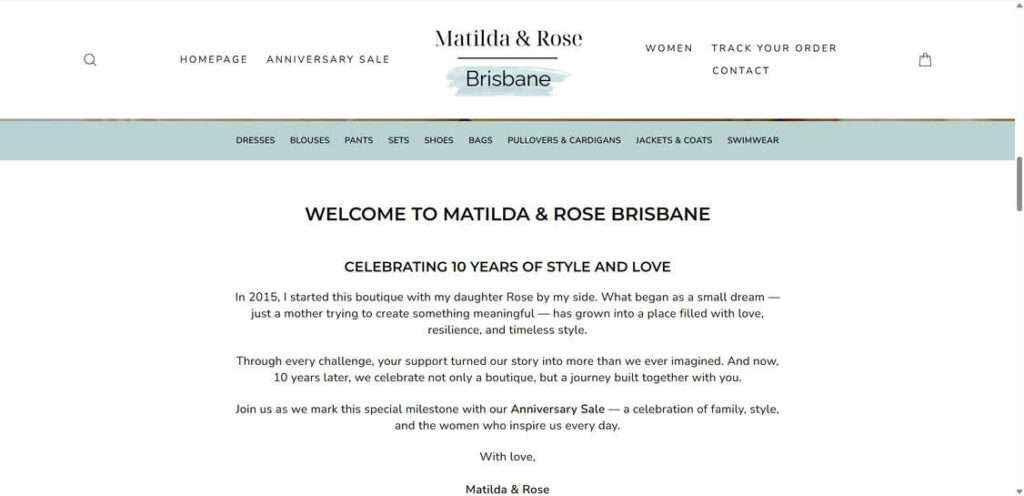
Scam Overview
The Matilda Rose Brisbane Anniversary Sale Scam is structured to look like a family owned women’s clothing boutique based in Brisbane, Australia. The website claims to be celebrating a major anniversary and offers large discounts across its entire product catalog. Prices appear slashed from $120 down to $29.95, $89.95 down to $24.95, or similar dramatic reductions. The site claims that these special offers exist because the boutique wants to thank loyal customers for many years of support. However, there is no real boutique. The brand story is a fabrication designed to exploit trust and sentiment.
The website uses aesthetic photography, soft color palettes, elegant typography, and carefully written copy to appear legitimate. On first impression, the store looks like dozens of real Australian or American boutique clothing shops that sell casual sweaters, knit cardigans, floral tops, lightweight jackets, or seasonal apparel. This illusion is strengthened by the brand positioning itself as a small business rooted in community values. Shoppers looking for unique clothing pieces or trying to support small businesses may find this story appealing.
The homepage usually showcases a warm welcome message describing how Matilda Rose Brisbane began as a family project, with heartfelt references to heritage, passion, craftsmanship, and dedication to customer satisfaction. It claims that the brand has been serving customers for many years. Yet a simple domain lookup reveals that the website was registered very recently, which contradicts every claim about long term history. This is a common hallmark of scam boutiques. They claim decades of tradition, but their website is only days or weeks old.
Another defining characteristic of this scam is the use of AI generated visuals. Instead of real founders, real store locations, or real staff photography, the site uses synthetic models and faces generated by artificial intelligence. The pictures appear human at a distance but reveal unnatural facial details, inconsistent lighting, and digitally rendered backgrounds upon closer inspection. These visuals are designed to present a charming and trustworthy brand identity without requiring the scammers to reveal any real personal details.
Product photography is similarly suspicious. Many scam boutiques use AI generated fashion images, stock photos, or stolen images from legitimate retailers. This creates a sense of quality that does not exist in reality. The sweaters, coats, dresses, and tops displayed on Matilda Rose Brisbane appear professionally photographed, with consistent lighting and well edited color correction. Yet customers who place orders quickly discover that the items they receive do not match the images. Clothing is usually low grade fast fashion, poorly sewn, and cheaply constructed. Fabric quality is thin and synthetic. Colors appear faded or completely different from the photos. Stitching is uneven. Items fall apart after a single wash or arrive damaged.
Customers frequently report receiving items worth less than $5 in wholesale markets, despite paying $29 to $60 per piece. Some even report receiving entirely different items from what they ordered. A customer might order a thick knit cardigan and receive a flimsy polyester shirt instead. Others receive packages containing only one item when they ordered multiple pieces. A portion of victims receive nothing at all.
The review section on these sites is also fabricated. Matilda Rose Brisbane displays hundreds or thousands of five star reviews, each with photos of smiling customers and enthusiastic text. These reviews often use generic names, repeated phrases, or unnatural wording patterns. Nearly all the reviews praise the fit, softness, fast shipping, or compliments received from friends. Yet there is no verification that any of these orders actually took place. Scam boutiques use AI generated review photos combined with handcrafted text to create an illusion of credibility.
Customer service is another major red flag. The contact information often includes a generic email address and no real phone number, business number, or physical address. Some sites display an Australian address that does not appear on any public registry, or corresponds to a residential home. When customers contact the store for help, responses are slow, generic, or completely absent. Many victims report receiving the same scripted response about shipping delays, quality checks, or increased demand due to the anniversary sale.
The scam intensifies once a customer attempts to make a return. The return policy on the website usually claims that returns are accepted within a certain number of days. However, in reality, the process is impossible. Customers are often instructed to return items to an overseas warehouse in China at their own expense. Shipping from the United States, Canada, or Australia to China can cost $25 to $45 for even small packages, which makes returns economically unreasonable. Some victims are told to send items to an address that does not exist. Others receive no instructions at all. The result is the same: refunds are never issued.
The purpose of the scam is profit maximization through manipulation of psychological triggers. By portraying themselves as a sentimental boutique with an anniversary sale, scammers tap into the emotions of shoppers who enjoy supporting small brands. They present the illusion of limited availability and exclusive events. The use of phrases like “Final Anniversary Event”, “Limited Time Only”, and “Almost Sold Out” encourages shoppers to buy quickly without researching the brand.
The scope of the scam is broader than a single boutique. The same operators often run dozens of identical scam sites under different names, using the same layouts, product photos, reviews, and brand stories. Once one site gains negative attention or chargeback claims, the scammers simply abandon it and launch a new boutique under a different name. This cycle continues indefinitely.
The Matilda Rose Brisbane Anniversary Sale Scam is just one manifestation of this growing pattern. With AI tools becoming more sophisticated and social media advertising easier than ever, scammers can deploy new boutique scams rapidly. Consumers who are unaware of these patterns are likely to fall victim, especially when the design and presentation appear professional.
The scam overview demonstrates that Matilda Rose Brisbane is not a real boutique but a deceptive digital storefront created to generate quick profit through misleading marketing, manipulated visuals, and false claims about product quality. Understanding these tactics is essential to protect yourself and others from similar scams in the future.
How The Scam Works
The Matilda Rose Brisbane Anniversary Sale Scam is executed through a carefully planned sequence of steps designed to maximize trust, minimize skepticism, and extract as much revenue as possible before the site is shut down. Below is a detailed, step by step breakdown of exactly how the scam operates.
Step 1. Registering a New Domain
The first step is domain registration. Scam operators purchase a new domain that sounds feminine, friendly, and tied to a geographical location. Names like Matilda Rose Brisbane combine a first name with a city to create a feeling of authenticity. Shoppers assume the brand is locally based. The scammers choose domain names that appear fashionable, boutique like, and consistent with the aesthetic of real independent shops.
These domains are usually registered anonymously or through privacy protection services. They are brand new, despite the website claiming years of history. The short age of the domain is one of the most reliable indicators that the boutique is fake.
Step 2. Constructing a Professional Looking Website
Next, scammers build a visually appealing e commerce website using templates on Shopify, WooCommerce, or similar platforms. Modern website builders allow scammers to launch premium looking stores in hours with minimal cost. Key elements include:
- soft pastel color themes
- elegant serif fonts
- curated product categories
- minimalist icons
- animated banners
- sentimental slogans
The site is designed to look gentle, warm, and artistic, matching the aesthetic preferences of customers who enjoy boutique fashion.
Step 3. Crafting a Fake Brand Story
The About Us page is one of the most important elements. The scammers write emotional stories about how the boutique was founded, often involving references to mothers and daughters, family tradition, creative passion, or dedication to quality. These stories are pure fiction. They manipulate the reader’s emotions to build trust. Many shoppers want to support local family businesses, so scammers intentionally adopt this persona.
Step 4. Creating AI Generated Images and Lifestyle Shots
Because scammers do not have actual products, models, or stores, they use AI to generate all visual assets. They produce:
- fake founders
- fake staff photos
- fake indoor boutique scenes
- fake product lifestyle images
AI allows scammers to avoid the costs associated with real photography. Visuals appear soft and artistic but contain imperfections like mismatched lighting or inconsistent textures if viewed closely.
Step 5. Filling the Website with Fake Product Listings
Scammers steal or generate product photos that show high quality clothing. They list items such as lace tops, cardigans, knitted sweaters, linen blouses, and floral dresses. Product descriptions are written with exaggerated claims, such as:
- premium materials
- handcrafted finishes
- designer level detail
- limited edition pieces
In reality, the scammers source low quality items from cheap suppliers. These items cost $2 to $8 to produce. The scammers sell them for $24 to $60.
Step 6. Announcing a Large Anniversary Sale
The scam relies heavily on the emotional appeal of a special event. The site prominently displays messages such as:
- Anniversary Sale
- Thank You for 20 Years of Support
- Final Days of Celebration
- Up to 80% Off Everything
These banners create urgency and encourage impulse purchases. Shoppers assume they are getting a rare deal from a beloved boutique.
Step 7. Launching Aggressive Social Media Ads
Scammers run image based ads on Meta platforms (Facebook and Instagram). The ads show smiling women, floral clothing, and warm messages about celebrating anniversary events. These ads target women aged 25 to 65 who recently searched for online fashion, sweaters, or boutique clothing. The campaigns run under multiple fake pages. When one page receives negative comments, scammers delete it and start another.
Step 8. Accepting Payments
When shoppers check out, the site accepts major credit cards or PayPal. The presence of familiar payment icons creates a sense of legitimacy. Once payment is processed, the scammers immediately receive the funds. They send an order confirmation email to make the transaction appear legitimate.
Step 9. Delaying Shipment
The scammers typically delay orders for several days. They may send tracking numbers that never update or belong to unrelated shipments. The delay reduces the chance of shoppers initiating chargebacks too early. Some victims receive messages claiming that the warehouse is backed up due to the anniversary event.
Step 10. Shipping Low Quality Products
If products do arrive, they are:
- extremely low quality
- thin
- synthetic
- poorly stitched
- inconsistent in size
- different in color or pattern
They are shipped from warehouses in China, not from Brisbane as the website claims. Some victims receive items that are completely unrelated to what they ordered. Others receive only partial orders.
Step 11. Blocking Returns and Refunds
When customers complain, the scammers use scripted responses to delay or deny refunds. They may:
- request more photos
- offer a small partial refund
- insist on return shipping to China
- ignore emails entirely
Because return shipping costs are high, most victims abandon the process.
Step 12. Shutting Down and Rebranding
Once enough complaints accumulate, scammers deactivate the domain and launch a new boutique using the same template and pictures. This cycle repeats endlessly, making it extremely difficult for law enforcement to track them.
What to Do if You Have Fallen Victim to This Scam
If you purchased from Matilda Rose Brisbane and realized the boutique is a scam, take the following steps immediately.
1. Contact Your Bank or Credit Card Company
Request a chargeback for goods not as described. Explain that you purchased from a fraudulent boutique using false advertising and misleading product photos. Many banks will approve these disputes.
2. Open a PayPal Claim if Applicable
If you paid using PayPal, file a dispute under the “Item Not as Described” category. Include photos of the items you received and screenshots of the product listings.
3. Take Photos and Save All Documentation
Gather:
- screenshots of the website
- confirmation emails
- product descriptions
- photos of the received items
- shipping labels
- tracking history
This evidence strengthens your dispute case.
4. Do Not Ship Items Back to China
Returning items to China is expensive and pointless. The scammers will either deny receiving the package or refuse to issue a refund. Do not waste money on international return shipping.
5. Report the Scam
Report the boutique to:
- FTC (United States)
- IC3 (United States)
- Scamwatch (Australia)
- Your local consumer protection authority
These reports help track patterns and shut down fraudulent operators.
6. Warn Others
Post honest reviews on platforms like Trustpilot, Reddit, Facebook, and consumer advocacy forums. Your review can prevent others from falling victim.
7. Install Scam Protection Tools
Install tools such as:
- Malwarebytes Browser Guard
- AdGuard
These tools block fraudulent websites and malicious ads before they appear on your feed.
8. Monitor Your Bank for Unauthorized Charges
Some scam boutiques attempt repeat charges. Watch your account carefully and consider replacing your card.
The Bottom Line
The Matilda Rose Brisbane Anniversary Sale Scam is part of a larger network of fraudulent fashion boutiques designed to deceive consumers through emotional storytelling, AI generated visuals, fake discounts, and misleading product descriptions. The boutique is not based in Brisbane, has no physical store, and does not produce any of the clothing it advertises. Customers receive low quality items or nothing at all, and returns are nearly impossible. Understanding the tactics behind this scam is essential to protect yourself and others from similar boutique scams.
Consumers should always research unfamiliar stores, verify domain age, check for real customer reviews, and approach massive discount claims with skepticism. If a boutique offers 60% to 80% off everything and claims decades of history despite having a brand new domain, it is likely a scam.
When in doubt, trust your instincts. If something feels off, it probably is.
FAQ
What is the Matilda Rose Brisbane Anniversary Sale Scam?
It is a fraudulent online clothing boutique that claims to be celebrating an anniversary sale. It advertises large discounts, emotional brand stories, and high quality clothing but delivers low quality items shipped from overseas or nothing at all.
Is Matilda Rose Brisbane a real boutique?
No. The boutique claims to be based in Brisbane, but there is no registered business, no physical store, and no verifiable contact information. The domain is new despite claims of long history.
Why are prices so heavily discounted?
The discounts are used to lure shoppers. Real boutiques do not offer 70% or 80% off every product at once. These extreme discounts are designed to trigger impulse purchases.
Why do the photos look professional?
Scammers use AI generated visuals, stock photography, or stolen product images from legitimate retailers. This allows them to present a polished appearance while selling cheap products.
Where do the items actually ship from?
Despite the boutique claiming Brisbane origins, items are shipped from warehouses in China. This is one of the clearest signs that the boutique is not legitimate.
Are the positive reviews real?
No. The reviews are fake. The photos are AI generated and the text is generic. There is no verified purchase system in place.
What should I do if I received low quality items?
File a chargeback with your bank or credit card provider. Keep all evidence and do not return items to China unless your bank specifically requires it.
Can I return items?
In most cases, no. Scammers intentionally make returns difficult or impossible by providing overseas return addresses or ignoring emails.
Will I get my money back?
Many victims successfully obtain refunds through chargebacks. Your best chance is to contact your bank quickly and provide complete evidence.
How can I avoid scams like this in the future?
Research stores, check domain age, verify business registration, look for real reviews, and be skeptical of massive discounts. Install tools like Malwarebytes Browser Guard and AdGuard to block scam ads.

Join the discussion
0 commentsShare your experience or ask a question about this article.
Discussion
Start the conversation
Have a question or something useful to share? Add the first comment.