

Lucky Fours Watches looks like the kind of brand you stumble on once and immediately want to believe. The site feels polished, the photos scream “luxury,” and the discounts are big enough to make you think you just found a hidden gem.
But then the stories start to sound eerily similar.
A tracking number that takes forever to update. A package that arrives from somewhere unexpected. A watch that doesn’t quite match what you thought you ordered. And when buyers try to send it back, the “simple return” suddenly turns into a wall of excuses and a familiar offer: keep the item, accept a small partial refund, and move on.
If you’re considering buying from Lucky Fours, here’s what to know before you learn the hard way.
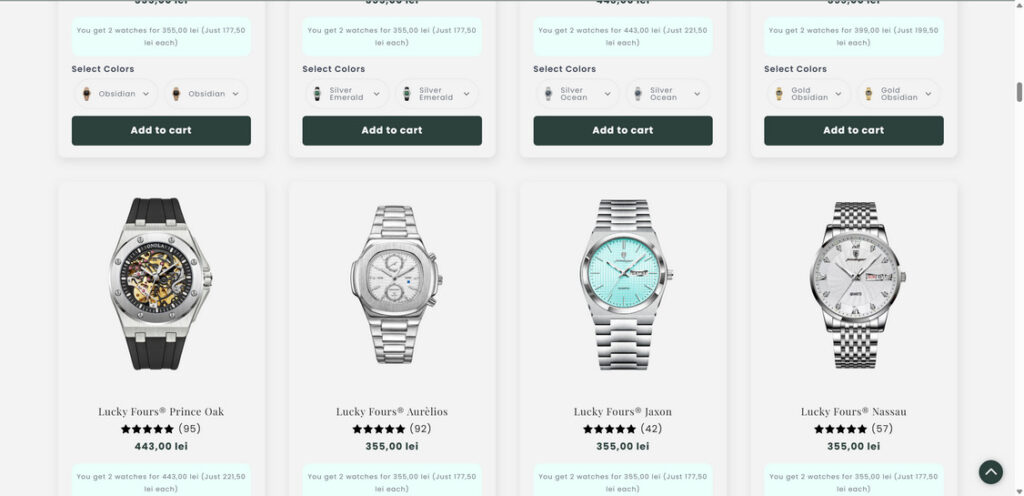
What is Lucky Fours Watches?
Lucky Fours presents itself as a premium watch brand selling elegant, luxury style timepieces at heavily reduced prices. The store leans into classic watch aesthetics, gift-ready packaging, and a boutique style identity, often paired with language like “masterpieces,” “limited edition,” or “handpicked” to suggest exclusivity.
That alone does not prove anything. Plenty of legitimate brands use aspirational marketing. The issue is the pattern of red flags that frequently appears alongside these claims and the consistent complaints that show up when customers try to get help, request refunds, or return items.
Lucky Fours Watches: scam or legit?
If you are expecting a clear yes or no, here is the safest way to frame it:
Lucky Fours shows multiple warning signs commonly associated with low quality, white label dropshipping operations that present themselves as premium brands. That means the risk is not only “will I receive something?” but “will what I receive match what I thought I bought, and can I return it if it doesn’t?”
The pattern behind stores like Lucky Fours
Lucky Fours appears to operate in the same broader playbook as many “brand new boutique” stores that pop up around big shopping events (Cyber Week, Black Friday, holiday sales). The goal is simple: create urgency, convert quickly, and make the refund process difficult enough that most customers accept a small partial refund instead of pushing for a full return.
Here is how the pattern typically looks.
1) A premium identity built fast
These sites often launch with:
- A clean theme and luxury colors
- Professional looking product shots
- “Heritage” sounding branding
- A story that implies craftsmanship or a long history
- Trust badges like “Secure payment” and “24/7 support”
The site looks legitimate because the design is legitimate. Modern ecommerce templates make it easy to build a convincing storefront in a day.
2) Massive discounts as the main hook
A common tell is that the discount is not a one time event. It is the core business model.
You will see:
- “Up to 70% off” or “Up to 80% off” banners
- Countdown style urgency
- “Final sale” language
- Constant markdown pricing, where the “original” price is always crossed out
When everything is always on sale, the “sale” is not a sale. It is the price.
3) Product images that look too perfect
Many of these stores use highly stylized images that resemble AI generated visuals or heavily edited renders. For watches, this can show up as:
- Hyper clean lighting with unreal reflections
- Identical angles across many products
- Details that look inconsistent (hands, indices, engravings)
- Branding that looks pasted on in a uniform way
Even when the photos are not AI generated, they can be lifted from other sources or created as mockups. The risk is that the photos represent an idealized concept, not the real item you will receive.
4) Vague product specs, unclear movement details
Legitimate watch sellers usually make it easy to verify what you are buying.
You typically get:
- Movement type (automatic, quartz, mecha-quartz)
- Movement maker or caliber info
- Case material, crystal type, water resistance rating with clarity (and limitations)
- Warranty terms that are specific and enforceable
- A real company footprint
With questionable stores, you often get marketing first and specs second. The description focuses on “luxury” rather than verifiable details.
5) Reviews that feel manufactured
Some stores rely on onsite star ratings and short reviews that are hard to verify. When the only praise lives on the store itself, but independent review platforms are full of frustration, you should treat the onsite reviews as advertising, not evidence.
What customers commonly report after ordering
Not every buyer will have the same outcome. But the complaints tend to cluster around the same themes:
The watch arrives, but it is not what the photos implied
A common complaint is that the watch that arrives does not match the premium branding or the product photos. Instead, customers describe receiving a very cheap, generic watch that looks like a mass-produced item you can find on overseas marketplaces for a few dollars.
When the gap between the marketing and the delivered product is this large, shoppers are not just disappointed. They feel misled..
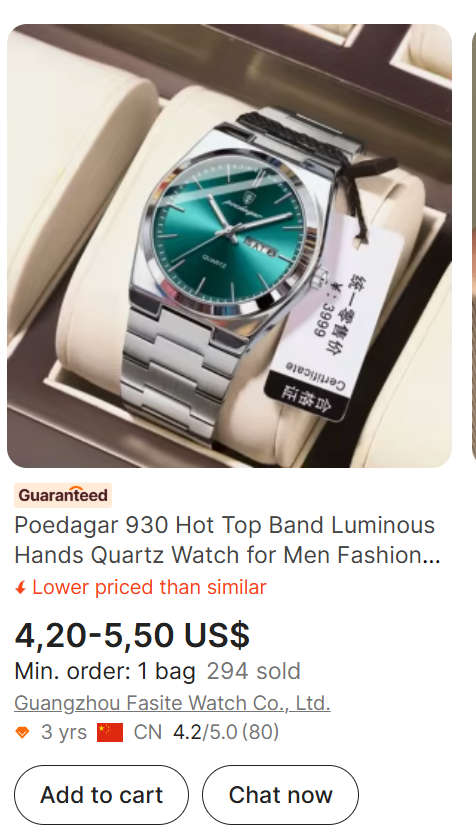
Buyers often describe:
- Cheaper materials than expected
- Lightweight feel
- Finishing that does not match the marketing
- Misleading “luxury” presentation
- A product that looks like a generic item you could find on large marketplaces for far less
Shipping takes longer than expected
Delays often happen when the item ships from overseas or passes through multiple logistics steps. A site can market itself as local or boutique, but fulfillment can still be international.
Customer support becomes slow or unhelpful
This is where things usually get messy. Shoppers report:
- Generic replies
- Long response times
- Requests for extra photos and repeated information
- “We can offer you a partial refund” as the first solution
- A return process that feels intentionally exhausting
Returns require shipping back internationally
This is one of the biggest pain points. If you have to ship a watch back overseas, you may face:
- High shipping costs
- Complex customs forms
- Long delivery times
- No guarantee the return will be accepted
- A refund that is delayed until the package is received and processed
If the return process costs nearly as much as the item, many people give up.
Partial refunds are offered instead of a real fix
This is a common tactic across these operations. Victims are often offered something like 15% to 30% back and told to keep the product. It sounds like customer service, but it is also a strategy: it reduces chargebacks and keeps the seller from paying return shipping or dealing with inventory.
If you truly want a refund, do not treat the first partial refund offer as the final option.
How the “sale scam” funnel works
Even when a store delivers a product, the “scam” element is often the gap between what is marketed and what is delivered, plus the barriers placed in front of refunds.
Here is the funnel shoppers describe:
Step 1: You see an ad or find the store during a major sale period
The messaging is built for impulse:
- Limited time
- Luxury aesthetic
- Big discount
- Gift framing
Step 2: You buy based on images and the promise of premium quality
Most buyers are not trying to gamble. They think they found a hidden gem.
Step 3: The product arrives and reality hits
The item may be “fine” in a basic sense, but not worth the price paid, and not what the photos suggested.
Step 4: You request a return
This is where friction starts.
Step 5: Support pushes alternatives
Typical responses include:
- Partial refund offers
- Store credit
- Requests to “try it longer”
- Claims that returns are complicated due to “warehouse location”
Step 6: The return destination is overseas
Costs and hassle increase, and many customers stop here.
Step 7: The seller keeps most of the revenue
Even if a partial refund is given, the economics often still favor the seller.
Red flags to look for on Lucky Fours and similar watch sites
Use this checklist before you buy.
Branding and claims
- The brand story feels emotional but hard to verify
- “Heritage” language without verifiable history
- Constant “final sale” urgency
Pricing
- Huge discounts on nearly everything
- Inflated “original” prices that seem unrealistic
- Bundles and gift boxes used to justify price
Product detail quality
- Few technical specs
- No clear movement details
- Vague water resistance claims
- No independent certifications or verifiable manufacturing info
Company footprint
- No clear physical address you can verify
- Support email only, no real phone support
- Policies that look generic or copied
- Return policy that makes refunds hard in practice
Refund behavior
- Partial refund offers appear quickly
- Return shipping is expensive or international
- Long back-and-forth to “approve” a return
Should you buy Lucky Fours Watches?
If your goal is a true value watch purchase, the risk is high.
You are not only judging whether the watch arrives, you are judging whether:
- The watch matches the photos and implied quality
- The specs match what you assumed you were getting
- You can return it without spending a large amount on shipping
- Support will actually help if something goes wrong
If you want a safe purchase, you are usually better off buying from a known retailer, a brand with traceable history and service channels, or a marketplace with strong buyer protection and straightforward returns.
What to do if you already bought from Lucky Fours
If you placed an order and now feel uneasy, you still have options.
1) Save everything
- Order confirmation page
- Emails
- Product page screenshots
- Tracking details
- Any support conversations
2) If it has not shipped, request cancellation immediately
Keep it short and direct:
- Ask to cancel the order
- Ask for written confirmation
- Ask for a full refund to the original payment method
3) If it arrived and it is not as described, request a refund in writing
Use clear wording:
- “Item not as described”
- “Quality does not match product listing”
- “I want a full refund, not a partial refund”
4) Do not accept a partial refund if you want to pursue a full refund
A partial refund can weaken your leverage later. If you accept it, the seller may argue the issue is resolved.
5) Consider a chargeback if the seller stalls
If you paid by credit card, you may be able to dispute the charge if:
- The item is not as described
- The seller refuses a refund that their policy implies
- The seller becomes unresponsive
- The return process is unreasonable or misleading
Act quickly because dispute windows are time limited.
6) If you paid by debit or bank transfer, contact your bank anyway
Options can be more limited, but banks sometimes have dispute paths for card-based debit purchases.
7) Report the store and the ads
If you believe the marketing was deceptive, report it to:
- The ad platform where you saw it
- Your consumer protection agency
- The payment provider if relevant
How to safely verify a watch store before you buy
If you keep seeing brands like Lucky Fours pop up, these checks can save you money.
Verify real-world presence
- Look for a verifiable address
- Search for the address in maps and business directories
- Look for independent coverage that is not paid promotion
Verify specs
- Identify the movement type and maker
- Look for real water resistance standards and disclaimers
- Look for crystal type and case material details
Verify images
- Reverse image search product photos
- Look for the same images used on other stores
- Look for AI inconsistencies in detail shots
Verify return reality
- Where do returns go?
- Who pays return shipping?
- Is there a restocking fee?
- Are refunds issued to the original payment method?
If the return destination is overseas and the product price is low to midrange, returns often become impractical.
FAQ
Is Lucky Fours Watches legit or a scam?
Lucky Fours shows multiple red flags consistent with a high risk ecommerce watch store. Many buyers report dissatisfaction and mismatch issues.
Why are Lucky Fours watches so heavily discounted?
Deep discounts are a common conversion tactic for stores selling white label or mass produced items while positioning them as premium products.
Where do Lucky Fours watches ship from?
Shipping origin is not always clear from storefront marketing. If tracking shows international fulfillment or long transit times, that often indicates overseas shipping.
Can you return a Lucky Fours watch for a full refund?
Some buyers report that returns can be difficult, especially if the return requires shipping internationally. Partial refunds are commonly offered as an alternative.
What should I do if Lucky Fours refuses to refund me?
Keep written records, restate that you want a full refund, and consider a chargeback through your card issuer if the item is not as described or the return process is unreasonable.









Same thing happened to me. I ordered my watches on April 1st and still not have arrived on April 20th. The watches also had to be shipped a second time. It is all a scam and I plan to file a credit card dispute with them on the watches. So Lucky Fours is a FAKE company. DO NOT order from them. They are a scam and will take your money
Hi Brayden, I’m sorry to hear you’re dealing with this. Your experience matches a common pattern we see with these sites—taking the money and then providing endless excuses or “re-shipping” items that never arrive. Filing a dispute with your credit card company is definitely the right move. Thank you for sharing this warning to help others avoid the same trap.
Hola Javier, lamento mucho que hayas pasado por esto. Esta es una táctica clásica de los casinos falsos: inventar excusas y pedir más depósitos para poder “retirar” supuestas ganancias. Por favor, no deposites más dinero, ya que es una estafa. Te recomiendo contactar a tu banco para ver si existe alguna posibilidad de revertir los cargos. Gracias por compartir tu testimonio.