

Lung Tank reviews tend to start with an appealing idea: explore beneath the surface without carrying a large tank or committing to a complicated-looking setup.
For someone imagining a relaxed afternoon in the water, that promise is easy to understand. The purchasing decision deserves a slower, more practical look.
Overview
The evidence concerns buying risk, not a proven counterfeit device
Lung Tank operates a storefront for underwater breathing equipment. Its public pages include safety warnings, a user manual, and restrictive return conditions.
Our review does not establish that the cylinders are counterfeit, that orders never arrive, or that every buyer is being defrauded.
The important findings are practical: buying is not a substitute for training, and the published return policy does not offer an ordinary try-it-and-return-it arrangement.
The return restriction starts when shipping begins
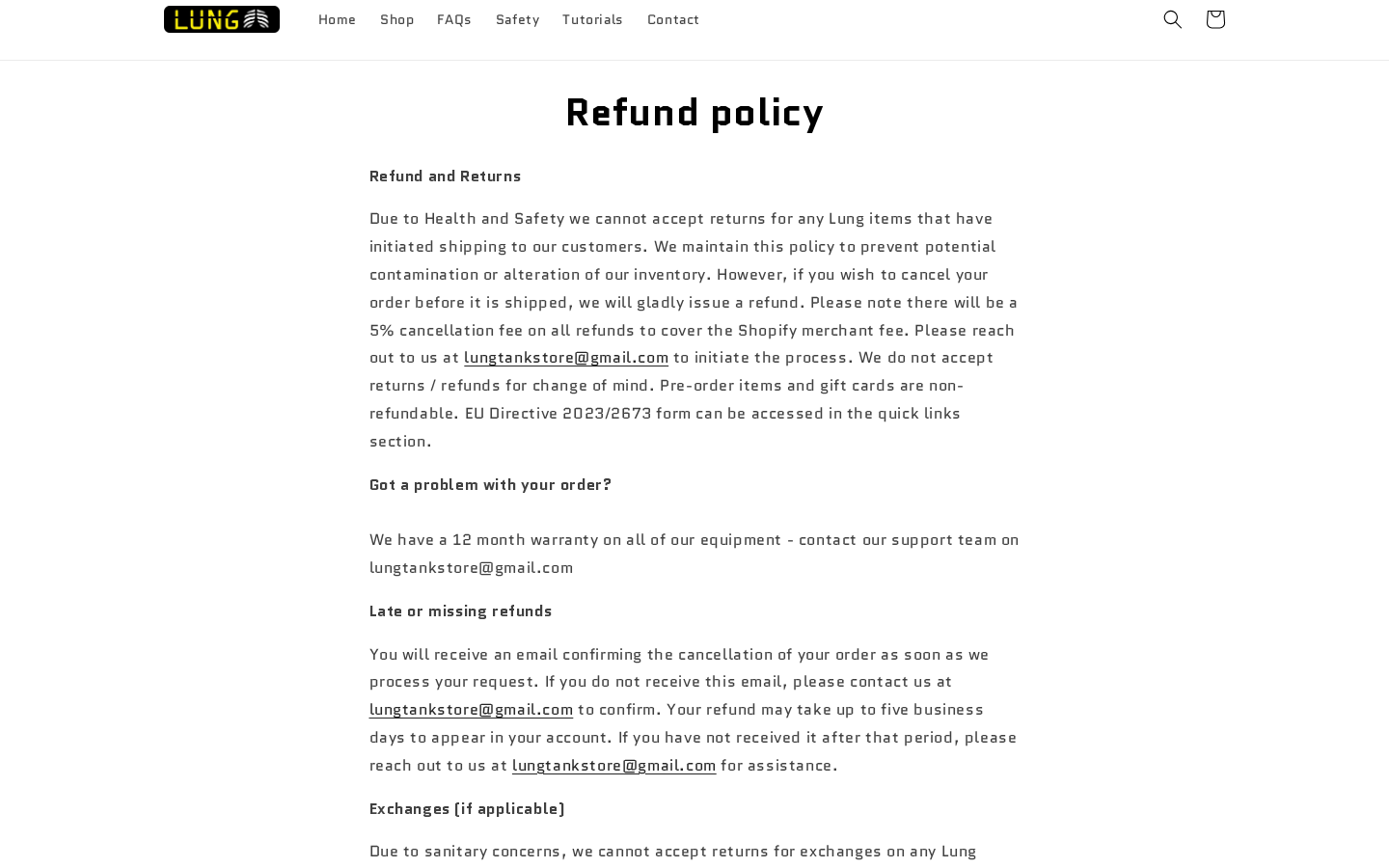
The refund policy says Lung items cannot be returned once shipping has been initiated, citing health and safety concerns.
It describes pre-shipment cancellation with a 5% deduction and separately offers a 12-month equipment warranty. Those are different promises, not an unrestricted satisfaction guarantee.
Anyone hoping to examine the equipment at home before deciding whether to keep it should understand that distinction before payment.
The seller itself warns of serious consequences
The safety page explicitly mentions injury or death and tells purchasers to read the manual. A small cylinder does not make breathing underwater a casual activity.
- Understand the exact model’s restrictions before considering an order.
- Obtain suitable instruction rather than learning from a promotional clip.
- Clarify cancellation, warranty, shipping, and return arrangements in writing.
- Identify the seller responsible for your specific purchase.
We reviewed the website on October 8, 2026. No equipment was bought, pressurized, inspected, or used in water for this investigation.
Why Lung Tank Reviews Should Not Double as Dive Lessons
A short demonstration can make equipment look straightforward. You see someone enjoying the water, not necessarily the preparation and training behind the moment.
That difference matters more here than with an ordinary household gadget. The consequences of misunderstanding underwater breathing equipment can be serious.
This article reviews purchase information. It does not provide diving, filling, pressure-setting, emergency-ascent, or equipment-modification instructions.
A professional instructor can help you determine whether a particular system belongs in an activity you are trained to perform. A product advertisement cannot do that.
The Divers Alert Network treats training, equipment management, and breathing-gas quality as meaningful safety responsibilities.
Its cylinder guidance also notes that small integrated bailout bottles have limited gas capacity and may have monitoring limitations. Size alone is not a safety advantage.
Do not interpret an advertised number of minutes as a personal guarantee. Equipment capacity, activity, conditions, and the user all affect what a demonstration can tell you.
We have not independently measured a Lung Tank unit’s duration. A customer clip cannot substitute for that test, much less a qualified assessment of suitability.
How the Lung Tank Purchase Journey Works
Step 1: The compact format makes underwater exploration feel accessible
The attraction is understandable. A smaller breathing device looks easier to transport than conventional diving equipment and may seem less intimidating to a newcomer.
Pause at that impression. Easier transport does not establish that the equipment can be used without preparation or that it suits your planned activity.
Write down the actual use you have in mind. Then discuss it with a qualified instructor before choosing a model or spending money.
A pool, open-water location, and boat-related task are not interchangeable settings. A seller’s broad adventure imagery may leave those differences unexplained.
If the only basis for your confidence is a short video, you have not yet gathered enough information for a responsible purchasing decision.
Step 2: You compare a model with the instructions it actually requires
The website names different models and directs users to safety documentation. Read the material associated with the exact system, not a similarly sized product elsewhere.
The FAQ states a three-meter maximum for the Lung T-500 and T-1000. That restriction is not a recommendation that an untrained buyer should dive to that depth.
A limit tells you what the seller prohibits. It does not certify your skill, equipment condition, environment, or ability to handle an emergency.
Ask which accessories are required and which are included. A low starting price may not describe the full equipment you would need.
Do not improvise compatibility based on a connector photograph. Have a qualified professional evaluate questions involving breathing equipment and filling arrangements.
Step 3: The full cost includes more than the main cylinder
Before checkout, list the equipment, delivery charges, potential import costs, and any necessary professional instruction or servicing.
That calculation may change whether the purchase makes sense. A compact system that appears inexpensive can become less attractive once the complete arrangement is understood.
Check the currency as well. A familiar $ symbol can represent different national currencies, so confirm what the store is charging for your location.
If installments are offered, distinguish scheduled payments for one purchase from automatic shipments of another product. They are not the same billing mechanism.
The presence of a payment plan does not prove a refill scam. Your obligation is to understand the selected payment arrangement and its total cost.
Step 4: Processing can close the seller’s ordinary cancellation route
The point of no return can arrive before the parcel reaches your home. That is the practical effect of wording tied to shipping initiation.
If you realize the equipment is unsuitable, request cancellation immediately. Ask the seller to identify whether dispatch or another processing milestone has already occurred.
Do not assume an unopened parcel will be accepted as a change-of-mind return. The published restriction is broader than a rule about opened packaging.
Also avoid confusing the seller’s own policy with a final determination of your legal rights. Consumer protections differ by location and the nature of the problem.
A policy dispute about an unwanted order is not identical to receiving damaged, incorrect, or nonfunctional equipment. Describe the actual issue accurately.
Step 5: A problem becomes a warranty or dispute question
The website describes warranty coverage separately. If something is wrong, ask what documentation is required and which remedy the seller proposes.
A replacement, repair, refund, and safety assessment are different outcomes. Do not accept one as automatically resolving the others.
Keep questionable equipment out of service while the issue is investigated. A support message should not be treated as an independent inspection.
If the seller requests a return, clarify the shipping requirements before arranging transport. Cylinders and related equipment can have special handling restrictions.
Contact the carrier about its own rules. This article does not provide packing, depressurizing, or shipping instructions for pressurized equipment.
The Safety Notice Is Part of the Offer, Not Fine Print to Skip
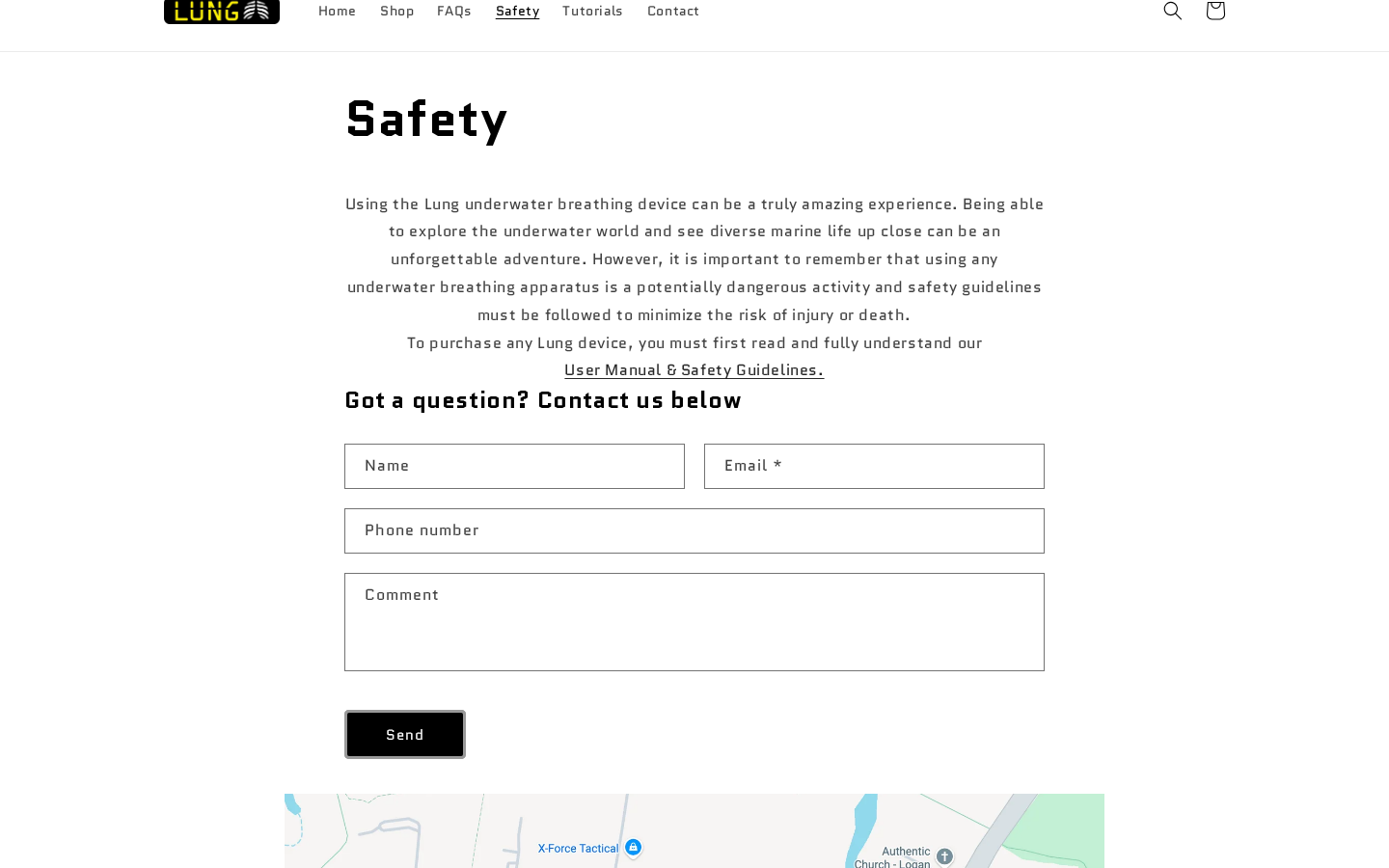
The safety page makes the seriousness explicit. It requires reading and understanding the manual before purchasing a Lung device.
That warning should carry more weight than a relaxed-looking promotional scene. It is not sensible to buy first and investigate training afterward.
The screenshot below records the notice we reviewed. We have not independently certified the equipment or the adequacy of its instructions.
Reading a manual is important, but it does not replace supervised skill development. A written explanation cannot observe whether you can apply it correctly.
Nor does a product’s portability remove the need to understand breathing-gas quality, maintenance, and the limitations of the complete setup.
A sensible sequence is instruction first, equipment assessment second, and purchase only when the system fits the activity. Reversing that order can create unnecessary pressure.
Once an expensive order is difficult to return, a buyer may feel motivated to use it anyway. That financial frustration should never determine a safety decision.
Company, Address, and Fulfillment Checks
The Lung Tank brand should lead to an identifiable merchant
The reviewed terms identify the operator using the Lung Tank name. That does not independently establish a complete legal entity or ownership structure.
Ask for the legal seller name on your invoice and any relevant business-registration details. They should relate to the entity accepting payment.
A payment processor is not necessarily the manufacturer or seller. Keep that distinction clear if you later need to discuss a faulty order.
The listed headquarters is not a verified return depot
The site lists Ellerslie Road, 4131, Queensland, Australia as its headquarters location. The wording reviewed does not include a complete street number.
We have not verified that location as a factory, warehouse, office, or authorized returns facility. It would be inaccurate to label it fake based on that gap.
For a physical return, obtain the complete destination and recipient details directly in the authorization. A general headquarters reference is not sufficient shipping guidance.
Support needs to answer equipment-specific questions
The refund policy uses lungtankstore@gmail.com as the support contact. A Gmail address does not establish fraud, but it also does not verify technical expertise.
Ask concrete questions about your exact model, warranty procedure, and documentation. A generic assurance that everything is safe is not an adequate equipment assessment.
We did not call or email the seller to test responsiveness. Do not treat this article as proof that support always answers, or never does.
Manufacturer and servicing information should be traceable
Breathing equipment should come with identifiable specifications, markings, documentation, and appropriate servicing information. A brand logo alone does not answer those questions.
Have a suitably qualified professional review the details of a unit you intend to use. Do not assume an online badge verifies a particular cylinder.
No manufacturing-origin finding is established here. Production in any country is a separate question from whether the equipment is documented, maintained, and suitable.
Questions to Settle Before You Pay
A useful seller response should be specific enough to compare with the invoice and manual. Ask these questions while you still have the option not to buy.
- Which exact model and accessories does the total include?
- What training and professional assessment should occur before use?
- What marks and documentation identify the manufacturer and the specific equipment?
- When does the company consider shipping initiated for cancellation purposes?
- What happens if the item arrives defective or differs from the order?
- Who handles warranty assessment, and who pays any authorized shipping?
Do not let uncertainty become an experiment in the water. If the answers are incomplete, postponing the order is a reasonable decision.
For an illustrative $200 order, a 5% deduction would be $10. That arithmetic is not a quotation or a guarantee of the amount in your case.
The more important issue is whether cancellation remains available at all. A small fee should not distract from a much larger commitment after dispatch.
What to Do If You Ordered Lung Tank Equipment
- Reassess suitability before using it.
If you lack relevant training or have unanswered equipment questions, leave the unit out of service. Arrange an assessment with a qualified diving professional.
Do not learn by trial and error because the order is expensive or difficult to return. Safety and refund eligibility are separate decisions.
- Send any cancellation request immediately.
Give the order number and state that you want the order stopped. Ask whether shipping has begun and what deduction the seller proposes.
Retain the email timestamp and response. If the company says cancellation is unavailable, request the specific reason rather than accepting an unexplained refusal.
- Keep the purchase documentation together.
Save the listing, selected package, payment record, manual version, warranty promise, and all communications. Record the item markings without altering the equipment.
These records help a professional or payment provider identify the issue. They are more useful than a broad allegation that the product is a scam.
- Report defects without attempting improvised fixes.
Describe observable damage, missing components, or a mismatch with the receipt. Ask for the formal warranty procedure and an appropriate assessment.
Do not modify breathing equipment to make it match a demonstration. A seller’s return dispute is not a reason to perform an unqualified repair.
- Clarify authorized transport before any return.
Get the complete return destination and seller’s written requirements. Then contact the carrier about restrictions applying to your equipment and its condition.
Never guess about pressure, packing, or transport preparation. Use competent guidance and retain the shipping record if a return is authorized.
- Check your remedy options for an unresolved order.
Ask the payment provider about non-delivery, an incorrect item, or a promised refund that has not arrived. Supply the relevant records and seller correspondence.
For a disagreement about consumer rights, consult the appropriate local consumer agency. Do not assume either a policy heading or this review settles the law.
- Take a suspected injury seriously.
If you feel unwell after using underwater breathing equipment, stop the activity and seek appropriate medical care. Severe breathing problems or chest pain require urgent help.
Tell the clinician what happened and which equipment was involved. Do not use a shopping review or promotional video to assess a possible injury.
Frequently Asked Questions
Is Lung Tank a confirmed scam?
This investigation does not establish fraud. It identifies a restrictive returns policy and a safety-sensitive purchase that needs training and equipment-specific scrutiny.
Can an unopened Lung Tank order be returned?
The policy reviewed rejects returns once shipping starts. An unopened package should not be assumed eligible for a change-of-mind refund.
What does the 5% cancellation fee apply to?
The seller describes it for pre-shipment cancellation refunds. Confirm whether your order can still be canceled and ask for the proposed calculation in writing.
Does the warranty mean I can try it and return it?
No. Equipment warranty assistance and an ordinary satisfaction return are distinct. Ask which warranty remedy applies to a specific problem.
Is the three-meter restriction a safe beginner recommendation?
No. A model’s stated maximum is not permission for an untrained person to use underwater breathing equipment. Obtain qualified instruction first.
Should I follow a social-media filling tutorial?
Do not rely on an unverified clip for a safety-critical procedure. Seek the exact manufacturer’s documentation and guidance from an appropriately qualified professional.
The Bottom Line
Lung Tank reviews should separate product appeal from purchase commitments and safety requirements. The site itself warns of serious risks and limits ordinary returns after dispatch.
Resolve training, equipment suitability, seller identity, and refund questions before paying. If those answers remain unclear, do not let the compact format rush your decision.








