

A jacket looks just right, the sale price feels reasonable, and the storefront promises a month to change your mind. It sounds like an easy purchase.
Maison Verro makes that moment familiar. Before you choose a size, though, its return instructions deserve more attention than the discount banner.
Overview
A polished clothing store with a broad catalog
Maison Verro sells dresses, jackets, knitwear, shoes, and men’s clothing through maisonverro.com. Its October 1 homepage advertised a fall sale of up to 50% off.
The storefront also promoted free shipping and a 30-day money-back guarantee. Those messages matter because online clothing purchases involve uncertainty about size, fabric, and fit.
A buyer may see the brand’s elegant photography and reasonably expect an ordinary domestic return if the garment does not work out.
The return destination is the important surprise
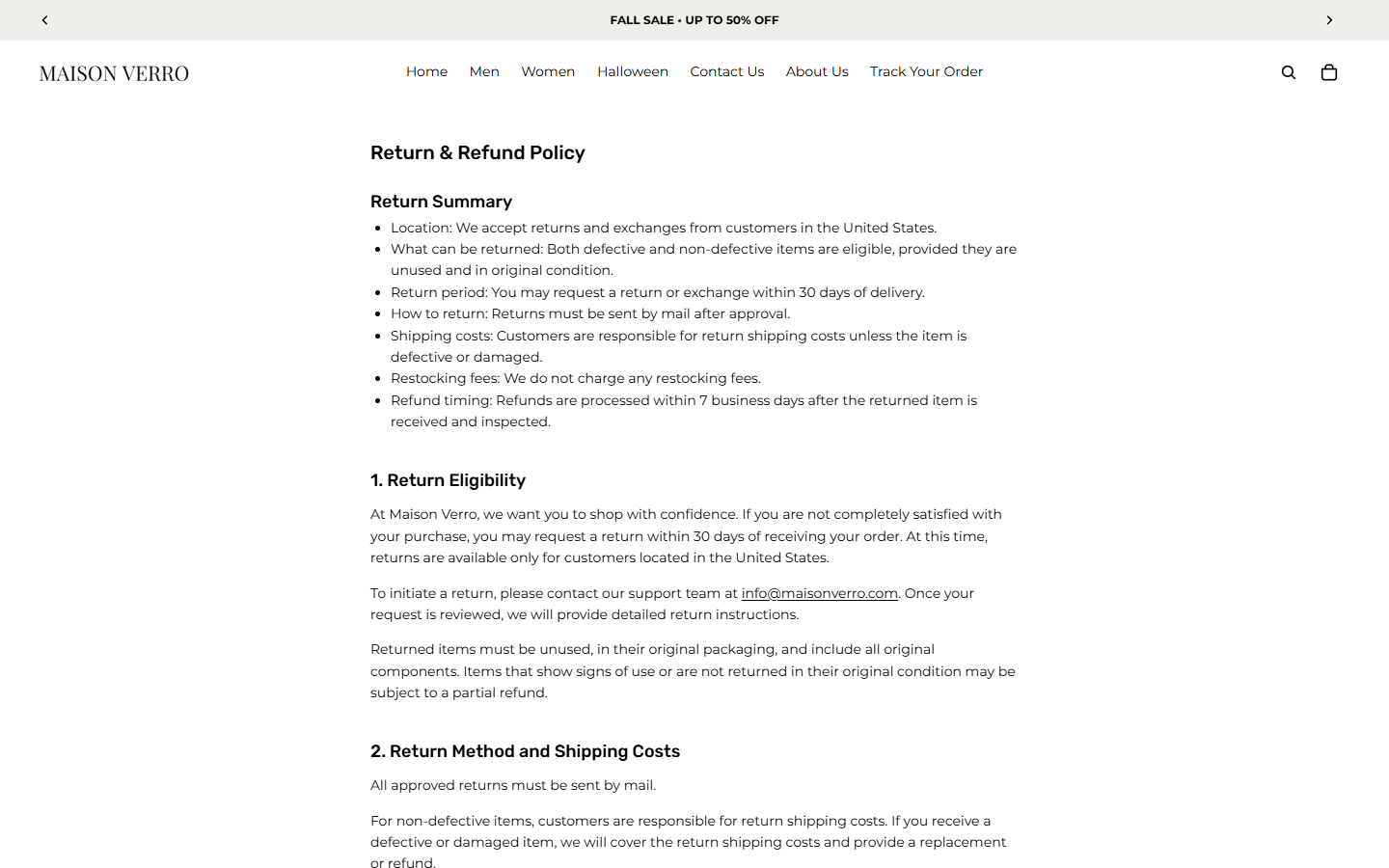
The published return policy accepts eligible requests from U.S. customers within 30 days. It requires unused items and prior approval.
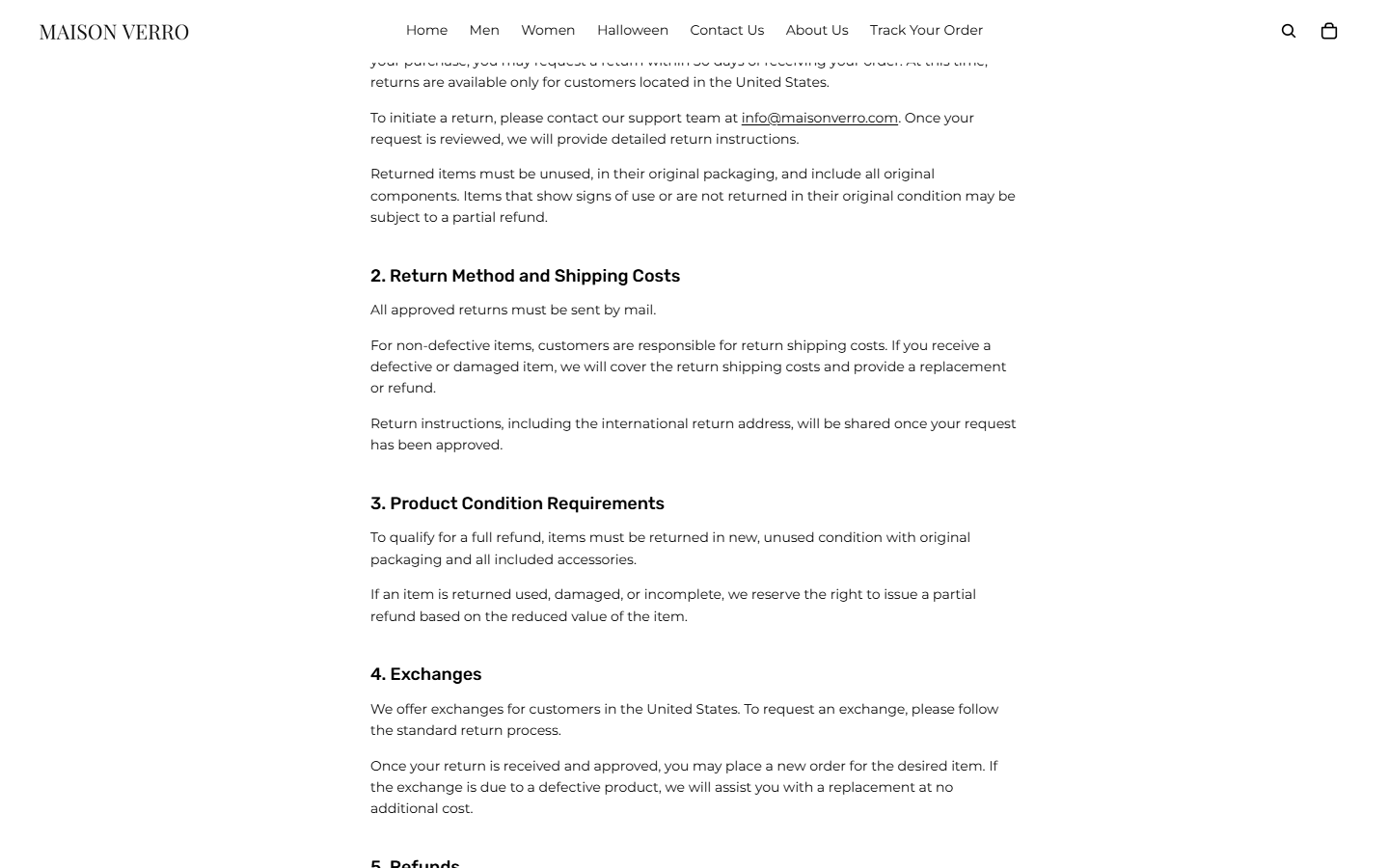
For a non-defective item, the customer pays return postage. The policy says an international return address is supplied only after the request is approved.
That means a shopper cannot calculate the true cost of a change-of-mind return from the policy alone. Overseas tracked postage could make a refund unattractive.
What we can and cannot conclude
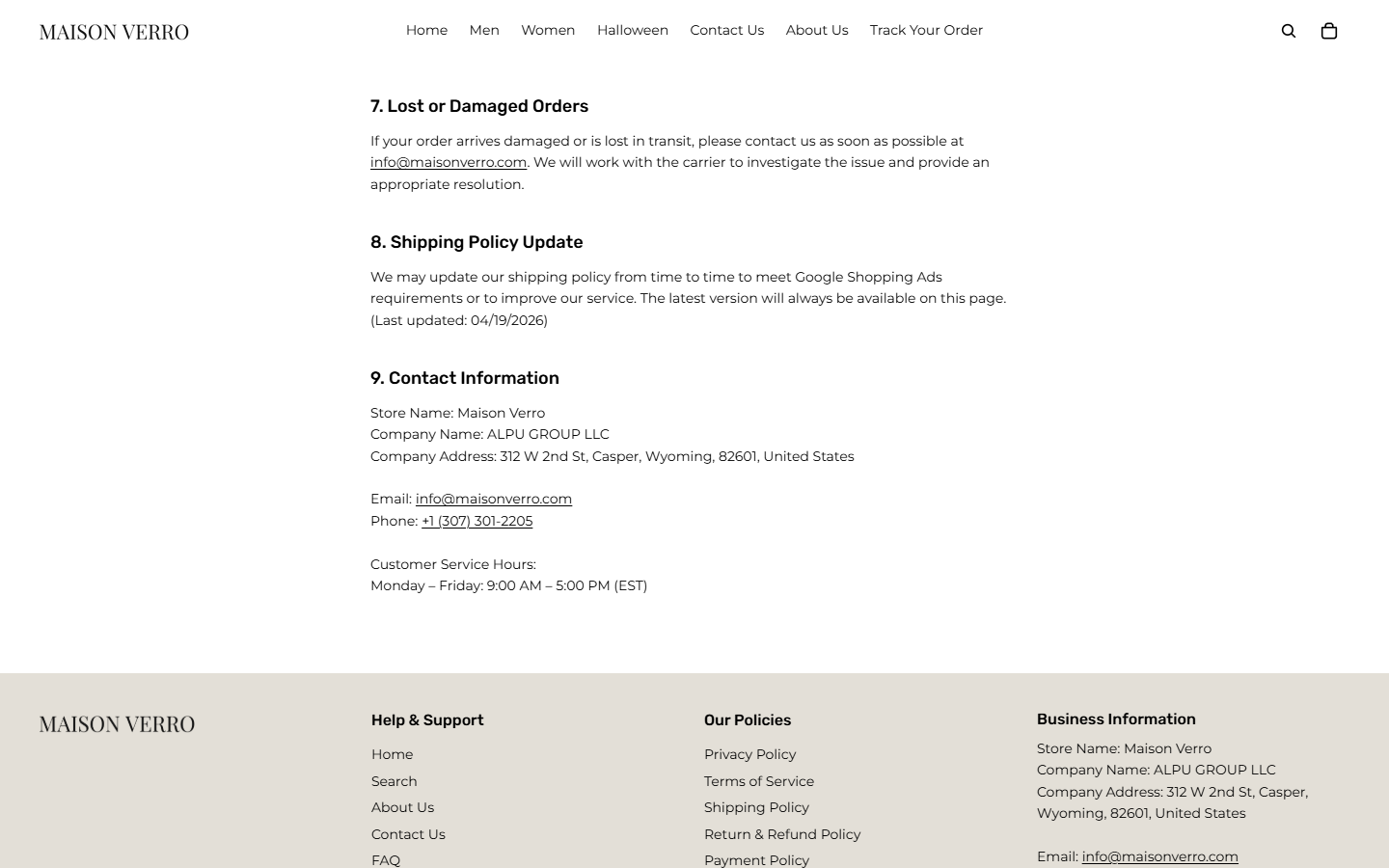
Maison Verro lists ALPU GROUP LLC, a Casper, Wyoming address, an email address, and a phone number in its policies.
These are useful disclosures. They do not identify the country where every garment is manufactured, stocked, or returned.
We did not buy clothing, test customer support, or inspect a returned parcel. The documented concern is the gap between reassuring front-page language and uncertain return logistics.
- Sale advertising and the 30-day message appear prominently on the storefront.
- The written policy allows eligible U.S. returns but requires approval first.
- Ordinary return postage is the buyer’s responsibility.
- The destination is described as international and disclosed after approval.
- The displayed Wyoming company address is not presented as the return address.
Those details do not establish fraud. They are concrete reasons to ask questions before paying, particularly for items you may need to exchange.
Why a Thirty-Day Promise Can Be Less Useful Than It Sounds
A return window is only one part of a return
Thirty days sounds generous when you are comparing clothing stores. It says little about what the return will cost or how quickly authorization arrives.
Maison Verro’s policy says you must email support and wait for instructions. Mailing a garment to the Wyoming company address without approval may not satisfy the process.
The page does not publish the international destination in advance. Without a country and postal code, the buyer cannot obtain a meaningful tracked-shipping quote.
Consider a $49.95 sweater that arrives in a size you dislike. The nominal refund may look fair until insured international postage consumes much of it.
That example illustrates a possible cost, not an observed Maison Verro transaction. Actual postage depends on the parcel, service, destination, and return instructions.
A return can also be refused or reduced if clothing has been worn, washed, damaged, or sent without its original packaging.
Try on a garment indoors, keep its tags and packaging, and photograph the condition immediately. Do not assume an ordinary wear test meets the site’s unused-item rule.
Free delivery does not mean free returns
The store’s shipping page says U.S. orders receive free delivery. Its returns page separately assigns postage for non-defective returns to the customer.
Those are two different promises. The first covers the parcel coming to you; the second concerns the parcel you might send back.
When a return destination is international, the difference can be substantial. Ask for the destination and a carrier-compatible address before treating the guarantee as risk-free.
If the seller refuses to identify the destination before purchase, decide whether you could comfortably keep the garment if it disappoints.
For a gift or event outfit, the stakes are higher. A late arrival or unfamiliar fit may leave no useful time to seek a replacement.
What the business address actually tells you
The seller identifies ALPU GROUP LLC at 312 W 2nd St in Casper, Wyoming. That is a published contact address, not evidence of local inventory.
An American company can use overseas manufacturing and logistics legitimately. Conversely, an American-looking address does not guarantee an easy U.S. return.
The policy itself directs approved returns to an international address. That is the operational fact a buyer should prioritize over assumptions about the brand name.
Ask which legal entity charges the card, which entity handles complaints, and where an authorized return must be delivered.
How the Maison Verro Sales Journey Works
Step 1: The storefront establishes an easy-shopping mood
The landing page uses fashion photography, clean navigation, and a prominent fall-sale message. Dresses, outerwear, and accessories sit under the same brand.
Nothing about a polished layout proves a problem. It simply makes the next step, selecting an item, feel routine.
Read the product description as carefully as the pictures. Note fabric composition, measurements, care instructions, and whether the image shows the exact color offered.
Save a screenshot of the product page. If the item arrives differently, that record helps you describe the mismatch without relying on memory.
Step 2: The sale price encourages a quick decision
The fall banner advertises up to 50% off. “Up to” means individual reductions can vary, and a crossed-out price is not an independent value appraisal.
Compare the garment’s total delivered cost with similar items elsewhere. Pay attention to material and measurements, not just the displayed percentage.
Some fashion pages use a countdown or scarcity message. We did not establish such a mechanism here, so the relevant pressure is the broad seasonal sale.
If you are choosing between two sizes, the return terms become part of the price calculation. A bargain loses appeal when a likely return is expensive.
Step 3: The guarantee lowers the perceived risk
“30-day money-back guarantee” is a strong reassurance near a clothing offer. A reader can easily interpret it as a simple domestic return.
The full policy adds conditions: request approval, keep items unused, retain original packaging, and pay ordinary return postage.
It also withholds the actual return address until after approval. These details may not be visible while someone is browsing a sweater grid.
Before payment, send a brief written question about the exact item and the country of return. Preserve the answer alongside the checkout terms.
Step 4: Checkout determines the enforceable order details
Review every line of the cart. Check quantity, size, color, currency, taxes, shipping, and any optional service before authorizing payment.
Use a payment method that provides a dispute route. Avoid moving the transaction to a direct transfer or a link supplied through a social message.
Keep the confirmation email and the terms shown during checkout. The wording visible there can matter if a later support message conflicts with it.
Watch for the merchant name on your statement. It may differ from the storefront brand if the legal entity or processor appears instead.
Step 5: Delivery follows a stated estimate
The shipping policy states one to three business days of processing and five to seven business days of transit for U.S. deliveries.
Together, that is a stated estimate of six to ten business days, not a guaranteed arrival date. Holidays or carrier issues could extend it.
Save tracking information once issued. A label creation notice does not necessarily mean a package has entered the carrier’s network.
If the tracking stalls, ask support for the handoff date and expected delivery window. Keep the conversation in email when possible.
Step 6: A return request reveals the real logistics
Inspect the garment promptly after arrival. Document incorrect sizing, visible damage, missing parts, and discrepancies with the listing.
For an ordinary change of mind, ask for approval and the international destination before purchasing postage. Compare the likely refund with shipping cost.
For a defective or damaged item, the policy says Maison Verro covers return shipping and offers a replacement or refund.
Explain the defect clearly, include photographs, and ask the seller to confirm that it will pay or reimburse the carrier charge.
Do not send a parcel to the company address merely because it appears in the footer. Follow the approved return instructions and retain delivery proof.
Company, Address, and Fulfillment Checks
The label on the site and the legal seller are different questions
Maison Verro is the brand customers see. ALPU GROUP LLC is the company named in the site’s return and shipping pages.
That distinction is not a warning by itself. It helps you match receipts, card charges, customer-service replies, and any formal complaint.
Ask the seller to confirm whether ALPU GROUP LLC is the contracting merchant for your order. Record any other name that appears during payment.
A Wyoming contact address is not a return destination
The policy provides a Casper address for company information. It separately says approved returns go to an international address supplied later.
Conflating those addresses could result in a lost or rejected parcel. Ask for the actual returns destination and the recipient name in writing.
We have not independently verified whether the Casper location is an office, registered-agent address, or another type of business address.
Even a genuine registration would not tell a shopper where the clothes are stocked. The return instructions remain the practical point.
Support should answer the expensive question before payment
The site lists info@maisonverro.com and a Wyoming-area phone number. We did not test response times or reach an agent.
Before ordering, ask whether a specific discounted item can be returned, where it must be mailed, and whether a prepaid label is available.
A clear answer should identify the destination country and who pays postage for each scenario. A vague assurance is less useful.
Save the complete reply, including the date and sender. If support later gives different instructions, the earlier record can help resolve the dispute.
Manufacturing and fulfillment remain separate from branding
The store’s elegant imagery and American contact address do not establish who made a particular item or where it was shipped from.
We found no basis to claim every garment is made in China, counterfeit, or unsafe. Those would require product or supply-chain evidence.
What is documented is an international return route. Ask for country-of-origin labeling and material details when those facts matter to your purchase.
Questions Worth Settling Before You Order
Ask about the garment, not a generic guarantee
Start with the product’s exact name, size, and color. Ask support whether that item qualifies for a 30-day return if the fit disappoints.
Ask whether opening the packaging or trying it on indoors counts as use. Clothing return rules can turn on details like tags and condition.
If the item is marked down, confirm whether the promotion changes eligibility. The current policy does not announce a blanket sale-item exclusion.
That is a favorable distinction from some stores, but the actual destination and postage cost still determine whether the option is worthwhile.
Price the return before trusting the promise
A carrier quote requires a destination. If support cannot provide one, you cannot realistically estimate international postage or customs paperwork.
Think about the cheapest reasonable outcome and the worst plausible one. If keeping a poor-fitting item would be painful, choose a more transparent seller.
Consider the size chart, customer photographs, and independently verifiable product details. Do not substitute a general star rating for measurements.
For a high-value coat, ask whether returns require insurance, tracking, or a specific carrier. Those requirements can add cost.
Know the difference between disappointment and a defect
“I dislike the shade” and “the zipper arrived broken” are not identical claims under this policy. Describe your issue accurately.
Photograph defects before removing tags or washing anything. For a wrong item, place the parcel, label, and garment in the same photo series.
Request a prepaid return label or written reimbursement commitment when the fault is the seller’s. Do not pay unexpected overseas postage without asking.
Keep communications polite and factual. Precise details usually work better than arguing over whether the entire store is legitimate.
What to Do If You Ordered from Maison Verro
- Collect the order record. Save the product listing, checkout total, confirmation email, tracking, and the return-policy version visible when you bought. These establish what was offered.
- Inspect promptly and document condition. Photograph the parcel label, packaging, tags, size label, and any defect. Do this before washing or altering the garment.
- Request written return instructions. Email the listed support address within the 30-day window. State the order number, reason, and the remedy you want. Ask for the destination country.
- Clarify who pays postage. For an ordinary return, request the exact address and compare tracked-shipping cost with the refund. For damage, ask for prepaid shipping.
- Do not mail to an unapproved address. Wait for a return authorization and preserve the seller’s instructions. Keep the carrier receipt and delivery confirmation after shipping.
- Escalate a documented unresolved problem. If the item never arrives, is materially misdescribed, or the seller refuses its stated remedy, contact your card issuer promptly about options.
- Monitor the final refund. The policy says processing occurs within seven business days after receipt and inspection. Ask for the transaction reference if the credit does not appear.
A disappointing garment is not an emergency. Start with a clear written request, keep your evidence together, and follow your payment provider’s deadlines.
Frequently Asked Questions
Is Maison Verro a confirmed scam?
No. Our review found a live store with published policies and contact details, plus a meaningful return-cost uncertainty. We did not prove fraud or non-delivery.
Where does Maison Verro say returns go?
Its policy describes an international return address supplied after approval. It does not publish that destination on the reviewed policy page.
Can I return a sale item?
The reviewed policy does not list a blanket sale-item exclusion. Eligibility still depends on the 30-day request, unused condition, approval, and other terms.
Who pays return shipping?
Customers generally pay for non-defective returns. The policy says Maison Verro covers shipping when an item arrives defective or damaged.
Is the Wyoming address the warehouse?
The site presents it as company contact information. It does not establish that the address is a warehouse or the place to send returns.
What if the clothing is different from the listing?
Photograph the garment and saved product page, then request a remedy in writing. If unresolved, ask your payment provider about a transaction dispute.
The Bottom Line
The Maison Verro review turns on a practical question: what does a return really cost when the destination is disclosed only after approval?
A 30-day promise is useful only when its conditions fit your order. Get the address, postage responsibility, and item eligibility in writing before treating the sale as low risk.

Join the discussion
0 commentsShare your experience or ask a question about this article.
Discussion
Start the conversation
Have a question or something useful to share? Add the first comment.