


On the receipt, Lyoness looked like a cashback program. Its other paperwork described a much bigger opportunity, and that’s where the story in Norway gets interesting.
If you still have a Lyoness or Lyconet account, start by looking at what you paid for. A shop receipt and a membership purchase tell different stories.
Overview
What Norway ordered Lyoness to stop
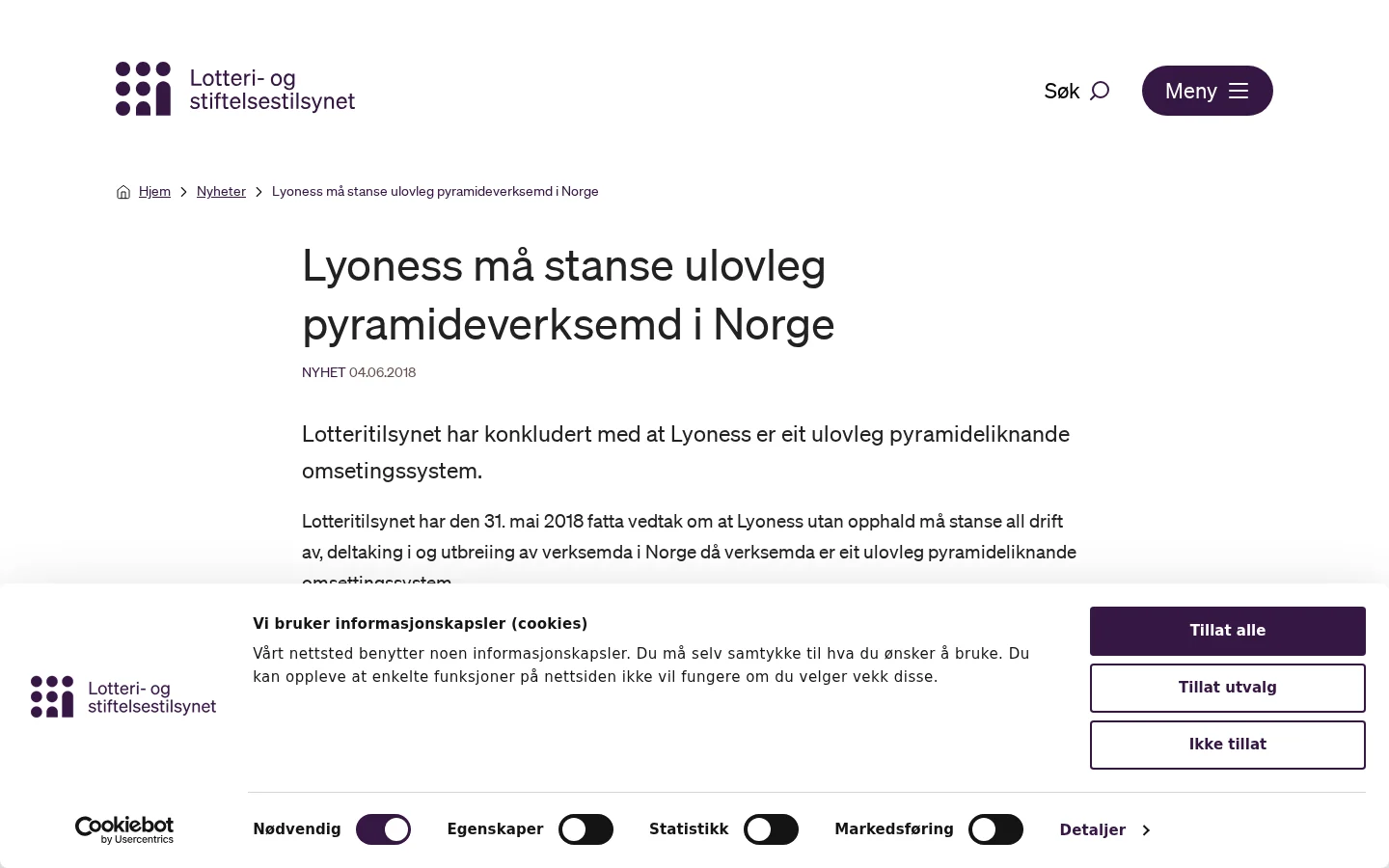
On May 31, 2018, Norway’s Lottery Authority ordered Lyoness to stop operating, recruiting and participating in the activity covered by its decision in Norway.
The authority’s announcement explained that it had classified the operation as an illegal pyramid-like turnover system. This was an administrative finding by the regulator, not just a subscriber’s opinion.
The order did not say it was illegal to redeem a discount at a Norwegian store. It addressed how Lyoness’s Norwegian operation worked as a whole.
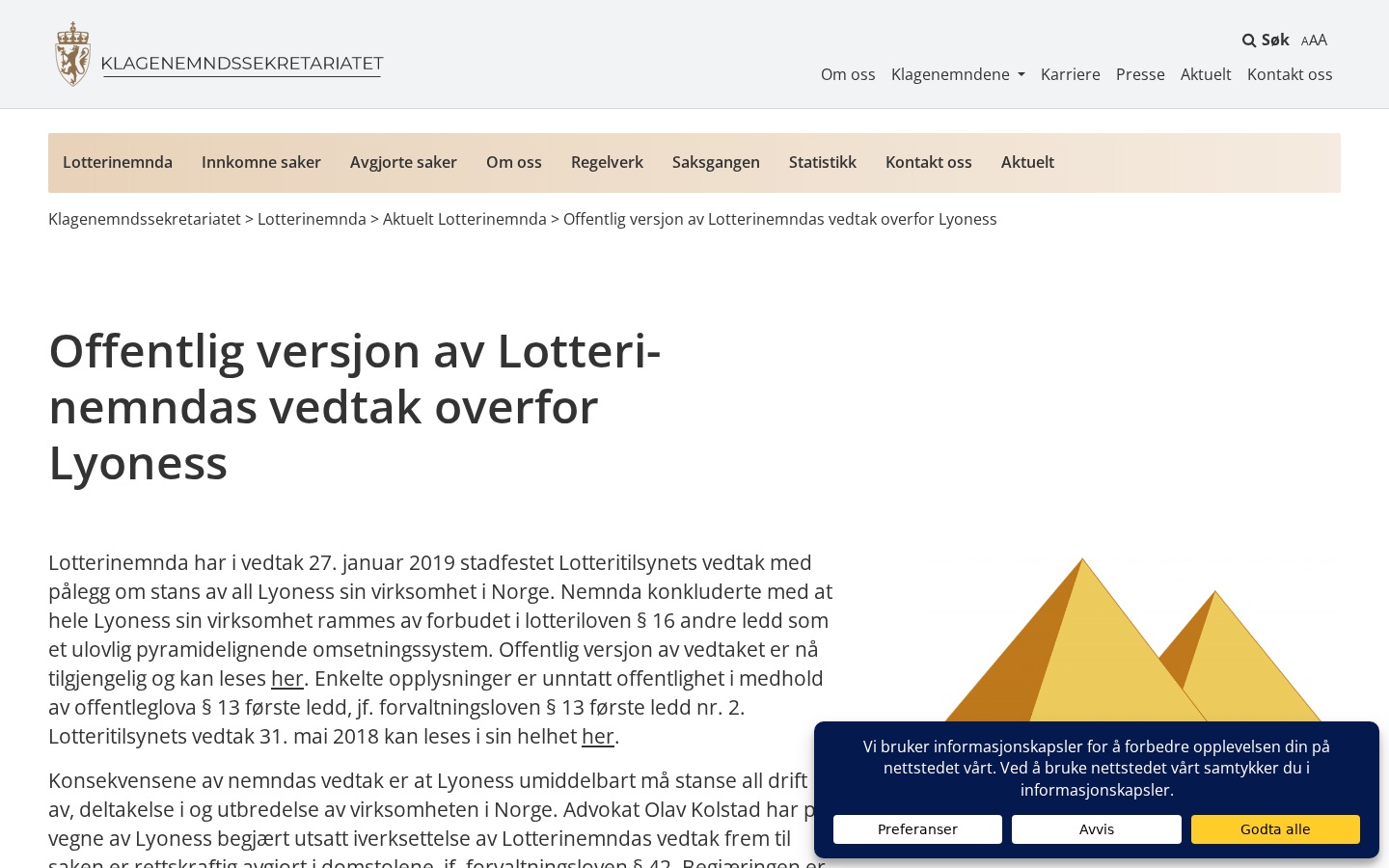
In January 2019, Norway’s Lottery Board upheld the stop order. Its public decision summary names Lyoness and identifies the Norwegian law that applied.
The names on the discount and the business opportunity
Useful records may be filed under different names. The original Norwegian action discusses Lyoness, Lyconet and Cashback World, and the published decision’s file name also includes myWorld.
Search your old messages under more than one name. But don’t assume a new business with a similar name has the same operator.
Look for the legal entity on the invoice or membership contract. The marketing label that appears at the top may not match the entity you actually paid.
For a former participant, three papers can answer different questions. Try to find all three rather than inferring the transaction from a bank descriptor alone:
- A merchant receipt: Shows what you bought at a store and what you paid the retailer.
- A program invoice or agreement: May show a payment for membership, an advance or participation rights under separate terms.
- An account statement or export: Can show rewards recorded inside an account. Compare it with separate evidence of withdrawals that actually landed.
What the Norway finding does not establish
The public ruling is about the Norwegian system under Norwegian law. It is not a single ruling on every company, promotion or cashback offer in every country.
It also does not establish whether your own purchase is refundable. Before responding to any notice about money being returned, identify the entity and country that accepted your payment.
Later coverage of related businesses can be hard to untangle. The 2018 decision and 2019 appeal identify the Norwegian operation that authorities ordered to stop.
For practical purposes, the clearest place to start is the appeals body’s page. It tells you that the stop order was upheld and links to the public version.
How the Lyoness System Worked in Norway
Step 1: An ordinary shop purchase introduces the program
Cashback is straightforward on its own. If a shopper spends money they already intended to spend, a benefit linked to that purchase can have a clear purpose.
The Norwegian decision was not based on the idea that a merchant’s entire sale was imaginary. A person may have received the goods and a discount exactly as expected.
That ordinary purchase can create trust. When the conversation moves to a paid business opportunity, it is easy to carry that trust into a different deal without inspecting the terms.
Think about the cashier who scans your receipt. That person can confirm a shop purchase happened, but cannot verify what funds income in a separate membership system.
Step 2: The opportunity adds payments outside the shop
The Norwegian authority examined payments participants made to the program, not just purchases at participating stores. Some parts of the opportunity involved advances and benefits beyond routine shopping.
The meaning of an advance depends on what you could receive for it. An invoice described as a discount product may not answer whether you could use it easily.
Look for details such as where it was redeemable and whether it expired. If you were told the value would come through future rewards, capture the explanation separately.
The difference is plain when you ask what you got on day one. A purchase you can check against goods already delivered is different from access to potential income.
Step 3: The regulator looks at where the money comes from
When the Norwegian authority looked at Lyoness, it concluded that income largely came from enrolling people rather than the sale or consumption of goods and services.
You can have genuine merchants in the picture and still have that problem. The significant question is what pays the people who are told they can earn from the system.
Consider a hypothetical group that earns small rewards on grocery purchases. If separately funded membership payments support much larger rewards, the groceries do not explain the larger payouts.
The authority was testing the system behind the offer. It was not asking whether somebody could bring in an isolated receipt or show that a single reward was paid.
If a former recruiter says they did get paid, that experience need not be false. It does not resolve whether the same source of revenue can sustain payments to everyone.
Step 4: The stop order applies to the operation, not one advertisement
Norway’s authorities did not simply ask for a misleading brochure to be rewritten. The decision reached operation, participation and expansion of the covered Norwegian activity.
The public appeals page confirms that broader scope. Treat that as the more useful reference than a post describing the action as a disagreement over one discount card.
If someone sends you a new presentation using a familiar label, find out who is making the offer now. Do not assume a new title cures the previous concerns.
Conversely, do not use the stop order to accuse an unrelated shop. A shop appearing in an old directory tells you less than the agreement governing the membership payment.
What to Do If You Paid Into Lyoness or Lyconet
- Sort the charges by what you bought. List store purchases, program fees and advances separately. Record promised income without counting it as money you paid.
- Save the original contract and terms. Record your signup country, currency, seller’s legal name and date. Keep copies of the original statements and any amendment that changed access or redemption.
- Check which rewards you actually received. Match withdrawals to bank or wallet records. Set aside any points or credits that never reached your account.
- Contact the authority for your signup country. Visit the Norwegian Lottery Authority for the Norwegian decision. If your agreement was outside Norway, ask a consumer authority in the country involved.
- Ask about your payment options promptly. A card dispute and a consumer complaint may need different evidence. Start with the dated invoice rather than an estimated loss.
- Do not pay for access to old balances. If somebody says an urgent transfer is required to unlock or migrate rewards, stop and independently check who actually sent the message.
- Keep communication outside the recruiter’s group. Ask the organization or payment provider in writing. Save what they say about the account and whether any recovery or refund route exists.
How to Read Old Cashback Records Without Mixing Up the Money
Suppose a person bought dinner from a participating restaurant and received a reward. The amount of the meal is not automatically money paid into a recruitment-based program.
Now suppose that person made a separate payment to acquire a larger future earnings opportunity. The second charge needs its own date, receipt and explanation of what was promised.
Start a timeline with transfers out of your account, then add returns actually received. Put internal credits beside them rather than adding them into the same bank balance.
One account can include rewards from different sources. When you cannot tell whether a reward came from shopping, a recruit or a promotion, write that down as unknown.
Keep the date and currency beside any amount you copy. Do not silently turn points into cash unless the agreement and a real redemption show how they converted.
Those details make a complaint more useful than one screenshot of a big figure. They also help you notice if a purported recovery service has copied only public details.
Verify names against paperwork, not the date an email arrived. A recruiter can forward an old announcement, so the message date does not necessarily date the rights it describes.
For people helping a parent or friend, ask what they thought they were buying at the time. That answer may differ from what a membership description says after the fact.
Do not ask them to erase group chats to stop the messages. Muting the group first gives you a chance to export the conversation without destroying potential evidence.
If you never paid to participate, say so when you ask for help. Don’t count ordinary spending as missing money because the store belonged to the program.
What the later audit coverage tells you
In November 2026, Norwegian financial supervisor Finanstilsynet published an inspection notice about Stiansen & Co, an audit firm. Reporting connected the inspection to a Lyoness-related assignment.
The public inspection material anonymizes the client assignments it discusses. It does not independently identify Lyoness as the client behind a particular anonymized finding.
That is why the named lottery decision carries more weight here. The audit notice is not a new Norway-wide stop order and is not a ruling on shoppers’ claims.
Seeing an accountant or auditor referenced in a presentation is no shortcut to verifying where benefits came from. Ask for the specific report and what activity it actually covers.
Follow the terms that applied when you paid
A printed brochure and the member portal can describe the same deal differently. Try to keep whatever was given to you before you paid, including a dated compensation schedule.
If you were offered a voucher, keep the catalog or shop restrictions that came with it. A list of participating stores does not establish that your particular voucher worked there.
Write down whether you ever tried to redeem it and what happened. A rejection notice is more useful evidence than an assumption about why the voucher could not be used.
Then compare what you were told about exit rights with the written terms. If a sponsor said you could leave anytime, keep that message even if the agreement says otherwise.
Organize the files by seller rather than by branding. Two agreements with different companies can display a related logo without giving you the same refund rights or address for service.
When an old sales contact resurfaces
Someone you knew years ago may honestly believe they can restore access. Treat their message as something to check, not a reason to send money.
Ask who is making the offer and where it was announced. If they name a regulator or court, check its website for that reference.
Make a note if the entity in the new message is not the one in your agreement. Before you contact anyone, save the message showing that difference.
Do not treat a balance imported into a new dashboard as evidence that the old funds moved. An operator can display a number without proving that the money is available.
If you are asked for identity documents, confirm who has authority to receive them and why. Do not send sensitive records through a recruiter’s private chat for convenience.
Report a fresh payment request separately from an old membership dispute. The new contact, destination and timestamp may be the most actionable parts of the information you have.
Frequently Asked Questions
Did Norway really call Lyoness a pyramid-like system?
The Norwegian Lottery Authority classified the covered Norwegian operation that way. The appeals body upheld the stop order in its January 2019 decision.
Did the decision ban all cashback programs?
The decision was about Lyoness’s Norwegian business and how it generated income. It was not a ban on ordinary loyalty points, retailer discounts or purchase rebates.
Why does Lyconet appear in the Lyoness paperwork?
The Norwegian materials describe related parts and labels of the operation. Use the legal name and jurisdiction on your particular contract before taking payment or complaint advice.
Can a confirmed shop purchase prove a program was safe?
It can prove that you bought something at a shop. It cannot show whether you should have trusted an earnings forecast or how membership rewards were funded.
Does the stop order confirm I have a refund?
The public order does not establish that an individual payment is refundable. Verify any refund route through the relevant authority or payment provider before sharing private information.
Does the Norway ruling decide whether a new offer abroad is legal?
The Norwegian decision cannot answer that question. Check who operates the new offer, the local regulator and whether the income terms match the activity described in the old decision.
The Bottom Line
Do not pay to join or top up an offer that repeats the Lyoness earnings model stopped in Norway. A working discount at a shop does not make it safe.
If you paid in, sort the charges by what you bought and who received them. Use the official decision and your own payment records when asking what you can recover.

Join the discussion
0 commentsShare your experience or ask a question about this article.
Community experiences
Did this happen to you?
Your experience could help someone recognize the same scam. Submit a private report for our team to review.
I experienced this tooReports are reviewed before publication. Sharing publicly is always your choice.
Discussion
Start the conversation
Have a question or something useful to share? Add the first comment.