

A last warning says your email access has expired and the mailbox is overdue for a system update. There are 46 hours left before suspension, and one button appears to fix everything.
The Mail Account System Update email scam turns that countdown into a stolen password. Its fake cPanel Webmail page is hosted on legitimate cloud infrastructure, a detail meant to make an unauthorized login form feel less suspicious.
Overview
The notice invents an overdue mailbox update
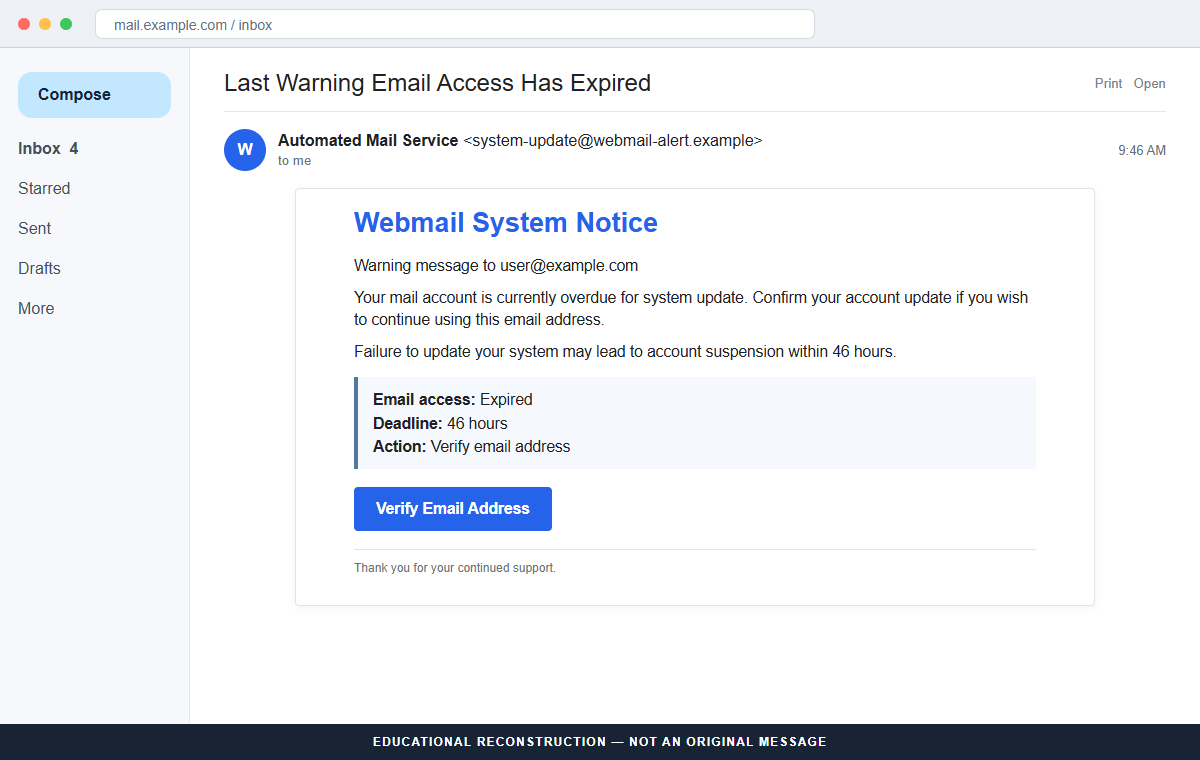
The subject says “Last Warning Email Access Has Expired.” The body claims the recipient's mail account is overdue for a system update and must be confirmed to preserve access.
Email providers update server software without asking each user to validate the process through an unsolicited password link. A legitimate administrator may announce maintenance, but should not need the current mailbox credential on an outside page.
A 46-hour deadline makes verification feel routine
The message warns that failure to update may lead to account suspension within 46 hours. The unusual number suggests a precise automated deadline even though the notice does not identify the governing policy or administrator.
A Verify Email Address button controls the proposed solution. The recipient is not told to open an established webmail portal, contact a known help desk, or review the change in account settings.
The fake cPanel form sits on Firebase Storage
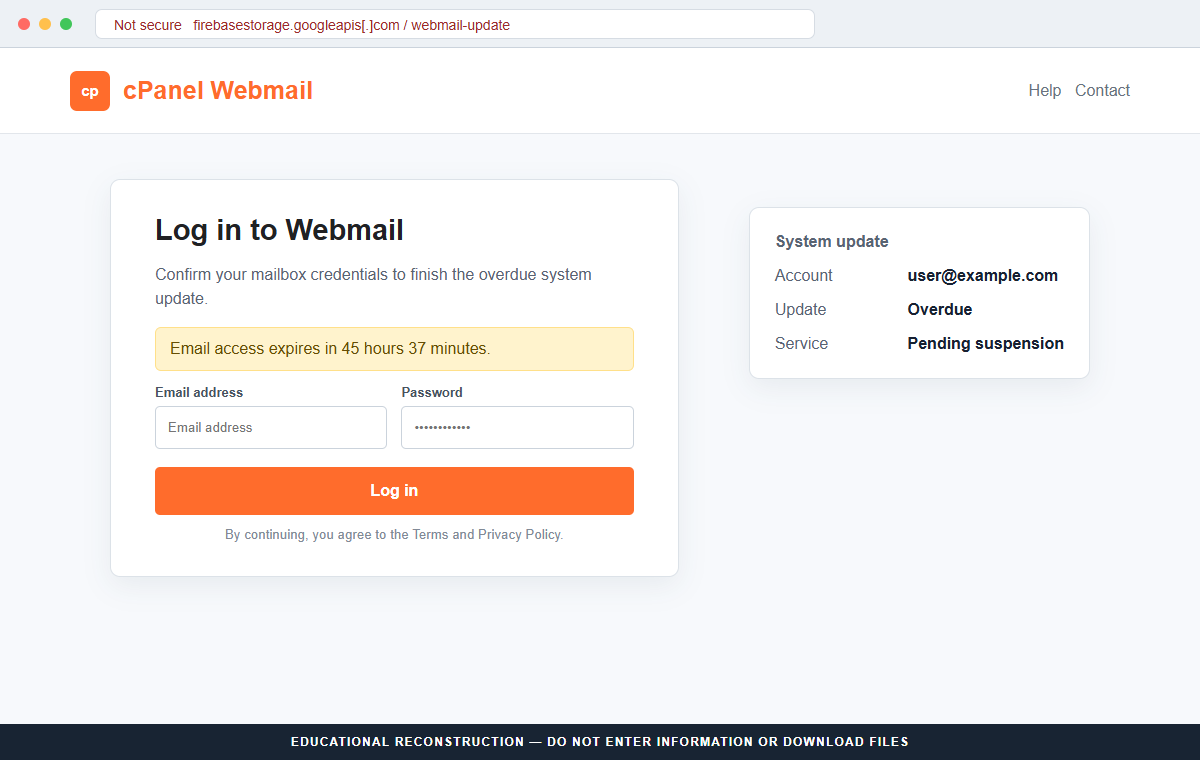
The button leads to a page styled like cPanel Webmail and asks for an email address and password. Analysis found the fraudulent page on Google's Firebase Storage infrastructure.
Firebase Storage is a legitimate service used to host application files. Criminal use of one hosted object does not implicate Google, Firebase, or cPanel, and the hosting name does not establish ownership of the victim's mailbox.
- The subject claims email access has already expired.
- The body says a system update is overdue instead.
- A 46-hour countdown threatens account suspension.
- The sender does not clearly identify the mailbox provider.
- The link loads a cPanel Webmail-style password form.
- The page is hosted on Firebase Storage rather than the recipient's mail domain.
- Captured credentials can expose email and linked services.
Why a Legitimate Cloud Address Can Lower Suspicion
People are often taught to avoid obviously strange domains. Attackers respond by placing phishing content on reputable cloud, form, file-sharing, and application-hosting services that users already encounter at work.
A familiar provider in the address bar can be reassuring, but it identifies the hosting platform, not the organization that created the page. Cloud customers control their own objects and can upload deceptive content until it is detected and removed.
cPanel branding adds another layer of plausibility. Many hosting companies use cPanel or similar webmail tools, so a user with a custom domain may recognize the name without remembering the correct login address.
The 46-hour figure makes the warning look calculated. In reality, a precise timer can be printed in static text or generated by a script with no connection to an email server.
The safe reference is the portal previously supplied by the employer, school, host, or internet provider. An unexpected notice should not redefine where that mailbox accepts its password.
What the Destination Proves and What It Does Not
Review of the campaign identified it as credential phishing. The fake cPanel Webmail page collected email addresses and passwords and had no legitimate relationship with the targeted accounts.
The page's use of Firebase Storage proves only that content was hosted through Google's service. It does not show that Google, Firebase, cPanel, or the victim's email administrator approved the form.
Google advises users not to enter passwords after following message links and to navigate directly to the service instead. The FTC gives the same independent-verification advice for unexpected account warnings.
A genuine cPanel installation normally belongs to a specific hosting account and domain. Users should reach it from the host's customer panel, a saved bookmark, or instructions supplied by the known administrator.
The sender, destination, deadline, and branding can rotate. The campaign remains recognizable when an unsolicited system-update warning directs a mailbox password to infrastructure outside the real provider.
How the Mail Account System Update Email Scam Works
Step 1: A last-warning subject creates a missed-deadline feeling
The message arrives as though earlier notices were ignored. Calling it the last warning makes the recipient search memory for an update they might have overlooked.
No evidence of those earlier notices is required. The phrase is a pressure device that turns a new message into the final stage of an invented process.
Step 2: Expired access becomes an overdue update
The subject says access expired, while the body says the account is overdue for a system update. The two ideas are close enough to feel related but remain technically vague.
A real notice should explain whether the issue is password expiry, storage, licensing, policy, server maintenance, or account inactivity. Each has a different official remedy.
Step 3: A 46-hour clock discourages help-desk verification
The recipient is warned that the mailbox may be suspended within 46 hours. The deadline invites immediate action while making a normal support response feel too slow.
An administrator can confirm a genuine change without asking the user to reveal a password. Contact information should come from a known directory, not the warning.
Step 4: The button opens a cloud-hosted counterfeit
The Verify Email Address button points to Firebase Storage rather than the mailbox provider. The page can be responsive, encrypted, and professionally styled because ordinary web tools are available to criminals too.
HTTPS protects data in transit to that hosted object. It does not guarantee that the recipient intended to send a password to the object owner.
Step 5: cPanel branding fits many custom-domain users
The fake page displays cPanel Webmail and asks for the full email address. That generic combination can target many hosting customers without knowing which provider manages each domain.
The page may prefill the address from the link. Prefilling is a URL feature, not proof that the site looked up a real account.
Step 6: An error prompt improves the stolen credential
After submission, the site can claim that the password is incorrect or the update failed. A second entry may correct a typing error or reveal another password used by the victim.
The criminal can test credentials against webmail, hosting panels, file transfer, and other services connected with the domain.
Step 7: A compromised mailbox supports domain-level fraud
For a business or custom domain, inbox access may reveal invoices, website administration messages, hosting notices, customer requests, and password-reset links. Attackers can impersonate a trusted employee or supplier.
If hosting credentials are reused, the risk can extend to website changes and additional phishing pages. Recovery should therefore involve the email administrator and hosting provider.
Company and Checkout Checks
Identify the organization that actually hosts the email
Look at prior account records, the hosting invoice, IT documentation, or the administrator who created the mailbox. A generic automated sender cannot establish that identity.
Personal users should verify through their provider. Business users should contact the internal help desk or domain host through known details.
Separate the cloud platform from the page owner
A firebase storage URL identifies infrastructure supplied by Google, not the customer who uploaded one file. The same distinction applies to forms, site builders, code hosts, and document-sharing services.
Report the abusive URL to the platform, but do not describe the platform itself as the scam operator without evidence.
Use the established webmail and hosting portals
Open the normal webmail bookmark or hosting dashboard and look for a matching update. Review account notices, storage, sessions, forwarding, and password policy there.
If the account works and no administrator confirms the deadline, the external verification page has no authority to suspend it.
A cPanel logo does not establish a cPanel session
Logos and form styles can be copied from public pages. The important checks are the host's official domain, certificate context, expected login route, and whether the account owner initiated the session.
Never use the same credential on a page reached from a countdown message simply because its interface looks familiar.
Warning Signs to Check Before You Act
- A last warning arrives without any earlier verifiable notice.
- The subject says access expired while the body says an update is overdue.
- The provider or administrator is not clearly identified.
- An unusual 46-hour deadline threatens suspension.
- The verification button leaves the normal webmail domain.
- A cPanel login appears on Firebase Storage or another cloud host.
- The form requests the current mailbox password.
- The email provides no official policy or support case.
- A failed sign-in asks for another credential submission.
- No matching notice exists in the established hosting portal.
Cloud hosting and cPanel styling do not solve the ownership problem. If the page is not the established login for the specific mailbox or hosting provider, do not give it the password, regardless of the countdown.
A genuine provider can display pending maintenance inside the authenticated account, so an outside password form is never needed to complete an update.
What to Do if You Have Fallen Victim to This Scam
- Reset the mailbox password through the real provider. Use the established webmail or hosting dashboard from a clean device. Set a unique password and update any reused credential on other email, hosting, file-transfer, or customer-management services.
- Ask the administrator to revoke active sessions. Business and hosted-email users should contact IT or the hosting company. Revoke webmail sessions, app passwords, API tokens, mobile-client access, and connections that remain active after the password change.
- Enable multi-factor authentication where supported. Use a passkey, security key, or authenticator application. Remove unfamiliar recovery addresses, telephone numbers, devices, and authentication methods added during the compromise window.
- Check forwarding, filters, and domain settings. Inspect mailbox rules, delegates, forwarding addresses, autoresponders, filters, catch-all behavior, and account recovery. Domain administrators should also review new mailboxes and changed routing records.
- Review hosting and website access. If the password was reused, change credentials for cPanel, file transfer, content management, domain registration, and backups. Look for unexpected files, administrator accounts, redirects, and DNS changes.
- Run a device scan when downloads occurred. Use Malwarebytes or another trusted security scanner if the page delivered a file, extension, or remote-access application. Update the system and browser before restoring normal work.
- Block known phishing infrastructure as an extra layer. AdGuard or another reputable DNS and content blocker may stop known campaign domains and malicious advertisements. Platform-hosted pages rotate quickly, so blocking cannot replace direct verification.
- Report the page to the email provider and cloud platform. Mark the email as phishing and send the abusive URL to the hosting service's reporting channel. Notify the workplace security team so it can search for other recipients and related logins.
- Check connected accounts and financial activity. Review password resets, invoices, online purchases, payment changes, and messages sent from the mailbox. Contact banks or merchants promptly if the attacker used email access to authorize transactions.
- Warn colleagues, clients, and suppliers when necessary. If the account sent messages, tell recipients through another channel. Require independent confirmation for new bank details, urgent invoices, shared documents, and login links until the incident is contained.
Is Your Device Infected? Run a Free Malware Scan
Slow performance, constant pop-ups, or strange behavior? These are classic signs of a malware infection. The fastest way to find out is to scan your device with Malwarebytes Free — one of the most trusted malware removal tools available.
The free version detects and removes the most common threats, including:
- Adware — the cause of those annoying pop-ups
- Browser hijackers — unwanted redirects and changed homepages
- Trojans and spyware — hidden programs stealing your data
- Potentially unwanted programs (PUPs) — software you never asked for
👉 Select your device below — Windows, Mac, or Android — then follow the simple steps to download Malwarebytes, scan your system, and remove any threats it finds. The scan usually takes 5 to 20 minutes.
Run a Malware Scan with Malwarebytes for Windows
Malwarebytes is one of the most popular and trusted anti-malware tools for Windows — and it’s completely free for removing infections. It catches threats that many antivirus programs miss, including adware, browser hijackers, and trojans. Follow the steps below to scan and clean your PC in just a few minutes.
Download Malwarebytes
Click the button below to download the latest version of Malwarebytes for Windows from the official source. The free version is all you need — it will scan your computer and remove adware, browser hijackers, and other malicious software at no cost.
Download MalwarebytesOfficial installer for Windows 11 and 10. Your download starts right away.Want real-time protection? See Malwarebytes Premium Malwarebytes Free for WindowsScans and removes malware at no cost
-
Install Malwarebytes
When the download finishes, open your Downloads folder and double-click the MBSetup file. If Windows shows a User Account Control pop-up, click “Yes” to allow the installation.
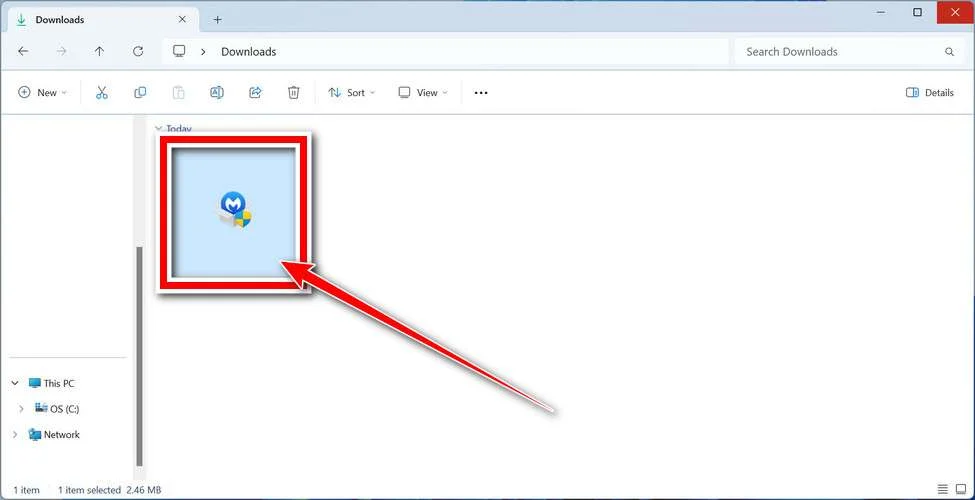
Follow the On-Screen Prompts to Install Malwarebytes
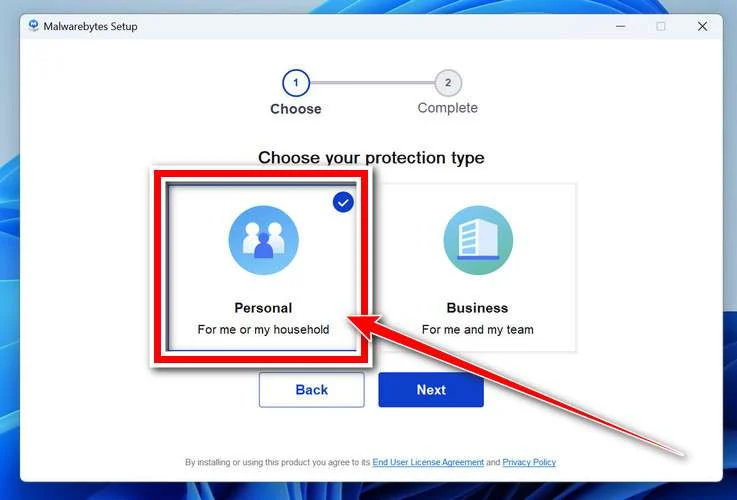
The setup wizard will walk you through a few quick screens:
-
Choose where you’re installing the program — “Personal Computer” or “Work Computer” — then click Next.
-
Malwarebytes will now install on your device. This usually takes under a minute.

-
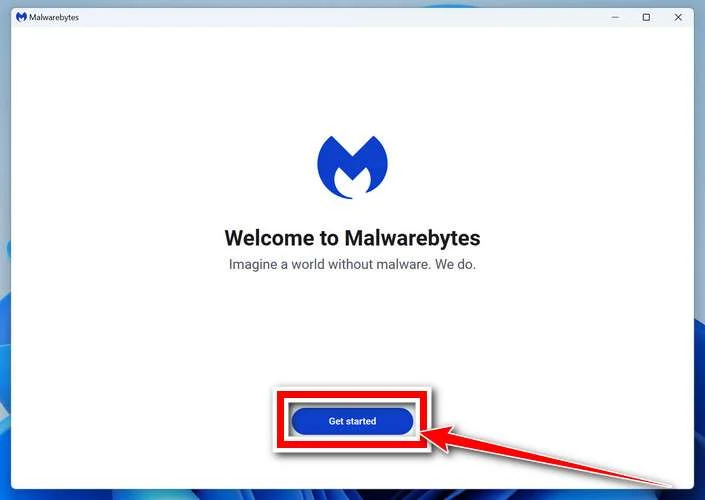
When installation is complete, the “Welcome to Malwarebytes” screen will open automatically.
-
On the final screen, click Open Malwarebytes to launch the program.

-
Enable “Scan for Rootkits”
Before scanning, turn on rootkit detection so Malwarebytes can find even the most hidden threats. Click the Settings gear icon on the left side of the screen.
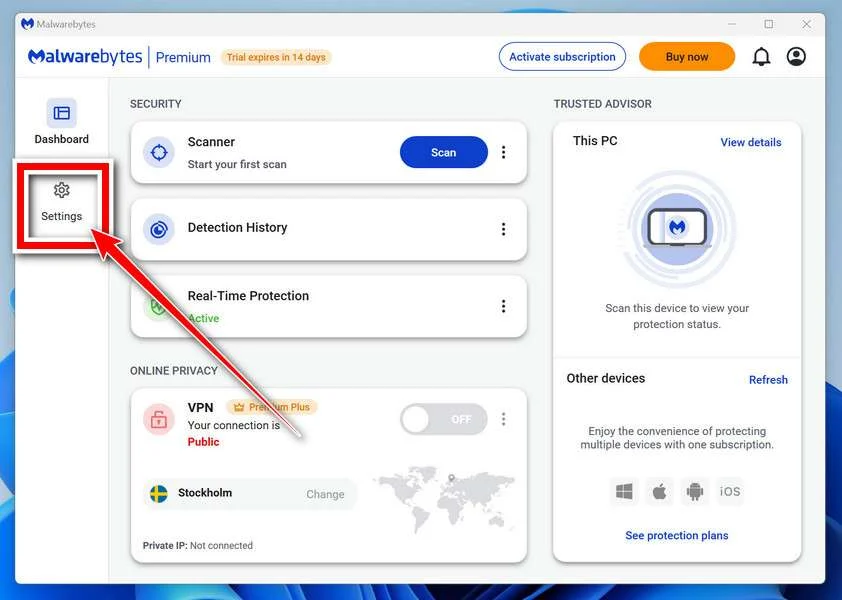
In the settings menu, find “Scan for rootkits” and click the toggle so it turns blue.

Done? Click “Dashboard” in the left pane to return to the main screen.
Start the Scan
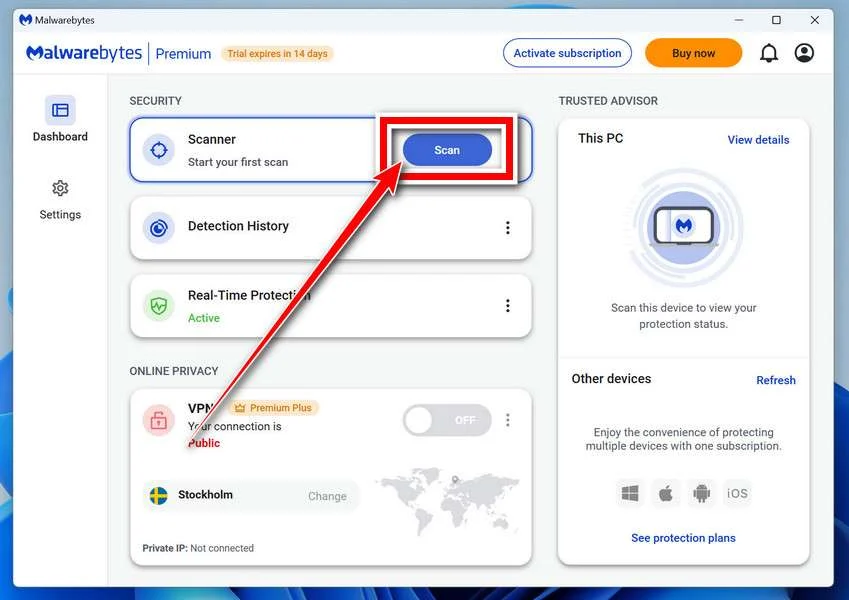
Click the blue Scan button. Malwarebytes will automatically update its virus database and start checking your computer for malware.
-
Wait for the Scan to Finish
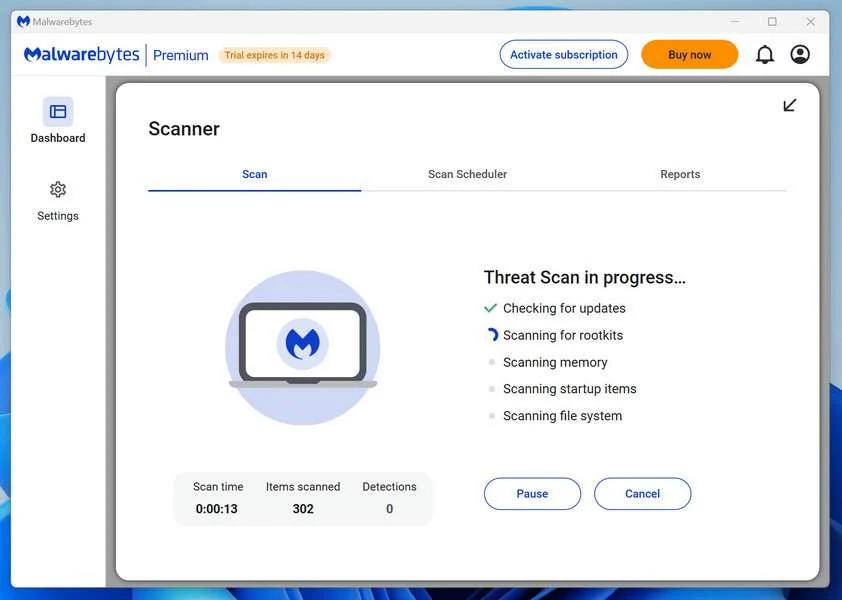
The scan checks your entire system for browser hijackers and other malicious programs, so it can take 5 to 20 minutes depending on your computer. Feel free to do something else — just check back occasionally to see the progress.
-
Quarantine the Detected Threats
When the scan is done, you’ll see a list of everything Malwarebytes found — malware, adware, and potentially unwanted programs. Click the “Quarantine” button to remove all of them at once.
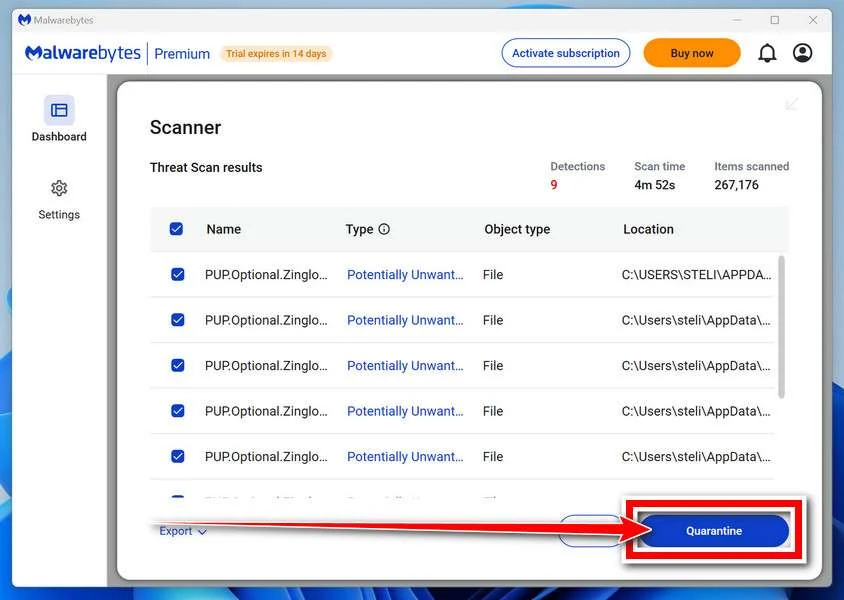
Malwarebytes will now remove the malicious files and registry entries and move them safely into quarantine.
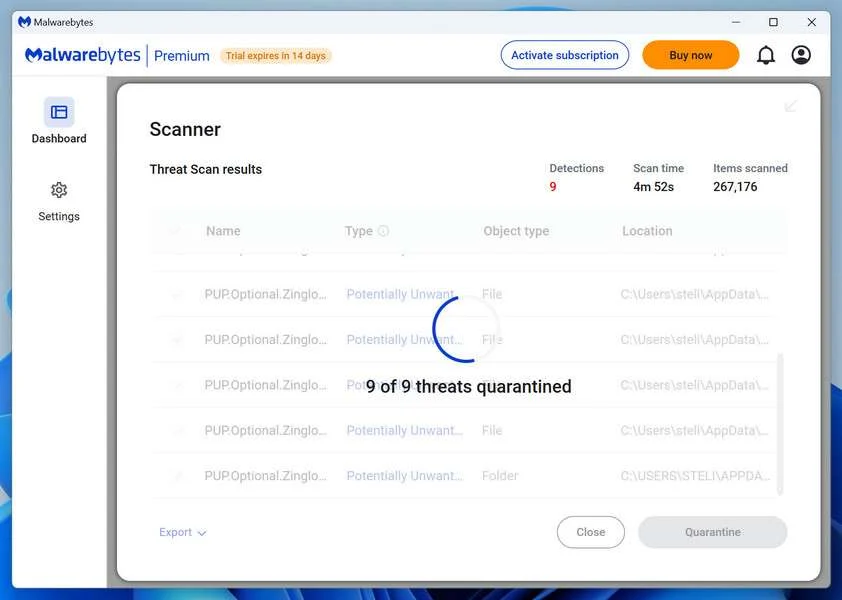
-
Restart Your Computer
Some threats can only be fully removed after a reboot. If Malwarebytes asks you to restart, click Yes. Once you’re logged back in, Malwarebytes has finished removing the threats it found.
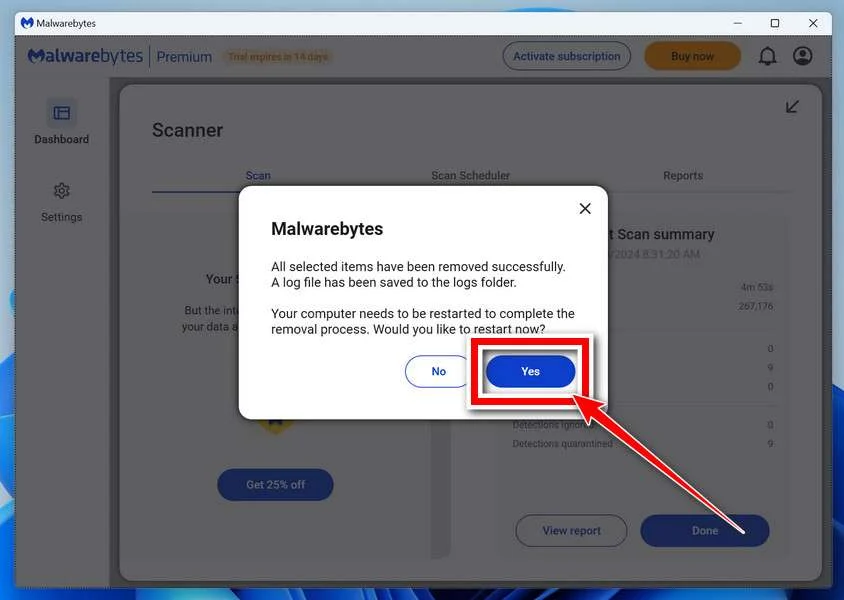
That’s it — your Windows PC is now clean of trojans, adware, and other malware, and should be back to running smoothly.
If you are still having problems with your computer after completing these instructions, then please follow one of the steps:
- Run a computer scan with ESET Online Scanner
- Ask for help in our Windows Malware Removal Help & Support forum.
Run a Malware Scan with Malwarebytes for Mac
Malwarebytes for Mac is a free on-demand scanner that removes the malware other security software tends to miss — adware, browser hijackers, and unwanted programs included. Cleaning an infected Mac with Malwarebytes has always been completely free, and it’s our go-to recommendation. Follow the steps below to scan and clean your Mac in just a few minutes.
-
Download Malwarebytes for Mac
Click the button below to download the latest version of Malwarebytes for Mac.
Download MalwarebytesOfficial installer for macOS. Your download starts right away.Want real-time protection? See Malwarebytes PremiumMalwarebytes Free for MacScans and removes malware at no cost -
Open the Malwarebytes setup file
When the download finishes, open your Downloads folder and double-click the setup file to begin the installation.
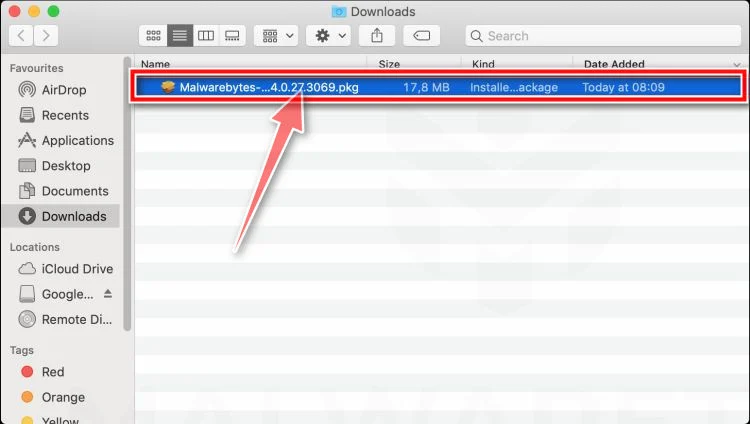
-
Follow the On-Screen Prompts to Install Malwarebytes
The Malwarebytes for Mac Installer will guide you through a few quick screens. Click “Continue” and keep following the prompts until the installation completes.
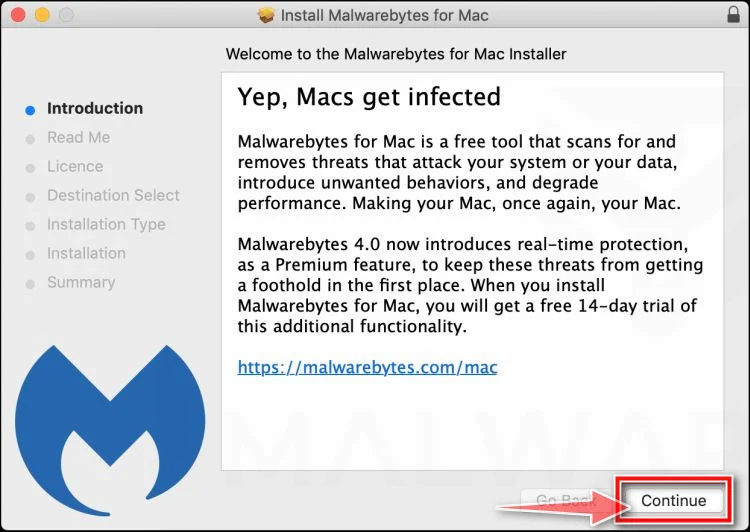
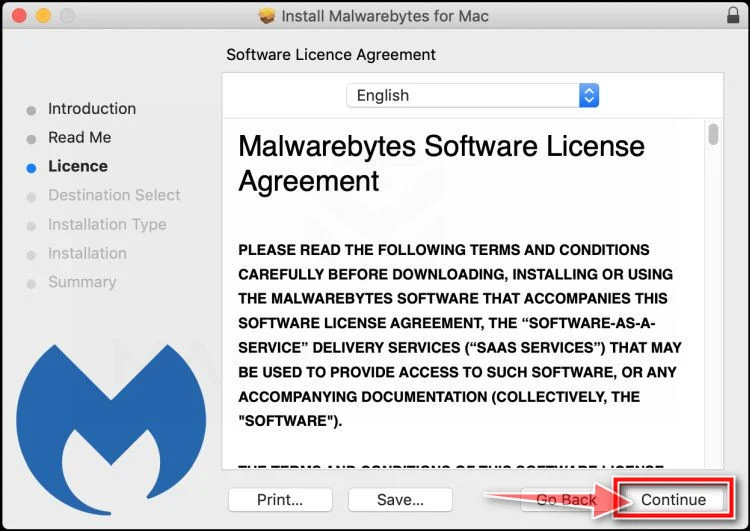
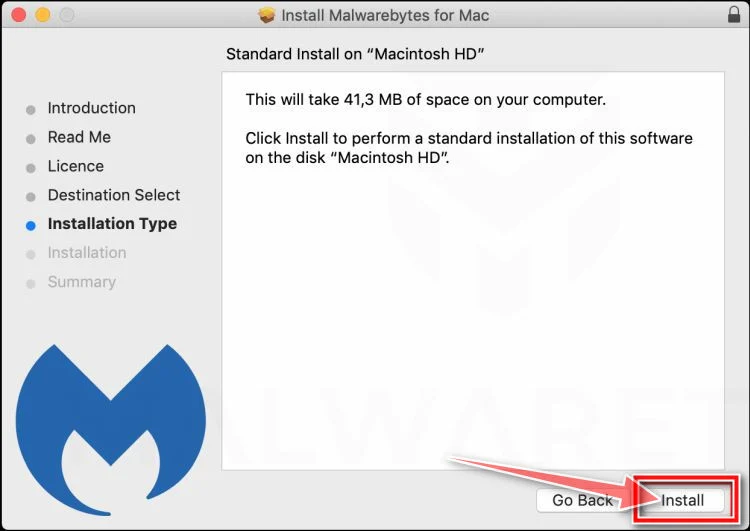
When the installation is complete, Malwarebytes opens to the Welcome to Malwarebytes screen. Click “Get started“.
-
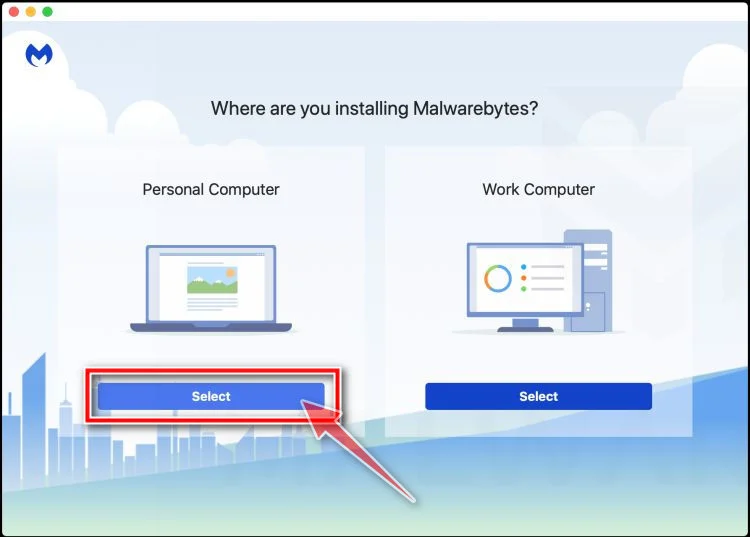
Select “Personal Computer” or “Work Computer”
Malwarebytes will ask what type of computer you’re installing it on. Click either Personal Computer or Work Computer, whichever applies.
-
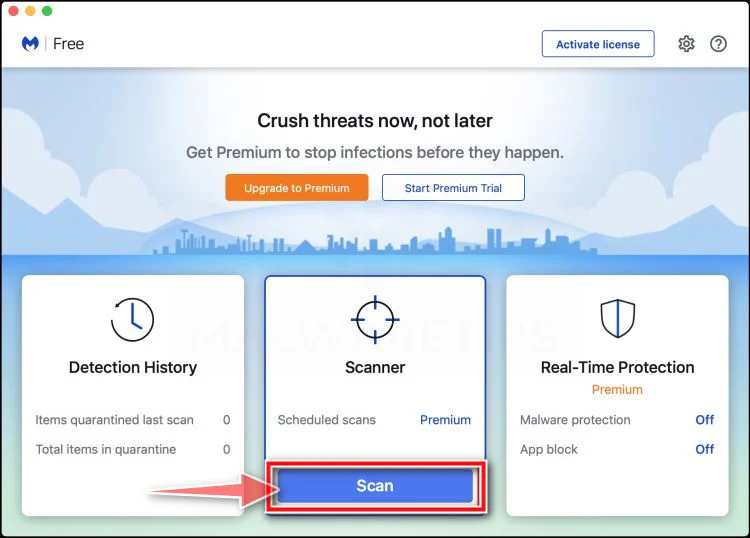
Start the Scan
Click the “Scan” button. Malwarebytes will automatically update its detection database and begin checking your Mac for malware.
-
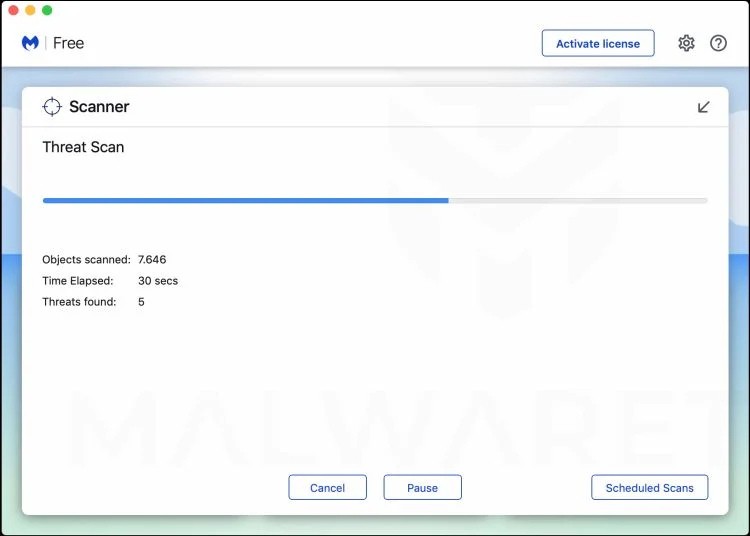
Wait for the Scan to Finish
Malwarebytes will scan your Mac for adware, browser hijackers, and other malicious programs. This can take a few minutes, so feel free to do something else — just check back occasionally to see the progress.
-
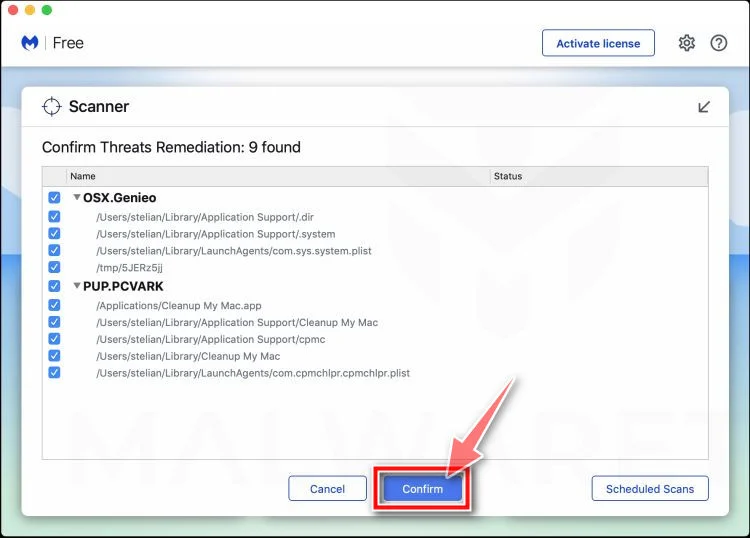
Quarantine the Detected Threats
When the scan is done, you’ll see a list of everything Malwarebytes found. Click the “Quarantine” button to remove all the threats at once.
-
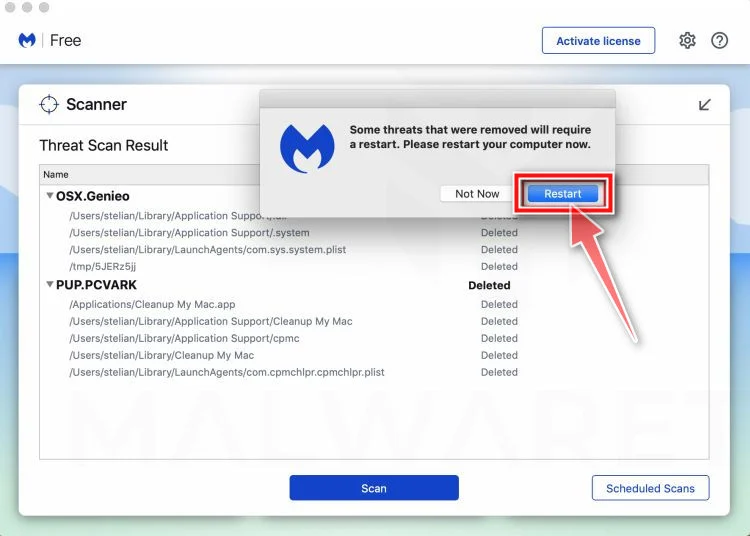
Restart Your Mac
Malwarebytes will now remove all the malicious files it found. Some threats can only be fully removed after a reboot — if Malwarebytes asks you to restart, allow it. Once you’re logged back in, your Mac is clean.
That’s it — your Mac is now free of adware, rogue browser extensions, and other potentially harmful software.
If you are still experiencing problems while trying to remove a malicious program from your computer, please ask for help in our Mac Malware Removal Help & Support forum.
Run a Malware Scan with Malwarebytes for Android
Malwarebytes for Android automatically detects and removes dangerous threats like malware and ransomware so you don’t have to worry about your most-used device being compromised. Aggressive detection of adware and potentially unwanted programs keeps your Android phone or tablet running smooth.
-
Download Malwarebytes for Android.
You can download Malwarebytes for Android by clicking the link below.
Get Malwarebytes for AndroidOpens Google Play in a new tab.Want real-time protection? See Malwarebytes Premium for AndroidMalwarebytes for AndroidScans your phone and removes malware at no cost -
Install Malwarebytes for Android on your phone.
In the Google Play Store, tap “Install” to install Malwarebytes for Android on your device.

When the installation process has finished, tap “Open” to begin using Malwarebytes for Android. You can also open Malwarebytes by tapping on its icon in your phone menu or home screen.

-
Follow the on-screen prompts to complete the setup process
When Malwarebytes will open, you will see the Malwarebytes Setup Wizard which will guide you through a series of permissions and other setup options.
This is the first of two screens that explain the difference between the Premium and Free versions. Swipe this screen to continue.
Tap on “Got it” to proceed to the next step.
Malwarebytes for Android will now ask for a set of permissions that are required to scan your device and protect it from malware. Tap on “Give permission” to continue.
Tap on “Allow” to permit Malwarebytes to access the files on your phone.
-
Update database and run a scan with Malwarebytes for Android
You will now be prompted to update the Malwarebytes database and run a full system scan.

Click on “Update database” to update the Malwarebytes for Android definitions to the latest version, then click on “Run full scan” to perform a system scan.

-
Wait for the Malwarebytes scan to complete.
Malwarebytes will now start scanning your phone for adware and other malicious apps. This process can take a few minutes, so we suggest you do something else and periodically check on the status of the scan to see when it is finished.

-
Click on “Remove Selected”.
When the scan has been completed, you will be presented with a screen showing the malware infections that Malwarebytes for Android has detected. To remove the malicious apps that Malwarebytes has found, tap on the “Remove Selected” button.

-
Restart your phone.
Malwarebytes for Android will now remove all the malicious apps that it has found. To complete the malware removal process, Malwarebytes may ask you to restart your device.
That’s it — your Android phone is now clean — no more malicious apps, adware, or browser redirects.
If you are still having problems with your phone after completing these instructions, then please follow one of the steps:
- Restore your phone to factory settings by going to Settings > General management > Reset > Factory data reset.
- Ask for help in our Mobile Malware Removal Help & Support forum.
Stay Protected: Block Ads and Malicious Sites
Now that your device is clean, keep it that way. Most infections start with a malicious ad or a fake download button — so blocking them at the source is your best defense.
We recommend AdGuard, which blocks malicious ads, phishing pages, and dangerous redirects before they can reach you.
👉 Download AdGuard and browse safely
Frequently Asked Questions
Is the Mail Account System Update email real?
No. The analyzed message leads to a fake cPanel Webmail login and is designed to steal email credentials.
Do email accounts require a manual system update?
Providers maintain their systems without collecting each user's current password through an unsolicited outside link. Verify any policy in the known account portal.
Is Firebase Storage a malicious service?
No. It is a legitimate Google hosting service that can be abused by individual customers. Its name does not authenticate content uploaded there.
Why does the email use a 46-hour deadline?
The precise number creates urgency and the appearance of an automated system. It has no authority unless the real provider confirms the same deadline independently.
What if I opened the page but did not enter anything?
Close it, report the email, and inspect downloads. If no credential or file was submitted, the immediate account-takeover risk is lower.
Can a stolen webmail password affect my website?
Yes, especially if passwords are reused or hosting notices arrive in that inbox. Secure cPanel, domain, file-transfer, and content-management access as well.
The Bottom Line
The Mail Account System Update email scam uses a 46-hour suspension warning to send users away from their established mailbox portal. Its cPanel branding is a costume, and Firebase Storage is merely the infrastructure hosting the fake form.
Verify updates through the actual email administrator, hosting dashboard, or provider account. No outside page should receive a mailbox password because an unsolicited message says a system deadline is approaching.
If credentials were submitted, involve the administrator quickly. Revoke sessions, audit forwarding and domain settings, secure hosting access, and warn anyone who may receive believable messages from the compromised inbox.

Join the discussion
0 commentsShare your experience or ask a question about this article.
Discussion
Start the conversation
Have a question or something useful to share? Add the first comment.