Your inbox flashes a warning: “Mailbox Usage Warning — your mailbox is almost full!” A red bar shows you’re just under the limit. A bold button urges you to take immediate action via “Storage Management.”
It feels urgent. It looks professional. But it’s a scam.
This seemingly harmless alert is actually a phishing email designed to steal your login credentials. Here’s a complete breakdown of how this scam works, why it’s dangerous, and how to protect yourself.
Scam Overview
The Mailbox Usage Warning scam is a phishing attack disguised as a routine storage notification. The email mimics a legitimate message from your email provider or system administrator. It alerts you that your mailbox storage is almost full, typically showing specific numbers such as “4.90 GB used of 5.00 GB limit.”
The message creates a false sense of urgency, claiming you will soon be unable to send or receive emails unless action is taken. It includes a call-to-action button, usually labeled “Storage Management” or “Manage Storage.”
The email uses professional formatting, an official-sounding subject line (e.g., “You will stop to send or receive messages shortly”), and includes your email address to enhance credibility. It may even include unsubscribe and preferences links to make it look legitimate.
But the danger lies in the link.
Clicking the button redirects you to a fake website that closely resembles a Gmail or Outlook login page. This spoofed page asks for your email address and password. The moment you input these credentials, they are sent directly to the scammers.
What Happens Next?
Once scammers gain access to your email account, the damage can escalate quickly:
Email Account Takeover: They can lock you out by changing your password.
Sensitive Data Theft: Scammers browse your emails for banking info, tax records, ID photos, or anything valuable.
Further Phishing: They may use your account to send scam emails to your contacts, which appear trustworthy coming from you.
Access to Other Accounts: Many people use email for account recovery. Scammers can reset passwords to banking, social media, or cloud storage accounts.
The risk extends beyond a single breach. Access to your email can expose your entire digital identity.
This phishing tactic preys on the fact that storage warnings are common. Most users won’t think twice about such a notification. The email’s urgent tone pressures the recipient to act fast—before considering if the message is real.
Cybercriminals constantly update the appearance of these emails to bypass spam filters and fool even cautious users. That makes awareness the most critical defense.
Next, let’s examine exactly how this scam works, from the moment it lands in your inbox to full account compromise.
How the Scam Works
Step 1: The Phishing Email Arrives
The scam begins with an email that looks like it’s from your email provider or system administrator. It’s typically titled something urgent, such as:
“Mailbox Usage Warning”
“Your Email Storage is Almost Full”
“You Will Stop to Send or Receive Messages Shortly”
The body of the email contains:
A greeting using your email address or display name
A progress bar showing near-full storage (e.g., 4.90 GB of 5.00 GB)
A large red button labeled “Storage Management”
Footer text mentioning your mailbox address and links like “Unsubscribe” or “Manage Preferences”
This setup is designed to look legitimate and provoke immediate concern.
Step 2: The User Clicks the Button
If you click the “Storage Management” button, you are redirected to a fake login page. These pages are expertly designed to look like the login screen of Gmail, Outlook, Yahoo Mail, or your workplace provider.
These pages will ask you to log in, citing the need to verify your identity before managing storage.
Step 3: Login Credentials Are Harvested
Once you enter your email address and password, they are immediately sent to the scammer’s server. You may be redirected to a real inbox login page afterward, or shown an error message to minimize suspicion.
The scammer now has full access to your email account.
Step 4: Email Account Exploitation Begins
Within minutes, scammers can:
Browse your inbox for passwords, documents, and sensitive content
Download attachments or stored files
Change account settings and recovery information
Send phishing emails to your contacts, pretending to be you
Reset passwords for other connected services (banks, cloud accounts, social platforms)
Step 5: Account Lockout or Continued Exploitation
In some cases, scammers change your password to lock you out completely. In others, they leave the account accessible while silently monitoring and extracting information.
The longer they maintain access, the more damage they can do.
What to Do If You’ve Fallen Victim to the Scam
If you clicked the phishing link and entered your credentials, act fast. Follow these steps to regain control and secure your accounts:
Change Your Email Password Immediately
If you’re still able to log in, change your password right away
Make it long, complex, and unique
Enable Two-Factor Authentication (2FA)
Adds a layer of security that requires a second form of identity verification
Check for Suspicious Account Activity
Review login history and device access in your email account settings
Log out of all active sessions
Inspect Email Forwarding and Filter Rules
Scammers often set rules to forward your emails to another account or hide incoming messages
Notify Your Contacts
Inform friends, coworkers, and family that your account was compromised
Ask them to delete any strange messages that appeared to come from you
Scan Your Devices for Malware
Use reputable antivirus or anti-malware software to ensure no spyware was installed
Secure Other Accounts
Change passwords for accounts tied to your email, especially financial or cloud services
Review recovery email addresses and phone numbers for signs of tampering
Report the incident to national cybercrime units or consumer protection agencies
Watch for Identity Theft
Monitor credit reports, bank accounts, and online profiles for unusual activity
Consider placing a fraud alert or credit freeze if sensitive info was exposed
Educate Yourself and Others
Learn how to spot phishing attacks
Share your experience to help others avoid similar scams
Is Your Device Infected? Scan for Malware
If your computer or phone is slow, showing unwanted pop-ups, or acting strangely, malware could be the cause. Running a scan with Malwarebytes Anti-Malware Free is one of the most reliable ways to detect and remove harmful software. The free version can identify and clean common infections such as adware, browser hijackers, trojans, and other unwanted programs.
Malwarebytes works on Windows, Mac, and Android devices. Choose your operating system below and follow the steps to scan your device and remove any malware that might be slowing it down.
Malwarebytes for WindowsMalwarebytes for MacMalwarebytes for Android
Run a Malware Scan with Malwarebytes for Windows
Malwarebytes stands out as one of the leading and widely-used anti-malware solutions for Windows, and for good reason. It effectively eradicates various types of malware that other programs often overlook, all at no cost to you. When it comes to disinfecting an infected device, Malwarebytes has consistently been a free and indispensable tool in the battle against malware. We highly recommend it for maintaining a clean and secure system.
Download Malwarebytes
Download the latest version of Malwarebytes for Windows using the official link below. Malwarebytes will scan your computer and remove adware, browser hijackers, and other malicious software for free.
(The above link will open a new page from where you can download Malwarebytes)
Install Malwarebytes
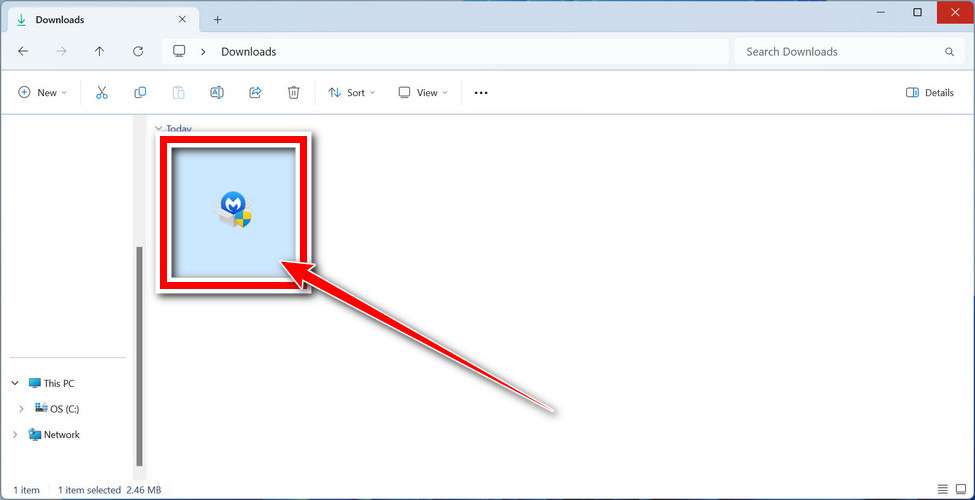
After the download is complete, locate the MBSetup file, typically found in your Downloads folder. Double-click on the MBSetup file to begin the installation of Malwarebytes on your computer. If a User Account Control pop-up appears, click “Yes” to continue the Malwarebytes installation.
Follow the On-Screen Prompts to Install Malwarebytes
When the Malwarebytes installation begins, the setup wizard will guide you through the process.
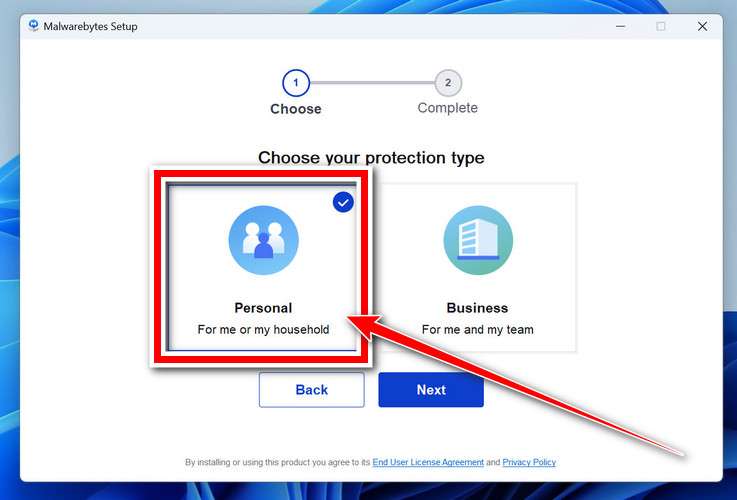
You’ll first be prompted to choose the type of computer you’re installing the program on—select either “Personal Computer” or “Work Computer” as appropriate, then click on Next.
Malwarebytes will now begin the installation process on your device.
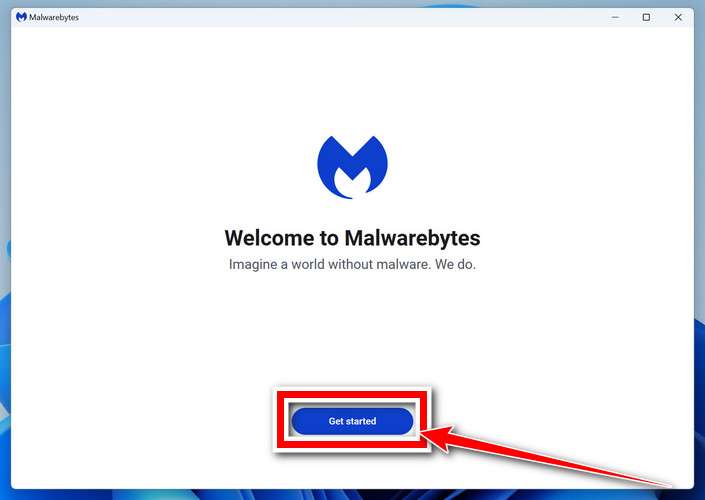
When the Malwarebytes installation is complete, the program will automatically open to the “Welcome to Malwarebytes” screen.
On the final screen, simply click on the Open Malwarebytes option to start the program.
Enable “Rootkit scanning”.
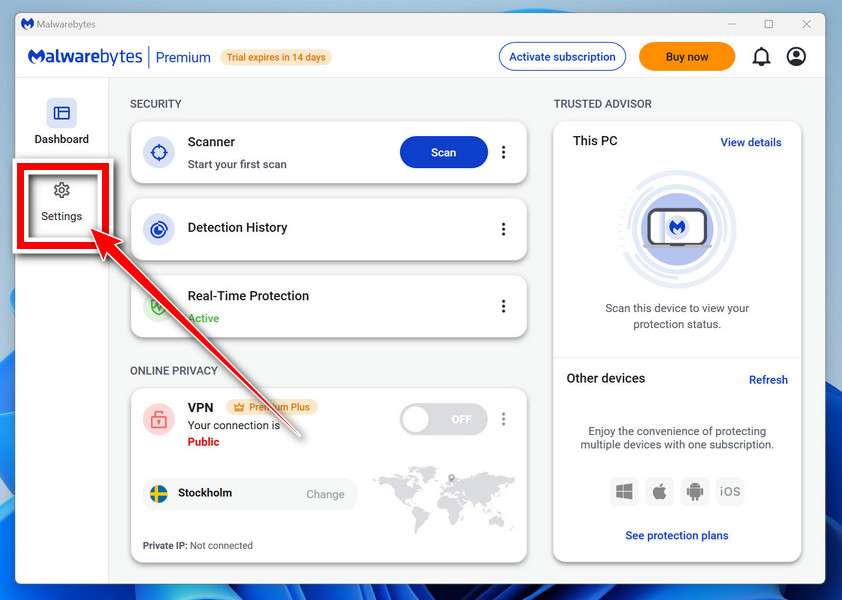
Malwarebytes Anti-Malware will now start, and you will see the main screen as shown below. To maximize Malwarebytes’ ability to detect malware and unwanted programs, we need to enable rootkit scanning. Click on the “Settings” gear icon located on the left of the screen to access the general settings section.
In the settings menu, enable the “Scan for rootkits” option by clicking the toggle switch until it turns blue.
Now that you have enabled rootkit scanning, click on the “Dashboard” button in the left pane to get back to the main screen.
Perform a Scan with Malwarebytes.
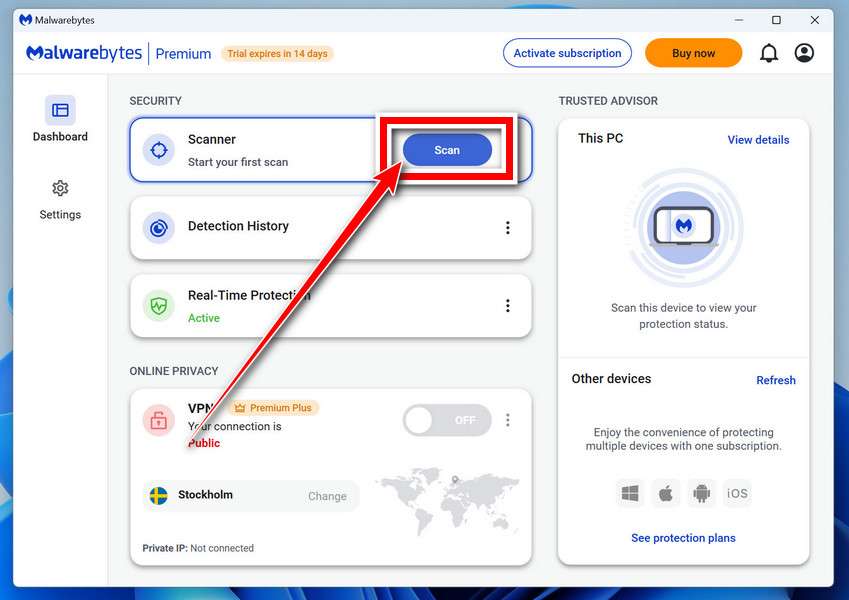
To start a scan, click the Scan button. Malwarebytes will automatically update its antivirus database and begin scanning your computer for malicious programs.
Wait for the Malwarebytes scan to complete.
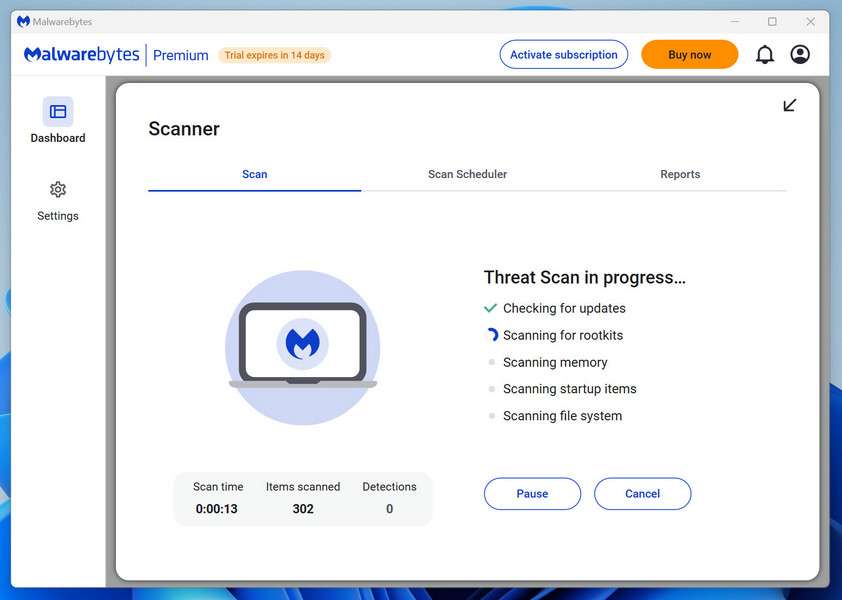
Malwarebytes will now scan your computer for browser hijackers and other malicious programs. This process can take a few minutes, so we suggest you do something else and periodically check the status of the scan to see when it is finished.
Quarantine detected malware
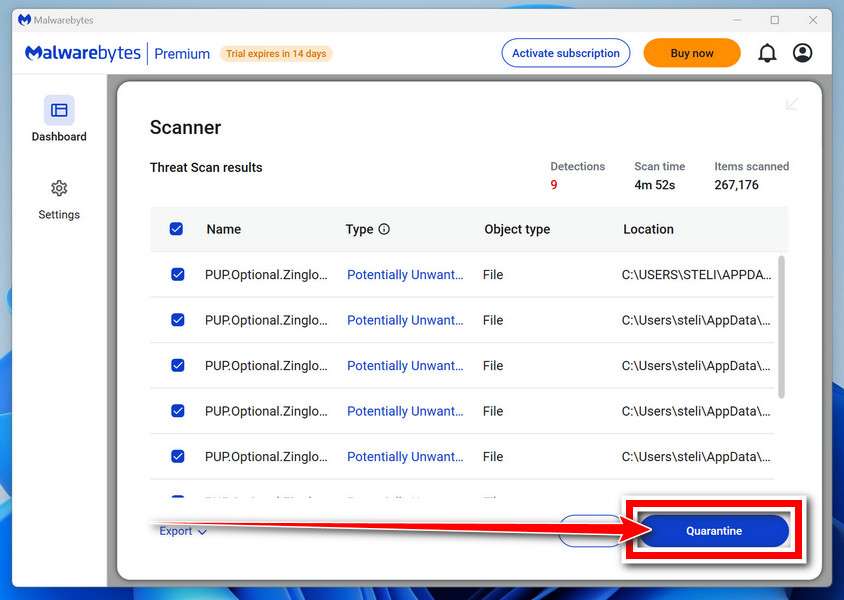
Once the Malwarebytes scan is complete, it will display a list of detected malware, adware, and potentially unwanted programs. To effectively remove these threats, click the “Quarantine” button.
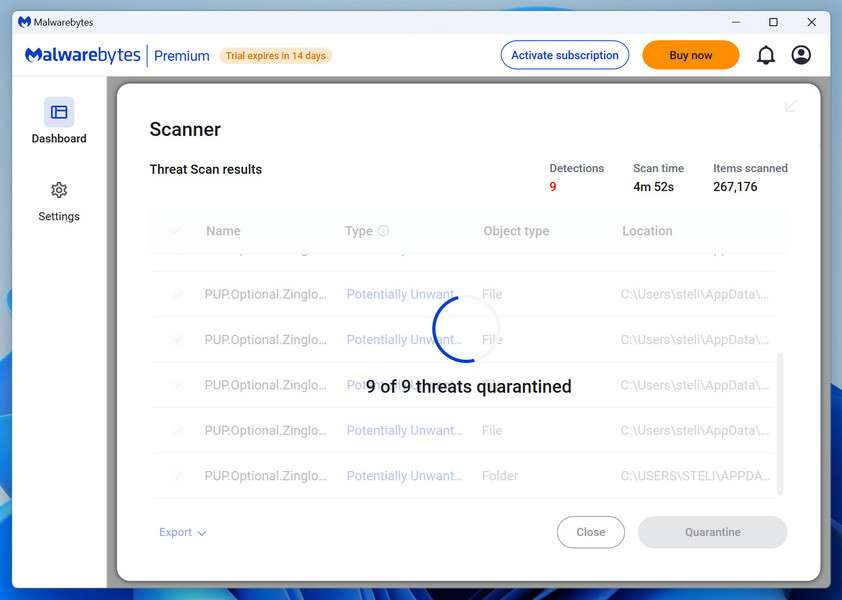
Malwarebytes will now delete all of the files and registry keys and add them to the program’s quarantine.
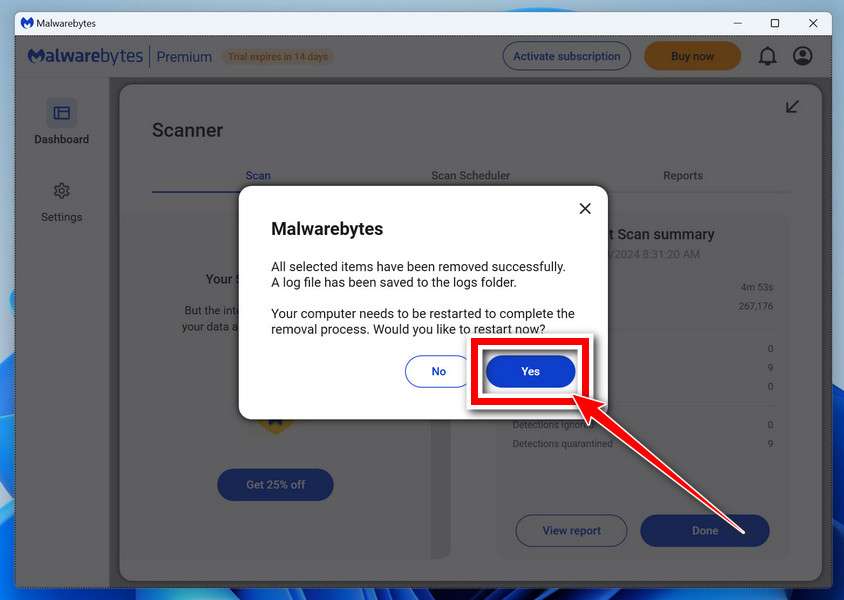
Restart your computer.
When removing files, Malwarebytes may require a reboot to fully eliminate some threats. If you see a message indicating that a reboot is needed, please allow it. Once your computer has restarted and you are logged back in, you can continue with the remaining steps.
Once the scan completes, remove all detected threats. Your Windows computer should now be clean and running smoothly again, free of trojans, adware, and other malware.
If your current antivirus allowed this malicious program on your computer, you may want to consider purchasing Malwarebytes Premium to protect against these types of threats in the future. If you are still having problems with your computer after completing these instructions, then please follow one of the steps:
Malwarebytes for Mac is an on-demand scanner that can destroy many types of malware that other software tends to miss without costing you absolutely anything. When it comes to cleaning up an infected device, Malwarebytes has always been free, and we recommend it as an essential tool in the fight against malware.
Download Malwarebytes for Mac.
You can download Malwarebytes for Mac by clicking the link below.
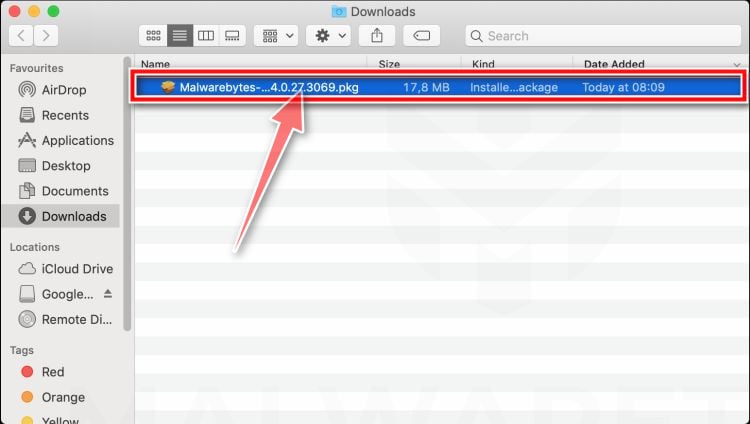
When Malwarebytes has finished downloading, double-click on the setup file to install Malwarebytes on your computer. In most cases, downloaded files are saved to the Downloads folder.
Follow the on-screen prompts to install Malwarebytes.
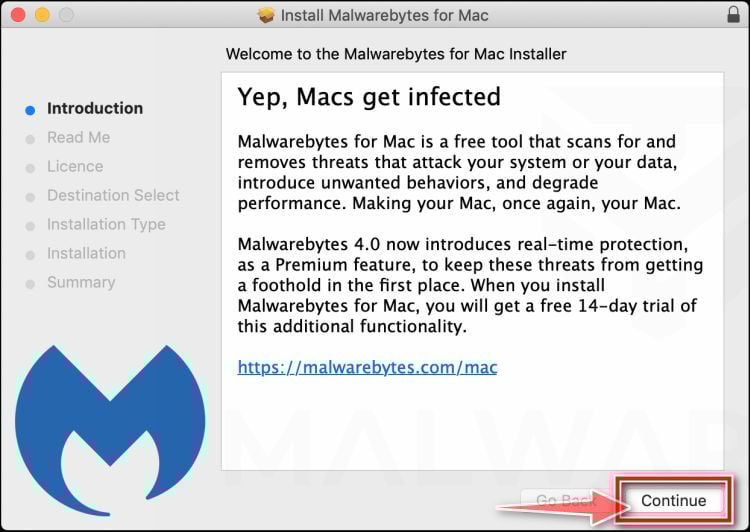
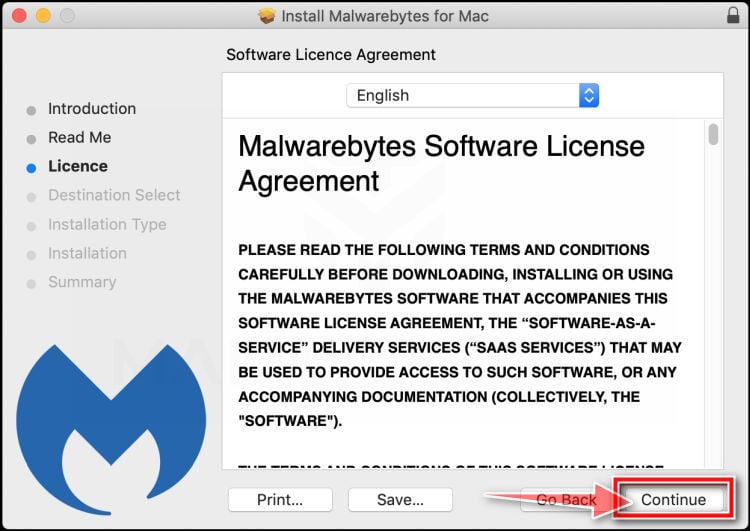
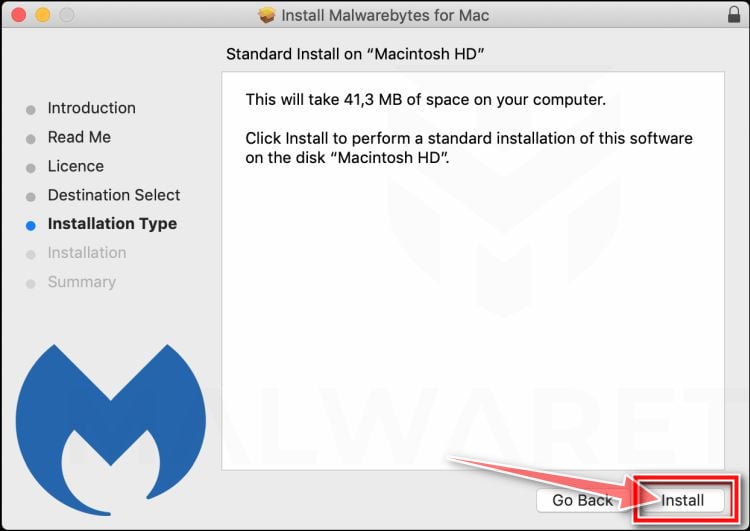
When the Malwarebytes installation begins, you will see the Malwarebytes for Mac Installer which will guide you through the installation process. Click “Continue“, then keep following the prompts to continue with the installation process.
When your Malwarebytes installation completes, the program opens to the Welcome to Malwarebytes screen. Click the “Get started” button.
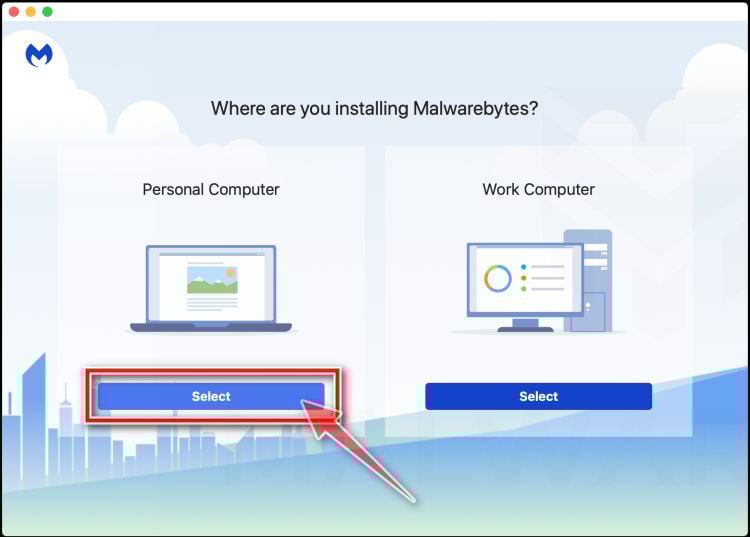
Select “Personal Computer” or “Work Computer”.
The Malwarebytes Welcome screen will first ask you what type of computer are you installing this program, click either Personal Computer or Work Computer.
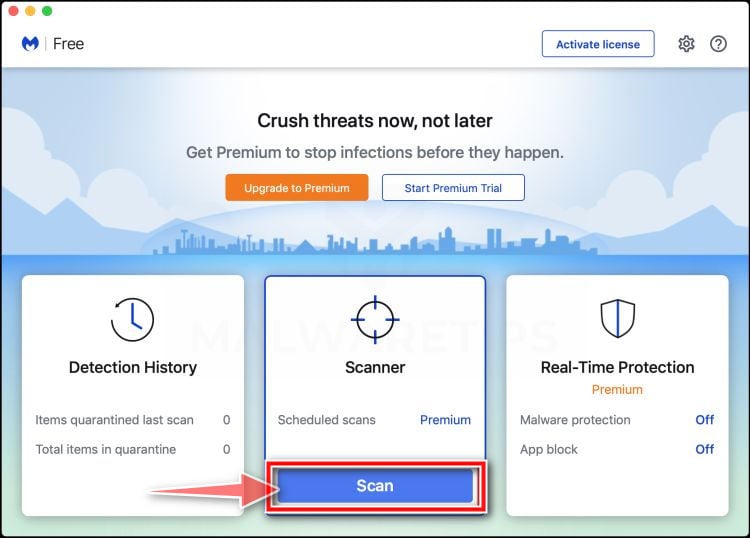
Click on “Scan”.
To scan your computer with Malwarebytes, click on the “Scan” button. Malwarebytes for Mac will automatically update the antivirus database and start scanning your computer for malware.
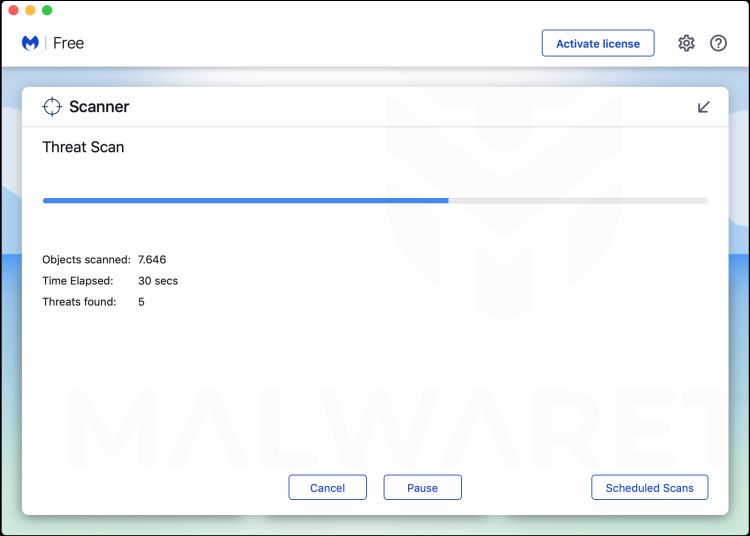
Wait for the Malwarebytes scan to complete.
Malwarebytes will scan your computer for adware, browser hijackers, and other malicious programs. This process can take a few minutes, so we suggest you do something else and periodically check on the status of the scan to see when it is finished.
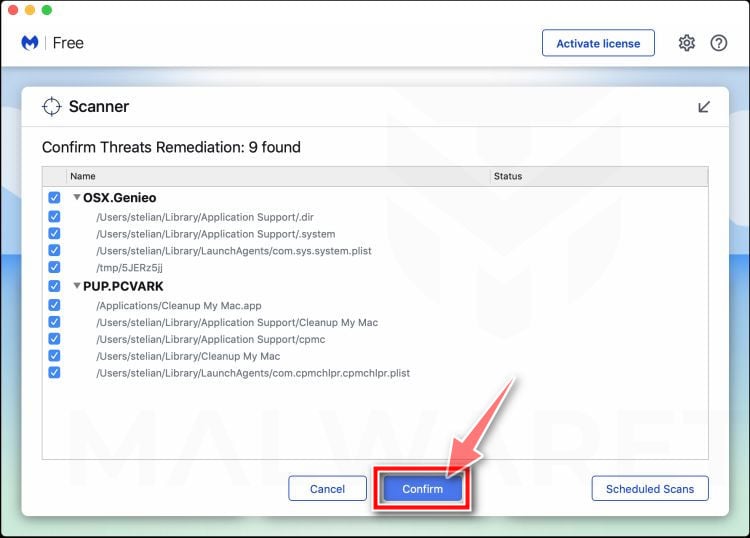
Click on “Quarantine”.
When the scan has been completed, you will be presented with a screen showing the malware infections that Malwarebytes has detected. To remove the malware that Malwarebytes has found, click on the “Quarantine” button.
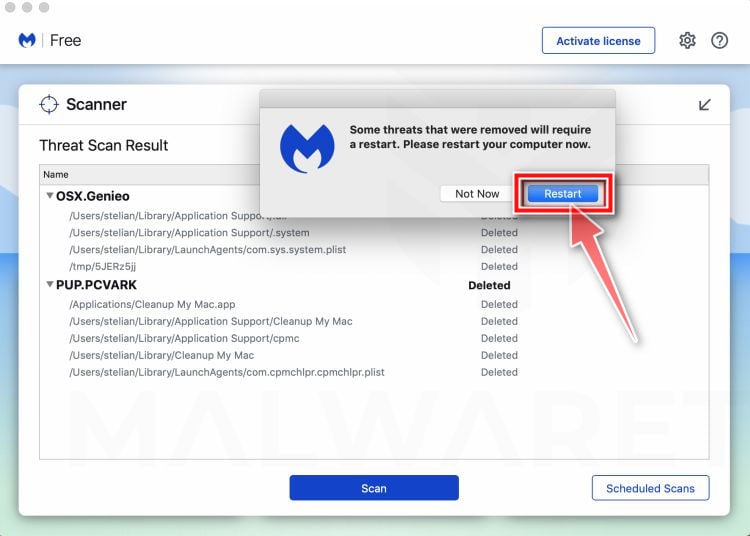
Restart computer.
Malwarebytes will now remove all the malicious files that it has found. To complete the malware removal process, Malwarebytes may ask you to restart your computer.
After scanning, delete any detected threats. Your Mac should now be free from adware, unwanted extensions, and other potentially harmful software.
If your current antivirus allowed a malicious program on your computer, you might want to consider purchasing the full-featured version of Malwarebytes Anti-Malware to protect against these types of threats in the future. If you are still experiencing problems while trying to remove a malicious program from your computer, please ask for help in our Mac Malware Removal Help & Support forum.
Run a Malware Scan with Malwarebytes for Android
Malwarebytes for Android automatically detects and removes dangerous threats like malware and ransomware so you don’t have to worry about your most-used device being compromised. Aggressive detection of adware and potentially unwanted programs keeps your Android phone or tablet running smooth.
Download Malwarebytes for Android.
You can download Malwarebytes for Android by clicking the link below.
In the Google Play Store, tap “Install” to install Malwarebytes for Android on your device.
When the installation process has finished, tap “Open” to begin using Malwarebytes for Android. You can also open Malwarebytes by tapping on its icon in your phone menu or home screen.
Follow the on-screen prompts to complete the setup process
When Malwarebytes will open, you will see the Malwarebytes Setup Wizard which will guide you through a series of permissions and other setup options. This is the first of two screens that explain the difference between the Premium and Free versions. Swipe this screen to continue. Tap on “Got it” to proceed to the next step. Malwarebytes for Android will now ask for a set of permissions that are required to scan your device and protect it from malware. Tap on “Give permission” to continue. Tap on “Allow” to permit Malwarebytes to access the files on your phone.
Update database and run a scan with Malwarebytes for Android
You will now be prompted to update the Malwarebytes database and run a full system scan.
Click on “Update database” to update the Malwarebytes for Android definitions to the latest version, then click on “Run full scan” to perform a system scan.
Wait for the Malwarebytes scan to complete.
Malwarebytes will now start scanning your phone for adware and other malicious apps. This process can take a few minutes, so we suggest you do something else and periodically check on the status of the scan to see when it is finished.
Click on “Remove Selected”.
When the scan has been completed, you will be presented with a screen showing the malware infections that Malwarebytes for Android has detected. To remove the malicious apps that Malwarebytes has found, tap on the “Remove Selected” button.
Restart your phone.
Malwarebytes for Android will now remove all the malicious apps that it has found. To complete the malware removal process, Malwarebytes may ask you to restart your device.
When the scan is finished, remove all detected threats. Your Android phone should now be free of malicious apps, adware, and unwanted browser redirects.
If your current antivirus allowed a malicious app on your phone, you may want to consider purchasing the full-featured version of Malwarebytes to protect against these types of threats in the future. If you are still having problems with your phone after completing these instructions, then please follow one of the steps:
Restore your phone to factory settings by going to Settings > General management > Reset > Factory data reset.
After cleaning your device, it’s important to protect it from future infections and annoying pop-ups. We recommend installing an ad blocker such as AdGuard. AdGuard blocks malicious ads, prevents phishing attempts, and stops dangerous redirects, helping you stay safe while browsing online.
Frequently Asked Questions About the Mailbox Usage Warning Email Scam
What is the Mailbox Usage Warning email scam?
This is a phishing scam where cybercriminals send emails that look like official storage alerts from your email provider. The message claims your mailbox is nearly full and includes a button to manage your storage. Clicking the link leads to a fake login page designed to steal your email credentials.
How can I identify a fake mailbox storage warning?
Watch for these signs:
Unexpected email about mailbox storage
A near-full storage indicator that doesn’t match your real usage
A red button labeled “Storage Management” or similar
URLs that don’t belong to your actual email provider (hover to check)
Generic greetings like “Hello user” instead of your name
Slightly off formatting or suspicious-looking email addresses
What happens if I click the Storage Management button?
Clicking the button redirects you to a spoofed login page that looks like Gmail or another provider. If you enter your credentials there, the scammers capture them and gain access to your email account.
Why is this scam dangerous?
Once scammers have access to your email:
They can steal sensitive data, including bank info, ID documents, and passwords
They may lock you out by changing your password
They can send phishing emails to your contacts, spreading the scam further
They may reset passwords to linked services like banking, cloud storage, and social media
What should I do if I entered my email and password?
Act immediately:
Change your email password
Enable two-factor authentication (2FA)
Review recent login activity
Remove suspicious auto-forwarding rules
Notify your contacts
Run a malware scan
Secure any accounts linked to your email
Report the phishing email to your provider and local authorities
Can this scam affect corporate email accounts?
Yes. Business accounts are prime targets because they often contain sensitive company data and communication threads. Scammers may use compromised accounts to impersonate employees or executives in business email compromise (BEC) scams.
Do legitimate email providers send storage warnings?
Yes, but they rarely include direct login links. A real provider typically alerts you to log into your account independently to manage storage. They do not ask you to click urgent buttons or input credentials through unknown pages.
Can antivirus software detect this scam?
Antivirus software may detect malicious links or block known phishing domains, but it cannot stop all email-based scams. The best defense is awareness, cautious behavior, and keeping your software updated.
How can I prevent falling for similar phishing attacks?
Never click on links in unexpected emails
Type the web address directly into your browser
Use a password manager to recognize unfamiliar login pages
Keep all your software, including browsers, up to date
Enable 2FA on all major accounts
Regularly review your inbox for unauthorized access
Where can I report the Mailbox Usage Warning scam?
Report it to your organization’s IT or security team
File a complaint with your national cybersecurity agency or consumer protection agency
The Bottom Line
The Mailbox Usage Warning email scam is a clever and convincing phishing attempt designed to steal your email login credentials. By posing as a storage alert, it preys on your instinct to act quickly to prevent service interruption.
Don’t be fooled by professional layouts or urgent warnings. Always verify such messages by logging into your email account through a secure, direct link.
Staying informed is your best defense. Take time to understand how these scams work, and help others around you do the same. Vigilance can protect not only your inbox, but your entire digital life.
Thomas is an expert at uncovering scams and providing in-depth reporting on cyber threats and online fraud. As an editor, he is dedicated to keeping readers informed on the latest developments in cybersecurity and tech.