

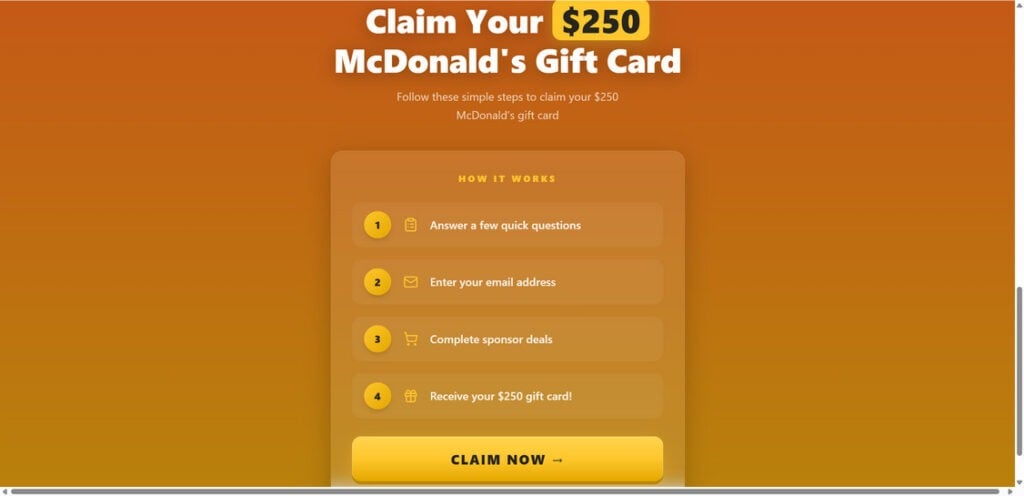
McRewardClaim.com looks like a simple giveaway page. You land on a bright, branded screen promising a $250 McDonald’s gift card, usually paired with a countdown timer and a short list of steps that feel fast and harmless.
That is exactly the point.
McRewardClaim.com and similar “gift card claim” pages are built to pull you into a sponsor-offer funnel, where the real objective is not to reward you, but to monetize your clicks, your data, and sometimes your payment details.
This article breaks down what McRewardClaim.com is, how the scam operates, why so many people get stuck in it, and what to do if you already interacted with the site.
Scam Overview
What McRewardClaim.com claims to offer
McRewardClaim.com is typically presented as a limited-time promotion tied to McDonald’s branding.
A common version promises a $250 McDonald’s gift card and frames the process as quick and structured, with steps like:
- Answer a few quick questions
- Enter your email address
- Complete sponsor deals
- Receive your $250 gift card
On the surface, this looks like a normal marketing campaign.
In reality, it is almost always a classic “reward unlock” funnel.
The reward is the bait. The “sponsor deals” are the profit engine.
Why this is an affiliate scam
Affiliate marketing is a legitimate industry when it is transparent.
A business pays a commission when a customer buys something, signs up for a service, or completes an agreed action through a tracked referral link.
McRewardClaim.com style pages take the same affiliate mechanics, then wrap them in a misleading promise.
Instead of saying, “Complete third-party offers and you might qualify for a reward under strict conditions,” the page implies something much stronger:
- The reward is waiting for you
- The steps are simple
- Completing the steps leads to the gift card
Behind the scenes, each offer you complete can trigger an affiliate payout to the funnel operator or the network feeding the traffic.
The gift card is not the product.
You are the product.
The “sponsor deals” model and why it’s so profitable
The sponsor-deal funnel works because it can be profitable even if you never get anything.
Here’s how money is generated, even without a gift card being delivered:
- You enter your email, which becomes a monetized lead
- You register for “free trials,” which generate affiliate commissions
- You install apps, which generate cost-per-install payments
- You sign up for subscriptions, which can generate higher payouts
- Your activity is tracked, measured, and optimized for conversion
Some offer categories pay surprisingly well, especially those that collect billing information.
That creates a financial incentive to push users toward the most aggressive offers.
Why the page looks “official enough”
Scam pages used to look messy.
Modern affiliate scam funnels often look clean and minimal, because that design converts better and triggers less suspicion.
Typical trust-building elements include:
- A recognizable brand logo or brand-like styling
- A large gift card image and a clear dollar amount, like $250
- A countdown timer that creates urgency
- A short “how it works” box that feels legitimate
- Simple language that avoids complicated legal text upfront
The layout is not meant to convince a careful reader.
It is meant to keep you moving before you slow down.
Why the countdown timer is a major red flag
A timer like “Offer expires in 03:40” is not there to inform you.
It is there to pressure you.
Real corporate promotions rarely rely on second-by-second countdown timers on random domains, especially ones unrelated to the brand.
In these funnels, timers are used to:
- Reduce hesitation
- Prevent you from checking the URL
- Stop you from searching for official confirmation
- Push you into entering an email quickly
In many cases, the timer resets if you refresh.
That alone tells you it is psychological pressure, not a real deadline.
The biggest deception: “Answer questions, enter email, complete deals, get gift card”
This flow is designed to feel fair.
You are not being asked to hand over money directly for the gift card, so it feels safer than obvious fraud.
But the “complete sponsor deals” step is where the trap lives.
Sponsor deals often include offers like:
- “Free” trials that require a credit card
- App installs tied to subscription upsells
- Sample offers that charge shipping and enroll you in monthly billing
- Identity or credit monitoring trials that auto-renew
- Discount clubs with recurring fees
- Survey funnels that collect personal data and resell it
Even if each offer has fine print, the funnel’s headline promise changes how you perceive risk.
You are more likely to say yes, because you believe a $250 reward is waiting on the other side.
Why people don’t get the gift card, even after doing the steps
Most victims report one of these outcomes:
- The site claims your completion is “pending” and asks you to do more
- The site says the offer did not track, so it does not count
- The site adds more requirements after you complete one or two offers
- The gift card never appears, and support is missing or useless
That is not an accident.
This funnel model is designed to keep the reward vague, because vagueness keeps you chasing.
If the “finish line” is unclear, it can be moved.
Tracking problems are used as built-in excuses
Affiliate networks rely on tracking to confirm an action was completed.
Tracking can fail for many reasons, including:
- Cookies blocked or deleted
- Private browsing mode
- Switching devices or browsers mid-process
- Using a VPN
- Ad blockers or privacy extensions
- Not completing every sub-step in the offer
In a fair system, tracking failure would be rare and resolvable.
In a scammy funnel, tracking ambiguity becomes a tool.
It gives the operator a ready-made explanation for why you did not “qualify,” even if you did what the page asked.
Why these scams spread so quickly
McRewardClaim.com is not usually discovered through normal search.
People are often pushed into it through aggressive traffic sources, such as:
- Pop-ups on low-quality websites
- Social media “limited time” giveaway posts
- Spam emails and texts claiming you were selected
- Push notification spam from sketchy sites
- Redirect chains from ad networks with poor screening
The funnel does not need high trust.
It needs volume.
If 1,000 people click and 50 complete offers, the operator can profit even if almost all users walk away unhappy.
The real risks for victims
The missing gift card is only part of the harm.
The more serious risks tend to be:
Financial risk
If you entered payment information for any “trial” or “deal,” you may see unexpected charges and recurring billing.
Privacy risk
Email addresses, phone numbers, and profile data can be added to marketing and lead lists, which can trigger ongoing spam.
Security risk
If you reuse passwords or share sensitive details, you become an easier target for follow-up phishing.
Ongoing scam exposure
Once you engage with one gift card funnel, you are more likely to see more of them, because your data and browsing signals mark you as responsive.
In other words, the scam can follow you.
How to tell McRewardClaim.com is not connected to McDonald’s
You do not need insider knowledge to check authenticity.
Here are the most practical indicators:
- The promotion is not hosted on an official brand domain
- The “reward” depends on completing third-party sponsor deals
- There is no clear, official rules page tied to a real brand campaign
- Contact or support information is vague or absent
- A countdown timer creates artificial urgency
- The process focuses on data capture and offer completion, not reward delivery
If a promotion is real, the brand wants it to be verifiable.
If it is hard to verify, treat it as high risk.
How The Scam Works
Step 1: You are pulled in through a fast, emotional hook
Most people do not search for McRewardClaim.com directly.
They get there through a link designed to trigger quick action, like:
- “Claim your $250 McDonald’s gift card”
- “Limited time offer”
- “You have been selected”
- “Answer a few questions to qualify”
The messaging is simple on purpose.
It reduces your time to think and increases your chance of clicking.
Step 2: The landing page uses branding and urgency to lower your guard
When the page loads, it typically displays:
- McDonald’s-like branding elements
- A large gift card graphic and a $250 promise
- A countdown timer suggesting time is running out
- A “how it works” box with four steps
This combination is powerful.
Brand familiarity reduces skepticism, and urgency makes you act.
The funnel does not need to win an argument.
It needs you to take the first small step.
Step 3: “Answer a few quick questions” is a warm-up, not a requirement
The question step often feels like you are qualifying for a real promotion.
The questions are usually simple, like preferences, location, or basic demographics.
This serves three goals:
- It creates a sense of progress
- It increases your commitment, because you already invested time
- It generates data that can be monetized or used for targeting
Even if the questions feel harmless, the structure is deliberate.
Step 4: Email capture locks you into the funnel
Next, you are asked to enter your email address.
This is framed as necessary for:
- Confirmation
- Updates
- Sending the gift card
- Verifying eligibility
Email capture is valuable even if you leave immediately after.
It allows the funnel to:
- Retarget you later
- Send follow-up “reward” emails
- Add you to marketing lists
- Link your actions across offers
Many victims notice spam increases shortly after.
That is a common side effect of reward-offer funnels.
Step 5: You are redirected into an offer wall or “sponsor deals” page
This is where the real monetization starts.
The site typically presents a list of offers you must complete to “unlock” the reward.
The offers can vary by:
- Country and region
- Device type (mobile vs desktop)
- Browser and ad network
- Time of day and current campaigns
That variability helps the funnel optimize earnings.
It also makes it harder for victims to describe exactly what happened, because two people may see different offers on the same day.
Step 6: The funnel starts with low-friction offers to build momentum
Early offers are often easy and quick, such as:
- Email submit forms
- Basic registrations
- Sweepstakes entries
- App installs with minimal onboarding
These offers usually pay less.
They exist to get you into motion.
Once you complete one, you are more likely to complete the next, because it feels like you are “almost done.”
Step 7: The funnel escalates to higher-paying, higher-risk offers
After you complete one or two offers, the funnel often pushes you toward deals that pay more affiliate commission.
These commonly involve:
- Free trials that require a credit card
- Subscriptions with auto-renewal
- Shipping-fee offers that lead to monthly billing
- Services with complicated cancellation processes
This is the most dangerous phase, because it can create real financial harm.
The offer is presented as a simple step.
The billing is often buried in terms that few people read during a timed “limited offer.”
Step 8: The “pending” or “verification” stage keeps you stuck
Even after completing offers, many users see messages like:
- Your completion is pending
- Verification in progress
- Please complete more deals while you wait
- Some deals may take time to confirm
This is a critical part of the scam design.
If you believe your reward is pending, you are more likely to keep going.
A delayed reward also reduces immediate backlash, because you might think it will arrive tomorrow.
Step 9: Tracking ambiguity becomes the perfect excuse
If you complain or try again, the funnel can claim:
- The deal did not track
- You did not complete all steps
- You used an unsupported browser
- You were not eligible for a specific offer
- You must complete a different offer to qualify
Notice the pattern.
The system always points back to more work.
This is why people describe the process as endless.
The funnel benefits when you keep trying.
Step 10: Your data spreads and follow-up scams increase
As you complete offers, your data can be shared across multiple marketing partners.
That can lead to:
- A surge in promotional email
- New “gift card” scams from different brands
- Phishing messages disguised as shipping updates
- Robocalls or subscription sales calls
Even if McRewardClaim.com itself disappears, the downstream effects can continue.
Step 11: The end result is rarely a straightforward $250 gift card
In a small number of cases, users may receive something, but it is often not what they expected.
Examples of what people sometimes report in these ecosystems include:
- A reward that requires more steps to redeem
- A gift card with restrictions or conditions
- A coupon or discount instead of a gift card
- A “reward” that redirects to yet another offer wall
For most victims, the reward never arrives at all.
The funnel is designed so the operator profits regardless.
Step 12: The same template is reused under new domains
When a domain accumulates complaints or gets blocked by ad filters, the operator can:
- Register a new domain
- Swap in the same template
- Use a new brand theme
- Restart traffic campaigns
That is why you see endless variations: different names, same mechanics.
Today it is McDonald’s.
Tomorrow it is Target, Costco, Walmart, or another familiar brand.
What To Do If You Have Fallen Victim to This Scam
- Stop immediately and do not complete more sponsor deals.
Chasing the reward increases your exposure and raises the odds of unwanted charges. The safest move is to exit the funnel completely. - Document what happened while it’s fresh.
Take screenshots of the page, the domain name, and any offer completion screens. Save emails you received from the offers. This documentation is useful for cancellations and disputes. - Check your bank and card statements for new charges.
Look for small test charges and new subscriptions. Pay attention to unfamiliar merchant names, especially those that repeat monthly. - Identify every offer you interacted with.
Search your email for keywords like “welcome,” “trial,” “receipt,” “invoice,” “membership,” and “subscription.” Make a list of the companies you signed up with. - Cancel any trials or subscriptions you started.
Cancel directly through the merchant’s billing page when possible, and save proof of cancellation. If you signed up via a mobile app, check:
- Apple ID subscriptions (iPhone)
- Google Play subscriptions (Android)
- If you cannot cancel or you see suspicious billing, contact your card issuer.
Explain that the sign-up came from a deceptive gift card offer and you want to stop future charges. Ask about:
- Blocking the merchant
- Disputing posted charges
- Issuing a new card number if needed
If you entered your card details on multiple offers, replacing the card is often the fastest way to prevent additional billing.
- Secure your email account immediately.
Your email is the gateway to password resets for everything else. Change your email password and enable 2-factor authentication. - Change passwords on any accounts that share the same password you used during sign-ups.
Use unique passwords for important accounts, especially banking, email, and shopping accounts. - Reduce spam fallout with filters and caution.
Mark related messages as spam. Create filters for common phrases like “gift card,” “claim,” “reward,” and “verification.” Be cautious with “unsubscribe” links in suspicious emails, since some are used to confirm active inboxes. - Disable browser push notifications if you allowed them.
If you started receiving pop-up notifications from websites, go to your browser notification settings and remove permission for unknown sites. - Scan your device and remove anything you did not intentionally install.
Uninstall suspicious apps, remove unknown browser extensions, and run a reputable security scan. If redirects continue, reset your browser settings. - Report the scam.
Report the page to the platform where you found it (ad network, social platform, or site). If you are in the United States, you can also report to the FTC at ReportFraud.ftc.gov. Reporting helps shorten the lifespan of these domains.
Is Your Device Infected? Run a Free Malware Scan
Slow performance, constant pop-ups, or strange behavior? These are classic signs of a malware infection. The fastest way to find out is to scan your device with Malwarebytes Free — one of the most trusted malware removal tools available.
The free version detects and removes the most common threats, including:
- Adware — the cause of those annoying pop-ups
- Browser hijackers — unwanted redirects and changed homepages
- Trojans and spyware — hidden programs stealing your data
- Potentially unwanted programs (PUPs) — software you never asked for
👉 Select your device below — Windows, Mac, or Android — then follow the simple steps to download Malwarebytes, scan your system, and remove any threats it finds. The scan usually takes 5 to 20 minutes.
Run a Malware Scan with Malwarebytes for Windows
Malwarebytes is one of the most popular and trusted anti-malware tools for Windows — and it’s completely free for removing infections. It catches threats that many antivirus programs miss, including adware, browser hijackers, and trojans. Follow the steps below to scan and clean your PC in just a few minutes.
Download Malwarebytes
Click the button below to download the latest version of Malwarebytes for Windows from the official source. The free version is all you need — it will scan your computer and remove adware, browser hijackers, and other malicious software at no cost.
Download MalwarebytesOfficial installer for Windows 11 and 10. Your download starts right away.Want real-time protection? See Malwarebytes Premium Malwarebytes Free for WindowsScans and removes malware at no cost
-
Install Malwarebytes
When the download finishes, open your Downloads folder and double-click the MBSetup file. If Windows shows a User Account Control pop-up, click “Yes” to allow the installation.
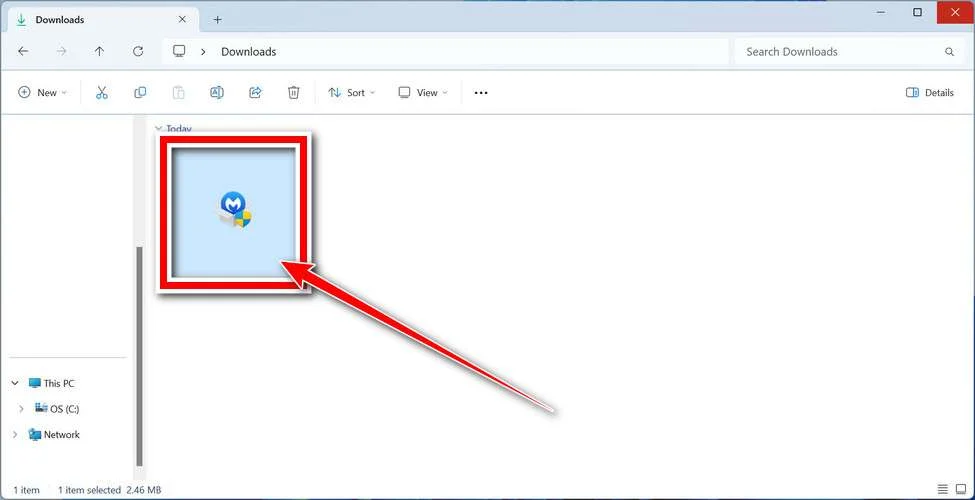
Follow the On-Screen Prompts to Install Malwarebytes
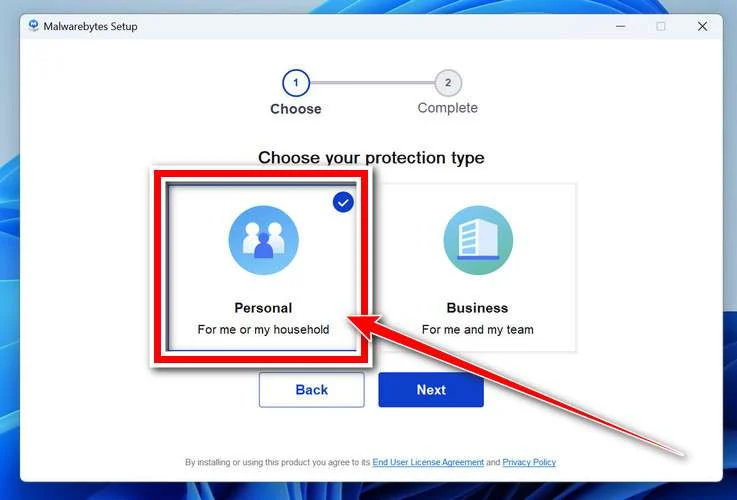
The setup wizard will walk you through a few quick screens:
-
Choose where you’re installing the program — “Personal Computer” or “Work Computer” — then click Next.
-
Malwarebytes will now install on your device. This usually takes under a minute.

-
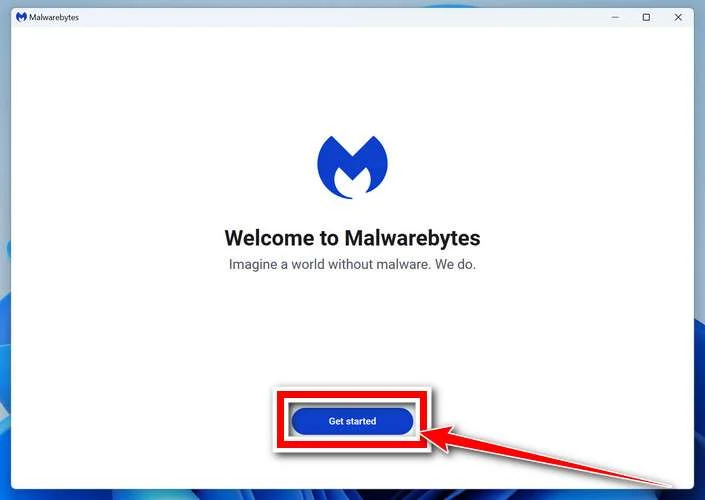
When installation is complete, the “Welcome to Malwarebytes” screen will open automatically.
-
On the final screen, click Open Malwarebytes to launch the program.

-
Enable “Scan for Rootkits”
Before scanning, turn on rootkit detection so Malwarebytes can find even the most hidden threats. Click the Settings gear icon on the left side of the screen.
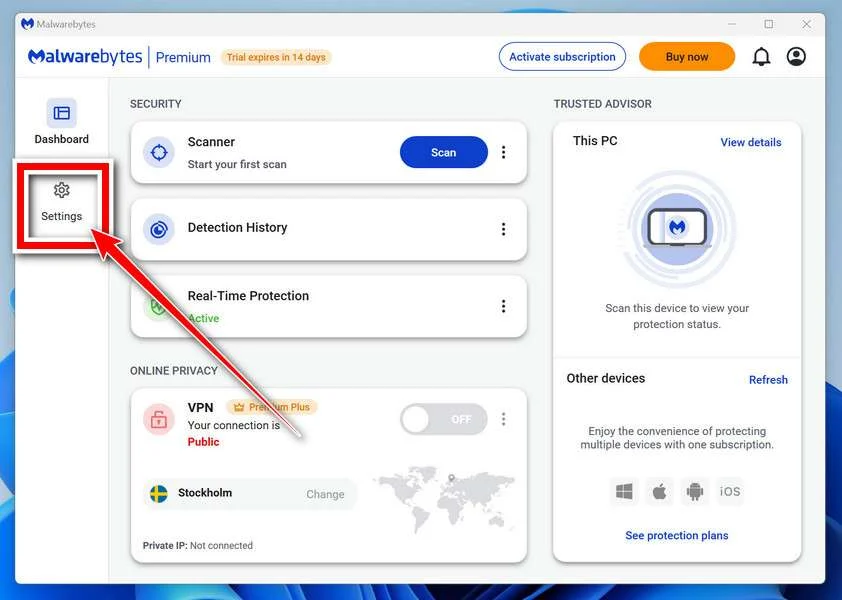
In the settings menu, find “Scan for rootkits” and click the toggle so it turns blue.

Done? Click “Dashboard” in the left pane to return to the main screen.
Start the Scan
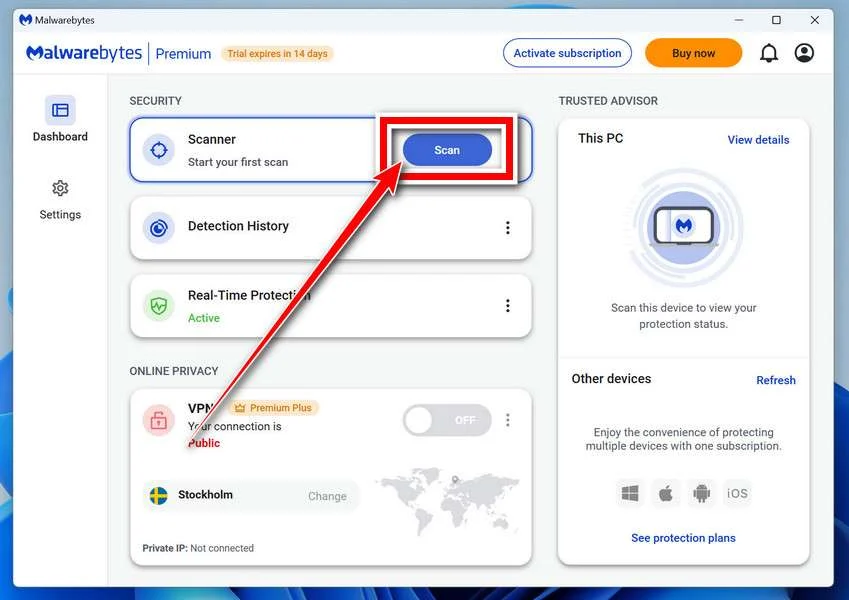
Click the blue Scan button. Malwarebytes will automatically update its virus database and start checking your computer for malware.
-
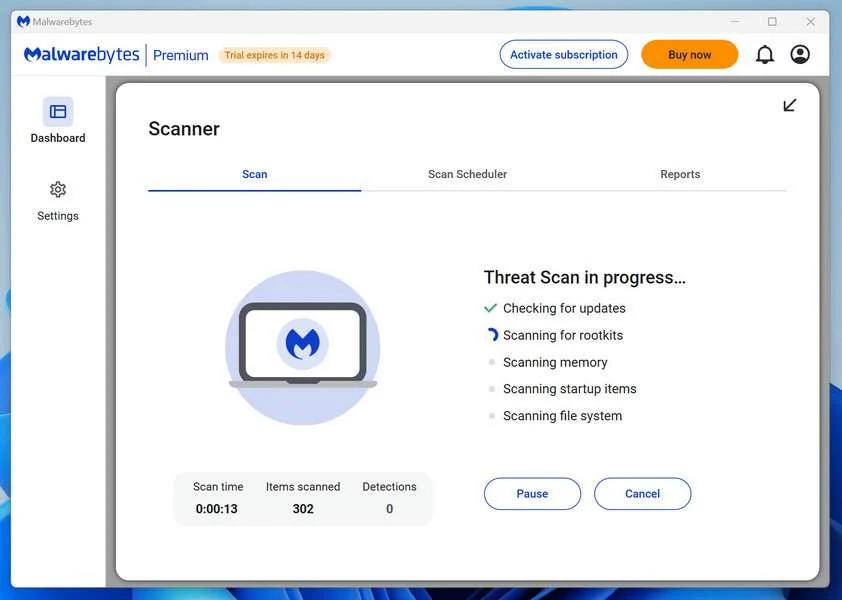
Wait for the Scan to Finish
The scan checks your entire system for browser hijackers and other malicious programs, so it can take 5 to 20 minutes depending on your computer. Feel free to do something else — just check back occasionally to see the progress.
-
Quarantine the Detected Threats
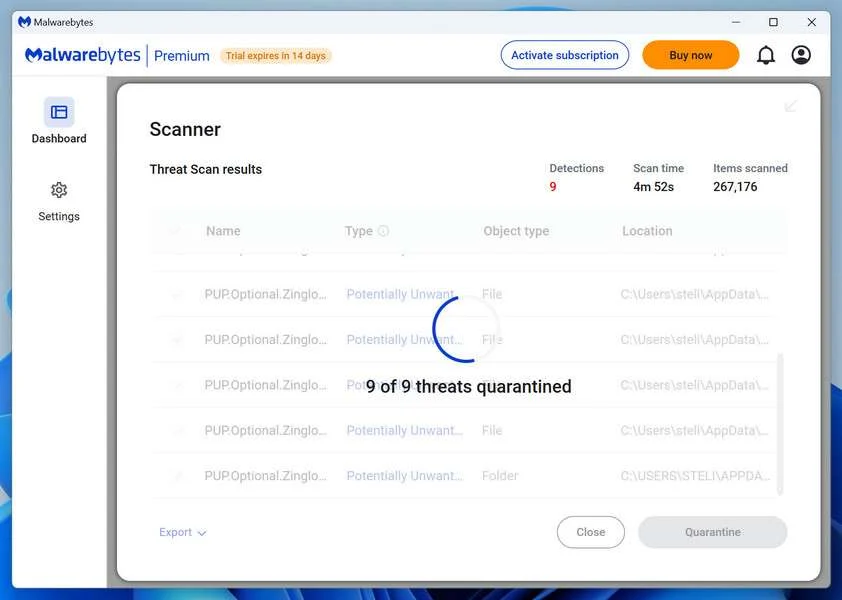
When the scan is done, you’ll see a list of everything Malwarebytes found — malware, adware, and potentially unwanted programs. Click the “Quarantine” button to remove all of them at once.
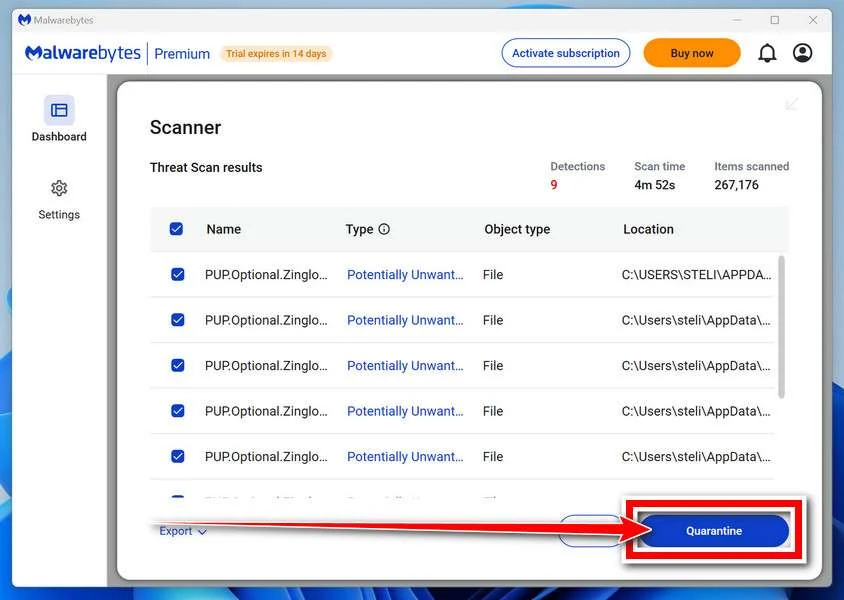
Malwarebytes will now remove the malicious files and registry entries and move them safely into quarantine.
-
Restart Your Computer
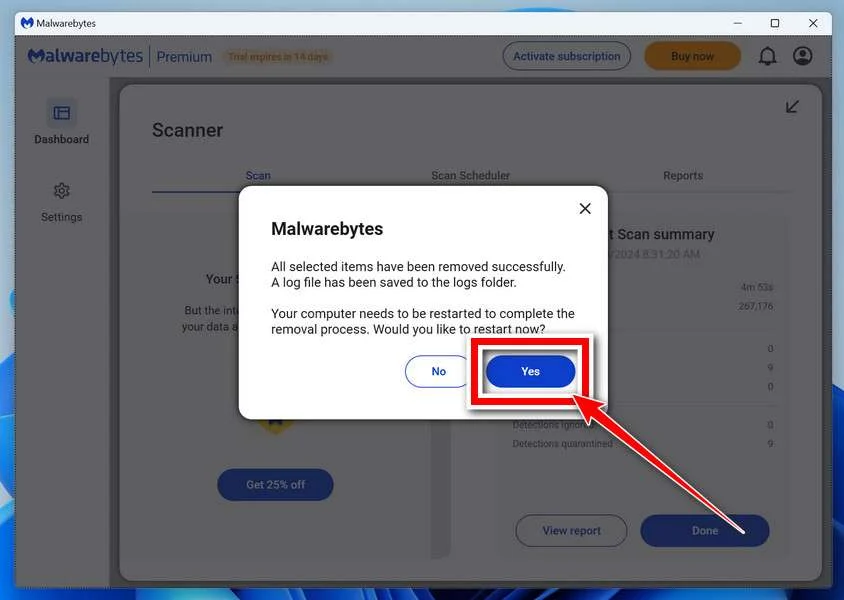
Some threats can only be fully removed after a reboot. If Malwarebytes asks you to restart, click Yes. Once you’re logged back in, Malwarebytes has finished removing the threats it found.
That’s it — your Windows PC is now clean of trojans, adware, and other malware, and should be back to running smoothly.
If you are still having problems with your computer after completing these instructions, then please follow one of the steps:
- Run a computer scan with ESET Online Scanner
- Ask for help in our Windows Malware Removal Help & Support forum.
Run a Malware Scan with Malwarebytes for Mac
Malwarebytes for Mac is a free on-demand scanner that removes the malware other security software tends to miss — adware, browser hijackers, and unwanted programs included. Cleaning an infected Mac with Malwarebytes has always been completely free, and it’s our go-to recommendation. Follow the steps below to scan and clean your Mac in just a few minutes.
-
Download Malwarebytes for Mac
Click the button below to download the latest version of Malwarebytes for Mac.
Download MalwarebytesOfficial installer for macOS. Your download starts right away.Want real-time protection? See Malwarebytes PremiumMalwarebytes Free for MacScans and removes malware at no cost -
Open the Malwarebytes setup file
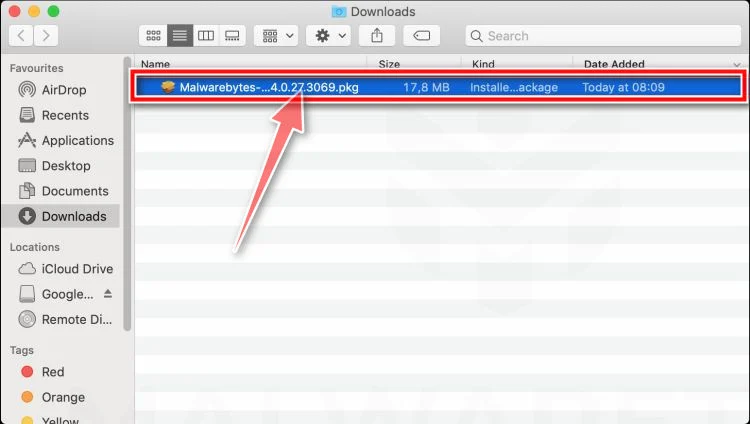
When the download finishes, open your Downloads folder and double-click the setup file to begin the installation.
-
Follow the On-Screen Prompts to Install Malwarebytes
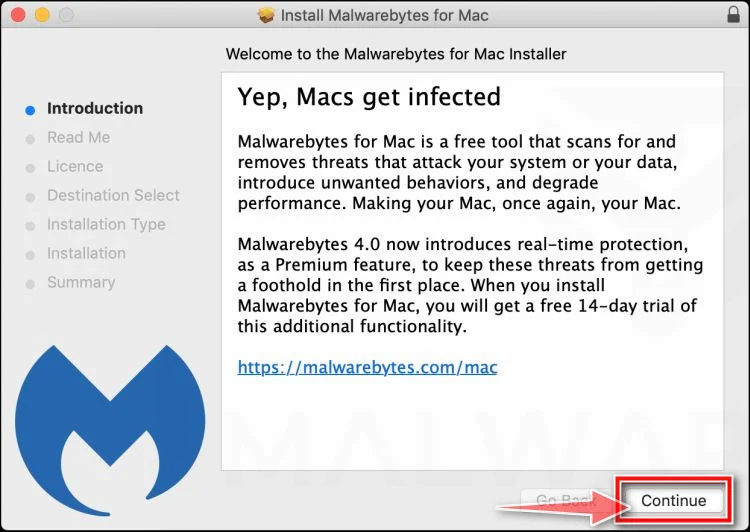
The Malwarebytes for Mac Installer will guide you through a few quick screens. Click “Continue” and keep following the prompts until the installation completes.
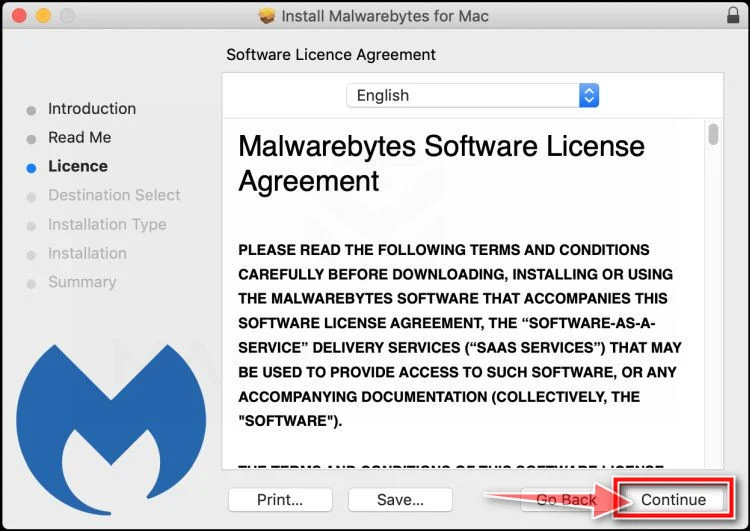
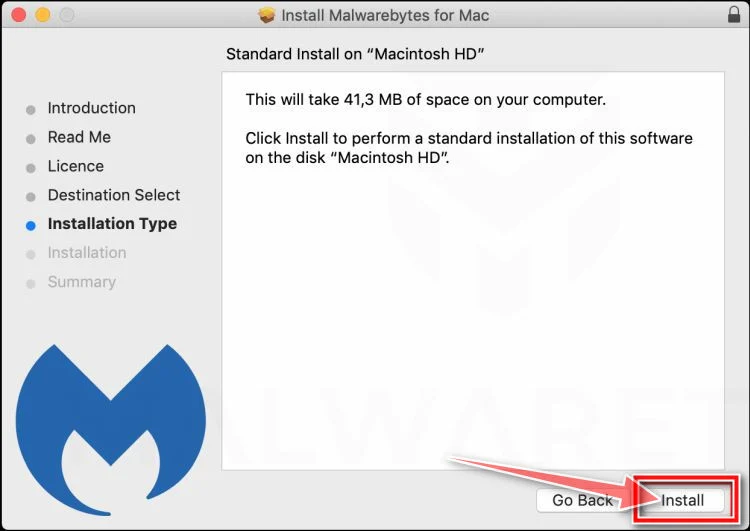
When the installation is complete, Malwarebytes opens to the Welcome to Malwarebytes screen. Click “Get started“.
-
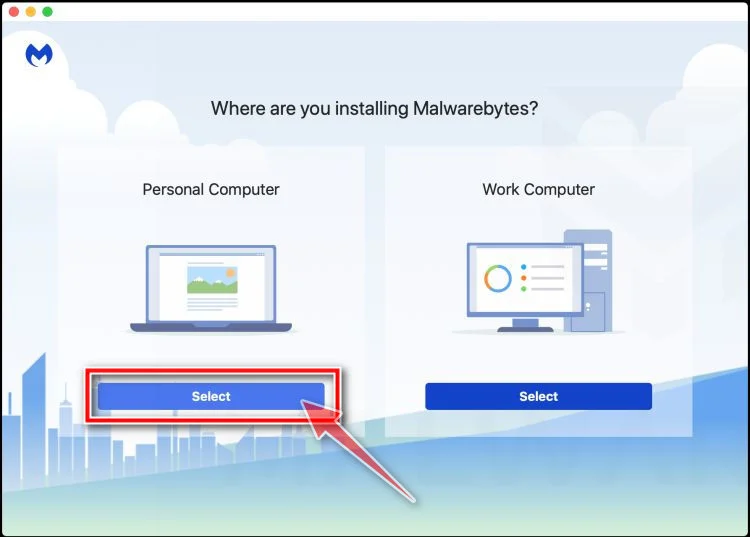
Select “Personal Computer” or “Work Computer”
Malwarebytes will ask what type of computer you’re installing it on. Click either Personal Computer or Work Computer, whichever applies.
-
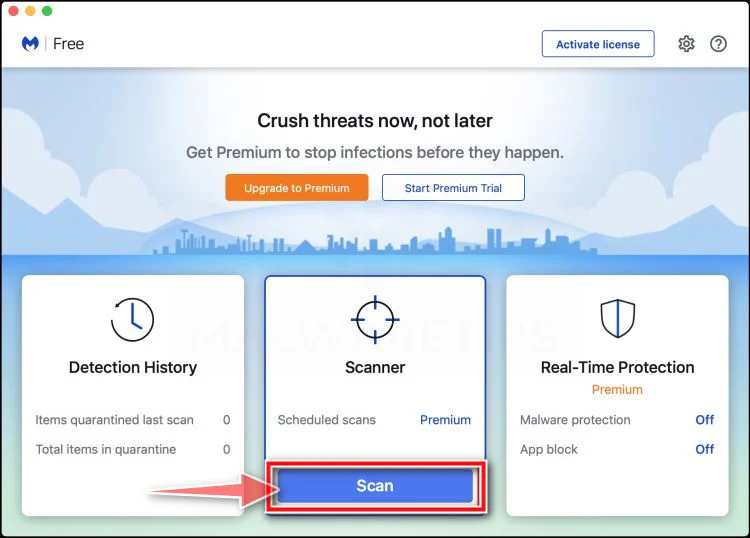
Start the Scan
Click the “Scan” button. Malwarebytes will automatically update its detection database and begin checking your Mac for malware.
-
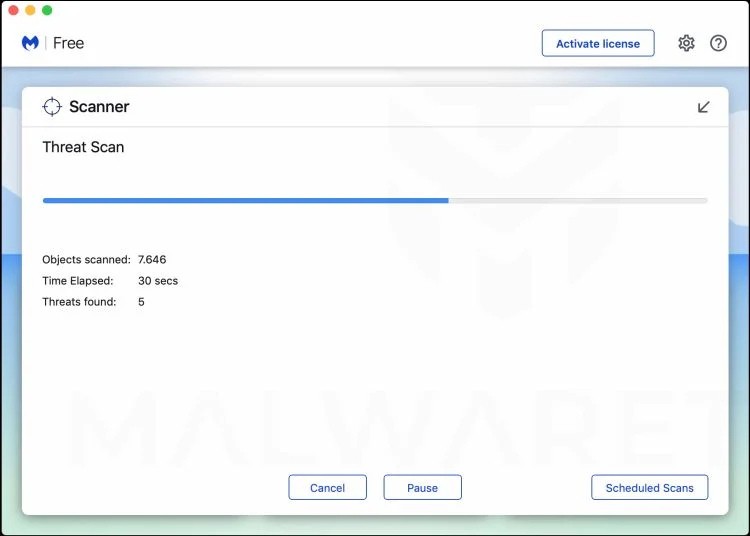
Wait for the Scan to Finish
Malwarebytes will scan your Mac for adware, browser hijackers, and other malicious programs. This can take a few minutes, so feel free to do something else — just check back occasionally to see the progress.
-
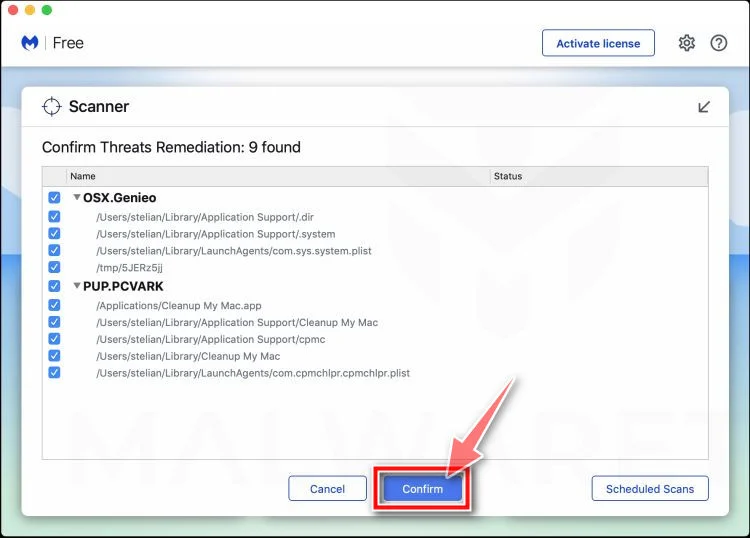
Quarantine the Detected Threats
When the scan is done, you’ll see a list of everything Malwarebytes found. Click the “Quarantine” button to remove all the threats at once.
-
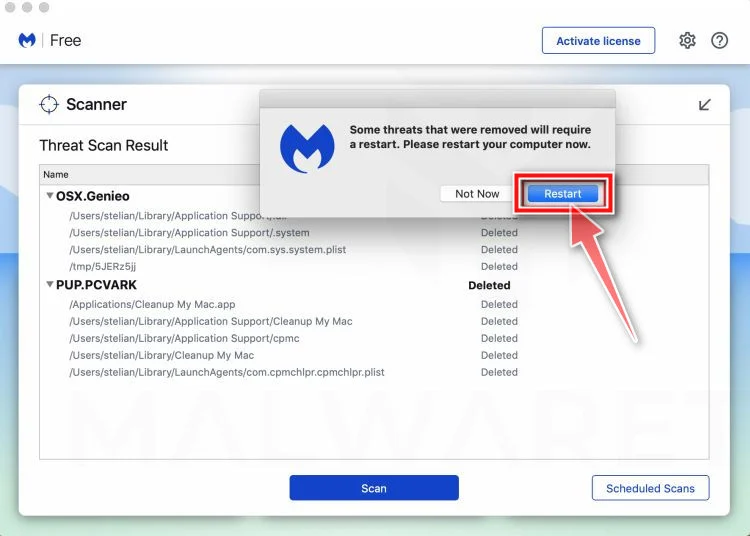
Restart Your Mac
Malwarebytes will now remove all the malicious files it found. Some threats can only be fully removed after a reboot — if Malwarebytes asks you to restart, allow it. Once you’re logged back in, your Mac is clean.
That’s it — your Mac is now free of adware, rogue browser extensions, and other potentially harmful software.
If you are still experiencing problems while trying to remove a malicious program from your computer, please ask for help in our Mac Malware Removal Help & Support forum.
Run a Malware Scan with Malwarebytes for Android
Malwarebytes for Android automatically detects and removes dangerous threats like malware and ransomware so you don’t have to worry about your most-used device being compromised. Aggressive detection of adware and potentially unwanted programs keeps your Android phone or tablet running smooth.
-
Download Malwarebytes for Android.
You can download Malwarebytes for Android by clicking the link below.
Get Malwarebytes for AndroidOpens Google Play in a new tab.Want real-time protection? See Malwarebytes Premium for AndroidMalwarebytes for AndroidScans your phone and removes malware at no cost -
Install Malwarebytes for Android on your phone.
In the Google Play Store, tap “Install” to install Malwarebytes for Android on your device.

When the installation process has finished, tap “Open” to begin using Malwarebytes for Android. You can also open Malwarebytes by tapping on its icon in your phone menu or home screen.

-
Follow the on-screen prompts to complete the setup process
When Malwarebytes will open, you will see the Malwarebytes Setup Wizard which will guide you through a series of permissions and other setup options.
This is the first of two screens that explain the difference between the Premium and Free versions. Swipe this screen to continue.
Tap on “Got it” to proceed to the next step.
Malwarebytes for Android will now ask for a set of permissions that are required to scan your device and protect it from malware. Tap on “Give permission” to continue.
Tap on “Allow” to permit Malwarebytes to access the files on your phone.
-
Update database and run a scan with Malwarebytes for Android
You will now be prompted to update the Malwarebytes database and run a full system scan.

Click on “Update database” to update the Malwarebytes for Android definitions to the latest version, then click on “Run full scan” to perform a system scan.

-
Wait for the Malwarebytes scan to complete.
Malwarebytes will now start scanning your phone for adware and other malicious apps. This process can take a few minutes, so we suggest you do something else and periodically check on the status of the scan to see when it is finished.

-
Click on “Remove Selected”.
When the scan has been completed, you will be presented with a screen showing the malware infections that Malwarebytes for Android has detected. To remove the malicious apps that Malwarebytes has found, tap on the “Remove Selected” button.

-
Restart your phone.
Malwarebytes for Android will now remove all the malicious apps that it has found. To complete the malware removal process, Malwarebytes may ask you to restart your device.
That’s it — your Android phone is now clean — no more malicious apps, adware, or browser redirects.
If you are still having problems with your phone after completing these instructions, then please follow one of the steps:
- Restore your phone to factory settings by going to Settings > General management > Reset > Factory data reset.
- Ask for help in our Mobile Malware Removal Help & Support forum.
Stay Protected: Block Ads and Malicious Sites
Now that your device is clean, keep it that way. Most infections start with a malicious ad or a fake download button — so blocking them at the source is your best defense.
We recommend AdGuard, which blocks malicious ads, phishing pages, and dangerous redirects before they can reach you.
👉 Download AdGuard and browse safely
The Bottom Line
McRewardClaim.com is best understood as a gift card bait funnel.
It uses McDonald’s branding, urgency timers, and a simple step-by-step story to push people into completing sponsor offers that generate affiliate revenue, while the promised $250 gift card remains vague, delayed, or never delivered.
If you see any site that requires “sponsor deals” to unlock a brand-name gift card, treat it as a red flag and leave.
If you already interacted with it, focus on the practical cleanup: cancel subscriptions, monitor your statements, secure your accounts, and shut down spam and notifications before the fallout grows.
FAQ
Is McRewardClaim.com legit?
No. McRewardClaim.com is not an official McDonald’s website and it is commonly used as an affiliate offer funnel that promises a $250 gift card to push users into sponsor deals.
Will I actually receive a $250 McDonald’s gift card?
Most people do not. The reward is typically delayed behind “verification,” “pending” steps, or tracking claims that keep you completing more offers.
Why does it ask me to complete sponsor deals?
Because that is how the operator makes money. Each deal can generate affiliate commission, especially trials and subscriptions.
Can this lead to unwanted charges?
Yes. Some sponsor deals involve free trials, shipping fees, or subscriptions that can auto-renew and bill you later.
What if I only entered my email?
Expect more spam and follow-up “reward” messages. Tighten spam filters and be cautious with links that ask for verification or payment.
What should I do if I entered payment info?
Cancel any trials immediately, check your statements for new charges, and contact your bank if you see suspicious billing or cannot cancel.

Join the discussion
0 commentsShare your experience or ask a question about this article.
Discussion
Start the conversation
Have a question or something useful to share? Add the first comment.