

A short video asks you to help a child receive urgent treatment. The story is hard to scroll past, and the donation button is only one tap away.
Compassion is a good instinct. Before giving, a few quiet checks can tell you far more than the urgency of the ad.
Overview
What appeared in social feeds
Bitdefender Labs reported two medical-donation ad campaigns on Meta platforms in September 2026.
The ads described young children with leukemia who supposedly needed expensive treatment abroad. They used emotional images, localized language, and prominent calls to donate.
One campaign reached an estimated 108,189 Meta accounts through a Romanian-language ad, according to the researchers. Related German ads reached more than 5,000.
A second campaign had 32 active ads aimed at Romania and an estimated reach above 500,000 people at the time researchers checked.
Why the pages raised questions
The researchers found limited information about one supposed organization, a sparse social profile, and a recently created donation page focused on a single case.
They also found the same child’s banner photo on a separate Spanish-language fundraiser. Reused imagery calls for investigation but does not prove which campaign is genuine.
Both donation sites displayed the same US-based phone number and address despite targeting European audiences. That is a connection to verify, not proof of a crime.
One site’s wording allowed funds to support broader charitable activities rather than guaranteeing exclusive use for the featured child’s care.
What remains unproven
Real people appeared to engage with the appeals. Genuine shares and donor comments can spread a campaign without independently validating its claims.
The public research did not trace every payment to its final recipient. It did not establish that no child existed or that all contributors were defrauded.
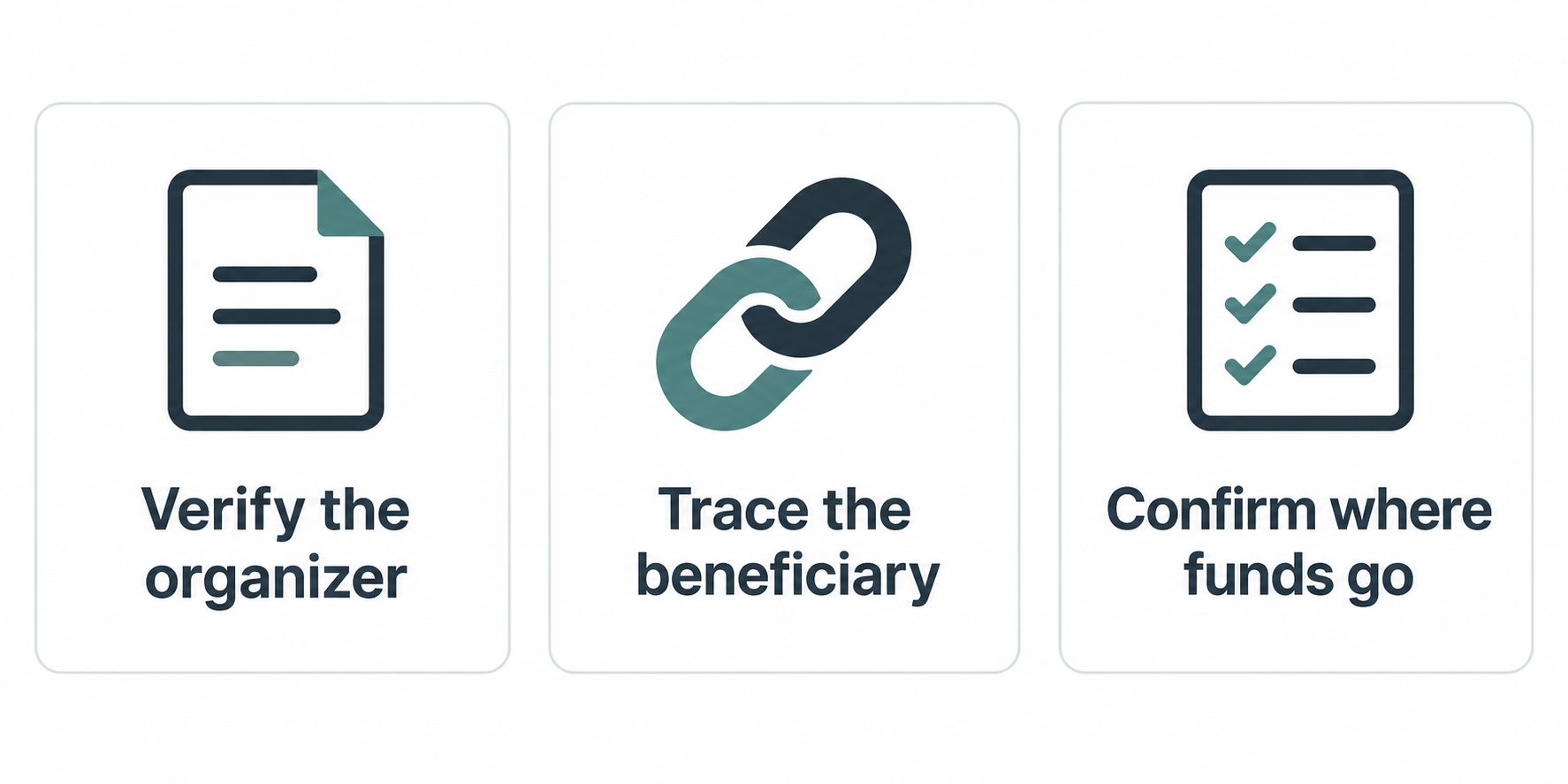
The safer conclusion is specific: donors lacked enough independent evidence to know exactly who controlled the appeal and where their contribution would go.
- A moving story is not proof that the organizer is registered or accountable.
- A rising donor counter does not verify the beneficiary.
- A familiar payment logo does not tell you who receives the funds.
- The campaign’s own terms may permit uses broader than the ad suggests.
How the Medical Donation Ad Funnel Works
Step 1: A social ad introduces an urgent story
The first contact is a promoted post or video, not a personal request from someone the reader knows. The ad may feature a child’s illness and treatment deadline.
Medical emergencies are emotionally immediate. A person may decide to help before asking whether the campaign’s organizer can be verified.
Meta’s ad system can deliver the appeal to large groups quickly. The presence of an ad in a feed does not mean Meta endorsed the underlying medical claim.
The researchers observed Romanian, German, and Lithuanian versions. Language adaptation can make a campaign feel local and familiar.
Localization is normal for legitimate charities too. It becomes a concern when organizational details remain thin or inconsistent across versions.
Pause on the ad and record the page name. Look for a history of posts and independent information rather than relying on one urgent video.
Do not share the appeal before checking. A share can expose friends and relatives to the same uncertainty.
Step 2: The landing page frames a single beneficiary
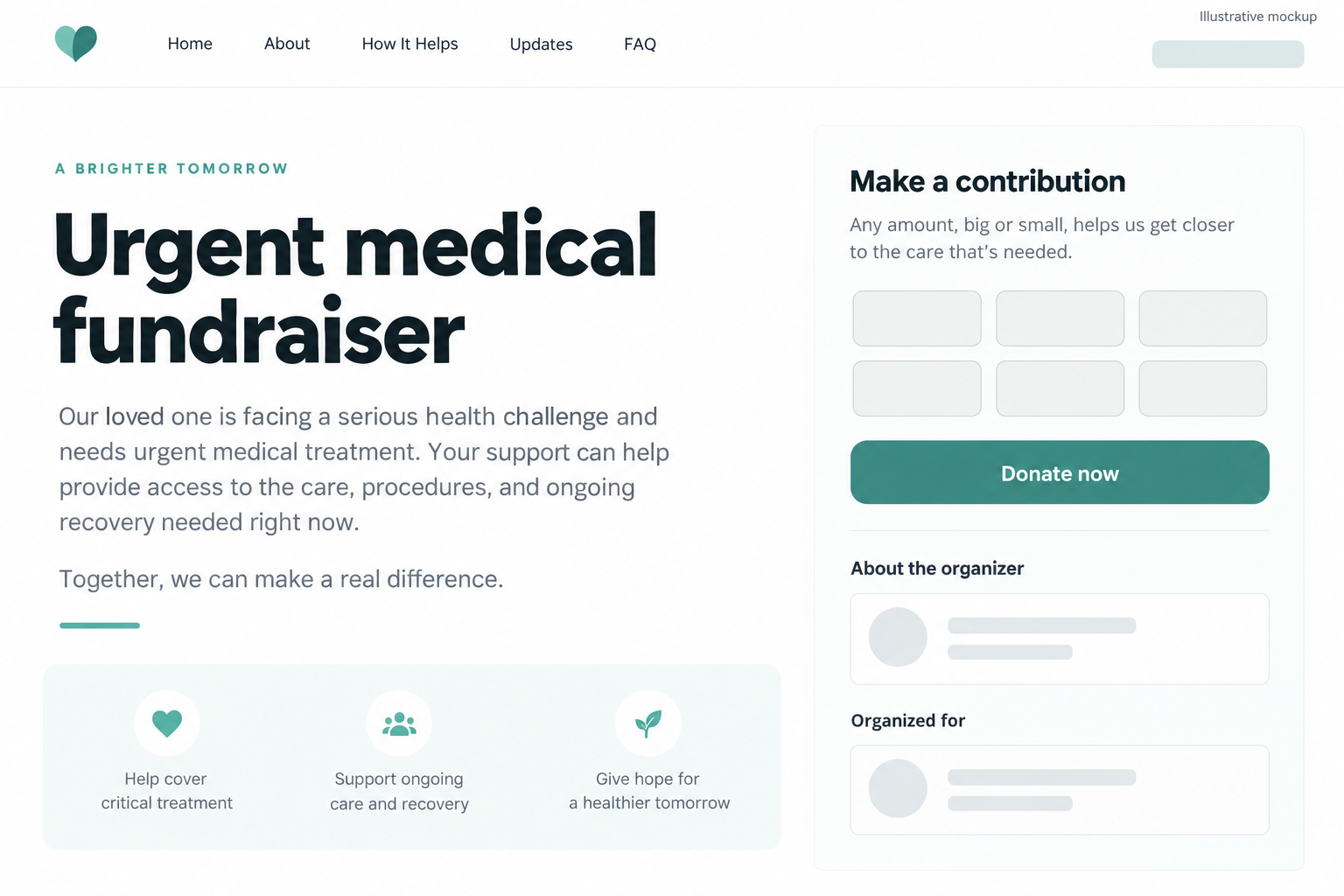
Clicking the ad leads to a donation website with a child-centered story. The page emphasizes the treatment need and makes contributing feel straightforward.
One page offered predefined donation amounts and displayed common payment-brand imagery. Those interface choices reduce friction at the moment of decision.
Bitdefender observed a donor total and count that rose during a short review period. A moving counter can create social proof.
But a displayed figure is a claim made by the page. Without independent accounting, a visitor cannot know how it is calculated or where funds settle.
Read the entire page, not just the headline. Check whether the named family, charity, hospital, and payment recipient can be tied together.
A legitimate organizer should be able to explain who authorizes the fundraiser and how the beneficiary receives help.
When those basics are absent, the sensible response is to withhold payment until they can be verified.
Step 3: Names and comments supply apparent reassurance
Donor lists and supportive comments can make a fundraiser feel established. A real person may have shared it in good faith.
Bitdefender found social profiles associated with some displayed names. That observation did not confirm the appeal or the flow of funds.
People often trust an appeal more after seeing others participate. The effect can be strongest when comments express sympathy and urgency.
However, a crowd’s belief is not independent verification. Several people can donate based on the same untested claim.
Look for a hospital or recognized charity confirming the case through its own channels. A screenshot of a medical document is easier to copy than an independent statement.
Do not contact a child or family directly from details in an ad. Use an established charity or official organizer channel that respects privacy.
The goal is not to demand sensitive medical records publicly. It is to confirm that an accountable organization is handling the money.
Step 4: Contact details look formal but need checking
The two sites shared a US-based phone number and address while speaking mainly to European donors. That could reflect an international operator, but it warrants explanation.
An address printed on a donation page is easy to add. It may be an office, mailbox, service provider, or unrelated location.
Search the address separately and compare it with official charity registration records. Check whether the legal name matches the payment recipient.
Call the published number only after confirming it through independent records. Ask which organization answers and which specific campaign it handles.
If the phone line does not answer, or staff cannot identify the fundraiser, do not treat the printed number as reassuring.
One inconsistent detail does not establish fraud. A pattern of missing registration, unclear control, and vague beneficiary terms is more consequential.
Keep screenshots of the page and policy language if you need to report a misleading appeal later.
Step 5: The donor enters payment and contact details
At checkout, a reader may provide a card number, email address, and billing information. Some sites display familiar payment logos near the button.
Those logos can indicate a payment option, but they do not certify the medical story or the charity’s use of donations.
Before paying, inspect the legal entity named at checkout and in the terms. It may differ from the brand used in the advertisement.
Check whether the contribution is one-time. A recurring donation should require clear consent, and cancellation details should be easy to find.
Use a payment method with dispute protections when donating online. Avoid sending funds to personal accounts or cryptocurrency addresses for an unverified appeal.
Save the receipt and exact page URL. If the page disappears, those details may be the only practical record of what was promised.
If the amount or recipient shown in the payment confirmation differs from the page, contact the issuer immediately.
Step 6: Broad terms may change where money goes
One campaign said the featured names were changed to protect privacy and that the story remained accurate. Privacy can be legitimate, but it complicates outside verification.
The same site’s wording also allowed money to support broader charitable priorities. That is not equivalent to promising every contribution for one child’s treatment.
Such terms may be lawful for a registered charity, depending on jurisdiction. The problem for donors is a possible gap between the ad’s impression and the policy.
Read restrictions and refund terms before contributing. Ask for a written answer if you intend your donation for a specific beneficiary.
Do not infer misuse merely because an organization funds several causes. Focus on whether its advertising makes the allocation clear and independently verifiable.
If the page cannot answer where money goes, choose a charity with audited reporting or a fundraiser confirmed by a trusted institution.
Compassion and scrutiny can coexist. Careful giving helps real families as well as donors.
How to Check the Company Behind the Campaign
Identify the legal organizer, not only the page name
A friendly brand can sit above a different legal entity. Find the registered name in the terms, receipt, payment statement, and charity records.
If those names do not align, ask for an explanation before donating. A marketing page should not be the only source of identity.
Test the address and support number
Search the address independently. A virtual mailbox or fulfillment location is not a charity headquarters, and an unrelated address is a serious warning.
Call a verified number and ask which fundraiser the staff handle. A dead line or generic answer should not be treated as confirmation.
Verify registration and financial reporting
Look up the organizer with the charity regulator in the country where it claims to operate. Compare legal names, registration dates, and stated purposes.
Check annual reports or audited accounts where available. A new charity may have limited history, but it should still explain governance and funds handling.
Confirm the beneficiary and donation restrictions
Ask whether a hospital, family representative, or recognized partner can confirm the campaign through a separate channel without exposing private medical details.
Read whether donations are restricted to the named case or may be used for broader work. That distinction should be visible before checkout.
What a Reused Photo Can and Cannot Tell You
Bitdefender found a banner image from one campaign on a separate Spanish-language fundraiser. That overlap is a reason to ask who owns the image.
It does not, on its own, tell you which appeal came first, whether permission was granted, or whether either organizer is legitimate.
Images are frequently reused with consent in real campaigns. They are also copied without permission by people building deceptive appeals.
Use reverse-image search as a starting point, not a verdict. Record where the image appears and compare dates, names, and organizer statements.
Ask the charity to explain its relationship to the family and the photographer. A credible organization should understand why donors need clarity.
Do not publish accusations against a family based on a matching photo. The people pictured may have no control over where their image travels.
Look for stronger corroboration, such as a hospital-confirmed campaign, regulator record, independent community fundraiser, or published financial reporting.
The point of checking is not to dismiss a child’s need. It is to make sure help reaches the person the advertisement asks you to support.
What to Do If You Already Donated
- Save the original promise. Capture the ad, landing page, terms, donation confirmation, and statement descriptor. Include the date and amount so the organizer’s claims can be compared with the charge.
- Ask the organizer for a written accounting. Request the legal name, charity registration, payment recipient, and whether your contribution is restricted to the featured beneficiary. Keep the reply.
- Contact your card issuer if something is wrong. Report an unauthorized, recurring, duplicate, or materially misrepresented charge. Ask about dispute deadlines and whether a replacement card is needed.
- Watch for follow-up messages. A donor email can become a target for additional appeals or phishing. Treat new requests for card verification or login details with caution.
- Report deceptive advertising. Use the social platform’s ad-reporting tools. If the organization claims charity status it does not have, alert the relevant regulator and consumer-protection agency.
- Redirect future giving thoughtfully. If you cannot verify this campaign, donate through a registered charity or a hospital-confirmed fundraiser. Avoid reposting an uncertain appeal while seeking answers.
Donating to an unverified fundraiser does not automatically mean your card or device is compromised. Focus first on the charge, recipient, and any information entered.
If you only saw or shared the ad, remove the share if you cannot verify it. Tell people you are checking the organizer before recommending payment.
Frequently Asked Questions
Did researchers prove the featured children do not exist?
No. The investigation documented red flags and gaps in verification. It did not establish the nonexistence of every person described in the appeals.
Does a Meta ad mean the fundraiser was vetted?
No. Paid placement shows that an advertisement ran on the platform. It is not independent confirmation of a medical claim or use of funds.
Is a US address suspicious for a European fundraiser?
It is a detail that deserves explanation, not proof by itself. Verify the entity, the address’s purpose, and where payments are processed.
Can real donor comments prove the campaign is genuine?
No. Real people may contribute or comment in good faith. Their participation does not trace payments to a beneficiary.
What if the terms allow broader charitable spending?
Then ask whether your gift is restricted. A broader mission can be legitimate, but the advertising should not imply exclusive use if that is not promised.
Should I stop donating to medical appeals online?
No. Verify the organizer and beneficiary through independent channels, understand the payment terms, and choose accountable campaigns that explain where money goes.
The Bottom Line
The ads may inspire real generosity, but their emotional force is not a substitute for an identifiable organizer and clear rules for the funds.
Before paying or sharing, confirm who runs the campaign, who receives the money, and whether the terms match the story shown in the ad.








