

The advertisement makes an ordinary pair of shaping shorts look like a breakthrough. Plant names, scientific language, and dramatic body claims turn simple clothing into something mysterious.
Before trusting that story, buyers should examine what is actually sold, who accepts the payment, and which promises can be independently verified.
Overview
The product is clothing wrapped in supplement-style language
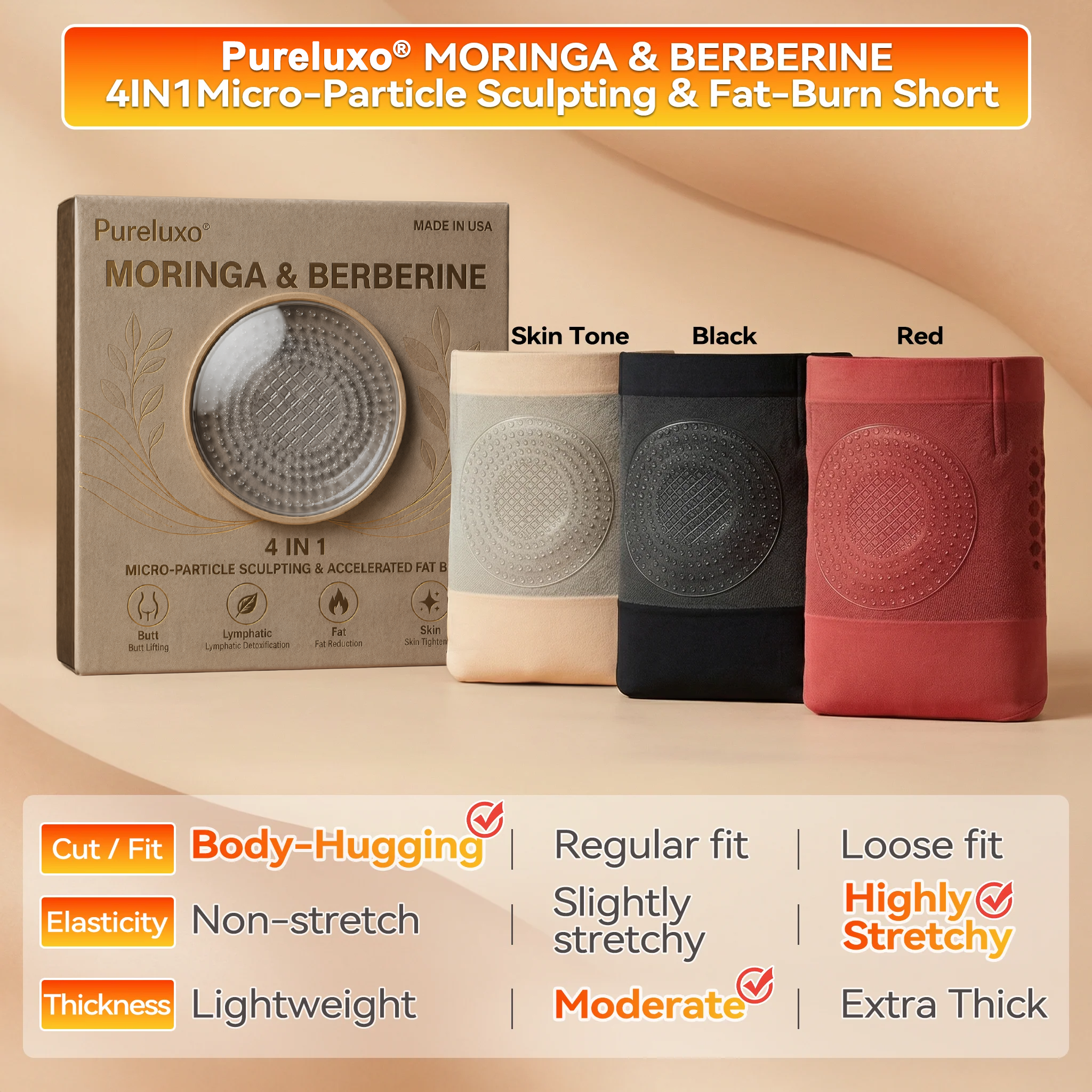
Moringa fat-burning shorts are tight, high-waisted garments promoted as more than shapewear. Sellers describe them as wearable tools for slimming, detoxification, and metabolic support.
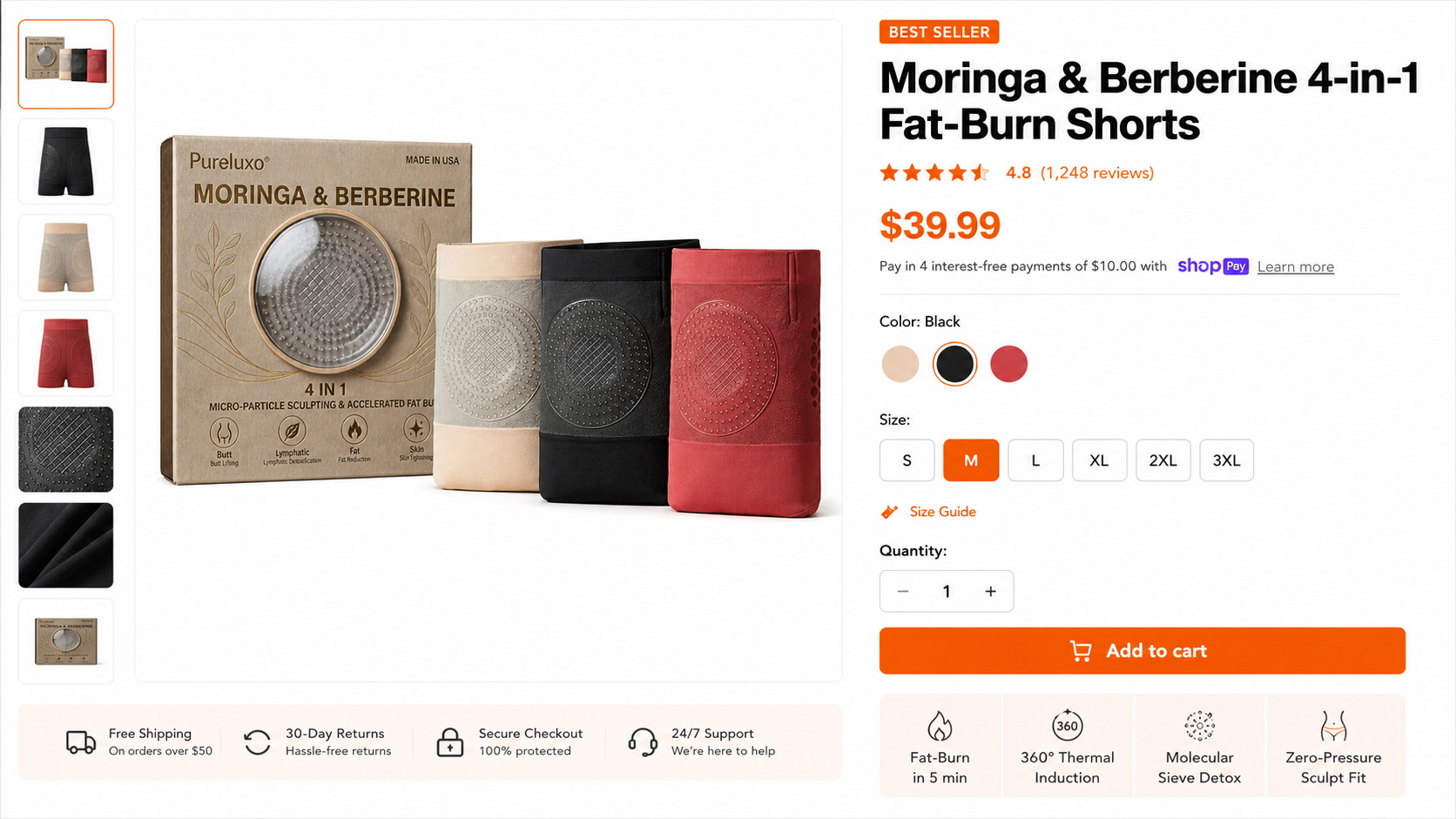
One page calls the garment Fat-Burning Shorts. Others attach changing names, invented technologies, or broad wellness labels to nearly identical photographs.
The material may provide compression, warmth, and temporary smoothing. Those familiar effects are very different from losing stored body fat.
The strongest promises are not backed by visible product evidence
Sales copy mentions moringa, berberine, NAD+, thermal induction, molecular filtration, lymphatic drainage, and metabolic activation.
Yet the reviewed pages do not provide independent laboratory reports proving which substances are embedded, how much is present, or what reaches the skin.
They also do not establish that wearing the shorts causes meaningful, lasting weight loss. Impressive terminology cannot replace measurable evidence.
The same-looking item travels through a shifting storefront network
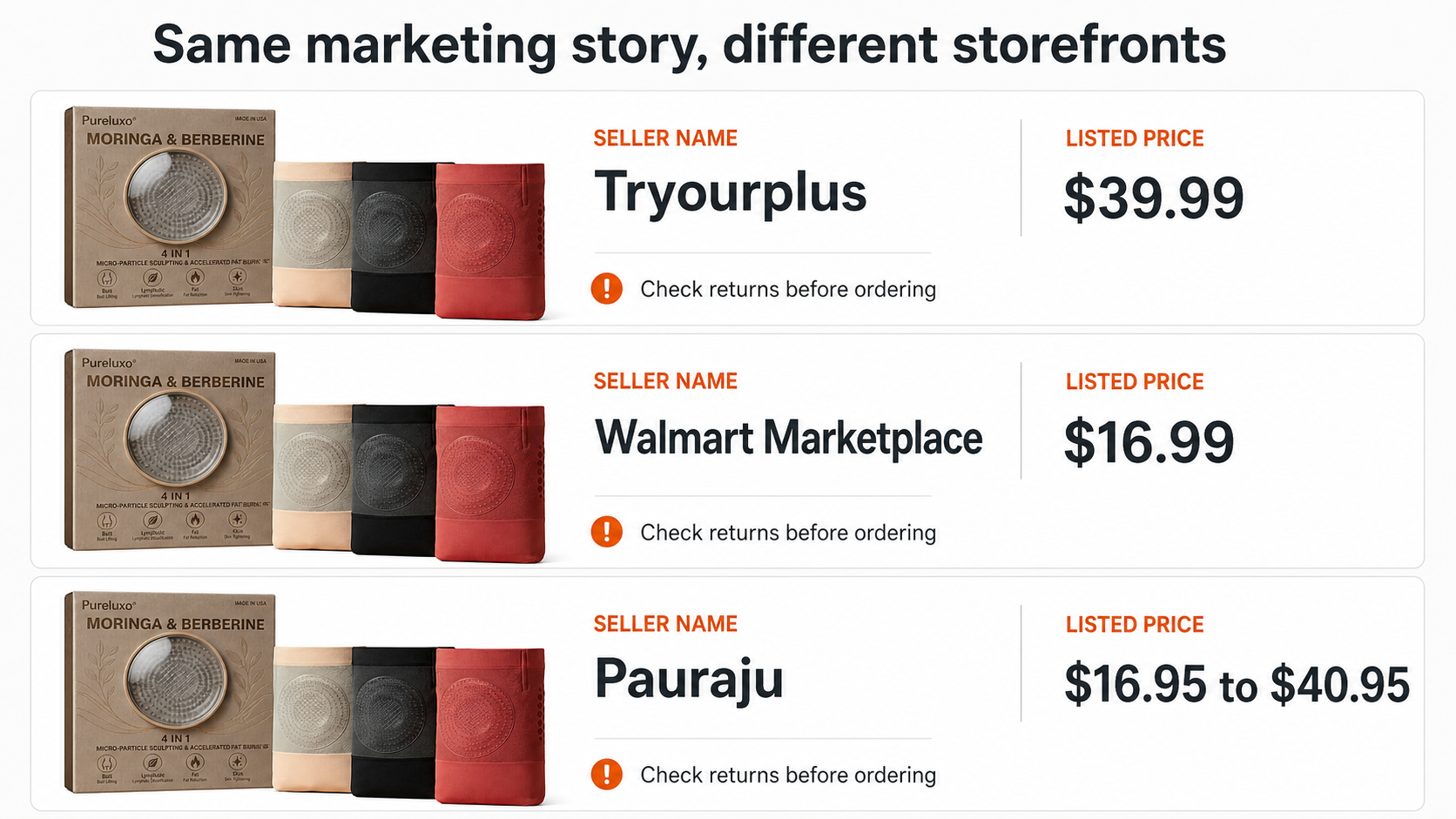
Near-identical shorts appear through Tryourplus, Pauraju, Aoecool, Walmart marketplace listings, and other online sellers. Prices, review totals, branding, and supposed origins change.
That pattern is common with generic products sourced through wholesalers. A merchant can add a new story, discount, brand name, and set of testimonials around the same item.
It does not prove that every seller commits fraud. It does mean the marketing identity should not be mistaken for a unique medical innovation.
- The product is primarily a compression garment.
- Health-style claims exceed what the visible evidence establishes.
- Nearly identical items appear under multiple seller identities.
- Advertised prices vary widely for similar-looking merchandise.
- Review totals cannot be independently confirmed from the sales pages alone.
- Return restrictions may reduce the value of a money-back promise.
Our investigation found enough inconsistencies to recommend caution. Buyers are being asked to trust an extraordinary fat-loss narrative without equally extraordinary proof.
What Are Moringa Fat-Burning Shorts?
These products resemble ordinary high-waisted compression shorts. Some versions have textured panels, reinforced seams, and fabric intended to increase warmth around the waist and thighs.
Compression can make clothing fit differently while the garment is worn. It may also create a temporarily smoother silhouette by redistributing soft tissue.
Neither effect shows that fat cells have been removed. Once the garment comes off, temporary shaping normally disappears.
Heat and sweating can also change the scale briefly through water loss. Drinking fluids restores that water, so this is not equivalent to reducing body fat.
The unusual part is the ingredient story. Sellers suggest that botanical or supplement ingredients somehow leave the fabric and influence metabolism through the skin.
That is a testable claim. A responsible seller should identify the substance, concentration, delivery method, durability after washing, and evidence from the finished garment.
We did not find that complete evidence on the reviewed pages. Ingredient names appear in persuasive copy, but the essential verification details remain missing.
The Marketing Claims Deserve a Closer Look
“Fat burning” is presented as a passive process
Some advertisements imply that five minutes of wear can activate fat burning. Others recommend longer daily use while promising changes around the abdomen, hips, and thighs.
This framing is attractive because it removes the difficult parts of weight management. The garment supposedly does the work while the buyer continues a normal routine.
Human metabolism is not controlled by a fabric slogan. Lasting fat loss depends on complex biological and behavioral factors, not compression around one body area.
Technical phrases create authority without explaining the mechanism
“360° thermal induction” sounds engineered, but warmth inside close-fitting fabric is ordinary. The phrase does not prove special metabolic action.
“Molecular sieve detox” is even less clear. The pages do not identify a toxin, measurement method, clinical endpoint, or validated filtration process happening inside the garment.
“Nano-level bioactive permeation” suggests controlled transdermal delivery. That would require safety, dosage, stability, and absorption evidence, none of which appears beside the bold promise.
Moringa and berberine names borrow credibility from supplements
Moringa and berberine are recognizable wellness terms. Their appearance in marketing can make a textile product feel medicinal, even when composition and delivery remain uncertain.
Evidence about swallowing a measured ingredient cannot be transferred automatically to wearing fabric that allegedly contains it. Route, dose, exposure, and formulation all matter.
Even a genuine ingredient does not prove the advertised outcome. The finished shorts themselves would need credible testing under realistic conditions.
Large review counts may create false social proof
One reviewed page displayed a 4.9 rating associated with more than 12,000 reviews. Other retailers showed different large totals for similar-looking shorts.
A number printed by the seller is not the same as an independently verified purchase history. Buyers should inspect dates, wording, photos, and negative reviews.
Repeated praise, vague personal stories, and no meaningful criticism can indicate curated or imported testimonials. Authentic products normally produce a wider range of experiences.
How the Moringa Fat-Burning Shorts Scam Works
Step 1: A dramatic social advertisement promises effortless slimming
The journey often begins with a short video on Facebook, Instagram, TikTok, or another feed. It shows rapid body changes and presents the shorts as newly discovered.
The advertisement may use a confident narrator, medical-looking graphics, thermal animations, or before-and-after imagery. Each element encourages emotion before careful thought.
Urgency does the rest. A countdown, limited stock warning, or unusually deep discount pressures the viewer to click immediately.
Step 2: The landing page turns fabric into a scientific treatment
The visitor reaches a long sales page filled with technical phrases. Ordinary compression becomes “body sculpting,” warmth becomes “thermal activation,” and sweat becomes “detoxification.”
Botanical names make the explanation sound healthier and more advanced. The page may imply moringa or berberine moves through skin and changes fat metabolism.
Important questions remain unanswered. There is often no accessible finished-product study, no independent composition report, and no clearly quantified delivery system.
Step 3: Testimonials replace evidence
Next come enthusiastic reviews, star ratings, transformation stories, and photographs. They create the impression that thousands of people obtained quick, consistent results.
However, the buyer may be unable to verify whether every reviewer purchased this exact garment from this exact seller.
Images can be reused, licensed, edited, or generated. A polished portrait beside a first name does not establish a genuine customer experience.
Step 4: A comparison price makes the offer feel exceptional
The store may display a crossed-out price around $79.99 and a current price around $39.99, creating an apparent 50% discount.
Yet similar-looking unbranded multipacks have appeared through marketplace sellers around $16.99. Other independent stores list related versions at many different prices.
This does not prove every garment is identical. It does weaken the suggestion that one storefront possesses a rare, proprietary breakthrough.
Step 5: Checkout focuses attention on speed, not conditions
A floating purchase button, stock counter, free-shipping threshold, or timer keeps the buyer moving. Optional extras can appear during checkout.
Customers should inspect quantity, size, shipping protection, warranties, and recurring-payment language. Never assume the price shown in an advertisement is the final card total.
Tryourplus also advertises a store subscription program. We did not verify that this specific shorts listing automatically enrolled every buyer.
That distinction matters. Check the actual cart and confirmation page rather than assuming either a one-time purchase or recurring billing.
Step 6: Delivery may reveal a generic item
The parcel can contain a functional pair of compression shorts, yet still disappoint. Fabric, sizing, stitching, packaging, or instructions may differ from the marketing impression.
A real delivery does not validate the fat-loss promises. The central issue is whether the received product performs as advertised, not merely whether something arrived.
Some merchants ship through multiple international warehouses. Tracking gaps, separate packages, and unclear return destinations can complicate the experience.
Step 7: Refund conditions make reversal harder than ordering
The Tryourplus refund page says buyers must contact support before returning anything. It also describes buyer-paid return postage and a 15% restocking charge.
That policy limits refunds to two items per order and excludes several added fees. It also says unapproved returns may not be accepted.
The same policy contains conflicting cancellation language. One passage permits cancellation within 24 hours before shipping, while another says orders cannot be canceled after placement.
When a guarantee contains several conditions, the headline promise may feel much simpler than the actual recovery process.
Why Wearing These Shorts Is Unlikely to Burn Body Fat
Compression changes appearance, not stored energy
Close-fitting clothing can temporarily reshape the surface beneath it. That visual effect can look convincing in photographs taken immediately before and after dressing.
Fat loss requires the body to use stored energy over time. Squeezing one area does not selectively instruct nearby fat cells to disappear.
Sweating is mostly a fluid response
Warm clothing can increase perspiration. A person may weigh slightly less immediately afterward because water has left the body.
That change is normally temporary. It does not demonstrate that a meaningful amount of fat was burned from the covered area.
Excess heat can also be uncomfortable. Anyone with skin sensitivity, circulation concerns, or medical conditions should seek appropriate professional guidance.
Transdermal ingredient claims need product-specific proof
Some medicines are delivered through carefully engineered skin patches. Those products use controlled formulations, measured doses, safety testing, and defined instructions.
Invoking “nano” technology does not place ordinary apparel in that category. The seller must demonstrate what enters the skin, how much enters, and with what effect.
Without that evidence, the ingredient story remains advertising, not a verified explanation of the garment’s performance.
Company, Address, and Fulfillment Red Flags
One storefront presents more than one company identity
Tryourplus contact and policy pages currently identify StarDrive Trading Inc and an address at 124 W Dakota Avenue, Suite 1, Pierre, South Dakota.
An intellectual-property page and shipping material instead name Wanyi Trading Inc with an address at 259 South Center Street, Number 211, Casper, Wyoming.
These differences do not automatically prove criminal activity. They do make it harder to know which legal entity owns the store and accepts responsibility.
The return destination is a third address
The refund policy provides a return address at 5235 Golden Lane, Las Vegas, Nevada. That is separate from both company addresses displayed elsewhere.
A return warehouse can legitimately differ from a headquarters. The concern is clarity, especially when authorization is required and the customer pays postage.
Before ordering, ask which entity will appear on the statement and which address will accept this exact product if returned.
Support appears centered on one email channel
The visible Tryourplus pages direct customers to support@tryourplus.com. We did not find a prominently listed customer-service telephone number during this review.
Email-only support can be difficult when a shipment, cancellation, or card charge requires immediate action. Save every message and confirmation with timestamps.
Do not rely on contact details copied into an advertisement. Open the seller’s policies independently and compare them with the receipt.
International fulfillment can obscure the supply chain
The shipping policy says orders may come from warehouses in the United States, Asia, the United Kingdom, or Australia, depending on available stock.
That wording is consistent with a broad fulfillment network, not necessarily a specialized local manufacturer. It also makes the product’s actual origin harder to predict.
Do not call these shorts medically engineered because a landing page uses technical vocabulary. Look for the manufacturer, fiber composition, country of origin, and test documentation.
Warning Signs to Check Before Buying
No single warning sign settles the question. Several appearing together should make a buyer pause and preserve evidence before paying.
- Rapid fat-loss promises from passive clothing.
- Medical or scientific phrases without finished-product studies.
- Botanical ingredients mentioned without concentration or testing details.
- Huge review totals that cannot be verified elsewhere.
- Nearly identical product photography across unrelated stores.
- Multiple company names or addresses within one storefront.
- Conflicting cancellation or return instructions.
- Buyer-paid return shipping and restocking charges.
- Deep discounts based on an unverified comparison price.
- No clear manufacturer behind the claimed textile technology.
Take screenshots of the page, cart, policies, and claimed guarantee. Store pages can change after a campaign ends or complaints begin.
Search the product image and key marketing phrases. Finding identical copy under several names can reveal a reseller pattern within minutes.
Compare the final checkout total against reputable marketplace listings. Account for quantity, materials, shipping, and return eligibility before judging price alone.
What to Do if You Have Fallen Victim to This Scam
- Save the complete record. Capture the advertisement, product page, checkout, promised delivery date, refund terms, order confirmation, tracking page, and every support exchange.
- Contact the seller in writing. State the exact requested outcome, include the order number, and set a reasonable response deadline. Keep proof that the message was sent.
- Check for recurring billing. Review the receipt, account portal, and card statement. Cancel any subscription you knowingly or accidentally accepted, then retain the cancellation confirmation.
- Ask your card issuer about options. Explain whether the problem involves nondelivery, misrepresentation, an unauthorized charge, or a refused cancellation. Provide your evidence promptly.
- Do not mail an unapproved return. Request the authorized destination and instructions first. Use tracked shipping and photograph the contents, label, and sealed parcel.
- Report misleading health claims. File a complaint with the relevant consumer-protection or advertising authority in your country, especially when marketing promises medical outcomes.
- Lock down exposed accounts. Replace any password entered on the store, especially when it protects other services. Enable multifactor authentication and scan suspicious downloads with Malwarebytes.
- Reduce further advertising exposure. AdGuard can block many malicious ads and tracking requests, but it cannot reverse a purchase or guarantee every deceptive page disappears.
Stay calm and work in order. A detailed timeline and prompt written notice usually make a dispute easier to understand.
Do not threaten support or delete messages. Clear documentation is more useful than an angry exchange when a bank or authority reviews the case.
Frequently Asked Questions
Are Moringa Fat-Burning Shorts a scam?
The garment category is real, but the reviewed marketing uses unverified fat-loss and ingredient claims. Company and policy inconsistencies add further reasons for caution.
Do the shorts really contain moringa or berberine?
The sales copy says they do, but we found no independent finished-product laboratory report confirming composition, concentration, durability, or skin delivery.
Can compression shorts burn belly fat?
Compression can temporarily smooth the body’s outline and increase warmth. It does not establish targeted or permanent fat loss.
Why do identical shorts appear at different prices?
Generic merchandise can be sold by multiple retailers with different branding, bundles, markups, and promotional stories. Similar photographs do not always guarantee identical specifications.
Does Tryourplus automatically enroll every buyer in a subscription?
We verified that the store offers subscriptions generally, not that every shorts purchase automatically enrolls buyers. Read the cart and final confirmation carefully.
What should I do before ordering?
Verify the legal seller, final price, garment materials, size chart, return destination, cancellation rules, and payment type. Save copies of every promise before paying.
The Bottom Line
Moringa fat-burning shorts are generic compression shapewear sold with unsupported claims that plant particles enter skin, activate metabolism, drain lymph, and burn targeted fat.
The same design appears across unrelated sellers, while prices, review totals, supposed technology, and business identities shift. That is a marketing pattern, not proof of innovation.
The claims are the scam. If you want shapewear, buy traceable clothing and do not pay a medical premium for invented botanical or targeted fat-loss technology.

Join the discussion
0 commentsShare your experience or ask a question about this article.
Discussion
Start the conversation
Have a question or something useful to share? Add the first comment.