

A friendly message can feel harmless, especially when it arrives during a quiet evening and the conversation seems unusually easy. In Pennsylvania romance scams, that simple beginning is often the first move in a patient financial fraud.
The person on the other side may sound caring, attentive, and sincere. What matters is not how convincing the story feels, but what happens when affection turns into urgency, secrecy, and a request for money.
Overview
What is the Pennsylvania romance scam?
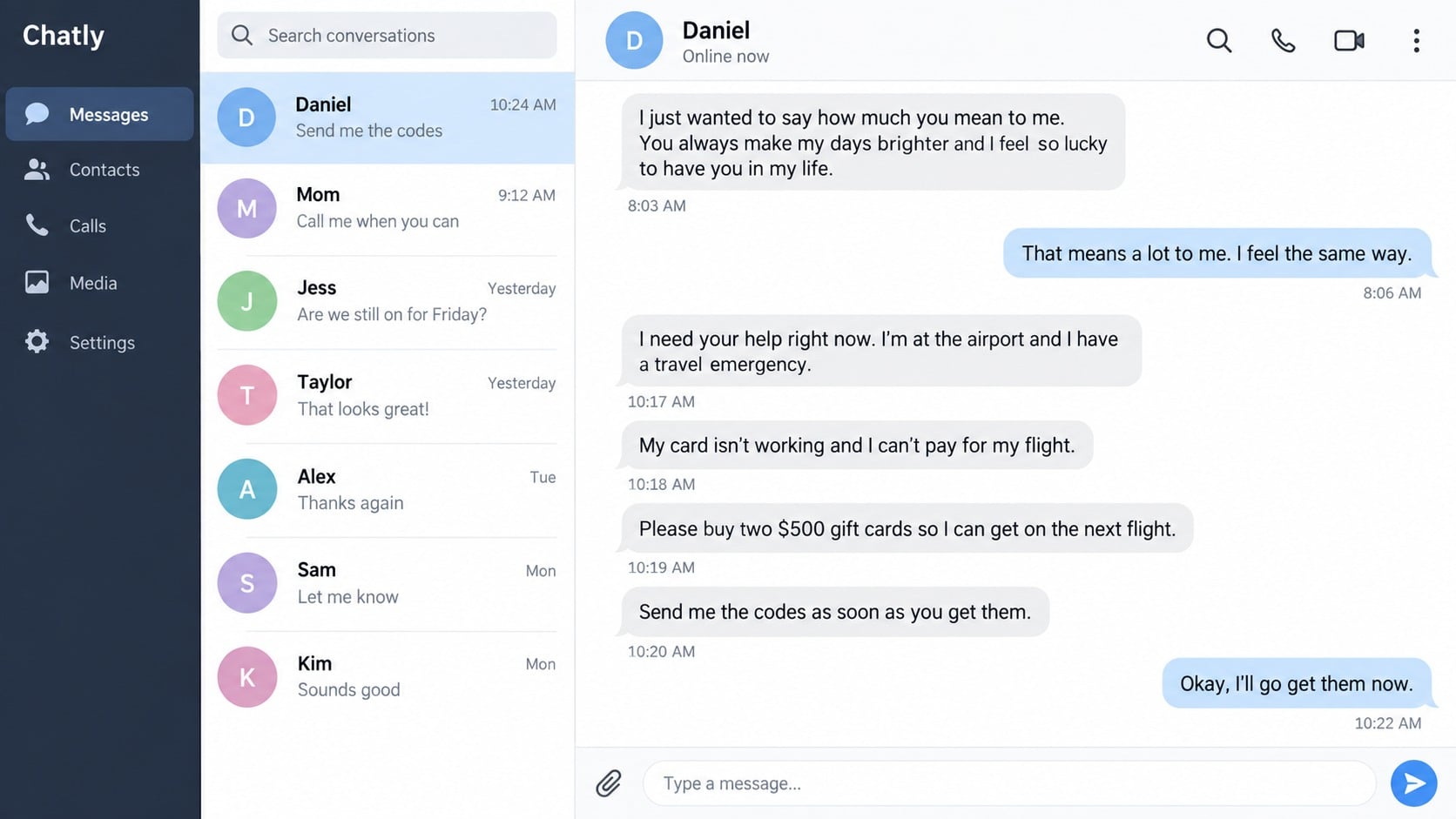
The Pennsylvania romance scam is not one single message or criminal group. It is a pattern in which an impostor builds an online relationship with a Pennsylvania resident, gains trust, and then invents reasons why the victim must send money.
Contacts commonly begin on a dating app, social network, video platform, or messaging service. The profile may present a musician, military member, engineer, contractor, doctor, entrepreneur, or widowed parent whose work supposedly keeps them far away.
Pennsylvania’s Office of Attorney General has warned that romance scams remain a persistent problem in the state. Its consumer warning about online romance fraud specifically notes requests involving cryptocurrency, wire transfers, and gift cards.
Why the approach can feel genuine
Romance fraud succeeds because the criminal does not always ask for money immediately. Early conversations may include ordinary questions, daily greetings, remembered details, and carefully timed reassurance. The attention creates a sense of continuity before any financial request appears.
Photos, voice notes, identity documents, travel schedules, and family stories can all be fabricated or stolen. A polished profile proves only that someone assembled convincing material. It does not establish that the person sending the messages owns that identity.
The scammer may also mirror the target’s hopes and concerns. If the victim values family, the persona talks about building a home. If the victim has experienced loss, the persona shares a similar tragedy. This imitation makes the relationship seem unusually compatible.
The warning signs that matter most
No single awkward sentence proves fraud. The stronger signal is a cluster of behaviors that repeatedly protects the stranger from verification while moving the victim toward payment.
- The person quickly moves the conversation away from the original dating or social platform.
- Video calls are refused, repeatedly interrupted, dark, blurry, or replaced with prerecorded clips.
- Plans to meet are always canceled by a new emergency, fee, accident, or travel problem.
- The relationship becomes intense before the two people have met and independently verified each other.
- Money is requested through gift cards, cryptocurrency, wire transfer, cash, or a payment app.
- The victim is asked to keep the relationship or the transfer secret from relatives and bank staff.
- A new investment opportunity appears after trust has been established.
The Federal Trade Commission’s romance scam guidance gives one especially useful rule: never send money or gifts to an online sweetheart you have not met in person. That boundary cuts through even an elaborate story.
How the Pennsylvania Romance Scam Works
Step 1: The scammer selects a believable identity
The fraudster begins with a profile designed to explain future absences. A supposed overseas contractor can blame poor internet access. A deployed service member can claim security rules prevent calls. A touring performer can say a manager controls travel and finances.
Profile photographs may belong to a real person who has no connection to the scam. Names can change from one target to the next, while the same biography, photos, and emotional script are recycled across many conversations.
A Pennsylvania location in the victim’s profile may help the criminal tailor the approach. They can mention a familiar town, sports team, restaurant, or planned visit without actually living anywhere near the state.
Step 2: Routine conversation becomes emotional grooming
Instead of making an immediate demand, the scammer creates a rhythm. Good-morning messages, late-night conversations, compliments, and questions about the victim’s life can continue for weeks. Consistency is used as evidence of sincerity.
The persona may disclose a painful past, claim to be lonely, or say the victim is the first trustworthy person they have met in years. These disclosures encourage the target to respond with private information that can later be used for pressure.
When relatives express concern, the scammer may describe them as jealous, controlling, or unwilling to accept the relationship. Isolation is valuable to the criminal because an outside observer can recognize contradictions that feel less obvious from inside the bond.
Step 3: Verification is delayed without ending the relationship
A genuine long-distance relationship can involve scheduling problems, but a scam requires endless excuses. The camera is broken, a secure workplace bans video, the microphone fails, or the person suddenly has a medical emergency before a planned meeting.
Some criminals use stolen videos, altered images, or brief low-quality calls to reduce suspicion. A short clip that appears to show the claimed person is not the same as a spontaneous conversation in which they respond naturally to unpredictable questions.
The target is encouraged to judge the relationship by emotional intensity rather than verifiable facts. Each failed meeting then becomes another opportunity for sympathy instead of a reason to stop.
Step 4: The first financial emergency appears
The initial request is often framed as a temporary bridge. A ticket must be rebooked, customs is holding equipment, a child needs medicine, a bank account is frozen, or a contract payment is delayed. The explanation is urgent but just plausible enough to invite help.
The requested amount may begin small to test compliance. If the victim pays, the scammer learns that emotional pressure works and that the payment channel is available. A promised repayment date then keeps the victim waiting.
The emergency also serves as a loyalty test. Questions are treated as evidence that the victim does not care, while payment is portrayed as something any loving partner would provide.
Step 5: The payment method removes ordinary protections
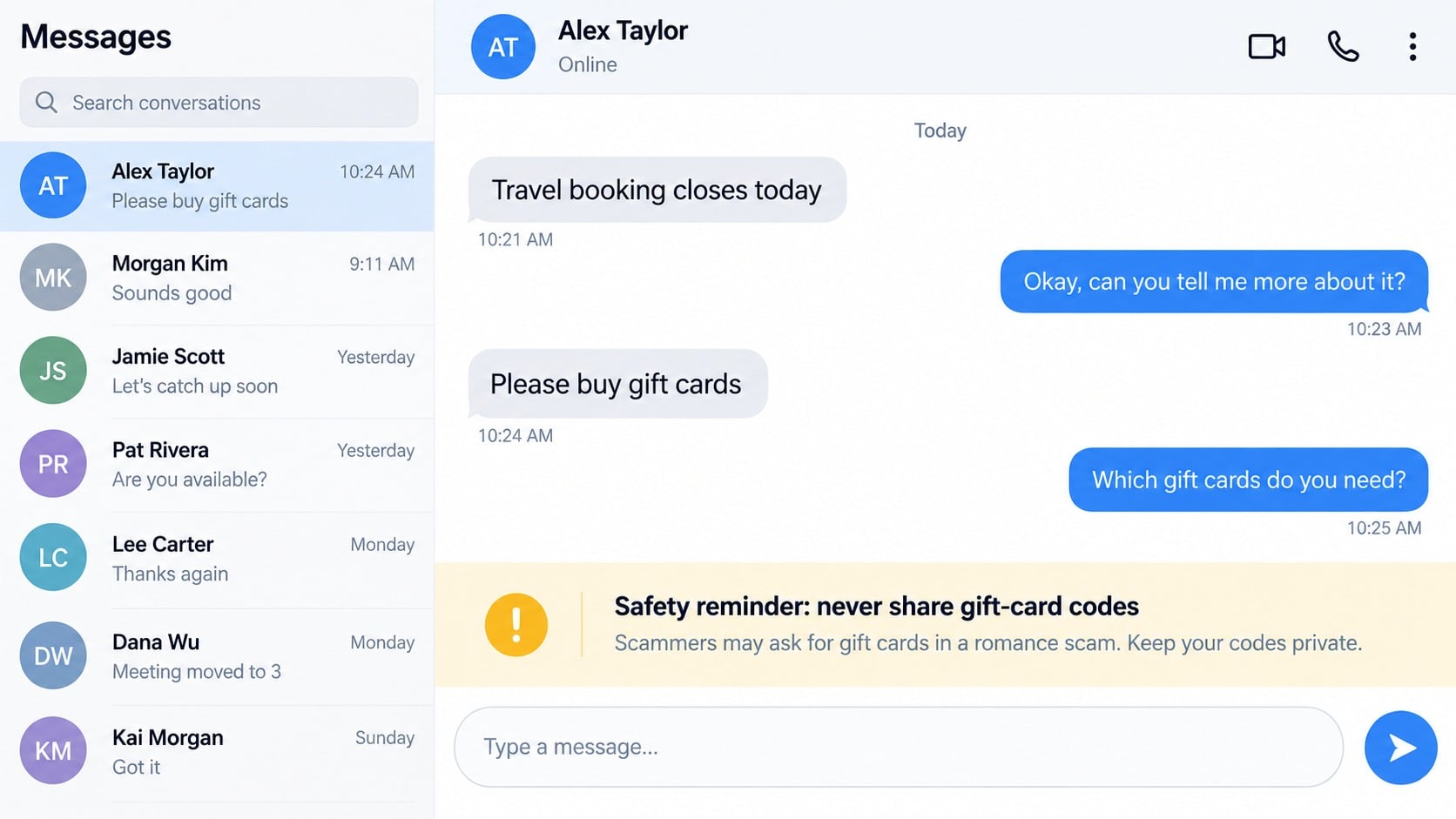
Gift cards are attractive to scammers because the code can be redeemed quickly once photographed or typed into a message. The physical card never needs to leave Pennsylvania. A receipt does not guarantee recovery after the value has been spent.
Wire transfers and cryptocurrency serve a similar purpose. They reduce the chance of a routine card dispute and can move value beyond the victim’s bank. A fraudster may coach the victim on what to tell a cashier or bank employee.
If a financial institution pauses the transfer, the scammer may become angry or invent a new deadline. That reaction exposes the real priority: completing the payment, not protecting the victim.
Step 6: One crisis expands into a chain of payments
After the first transfer, the promised meeting or repayment does not happen. Instead, a new obstacle appears. There may be a tax, hospital balance, attorney charge, luggage release fee, business penalty, or additional travel expense.
Past payments make the next request harder to reject. The victim may hope that one final transfer will recover everything already sent. Scammers deliberately use that hope, promising that the relationship and all repayments are just one step away.
In some cases, the romance story shifts into an investment pitch. A dashboard shows invented profits, but withdrawals require more deposits. The emotional relationship becomes the sales channel for a second fraud.
Step 7: The scammer disappears or returns under a new role
When the victim refuses, runs out of money, or demands independent proof, the contact may vanish. Accounts are deleted, numbers stop working, and promised travel never occurs. The identity was disposable from the beginning.
Another person may then appear as an investigator, attorney, recovery specialist, or government agent who claims the stolen money has been located. An upfront recovery charge signals a second attempt to exploit the same loss.
Real investigators do not guarantee recovery in exchange for gift cards or cryptocurrency. Treat unexpected recovery messages as a fresh scam and verify any agency through contact information you find independently.
How to Verify an Online Relationship Without Escalating the Conflict
Verification works best when it is calm, specific, and independent. You do not have to prove that the other person is a criminal before protecting your finances. A refusal to send money is a reasonable boundary in any new relationship.
Ask for a live video conversation at a mutually practical time. During the call, request a simple spontaneous action or discuss a detail from the current conversation. Do not accept a prerecorded greeting as a substitute.
Run reverse-image searches on several profile photos, not just one. A match to another name, occupation, country, or public figure is a serious warning. No match is not proof of authenticity because stolen images may be new or private.
Search distinctive phrases from the person’s biography and emergency story. Reused wording can reveal scripts reported by other targets. Verify claimed employers through public contact details, but do not call a number supplied only by the stranger.
Tell a trusted friend the complete story, including payment requests. Scammers benefit when facts are revealed one piece at a time. An outside person should see the full timeline, the cancellations, the financial instructions, and the explanations.
Company, Address, and Fulfillment Checks
Check whether any claimed employer can confirm the role
If the persona claims to work for a company, hospital, military unit, shipping line, or international organization, find that entity’s official website yourself. Do not use a directory, email address, or telephone number sent in the chat.
Many employers will not disclose personal details, but they may confirm whether a domain, department, or contact process is genuine. A stranger who discourages even basic verification is asking for trust they have not earned.
Test the address against the story
Search the claimed home, office, hotel, or project address using independent maps and public records. An empty lot, unrelated business, mail service, or address copied from a legitimate company does not support the persona’s claim.
Be alert when every location remains vague. Real travel creates checkable details such as airports, dates, reservations, and local time. Fraud stories often contain impressive place names but collapse when the timeline is examined.
Examine payment recipients as separate identities
A request to pay a manager, cousin, agent, supplier, or assistant adds another unverified person. The scammer may say this arrangement is necessary because their own account is unavailable. In reality, third-party recipients can be money mules.
Never assume a bank account is safe because it is located in the United States. Domestic accounts can still receive fraudulent transfers. The name on the account should match a verified purpose, and a mismatch is a reason to stop.
Question promises about travel, delivery, and repayment
Romance scams often revolve around something that is always about to be fulfilled: a flight, package, contract, inheritance, or repayment. Each delay produces another charge while the promised result remains out of reach.
Do not pay a supposed courier, customs office, airline, or lawyer through a link supplied in the relationship. Contact the real organization independently and ask whether the reference number and requested charge exist.
What to Do if You Have Fallen Victim to This Scam
- Close the conversation and capture its history. Do not announce an investigation or send one last payment. Save profile URLs, usernames, email headers, telephone numbers, chat exports, receipts, wallet addresses, transaction IDs, photos, and the complete timeline before accounts disappear.
- Contact every payment provider immediately. Tell the bank, card issuer, wire service, payment app, gift-card company, or cryptocurrency exchange that the transaction was induced by fraud. Ask whether a recall, freeze, dispute, or recipient-account review is still possible.
- Secure financial and email accounts. Change passwords from a trusted device, beginning with the email account that can reset other services. Use a unique password for each account, enable strong multi-factor authentication, review forwarding rules, and remove unfamiliar recovery methods or active sessions.
- Watch for identity misuse. If you shared a Social Security number, identity document, bank statement, or extensive personal data, visit IdentityTheft.gov for a tailored recovery plan. Consider fraud alerts or credit freezes with the major credit bureaus.
- Check the device if files or software were involved. If the contact persuaded you to install an app, open an unexpected attachment, or grant remote access, disconnect that device from sensitive accounts. Run a complete scan with Malwarebytes and remove unknown remote-control tools.
- Reduce exposure to malicious follow-up pages. AdGuard can help block known phishing, advertising, and tracking domains during normal browsing. It cannot reverse a transfer or prove that a message is genuine, so account and payment recovery still come first.
- Report the fraud through official channels. Submit the evidence to ReportFraud.ftc.gov and the FBI Internet Crime Complaint Center. Pennsylvania residents can also contact the state Office of Attorney General’s Bureau of Consumer Protection.
- Warn the platform and people around you. Report the profile to the dating or social service. If your account was used to contact others, tell those contacts directly. A private conversation with a trusted relative can also interrupt pressure and reduce the risk of a recovery scam.
Do not pay anyone who promises guaranteed recovery, secret access to a cryptocurrency wallet, or priority treatment from law enforcement. Recovery scammers often quote accurate details because the original criminal shared or sold the victim’s information.
Frequently Asked Questions
Are all long-distance online relationships scams?
No. Distance alone does not prove fraud. The concern grows when identity cannot be independently verified, meetings are endlessly canceled, secrecy is encouraged, and money is requested through methods that are difficult to reverse.
Can a video call prove the person is genuine?
A natural, extended video call is useful, but it is not perfect proof. Stolen clips, filters, impersonators, and manipulated media exist. Combine a live call with reverse-image searches, consistent facts, independent contact details, and a firm no-payment boundary.
Why do romance scammers ask for gift cards?
The codes can be transmitted instantly and redeemed without the scammer holding the physical card. Once spent, the value may be difficult to recover. A romantic partner asking for card numbers or PINs is presenting a major fraud warning.
Should I confront the person with my evidence?
You do not need a confession. Preserve evidence, stop payments, secure accounts, and report the profile. A confrontation can prompt the scammer to delete records, intensify manipulation, or shift into threats.
Can my bank recover money sent to a romance scammer?
Recovery depends on the method, timing, and destination. Contact the provider immediately and describe the transaction as fraud. Do not assume the loss is irreversible, but be cautious of anyone outside the provider who guarantees a refund for an upfront charge.
What should I say to a relative who may be involved?
Lead with concern rather than ridicule. Ask to review the full timeline together, focus on repeated payment requests and failed verification, and suggest a pause before any transfer. Shame can push a victim deeper into secrecy.
The Bottom Line
A Pennsylvania romance scam turns attention and affection into leverage. The decisive warning is not an imperfect profile. It is the moment an unverified online relationship demands money, secrecy, or financial access.
Slow the situation down, involve someone you trust, and verify every identity outside the conversation. If money has already moved, preserve evidence and contact the payment provider immediately. Fast, practical action offers a better chance of limiting the damage.








