

The storm has passed, but rain is still finding its way through the roof. Then a contractor appears at the door and says a crew can start today if the homeowner signs now. A post-hurricane roof repair offer can feel like rescue.
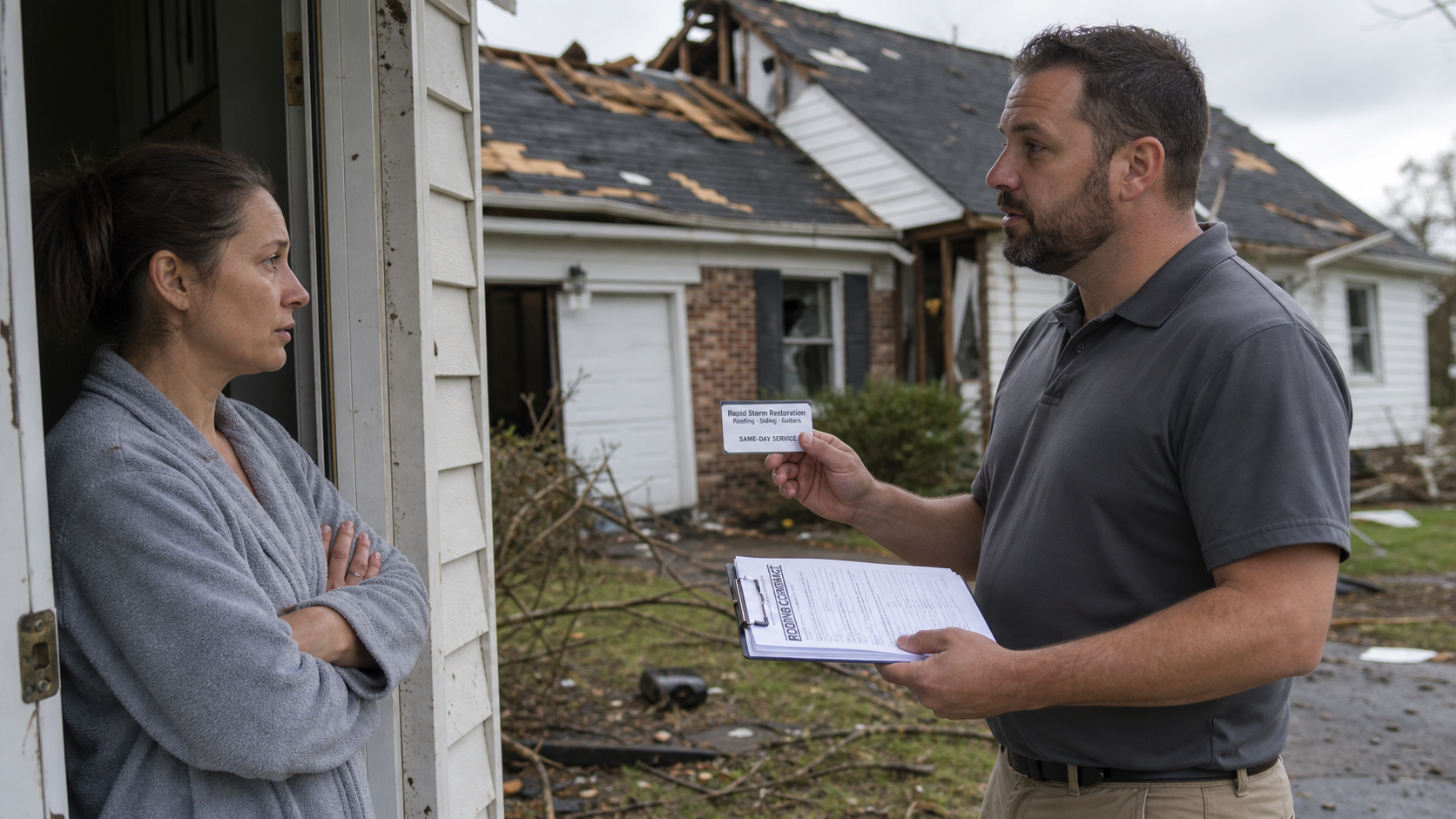
Storm-chasing contractors move quickly into damaged communities. Some are legitimate businesses responding to real demand, while others use the emergency to collect large deposits or insurance checks before disappearing.
The salesperson may point to visible damage, claim materials are almost gone, and offer a neighborhood discount that expires that day. Pressure replaces the time normally used to verify a license, insurance, address, and references.
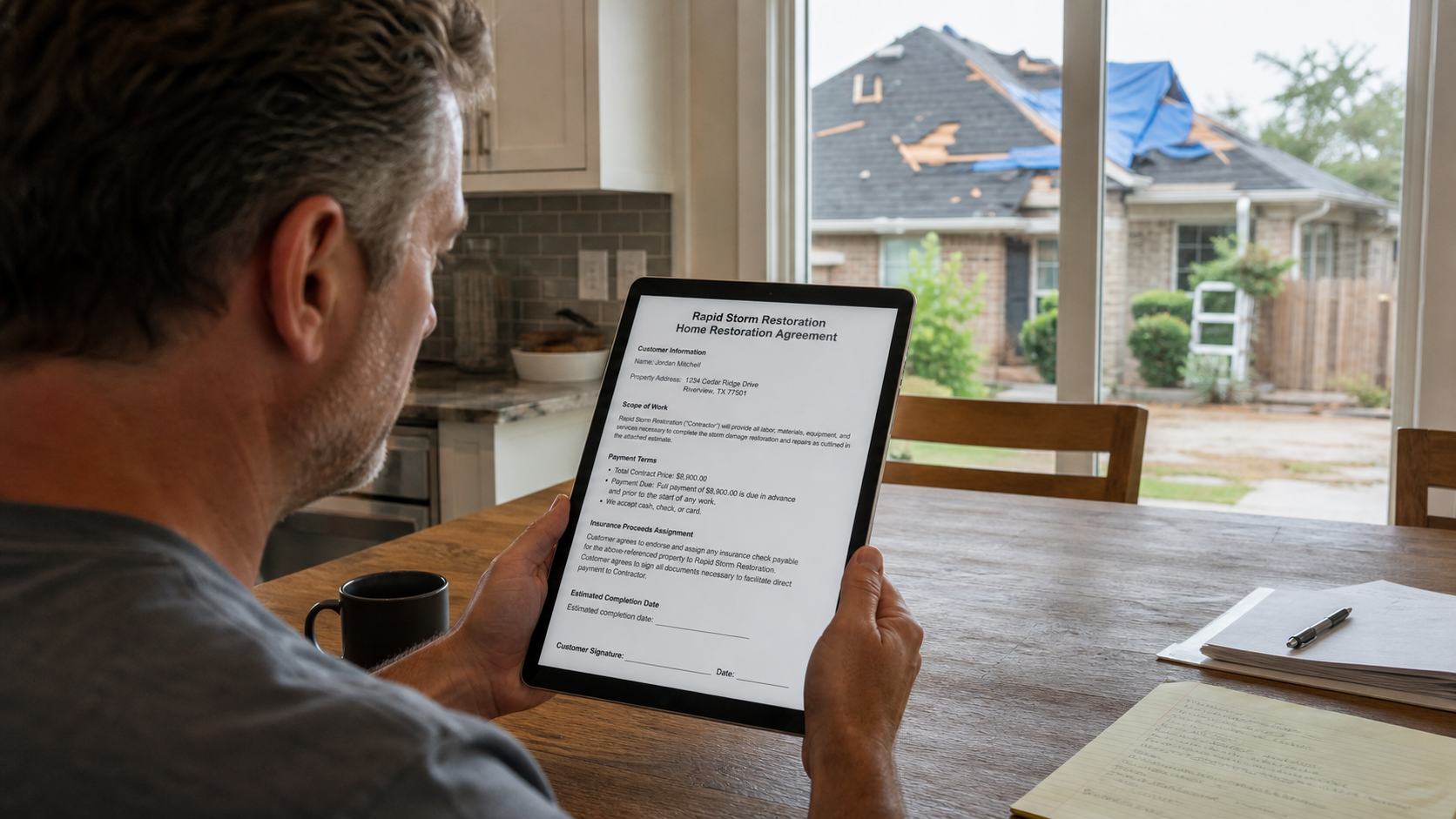
A dangerous contract may require full payment upfront, assign insurance benefits to the contractor, leave the scope or completion date blank, or permit financing through an unfamiliar lender.
Overview
It can also be the beginning of an unfinished job, a vanished payment, or a contract that hands away control of the insurance claim.
The emergency makes normal comparison shopping feel impossible
A leaking roof, unsafe tree, flooded room, or missing windows need prompt attention. Scammers exploit that genuine urgency by claiming the homeowner has only one chance to secure a crew or materials.
Temporary protection and permanent repair are different decisions. A homeowner can arrange safe emergency mitigation without signing an incomplete repair contract at the door.
Insurance language can disguise a one-sided agreement
The contractor may promise to handle everything with the insurer and say the repair will cost only the deductible. That promise can hide an assignment of benefits, broad payment authority, or work beyond what the insurer approves.
The FTC advises homeowners not to rely on a contractor to explain coverage and never to sign an insurance check over to the contractor.
The loss continues when work is absent or deliberately poor
After a large deposit, the crew may not return, may use unsuitable materials, or may complete only enough work to demand another payment. An unlicensed contractor can leave the homeowner responsible for permits and injuries.
The safest contract ties payments to defined milestones, permits, inspections, receipts, and satisfactory completion. Final payment should remain with the homeowner until the work is finished.
- The contractor appears unsolicited immediately after a storm.
- A same-day discount is tied to signing before verification.
- The contractor says licensing or permits are unnecessary.
- The homeowner is asked to sign a blank or incomplete agreement.
- Full payment or a very large deposit is required upfront.
- Payment must use cash, wire, payment app, gift card, or cryptocurrency.
- The contractor asks the homeowner to sign over an insurance check.
- A lender recommended by the salesperson controls the financing.
- No fixed business address, proof of insurance, or local references can be verified.
Why Disaster Recovery Attracts Aggressive Contractors
A hurricane creates more repair demand than local contractors can immediately handle. Roofers, tree crews, water-remediation teams, adjusters, and suppliers may all be booked for weeks.
That shortage gives credibility to a salesperson who says the crew must be reserved immediately. Homeowners may also be displaced, exhausted, and trying to protect possessions from further damage.
Insurance adds another deadline. The homeowner is documenting loss, waiting for an adjuster, and trying to understand deductibles, depreciation, emergency mitigation, and approved scope.
A storm chaser can sound experienced because the same script has been used after many disasters. Knowing common insurance terms does not prove the contractor is licensed, insured, financially stable, or authorized by the insurer.
The important distinction is between a contractor who can document identity and performance, and a salesperson whose promise exists only while the payment is still available.
What FTC and FEMA Contractor Warnings Emphasize
The FTC warns that unlicensed contractors and scammers often appear after hurricanes, wildfires, tornadoes, and other disasters.
Common tactics include immediate-repair promises, full upfront payment, blank contracts, and hard-to-reverse payment methods.
FTC guidance says homeowners should verify licenses and insurance, obtain multiple written estimates, review a complete contract, and avoid signing over insurance checks.
The agency also notes that FEMA does not charge an application fee. A person demanding payment to help a household qualify for FEMA relief is an impostor or scammer.
FEMA contractor-fraud guidance identifies unsolicited visits, cash-only demands, missing written documents, no fixed business location, and requests to sign over insurance or compensation checks as warning signs.
Both agencies recommend payment schedules tied to completed work. When possible, payment by credit card or check provides a clearer record than cash-like transfers.
How the Post-Hurricane Roof Repair Scam Works
Step 1: A storm chaser enters the damaged neighborhood
The salesperson watches weather reports, insurance activity, tarped roofs, debris piles, and damaged signs. Door-to-door visits begin while residents are still assessing loss.
A magnetic truck sign, branded shirt, clipboard, and local phone number create the appearance of an established crew.
Step 2: A free inspection turns into an urgent diagnosis
The contractor climbs onto the roof or points to damage from the ground, then claims the structure will fail or the insurer will deny the claim unless work starts immediately.
Some damage may be real, but the salesperson's interpretation should be checked by the insurer and another qualified contractor.
Step 3: A same-day discount prevents comparison
The homeowner is told that shingles, tarps, dumpsters, or crew time must be purchased that afternoon. A large discount supposedly disappears if the contract is reviewed later.
The deadline keeps the homeowner from checking the license, insurance, complaints, address, and competing estimates.
Step 4: The contract transfers more control than expected
Blank spaces may remain for price, materials, start date, or completion. Another clause assigns insurance benefits or lets the contractor negotiate and receive claim funds.
Verbal promises about materials and timing are meaningless if the written agreement allows something different.
Step 5: A large or irreversible payment is collected
The contractor demands full payment, a large deposit, or the endorsed insurance check. Payment may be requested by cash, wire, app, cryptocurrency, or an unfamiliar financing company.
The money moves before permits, materials, a crew schedule, and performance have been verified.
Step 6: Work is delayed, partial, or deliberately inadequate
The crew may remove materials and then request more money, install a small patch, or stop responding. A new reason appears for every missed date.
Shoddy repairs can cause leaks, mold, code problems, and insurance disputes, leaving the homeowner worse off than before.
Step 7: The business vanishes or enforces the contract
A disposable company may close its phone line and move to the next disaster area. Another operation may threaten liens or collections under the agreement the homeowner signed.
Recovery depends on complete records, prompt contact with the bank and insurer, licensing complaints, and legal advice about the contract and property rights.
Company, Address, and Fulfillment Checks
The truck logo may not match a registered contractor
Ask for the full legal name, license number, employee identity, insurer, and local registration. Confirm them with state or county authorities, not through links supplied by the salesperson.
A trade name printed yesterday is not evidence of a company that will answer warranty calls next year.
The address may be a mailbox or temporary storm office
Search the business and contract addresses. A P.O. box, motel, virtual office, vacant lot, or unrelated property cannot establish a permanent repair operation.
FEMA specifically warns about contractors without a fixed business location. Local references and permit history provide better evidence.
Support may disappear after the deposit
Call the office before signing and ask about permits, scheduling, warranty service, subcontractors, and cancellation. Verify that the same legal company answers every channel.
Rotating phone numbers, generic voicemail, unanswered email, and refusal to provide a certificate of insurance are reasons to walk away.
Materials, permits, and workmanship must be traceable
The contract should specify roofing system, manufacturer, product line, color, quantities, underlayment, flashing, ventilation, disposal, code requirements, and warranty.
Confirm who obtains permits and inspections. Keep delivery records, progress photos, lien waivers, invoices, and proof that subcontractors and suppliers were paid.
How to Hire a Contractor Without Delaying Necessary Protection
Address immediate safety first. Stay away from downed lines, unstable structures, floodwater, and unsafe roofs. Use emergency services and qualified temporary mitigation when needed.
Notify the insurer through a known policy number before committing to permanent work. Ask what documentation, inspections, emergency repairs, and approvals are required.
Photograph every damaged area before temporary work begins. Capture wide views, close details, serial numbers, debris, and interior water paths so the insurer and later contractors can distinguish storm loss from new work.
Get at least two or three written estimates when practical. Compare scope and materials, not only total price. A large difference needs a clear explanation.
Verify the contractor's license and insurance with the issuing authority and insurer. Ask for references from work completed before the current storm.
Ask who will perform the work. A verified sales company may subcontract to an unknown crew, so confirm supervision, workers compensation, liability coverage, permits, and responsibility for damage or cleanup.
Request supplier and subcontractor lien waivers at each payment stage. This helps show that money reached the people providing labor and materials instead of leaving the property exposed to additional claims.
Read every line of the contract and fill every blank. Include exact work, materials, total price, payment milestones, start and completion dates, permits, cleanup, warranty, and cancellation rights.
Pay a reasonable deposit allowed by local law, then tie later payments to inspected progress. Do not make final payment until the work is complete and satisfactory.
Warning Signs to Watch For
- The contractor arrives unsolicited immediately after the storm.
- A free inspection becomes a catastrophic diagnosis.
- The price expires before license and insurance can be checked.
- The salesperson says permits are unnecessary.
- The contract contains blank spaces or vague materials.
- Full payment is required before work begins.
- The homeowner must sign over an insurance check or claim rights.
- Payment must use cash or another hard-to-reverse method.
- The business has no fixed address or pre-storm history.
- More money is demanded after only partial demolition or patching.
A damaged roof needs prompt protection, but a rushed signature can create a second disaster. Emergency conditions do not make a contractor exempt from proof.
What to Do if You Have Fallen Victim to This Scam
- Stop additional payments. Tell the contractor in writing that disputed work and charges must be documented. Do not send more money because a caller threatens delay, liens, or loss of materials.
- Contact the bank or card issuer. Report fraud, misrepresentation, or nonperformance and ask what transfers, checks, or card payments can be stopped or disputed. Act before funds are moved.
- Notify the insurance company. Explain any assignment, endorsed check, changed scope, or suspicious contractor contact. Ask the insurer to flag the claim and confirm who may receive payments.
- Secure the property safely. Use a verified professional for emergency tarping or mitigation if needed. Do not let a payment dispute leave people exposed to structural, electrical, water, or mold hazards.
- Preserve the complete job record. Save the ad, business card, license claim, contract, financing papers, checks, receipts, messages, calls, photos before and after work, materials, and worker identities.
- Check for digital compromise. If the contractor sent apps, remote forms, or unusual attachments, change exposed passwords and run a full Malwarebytes scan. Remove unknown browser extensions or remote-access software.
- Block malicious contractor ads and links. AdGuard can reduce access to known phishing pages and deceptive ad domains during the search for replacement help. It does not verify licenses or workmanship.
- Report the contractor. Contact the state licensing board, attorney general, local consumer protection office, insurer, and FTC at ReportFraud.ftc.gov. Report FEMA impersonation through official FEMA channels.
- Get legal help for liens or assignments. Do not ignore a lien notice, financing agreement, or collection demand. A local attorney or legal-aid organization can review cancellation rights, insurance assignments, and property deadlines.
Frequently Asked Questions
Are all out-of-town storm contractors scams?
No. Legitimate companies travel after disasters. The contractor still needs verifiable licensing, insurance, references, written terms, permits, and accountable payment practices.
Should I let a contractor handle the insurance claim?
A contractor can provide estimates, but confirm coverage and payment directly with the insurer. Do not surrender claim control without understanding the legal effect.
Is a large upfront deposit normal after a hurricane?
Deposit rules vary. Full payment upfront is a major warning. Check local limits and use milestone payments tied to verified work.
Does FEMA charge for repair grants or applications?
No. FEMA does not charge an application fee. Anyone demanding money to qualify you for FEMA funds is a scammer.
What should a roof contract specify?
It should identify the legal contractor, license, materials, scope, price, payment schedule, dates, permits, cleanup, warranty, and cancellation rights with no blanks.
Can Malwarebytes tell whether a contractor is licensed?
No. It can help detect malicious software and links. Contractor licensing must be confirmed through state or county authorities.
The Bottom Line
A post-hurricane roof repair scam does not need to invent the damage. It exploits real destruction and the understandable need to stop it quickly.
Separate emergency protection from permanent repairs, verify the contractor independently, keep control of insurance funds, and tie payments to written, inspected milestones.
If money or claim rights were already surrendered, contact the bank and insurer, secure the property, preserve every contract and image, report the contractor, and obtain legal help before deadlines pass.

Join the discussion
0 commentsShare your experience or ask a question about this article.
Discussion
Start the conversation
Have a question or something useful to share? Add the first comment.