

The caller says a back brace is already covered and costs nothing. They only need to confirm a Medicare number and ask a few health questions before shipping it. A free Medicare back brace call can sound like a routine benefit.
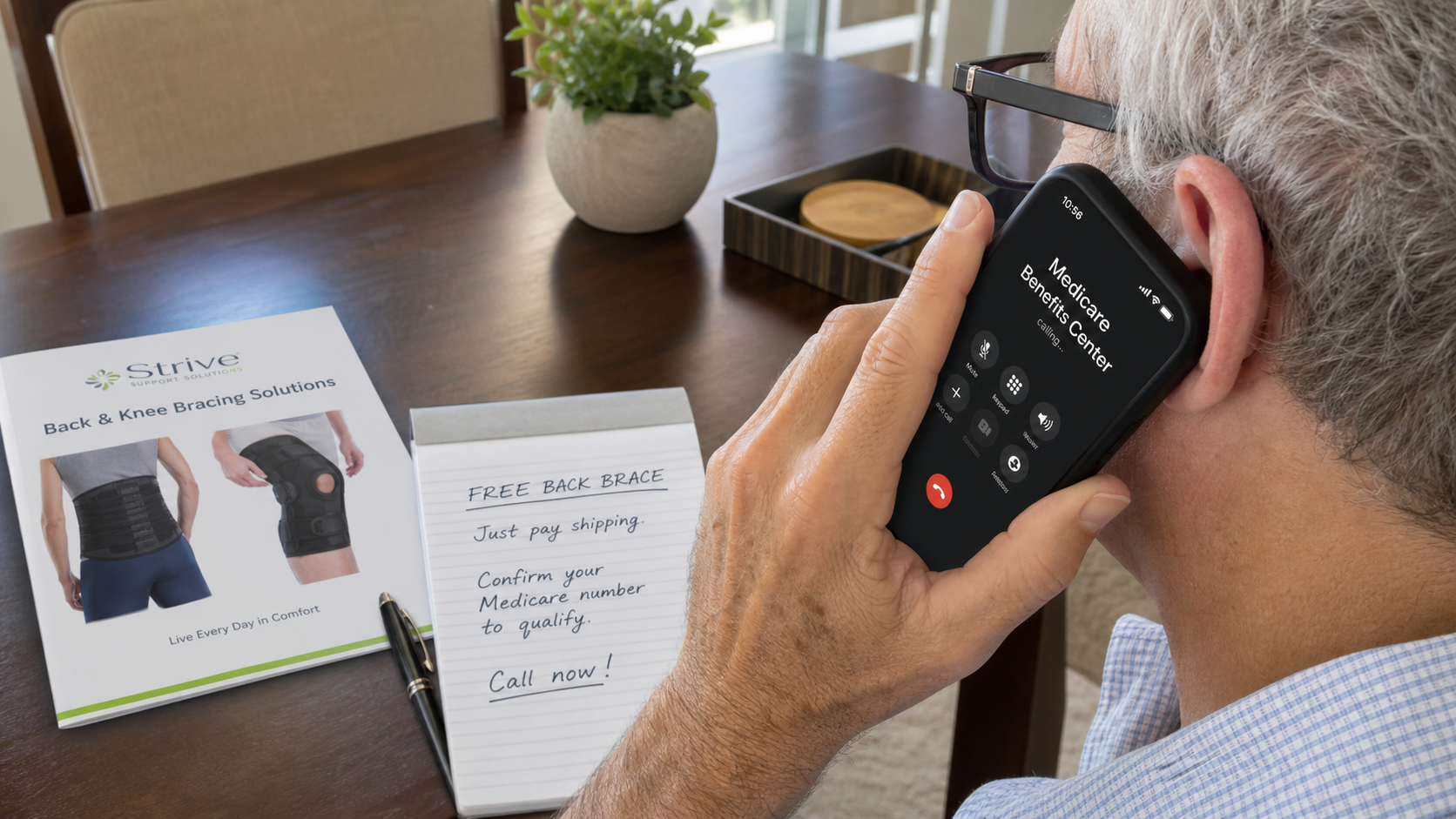
Unsolicited callers may offer braces, testing, pain products, or other medical equipment and claim Medicare approved the order. Medicare does not call or visit people at home to sell products.
Once a Medicare number is shared, it can be used to submit claims for equipment or services the beneficiary did not request, receive, or need. A package may even arrive to make the billing look legitimate.
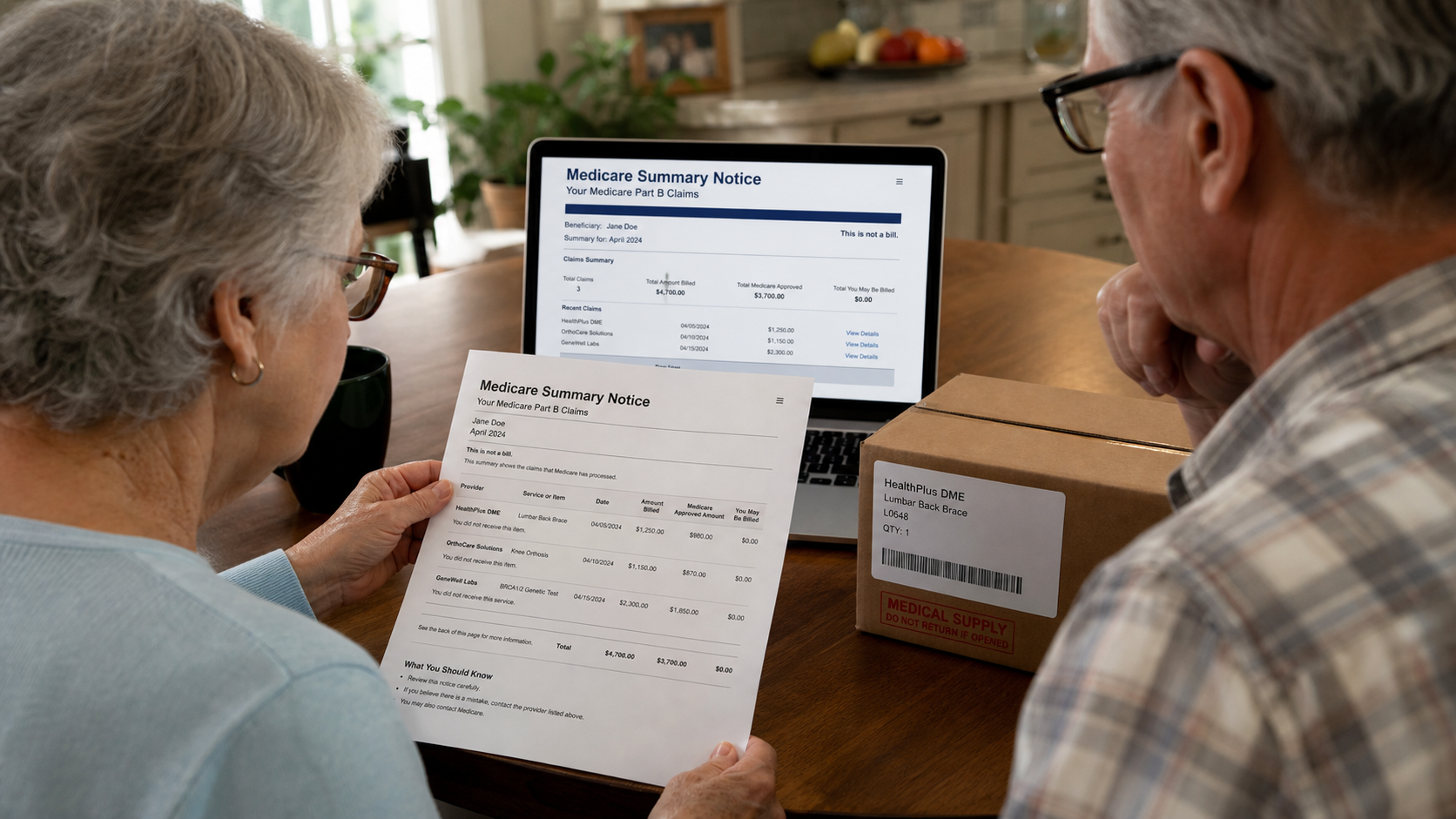
The warning often appears later on a Medicare Summary Notice or Explanation of Benefits. Unfamiliar providers, repeated equipment codes, or services on impossible dates can reveal medical identity theft.
Overview
The real value to the caller may be the identity and billing information attached to that card.
Free is a billing promise, not proof of medical need
Medicare may cover certain durable medical equipment when coverage rules and medical need are satisfied. An unsolicited salesperson cannot decide that a beneficiary qualifies simply by asking a few scripted questions.
The offer may hide billing to Medicare, a plan, or the beneficiary. Even when the recipient owes $0, a fraudulent claim can affect records and future benefits.
The Medicare number functions like valuable identity data
A beneficiary identifier can be combined with a name, birth date, address, diagnosis, and provider information to create claims that appear connected to a real patient.
The scammer may say the number is needed only to check eligibility. The FTC advises never sharing it with someone who calls unexpectedly.
False claims can damage more than the program
Incorrect equipment, diagnoses, hospice enrollment, home-health services, or tests can enter a medical and billing history. That record may confuse legitimate providers and interfere with coverage.
The FTC warns that Medicare fraud and errors contribute to medical identity theft, loss of benefits, and higher healthcare costs. Reviewing every statement is therefore a personal safety step, not only a civic duty.
- An unexpected caller claims to represent Medicare or a benefits center.
- A brace or test is described as free and already approved.
- The caller requests the Medicare number to confirm eligibility.
- Health questions are used to manufacture a diagnosis or order.
- The beneficiary is told not to contact their doctor or plan.
- Equipment arrives from an unfamiliar supplier.
- Statements show items, tests, or providers the beneficiary does not recognize.
- Another caller offers more free equipment after the first claim.
Why Braces and Medical Equipment Are Used in Billing Schemes
Back, knee, wrist, and shoulder braces are tangible products that can be shipped widely. A package on the doorstep creates a paper trail that may make a claim appear more plausible.
The equipment can also be described through common symptoms. Many older adults have occasional back or knee pain, so a scripted caller can turn an ordinary answer into an apparent medical justification.
Medicare billing is complex and often separated from the visit where care occurred. Beneficiaries may not recognize provider names, supplier names, and billing codes on the first reading.
A fraud operation benefits when the recipient assumes a $0 patient balance means no harm occurred. The actual claim may still draw public funds and create incorrect medical data.
Not every billing mistake is intentional. The correct response is to ask the provider or plan to explain the entry, then report anything that remains unauthorized or false.
What Medicare and FTC Guidance Says
The FTC reported in 2026 that Medicare fraud, errors, and abuse cost taxpayers about $60 billion each year. Examples included double billing, charges for braces that were not received or needed, fake drug plans, and Medicare-number theft used for hospice fraud.
The agency says Medicare will not call or visit a beneficiary at home to sell anything. Representatives ask for information only in limited circumstances after the beneficiary initiated contact.
Official Medicare fraud guidance lists free equipment offers that require only a Medicare number as a warning sign. It also identifies billing for unnecessary back braces, orthotics, wheelchairs, scooters, and genetic tests.
Beneficiaries are advised to review Medicare Summary Notices and plan statements, ask providers about unfamiliar entries, and call 1-800-MEDICARE when fraud is suspected.
The Senior Medicare Patrol can help people read statements and report concerns. Medical identity theft should also be reported through IdentityTheft.gov for a personalized recovery plan.
How the Free Medicare Back Brace Scam Works
Step 1: An unsolicited benefits call reaches the beneficiary
The phone may display a local number or a name such as Medicare Benefits Center. Caller ID can be spoofed and the business may have no connection to Medicare.
The agent says the person was selected, referred, or identified as eligible through a recent benefit update.
Step 2: Common pain is turned into apparent qualification
The caller asks whether the person has back pain, difficulty walking, arthritis, or a prior injury. Broad questions are designed to produce at least one yes.
The agent may imply that answering qualifies the person without an examination or conversation with the treating clinician.
Step 3: The product is described as free and urgent
The brace supposedly has no cost, no risk, and limited availability. The caller warns that benefits expire or that a new rule will make the equipment harder to obtain later.
The sales pitch focuses on avoiding discomfort and missing coverage, not on whether the device is appropriate.
Step 4: Medicare and medical identity details are collected
The caller asks for the Medicare number, date of birth, address, doctor, diagnoses, plan details, and sometimes a Social Security number or bank information.
Those details can support false billing and broader identity theft. Medicare does not need an unexpected caller to confirm information already held in official records.
Step 5: An order or authorization is created
A supplier may seek a signature, recorded yes, or remote medical approval. The beneficiary might receive a form designed to appear like consent for a legitimate prescription.
A provider identity can be used without the beneficiary understanding who ordered the brace or whether the clinician reviewed the need.
Step 6: Equipment arrives or a claim appears
A brace may arrive from a company the beneficiary never chose. Another version submits the claim without delivering anything.
The statement may list multiple orthoses, repeated supplies, or an unfamiliar test. A $0 patient responsibility does not make the entry correct.
Step 7: The identity is reused for more billing
A successful claim can lead to calls offering additional braces, genetic testing, home-health services, or enrollment changes. The stolen data may circulate among marketers and suppliers.
False records can continue until the beneficiary, provider, plan, Medicare, or investigator challenges them.
Company, Address, and Fulfillment Checks
The benefits-center name may hide the actual supplier
Ask for the legal company, supplier number, physical address, clinician who ordered the item, and exact product. Then verify those details independently through Medicare and state records.
A caller using Medicare in its name is not automatically part of the federal program.
The return address may be only a fulfillment warehouse
A package can come from a shipping depot that handles many brands and suppliers. That address may not identify the company that marketed, prescribed, or billed the item.
Compare the package, statement, privacy notice, supplier enrollment, and card or invoice details. Each entity should have a clear role.
Support may redirect every question instead of answering
A genuine supplier should explain the order, prescription, coverage, return process, and billing contact. Generic agents who cannot identify the ordering provider are not enough.
Do not call only the number on the package. Use the statement, Medicare, plan, or official supplier records to find independent contact details.
The equipment and clinical order must be traceable
Confirm the manufacturer, model, lot or serial information, instructions, ordering clinician, date, diagnosis, and medical necessity. Do not use a brace that fits poorly or was not recommended for you.
Ask a trusted healthcare professional whether the device is appropriate. An unexpected package is not medical advice.
How to Review a Medicare Statement for Unfamiliar Claims
Read every Medicare Summary Notice or plan Explanation of Benefits, even when it says This Is Not a Bill. Compare dates, providers, locations, services, equipment, and amounts with your own calendar.
Keep a simple healthcare journal with appointments, tests, supplies, and prescriptions. It makes unfamiliar entries much easier to recognize months later.
Check whether several claims share a supplier, ordering clinician, diagnosis, or date. A cluster of unfamiliar items can reveal that one stolen identity record is being reused across different billing categories.
Call the provider or supplier through an independently verified number and ask for an explanation. Record the date, representative, and response.
If the entry remains wrong, call 1-800-MEDICARE or the plan's fraud number. The Senior Medicare Patrol at 1-877-808-2468 can help beneficiaries review statements and understand reporting options.
Ask Medicare or the plan whether any future claims, supplier relationships, or enrollment changes should be monitored. Keep the case or reference number with the disputed statement.
Do not return equipment to a caller-selected address until Medicare or the verified supplier explains the correct process. Keep package labels, contents, and documents as evidence.
Tell regular doctors about false diagnoses, equipment, or services appearing in records so they can protect the accuracy of clinical information.
Warning Signs to Watch For
- An unexpected caller says Medicare approved a free brace.
- The caller needs the Medicare number only to confirm eligibility.
- Common pain questions supposedly replace a medical evaluation.
- The offer expires if the beneficiary speaks with a doctor or family member.
- The caller asks for a Social Security number, bank detail, or one-time code.
- Equipment arrives from a supplier never chosen.
- The statement lists a brace, test, or provider not recognized.
- Several equipment items are billed around the same date.
- A second marketer calls after the first claim.
- Support cannot identify the clinician who ordered the product.
A $0 balance does not mean a claim is harmless. If the equipment, provider, diagnosis, or date is unfamiliar, the record deserves an explanation.
What to Do if You Have Fallen Victim to This Scam
- Call Medicare or the plan through an official number. Use 1-800-MEDICARE or the number on the verified plan card. Report what was offered, what information was shared, and any unfamiliar claims or enrollment changes.
- Contact the Senior Medicare Patrol. Call 1-877-808-2468 for help reviewing statements and organizing a report. The program can explain common billing patterns without charging a recovery fee.
- Protect the Medicare identifier. Ask Medicare what replacement or monitoring steps are appropriate. Do not share the old or new number with unexpected callers.
- Correct medical and billing records. Notify the listed provider, supplier, plan, and trusted clinicians. Request written confirmation that disputed services, diagnoses, and orders were investigated or corrected.
- Preserve the equipment and evidence. Keep packaging, labels, brochures, call logs, recordings, statements, claim numbers, delivery records, and every business name. Do not discard or return items before receiving verified instructions.
- Secure other personal accounts. If a Social Security number, banking information, or password was shared, follow IdentityTheft.gov guidance, consider credit freezes, and notify affected financial institutions.
- Check devices used for forms or files. If the caller sent a link, app, or attachment, remove unfamiliar software and run a full Malwarebytes scan. This protects the device but does not remove false Medicare claims.
- Block malicious calls, ads, and websites. AdGuard can reduce known phishing and malicious advertising domains. Use official Medicare and provider addresses rather than search-ad links.
- Report fraud without paying a recovery service. Report at ReportFraud.ftc.gov and through Medicare or HHS OIG channels as appropriate. Ignore anyone who promises to erase claims or recover benefits for an upfront fee.
Frequently Asked Questions
Does Medicare ever cover a back brace?
It may cover certain medically necessary equipment when requirements are met. Coverage does not make an unsolicited sales call or every brace order legitimate.
Will Medicare call to offer free equipment?
Medicare does not call or visit beneficiaries at home to sell products. Treat unexpected equipment offers as suspicious and verify through official channels.
What if the brace arrived but I never ordered it?
Keep the package and documents, do not use it without appropriate advice, and call Medicare or the plan to report and verify the claim and return process.
Why should I care if my statement says I owe $0?
The claim may still misuse public funds, add false medical information, affect benefits, and encourage more billing under your identity.
Where can I get help reading my statement?
The Senior Medicare Patrol can help at 1-877-808-2468. Medicare is available at 1-800-MEDICARE.
Can Malwarebytes remove false medical claims?
No. It can detect some malicious software. Claims must be disputed with Medicare, the plan, providers, suppliers, and appropriate fraud authorities.
The Bottom Line
A free Medicare back brace call uses a simple product to reach something much more valuable: a beneficiary identity that can support medical billing.
Never give a Medicare number to an unexpected caller. Review every statement, question unfamiliar providers and equipment, and verify coverage through Medicare or the plan.
If data or claims were already exposed, report quickly, preserve the package and records, correct medical information, secure related accounts, and reject anyone selling a paid recovery shortcut.

Join the discussion
0 commentsShare your experience or ask a question about this article.
Discussion
Start the conversation
Have a question or something useful to share? Add the first comment.