

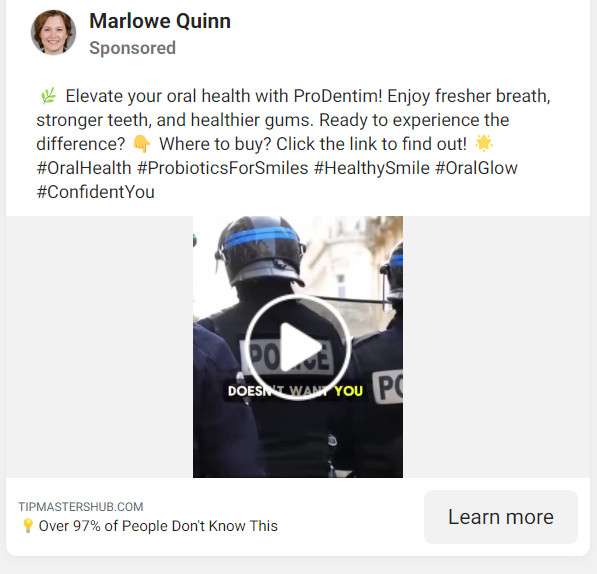
Oral health supplements are becoming an increasingly popular category, with new products emerging that promise everything from whiter teeth to fresher breath. ProDentim is one of the latest such supplements to generate buzz online, with claims it can transform your oral hygiene using the power of probiotics. But is this new oral probiotic all it’s cracked up to be? I decided to take a closer look to find out the reality behind ProDentim’s claims.
Introducing ProDentim
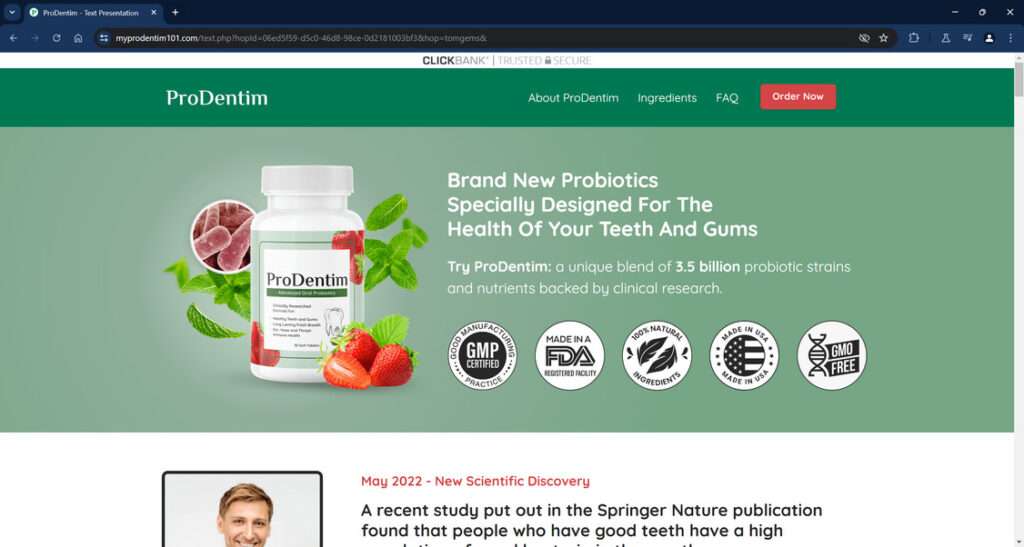
ProDentim bills itself as an “advanced oral health support supplement” that works via probiotics to improve dental hygiene.
It is marketed as a chewable tablet that utilizes “good bacteria” to provide the following oral care benefits:
- Strengthen teeth
- Freshen breath
- Support gum health
- Whiten teeth
- Balance oral microbiome
The key ingredients in ProDentim are said to be 3.5 billion probiotic strains along with a blend of plant extracts and nutrients.
It is manufactured in the USA in an FDA-registered, GMP-certified facility.
The company sells the product directly to consumers, with packages ranging from 1 to 6 bottles available on their website.
With promises of complete dental care in one supplement, it’s clear why ProDentim has captured so much attention. But how much of this hype holds up to scrutiny? Let’s analyze the evidence behind the claims.
Evaluating the Role of Probiotics in Oral Health
The central premise of ProDentim lies in the benefits of probiotics for your mouth.
What does the science say?
There is some emerging research showing certain probiotic strains may assist with:
- Inhibiting cavity-causing bacteria
- Reducing gum inflammation
- Neutralizing bad breath
However, most studies are still in early or pre-clinical stages. There is no definitive proof yet that probiotics can have a transformative effect on oral health.
Even in the studies showing potential benefits, the effective probiotic strains and dosages varied greatly. There is no established consensus on which specific probiotics (and in what amounts) are useful.
This makes it impossible to judge whether ProDentim’s formula and potency is backed by science without more transparency on the exact strains and quantities of its probiotics.
The probiotics also need to be able to survive in the oral cavity, which presents challenges due to saliva, enzymes, etc. ProDentim does not provide any evidence that its capsules adequately protect and deliver the probiotics to the mouth.
In summary: The role of probiotics in oral health shows promise but remains inconclusive. ProDentim lacks sufficient evidence for its specific formula and delivery method.
Questionable Formula and Ingredients
To assess ProDentim’s formula, I scoured the website and product labels for details. Alarmingly, the full ingredients list is not readily disclosed anywhere.
Only 5 probiotic strains are highlighted, without mention of:
- The quantities of each strain
- If other probiotic strains are included
- Non-probiotic ingredients in the formula
This lack of transparency about the ingredients is very concerning. I was unable to verify if ProDentim contains enough probiotics in clinically effective strains and dosages.
The highlighted strains – like Lactobacillus Paracasei and Lactobacillus Reuteri – only have preliminary links to oral health benefits. There is no proof these specific strains improve dental hygiene in humans when taken orally.
Peppermint oil is the only other ingredient mentioned, but once again, the concentration is unclear.
Without a complete ingredients list and dosages, ProDentim’s formula lacks credibility.
Insufficient Evidence for Dramatic Dental Health Claims
Across its website and ads, ProDentim boldly claims it can:
- Strengthen teeth
- Reverse gum disease
- Whiten teeth
- Support the immune system
However, there are zero clinical studies cited demonstrating ProDentim achieves any of these dental health results when taken as directed.
Such dramatic claims require a high bar of evidence – placebo-controlled, double-blind trials in humans. ProDentim does not meet this standard. All the dental health claims remain unsubstantiated.
Further, some of the claims are highly questionable:
Can probiotics even realistically “strengthen” or “whiten” teeth when taken orally? This seems like an implausible stretch.
ProDentim is also promoted heavily as an immune booster, despite no apparent ingredients for this purpose. This appears to be marketing hyperbole lacking scientific grounding.
Without proper proof, all of ProDentim’s lofty dental health claims should be taken with extreme skepticism.
Reviews From Real Customers Raise Red Flags
Given the limited evidence backing its formula, I next looked at ProDentim customer reviews to gauge real-world results.
ProDentim’s website only has 5-star ratings with blatantly promotional testimonials.
The lack of objective reviews continued elsewhere online:
- All YouTube reviews and demos appear paid or sponsored. The creators simply rehashed marketing claims.
- ProDentim Reviews on 3rd party sites primarily showed up on affiliate sites or brand new domains – classic signs of fabricated reviews.
- There were zero reviews on trusted forums or communities from real customers.
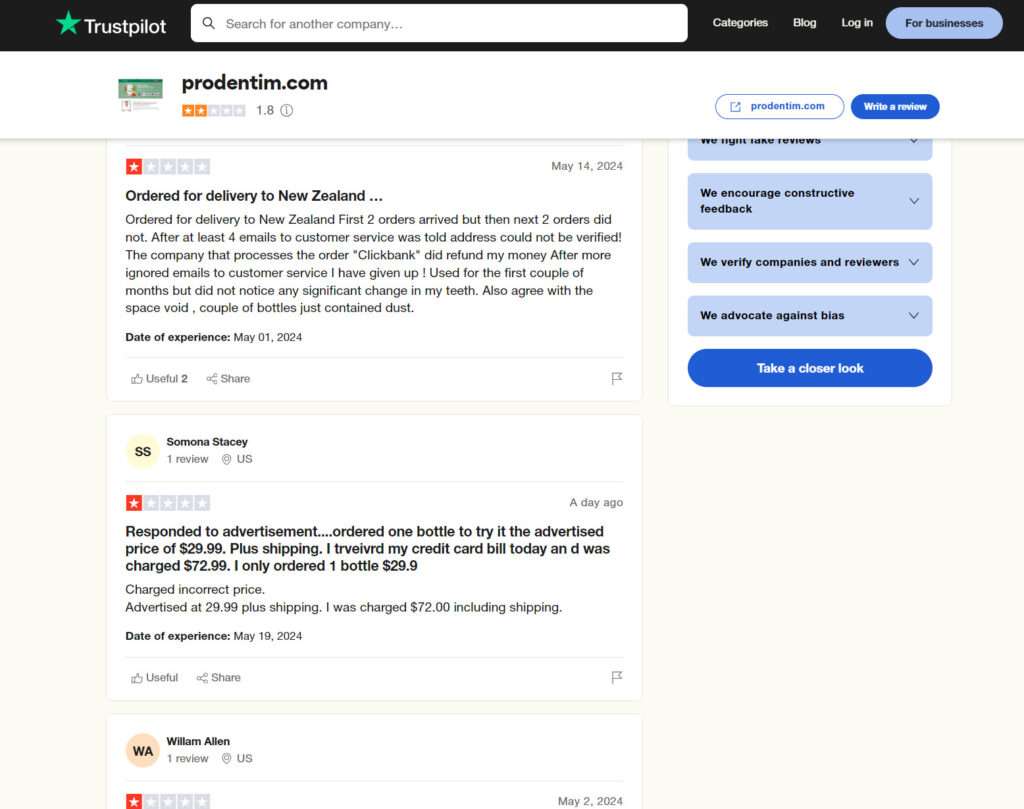
On Trustpilot, Prodentim currently scores an abysmal 1.8 out of 5 based on 59 reviews. The vast majority of customers report the product simply does not work as advertised.
Here are some telling excerpts from Prodentim’s negative reviews:
“I ordered 6 bottles Prodentim…After using 5 of the bottles I nor my dentist could see NO IMPROVEMENT with bleeding gums.”
“Ordered for delivery to New Zealand…Used for the first couple of months but did not notice any significant change in my teeth.”
“Don’t waste your money, did not do anything at all for me. Took the pills for 90 days and to no avail, might have made my teeth more sensitive.”
“I am a retired dentist and this product is an entire scam…Dental caries and periodontal disease is not cured by taking a supplement.”
“I took 1 chewable pill and it “Smelled and Tasted Funny.” The Whole bag does. It has been adulterated at the Manufacturing Plant.”
Many reviews also accuse Prodentim of refusing refunds even when contacted within the 60 day return period. Customers describe an excruciating process trying to get their money back from Prodentim and their payment processor ClickBank.
A few positive reviews do exist, with customers claiming the product worked to reduce tooth pain and sensitivity. However, even some of these “verified purchasers” admit the drastic before and after pictures used in Prodentim’s marketing seem highly exaggerated.
Overall, authentic customer feedback paints a troubling picture of Prodentim as an ineffective oral health supplement with misleading advertising claims.
Alarming Financial Motives
Beyond the limited evidence, another concerning aspect of ProDentim is the incentives driving the hype around it. ProDentim appears to operate on an affiliate marketing model:
- The brand itself does no paid advertising, relying entirely on influencers and affiliate marketers to promote the product
- These affiliates often make outrageous claims and publish positive reviews to earn huge commissions
- Affiliates have a direct financial incentive to hype up ProDentim to drive sales, regardless of actual results
As a result, the excessive buzz around ProDentim is rooted primarily in financial motives rather than genuine satisfaction. This casts further doubt on the trustworthiness of the reviews.
Lack of Reputation Adds to the Uncertainty
Lastly, I tried researching the company behind ProDentim to better understand their credibility. However, I found no details about the manufacturer or leadership team anywhere.
The website vaguely references “our professionals”, but provides zero insight into who actually makes ProDentim.
This lack of transparency about the team and company raises many questions around trust and intent. Who exactly stands behind ProDentim – and can they be held accountable for the product claims?
Without reputable professionals openly endorsing ProDentim, users ultimately have to take the company at face value – which is a tall order given the many red flags identified already.
The Final Verdict: Should You Trust ProDentim?
Given the sheer amount of hype surrounding ProDentim online, one would expect it to be solidly backed by proven oral health benefits. However, a closer look under the microscope reveals many causes for concern:
- Insufficient evidence for the role of probiotics in dental care
- Opaque formula and ingredients list
- Dramatic claims completely unsubstantiated by trials
- Suspicious lack of authentic customer reviews
- Worrying affiliate marketing tactics and motivations
- No details on manufacturer reputation or trustworthiness
In totality, these multiple issues severely undermine ProDentim’s credibility. Without further rigorous testing and transparency, there is simply too much uncertainty in its bold claims.
The concept of an oral probiotic still shows promise, but ProDentim specifically has yet to demonstrate meaningful results, despite the effusive hype. Those looking to seriously improve their dental health would be better off consulting a dentist rather than experimenting with unproven supplements.
In conclusion, ProDentim tries to position itself as a dental breakthrough, but the gap between marketing claims and scientific proof remains too wide. While probiotics may offer potential, rely on meticulously tested solutions rather than supplements peddled through influencer hype. ProDentim ultimately fails to deliver the rigorous evidence needed to recommend it for your oral health needs.
This article is for educational purposes only and does not constitute professional, financial or legal advice. The content is intended for general information and should not be construed as definitive guidance. Information contained herein is subject to change without notice.  For concerns, please contact us via the provided form.
If you are the owner of the website or product in question and wish to offer clarifications regarding your business or website, please reach out to us through the provided Contact Form.

Join the discussion
0 commentsShare your experience or ask a question about this article.
Discussion
Start the conversation
Have a question or something useful to share? Add the first comment.