


An AI supercomputer, predictable returns, and a promise to give your money back: Profit Connect made a complicated investment sound unusually reassuring.
Years later, investors are following court updates rather than monthly projections. The story behind that change offers a warning for anyone tempted by dependable-looking returns.
Overview
A confirmed investment fraud, not just an unhappy review
Profit Connect was promoted as an AI-driven cryptocurrency business. Its owner, Brent C. Kovar, was convicted by a federal jury on August 24, 2026.
The Justice Department reported that he fraudulently obtained $24 million from at least 400 investors through false return, reserve, and money-back claims.
The original operation ran from late 2017 to July 2021. Do not mistake a new article or court update for evidence that the investment has reopened.
The technology story hid the source of the money
The pitch described a supercomputer using artificial intelligence to mine cryptocurrency and verify transactions. Investors were offered fixed annual returns of 15% to 30%.
Prosecutors said the company lacked the profits and reserves needed to support those promises. Investor money funded expenses, personal benefits, and payments presented as investment earnings.
That last distinction explains the trap: receiving a payment did not establish that the promised technology had generated a profit.
What matters for investors now
- The criminal conviction and the civil recovery process are different proceedings with different purposes.
- A court-appointed receiver maintains a website with notices, filings, and claim information.
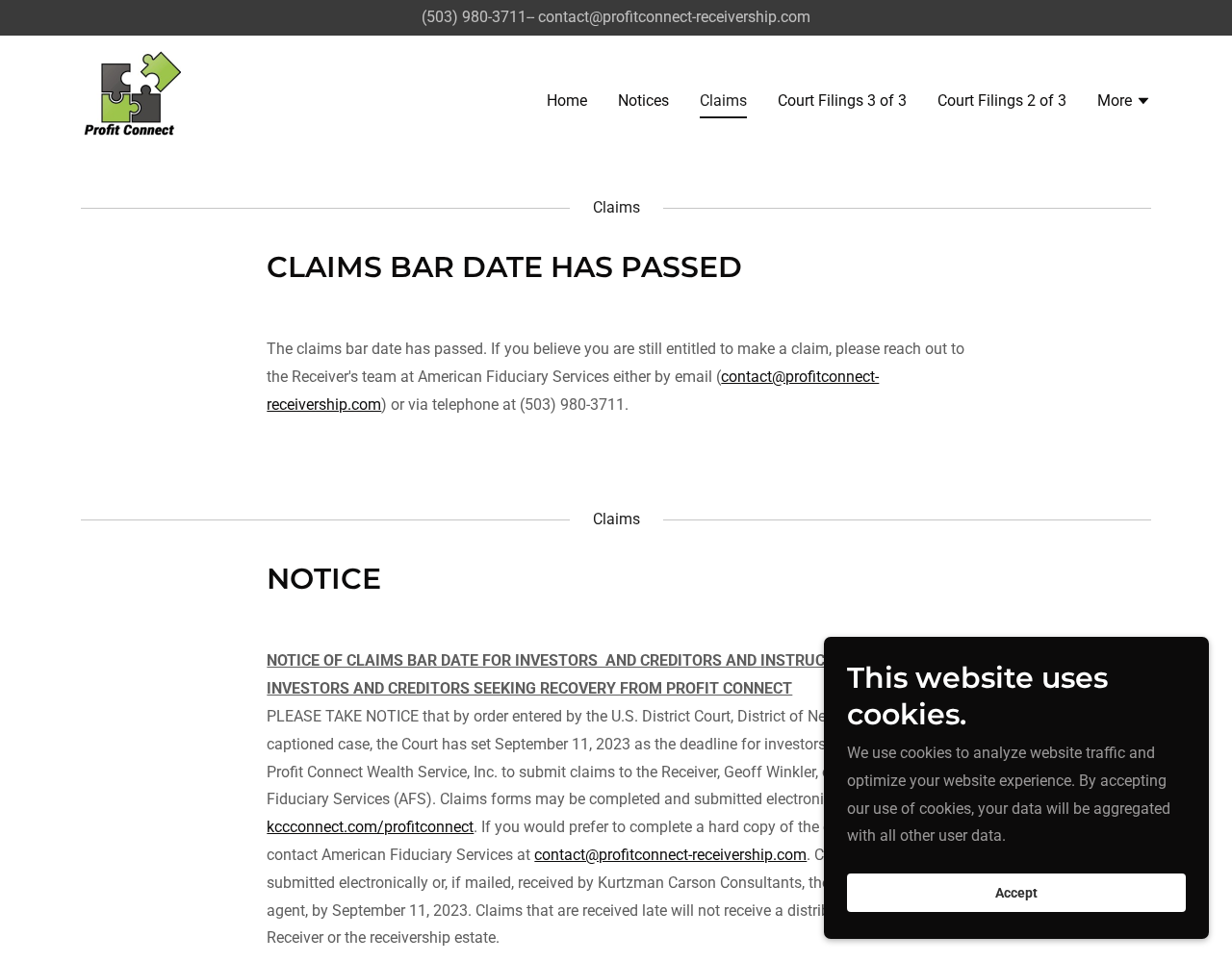
- The original claims deadline has passed; the current claims page directs questions about possible entitlement to the receiver’s team.
- No article, caller, or recovery advertisement can promise that an individual investor will receive a full refund.
Use the official recovery process for case information. Do not send new money to someone offering to unlock the investment or guarantee reimbursement.
How the Profit Connect Scam Worked
Step 1: A sophisticated technology claim made the offer sound different
Profit Connect put artificial intelligence and supercomputing at the center of its explanation. Those terms suggested an advantage ordinary investors could not easily reproduce.
That can change how someone evaluates a financial offer. Instead of asking where the returns come from, the investor starts imagining what advanced technology might achieve.
A working computer, an impressive presentation, and a registered business still would not prove that an investment generates the advertised earnings.
The useful question is simpler: can reliable records show that the advertised activity produced the money being paid out? Technical vocabulary cannot answer it.
Step 2: Fixed returns made uncertainty feel manageable
The advertised returns were annual rates, not monthly rates. That detail matters when comparing the claims with screenshots or retellings of the case.
The SEC’s original enforcement announcement described investors being assured that recommendations from the supposed supercomputer would support unusually dependable returns.
A projection can become emotionally persuasive when it is shown as a schedule. You start planning around the payments before verifying the business behind them.
Always distinguish an illustration of possible growth from a contractual promise, and a contractual promise from evidence that the payer can afford it.
Step 3: A money-back promise weakened the perceived downside
A 100% money-back guarantee encouraged the idea that someone could try the arrangement and leave if it did not suit them.
But a guarantee depends on the party making it having both the obligation and the means to honor it. The words alone create no reserve.
In this case, the promised reserves did not exist. A reassurance intended to answer the investor’s biggest fear was itself part of the deception.
Before trusting any financial guarantee, establish who owes the payment, what assets support it, and what happens if that organization fails.
Step 4: Familiar financial names supplied borrowed credibility
The case also involved false assurances about protection for investors’ money. References to recognized financial institutions can make an unfamiliar company feel supervised and secure.
Do not assume that a company using a bank has obtained that bank’s endorsement. Businesses can hold accounts without the bank approving their sales claims.
Similarly, deposit insurance and investment protection are different. The FDIC explains that its deposit insurance does not cover crypto assets or other non-deposit investments.
A logo does not tell you which account is insured, who owns it, or whether your particular transaction is covered.
Step 5: Payments to investors were mistaken for proof of profits
Kovar used investor funds to make repayments as though they came from the advertised cryptocurrency activity. That gave an account entry the appearance of business performance.
For an investor, the payment could feel like a successful test. For somebody being recruited, a friend’s receipt could seem more convincing than a polished advertisement.
Yet a payment only demonstrates that money moved. It does not identify its economic source or establish that later participants can receive the same treatment.
That is why testimonials and withdrawal screenshots cannot substitute for reliable financial information about the operation as a whole.
Step 6: The advertised exit became a recovery problem
Once the operation was stopped, investors could not simply rely on the old promise to request their money back. Recovering assets required a separate process.
Courts, investigators, and a receiver had different roles. A result in one part of the case did not automatically settle each investor’s claim.
This creates another vulnerable moment: someone waiting for money may become receptive to a caller who promises a shortcut through the process.
A real case number or familiar defendant’s name can be copied into an unrelated message. Verify the sender independently before providing information or following instructions.
Who Held the Money and Who Handles Recovery
The investment company was not your personal insured bank account
Profit Connect’s investment offer should not be confused with opening an ordinary deposit account in your own name at an insured bank.
When evaluating a financial arrangement, identify the legal recipient of the money and the rights created by the transaction, not just the institution mentioned in marketing.
Keep the agreement and payment instructions together. Differences between the advertised company and the actual recipient are facts worth preserving for investigators.
A personal promoter was not an independent financial safeguard
The SEC’s case described a network of agents and affiliates paid to bring investors into Profit Connect. A recommendation could therefore involve a financial incentive.
That matters even when the person making it is familiar, confident, or genuinely believes the offer. Their confidence does not independently validate the underlying business.
Do not infer that every promoter was convicted because Kovar was. Preserve what a particular person said and distinguish it from the findings against him.
The money-back guarantee depended on resources that were not there
A reassuring refund promise can be easy to remember and hard to enforce. Its practical value depends on the assets and accountable entity behind it.
For future offers, ask whether the supposed protection comes from the seller, an independently identified insurer, a regulated deposit arrangement, or somebody’s verbal assurance.
These are not interchangeable. Never assume a broad protection claim has been verified simply because it appears beside a familiar institution’s name.
The receiver is separate from the old sales network
The Profit Connect receivership website identifies Geoff Winkler as the court-appointed receiver and provides the relevant civil case number.
Its purpose is to communicate about the receivership, not sell a replacement investment. Use its published notices and contact route to check case-related instructions.
Do not let a former referral contact become your only source of recovery information. Compare their account with the documents and notices themselves.
What the Court Developments Do and Do Not Mean
A conviction is not the same as money returned
The criminal case establishes accountability for the proven offenses. Collecting and distributing assets involves additional work and does not follow automatically from a guilty verdict.
The August announcement scheduled sentencing for November 30, 2026. A scheduled hearing is not an imposed sentence, and a maximum penalty is not the expected outcome.
For an investor, the more immediate practical issue is the status of their own claim, contact details, and any official distribution instructions.
Different historical totals describe different stages
The SEC’s 2021 action described more than $12 million raised from at least 277 investors. The later criminal announcement reported the broader $24 million case.
Those figures should retain their dates and sources. Do not combine them into a new total or assume they represent separate sets of losses.
Likewise, an amount sought in litigation is not necessarily money collected. A proposed settlement, an approved settlement, and funds available for distribution are distinct stages.
The claims deadline has not silently restarted
The receiver’s claims page says the original bar date passed. It identifies September 11, 2023, as that deadline.
The page also directs people who believe they remain entitled to make a claim to contact the receiver’s team. Follow that route for your circumstances.
Do not treat an old online form or a new social post as an extension. This article cannot determine late-claim eligibility or change a court deadline.
What to Do if You Have Fallen Victim to This Scam
- Gather the records showing your actual payments.
Collect bank statements, receipts, contracts, correspondence, and any account statements. Keep original deposits separate from returns displayed on a spreadsheet.
Build a dated timeline showing what you paid and what you actually received. Do not count an unpaid promised balance as money returned.
- Check the receiver’s current instructions.
Use the receiver’s website and Notices page for updates. Check your existing claim confirmation before attempting another submission.
If you missed the deadline or cannot locate your records, ask the receiver’s team about the appropriate next step. Do not assume an exception applies.
- Keep your contact information current through verified channels.
A change of email, mailing address, or representative can complicate communication. Ask the official team how to update your details securely.
Do not send banking changes in response to an unexpected email until you have verified the request through a separate, established route.
- Report relevant evidence about the original scheme.
The Justice Department’s announcement directs people with fraud information to the FBI’s Internet Crime Complaint Center. Include specific transaction and communication evidence.
A law-enforcement report is not the same as filing a receivership claim. Keep confirmations for each process and follow their different instructions.
- Ask your payment provider about the actual options.
Older payments may be outside ordinary dispute or recall periods. Explain the dates honestly and ask what records or assistance the provider can still supply.
Do not rely on someone promising a guaranteed chargeback for a years-old transfer. No recovery service can make that promise binding on your bank.
- Reject fees framed as unlocking recovered funds.
An unsolicited caller may claim that a tax, verification transfer, or release payment is needed before you can receive compensation.
Do not pay on that explanation alone. Verify the exact instruction directly with the official case team, without using the caller’s link or number.
- Protect information shared with a new recovery contact.
If you disclosed a reused password, secure the legitimate account directly. If you supplied identity or banking documents, tell the appropriate provider what was exposed.
Do not give anyone an email login code, wallet seed phrase, or remote access to prove your original investment.
- Get independent advice when your claim needs interpretation.
A disputed entitlement, estate issue, bankruptcy question, or request to sign a release may require qualified advice based on your documents.
Choose assistance independently of the person offering a new investment. Preserve copies before signing anything that could change your rights.
Frequently Asked Questions
Was Profit Connect proven to be a scam?
A federal jury convicted Brent Kovar for the Profit Connect fraud in August 2026. This is more than an allegation in an online review.
That finding should not be extended into unsupported criminal accusations against every person associated with the business.
Were the advertised returns monthly or annual?
The official criminal announcement describes fixed annual rates of 15% to 30%. Do not turn those figures into monthly promises when explaining the case.
Does a repayment prove that the AI business was profitable?
No. The proven scheme included paying investors with investor money while presenting the payments as earnings from cryptocurrency activity.
A payment receipt does not establish where the money came from.
Does Kovar’s conviction guarantee a full refund?
No. Criminal accountability and financial recovery are different processes. Follow the receiver’s instructions for your claim rather than assuming a particular distribution.
Can I still file after the original claims deadline?
The deadline has passed. The current claims page directs people who believe they have an entitlement to contact the receiver’s team.
Only the appropriate case process can address your circumstances; this article does not grant an extension.
Should I pay somebody who says my recovered money is ready?
Do not pay an unsolicited contact to release it. Verify the sender and instructions independently through the official recovery channel before doing anything further.
The Bottom Line
Profit Connect’s AI story and money-back promise concealed a proven investment fraud. Do not treat technology jargon, a payment receipt, or banking references as investment protection.
If you invested, preserve your transaction evidence and use the court-appointed receiver’s current instructions. Do not turn an old loss into another payment for a recovery shortcut.

Join the discussion
0 commentsShare your experience or ask a question about this article.
Discussion
Start the conversation
Have a question or something useful to share? Add the first comment.