


Pulmoria Mullein Drops offers an appealing idea to someone tired of coughing: a small bottle, a daily routine, and the prospect of easier breathing.
The important questions aren’t about how reassuring the herbs look. They’re about the medical promise behind the advertisement and what happens after an order.
Overview
The lung-cleaning promise has already faced scrutiny
Pulmoria is an oral herbal supplement marketed for respiratory support. Its promotion has gone considerably further than describing an ordinary addition to someone’s diet.
The UK’s Advertising Standards Authority has ruled against the medical sales pitch. This isn’t simply a disagreement about whether an herbal product sounds appealing.
Do not buy these drops to undo smoking damage or treat a breathing condition. The reassuring presentation does not supply the medical evidence that promise requires.
The bottle and the billing need separate attention
Pulmoria publishes a recurring-delivery policy and a money-back policy. Those documents matter even if your immediate concern is whether the drops work.
A subscription policy does not mean every buyer was enrolled. Your actual confirmation should show whether you bought a single order or authorized repeat deliveries.
Three decisions should not be bundled together
Keep these questions separate rather than letting a discount or guarantee answer all of them:
- Is there reliable evidence for the advertised medical result?
- What exact quantity and total did you authorize?
- Does your order renew, and what must you do to end it?
Bundle and refill warning
Check your receipt’s bottle count and full charge, not a per-bottle saving. Current package defaults and checkout selections were not confirmed.
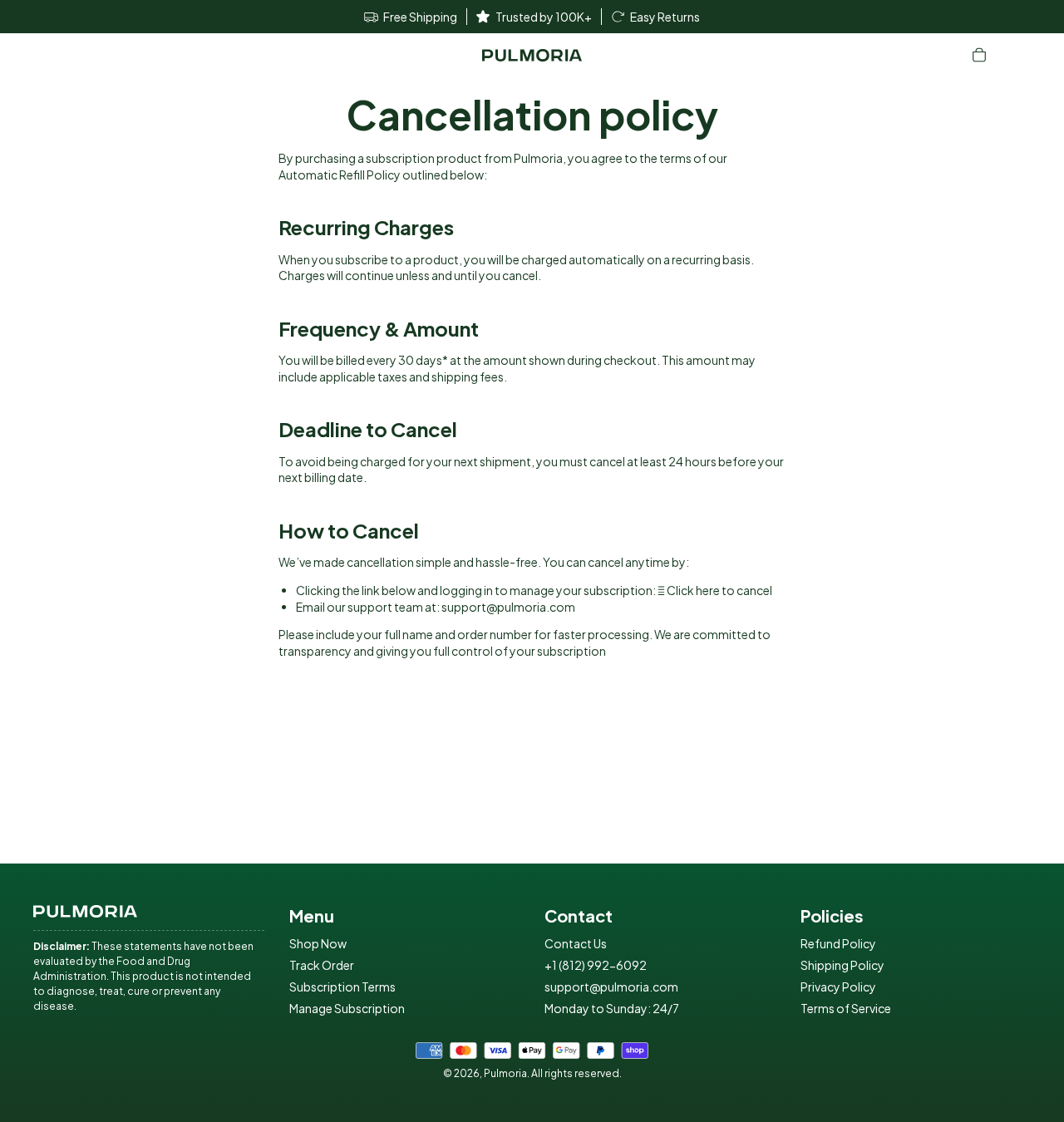
If you subscribed, Pulmoria’s policy specifies billing every 30 days and cancellation at least 24 hours before the next charge.
Save the order summary. If repeat deliveries are unwanted, cancel explicitly and keep confirmation; requesting a refund alone should not be your cancellation plan.
What the Pulmoria Advertisement Promised
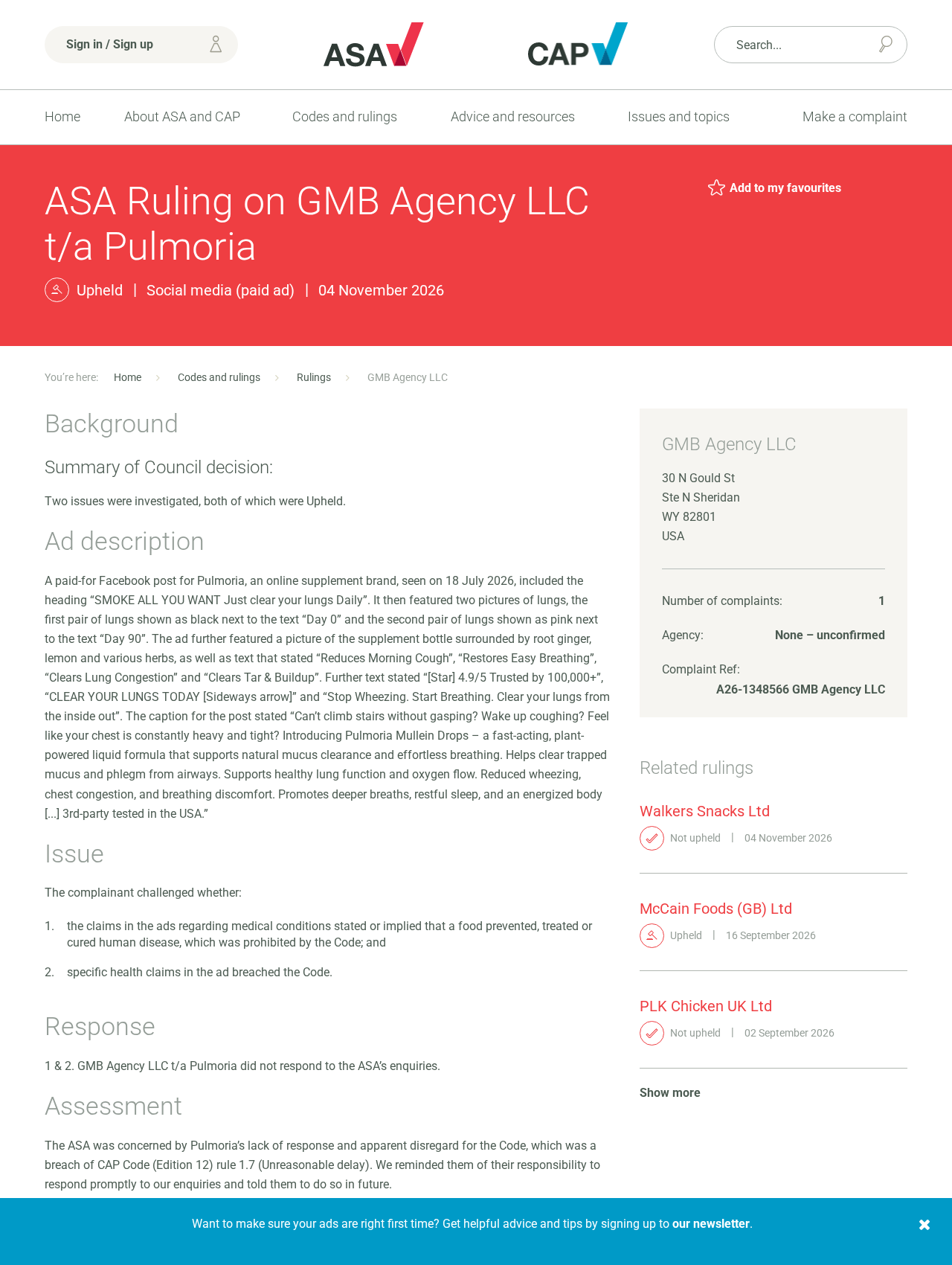
The ASA’s November 4, 2026 ruling describes a Facebook advertisement seen on July 18.
Its headline said: “SMOKE ALL YOU WANT Just clear your lungs Daily”. Dark lungs became pink in a graphic contrasting the starting point with 90 days.
The accompanying promises concerned smoking-related respiratory problems, including coughing, congestion, and tar accumulation. That is a treatment impression, not simply a pleasant herbal-drink suggestion.
The ASA found prohibited disease claims for a food supplement. It also found no evidence that the specific health claims met the applicable authorization requirements.
GMB Agency LLC, trading as Pulmoria, did not respond. The ASA said the ad must not reappear in that form and referred it to compliance.
That decision is enough to reject the medical sales pitch. It is an advertising ruling, not laboratory testing of a bottle or a criminal conviction.
The troubling message is the implied bargain: keep the exposure, buy the remedy, and expect the consequences to wash away. A purchase cannot establish that bargain.
Why a Lung-Cleanse Graphic Is Not Medical Proof
A before-and-after lung picture compresses a complicated health problem into an easy shopping decision. It gives the impression of a visible, predictable repair.
But an illustration cannot tell you what happened inside anyone’s lungs. It supplies no diagnosis, patient records, comparison group, or measured change in breathing.
Nor does a countdown turn the picture into a clinical result. A meaningful result needs a defined outcome, a reliable measurement, and a suitable comparison.
For a seller targeting smokers, the important question is whether the finished product delivers the promised benefit in the people being addressed.
A study about an ingredient, a laboratory experiment, or a traditional use cannot automatically answer that question for a particular commercial mixture.
Even a genuine improvement in someone’s symptoms would need interpretation. Other treatment, changes in exposure, recovery from an illness, and ordinary variation can affect how someone feels.
That is why a testimonial is not a medical clearance. A reader cannot tell from a short customer story what changed or what else was happening.
None of this requires dismissing someone’s symptoms. Coughing and breathlessness deserve a better answer than a picture designed to make a bottle feel necessary.
What the Pulmoria Mullein Drops Page Actually Establishes
The product page at pulmoria.com/products/mullein-drops describes a liquid supplement with mullein, cordyceps, bromelain, lemon peel, and ginger.
It presents claims about mucus clearance, airways, coughing, and respiratory comfort. It also features customer testimonials and assurances about manufacturing and ingredients.
Those are seller representations, not independent confirmation of the contents, manufacturing site, or effectiveness of the finished formula.
The page’s general FDA disclaimer says the product is not intended for disease treatment. That doesn’t supply proof for the much stronger impression created by the advertisement.
The FDA explains that dietary supplements do not receive its safety-and-effectiveness approval before sale.
A manufacturing-quality claim and a treatment claim answer different questions. Even properly manufactured drops would still need evidence for a promised medical result.
Don’t mistake a professional-looking bottle, plant photographs, or a reassuring badge for that evidence. The missing step is a demonstrated result, not better packaging.
Keep the policy findings separate from your receipt: the current checkout’s price, package, and selected billing option weren’t confirmed.
What Lung Health Advice Says Instead
The American Lung Association warns against lung-detox quick fixes and says most such products lack sufficient scientific support for recommendation.
Its practical advice prioritizes removing harmful exposures, especially smoking, rather than buying a cleanse to counterbalance them.
That is a fundamentally different message from permission to keep smoking. A supplement should not become reassurance that continued exposure has been neutralized.
If you’re finding it difficult to stop smoking, ask a healthcare professional about support that fits your situation. You do not need to solve it alone.
For existing respiratory disease, keep following your prescribed care and action plan. Do not replace an inhaler, appointment, or investigation with a shopping experiment.
Bring the actual label to a pharmacist or clinician before adding the drops, particularly if you already take medicines. A broad website safety statement isn’t individualized advice.
Do not improvise a different route of use. Drops marketed for oral use are not instructions to inhale or nebulize a mixture.
Subscriptions: Read the Condition Before Assuming the Charge
Pulmoria’s cancellation page applies when someone purchases a subscription. It says recurring charges continue until cancellation, using the amount presented at checkout.
Taxes and shipping can form part of that amount. The policy is a reason to inspect your order, not proof that an unwanted charge actually occurred.
The key distinction is between the original transaction and permission for future transactions. A receipt for one shipment may not tell the whole story.
If the wording on your confirmation is unclear, ask support to state whether another shipment is scheduled and the next billing date.
Get the answer in a form you can retain. A vague assurance about customer satisfaction is not the same as confirmation that future billing has ended.
Keep a cancellation request distinct from an instruction to change the next delivery date. Pausing, rescheduling, and ending recurring billing are different outcomes.
If you believe recurring consent was missing, preserve what you were shown. Ask the merchant and your payment provider to examine that specific transaction.
The Refund Promise Has Important Boundaries
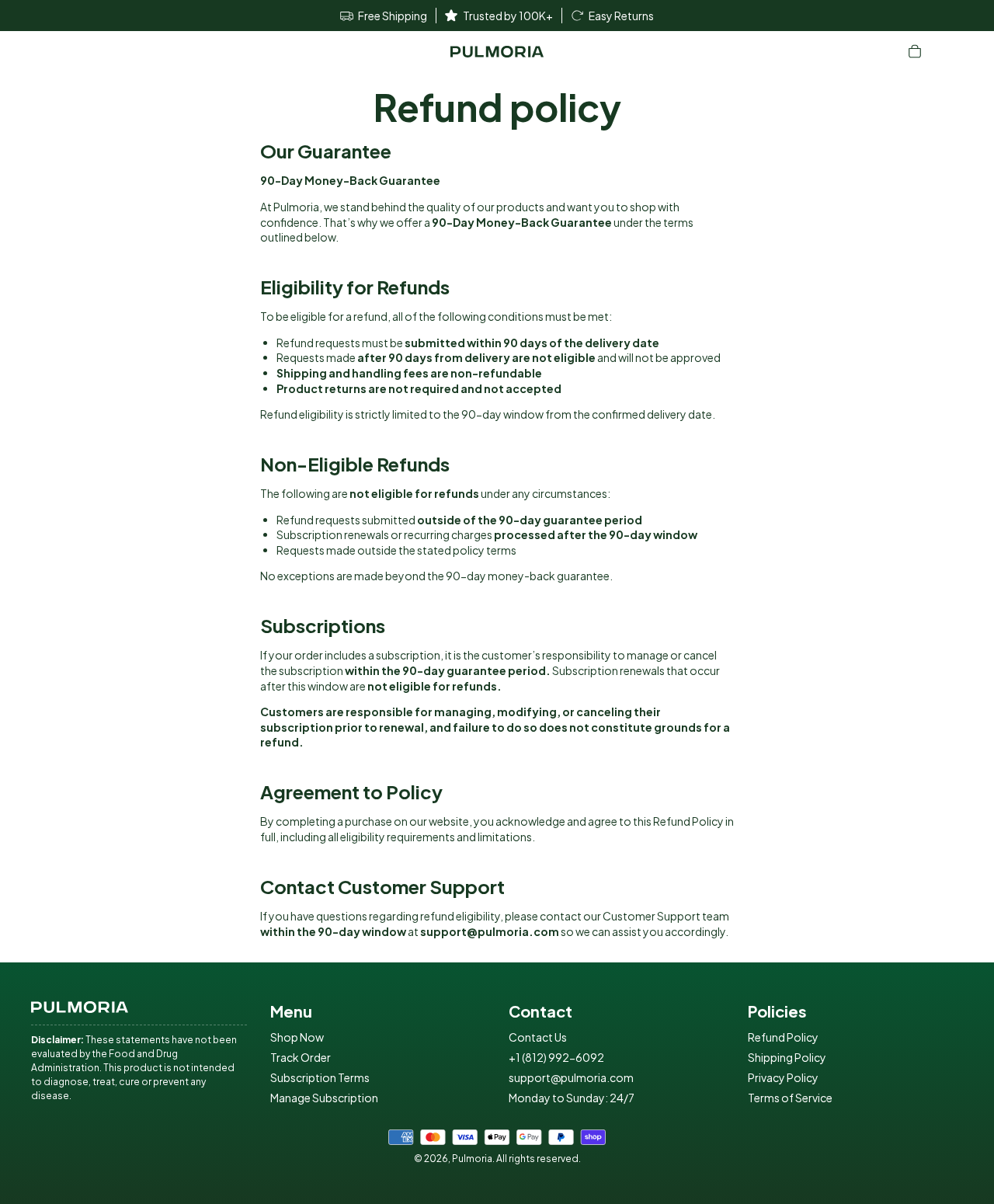
Pulmoria’s refund policy offers a 90-day guarantee measured from delivery. It excludes shipping and handling and rejects requests outside its stated window.
It also excludes subscription renewals processed after that window. Do not assume that each later shipment restarts the original guarantee.
Crucially, the policy says physical product returns are neither required nor accepted. That is not the same as saying refunds are unavailable.
The general terms separately call promotional sales final, with no returns. Meanwhile, the product page advertises a satisfaction guarantee.
Ask the seller to explain how those statements apply to your order. Do not assume the shortest promotional sentence contains all the conditions.
Nor should you pay return postage simply because returning a product feels like the usual next step. Follow a written, order-specific resolution.
A merchant’s policy is not the final word on every legal or payment right. Applicable protections depend on your location, payment method, and circumstances.
Who Is Responsible for the Order?
The terms name GMB Agency LLC
The site’s legal terms identify GMB Agency LLC. The ASA ruling names the same company trading as Pulmoria, connecting the advertisement to that declared business.
Keep that name with your receipt. When making a complaint, identify both the brand you recognized and the legal entity stated in the terms.
A listed address is not a factory inspection
The published address is 30 N Gould St, Ste N, Sheridan, WY 82801. That listing alone does not establish where the drops were manufactured.
The useful distinction is responsibility versus production. A mailing address may help identify a business contact without telling you who made a particular batch.
The published support routes need a written outcome
Support is listed as support@pulmoria.com and +1 (812) 992-6092. The cancellation policy also points to an account portal at account.pulmoria.com.
These are published routes, not a successful support or cancellation test. Save your own messages and any confirmation rather than assuming the procedure worked.
A manufacturing assurance needs product-specific records
If you already have a bottle, keep its lot information and full label. Those details matter more than an untraceable image of a quality seal.
Ask who is responsible for the finished batch and what any test actually measured. A contents check would still not prove the advertised lung-repair benefit.
What to Do If You Ordered Pulmoria
-
Deal with breathing symptoms first. Severe breathlessness, inability to speak normally, sudden confusion, or blue or gray lips can require emergency help.
The NHS breathlessness guidance lists emergency warning signs. In the UK, call 999 for an emergency; elsewhere, use your local emergency number.
Arrange medical advice for worsening symptoms or a persistent cough. Do not wait to finish a bottle before getting a problem assessed.
-
Identify your actual order. Keep the confirmation, total, quantity, delivery date, and any wording about future shipments. Compare them with what you intended to purchase.
Save the advertisement too, including the claim that influenced you. A record of the promise can explain the complaint better than the product name alone.
-
Request the outcome you want clearly. If you want to cancel an unshipped order, say so promptly. If you want a refund, make that explicit.
Give the order number, explain the reason, and keep a dated copy. Ask for the amount being refunded and any deductions in writing.
-
End unwanted future deliveries separately. Use the published account-management route or email support, and request confirmation that recurring billing has been canceled.
Do this well before the policy’s cutoff, not while a payment is already processing. Record the request and the merchant’s response.
-
Preserve the delivery evidence. Retain tracking and the delivery confirmation because the guarantee’s clock starts there. Don’t rely on when you first opened the bottle.
Keep the packaging and any correspondence until the matter is resolved. Never publish your full address, payment details, or medical history as complaint evidence.
-
Escalate a specific unresolved payment problem. Give your bank or payment provider the receipt, advertising claim, cancellation record, and the merchant’s answer.
Distinguish an unexpected renewal, an incorrect amount, and a misleading product claim. Explain what happened accurately and ask which dispute process and deadline apply.
No dispute route guarantees recovery. Do not let extended correspondence run down a deadline without asking your payment provider about it.
-
Report the promotion or a suspected adverse reaction appropriately. Use the platform’s advertisement-reporting option and the relevant consumer or health regulator in your country.
For a suspected serious supplement reaction, stop using it and get medical help. US consumers can follow the FDA’s supplement safety-reporting instructions.
Retain the bottle, ingredient label, lot details, and timing of symptoms for the clinician and report. Reporting an advertisement cannot replace medical care.
If You Saw a Different Mullein Lung-Cure Video
Not every mullein advertisement concerns Pulmoria. A familiar herb is not enough to identify a bottle, a company, or a recurring-billing agreement.
Our separate COPD mullein-and-Vicks campaign investigation concerns a different promotion. Don’t transfer its endorsement or product findings to this one.
When comparing campaigns, keep the actual ad, final destination, bottle name, and order records together. A changed product name can otherwise obscure what you bought.
Frequently Asked Questions
Can Pulmoria clear smoking damage from my lungs?
The advertised treatment impression is not a sound reason to buy. The ASA upheld the complaint about disease claims; seek proper respiratory care instead.
Does the ASA ruling prove the bottle is contaminated?
No. It addresses advertising, not a chemical analysis. The buying warning does not depend on an allegation about untested contents.
Are all Pulmoria orders subscriptions?
That was not established. The recurring policy is conditional on subscription purchases. Check your own confirmation rather than assuming either enrollment or one-time billing.
Do I need to mail the bottle back for a refund?
The published refund policy says no physical return is required or accepted. Submit the request within its delivery-based deadline and obtain written instructions.
Does canceling refills automatically refund my first order?
No automatic refund follows from cancellation. Request the refund and the end of recurring billing separately, keeping the answer to each.
Can I replace my inhaler or treatment with these drops?
No. Do not change prescribed treatment because of this offer. Discuss your symptoms and the actual supplement label with a qualified healthcare professional.
The Bottom Line
Do not buy Pulmoria Mullein Drops to erase smoking damage or treat respiratory disease. The lung-cleaning advertisement failed the regulator’s advertising standards.
Already ordered? Put medical needs first, preserve your delivery and payment records, request any refund promptly, and cancel unwanted recurring shipments separately.

Join the discussion
0 commentsShare your experience or ask a question about this article.
Discussion
Start the conversation
Have a question or something useful to share? Add the first comment.