

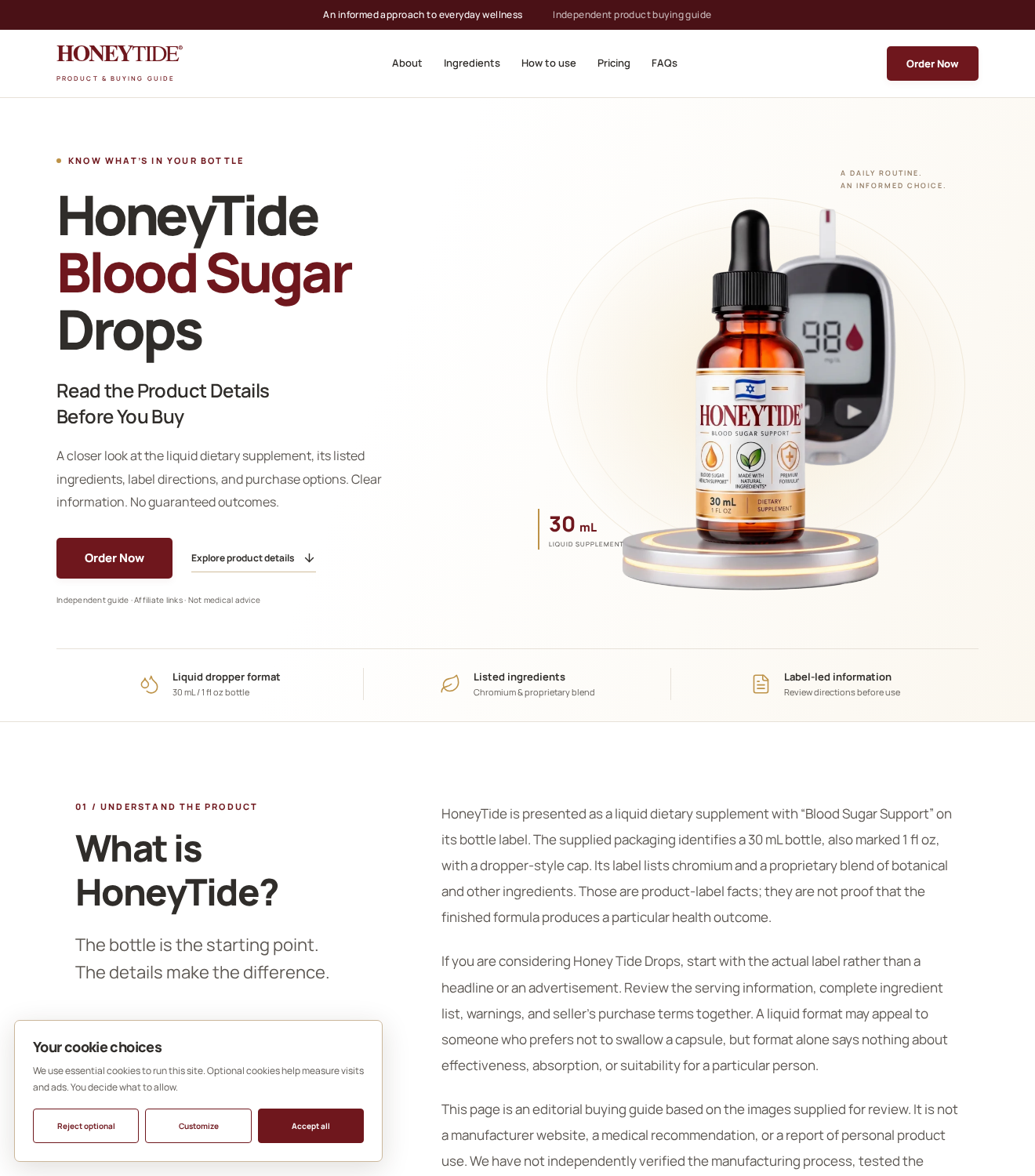
HoneyTide Blood Sugar Drops arrives with a reassuring picture: a small bottle, a familiar glucose meter, and the possibility of making an exhausting daily concern feel manageable.
When a supplement touches something as personal as blood sugar, the details deserve more attention than the packaging. Start with what the offer actually tells you.
Overview
The buying guide is not the business handling your payment
Honey-tide.com describes itself as an independent, affiliate-funded product guide. Its order buttons continue through rushmyoffers.com to a HoneyTide package page on myhoneytide.com.
That disclosure matters. The guide does not process orders, ship bottles, or promise it can arrange refunds. A purchase continues into another business relationship.
The guide uses cautious language, but the destination’s broader sales material makes much stronger statements about managing type 2 diabetes and improving insulin-related processes.
The product explanation becomes inconsistent after the click
HoneyTide is advertised as an oral liquid supplement. Yet a HoneyTide FAQ on the destination domain discusses Gelataro, apple cider vinegar, pectin, and one gummy daily.
The same FAQ includes refund restrictions that do not match the more generous policy linked from the package offer. Buyers encounter incompatible descriptions before they even receive anything.
This is a substantial quality-control failure in information attached to a health purchase. It leaves basic questions about directions and refund eligibility unresolved.
The clearest risks are medical claims and conflicting terms
- The smallest package on the linked offer contains two bottles, not one.
- A displayed $49 unit price requires a six-bottle, $294 purchase.
- The loaded checkout advertises a one-time fee and no autoship.
- One policy accepts empty containers; the HoneyTide FAQ says only sealed bottles qualify.
- The FAQ also describes a 20% restocking deduction.
Together, those contradictions make this a poor health purchase. You should not have to reconcile gummy directions and incompatible return policies after paying for drops.
Blood Sugar Support Is Not Proof of Diabetes Treatment
The HoneyTide sales homepage moves beyond a general wellness suggestion. It presents the drops as an easy way to manage type 2 diabetes.
Its ingredient explanations describe improved insulin sensitivity, fewer glucose spikes, and better carbohydrate handling. One passage even discusses regeneration of insulin-producing pancreatic cells.
Claims that specific can sound like a medical explanation. However, explaining a proposed biological pathway is not demonstrating that the finished drops produce those outcomes.
A useful clinical study would identify the exact formula, dose, participants, comparison group, duration, measured glucose outcomes, and adverse effects.
The inspected offer does not supply that finished-product evidence. Customer stories about easier diabetes management cannot substitute for it.
The National Center for Complementary and Integrative Health discusses diabetes supplements and describes substantial limitations in the evidence.
Its guidance specifically warns against replacing effective diabetes treatment with an unproven product. A reassuring word such as natural does not make that substitution safe.
The ingredient list does not reveal an effective dose for every component
The affiliate guide transcribes a 30 mL bottle, a 1 mL serving, chromium, and a 200 mg proprietary blend from its supplied label materials.
It lists many blend components, including gymnema, guarana, green tea, African mango, maca, and ginseng. Individual quantities within that blend are not disclosed.
A blend’s total weight is not the amount of each ingredient. You cannot match every named component to research without knowing its preparation and individual dose.
The guide also notes that caffeine content is unspecified despite guarana and green tea appearing in the ingredient transcription. That question matters for sensitive users.
Do not read the glucose meter in the artwork as a measured result. An advertising image cannot show what happened to a real person’s blood sugar.
How the HoneyTide Sales Funnel Works
Step 1: A careful-looking guide introduces the bottle
The first page presents itself as an information resource rather than a hard sell. It separates claims from evidence and acknowledges that no product trial was supplied.
The page is transparent about its affiliate role. That helps distinguish it from a store, but it does not establish the quality of the linked offer.
The practical problem comes when the reader treats that cautious introduction as reassurance about everything that follows. The linked seller’s statements need their own examination.
Step 2: The stronger diabetes story appears on the destination domain
The myhoneytide.com sales homepage talks directly about managing type 2 and describes a six-nutrient approach to blood sugar control.
It adds testimonials, bonus guides, a countdown, and recommendations for a six-month supply. The focus shifts from understanding the label to securing a package.
A page can carry a supplement disclaimer while making a much stronger impression elsewhere. Read the main promise, not just the small legal paragraph.
Buyers should not downgrade their normal monitoring or treatment because the story sounds simpler than their existing care plan.
Step 3: Bundle pricing makes a large order look economical
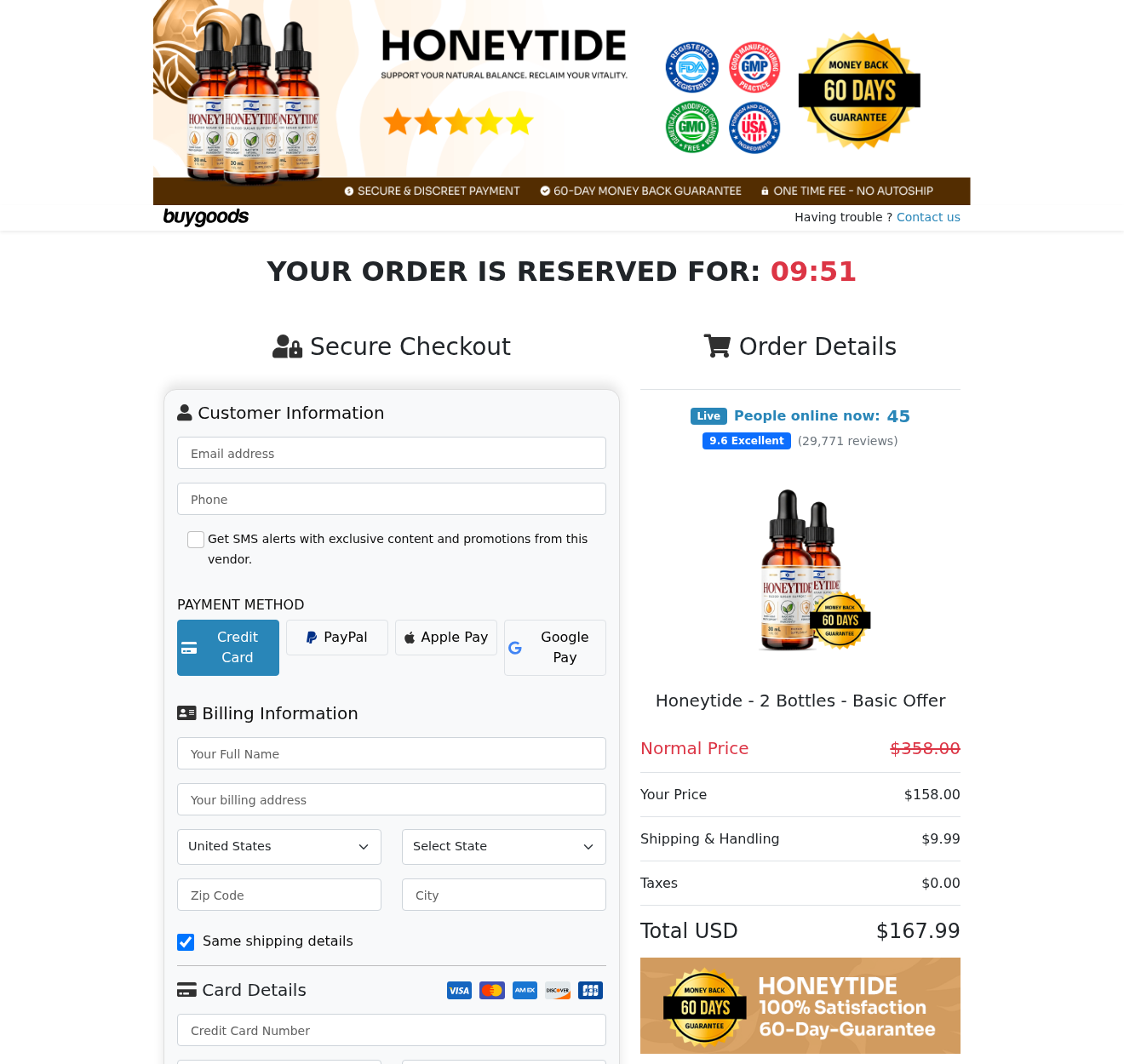
The package destination offers two bottles at $79 each, three at $69 each, or six at $49 each. The respective product totals are $158, $207, and $294.
The six-bottle option occupies the best-value position. Its attractive unit price can distract from committing almost $300 before establishing whether the supplement is appropriate.
There is no one-bottle option on this package screen. Someone intending to try one bottle cannot complete that intention by choosing the smallest displayed card.
A selected six-bottle order is different from an unauthorized quantity change. Keep the confirmation so the agreed bundle can be compared with the delivered parcel.
Step 4: The payment page names BuyGoods as the retailer
The two-bottle checkout identifies HoneyTide and adds $9.99 shipping to the $158 product price. The displayed total is US$167.99 before completed address-dependent adjustments.
The checkout says BuyGoods is the retailer, and its stated bank-statement descriptor is BuyGoods. That is the party buyers should recognize when examining the charge.
Its banner states one-time fee and no autoship. No active subscription selection or recurring price appeared in the loaded offer.
Save the one-time offer with your receipt. If a later payment appears, check whether it corresponds to another accepted order or contradicts your agreement.
Step 5: A HoneyTide FAQ describes a different product
The destination domain’s FAQ answers HoneyTide questions with repeated references to Gelataro. It describes apple cider vinegar and pectin rather than the liquid formula.
Its usage instruction is one gummy with water. That does not match the drops, dropper bottle, or liquid directions promoted elsewhere.
A support introduction also mentions blood pressure and circulation. These inconsistencies suggest poorly controlled reused copy, not a dependable product-specific source of instructions.
Do not follow the gummy directions for a liquid supplement. Ask for the actual current label before considering any use.
Step 6: The money-back promise splits into incompatible rules
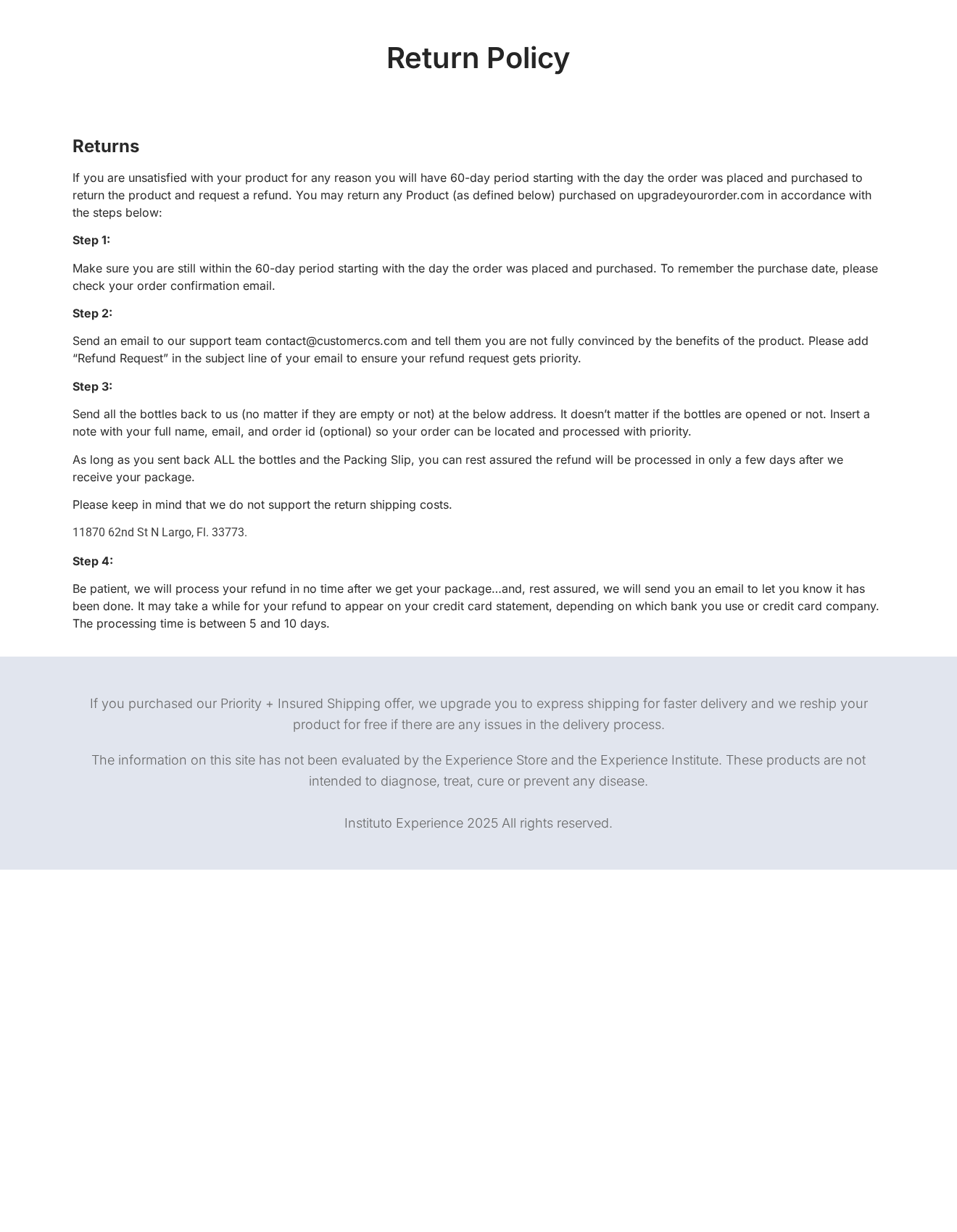
The package page links a return policy that accepts opened or empty bottles. It requires all bottles and a packing slip, with postage paid by the buyer.
The HoneyTide FAQ instead says only sealed bottles qualify and describes a 20% restocking fee. Its text again refers to Gelataro.
That mismatch is not permission to choose whichever version sounds better after paying. It is a warning that the seller has not supplied a coherent agreement.
There is another timing conflict: linked terms allow 60 days from delivery, while the linked returns page counts from purchase.
Why the Wrong-Product FAQ Matters to Your Refund
The FAQ does not merely contain an unrelated name in a sentence. Its footer sends legal-policy links to theJellyBlue.com, another product domain.
That leaves buyers with several competing routes: the HoneyTide support page, another brand’s legal pages, the package offer’s policy host, and the retailer’s agreement.
Do not assume one replaces all the others. Ask the retailer to identify which terms accompanied your order and preserve the pages that influenced it.
The difference has a measurable cost. A 20% deduction from a US$158 product purchase would remove US$31.60 before any excluded shipping or return postage.
That is not a deduction proven to have been applied to a HoneyTide customer. It illustrates why contradictory wording should be resolved before payment.
The FAQ also combines a minimum 30-day trial with sealed-only refund eligibility. Using a bottle for that trial would make its seal impossible to preserve.
A buyer should not have to solve that contradiction while a deadline expires. It is another reason the advertised risk-free trial is not dependable as presented.
HoneyTide Seller, Contact, and Supply-Chain Checks
The promotion, distributor, and retailer are separate identities
The affiliate guide expressly says it is not the manufacturer. It identifies Instituto Experience as the distributor printed in its supplied label material.
The payment screen identifies BuyGoods. The linked policy website, yourorderwasconfirmed.com, names GEX CORPORATION LLP as its operator.
These roles should not be collapsed into one assumed owner. A distributor name or policy footer does not establish who manufactured the bottle in your parcel.
Your receipt should identify the transaction and order-help route. Save it before relying on any support address found through a separate search.
A Florida mailing reference is not a manufacturing address
The guide transcribes Lakeland, Florida 33804 as part of the distributor information. That is not a complete street address for returning an order.
The linked return page lists a separate Largo, Florida destination. A return-processing location answers where parcels go, not where a formula was made.
Do not send products to either location without authorization. Obtain the current address and required reference in writing so delivery can be tied to your refund.
The published support channels need to match your receipt
Contact@customercs.com and +1 (507) 448-8190 appear in the product-related support information. The loaded checkout gives 302-404-2568 for BuyGoods customer help.
The BuyGoods order lookup provides another direct route to the retailer. Use its official address rather than an unsolicited refund message.
No call or email test was performed. Published contact details establish a route to try, not proof that a response or refund will follow.
The manufacturing promise needs documents behind it
The package page claims US manufacture with globally sourced ingredients. The available pages do not independently identify the factory responsible for a particular lot.
Ask for manufacturer details, lot identification, and any laboratory report associated with your bottle. A facility badge cannot answer those questions on its own.
The FDA explains how supplements are regulated. A registration-style graphic does not mean the agency approved HoneyTide as a diabetes treatment.
What to Do If You Bought HoneyTide
-
Keep your treatment plan intact. Show the complete bottle label to the clinician or pharmacist responsible for your diabetes care before adding it to your routine.
Do not change prescription doses or glucose monitoring because of a testimonial. Seek medical help for concerning symptoms rather than trying to correct them with extra drops.
-
Record what you ordered. Save the product name, quantity, full payment, offer address, receipt, and photographs of the parcel and its label.
If you expected one bottle but selected two or six, establish that distinction honestly. A billing complaint should describe the actual mismatch.
-
Ask the retailer to identify the applicable guarantee. Explain that the website contains conflicting opened-bottle rules and an unrelated product name.
Request written confirmation of the deadline, eligible containers, postage, and any deduction. Preserve screenshots of both versions rather than accepting a vague reference to policy.
-
Start a return request early. Do not wait until day 60 while debating whether delivery or purchase starts the clock.
Retain every bottle and the packing slip. Follow authorized instructions, use tracked shipping, and keep proof that the return reached its destination.
-
Check any unexpected follow-up payment. The inspected checkout advertises no autoship. Match later charges to their receipts and any separately accepted order.
If billing contradicts what you authorized, tell the retailer and card issuer promptly. Provide the actual one-time promise and amount, not a guessed subscription schedule.
-
Escalate a documented unresolved dispute. Give your payment provider the conflicting promises, request dates, replies, and return tracking. Ask about its own dispute time limit.
Keep health and billing complaints specific. Neither a broad fraud accusation nor a promise from an unsolicited recovery agent can replace the evidence from your purchase.
Frequently Asked Questions
Is HoneyTide proven to manage type 2 diabetes?
The sales claims are not accompanied by a finished-product trial establishing that result. Do not use them as a reason to replace diabetes medication or professional care.
Does honey-tide.com actually sell the drops?
It is an affiliate guide. Its order link continues to a package offer, which then uses BuyGoods for the retail transaction.
Why does the HoneyTide FAQ mention Gelataro gummies?
The support page contains unrelated product copy. That contradiction makes it unreliable for directions and raises serious questions about which refund restrictions apply.
Are automatic HoneyTide refills confirmed?
No. The loaded checkout says no autoship, and the sales homepage describes one-time billing. Keep that promise in case your actual transaction later differs.
Can I return an opened HoneyTide bottle?
The linked return policy allows it, but the domain’s FAQ gives a sealed-only rule. Obtain written clarification immediately and preserve both promises.
Should I buy this HoneyTide offer?
No. Unsupported diabetes-management promises, a wrong-product FAQ, and contradictory return conditions make this an offer to avoid.
The Bottom Line
Do not buy HoneyTide through this sales route. A blood-sugar product should come with accurate instructions and consistent terms, not answers describing another supplement.
If you paid, contact the retailer promptly, keep all containers, and document the guarantee conflict. Continue clinician-led diabetes care regardless of the marketing promises.

Reviews & discussion
0 commentsShare a firsthand experience, or ask a question.
Community reviews
HoneyTide Blood Sugar Drops
Moderated reader experiences, not an editorial verdict.
Start the conversation
Have a question or something useful to share? Add the first comment.