


A phone agent that keeps working after your staff goes home sounds useful. Add a coaching program, resale rights, and an income promise, and the purchase changes.
The Air AI and Scale13 case shows why the details matter when a software demonstration becomes an invitation to spend thousands building a business.
Overview
A business opportunity wrapped around AI
This case concerns the historical Air AI Technologies and Scale13 offers, including Access Cards, coaching, and licenses to resell conversational AI.
Buying software for an existing company and paying for a promised income opportunity create different obligations. A working demonstration cannot answer whether purchasers usually recover their investment.
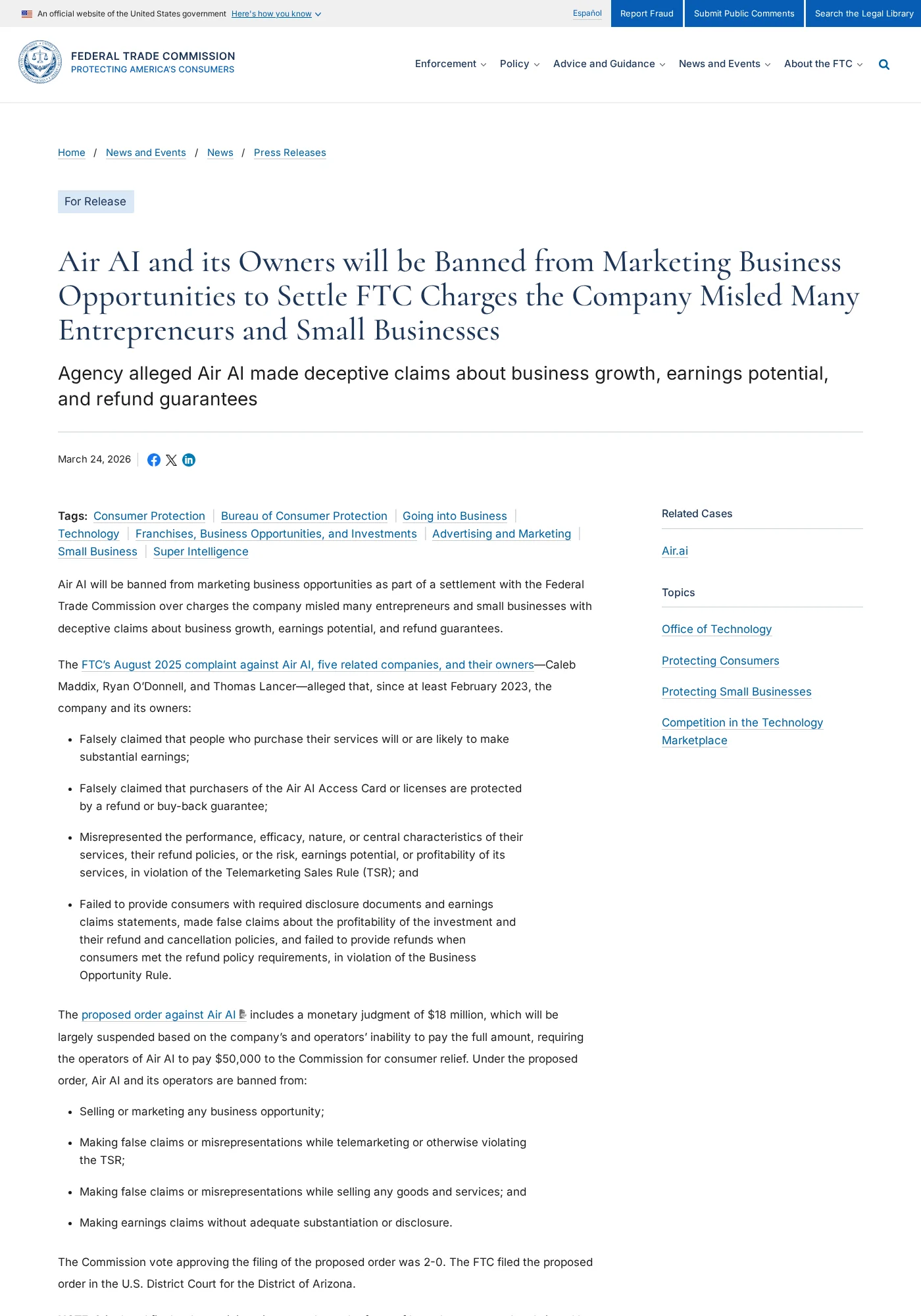
The FTC alleged misleading earnings and refund promises. Its March 2026 announcement described a settlement banning the defendants from marketing business opportunities.
The settlement became a court order
Judge Susan M. Brnovich signed the amended stipulated order on March 30, 2026. It was filed March 31; the FTC’s June litigation report confirms entry.
The signed order resolves a civil case. The defendants neither admitted nor denied the allegations, except jurisdictional facts. It is not a criminal conviction.
What buyers should separate
- The AI tool’s actual capabilities and the sales promises about business income.
- The entity on an agreement and other businesses using similar names.
- A contractual refund promise and money actually available through a court settlement.
- A salesperson’s example and documented results for ordinary purchasers after expenses.
Do not buy the historical Air AI/Scale13 business opportunity based on earnings or buy-back assurances. Existing customers should work from their own agreements and payment records.
What the Air AI Order Actually Changes
The permanent ban covers the defendants’ involvement in business opportunities as defined in the order. It reaches creating, promoting, offering, selling, and assisting those opportunities.
It does not outlaw AI phone software as a category. The distinction matters when an old promotion presents an expensive business package as simply access to technology.
The judgment is $18 million. The order requires $50,000 within 60 days of entry, with the remainder suspended upon payment, subject to financial-disclosure conditions.
A court can lift that suspension for specified failures, including material financial misrepresentations. The payment requirement alone does not establish that the defendants have paid.
Those terms cannot be converted into a promise that each purchaser receives a full refund. An individual loss and a settlement recovery are different amounts.
Someone offering you a guaranteed share should identify an official program and its administrator. A confident message or copy of the judgment cannot create that entitlement.
The March 24 announcement preceded entry. The FTC’s later status report records the March 31 order.
That later event also explains why the case page’s March 24 “Pending” label is not the last word on whether the settlement reached court approval.
How the Air AI Sales Funnel Worked
The following sequence summarizes allegations in the FTC complaint. It explains the purchasing decisions involved, rather than reporting a new test of the software.
Step 1: A demonstration opens the conversation
According to the complaint, social media and promotional material led prospective customers toward sales calls.
The promotions presented AI as a replacement for human sales representatives. The FTC alleged that some purchasers encountered unavailable services or unreliable calls.
A convincing call demonstration can answer a narrow question: can this sample sound natural? It leaves important questions about your business unanswered.
You still need to know which tasks require supervision, what happens when the agent misunderstands someone, and who fixes a failed connection.
For a small company, a missed appointment or inaccurate answer has a cost. A sales video should lead to specific service commitments before any substantial commitment.
Step 2: The conversation moves beyond the tool
The FTC described coaching and business support bundled with the Access Card, plus a separate licensing opportunity.
Its complaint puts historical Access Card prices at $15,000 to $30,000 and licenses at $25,000 to $100,000.
Ask what the purchase actually buys: software access, instruction, customer introductions, resale rights, or a combination. Each component needs its own deliverables.
Training attendance is measurable. Future customer revenue depends on additional events. Putting both into one package does not make the income component dependable.
A buyer interested in an AI assistant should not let a useful feature substitute for an explanation of a much larger business purchase.
Step 3: Resale rights introduce another dependency
The licensing pitch included reselling AI services, the complaint alleges.
Buyers were also promised customer leads and a share of call revenue, according to the FTC.
That changes your position. You would need customers willing to pay you, a reliable underlying service, and a contract explaining your continuing rights.
Find out who bills those customers, handles complaints, controls pricing, and carries the obligation if service stops. A license fee does not answer those questions.
Also establish whether access depends on the original provider remaining available. Selling a service onward can leave you responsible to customers while waiting for somebody else’s support.
Step 4: A guarantee makes the price feel safer
The FTC alleged that refund assurances helped overcome buyers’ concerns about cost and performance.
The agency said some qualifying purchasers went without refunds, and some lost service access after requesting repayment.
A guarantee deserves a separate reading. Look for eligibility conditions, exclusions, notice requirements, and the point when a request can first be made.
Ask whether the same written terms cover the package being sold to you. A reassuring sentence from another plan can leave the expensive commitment exposed.
The crucial question is what happens after failure: which entity owes repayment, what records it requires, and how you can make a documented request.
Step 5: Payment leaves the buyer with separate obligations
Some historical purchases involved third-party financing, according to the complaint.
If your agreement used a lender, the merchant dispute and the credit obligation need separate attention. A seller’s refund assurance does not automatically resolve the loan.
Read the credit agreement and ask the lender what options apply to your transaction. Keep its answer separately from the seller’s promises.
Avoid making another purchase to protect the first one. An additional coaching payment or replacement license needs an independent reason, rather than pressure to rescue sunk costs.
The Companies and Agreements Behind the Offer
Air AI and Scale13 were trading names in this case
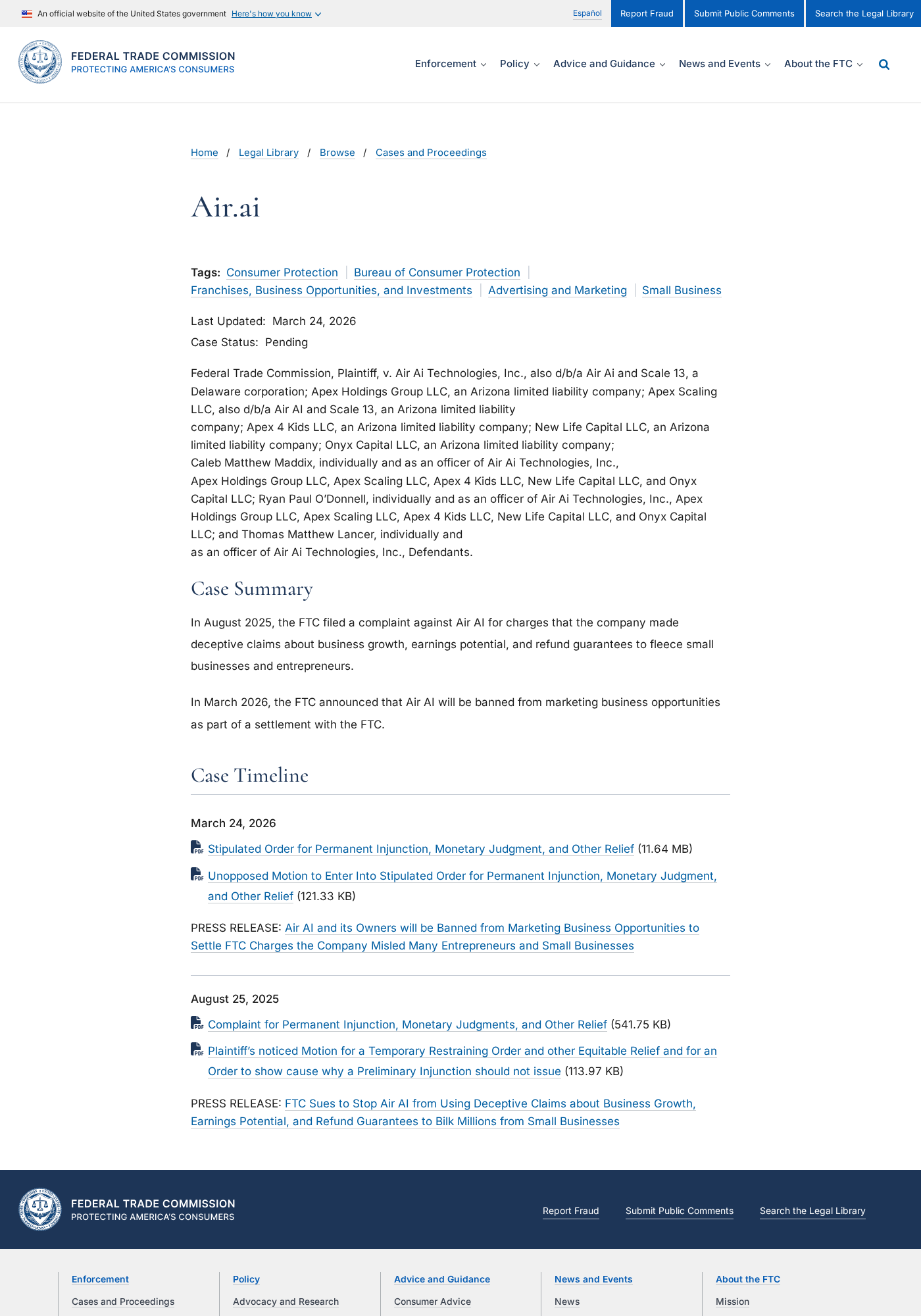
The FTC case record names Air Ai Technologies, Inc. and Apex Scaling LLC as doing business under Air AI and Scale13 names.
Other corporate defendants are Apex Holdings Group LLC, Apex 4 Kids LLC, New Life Capital LLC, and Onyx Capital LLC.
The named individual defendants are Caleb Matthew Maddix, Ryan Paul O’Donnell, and Thomas Matthew Lancer.
Use these identities to compare your paperwork with the case. Their inclusion does not tell you which entity signed your particular contract or received your payment.
Your receipt identifies the transaction to pursue
Collect the signed agreement, invoice, payment confirmation, and statement entry. Differences between those names should become explicit questions in your request for help.
Include a transaction reference privately when contacting your provider. Keep card numbers, loan credentials, and identity documents out of public complaint posts.
A clear file helps a payment provider distinguish your purchase from an unrelated charge. It also prevents an ambiguous brand name from carrying the whole dispute.
A familiar website name is insufficient
This article concerns the historical defendants and offers identified in the court documents. A similar company name or reused domain does not establish corporate continuity.
Existing customers should use contacts in their own authenticated records. Do not send account information to a newly found website merely because its name looks familiar.
Likewise, a new supplier’s reference to the same technology does not transfer an old refund obligation. Require evidence connecting that business to your actual agreement.
Support promises belong in writing
For an existing purchase, explain the promised service, what was delivered, and the remedy you are requesting. Attach relevant records rather than an entire disorganized message history.
If someone redirects you to another company, ask why that entity is responsible. Preserve the response and the original agreement together.
For reseller customers, separately document what you promised your own clients. Their needs may require attention while your dispute with the original provider continues.
Why the Guarantee Wording Matters
The complaint quotes different historical guarantees: an Access Card revenue target over six months, and a license buy-back available no sooner than 120 days, with conditions.
These examples are not a universal refund clock. Your own contract version determines which promise was made to you, and legal remedies can depend on the circumstances.
Revenue also differs from profit. Receiving the purchase price in sales would not necessarily repay operating costs, financing charges, or the time spent finding customers.
Consider a hypothetical $20,000 purchase that generates $20,000 in sales. If providing those services costs $8,000, only $12,000 remains before other expenses.
That simple example is not an Air AI customer result. It shows why a revenue-based guarantee should not be read as a promise to earn your money back.
Keep the definition of the target beside its conditions. Ask whether refunds, unsuccessful calls, canceled sales, or your own operating expenses affect the calculation.
What Meaningful Earnings Evidence Would Look Like
The FTC’s business-opportunity guidance explains disclosure obligations for covered sellers, including a separate statement when earnings claims are made.
For covered offers, the disclosure must arrive at least seven days before signing or payment. That review period is not an automatic cancellation period after purchase.
An earnings statement should identify the claim, when the results occurred, and how many purchasers achieved at least those results. Relevant differences between purchasers also matter.
With that information, ask whether the comparison includes people starting from circumstances like yours. An experienced agency with existing clients has different costs from a first-time reseller.
A successful purchaser’s sales screenshot leaves out unsuccessful buyers. Without the full group, you cannot tell whether the example represents an ordinary outcome or an unusual one.
Then examine expenses. Separate gross receipts from platform charges, advertising, refunds, financing, and the labor needed to deliver the service.
If a salesperson says the details are unnecessary because AI handles everything, stop the purchase. Automation does not remove the need to understand how customers will pay you.
The FTC’s coaching guidance warns about pressure and upsells. Take time to have an independent adviser examine a substantial business commitment.
What to Do If You Bought an Access Card or License
-
Build a dated purchase file. Save your contract version, invoice, sales material, payment method, and any written guarantees. Export relevant messages while you still have access.
Organize events from the first promise through delivery problems and refund requests. A concise chronology helps another person understand which commitments were missed.
-
State your requested remedy clearly. Write to the entity and contact identified in your transaction records. Specify whether you seek cancellation, repayment, or a missing deliverable.
Identify the relevant clause and attach evidence of any conditions you completed. Keep a copy showing when and where you sent the request.
-
Contact your payment provider promptly. Describe the actual purchase and problem, including services received. Ask which dispute routes and time limits apply to your payment.
Do not describe an authorized purchase as an unauthorized charge. Distinguishing misrepresented services from stolen-card use helps the provider assess the correct issue.
-
Handle financing directly with the lender. Give it the merchant agreement, refund request, and relevant case documents. Ask how a merchant dispute affects your particular credit agreement.
Do not assume the settlement cancels your balance or that stopping payments has no consequences. Obtain advice about the loan before changing how you handle it.
-
Check the official refund channel. Use the FTC refund directory for announced programs. The order does not provide every customer a claim amount or payment date.
Do not pay someone to unlock an FTC refund. A demand for an advance transfer is a reason to stop and verify the sender independently.
-
Report the specific transaction. Submit relevant information through ReportFraud.ftc.gov and consider your state consumer-protection office. Keep the submission reference with your file.
Reporting helps document the conduct; it does not replace a payment dispute or guarantee individual recovery. Continue pursuing applicable options rather than waiting for an assumed payout.
-
Get help with a substantial unresolved loss. A qualified adviser can assess your contract, financing, dispute terms, and deadlines using the complete transaction file.
If you resold services, bring your customer agreements too. Explain any continuing service obligations so advice covers the people who rely on your business.
Frequently Asked Questions
Was the Air AI settlement only proposed?
It was proposed on March 24, 2026. The signed amended order followed, and the FTC reports entry on March 31. The later court document controls that distinction.
Did the court ban all AI phone agents?
No. The ban concerns the defendants and defined business opportunities. It should not be presented as a finding that every conversational AI service is fraudulent.
Does the $18 million judgment guarantee my refund?
No. The judgment includes conditional suspension terms and a $50,000 payment requirement. It does not assign each purchaser a refund amount or promise full recovery.
Can I use the same refund deadline as another buyer?
Start with your own agreement. Access Card and license terms differed. Another customer’s purchase date or quoted guarantee may not establish the conditions covering your transaction.
Does software access prove the business opportunity was worthwhile?
No. Access answers whether you received a tool. It does not show that typical purchasers earned the advertised income, recovered expenses, or obtained promised business support.
Where should an existing customer send a complaint?
Use authenticated transaction contacts, your payment provider or lender, and official reporting channels. A familiar brand or domain alone is insufficient to identify the responsible entity.
The Bottom Line
Do not buy the historical Air AI/Scale13 business opportunity on earnings or buy-back promises. The entered settlement permanently bans the defendants’ involvement in defined business opportunities.
If you already paid, preserve your agreement and pursue the seller, payment-provider, and financing options that fit your transaction. Do not wait for a presumed universal settlement refund.
For any future AI purchase, establish what the tool delivers and what the contract requires. Keep an income promise from becoming the reason to accept an unexplained financial commitment.

Join the discussion
0 commentsShare your experience or ask a question about this article.
Discussion
Start the conversation
Have a question or something useful to share? Add the first comment.