


A poor credit score can put a home, a car, or an affordable loan out of reach. An easy fix sounds especially appealing under that pressure.
Financial Education Services paired credit repair with another promise: an opportunity to earn money yourself. Understanding the connection explains why so many customers ended up in an FTC case.
Overview
The offer combined a credit fix with recruitment income
Financial Education Services, commonly called FES, sold credit-repair services while encouraging people to sell the same services and recruit others as agents.
The FTC says the companies falsely claimed they could clean up people’s credit, charged upfront, and made false promises about the money agents could earn.
For someone already struggling financially, those promises could reinforce each other. The service appeared to solve the credit problem, while the opportunity supposedly helped cover the cost.
The case produced settlements and an actual refund program
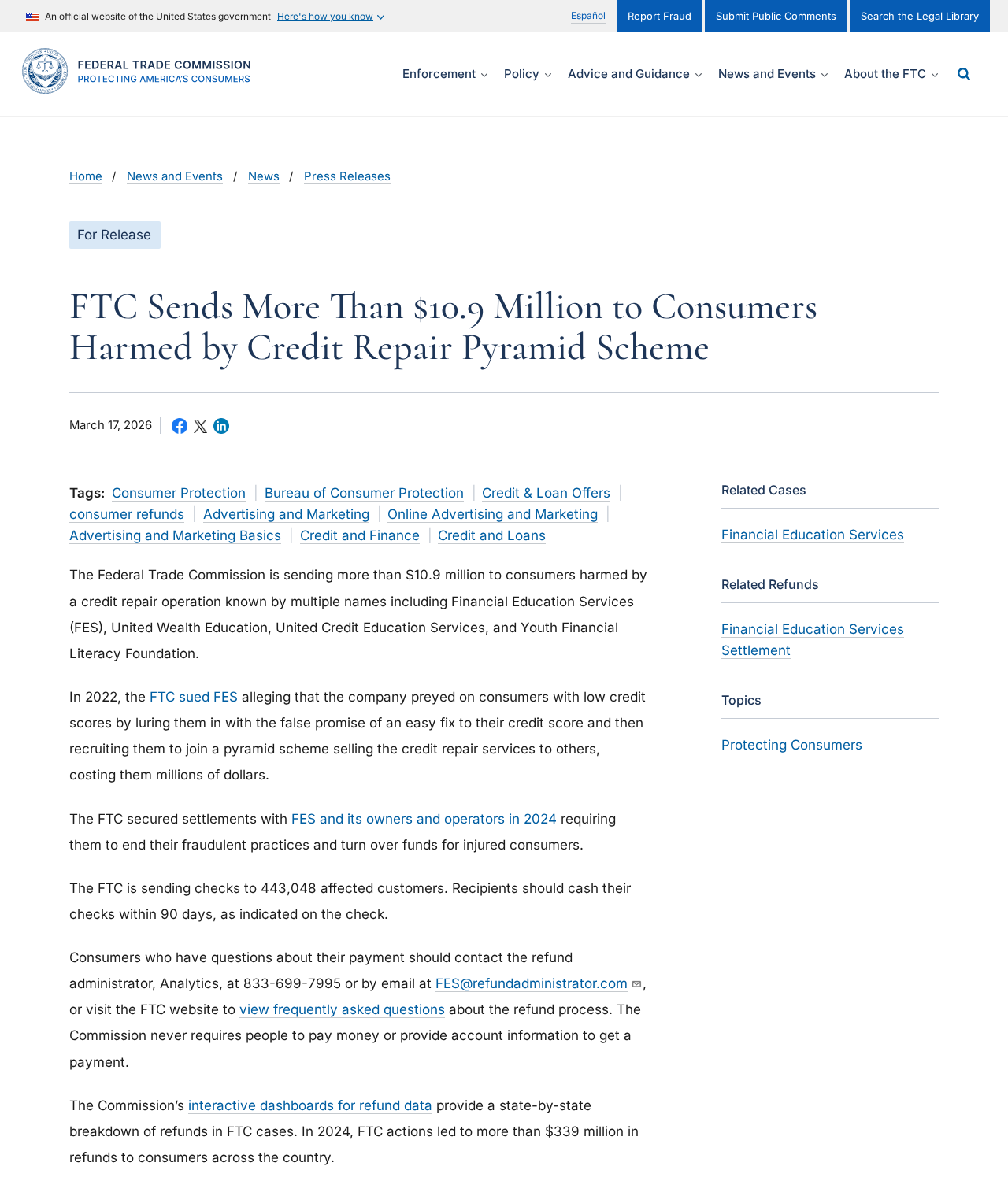
The FTC’s March 2026 announcement describes more than $10.9 million being returned through 443,048 checks following its enforcement action and settlements.
The FTC obtained settlements requiring the operation to end fraudulent practices and surrender money for injured customers. Those civil orders led to real payments, rather than another sales promise.
- The FTC says customers received false promises about easy credit repair.
- The operation also offered income from selling services and recruiting agents.
- Different company and marketing names appeared within the same case.
- The legitimate FTC refund process requires no payment to unlock money.
The March checks have individual dates and eligibility rules
The official refund page identifies eligible people who paid for the credit-repair operation between May 2019 and May 2022.
It tells recipients to cash checks within 90 days. That period follows the actual payment, rather than restarting whenever someone finds the announcement online.
If you have an expired check or a question about a payment, contact the published administrator. Do not assume the old notice opens a new application.
Why the Easy-Fix Promise Was So Powerful
Credit problems rarely arrive without consequences. A person may be facing higher borrowing costs, a rejected application, or pressure to qualify before a particular purchase.
Under those circumstances, a confident explanation about improving the score can feel like practical assistance. The urgency comes from the customer’s real situation.
The danger begins when a service turns that urgency into an unsupported result. A promise of fast improvement can discourage questions about what can legally change.
Your credit report contains particular information from particular sources. Fixing a genuine error is different from making an accurate late payment disappear on demand.
The FTC’s credit-repair guidance says no company can legally remove information that is both accurate and current merely by promising a repair.
That does not mean a person has no options. It means the useful task is identifying actual errors and addressing them, rather than buying an unexplained score transformation.
FES added a second financial attraction through its agent opportunity. That could make someone focus on earning back the cost before establishing whether the service delivered value.
How the FES Credit Repair Scam Works
Step 1: Find people with a pressing credit problem
The FTC’s case describes an operation targeting consumers with low credit scores. Those consumers already had a reason to want a change quickly.
A pitch can therefore sound personally relevant without demonstrating any special knowledge of the person’s report. General financial pressure makes the promised solution feel specific.
The first useful question is what exact information the service proposes to correct. A score alone does not identify an error or establish a legitimate remedy.
A provider should be able to explain its work without suggesting that all negative information can be erased. Accurate history and inaccurate reporting need different responses.
Do not judge the promise solely by how urgently you need the outcome. The need can be real while the proposed shortcut remains deceptive.
Step 2: Sell an easy improvement without delivering the promised result
The FTC says FES falsely claimed to clean up customers’ credit but failed to deliver. The case also concerned upfront charges for the services.
Those charges mattered because customers were spending money to solve an existing financial problem. An ineffective service could make that position worse.
Keep the exact representations if you paid: the expected change, any timeframe, the price, and the explanation of what the company would actually do.
A later improvement in a score does not automatically establish which action caused it. Payments, balance changes, and the passage of time can also affect a credit history.
The relevant question for a purchased service is whether it performed the work and delivered the result it truthfully promised, rather than whether any number moved.
Step 3: Present selling and recruiting as another financial solution
The operation also encouraged participants to sell credit-repair services and recruit other agents. The FTC says its income promises were false and most agents lost money.
That invitation changes the customer’s role in the business. Someone seeking help can become a promoter responsible for convincing other people to purchase the same supposed solution.
An earning story may make the initial cost seem easier to accept. The buyer imagines recovering it through the opportunity instead of judging the service independently.
But an income claim needs evidence about typical results after relevant costs. A successful participant’s story does not describe what an ordinary newcomer is likely to keep.
Before recommending any service, separate what it does for customers from what it pays for bringing in participants. Those are different reasons money changes hands.
Step 4: Let several business names complicate the paper trail
The FTC identifies names including FES, United Wealth Education, United Wealth Services, United Credit Education Services, and Youth Financial Literacy Foundation in the operation’s history.
Someone looking only for the best-known abbreviation may overlook relevant records. A statement or old email can use a different name from the original conversation.
Search your actual correspondence and payment history for the names you encountered. Keep the original descriptor instead of editing it to fit a later headline.
Also distinguish your service payments from agent-related expenses or income. Different records may be needed to explain each part of your involvement.
A matching name alone does not decide eligibility. The genuine refund process uses its own records and rules for the affected customers.
Step 5: Replace the sales promise with a real, limited refund process
The FTC obtained settlements in 2024 requiring changes to conduct and money for injured consumers. It announced the large check distribution in March 2026.
A refund program is a response to past harm. It does not validate the original credit-repair promise or guarantee that every person associated with FES receives money.
The official page identifies the relevant purchase period and the administrator responsible for payment questions. That is the useful starting point for a recipient.
If a stranger asks for a transfer to unlock a payment, stop before responding. The FTC says it does not require money or account information to obtain a payment.
A familiar case name can make a request sound convincing. Verify what is being asked against the actual case notice, rather than the sender’s explanation.
The FES Names, Settlement Terms, and Real Refund Administrator
The case covers particular companies and conduct
The FTC’s official materials identify the operation and its associated names. Keep the warning tied to the documented credit-repair and recruitment practices.
That precision matters when a name changes or another service uses similar words. Neither a generic abbreviation nor an unrelated customer complaint establishes the same case.
Your own records should identify the business you paid, the service or opportunity sold, and the period involved. Those details are more useful than broad assumptions.
The settlements imposed different restrictions on different defendants
The FTC’s settlement announcement describes permanent bans for certain defendants and conduct restrictions and compliance monitoring for others.
It would be inaccurate to say every party received an identical prohibition or that the civil settlements were criminal sentences.
The practical finding is that official enforcement led to restrictions and funds for customers. A person’s exact legal position belongs to the order concerning that person.
Analytics handles questions about the FES payments
The FTC identifies Analytics as the refund administrator and lists 1-833-699-7995. Its March announcement also provides FES@refundadministrator.com for payment questions.
Call using the number you obtained from the FTC case page. Avoid the return number in an unexpected message claiming to be from the administrator.
Have the check or notice reference available when asking a question. Do not send sensitive documents to an address supplied only by an unsolicited caller.
A check’s expiration needs a specific answer
Because the announced distribution dates to March 2026, a reader finding an old check may already be outside its stated cashing period.
Ask the administrator whether the particular payment can be reissued and what information is required. Do not change the printed date or assume a bank will accept it.
A request for assistance is not a promise of reissue. Retain the answer so you know which action, if any, actually applies to your payment.
How to Challenge a Genuine Credit-Report Error Yourself
You do not need to buy a recruitment membership to dispute inaccurate information. The FTC provides a free route for correcting actual reporting mistakes.
-
Start by requesting your own current reports. Have your name, address, Social Security number, and date of birth available, including a previous address if recently moved.
Call the official request service yourself at 1-877-322-8228, complete its identity verification, and request the bureau reports you need.
The FTC says telephone requests are processed and mailed within 15 days. Identity questions can require more time if the bureau needs additional information.
If verification fails or a report does not arrive, contact the same official service about your request. Do not substitute a paid monitoring offer.
The genuine AnnualCreditReport.com website also offers free reports. These options appear in the FTC’s official request instructions.
Check each bureau’s report separately because their records can differ. Identify a specific inaccurate or incomplete entry before preparing a dispute.
-
Write down the error and requested correction. Include your full name and address, identify the account and bureau, and explain precisely why the information is wrong.
Enclose a report copy with the disputed entry marked and copies of supporting records. Keep original documents, along with an identical copy of the entire packet.
-
Send the dispute to the correct parties. The FTC’s dispute instructions say to contact each bureau showing the error and the business supplying the inaccurate information.
For a mailed dispute, use the relevant address on your report. Send it by certified mail with a return receipt and retain the delivery record.
-
Compare the written result with the original issue. Keep the bureau’s response and check whether the particular entry was corrected in the updated report.
If the error remains or the response requests more information, use the contact on that genuine response to ask what remains unresolved, quoting your dispute reference.
This process addresses factual mistakes in a credit report. It does not promise a particular score increase or removal of information simply because accurate history is unfavorable.
What to Do if You Have Fallen Victim to This Scam
-
Gather service and agent records separately. Save contracts, advertisements, payment statements, cancellation messages, and any claims about credit improvements or expected earnings.
List charges and actual refunds with their dates. Keep agent expenses and money received apart from what you paid for credit-repair services.
-
Verify a refund notice through the FTC. Open the Financial Education Services Settlement page directly, confirm the company names, and compare its purchase period with your records.
The announcement concerns eligible purchases between May 2019 and May 2022. It is not a new application promising payment to everyone who reads the page.
-
Ask Analytics about a missing or expired payment. Use the phone number independently obtained from the FTC page and have your notice or check reference ready.
Explain whether the check never arrived, expired, or contains incorrect details. Ask which action is available and retain the response without assuming a replacement is guaranteed.
-
Challenge any current charge you did not authorize. Use the number on your current card or bank statement, identify the transaction, and explain the actual problem.
Ask about available dispute procedures and timing, then preserve the reference. A historical FTC case does not automatically extend every payment provider’s deadline.
-
Correct actual credit-report mistakes through the free process above. Keep the disputed entry, supporting documents, delivery record, and written result together.
If an entry is accurate and current, do not pay someone who promises to erase it. Ask what concrete correction they claim to make before considering any service.
-
Refuse requests to pay for an FTC refund. Save a suspicious demand and verify it through the administrator’s independently published contact before sharing information.
The real FTC does not require a transfer or financial-account details to release a payment. A copied logo or case title does not change that rule.
Frequently Asked Questions
What was deceptive about the FES offer?
The FTC says the operation falsely promised easy credit improvements and substantial agent income, charged upfront for services, and caused harm addressed through settlements and refunds.
Can a credit-repair company remove accurate negative information?
It cannot legally remove information merely because it is unfavorable when it is accurate and current. Genuine mistakes can be disputed without buying an earning opportunity.
Who was included in the announced FES refund distribution?
The official page identifies eligible people who paid the operation between May 2019 and May 2022. A matching company name alone does not establish individual eligibility.
Does reading the notice restart the 90-day check period?
No, use the date and instructions associated with the actual payment. Contact the published administrator about an expired check instead of assuming a fresh deadline.
Were all defendants permanently banned from the same activities?
No, the FTC describes different restrictions for different parties. The civil settlements should not be flattened into an identical ban or described as criminal convictions.
Should I provide account information to receive an FTC payment?
The FTC says it does not require account information or payment to provide a refund. Verify any demand against the genuine case page before responding.
The Bottom Line
Do not buy an easy-score-fix promise or a recruitment membership to repair your credit. The FES case documents why those promises can worsen financial trouble.
If you paid, preserve your records, verify any FTC payment through Analytics, and dispute genuine reporting errors directly. Do not pay someone to unlock a supposed refund.

Join the discussion
0 commentsShare your experience or ask a question about this article.
Community experiences
Did this happen to you?
Your experience could help someone recognize the same scam. Submit a private report for our team to review.
I experienced this tooReports are reviewed before publication. Sharing publicly is always your choice.
Discussion
Start the conversation
Have a question or something useful to share? Add the first comment.