


A robot trader supposedly works around the clock, turning cryptocurrency into regular returns. You supply the funds, while the difficult decisions happen somewhere behind the website.
Vista Network used that promise to attract investors. When the explanation later turned toward a small mining device, the question about the original money became even more important.
Overview
The promise was automated trading with exceptional returns
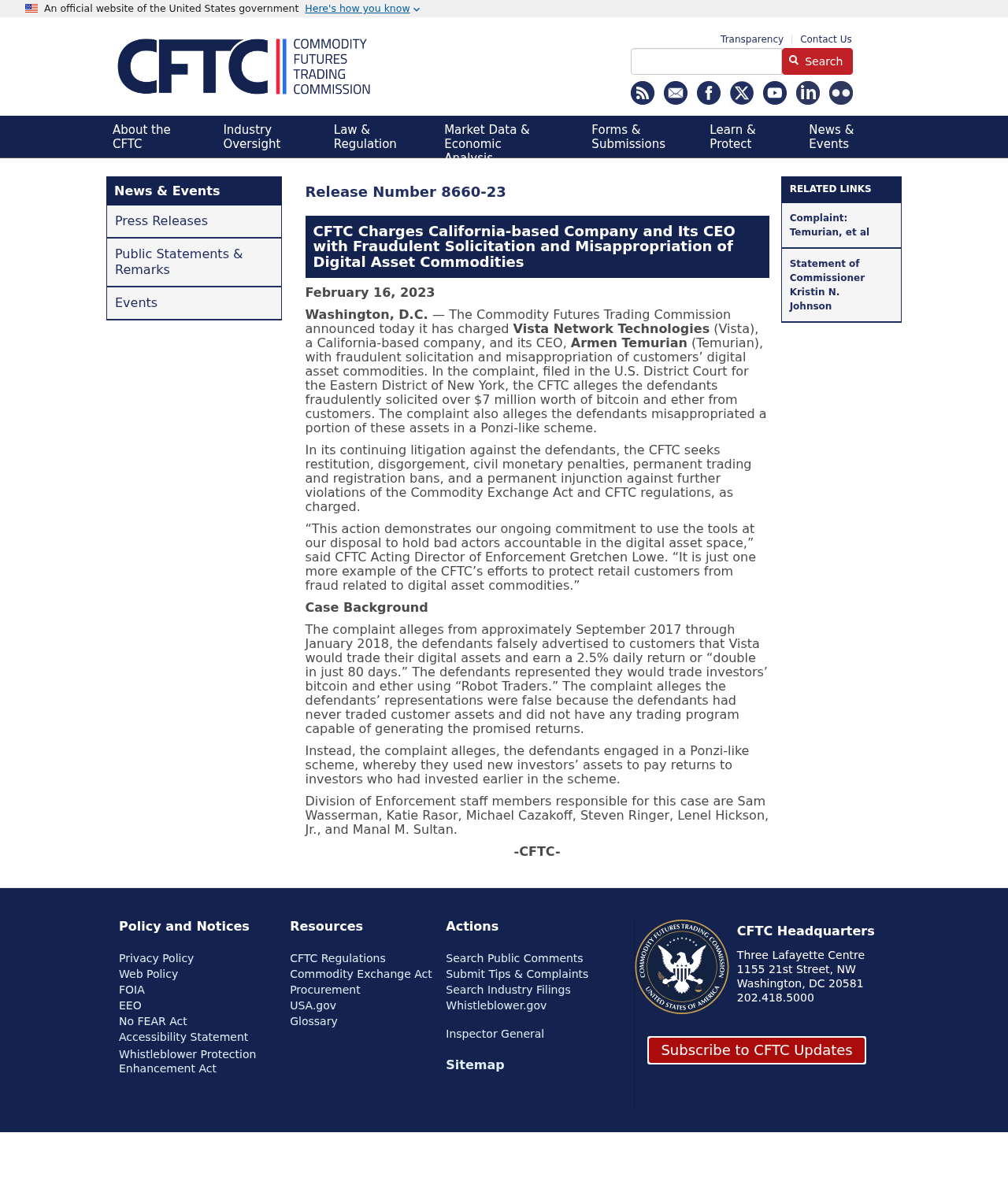
Vista Network Technologies and operator Armen Temurian promoted an investment arrangement involving Bitcoin and Ether. Advertising promised 2.5% daily returns or money doubling within 80 days.
The supposed explanation was robot trading. Participants were asked to believe software could produce the advertised results after their cryptocurrency moved into Vista’s control.
Those promises concern a historical investment program. They should not be confused with a verified trading record or an offer whose performance was independently demonstrated.
The crucial admission concerned whether trading happened at all
The CFTC’s complaint records Temurian saying under oath in September 2022 that Vista had never traded for customers.
That admission cuts through the technical sales story. Investors were not simply confronting a robot that chose unsuccessful trades; the advertised customer trading had not occurred.
- The promotion connected cryptocurrency deposits with supposed automated trading profits.
- The CFTC recorded an admission that Vista never traded for customers.
- The complaint traced payments from later investors toward earlier participants.
- A subsequent mini-miner pitch introduced another purchase instead of proving the original trading.
The legal record needs its civil-case context
The CFTC announced its lawsuit in February 2023. Its complaint alleged more than $7 million in solicitation and a Ponzi-like use of assets.
May 2026 reporting described a civil settlement involving restitution and a separate penalty. A civil settlement should not be described as a criminal conviction.
Do not send cryptocurrency into a revived Vista trading pitch. Someone seeking another payment to recover your old investment needs independent authentication, regardless of the technical explanation.
The Question the Robot Story Could Not Answer
Automated trading is an explanation for how an investment might operate. It does not establish that a particular business actually executed trades with customer assets.
A promoter can describe speed, constant activity, and technical expertise without producing independent records. The important question remains what happened to the contributed money.
Vista’s case is unusually clear on that point because the complaint records the operator’s own sworn statement. The missing activity was customer trading itself.
For someone already invested, this changes how to read old statements. A daily figure displayed on the platform cannot supply the trading history the operator said never existed.
Nor can another participant’s payment establish that history. A transfer can occur for a different reason from the explanation given to the person receiving it.
The complaint examined transaction records alongside public blockchain information. Its account of money movement addressed that source question rather than accepting the website’s description.
That is the useful lesson for a similar offer: ask for independently verifiable custody and activity, rather than another presentation about proprietary technology.
How the Vista Network Scam Works
Step 1: Turn a technical explanation into an income promise
The sales material connected Vista’s supposed robot traders with exceptionally high, regular returns. The advertised numbers gave participants a reason to transfer cryptocurrency.
Regular income can feel more tangible than a general forecast that an asset might rise. Someone can quickly imagine using it for bills or replacing other earnings.
But an attractive payment schedule says nothing about whether the business can generate the necessary profits. The underlying activity must still be real.
A trading bot also cannot remove the operator’s responsibility for truthful statements. Outsourcing decisions to software does not excuse an inaccurate explanation of customer funds.
Before any investment, separate the promised result from evidence of how it could be achieved. A promotional video supplies the promise, not independent verification.
In Vista’s case, the later sworn admission shows why that distinction mattered from the beginning. The advertised trading was not occurring for customers.
Step 2: Move cryptocurrency under the operator’s control
Investors transferred Bitcoin or Ether into Vista-controlled wallets. The contribution then depended on the operator using those assets as represented.
Paying through a blockchain did not preserve personal control over the investment. The transfer record could show where funds went without guaranteeing their subsequent use.
This is a common misunderstanding about cryptocurrency-based investments. A transparent transaction is not the same thing as transparent management of the assets afterward.
Keep your own sending account and receiving address in the same record. They help establish which transfer you made without relying on a later website balance.
Also preserve the asset quantity and transfer date. A historical contribution should not silently become a different number because Bitcoin or Ether later changed price.
The original transaction remains useful even when the recipient subsequently splits or moves funds. It provides a starting point for the actual payment trail.
Step 3: Present payments without the advertised trading behind them
The CFTC complaint describes records showing new investor assets used to pay earlier participants. It characterizes the movement as having features of a Ponzi scheme.
That account explains how an investor might receive money while misunderstanding its source. A genuine receipt can coexist with a false explanation of profits.
The complaint gives examples of cryptocurrency pooled and divided into smaller transfers. Its descriptions of particular recipients and transactions remain allegations within that civil pleading.
For readers, the central practical point does not require guessing every wallet owner’s identity. A payment to one participant does not independently prove profitable market activity.
If someone shows you an old Vista payout as reassurance, ask what established its source. The operator’s admission about customer trading makes that question unavoidable.
Do not send a new deposit as an experiment. Receiving a small payment would still leave the source and sustainability of that payment unresolved.
Step 4: Offer a mining device as another route to earnings
When investors complained about missing gains, the complaint says Vista urged further participation through a product called the mini-miner, promoted through VistaLive.
The new explanation involved a device that could supposedly mine cryptocurrency at home. That introduced another purchase instead of establishing what had happened to earlier contributions.
The CFTC alleged the device was advertised as capable of mining Bitcoin and Ether, despite not having those capabilities. It also described development problems involving Monero.
The complaint describes those device limitations; no physical unit was tested for this article. Its account explains why the mini-miner pitch failed to resolve investors’ original concern.
The buying consequence is nevertheless straightforward. A new product pitch should not be accepted as the answer to an unresolved question about old investment money.
Before spending again, require a clear accounting of the original transaction. Changing the supposed source of future earnings does not establish repayment.
Step 5: Leave investors distinguishing obligations from actual recovery
The reported 2026 settlement concerned a restitution obligation of $34,733.84 and an equal civil monetary penalty. The two amounts serve different legal purposes.
They should not be treated as two identical funds available to each investor. Nor does a reported order establish that a particular person has already received money.
The source reports that defendants represented most US investor funds had been refunded. That is not an instruction to assume your own position was resolved.
Compare the statement with your actual receipts and account records. If you have outstanding correspondence, retain its case reference and the amount it addresses.
A stranger offering to release your balance must establish genuine authority independently. Quoting a real settlement cannot authenticate an unrelated collection or recovery demand.
The appropriate response now is evidence and verified communication, rather than another purchase tied to the old promise of automated earnings.
Vista Network, Its Operator, and the Civil Case
The legal company matters more than a familiar trading word
The CFTC case identifies Vista Network Technologies and Armen Temurian. Keep those identities separate from unrelated businesses that happen to use Vista in a name.
A matching word in a company name cannot establish common ownership. Your transaction documents and the official case identity provide a more reliable connection.
If the business on your receipt differs, preserve that difference. Explain why you believe the payment concerned Vista without rewriting the original record.
The operator’s admission is different from the complaint’s other allegations
The complaint records a specific sworn statement about never trading for customers. Its remaining descriptions of intent, routing, and device representations are presented as allegations.
That distinction keeps the account precise while preserving the central deception. An admission about missing trading does not resolve every disputed detail in a civil case.
It also prevents a firm warning from becoming an invented criminal verdict. The proceedings discussed here are civil enforcement, with a separately reported settlement.
Restitution and penalties answer different financial questions
Restitution concerns returning money to harmed parties under the applicable process. A civil monetary penalty is a separate consequence and should not be counted as your refund.
The reported settlement amount also differs from the historical value solicited across the program. One figure cannot replace another simply because both appear in the case.
For an individual inquiry, start with what you paid and received. Ask which obligation or proceeding any proposed payment actually concerns.
Old promotional material is evidence, not a current support channel
A video, old website, or message may help show what you were told. Its continued availability does not authenticate a present-day person offering assistance.
Use the official case information to check institutional claims. Do not rely on a support number embedded in an unsolicited recovery message.
No investment report requires your wallet recovery phrase. That secret can expose unrelated assets and should never be supplied as proof of a claim.
Before You Pay for a Different Solution to the Same Loss
The move from robot trading to a mining device illustrates a useful warning pattern. A disappointed investor can be offered a new product as the way forward.
That can make another payment feel like protecting the original one. In reality, the second decision needs its own evidence and financial justification.
Ask whether the new purchase would make sense if the first investment had never happened. If the only reason is recovering the old loss, stop and examine that promise.
Keep cancellation or return documents for any device purchase you actually made. An old investment receipt alone does not establish the terms of a separate physical order.
A buyer’s remedy may depend on the real seller, payment method, and timing. Do not assume a historical case announcement reopens every chargeback or return deadline.
Most importantly, an unexplained old loss does not become easier to recover because the next pitch uses a different technical vocabulary.
What to Do if You Have Fallen Victim to This Scam
-
Stop new purchases or deposits tied to recovery. Keep any current request for a trading payment, mining device, activation charge, or supposed release fee.
Record its sender and payment destination before ending contact. Do not send another transfer to find out whether the offer can produce a small payout.
-
Separate investments from any device order you made. Create a dated list of cryptocurrency contributions, actual payments returned, and product purchases with their own receipts.
For each item, retain the recipient, asset or currency, amount, and explanation given. This prevents a later device invoice from replacing an earlier investment record.
-
Obtain independent transaction records from your provider. Download exchange exports or bank statements through your established account, preserving original files alongside any Vista screenshots.
Check whether claimed repayments actually arrived. If a record conflicts with a promotional message, save both and describe the difference without editing either document.
-
Report the actual facts through the official FBI intake. Visit IC3.gov, choose File A Complaint, review the terms, and select Accept if you agree.
Enter your contact details, contributions, known recipients, and the trading or device representations involved. Identify any subsequent recovery approach as a separate event.
After checking your answers and completing the digital signature, select Submit Complaint. Save the successful-submission page before navigating away.
If the form reports missing information, resolve that error before treating the report as filed. Keep originals securely because the intake does not take attachments.
-
Ask your payment provider about any recent transfer. Use the contact on your current statement or within your genuine exchange account, and provide the transaction reference.
Explain the deception and request any available stop, recall, or fraud-review procedure. Keep the reference and response without assuming recovery is guaranteed.
-
Verify settlement-related correspondence before sharing sensitive records. Compare the company, case, and requested action with the official CFTC announcement and any authenticated correspondence you already hold.
Ask the named institution to confirm the sender’s authority through its independently published route. Stop if the connection cannot be established or the request requires wallet secrets.
Frequently Asked Questions
What was Vista Network supposed to do with cryptocurrency?
The promotion said robot traders would generate exceptional returns from contributed Bitcoin and Ether. The CFTC complaint records the operator admitting Vista never traded for customers.
Does another investor’s payout prove the trading happened?
No, a receipt establishes a transfer rather than its source. The complaint describes later contributions used for earlier payments, alongside the admission about missing customer trading.
Was the mini-miner independently tested for this article?
No physical unit was tested here. The account of advertised capabilities and development problems comes from the CFTC complaint and remains attributed to that pleading.
Was the reported settlement a criminal conviction?
No, the reported resolution concerns civil enforcement. Its restitution and penalty terms should not be described as a criminal sentence or guaranteed individual payment.
Can a new device purchase recover my old investment?
A new purchase cannot establish that an old obligation will be paid. Require an accounting of the original funds before considering another promise connected to the loss.
What should I keep if the old website is unavailable?
Preserve provider statements, cryptocurrency transaction identifiers, original messages, product receipts, and any case correspondence. Those records remain useful without access to the promotional website.
The Bottom Line
Do not fund a revived Vista Network trading promise or buy another product to rescue an old balance. The recorded admission undermines the advertised trading itself.
If you paid, separate actual contributions, repayments, and device orders, then preserve and report the records. Authenticate any recovery request before providing documents or sending further money.

Join the discussion
0 commentsShare your experience or ask a question about this article.
Community experiences
Did this happen to you?
Your experience could help someone recognize the same scam. Submit a private report for our team to review.
I experienced this tooReports are reviewed before publication. Sharing publicly is always your choice.
Discussion
Start the conversation
Have a question or something useful to share? Add the first comment.