


The holiday deal looks right: familiar product photos, good reviews and a delivery date just in time. Then the seller asks you to finish the purchase somewhere else.
Or you pay through Amazon, but the package never arrives. Before you chase a refund, find out where the transaction happened and what the delivery record actually proves.
Overview
The product page and the offer are different things
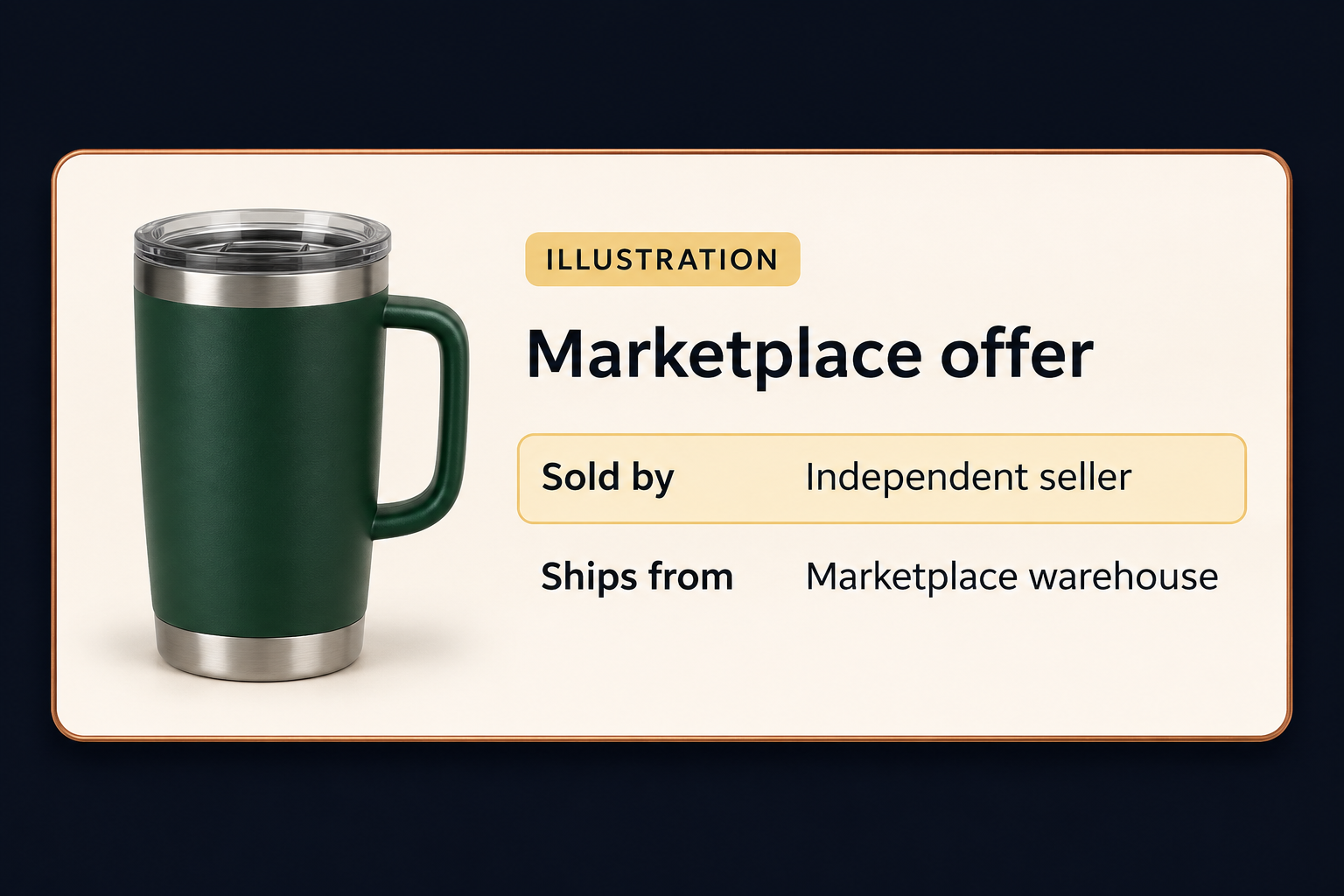
A real Amazon listing can show offers from more than one seller. The product name and photos tell you what is advertised; the purchase panel identifies the seller.
Amazon’s guide to third-party orders separates Sold by from Ships from. A seller can supply the item while Amazon handles storage and shipping.
A third-party seller isn’t a warning sign by itself. The important question is whether the seller and terms at checkout match the offer you meant to accept.
The checkout determines where you can get help
A discount advertised as an Amazon deal should be available through Amazon’s own checkout. If the seller asks for direct payment to complete it, walk away.
A receipt sent by email isn’t enough to establish where you paid. Open Amazon independently and look under Your Orders on the account and marketplace you used.
Amazon Pay on another merchant’s website is separate. If a payment appears in Amazon Pay Activity, see the Amazon Pay buyer guarantee for eligible purchases.
A delivered scan is not the end of the inquiry
Sometimes an ordinary delivery goes missing or shows as delivered early. A tracking record that cannot be tied to your order or address is a different problem.
Start with the tracking details on the order itself. The carrier may confirm whether the shipment matches your destination without identifying another recipient.
- Before you buy: Check seller, item condition, total price and delivery date on the offer you are actually selecting.
- If payment moves elsewhere: Stop and report the request through Amazon rather than negotiating a safer way to pay the seller.
- If an order is missing: Compare the Amazon record, the charge on your statement and the carrier’s delivery evidence before deciding whom to contact.
How Fake Amazon Holiday Deals Catch Shoppers
Step 1: The price gets your attention before the details do
Holiday prices move quickly for legitimate reasons. A convincing sale can put you in a hurry even when nothing on the page declares that time is running out.
Start with the offer itself, not its origin. An ad can lead to the real Amazon site, a different merchant, or a lookalike pretending to be Amazon.
A low price doesn’t tell you which one you’re looking at. Search for the item yourself in the app or on the marketplace you normally use.
Compare the exact model and condition. A refurbished appliance, last year’s model and a version missing accessories might explain a gap that looked suspicious at first.
A product that costs more elsewhere isn’t automatically a better comparison. Include shipping and taxes where shown, then check the delivery date and who handles returns.
Step 2: The shopping page borrows trust the seller hasn’t earned
One possibility is an actual Amazon product page with an unfamiliar offer. Another is a page outside Amazon that copies the retailer’s appearance.
Neither a product rating nor a familiar logo answers who will take your money. On a real page, the sale still belongs to the seller shown on that offer.
On a lookalike, don’t try to establish legitimacy by clicking around. Leave the page and check whether the offer exists through an independent route.
Read the final selection even if you already checked the product page. If you switch to another offer or condition, make sure the terms still fit.
Sometimes the independently opened marketplace shows another seller or price. That can happen normally; it doesn’t make the original ad safe or prove fraud on its own.
Step 3: The sale happens somewhere different from where you began
Amazon explicitly warns buyers against off-platform payments. A marketplace seller asking for a direct transfer to preserve an Amazon deal is a reason to stop.
A convincing explanation doesn’t change the transaction. A separate invoice, gift card code or payment app transfer doesn’t become a Marketplace purchase because the seller says so.
Don’t send a second payment if a message says the first one failed. Check Your Orders and the payment record, then ask support through the original purchase channel.
Keep a genuine seller conversation inside Amazon’s messaging system. That gives you a record you can return to, without depending on a private chat or a disappearing message.
If a seller says you need to cancel the Amazon order first, don’t assume a replacement payment keeps any platform protections. Verify what happened to the original order independently.
Step 4: The order record and the delivery story diverge
With an outside payment, there may be no Amazon order to dispute. A convincing delivery notice cannot supply the missing record.
With a real Marketplace purchase, the order exists, but a status change doesn’t guarantee that what you bought reached you. Check the order address and the shipment it lists.
A delivery date before your order or a photo of a different building is worth documenting. Neither proves by itself whether the seller or carrier is responsible.
The FBI’s holiday fraud guidance identifies non-delivery as a scam pattern. An individual late or missing package still needs investigation before you treat it as fraud.
How to Vet an Amazon Deal Before You Pay
Verify both names on the offer
Look near the purchase controls for Sold by and Ships from. If Amazon ships it but a different business sells it, don’t read the shipping line as a retailer endorsement.
Open the seller profile from the offer itself. Check recent fulfillment and return feedback when it exists, and see whether the comments concern the seller you are considering.
For a purchase you need by a fixed date, fulfillment complaints are more useful than praise for the product. Look for repeated reports about expensive items, cancellations or unresolved returns.
Don’t treat a short sales history as proof of dishonesty. If the offer is hard to evaluate, compare another seller with clearer returns and a delivery date you can accept.
Read reviews for the item, feedback for the seller
Amazon distinguishes product reviews from seller feedback. A product may be well reviewed even if the particular seller is new or has poor recent feedback.
Check whether recent reviews describe the exact model or version you are buying. Reviews about a related color or size can make sense; comments about a different product need scrutiny.
There is a documented reason not to put too much weight on those stars. The FTC’s Bountiful case concerned misleading review totals, ratings and badges on Amazon supplement listings.
The FTC approved a consent order in 2023. That case shows why reviews need context, not that every listing with shared reviews is deceptive or every badge is untrustworthy.
Compare the amount at checkout, not the advertised discount
Pick the exact version and check the condition on the final order screen. A large percentage off is only meaningful if it applies to a product you would otherwise buy.
Price history can help when it covers the same version. It cannot verify the seller, tell you who pays for a return, or authenticate a payment request.
If you need to ask about returns, contact the seller through the marketplace. Find out whether the policy covers opened items and who would pay for return shipping.
Take a screenshot of the seller, price, condition and estimated date for a costly order. Save it privately, then keep the receipt separately so you can compare both later.
When Amazon Says Delivered but Nothing Arrived
Open the order from your Amazon account. Check the shipping address, whether the order was split, and whether the tracking page covers the missing item.
Look at safe drop areas, a package locker or the building’s receiving desk. Amazon’s missing-package guidance notes that a delivery scan can sometimes appear before the parcel arrives.
Compare any official delivery photo to your location. If the photo doesn’t match, save it within your private case records rather than trying to find the address shown.
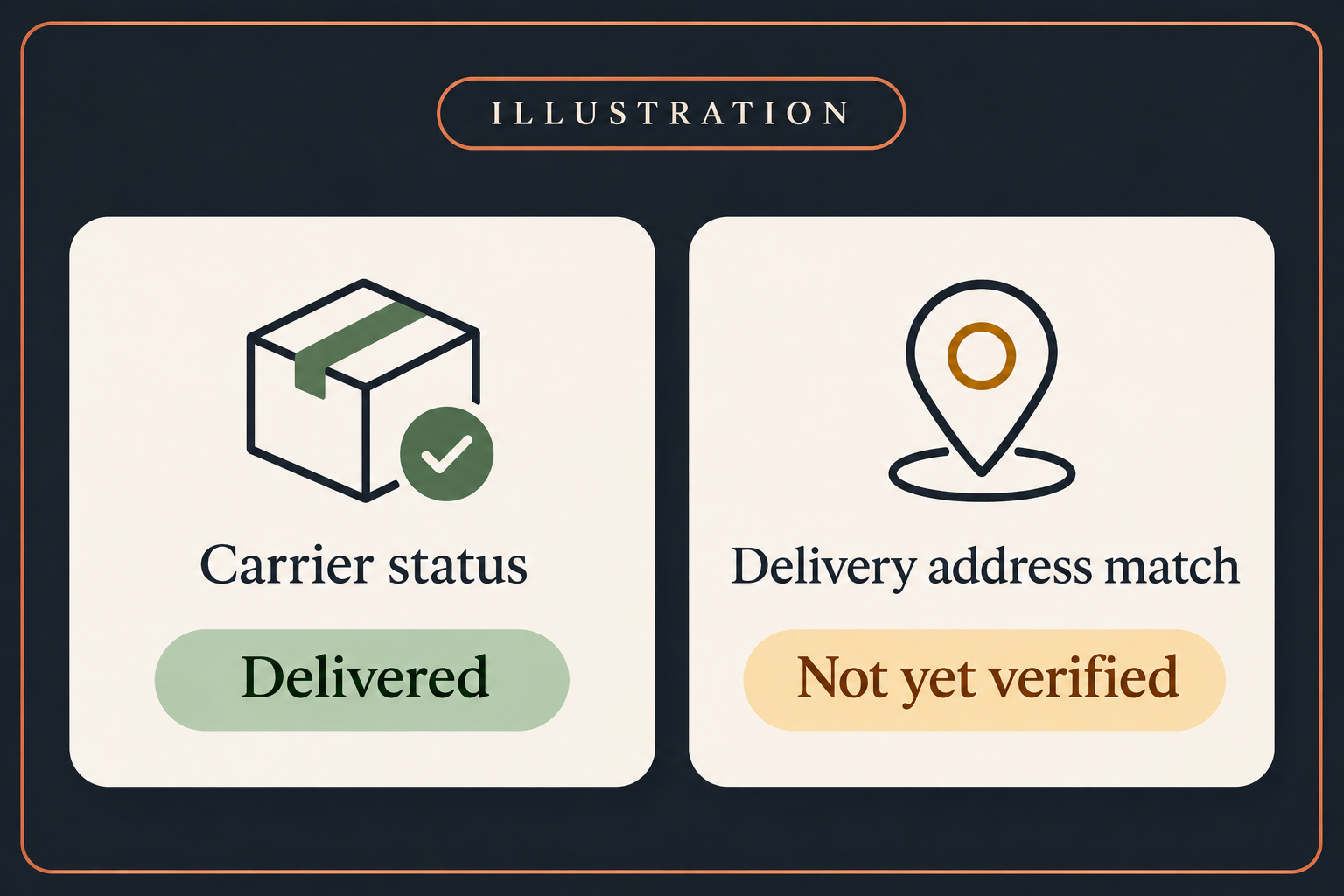
Use contact details from the carrier’s official site or Amazon’s tracking view. Ask whether the tracking number corresponds to a shipment addressed to you, not who received somebody else’s package.
If the carrier confirms a mismatch, ask whether it can provide a case number or written confirmation. Some carriers won’t share destination details with you.
Describe what you can show: the order lists one address, the tracking doesn’t match it, or the carrier couldn’t confirm the destination. Don’t present a suspicion as the carrier’s conclusion.
If tracking matches, report what you checked and what was missing. A misdelivery, an early scan and theft after delivery call for different follow-up; the status alone cannot distinguish them.
If a box arrives with the wrong item or nothing inside, keep the label, packaging and contents. Photograph them as received and open the issue against the actual order.
What to Do If You Paid for a Suspicious Amazon Deal
- Identify the transaction before requesting a refund. Save the order, messages, receipt and dates. For an outside payment, note the merchant or recipient on your statement.
- Use the help route on a real order. Open Your Orders, select the item and follow its support options. Keep any seller correspondence inside Amazon.
- Escalate a self-fulfilled Marketplace order if eligible. If the seller doesn’t resolve it, check Amazon’s guarantee rather than submitting a new payment or taking the conversation elsewhere.
- Report an outside payment to the issuer or provider. Explain whether you authorized the purchase but were deceived, didn’t receive what you paid for, or never authorized the charge.
- Secure accounts if you entered credentials. From the official service, change the exposed password, replace reused passwords, review recent activity and enable two-step verification.
- Report the impersonation separately from your refund request. Use Amazon’s scam reporting guidance for the lookalike or message. This doesn’t file a bank dispute.
Which Amazon refund route applies?
For packages shipped by Amazon or orders displaying Prime, Amazon directs you to its customer service. For sellers that handle their own shipping, start with the seller through the order.
The Amazon.com A-to-z Guarantee has separate requirements for self-fulfilled orders. For non-delivery, contact the seller first and check whether the order qualifies for a claim.
Amazon says more than 48 hours must have passed since you contacted the seller without a satisfactory resolution. It also specifies a 90-day limit from the promised delivery date.
For a promised delivery window, Amazon uses the last possible date. Missing items generally need to be more than three days overdue unless tracking already shows delivery.
Amazon also excludes certain orders for which you requested a refund or chargeback after reporting an unsolicited purchase to your bank. Don’t delay reporting suspected unauthorized charges while checking eligibility.
What if you gave money or card details to a lookalike?
Contact the card issuer through its app or the number on your card. Tell it what information you entered and ask about replacing exposed card details or challenging the transaction.
For eligible US credit card billing errors, the FTC says to dispute in writing within 60 days from when the issuer sent the first statement showing the error.
Debit cards and other payment methods have different protections. Contact the provider immediately and ask what’s possible instead of waiting for the seller to make good on a promise.
If you shared a gift card code, save the card and receipt and reach the issuer right away. The FTC’s recovery guide explains who to contact by payment type.
If the only thing you did was read a suspicious offer and close it, you haven’t made a payment or exposed a password by doing that alone.
If the link came with a fake Amazon order alert, see our separate guide to Prime Day phishing. That guide covers messages aimed at stealing the account login.
Frequently Asked Questions
Is the cheapest seller on Amazon automatically suspicious?
No, legitimate sellers sometimes discount to clear stock or compete. Compare the item condition, seller record, total cost and delivery terms before deciding whether to take the cheaper offer.
Does Ships from Amazon mean Sold by Amazon?
The shipping line tells you who fulfills the order, not who sells it. Read both fields before buying, especially if the product page offers prices from several sellers.
Can an Amazon Marketplace seller ask me to pay through PayPal?
A request to send the seller money directly is not Amazon Marketplace checkout. Decline it, keep the conversation within Amazon and report the request through your account.
What if the confirmation email looks real but the order is missing?
Check the account and country store you actually used before assuming anything. If you still cannot find the order, verify the payment independently and don’t use the email’s links.
Is a tracking number fake if the carrier shows Delivered?
The number may be genuine while still not proving that your package reached you. Ask the carrier whether the shipment matches your delivery information and save its response.
Can I get an Amazon refund if I paid a seller directly?
A direct payment to the seller isn’t covered by the Marketplace guarantee. Contact your payment provider immediately and report the impersonation to Amazon separately.
The Bottom Line
The safest check takes place before you pay. Identify the seller, compare the exact offer, and keep the purchase inside Amazon if the seller is advertising an Amazon deal.
Afterward, your order record is more useful than a polished email or a tracking screenshot. Match the payment to the order and the shipment to your address.

Join the discussion
0 commentsShare your experience or ask a question about this article.
Community experiences
Did this happen to you?
Your experience could help someone recognize the same scam. Submit a private report for our team to review.
I experienced this tooReports are reviewed before publication. Sharing publicly is always your choice.
Discussion
Start the conversation
Have a question or something useful to share? Add the first comment.