


Real estate wire fraud works because a message at the end of a home purchase can contain the right address, closing date, and amount but name the wrong recipient.
Before you authorize a wire, establish what you owe and who will receive it. A correct amount isn’t evidence that the account on the instructions belongs to your settlement agent.
Overview
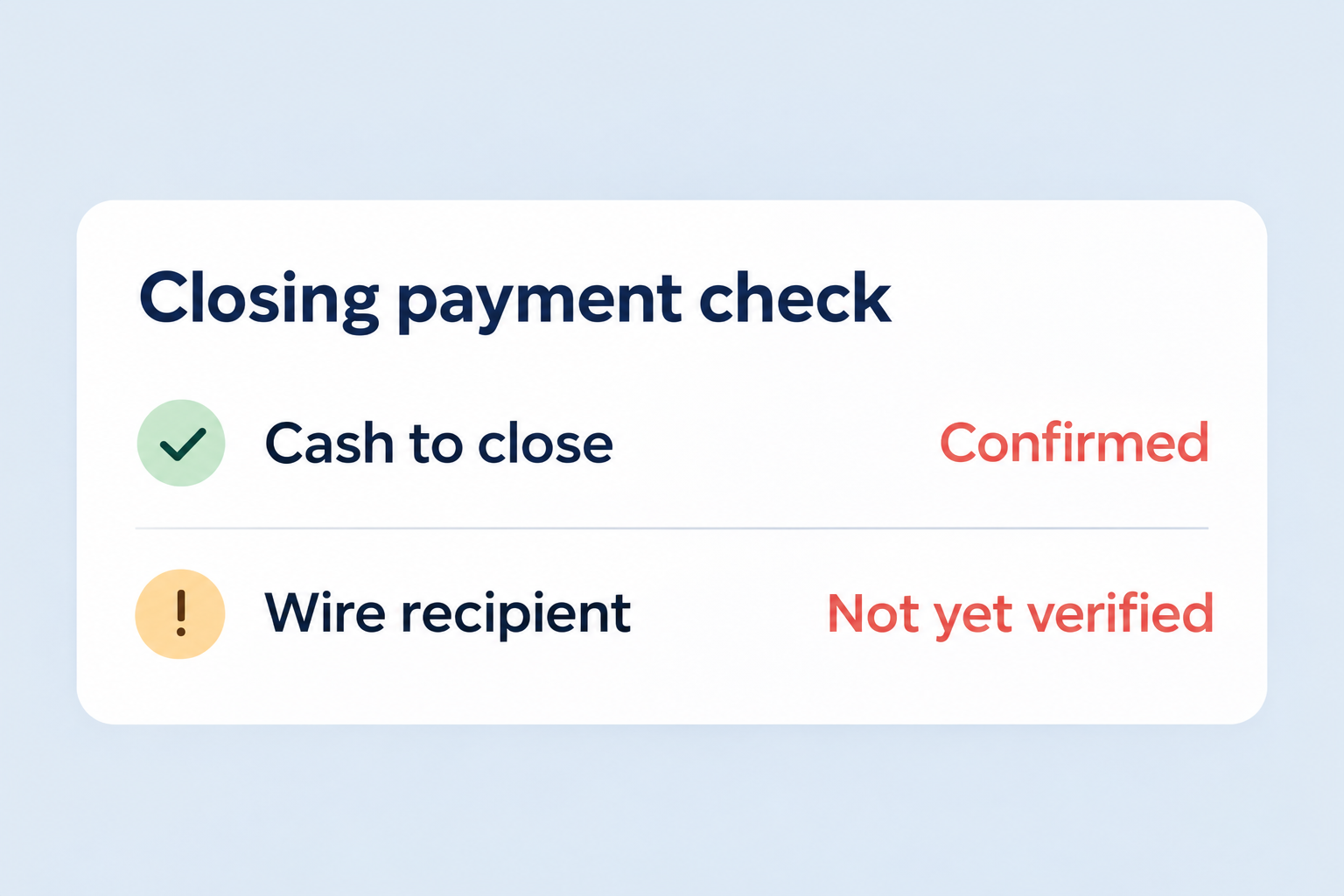
Make two checks for the same payment
Your closing figures tell you how much money to bring. The title company, settlement attorney, or other designated agent confirms the account where that money should go.
Check both through sources you already trust. A criminal who sees the closing figures can send a payment request that tracks a real adjustment without controlling the actual settlement account.
- Verify the amount with the closing team and the latest confirmed settlement figures.
- Confirm the recipient and bank details through an independently established contact.
- Stop when either check fails, even if doing so could delay the closing.
An email thread isn’t a secure payment record
Messages can appear to come from a familiar contact or even arrive inside an existing conversation.
A reply that seems to confirm a change may come from the same compromised account.
The Consumer Financial Protection Bureau describes closing scams in which someone posing as a member of the closing team tells a buyer to wire money to a different account.
After sending, start with the bank that sent the wire
Call immediately if you suspect that a wire went to a fraudulent account. The sending institution can contact the receiving institution; an email to your agent can’t take its place.
Then check with the legitimate settlement office about what actually arrived. Keep the financial fraud investigation separate from negotiations about whether the purchase can close on time.
What to Do Before You Wire Closing Funds
- Verify who collects your funds and record the settlement office’s contact details before any payment instructions arrive. Use a number established independently of the instructions.
- Confirm the current amount due with the closing team. Ask how earnest money, lender credits, or final adjustments are reflected so you can reconcile the number.
- Call the established settlement number, have the office identify the beneficiary and bank details securely, and compare them with the instructions before entering a wire.
- Stop if the amount, recipient, or destination doesn’t match. Ask both your transaction representative and the designated settlement office to resolve the discrepancy independently.
- Recheck the final bank screen before authorizing the wire and save the receipt. Confirm receipt separately with the settlement office using its established contact details.
Use a clean sheet of paper or secure notes that don’t live in the same suspect email thread.
Keep the information private and avoid distributing bank details across your closing team.
Establish the number while nothing is urgent
At the start of the closing process, ask who holds the settlement funds and how to reach that office. Depending on where you live, titles and responsibilities differ.
If the lender or real estate agent gives you a number, record it before the wire request arrives. Confirm it with trusted engagement documents or an earlier established conversation.
For offices with several branches, include the location and the closer’s name in your notes. That helps staff route your call without using the contact details from an unexpected message.
Ask about written wire procedures, including whether the office uses a secure portal, whether it allows wire instructions to change, and which person can confirm a change.
If closing is tomorrow and you did not prepare earlier, use your prior known contacts or visit the confirmed office.
Don’t call an unfamiliar number on the new instructions for verification.
Understand who confirms each part
Your lender can help explain your loan costs and credits. The party that physically receives or disburses your closing funds can verify the recipient account.
Your real estate agent may know which settlement office is handling the purchase without being authorized to verify its account.
Ask them to identify the right office, not approve a number.
A bank representative can help enter and read back the wire fields. The bank’s form may not prove that the named beneficiary actually controls the account you were given.
If you need accessibility support or an interpreter, arrange it with the bank and settlement office ahead of time. Don’t let someone in an unsolicited call speak for either party.
Check the Amount and the Beneficiary Separately
For covered US mortgages, the CFPB’s Closing Disclosure guide explains where to review the cash you need to bring to closing. Use the latest verified version of your documents.
The sale price, loan amount, and cash to close are different figures.
The number you need for this payment may reflect a deposit you’ve already made or a credit at settlement.
If the final amount changes, ask which line changed and why. A valid adjustment has an explanation independent of a new attachment asking you to send a wire.
It helps to use a short sentence when calling: “I know how much I’m supposed to send, but I still need to confirm who receives it.”
For the beneficiary check, verify the legal recipient name and the bank and account details required by your bank, through the designated settlement office’s secure process.
An escrow, trust, or settlement account may not be named exactly like the familiar brand on your agent’s website. Ask the office to explain the legal name.
Do not treat the recipient’s name, a routing number accepted by a form, or the bank being a recognizable brand as proof that the account is authorized.
If your bank lets you save a beneficiary, confirm exactly which template you selected.
An old saved recipient or copied value can create the same practical problem as a malicious substitution.
If instructions change after you verified them
Treat any revised destination as an unverified first-time instruction. Previous approval applies to the account you actually verified, not to a replacement supplied later.
Ask whether there is any acceptance window or cutoff, but don’t send under time pressure while the destination remains unresolved.
Have the authorized office explain a delay to the other parties.
Even a legitimate account change starts over at verification. If the independent contacts cannot agree, wait for settlement staff and your bank to resolve the question.
Do not use a small test payment as your only check. A recipient confirming a test by email could be the same person that sent the fraudulent instructions.
If the office accepts a different method, such as a cashier’s check, ask exactly whom to make it payable to and where it can be delivered securely.
A fictional closing-day decision
Imagine the authenticated figures say you owe $42,600 and an email sent minutes later quotes precisely $42,600.
The sender claims the closer must now use a different receiving account.
The amount passes because you checked the figures. The destination still fails until the established settlement office confirms the legal beneficiary and bank details.
Now imagine the real office says its account did not change. Do not reply to resolve the discrepancy; save the suspicious message and tell the office which conversation carried it.
Use a known phone number to notify the lender and any other affected party. They may need to protect their own accounts and examine messages sent to other clients.
If Your Bank Already Sent the Wire
Call the sending bank’s verified wire or fraud number. Say plainly that you believe the home closing wire was sent to a fraudulent beneficiary.
Give the reference, amount, release time, receiving bank, and transaction details through the bank’s secure process. Ask whether the payment can still be stopped or whether a recall is available.
Ask the bank to contact the receiving institution and record your case number. Time matters, but recovery is never guaranteed even if you report the incident promptly.
The FBI’s business email compromise reporting guidance advises swift contact with your financial institution and an IC3 complaint. Reporting to federal authorities doesn’t replace the bank call.
Meanwhile, contact the actual settlement office to confirm what it received. Ask what it needs to document the shortfall and discuss deadlines or extensions with your closing team.
Do not send a second wire merely because someone emails an explanation or demands immediate replacement. Establish a safe destination and agree on next steps through verified contacts.
Save enough evidence without sharing bank details publicly
Keep the original message and attachments as received, without enabling anything inside them. Save the real instructions, payment receipt, dates, and case numbers from the bank.
Write down which contact told you what, and whether you used a known number. That helps the settlement office and investigators distinguish the fraud from legitimate changes.
If you entered your email credentials into a linked page, secure the email account through the real provider and check account recovery addresses and recent activity.
An unexpected instruction can also originate on another party’s side. A normal login history for your email account doesn’t prove the payment request is legitimate.
Apply the Same Controls to Other Closing Payments
If you wire earnest money earlier in the transaction, confirm its recipient in the same way. Don’t carry over the final closing account without asking the settlement office.
Sellers should also establish how their own disbursement instructions will be verified. The relevant safeguard is a separately confirmed change, not just a reassuring file name.
Disputes about where to send closing funds differ from disputes over who legally owns the property. This guide to forged deeds and home title fraud explains that separate risk.
The bank change mechanism can appear outside real estate too, as seen in this case involving diverted business wires. The buyer’s settlement process requires its own checks.
If family members are helping fund the purchase, verify how the lender and settlement office want those funds documented. Avoid forwarding raw instructions as the only source of truth.
Do the final comparison at the bank
With the verified directions at hand, read back each field the bank intends to use. Don’t let a correct account name distract you from an incorrect account number.
If you carry instructions in printed form, take only the version you verified with the office. Mark obsolete copies so you don’t hand the wrong sheet to a teller.
If you’re using online banking, compare the confirmation view before submitting. Check the exact amount, currency, and beneficiary, and make sure the selected source account is the one you intended.
Ask the bank to explain an unfamiliar field rather than accepting a guess from a chat. Ask the settlement office, separately, about any reference needed to credit your transaction.
Confirm receipt without expecting an instant answer
Ask the settlement office how it tells you that your particular wire was received and credited. An acknowledgment from your bank isn’t the same as a confirmed ledger entry there.
Record both the transaction reference from the bank and the settlement office’s acknowledgment. If the office can’t find the credit, get the release status and reference before investigating a mismatch.
If a valid wire is still in process, the bank can explain that status and its next steps.
Don’t repeat the transfer simply because the settlement office hasn’t posted it yet.
If the reference shows the wrong recipient, escalate to the bank immediately. Don’t wait until the scheduled closing or for a formal email from the settlement office.
If you were told to bring the difference in person, confirm the method and appointment independently.
The same timing pressure that makes a wire persuasive can make a second demand seem routine.
Frequently Asked Questions
Does a correct cash-to-close amount prove a wire request is real?
No, because someone could know the correct figure and still substitute another account. Verify the amount and the recipient using different evidence, even when they arrive together.
Should I reply to confirm updated instructions?
Don’t rely on the message thread for confirmation. Call the settlement office through the number you previously verified, and confirm the beneficiary details directly with authorized staff.
Can a genuine closing office change its wire instructions?
A change can be legitimate, but it takes a new independent confirmation. Pause the transfer until you can verify the replacement through the settlement office and reconcile the applicable figures.
Does a successful wire receipt prove the title company received it?
A bank receipt helps identify the transfer; it doesn’t tell you that your legitimate settlement agent received and credited it. Confirm receipt through the existing settlement contact.
What do I say when calling the bank about a suspicious wire?
Say you suspect real estate wire fraud, give the transaction reference through a secure channel, and ask whether the wire can be stopped or recalled.
What if verification means missing the scheduled closing?
Tell the legitimate settlement office and the rest of the transaction team why the payment is on hold. Ask about deadlines or alternatives while you verify the account.
The Bottom Line
A closing wire needs two approvals in your own mind: the amount matches verified settlement figures, and the authorized office independently confirms the recipient details.
If anything changes, recheck before sending. If money already went out, call the sending bank and start the recovery request while separately confirming receipt with the real settlement office.

Join the discussion
0 commentsShare your experience or ask a question about this article.
Community experiences
Did this happen to you?
Your experience could help someone recognize the same scam. Submit a private report for our team to review.
I experienced this tooReports are reviewed before publication. Sharing publicly is always your choice.
Discussion
Start the conversation
Have a question or something useful to share? Add the first comment.