


Buy an advertising package, click a few websites, and share in the revenue. Traffic Monsoon made earning online sound like an uncomplicated daily routine.
Years later, messages about getting that money back bring a different decision. Before responding, you need to know which payment process is actually real.
Overview
The advertising package that behaved like an investment
Traffic Monsoon sold online advertising, but its most important offer was the $50 Banner AdPack. Buyers could qualify for revenue-sharing credits reaching $55 per pack.
Daily clicking made the arrangement feel like paid activity. The financial attraction, however, was receiving more money than the package originally cost.
In its March 2017 findings, a federal court concluded that Traffic Monsoon operated as a Ponzi scheme, using later AdPack purchases to fund earlier returns.
A genuine receivership alongside fake recovery approaches
The original company and the court-appointed receivership are different things. A legitimate process can distribute recovered assets without making the old business legitimate.
The receiver has also warned about fraudulent distribution messages. These borrow the familiar name, claim access to payments, and direct people toward unofficial contacts.
- AdPack returns depended overwhelmingly on purchases by later participants, according to judicial findings.
- Genuine claim information comes through the court-appointed receivership’s published case page.
- An activation fee is not required for an allowed claim’s distribution.
- A current correction deadline concerns certain unpaid allowed claims, rather than new investors.
The November 29 cutoff has a limited purpose
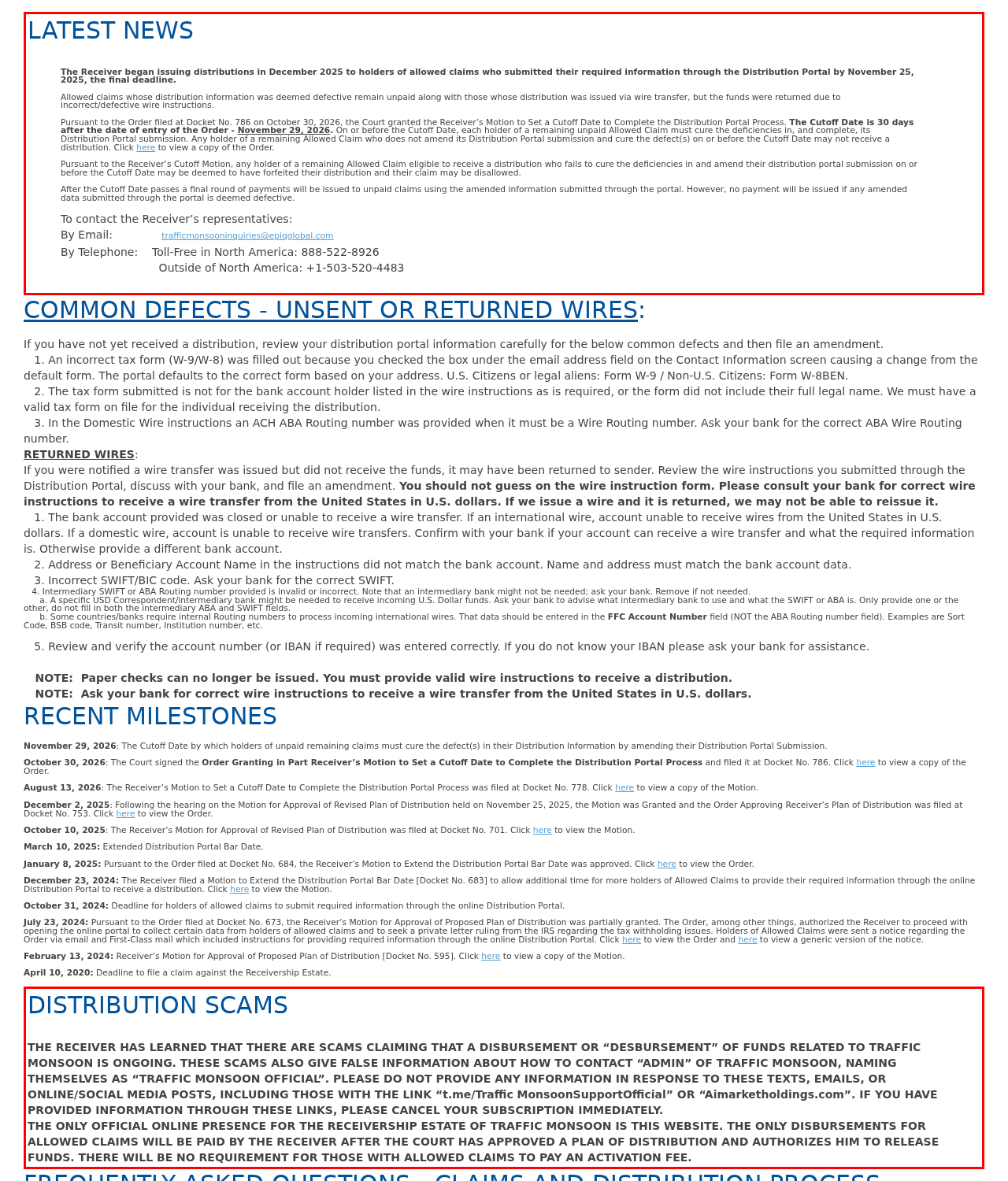
The official receivership notice identifies November 29, 2026, as the cutoff for curing defective distribution information on remaining unpaid allowed claims.
It is not a reopening of the original claims process. People affected should confirm their existing claim status and correct the actual defect promptly.
Older questions on the same case page retain earlier proposed dates and procedures. For this cutoff, use the latest notice and obtain help if instructions conflict.
Why Clicking Ads Felt Like Earning Money
A daily task gives people something concrete to do. Opening websites can make an account balance feel connected to work, rather than an operator’s payment decisions.
Traffic Monsoon required qualifying activity to receive revenue sharing. But the existence of that activity did not explain where the money funding the returns originated.
That question becomes clearer if you separate an advertising purchase from an investment expectation. An advertiser normally wants useful attention from potential customers.
Someone buying primarily for a larger future payment wants a financial return. Clicking unrelated websites does not itself generate enough outside demand to support that return.
The court examined the actual money flows instead of accepting the label attached to them. That is what exposed the gap between the advertising story and payments.
A service can exist inside a fraudulent arrangement. The relevant issue is whether customer revenue genuinely supports promised benefits, rather than whether any advertising appeared.
This makes Traffic Monsoon more instructive than a simple fake website. Participants could perform real tasks while misunderstanding the financial system surrounding those tasks.
How the Traffic Monsoon Scam Works
Step 1: Bundle advertising with a revenue-sharing position
The AdPack combined website visits and banner clicks with access to potential revenue sharing. The financial benefit made the package more attractive than advertising alone.
A prospective buyer could therefore focus on recovering the $50 and receiving additional money, rather than measuring whether the advertising helped a separate business.
That is an important distinction when assessing online earning offers. Ask what you would buy if the promised payout were removed from the package.
If the answer is nothing, the offer needs examination as a financial proposition. Calling the purchase advertising does not explain its economics.
Step 2: Make a small daily task qualify buyers for payments
The court described a requirement that ultimately involved clicking 50 ads daily and remaining on each website for five seconds to qualify for sharing.
That requirement created a routine people could follow. Completing it also gave participants a personal explanation for why they were entitled to the next payment.
However, the activity did not scale with the number of AdPacks owned. Buying many packages did not require proportionally more work from the same participant.
The growing return expectation was therefore tied to purchased positions, not a matching increase in useful work. More packages created more claims on incoming money.
For readers comparing similar offers, a task requirement should never replace the question of who ultimately pays for the supposed income.
Step 3: Fund returns with subsequent AdPack purchases
The judicial findings identified the decisive problem: returns came almost entirely from later AdPack purchases, rather than an independent advertising business generating the necessary profits.
Participants could receive money and conclude that the program worked. Yet their payment depended on other people buying positions in the same arrangement.
That creates a misleading picture of success. A payment receipt looks like evidence of profitability while concealing the source that made the payment possible.
Growing membership cannot permanently resolve that problem. Every new package adds another expectation of future sharing, so new money must support an expanding obligation.
The result is a business that needs continuing participation to maintain the appearance of earnings, rather than a business selling enough outside services.
Step 4: Encourage rollover and referral income
Traffic Monsoon also offered referral commissions, and participants could use account credits to purchase additional AdPacks. Reinvestment kept money circulating inside the arrangement.
An increasing number of packages could look like progress without a matching increase in cash available outside the website. The account became a larger promise.
That matters when reconstructing a loss. Repeatedly reinvesting the same credits is different from sending fresh money from your bank or receiving actual withdrawals.
A statement showing many package purchases can therefore overstate how much new cash entered. Preserve the details without treating every internal rollover as another external deposit.
Step 5: Leave a real recovery process vulnerable to impersonation
After intervention, the receivership took responsibility for recovered assets and claims. That process is separate from operating an advertising platform or reviving revenue sharing.
Unfortunately, a familiar case name also gives recovery impostors a convincing introduction. A message can mention genuine proceedings while redirecting the recipient to another payment destination.
The receiver specifically warns about unofficial distribution contacts and activation fees. Those warnings concern new deception aimed at people already waiting for money.
Never assume a message is authentic because it accurately names Traffic Monsoon. Verify its requested action against the receiver’s current notice before providing information.
Traffic Monsoon and the Receivership Are Different Entities
The original operator controlled the advertising business
The court identified Traffic Monsoon LLC and Charles Scoville in the original civil case. The company operated the website and sold the packages at issue.
The existence of a registered company did not answer whether the AdPack model was sustainable. Judicial findings examined how the business actually generated its returns.
Keep original operator details with your transaction history. They help distinguish the original solicitation from subsequent claims administration and any later impersonation attempt.
Civil orders should not be described as criminal convictions
A January 2021 final civil judgment imposed financial obligations and restrictions on Scoville. Those are civil proceedings, not a criminal conviction.
The Ponzi conclusion rests on the documented financial mechanism and court findings. There is no need to add unrelated allegations to explain what happened.
Likewise, a court-ordered financial amount is not a statement of cash ready for every claimant. Recovery depends on assets, administration, and applicable orders.
The receiver handles claims rather than investment accounts
The receivership’s current page identifies the representatives responsible for inquiries. Use that page as your starting point, rather than a group claiming to be official.
Have your existing claim number and the name used when filing available. They allow a specific inquiry without publishing your personal information in a discussion group.
An old company account balance is not the same thing as an allowed claim. Do not assume one establishes the amount payable under the other.
Distribution instructions can require correction without requiring a fee
The latest notice identifies unpaid claims with defective information or returned wires. Correcting banking details is different from purchasing access to a payment.
Ask your bank for accurate incoming USD wire instructions. An ACH routing number, incomplete beneficiary name, or unsuitable account can create an avoidable problem.
Do not guess those details or send them to a social-media administrator. Sensitive banking information belongs only in the authenticated procedure specified by the receiver.
Read the Current Deadline Without Confusing It With Old Notices
The latest notice says distributions began in December 2025. The November 29, 2026 cutoff concerns remaining unpaid allowed claims needing defective submission information corrected.
It does not invite everyone who once used Traffic Monsoon to submit a new claim. Nor does it promise payment simply for contacting an administrator.
That distinction is especially important because the case page retains historical FAQs. A sentence discussing an earlier proposal should not override a newer court-related notice.
If your claim has already been paid, this specific correction issue may not apply. If you have never established an allowed claim, ask about status first.
If you are an unpaid allowed claimant, identify the problem rather than changing every field. Unnecessary amendments can introduce another error into otherwise correct information.
For tax-form uncertainty, ask the administrator which information is missing and obtain appropriate tax advice. Do not change residency answers merely to make a form proceed.
The purpose is accurate payment information for the existing claimant. A deadline does not justify bypassing identity checks or accepting help from an unverified stranger.
What to Do if You Have Fallen Victim to This Scam
-
Find your claim records before responding to a payment message. Locate the claim number, original filing name, prior notices, and any returned-wire information.
Compare the message with the receiver’s current case notice. Treat requests for activation payments or unofficial account access as a reason to stop.
-
Prepare accurate banking details if your allowed claim remains unpaid. Ask your bank for incoming wire instructions for USD, including any required intermediary information.
Confirm the account can receive the payment and that the beneficiary’s legal name matches. Preserve the bank’s instructions so you can compare each field.
The current notice says paper checks can no longer be issued. Do not rely on an older FAQ suggesting a check will solve missing wire instructions.
-
Amend an existing submission through the receiver-linked portal. Start from the case page and its Distribution Portal, using your established email and password.
On Dashboard, find the completed submission and reference number. Scroll right to the Actions column and select Amend.
Use Next or Back to reach Payment Instructions, correct the relevant fields, and continue through the remaining pages.
On the last page, select Submit All Forms. Keep the resulting confirmation or updated submission record as evidence of what you submitted.
If the submission is missing, login fails, or confirmation does not appear, stop and contact the administrator. An email asking for help does not itself amend the submission.
-
Ask the published administrator about unresolved defects promptly. Use trafficmonsooninquiries@epiqglobal.com from the current case page, including your filing name and claim number if known.
Describe the precise error and request assistance with the authenticated portal procedure. Avoid attaching full banking or tax records until the secure route is confirmed.
For affected unpaid allowed claims, the published cutoff is November 29, 2026. Ask about your specific status rather than assuming every historical claimant qualifies.
-
Document any separate scam involving recovery fees. Save the message, sender account, destination address, payment request, and any transfer receipt without continuing the conversation.
For a recent payment, contact your bank or exchange through its genuine support route. Request a fraud case reference and ask about available intervention.
If you disclosed a reused password, change it through the real service. Review account activity without signing in through the suspicious message.
-
Report new online fraud with a clear timeline. At IC3.gov, choose File A Complaint, review the terms, and accept them if appropriate.
Identify the original Traffic Monsoon loss separately from any recent impersonator payment. Enter the transaction details, explain the demand, and review your answers before signing.
Choose Submit Complaint and save the successful-submission page immediately. If errors prevent confirmation, correct the indicated fields before treating the report as filed.
Keep original evidence separately, because reporting does not guarantee an investigation, reverse a transfer, or substitute for correcting an existing receivership submission.
Frequently Asked Questions
Was Traffic Monsoon merely an advertising service?
It sold advertising, but the court found its AdPack returns depended on later purchases. A real service did not make the revenue-sharing arrangement sustainable.
Did clicking advertisements create the money paid to participants?
The daily activity qualified participants for sharing, but judicial findings traced the returns overwhelmingly to subsequent AdPack purchases rather than independent advertising profits.
Does the November 29 deadline let anyone file a claim?
No, the current cutoff concerns correcting defective distribution information for remaining unpaid allowed claims. It does not reopen the original claim-filing process for everyone.
Should I pay an activation fee to receive restitution?
No, the receiver says allowed claimants do not need an activation fee. Verify any such demand against the current case notice before sending anything.
Can I email corrected banking information instead of amending?
The published instructions require the authenticated portal amendment. Email can request access assistance, but is not itself a replacement for completing and resubmitting the form.
What if an old FAQ conflicts with the latest notice?
Use the latest case notice and ask the published administrator about your specific situation. Historical proposals should not be mistaken for current payment instructions.
The Bottom Line
Do not pay a recovery activation fee or return to the AdPack model. Traffic Monsoon’s advertised returns concealed dependence on later participants’ money.
If your allowed claim remains unpaid, check the actual defect and current November 29 cutoff through the receiver’s page, then complete the authenticated correction procedure.

Join the discussion
0 commentsShare your experience or ask a question about this article.
Community experiences
Did this happen to you?
Your experience could help someone recognize the same scam. Submit a private report for our team to review.
I experienced this tooReports are reviewed before publication. Sharing publicly is always your choice.
Discussion
Start the conversation
Have a question or something useful to share? Add the first comment.