


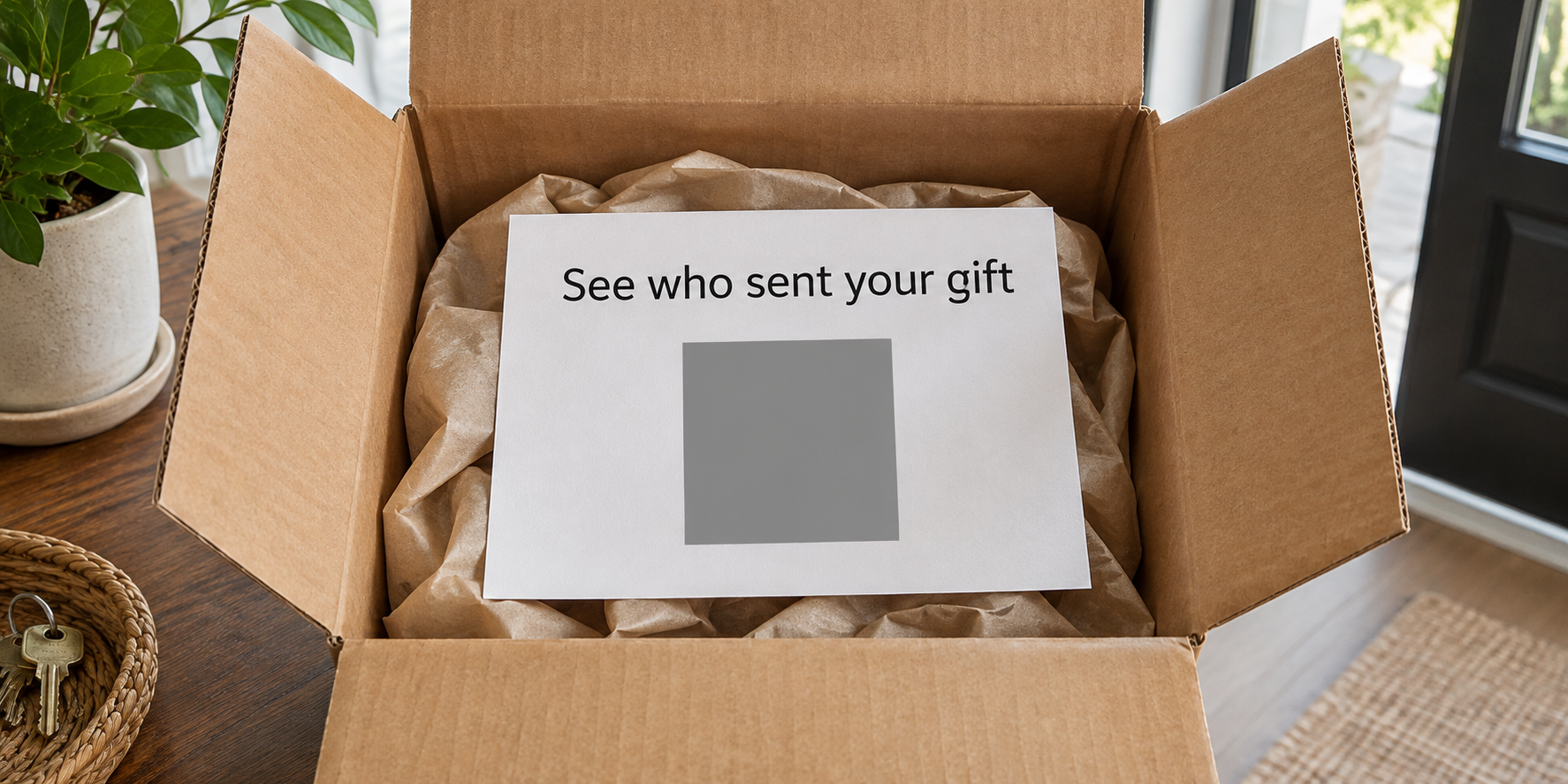
A package you don’t remember ordering is on the table. Inside, a note says you can scan a code to find out who sent the gift.
Before you reach for your phone, look at what the box itself can tell you. The shipping label and the insert answer two very different questions.
Overview
The parcel is real, but the instruction inside may be fake
A QR code in an unexpected package can be an attempt to take you from a real delivery to a website that asks for information.
The FTC’s brushing warning describes notes that offer to identify the sender or process a return. Either promise can lead to a page that steals credentials or card details.
Nothing on the card proves the retailer printed it. The outer label and the paper inside may have been prepared by different people, for entirely different reasons.
A mystery package and a QR phishing attempt are separate problems
In a brushing scam, a seller may send cheap merchandise to create a delivery record and support a fake review. The package needn’t ask you to scan anything.
QR phishing uses the delivery to start a different interaction. Its goal is to get you to trust the website that appears when you open the code’s destination.
You can suspect one without proving the other. A parcel sent to you may be a gift, a billing or delivery mistake, or something that warrants a fraud report.
What you did with the code determines your next move
Start with the most consequential thing you did. A camera preview, an opened page, a submitted password, and an approved payment don’t call for the same response.
- If you haven’t opened the destination, use the order history and the retailer’s support channel to investigate the parcel.
- If you opened the page but shared nothing, close it and check whether anything downloaded or a permission changed.
- If you disclosed a password, a code, or a card number, act on that exposure before spending time tracing the sender.
What the Label Tells You That the Insert Cannot
Start by reading the addressee on the outside. If the parcel is addressed to another person, treat it as a delivery issue and avoid opening it.
The correct street address with somebody else’s name is not the same as merchandise sent to you. It might be intended for a previous resident or another household.
If it is addressed to you, save the carrier name and tracking number privately. Use a carrier service you reached yourself rather than a tracking address printed on the insert.
A matching tracking record can confirm that a parcel was shipped and delivered. It doesn’t explain who paid, whose account was used, or why the note is inside.
Open the retailer’s order history from its app or website and compare the delivery date, parcel contents and tracking identifier. Look for split shipments as well as standalone orders.
An item can be dispatched separately from other things in the same order. A household member might also have placed the order from an account you cannot see.
Ask people who might have sent a gift without posting the shipping label publicly. You can describe the item and date without circulating your address, barcode, or tracking number.
If a gift sender confirms the item, that resolves who ordered it. It still doesn’t mean a loose insert with a login request is legitimate.
For an unmatched parcel that appears to be from Amazon, use its unwanted package instructions. Amazon distinguishes packages addressed to you from packages intended for an unknown person.
If the retailer asks for a tracking number or a label photo, use its support channel. A stranger in a group chat doesn’t need that record to offer an opinion.
How the Unexpected Package QR Scam Works
Step 1: The package supplies a believable reason to look
Ordinary scam messages have to convince you that something exists. Here there is already an object on your table, and you want to know why you received it.
The sender may call it a gift, imply the package is connected to a real store, or offer to make a return easier. Curiosity can do the work of urgency.
An unrecognized return label isn’t an invitation to follow the note. The real carrier or marketplace can handle shipping questions without relying on whatever is printed inside.
Step 2: The code takes the investigation away from the retailer
A printed URL lets you read the destination before typing it. A QR code hides that information until your phone interprets the pattern and offers to open something.
Even a useful preview isn’t a guarantee. Printed codes can lead to redirect links, and a displayed website name is easier to misread on a small screen.
The United States Postal Inspection Service calls this variation quishing, or phishing by QR code. The page can imitate a retailer, a bank, or another familiar institution.
Step 3: Finding the sender turns into sharing something
The destination can claim it needs an account login, a verification code, a full address or a return fee. None of those requests makes the card more credible.
A return address can be useful to the platform investigating the shipment. An unfamiliar website does not need your shopping account password to tell you who sent a gift.
If an apparent return page asks you to pay, stop before confirming anything. Ask the retailer whether there is a real order or return on record and what procedure applies.
If You Scanned It, Find the Point Where You Stopped
Some camera apps recognize a code and wait for you to tap a banner. In that situation, seeing the banner isn’t the same as loading the destination.
If your app opens a site automatically, close it without testing the form. You don’t need to go back to reproduce the screen to report what happened.
A site visit can reveal ordinary connection and browser information to the destination. That alone does not tell you your passwords, card information, or shopping account have been accessed.
A download is also not the same as installation. Don’t open it to find out what it is, and don’t approve notifications, device profiles, or app permissions the page requests.
If you installed software or granted control, stop accessing sensitive accounts on that device until you’ve addressed that exposure. Use another trusted device to contact support or your bank.
If you typed information into a suspicious form, treat it as potentially exposed even if the page stalled. An error doesn’t tell you what was transmitted.
For credentials, go directly to the service whose password you entered. Check contact details, security settings and order activity so you don’t overlook changes made alongside a sign-in.
If you gave away a one-time code, tell support what the message said the code was for. The difference between a login and a payment approval matters.
If the form captured card details, contact the bank using the number printed on your card. Tell the bank about any payment prompt or unfamiliar transaction.
The bank can advise on locking or replacing the card and disputing activity. It needs the difference between a card you exposed and a transfer you actually authorized.
How to Handle the Package While You Report It
Don’t mail the parcel to an address listed on the card. You could pay unnecessary postage or lose the label that helps identify the shipment.
In the United States, the federal unordered merchandise rule addresses goods mailed without a recipient’s prior request or consent. It isn’t permission to keep a neighbor’s package.
If the retailer confirms you didn’t order it, don’t pay a demand from the insert. Ask the retailer about return or disposal options if you want them.
You don’t have to use what came in the box. If contents look unsafe, don’t handle them unnecessarily and ask the carrier or appropriate local authority how to proceed.
Don’t treat a follow-up text as confirmation that the retailer is investigating. Look for your existing case in official support or return to the support channel you started with.
If you see unexpected orders, separately note whether charges came from your payment method. A parcel in your name is suspicious; a matching unauthorized purchase tells support where to look.
A Legitimate Return Starts With an Order, Not With a Loose Card
Amazon’s return instructions describe choosing an item in Your Orders and selecting a return method. The label-free option can generate a code for you to bring to an approved drop-off.
That’s the opposite direction from the note in the box. In the authorized flow you request a return and then get the retailer’s code to show at drop-off.
A documented gift return can also have its own official route. Ask support about the order or gift instead of assuming the mystery insert is part of that process.
Not every square on packaging is a return instruction. A manufacturer might use one for a manual or product registration, and a carrier might print one for processing.
Look at the instruction beside it. A loose card asking for your account credentials to identify a stranger’s gift has a different purpose than a label the carrier reads.
If someone directed you to the package as proof of a transaction you didn’t authorize, keep that message. The chronology may help separate a shipping complaint from attempted credential theft.
Record the date and where the box arrived if there are multiple packages. A retailer can link shipments with matching identifiers without making you scan something from each one.
If the label shows a retailer you don’t use, don’t create an account just to investigate. Ask the carrier or the retailer’s published support route what identification it needs.
Unsolicited contact after the first report can be its own risk. Anyone who claims you must pay to close the case should be checked against the original case record.
The point of keeping records isn’t to identify the person behind every package yourself. It gives the carrier and marketplace something useful without exposing account details to the sender.
What to Do If You Received a Parcel or Opened Its Code
- Put the insert aside. Preserve a photo of the note and the outside label, but don’t scan the code or post the unredacted photos.
- Check for ordinary explanations. Compare the addressee, tracking details and expected orders, then ask anyone who might plausibly have sent the item as a gift.
- Report the package through the retailer or carrier. Explain what the insert asked you to do, and provide the shipment details in a private official channel.
- Address the action you took. If you gave a password or verification code, secure that account. If you gave card details, contact the issuer.
- Record any second contact separately. Save new messages and payment demands, then report the pattern to the FTC in the United States.
If your report is about an unexpected package only, identify that clearly. You can say the note looks suspicious without claiming the parcel produced a confirmed identity theft.
Report any government ID or financial information you shared and follow the relevant recovery guidance. A shipping label alone doesn’t show those details were exposed.
Frequently Asked Questions
Can I photograph the note without visiting its website?
Yes, a photo is useful for your records. Don’t tap a destination suggestion from the camera, and cover the code before sharing an image publicly.
If a retailer or investigator requests the original through an official channel, send it privately. There’s no benefit in making someone else reproduce the visit.
Does recognizing the carrier mean the card is safe?
No, the carrier can deliver a real parcel without approving the seller’s insert. Check shipment details through the carrier’s own app or website.
Will Amazon ask me to scan the insert to report the package?
Amazon provides a report route you can reach from its own help page. Use that instead of a code whose origin you haven’t established.
Did I expose my login just by opening the page?
Opening a page isn’t the same as typing a password or approving access. Close the page and check what you actually entered, installed, or allowed.
If you can’t remember whether you submitted a password, secure that account directly. Don’t use the suspicious page again to see whether it still has your information.
What if the package is mine but the order doesn’t appear?
Check independently for a gift or a separate order first. If those don’t explain it, report the tracking number to the retailer and review your payment activity.
Does every mystery parcel come from brushing?
No, a parcel can also arrive because of a mistaken address, a gift, or an unauthorized order. Start with the order and charge records, not a guess about the sender.
The Bottom Line
Don’t use a QR code from an unexplained package to find out who sent it. Investigate through the retailer or carrier and leave the unknown destination unopened.
If you already followed the code, base your response on what the page got from you. A submitted credential, code, or payment deserves attention before the parcel does.

Join the discussion
0 commentsShare your experience or ask a question about this article.
Community experiences
Did this happen to you?
Your experience could help someone recognize the same scam. Submit a private report for our team to review.
I experienced this tooReports are reviewed before publication. Sharing publicly is always your choice.
Discussion
Start the conversation
Have a question or something useful to share? Add the first comment.