


A text about Amazon bonus credit looks like a reminder about money you already earned. The amount may be big enough to make you check your phone twice.
Amazon does offer real credits and promotions, which makes the language familiar. Start by finding out which benefit the message claims you have and where it should appear.
Overview
A balance and an order discount leave different records
Redeemed gift card funds are stored in your account. A promotion may instead apply to a qualifying purchase, with restrictions in the original offer. Neither requires trusting a random text.
That difference helps explain why checking one account screen may not settle everything. A genuine promotion needs its own terms and an official route, not a mystery claim form.
An expiration date can be part of the bait
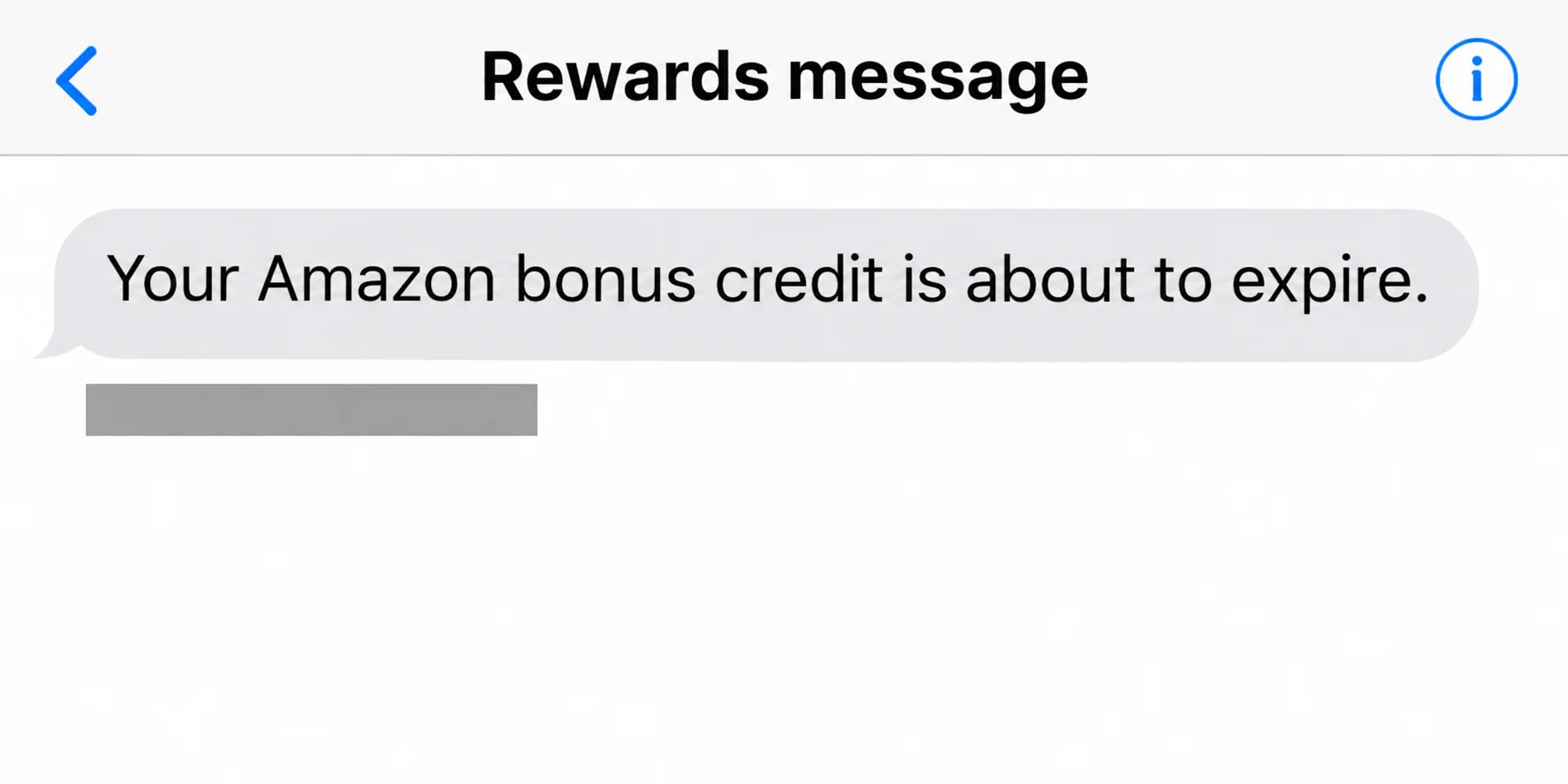
The Amazon bonus credit text scam says there’s already money waiting for you. It uses a deadline to make a sender-controlled link feel more urgent than checking the real account.
A real offer can also expire. The useful distinction is whether you can independently match it to Amazon’s records, your own activity, or the terms of a promotion you recognize.
Paying to receive a surprise reward is a different transaction
A stranger may say a small payment will unlock a larger balance. A charge on a new page doesn’t become an Amazon credit because the page calls it verification.
- Gift card balance: Check your signed-in account and recent balance activity.
- Promotion you earned: Find its terms and review any applicable discount at checkout without ordering.
- Unsolicited prize with a fee: Don’t pay to claim it.
- Already entered a password or card: Secure the affected account or contact the issuer.
Which Kind of Amazon Credit Are You Looking For?
Start by opening Amazon independently on the account and marketplace you usually use. Don’t tap the message to find a balance or sign in through a page it supplies.
| What the message claims | What a real record can look like | What not to do |
|---|---|---|
| Gift card funds already credited | Account balance or activity after redemption | Don’t enter a claim code on an outside page. |
| Discount earned through a particular promotion | Offer terms and an eligible order summary | Don’t order something just to check a mystery balance. |
| Refund connected to an earlier purchase | Refund information on that order and the corresponding payment record | Don’t share a banking code to release the refund. |
| Prize you must unlock with a charge | An unsolicited demand for payment, not independent prize confirmation | Don’t pay the sender’s fee or provide card details. |
Amazon’s gift card help explains that redeemed card funds sit in the account for eligible orders. The amount a text promises isn’t evidence of a redemption.
A genuine benefit may be linked to a specific purchase or promotion. As one example, Amazon’s Trade-In terms describe rebates or credits whose treatment depends on the offer.
That doesn’t mean the message you received is a Trade-In notice. It explains why a real order-specific discount need not appear as a general gift card balance.
If the text mentions a refund, look at the order it supposedly came from. Compare the refund method and amount with what appears in your account or at your issuer.
If you don’t recognize the promotion, ask Amazon about it through Customer Service. No seller-supplied password form is necessary to establish whether Amazon knows of an offer.
How the Amazon Bonus Credit Text Scam Works
Step 1: The message frames the prize as something you already own
The sender doesn’t need you to believe you won a contest. Calling it unused rewards or a credit about to expire makes checking it feel like recovering your own money.
A familiar name, first name, or amount makes the message seem individualized. It doesn’t show that the sender can access your actual gift card balance or order history.
The deadline discourages you from looking up the offer on your own. If the message is genuine, the actual terms matter more than what the sender says happens next.
Step 2: The claim button leads outside the account you trust
The text asks you to check a reward instead of opening Amazon separately. A landing page may then show an Amazon-like header and ask you to prove your identity.
The sign-in form is where a possible discount becomes a credential risk. Don’t type a password or relay a one-time code so an unknown page can prove you qualify.
Amazon’s SMS safety page includes a fraudulent prize text example and warns against requests for financial details or gift card codes through text.
Step 3: A fee or a new prompt can reveal the real cost
Some prize lures claim a card is needed for shipping or processing. The FTC’s prize guidance treats paying to collect an unexpected prize as a scam warning.
The amount can look small because the valuable part of the request is your card information. A charge or approval screen may expose more than the advertised claim fee.
An offer might also arrive as a fake customer survey. Treat that as a separate route to the same decision: don’t pay an outside form to release an unverified reward.
How to Check a Genuine Promotion Without Purchasing Anything
If you recognize the action that should have earned the reward, find the original confirmation from inside your account or through an independently verified Amazon message.
Check eligibility in the offer itself. An item category, seller, order minimum, expiration date, or account region can affect whether a promotion shows up on a particular order.
When you can verify the promotion, inspect the total for a qualifying item before placing an order. You don’t need to complete checkout merely to investigate a supposed credit.
Read the lines of the total separately. A seller’s price reduction, promotional credit, and gift card balance don’t represent the same kind of benefit.
If no discount shows, check the terms again rather than trying to activate something on the sender’s page. If unsure, bring the original offer details to Amazon.
If your family shares shopping responsibilities, ask who bought the item or made the trade-in. A different account can explain a missing record, but it doesn’t authenticate the unsolicited text.
If the lure switches from an account balance to free merchandise for a small shipping charge, the fake Amazon survey prize guide covers that variation.
Three Situations That Look Similar Until You Check the Account
You just completed a trade-in
Imagine Amazon confirmed a trade-in last week. You receive a surprise text today promising more than you remember. Open the actual trade-in record before comparing it with anything.
Look for which device and transaction were involved. Amazon’s terms distinguish credits or rebates tied to eligible purchases from how an account balance is normally spent.
Check whether you are looking at credit for the exchanged item or a separate discount on buying a new one. Those details can explain why two amounts differ legitimately.
If the text asks you to pay to release the higher amount, don’t assume it is referring to the same event. Ask Amazon about the original trade-in only.
You recognize the amount but the text calls it a refund
Suppose you returned an order recently. Check the refund status and chosen refund method before trusting a request to collect the amount somewhere else.
You may see that the order has a refund in progress without a matching posted credit yet. That doesn’t make another page a faster way to get paid.
If someone asks you to confirm a bank authorization to release the refund, pause. The confirmation from your issuer describes the action you’re being asked to approve.
When the refund record and payment history disagree, give Amazon the existing order details. If a card credit is missing, ask the issuer what it can verify separately.
You didn’t enter a promotion or make a recent purchase
In that situation there is nothing specific to reconcile with the text. Don’t search for a random item and buy it just to see whether a promised balance appears.
Instead, check whether the account actually shows a redemption or whether Amazon identifies a valid offer. If there’s no independent record, set the text aside.
An unexpected offer can be tempting even when you can’t explain why you received it. You don’t need to identify the sender to decline their link or fee.
Record the Terms Shown Before You Dispute a Charge
If you paid after a reward claim, save what the page showed about the price and the merchant. The text’s promise and the transaction on your card are separate evidence.
Look for the actual merchant name on the statement. A name in the charge record doesn’t verify the promotion, but it helps the issuer find the payment you mean.
If a receipt includes a trial or later charges, preserve those terms instead of assuming that every reward text enrolls people. Tell the issuer what happened in your case.
If there are multiple debits, mark the ones you don’t recognize. Give dates and amounts so the issuer can separate a hold from a posted payment.
If you never received the promised item, keep any confirmation describing it. The bank can investigate what was charged without treating the seller’s claim as proof of a shipment.
The FTC’s response guide separates steps by payment method. If you sent a gift card rather than providing a credit card number, use the contact route for that card.
A follow-up text offering a refund may come from someone who knows the first claim. Check with the company handling the payment before sharing more information or authorizing another charge.
What to Do If You Responded to a Bonus Credit Text
-
If you received the text but didn’t use it, stop there. Check your balance or orders directly if you want to verify its claim.
Don’t call a number in the message to ask whether the offer exists. Contact Amazon from an account or support route you opened yourself.
-
If you opened the link without entering anything, close it. Think through what else happened rather than assuming you submitted the details stored on your account.
If the page asked you to install something or approve a permission, review that separately. A payment claim and device access are different forms of exposure.
-
If you entered Amazon credentials, secure that account promptly. From the real app or site, change the password and check order history, addresses, and login settings.
Check the gift card activity as well as purchases. An unfamiliar order and a balance reduction are both useful facts to give Amazon without sharing codes.
-
If you gave a card number or approved a payment, contact your issuer. Tell it what you submitted and save the amount and merchant shown.
Use the issuer’s app or the number on the card. Ask about the specific charge and steps to protect the card, not whether the prize looks believable.
-
If you sent a gift card number, contact that card issuer. Keep the actual card and receipt, and ask whether it can act on the redemption.
Amazon’s gift card scam guidance warns against using gift cards to claim a prize. Recovery isn’t promised, but reporting promptly gives the issuer the information it needs.
-
Use the reporting route appropriate to your exposure. See Amazon’s report a scam page for instructions when you’ve shared account or payment information and when you haven’t.
Save any suspicious texts privately without forwarding sensitive details. Use the FTC’s report portal to document the impersonation in the United States.
Frequently Asked Questions
Is every Amazon promotional credit message fake?
Amazon does offer promotions and account benefits. Confirm anything you recognize from the original terms or your account, not by signing in through an unsolicited link.
Why isn’t a real promotion in my gift card balance?
A promotion can apply only to an eligible purchase, while redeemed gift card funds are stored on the account. Check the specific terms before assuming the two are interchangeable.
Do I need to buy something to check whether a credit applies?
You can review the order summary without placing the order. If an offer you independently verified doesn’t apply, ask Amazon or check the eligibility terms.
Is a small shipping fee acceptable to claim a surprise prize?
Don’t pay to release an unsolicited prize. A shipping label above the card form doesn’t make the charge legitimate or prove that an item will ship.
What if the text contains my first name and a deadline?
Those details can make a message convincing without identifying its sender. Use the actual account or offer terms to confirm the credit and any expiration.
What should I do if the site captured my Amazon sign-in code?
Contact Amazon and secure the account immediately from its real app or site. Review orders, addresses, security settings, and balance activity for anything you didn’t authorize.
The Bottom Line
The Amazon bonus credit text scam depends on you claiming the reward through the message. Check the real account and refuse any fee for an unsolicited prize.
If you already gave out a sign-in code, card number, or gift card, tell the appropriate provider what you disclosed. Act on that exposure rather than chasing the promised credit.

Join the discussion
0 commentsShare your experience or ask a question about this article.
Community experiences
Did this happen to you?
Your experience could help someone recognize the same scam. Submit a private report for our team to review.
I experienced this tooReports are reviewed before publication. Sharing publicly is always your choice.
Discussion
Start the conversation
Have a question or something useful to share? Add the first comment.