

Trojan.Kotver!gm2 is a heuristic detection used by Norton (Symantec) antivirus products to indicate and detect the Kovter Trojan Horse.
Kovter is a trojan horse that is used to perform click-fraud operations on the computers it infected, in order to generate revenue for its authors. When the new Kovter variant comprises a computer, the Trojan has the ability to reside only in the registry and not maintain a presence on disk. It accomplishes this by using registry tricks in an attempt to evade detection. The threat is also memory resident and uses the registry as a persistence mechanism to ensure it is loaded into memory when the infected computer starts up.
When infected with Trojan.Kotver!gm2 common symptoms may include:
- Your browser will be redirected to different web pages
- Pages may be blocked or unreachable while you are browsing the web
- Your computer will act sluggish and programs will take a long time to start up
- Alerts stating that PowerShell has stopped working
- Your computer may run slow
- Your computer’s CPU utilization may rise to as high as 75%
- Applications and Windows may freeze
- Your Internet may become slower
How to remove Trojan.Kotver!gm2 malware (Virus Removal Guide)
This page is a comprehensive guide which will remove the Trojan.Kotver!gm2 malware from Windows.
Please perform all the steps in the correct order. If you have any questions or doubt at any point, STOP and ask for our assistance.
To remove Trojan.Kotver!gm2 virus, follow these steps:
STEP 1: Stop the malicious processes with Rkill
STEP 2: Scan your computer with Symantec Kovter Removal Tool
STEP 3: Scan your computer with Malwarebytes Anti-Malware
STEP 4: Scan your computer with HitmanPro
(OPTIONAL) STEP 5: Scan your computer with Zemana AntiMalware
STEP 1: Stop the malicious processes with Rkill
RKill is a program that will attempt to terminate all malicious processes associated with this infection, so that we will be able to perform the next step without being interrupted by this malicious software. Because this utility will only stop the malicious process and does not delete any files, after running it you should not reboot your computer.
- You can download Rkill from the below link.
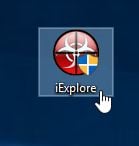
RKILL DOWNLOAD LINK (his link will open a new web page from where you can download “RKill”) - Double click on Rkill program to stop the malicious programs from running.
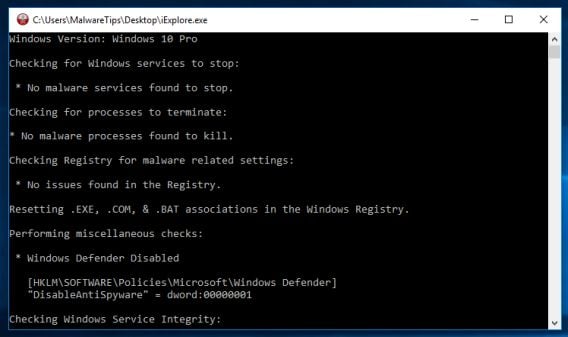
- RKill will now start working in the background, please be patient while this utiltiy looks for malicious process and tries to end them.
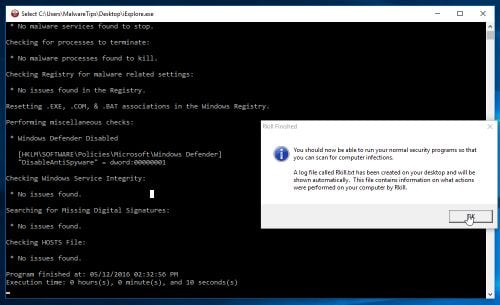
- When the Rkill tool has completed its task, it will generate a log. Do not reboot your computer after running RKill as the malware programs will start again.
STEP 2: Scan your computer with Symantec Kovter Removal Tool
Symantec Kovter Removal Tool is a specialized tool to remove Kovter Trojan from Windows.
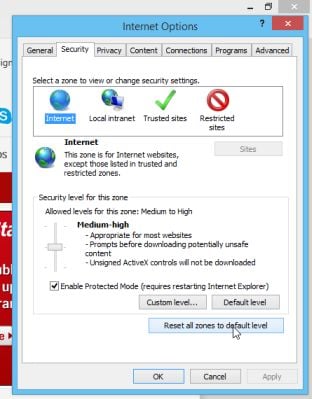
- Trojan.Kotver!gm2 will change your Internet Explorer security settings so that you are unable to download files with it. To fix this, press the Windows key on your keyboard, and while holding it down, also press the R key on your keyboard. This will open the Run dialog box as shown below.
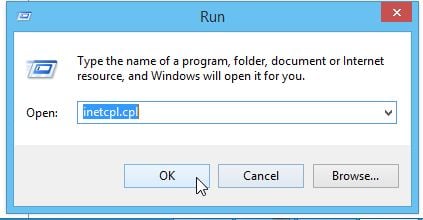
Next, we will need to type inetcpl.cpl in the “Run” box to open the Internet Explorer settings. - In Internet Explorer, click on the “Security” tab, then on “Reset all zones to default level” button. Click on “Apply” and “OK” to save these settings.
- Next, download Symantec Kovter Removal Tool from the below link:
SYMANTEC KOVTER REMOVAL TOOL DOWNLOAD LINK (This link open a new webpage from where you can download Symantec Kovter Removal Tool)
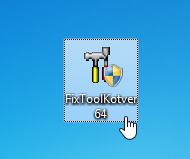
This tool comes in a 32-Bit and 64-Bit version, so make sure to download the version that has the same bit type as your installed version of Windows. - Once Symantec Kovter Removal Tool has been downloaded, double-click on FixToolKotver32.exe or FixToolKotver64.exe, depending on which version you downloaded.
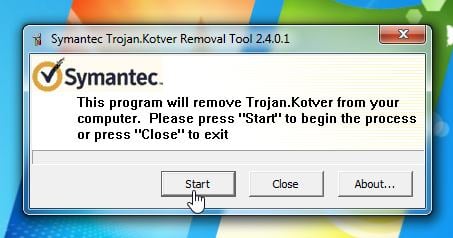
- To start a scan with Symantec Kovter Removal Tool, click on the Start button. This scan should not take more than a few minutes.
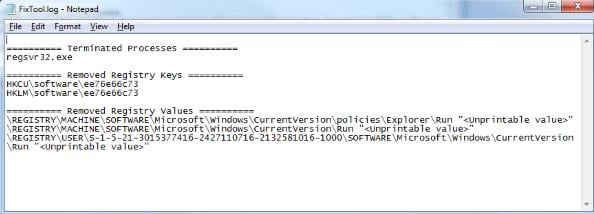
- When the removal tool has finished scanning and removing the infection, it will display a prompt that it has finished.
STEP 3: Scan your computer with Malwarebytes Anti-Malware
Malwarebytes Anti-Malware is a powerful on-demand scanner which should remove the Trojan.Kotver!gm2 virus from your machine. It is important to note that Malwarebytes Anti-Malware will run alongside antivirus software without conflicts.
- You can download download Malwarebytes Anti-Malware from the below link.
MALWAREBYTES ANTI-MALWARE DOWNLOAD LINK (This link will open a new web page from where you can download “Malwarebytes Anti-Malware”) - Once downloaded, close all programs, then double-click on the icon on your desktop named “mbam-setup” to start the installation of Malwarebytes Anti-Malware.
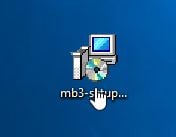
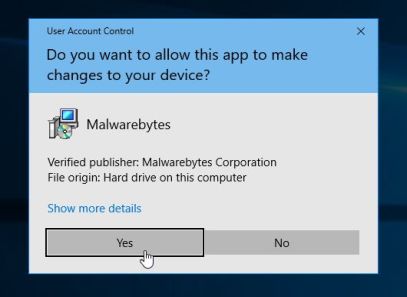
You may be presented with a User Account Control dialog asking you if you want to run this file. If this happens, you should click “Yes” to continue with the installation.
- When the installation begins, you will see the Malwarebytes Anti-Malware Setup Wizard which will guide you through the installation process.
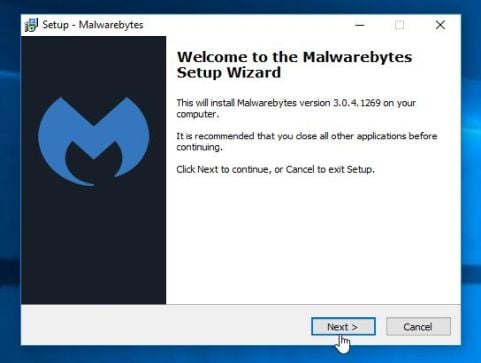
To install Malwarebytes Anti-Malware on your machine, keep following the prompts by clicking the “Next” button.
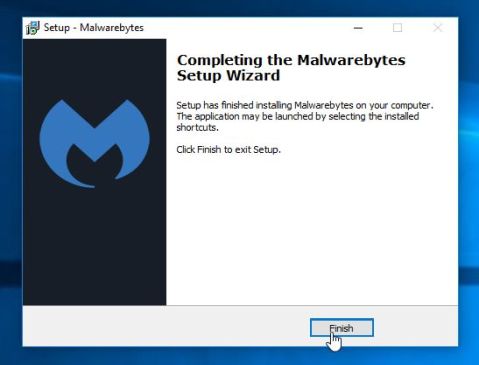
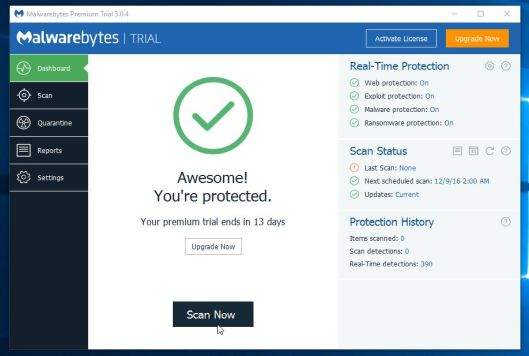
- Once installed, Malwarebytes Anti-Malware will automatically start and will update the antivirus database. To start a system scan you can click on the “Scan Now” button.
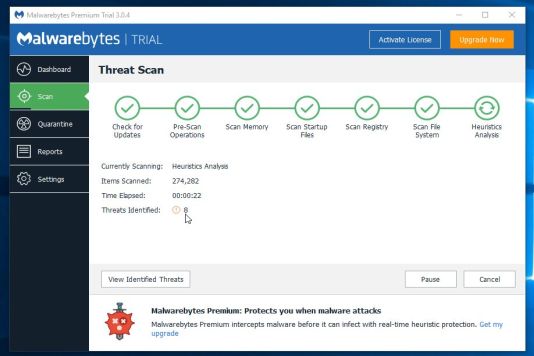
- Malwarebytes Anti-Malware will now start scanning your computer for malware. When Malwarebytes Anti-Malware is scanning it will look like the image below.
- When the scan has completed, you will be presented with a screen showing the malware infections that Malwarebytes Anti-Malware has detected. To remove the malicious programs that Malwarebytes Anti-malware has found, click on the “Remove Selected” button.
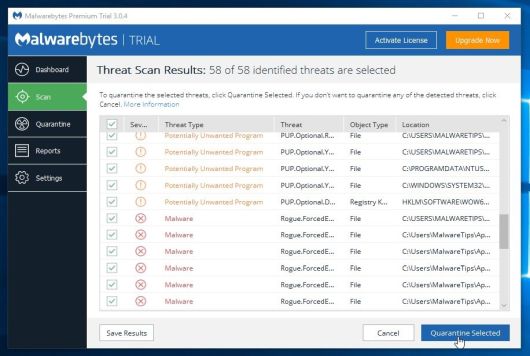
- Malwarebytes Anti-Malware will now quarantine all the malicious files and registry keys that it has found. When removing the files, Malwarebytes Anti-Malware may require a reboot in order to remove some of them. If it displays a message stating that it needs to reboot your computer, please allow it to do so.
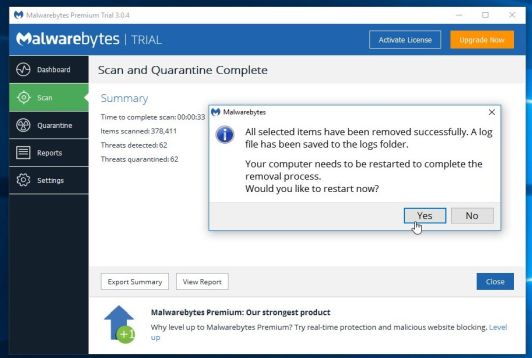
After your computer will restart, you should open Malwarebytes Anti-Malware and perform another scan to verify that there are no remaining threats
STEP 4: Scan your computer with HitmanPro
HitmanPro can find and remove malware, adware, bots, and other threats that even the best antivirus suite can oftentimes miss. HitmanPro is designed to run alongside your antivirus suite, firewall, and other security tools.
- You can download HitmanPro from the below link:
HITMANPRO DOWNLOAD LINK (This link will open a new web page from where you can download “HitmanPro”) - Double-click on the file named “HitmanPro.exe” (for 32-bit versions of Windows) or “HitmanPro_x64.exe” (for 64-bit versions of Windows).
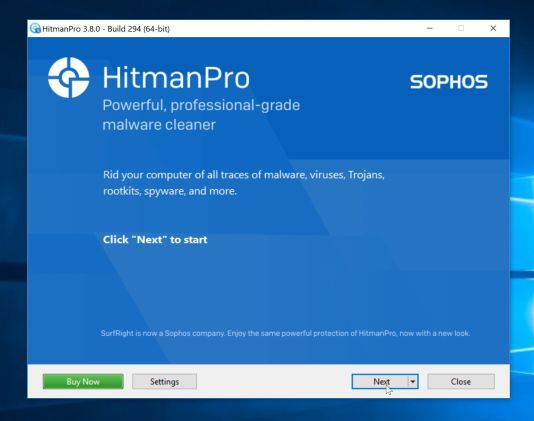
Click on the “Next” button, to install HitmanPro on your computer.
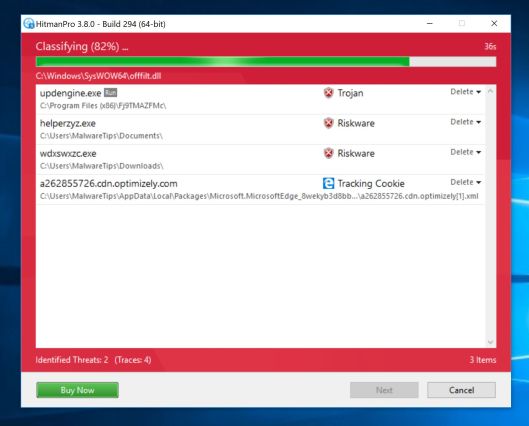
- HitmanPro will now begin to scan your computer for malware.
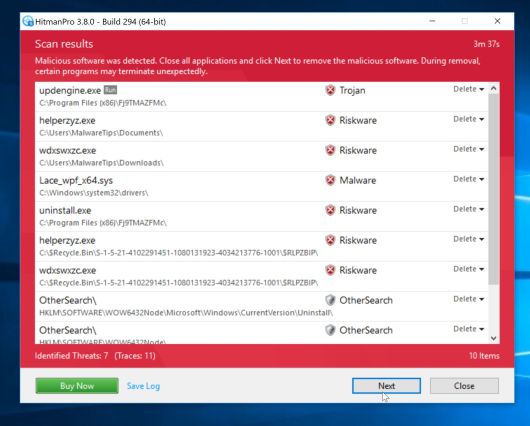
- When it has finished it will display a list of all the malware that the program found as shown in the image below. Click on the “Next” button, to remove malware.
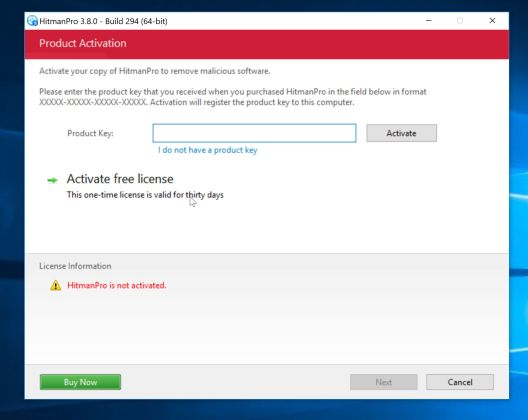
- Click on the “Activate free license” button to begin the free 30 days trial, and remove all the malicious files from your computer.
(OPTIONAL) STEP 5: Scan your computer with Zemana AntiMalware
Zemana AntiMalware is a powerful utility which will remove Trojan.Kotver!gm2 malware from your machine.
This step should be performed only if your issues have not been solved by the previous steps.
- You can download Zemana AntiMalware from the below link:
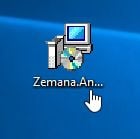
ZEMANA ANTIMALWARE DOWNLOAD LINK (This link will start the download of “Zemana AntiMalware”) - Double-click on the file named “Zemana.AntiMalware.Setup.exe” to start the installation of Zemana AntiMalware.
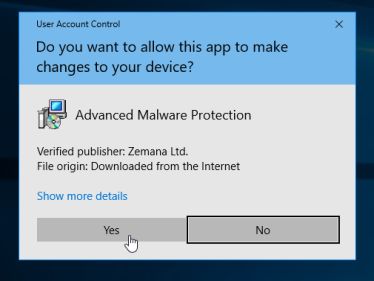
You may be presented with a User Account Control dialog asking you if you want to run this file. If this happens, you should click “Yes” to continue with the installation.
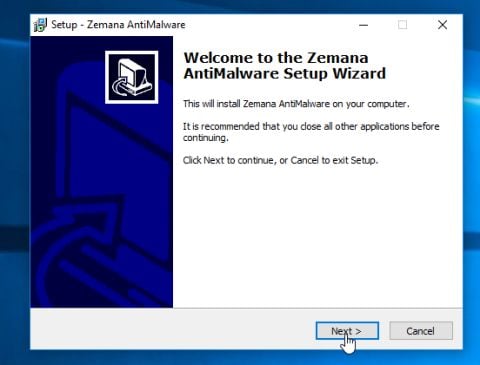
- Click on the “Next” button, to install Zemana AntiMalware on your computer.
- When Zemana AntiMalware will start, click on the “Scan” button.
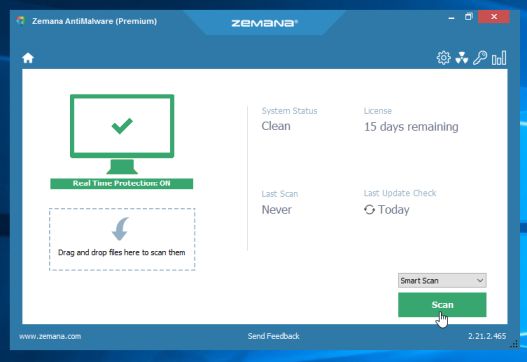
- Zemana AntiMalware will now scan computer for malicious files. This process can take up to 10 minutes.
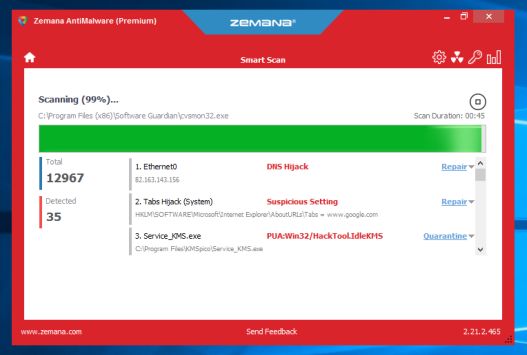
- When Zemana AntiMalware has finished it will display a list of all the malware that the program found. Click on the “Next” button, to remove the malicious files from your computer.
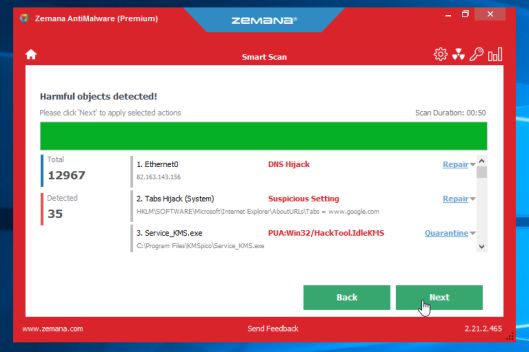
Zemana AntiMalware will now remove all the detected malicious files, and at the end a system reboot may be required to remove all traces of malware.
If you are still experiencing problems while trying to remove Trojan.Kotver!gm2 virus from your machine, please ask for help in our Malware Removal Assistance forum.








