

Robinhood scam texts are a fast-moving phishing and fake support threat built to trigger panic.
They usually look like urgent security notifications, account update alerts, or withdrawal warnings. The message often includes a one-time code, a fake reference number, and a phone number to call right away.
That phone number is the trap.
Once you call, scammers pose as Robinhood support or a fraud specialist and try to pull you into a fake account recovery process. The goal is to steal your login details, security codes, banking information, or money.
Scam Overview
The Robinhood scam text campaign is a classic impersonation scam that has been adapted for a brokerage and crypto audience.
Instead of pretending to be Apple, Microsoft, or a bank, the scammer pretends to be Robinhood. The message is written to sound like a legitimate security alert, and it is designed to make you react before you think.
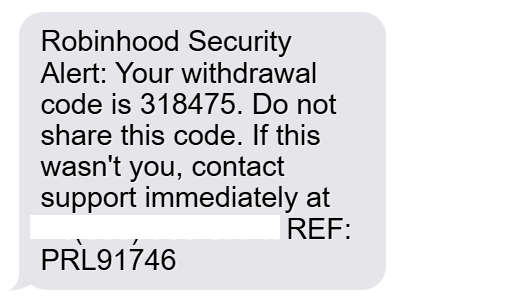
The examples you shared are a perfect match for this pattern:
- “Robinhood Security Alert: Your withdrawal code is 318475… If this wasn’t you, contact support immediately at [removed]…”
- “Robinhood Update: New phone number added to your account successfully. Unauthorized? Contact [removed] immediately if not you.”
These messages use the same psychological script that scammers have used for years. They create fear, add urgency, and then hand you a phone number that connects you directly to the attacker.
Why these messages feel believable
The wording is not random.
Scammers intentionally copy the tone of real financial security alerts. They use phrases like:
- “Security Alert”
- “Unauthorized?”
- “Do not share this code”
- “Contact support immediately”
- “Reference” or “REF” numbers
This makes the message feel procedural, not emotional. It looks like something generated by a real security system.
The text may also include a one-time code, a device change warning, or an account update line to make it feel even more specific. In many cases, the details are fake. The scammer does not need the alert to be technically accurate. They only need it to sound plausible enough to get you to call. FTC guidance on spam and phishing texts specifically notes that scammers send fake transaction and account alert messages, including suspicious activity claims and fake invoices, to push people into reacting.
This is a smishing scam, and often a fake support scam too
This scam usually starts as smishing, which means phishing by text message.
The text itself may not ask for your password immediately. Instead, it asks you to call a number. That is an important detail. The scammer is trying to move the attack from text to voice because a live phone call gives them more control.
Once you call, it often becomes a fake support scam.
Robinhood itself warns users about phone support scams that direct people to fake customer service numbers, and Robinhood support materials emphasize that phone support should be requested through official channels in the app or at the official contact page, not from a number sent in a random text. Robinhood support resources also note that there is no general direct-dial number to trust from unsolicited messages.
That is exactly why the scam message gives you a number first. The scammer wants to control the conversation before you verify anything through the app.
The real target is not the text, it is your account and your money
Many people think the risk is only clicking a link.
In these Robinhood scams, the bigger risk is the phone call. The number in the text connects you to someone trained to sound calm, authoritative, and helpful. Their job is to keep you on the line and move you step by step toward handing over access.
FTC guidance on tech support scams explains the same pattern in other impersonation scams. Scammers create a fake account problem, push you to call, then use pressure and a scripted “fix” to steal information or money. They often ask for remote access and then demand hard-to-reverse payment methods like gift cards, wire transfers, bank transfers, payment apps, or crypto.
The brand changes, but the mechanics stay the same.
Common versions of the Robinhood text scam
Scammers rotate message templates to catch different kinds of users. The core script stays the same, but the bait changes.
Here are the most common versions:
1) Withdrawal code alerts
This is the version in your example.
It usually says a withdrawal code was generated and warns you not to share it. Then it tells you to call a “support” number if you did not request it.
This format works because it includes a real security concept, a one-time code, but it inserts a fake support path.
2) New phone number added alerts
This version tells you a phone number was added or changed on your account.
It creates instant panic because users know a phone number can be used for two-factor authentication or account recovery. If a person believes their phone number was replaced, they may call without stopping to verify inside the app.
3) New device sign-in alerts
Scammers claim a new device logged in, an API key was connected, or a security setting changed.
These messages often include a fake reference number or technical language so they sound like system-generated security notices.
4) Fake fraud prevention or account lock messages
Some messages claim your account is temporarily on hold, restricted, or under review.
The text then gives a number to “verify your identity” or “restore access.” That call usually leads to the same fake support workflow.
5) Follow-up texts after a first call
If you call once, scammers may send additional texts pretending to be “case updates.”
They may send fake ticket numbers, fake confirmation codes, or fake “secure links” to keep you engaged and prevent you from contacting the real Robinhood support team.
Why scammers like Robinhood as a brand
Robinhood is a strong target for scammers because it combines speed, money movement, and mobile-first behavior.
A lot of users are used to doing everything from their phones, including account alerts, trading, and withdrawals. That means a text-based scam fits naturally into how people already use the product.
Scammers also know that Robinhood users may:
- React quickly to security alerts
- Worry about unauthorized withdrawals
- Be familiar with codes and account notifications
- Feel pressure to protect funds immediately
That emotional urgency is exactly what the attacker wants.
FTC guidance on phishing texts explains that scammers often send messages about suspicious activity or payment problems because those messages trigger fast reactions. The FTC also advises people to avoid using contact information included in the text and instead contact the company through a known real number or website.
The text may be fake even if you have a Robinhood account
This is another reason the scam works well.
The message does not need to be sent only to Robinhood users. Scammers can send it in bulk to thousands of phone numbers. They only need a small percentage of people to panic and call.
If you do have a Robinhood account, the message can feel even more convincing.
But receiving the text does not prove there was a real account event. It only proves a scammer sent you a text. The only way to verify a real issue is to check your account directly through the official Robinhood app or official Robinhood website, not by using the number in the text. Robinhood’s own scam guidance stresses this point by warning about fake support numbers and directing users to official support channels.
The red flags in your examples
Your examples contain several clear warning signs.
Red flag 1: The text tells you to call a phone number in the message
That is the biggest one.
Scammers want to move you off the text and into a call where they can pressure you. Robinhood support documentation explicitly warns about fake customer service numbers in phone support scams and directs users to request support through the app or official contact page. (Robinhood)
Red flag 2: Urgency and pressure language
Phrases like “contact support immediately” and “Unauthorized?” are meant to trigger fear.
FTC guidance on phishing texts and tech support scams repeatedly highlights urgency as a core tactic because scammers want you to act before verifying anything.
Red flag 3: A code is included to create authority
The code makes the message look “system-generated.”
Scammers know people trust automated-looking messages. The code is often just bait, and the real attack starts when you call.
Red flag 4: A generic support claim with no in-app verification path
Legitimate financial platforms usually direct users to secure in-app help, official websites, or known support channels.
Scam texts often skip that and give a random number instead. Robinhood’s support guidance warns that fake phone numbers are a common tactic and that official phone support is handled through the app or Robinhood contact flow.
What makes this scam dangerous
This scam is dangerous because it can lead to several different kinds of loss, not just one.
Victims may lose:
- Robinhood account access
- Email account access
- Bank account access
- Card information
- Identity information
- Money through fraudulent transfers
- Money through gift cards
- Money through fake “refund” or “reversal” steps
If the scammer gets you to install remote access software, the risk becomes much worse.
AnyDesk’s own abuse-prevention guidance warns that scammers misuse remote access tools to connect to your device and steal data, access codes, and money. AnyDesk also explicitly warns never to give unknown people access to your devices and never to share banking logins or passwords.
That is why these scams can become much more than a fake text. They can turn into a full account takeover or a financial theft event if the victim stays on the phone.
How The Scam Works
The Robinhood scam text usually follows a predictable sequence. Once you know the sequence, it becomes much easier to spot and stop.
Below is the most common workflow, including the fake support version that happens after the text.
Step 1: The scammer sends a high-pressure text message
The first message is built to cause panic in seconds.
It may say:
- A withdrawal code was generated
- A new phone number was added
- A sign-in attempt was detected
- A transfer was initiated
- Your account is under review
- A suspicious change was made
The wording is short, direct, and urgent. It may include a code, case number, or reference ID to look official.
FTC guidance on scam texts specifically describes this pattern, where scammers send fake alerts about suspicious activity, payment issues, or unauthorized transactions to trigger a fast response. (Consumer Advice)
Step 2: The text gives you a fake support number
This is the critical pivot.
Instead of directing you to the official app or a known support process, the text tells you to call a phone number immediately.
That number belongs to the scammers, not Robinhood.
Robinhood’s own support materials warn users that many phone support scams direct people to fake Robinhood customer service numbers, and Robinhood instructs users to request phone support through official channels like the app or official contact page.
The scam is built around that one decision. If you do not call, the scam usually fails.
Step 3: A fake support agent answers and sounds professional
When victims call, the scammer usually answers with a polished script.
They may say things like:
- “Robinhood Fraud Department”
- “Robinhood Account Security”
- “Robinhood Support Desk”
- “Verification Team”
The caller often sounds calm and procedural. They may thank you for calling “quickly” and tell you they can “secure the account.” This tone is deliberate.
Scammers know that sounding aggressive too early makes people hang up. So they start by sounding like a legitimate support rep, then slowly raise the pressure.
Step 4: They ask for verification details
Next, they ask for “verification.”
This is where victims begin to hand over sensitive information, often without realizing it. The scammer may ask for:
- Full name
- Email address
- Phone number
- Date of birth
- Last four digits of SSN
- Robinhood username
- A one-time code
- Device details
- Card or bank information
They frame each question as “standard security verification.”
But the real goal is credential theft and account takeover.
FTC guidance warns that phishing texts and related scams are designed to steal personal and financial information such as passwords, account numbers, and other sensitive details. (Consumer Advice)
Step 5: They create a fake emergency inside your account
Once they have your attention, they usually escalate the story.
They may claim:
- A withdrawal is pending
- A crypto transfer is in progress
- A linked bank account was added
- A device was approved
- Your account was compromised by malware
- A fraud block is active and must be cleared
This is where the script becomes flexible.
If the victim sounds worried about identity theft, they lean into “account compromise.” If the victim sounds worried about money, they lean into “unauthorized withdrawal.” If the victim sounds confused, they use technical jargon to sound more legitimate.
The purpose is always the same: keep the victim on the phone and prevent them from independently checking the account in the real app.
Step 6: They ask for a code, password, or approval
This is often the moment when the real theft happens.
The scammer may send a real one-time login code to your phone or email by attempting a login on their end. Then they ask you to read the code back “to verify your identity” or “cancel the transaction.”
That code is not for verification. It is usually a login or reset code that gives the scammer access.
In other cases, they may ask you to:
- Approve a device
- Confirm an email
- Click a “secure” link
- Reset your password with them on the line
All of these steps can be used to hijack the account.
The message in your example already sets up this path by mentioning a withdrawal code. That creates a mental anchor. When the fake agent later asks for a code, the victim is more likely to comply because the text already normalized the idea.
Step 7: The scam shifts into fake “protection” mode
If the scammer gains partial trust, they often move to a second stage.
They may claim your money must be “secured” while they investigate. This can lead to instructions like:
- Move money to a “safe wallet”
- Reverse a transfer
- Verify your bank by logging in while they watch
- Confirm card details for a “temporary hold”
- Install a remote access app for “secure assistance”
This is where the Robinhood text scam overlaps with fake support and tech support scam playbooks.
FTC guidance on tech support scams explains that once scammers get someone on the phone, they often ask for remote access, pretend to diagnose a problem, and then push for payment or financial access. The FTC also notes that these scams frequently involve fake invoices, fake charges, and pressure to call quickly. (Consumer Advice)
Step 8: They push remote access, usually using AnyDesk or a similar tool
This is one of the most dangerous variations.
The fake “support” agent says they need to help you secure your phone or computer. Then they ask you to install a remote access app such as AnyDesk, TeamViewer, or another remote support tool.
They may say this is needed to:
- Stop the unauthorized withdrawal
- Help with a refund
- Remove malware
- Secure your device
- Verify your transaction history
Once you install the app and approve the session, they may be able to see your screen, control your device, and guide you through actions that benefit them.
AnyDesk’s abuse-prevention guidance is very clear on this. AnyDesk states that scammers misuse remote access software to steal data, access codes, and money, and warns users never to give unknown people access to their devices or share banking credentials.
This is why a “Robinhood text scam” can quickly turn into a much larger financial fraud incident.
Step 9: They ask for payment, gift cards, or a fake reversal
Some victims assume the scam stops if they refuse to share a password.
Unfortunately, many scammers are trained to pivot.
If they cannot get your account directly, they may try to get money another way by claiming:
- You need to pay a “reversal fee”
- A charge was refunded incorrectly
- A “temporary verification hold” must be cleared
- A fraud case requires a “security deposit”
- Your account is frozen and needs “identity validation”
Then they push payment methods that are hard to reverse.
FTC tech support scam guidance warns that scammers often insist on payment methods like gift cards, wire transfers, bank transfers, payment apps, or crypto because those payments are difficult to recover. The FTC gift card scam guidance also specifically notes that scammers posing as tech support ask for remote access and then request payment by gift card.
If anyone claiming to be Robinhood asks you to pay with gift cards, it is a scam.
Step 10: They keep you busy while they steal or set up future fraud
Even after the call ends, the scam may continue.
Scammers often try to delay discovery by telling victims:
- “Do not log in while we investigate”
- “Your case is pending”
- “You will get a confirmation email”
- “Do not contact support yet or it may cancel the case”
- “Our escalation team will call you back”
This buys them time to use the stolen information.
They may also send follow-up texts with fake case numbers or additional “alerts” to keep the victim engaged.
Variations of the same scam
Not every Robinhood scam text leads to the exact same script.
Scammers adapt based on what the victim gives them. Here are common branches:
Branch A: Credential theft only
The scammer gets:
- Username
- Password reset code
- Email code
- MFA code
They use it to log in and take over the account.
Branch B: Banking theft through social engineering
The scammer keeps the victim on the phone and guides them through “verification” steps.
During that process, they harvest bank details, card numbers, or linked account info.
Branch C: Remote access theft
The victim installs AnyDesk or another tool.
The scammer observes the device, watches logins, and may take screenshots or capture codes.
Branch D: Gift card and fake support payment scam
The scammer claims there is a security issue that requires immediate payment.
They request gift cards and ask for the numbers and PINs from the back. FTC guidance identifies this exact pattern in tech support and gift card scams.
Why people fall for it
This scam is effective because it targets normal, responsible behavior.
A cautious person is supposed to react to a security alert.
A cautious person is supposed to call support if they think something is wrong.
A cautious person is supposed to protect their account quickly.
Scammers exploit that instinct.
They also rely on the fact that most people are busy. You glance at your phone, see “withdrawal code,” and your brain fills in the worst-case scenario.
That is why the best defense is a simple rule:
Never use the phone number in the message.
FTC guidance on spam texts explicitly recommends contacting the company using a phone number or website you know is real, not the contact information in the text. Robinhood’s support guidance aligns with this by warning about fake support numbers and directing users to official support channels.
What To Do If You Have Fallen Victim to This Scam
If you interacted with a Robinhood scam text, do not panic.
You still have options, and the right steps can limit the damage quickly. The key is to act in a clear order.
Below is a practical recovery plan based on what happened.
1) Stop all contact with the scammer immediately
Hang up and do not call back.
Do not reply to follow-up texts. Do not click links. Do not continue the conversation to “fix” anything.
Scammers are trained to keep you engaged. The faster you cut contact, the better.
2) Secure your Robinhood account through official channels only
Open the Robinhood app or go to the official Robinhood website yourself.
Do not use the phone number or links from the scam text.
If you can still access your account:
- Change your password immediately
- Review recent account activity
- Review linked bank accounts and payment methods
- Check profile and security settings for unauthorized changes
- Look for new devices, emails, or phone numbers you do not recognize
Robinhood support materials warn users about fake support numbers and direct users to official support channels, including the in-app support flow and Robinhood’s official contact page.
3) Contact real Robinhood support and report the phishing attempt
If you suspect account access, unauthorized changes, or you shared a code, contact Robinhood through the official app support flow or the official contact page.
Robinhood support resources also reference phishing reporting and provide a phishing reporting email. Robinhood support snippets indicate users can report incidents to ReportPhishing@robinhood.com.
When you report it, include:
- The full text message
- The phone number used in the scam
- The date and time you received it
- What information you shared
- Whether you called
- Whether you installed any software
The more specific you are, the better.
4) If you shared a one-time code, treat it as an urgent account takeover risk
If you read a code to the caller, assume the code was used or attempted.
Immediately:
- Change your Robinhood password
- Change the password for your email account too
- Review your email inbox rules and filters
- Enable the strongest two-factor authentication option available to you
- Sign out of other sessions if that option is available
Your email account matters because many account recoveries go through email. If a scammer gets both Robinhood access and email access, recovery becomes harder.
5) If you shared personal information, secure your identity footprint
If you gave details like your date of birth, address, SSN digits, or banking info, take identity protection steps.
At minimum:
- Change passwords on important accounts
- Watch for suspicious emails and calls
- Monitor bank and card statements daily
- Consider placing a fraud alert with a credit bureau
- Consider a credit freeze if you shared sensitive identity information
Scammers often reuse or sell data. Even if no money is stolen right away, your information can be used later in another scam.
6) If you installed AnyDesk or any remote access tool, treat your device as compromised
This is a high-risk scenario.
AnyDesk’s abuse-prevention guidance warns that scammers misuse remote access tools to steal data, access codes, and money, and it advises people to stop the call and end the session if they feel unsafe.
Take these steps immediately:
- Disconnect the device from the internet
- End the remote session
- Uninstall the remote access app
- Restart the device
- Run a full security scan
- Change passwords from a different trusted device
- Review banking and email logins for unusual activity
If the scammer watched you log in to financial accounts, assume they may have seen usernames, balances, and possibly security prompts.
7) Contact your bank or card issuer if financial information was exposed
If you entered bank or card details during the call, or while the scammer was connected to your device, call your bank or card issuer immediately using the number on the back of your card or from the bank’s official app.
Ask them to:
- Flag your account for fraud monitoring
- Review recent transactions
- Block or replace cards if needed
- Add extra verification
- Document the scam report in your account notes
AnyDesk’s guidance also recommends reporting the scam to your account providers, including banks and card institutions, as an immediate step. (AnyDesk)
8) If you sent gift cards, report them right away
If the scammer convinced you to buy gift cards, act fast.
FTC guidance says that if you gave a scammer the gift card numbers and PIN, it is a scam, and you should contact the gift card company immediately and ask for your money back if possible. The FTC also recommends reporting the incident to ReportFraud.ftc.gov.
What to do:
- Gather the gift card receipts
- Gather the card numbers if you still have them
- Contact the gift card issuer immediately
- Ask if a freeze or recovery is possible
- File an FTC fraud report
Time matters with gift cards because scammers usually drain them fast.
9) Report the scam text to your wireless provider and the FTC
Reporting helps more than most people realize.
FTC guidance on spam texts says you can report scam texts in three key ways:
- Forward the message to 7726 (SPAM)
- Report it as junk or spam in your messaging app
- Report it to the FTC at ReportFraud.ftc.gov
These reports help carriers and regulators identify and block similar messages.
10) Save evidence before deleting anything
Take screenshots and keep records.
Save:
- The original text message
- The phone number(s)
- Call logs
- Voicemails
- Email follow-ups
- Any case or reference numbers they sent
- Receipts if you paid anything
This evidence helps with support reviews, fraud investigations, and charge disputes.
11) Watch for follow-up scams
After one scam attempt, victims often receive more.
Scammers may call back pretending to be:
- Robinhood escalations
- Your bank fraud team
- Apple or Google support
- A “recovery service”
- Law enforcement
- A refund specialist
This happens because your number is now tagged as active.
Be extra cautious for the next several weeks. If you receive any new alert, verify it only through official channels you open yourself.
12) If no information was shared, your recovery is simple
If you only received the text and did not call, click, or reply, you are in good shape.
Do this:
- Report the text as spam
- Forward it to 7726
- Block the number
- Delete the message
FTC guidance supports exactly this approach and advises using only known contact information if you want to verify whether a message is real.
13) Use one permanent rule going forward
This rule stops most text scams instantly:
Never call the number in the message.
If a text claims to be from Robinhood, your bank, Apple, or any financial company, open the official app or type the official website yourself.
FTC guidance on scam texts and Robinhood’s own anti-scam guidance both support this exact habit, and it is one of the most effective ways to break the scam chain before it starts.
Is Your Device Infected? Run a Free Malware Scan
Slow performance, constant pop-ups, or strange behavior? These are classic signs of a malware infection. The fastest way to find out is to scan your device with Malwarebytes Free — one of the most trusted malware removal tools available.
The free version detects and removes the most common threats, including:
- Adware — the cause of those annoying pop-ups
- Browser hijackers — unwanted redirects and changed homepages
- Trojans and spyware — hidden programs stealing your data
- Potentially unwanted programs (PUPs) — software you never asked for
👉 Select your device below — Windows, Mac, or Android — then follow the simple steps to download Malwarebytes, scan your system, and remove any threats it finds. The scan usually takes 5 to 20 minutes.
Run a Malware Scan with Malwarebytes for Windows
Malwarebytes is one of the most popular and trusted anti-malware tools for Windows — and it’s completely free for removing infections. It catches threats that many antivirus programs miss, including adware, browser hijackers, and trojans. Follow the steps below to scan and clean your PC in just a few minutes.
Download Malwarebytes
Click the button below to download the latest version of Malwarebytes for Windows from the official source. The free version is all you need — it will scan your computer and remove adware, browser hijackers, and other malicious software at no cost.
Download MalwarebytesOfficial installer for Windows 11 and 10. Your download starts right away.Want real-time protection? See Malwarebytes Premium Malwarebytes Free for WindowsScans and removes malware at no cost
-
Install Malwarebytes
When the download finishes, open your Downloads folder and double-click the MBSetup file. If Windows shows a User Account Control pop-up, click “Yes” to allow the installation.
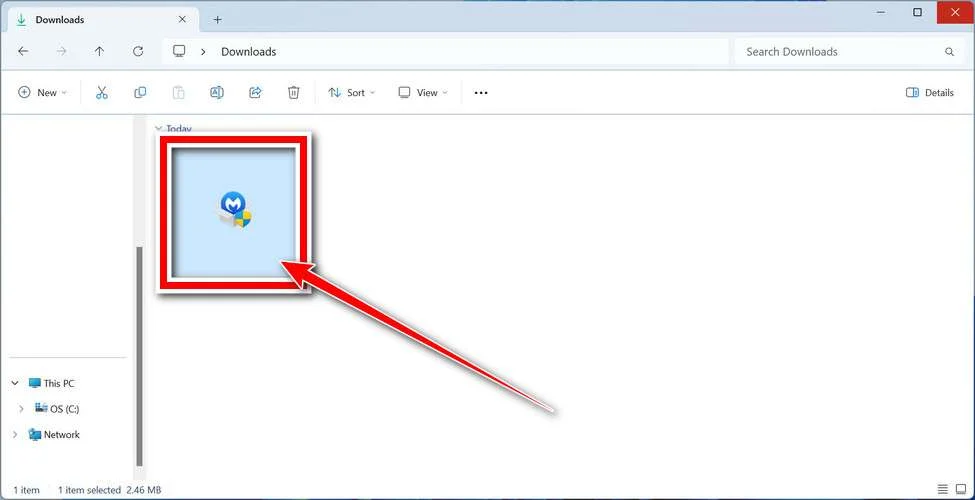
Follow the On-Screen Prompts to Install Malwarebytes
The setup wizard will walk you through a few quick screens:
-
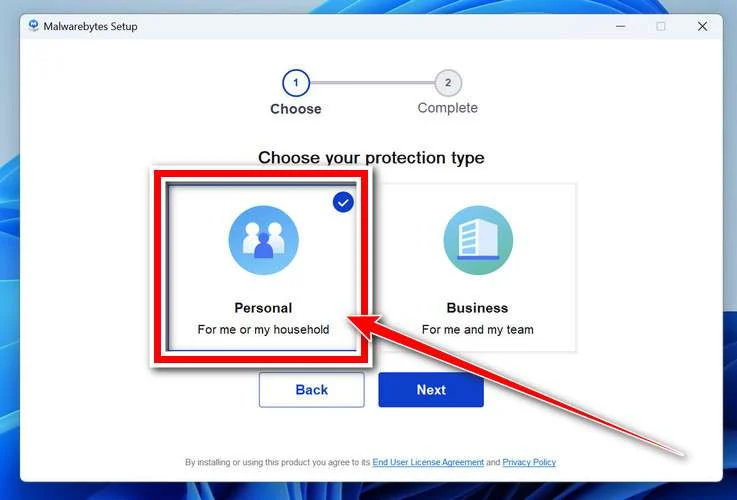
Choose where you’re installing the program — “Personal Computer” or “Work Computer” — then click Next.
-
Malwarebytes will now install on your device. This usually takes under a minute.

-
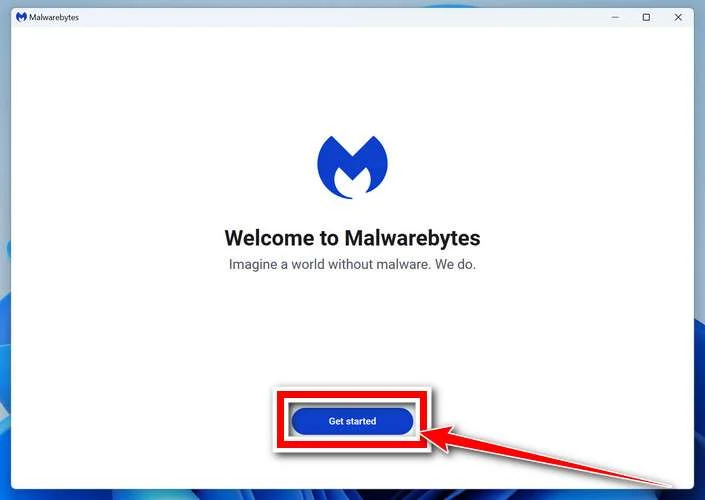
When installation is complete, the “Welcome to Malwarebytes” screen will open automatically.
-
On the final screen, click Open Malwarebytes to launch the program.

-
Enable “Scan for Rootkits”
Before scanning, turn on rootkit detection so Malwarebytes can find even the most hidden threats. Click the Settings gear icon on the left side of the screen.
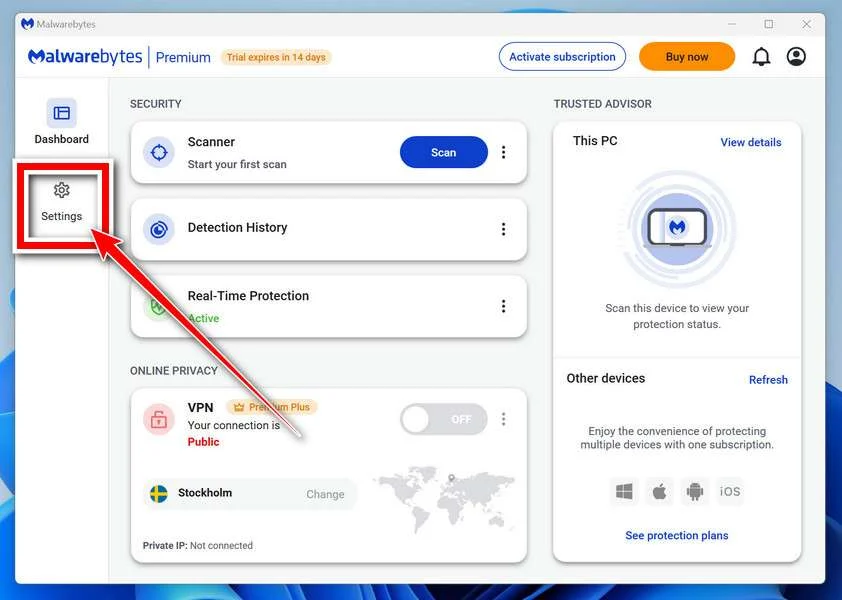
In the settings menu, find “Scan for rootkits” and click the toggle so it turns blue.

Done? Click “Dashboard” in the left pane to return to the main screen.
Start the Scan
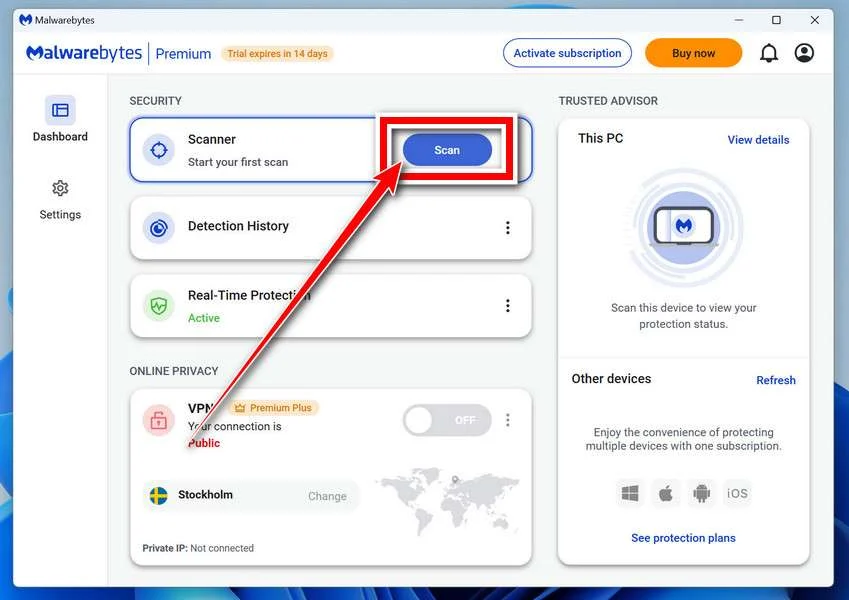
Click the blue Scan button. Malwarebytes will automatically update its virus database and start checking your computer for malware.
-
Wait for the Scan to Finish
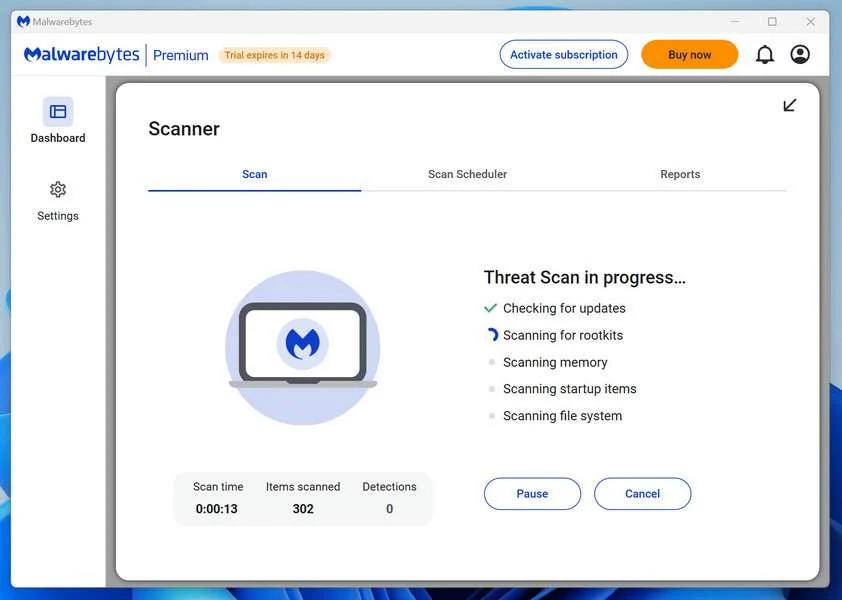
The scan checks your entire system for browser hijackers and other malicious programs, so it can take 5 to 20 minutes depending on your computer. Feel free to do something else — just check back occasionally to see the progress.
-
Quarantine the Detected Threats
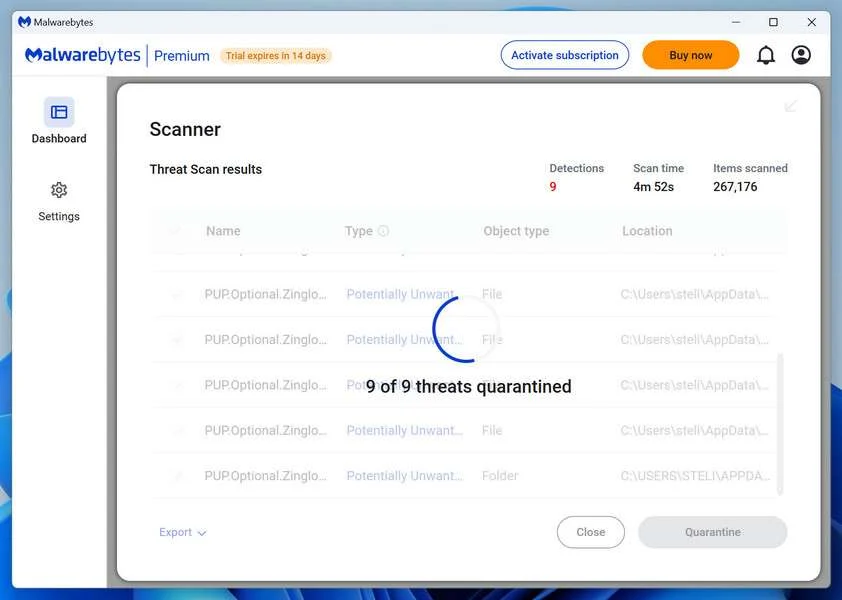
When the scan is done, you’ll see a list of everything Malwarebytes found — malware, adware, and potentially unwanted programs. Click the “Quarantine” button to remove all of them at once.
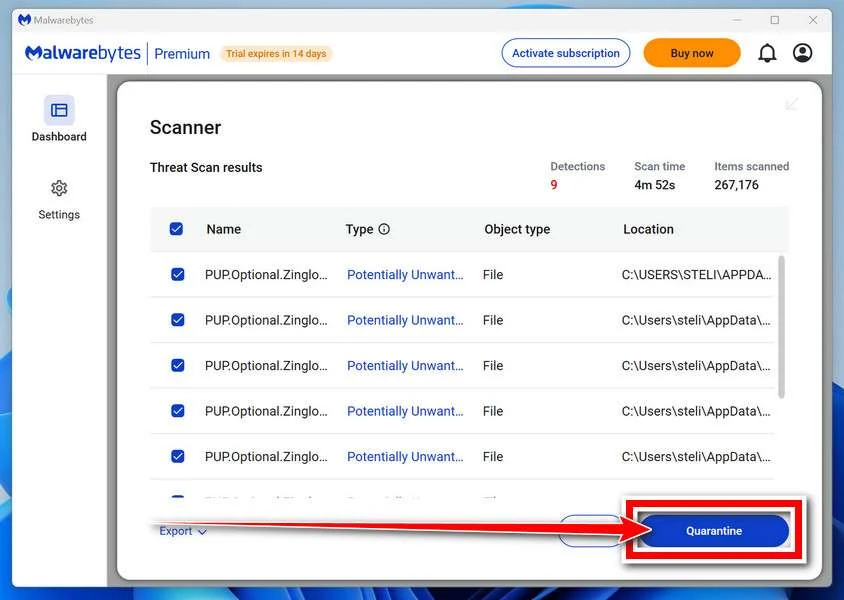
Malwarebytes will now remove the malicious files and registry entries and move them safely into quarantine.
-
Restart Your Computer
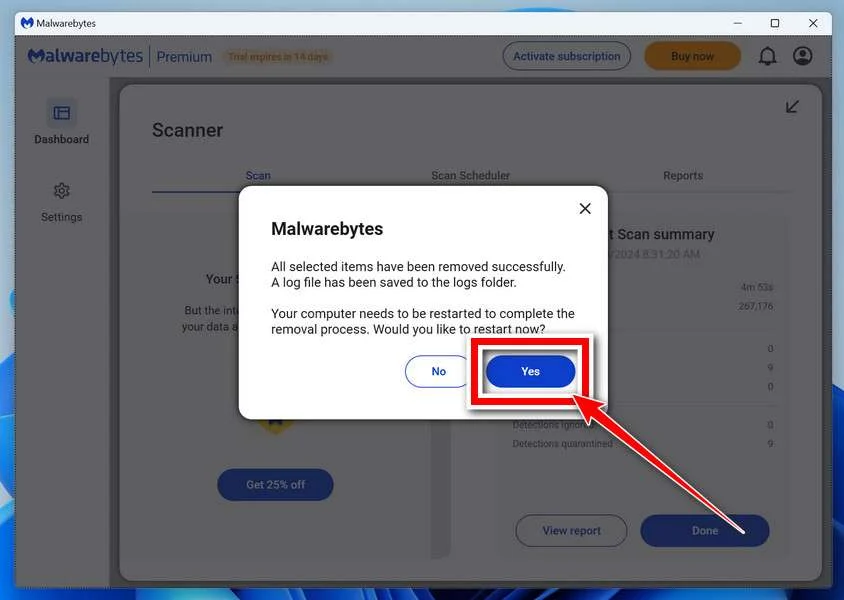
Some threats can only be fully removed after a reboot. If Malwarebytes asks you to restart, click Yes. Once you’re logged back in, Malwarebytes has finished removing the threats it found.
That’s it — your Windows PC is now clean of trojans, adware, and other malware, and should be back to running smoothly.
If you are still having problems with your computer after completing these instructions, then please follow one of the steps:
- Run a computer scan with ESET Online Scanner
- Ask for help in our Windows Malware Removal Help & Support forum.
Run a Malware Scan with Malwarebytes for Mac
Malwarebytes for Mac is a free on-demand scanner that removes the malware other security software tends to miss — adware, browser hijackers, and unwanted programs included. Cleaning an infected Mac with Malwarebytes has always been completely free, and it’s our go-to recommendation. Follow the steps below to scan and clean your Mac in just a few minutes.
-
Download Malwarebytes for Mac
Click the button below to download the latest version of Malwarebytes for Mac.
Download MalwarebytesOfficial installer for macOS. Your download starts right away.Want real-time protection? See Malwarebytes PremiumMalwarebytes Free for MacScans and removes malware at no cost -
Open the Malwarebytes setup file
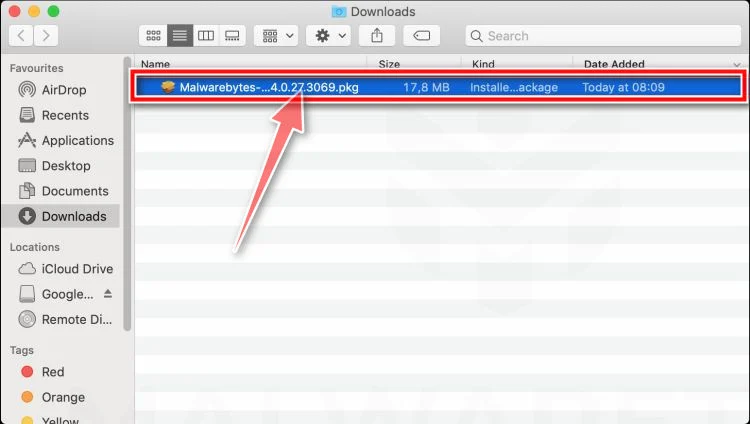
When the download finishes, open your Downloads folder and double-click the setup file to begin the installation.
-
Follow the On-Screen Prompts to Install Malwarebytes
The Malwarebytes for Mac Installer will guide you through a few quick screens. Click “Continue” and keep following the prompts until the installation completes.
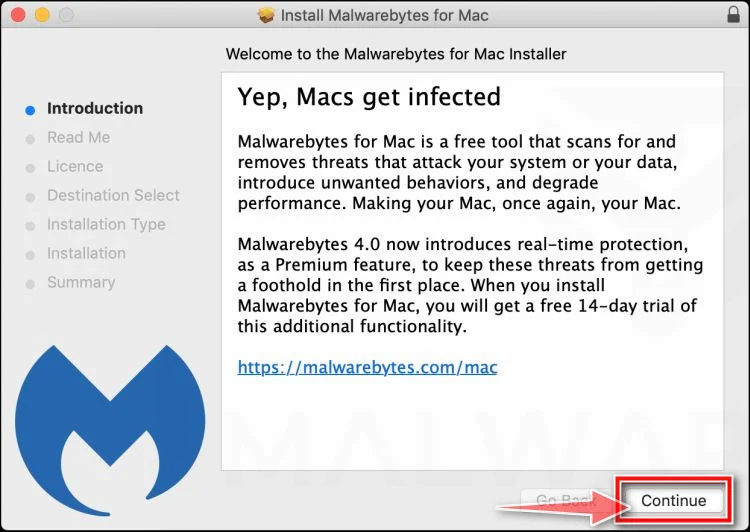
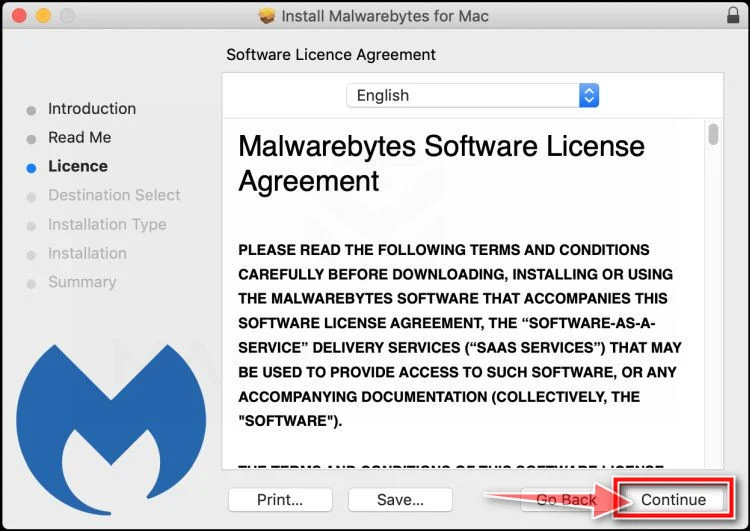
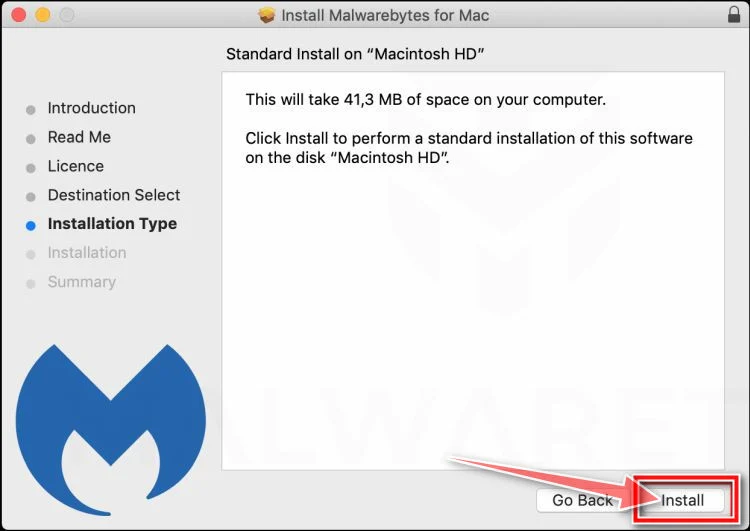
When the installation is complete, Malwarebytes opens to the Welcome to Malwarebytes screen. Click “Get started“.
-
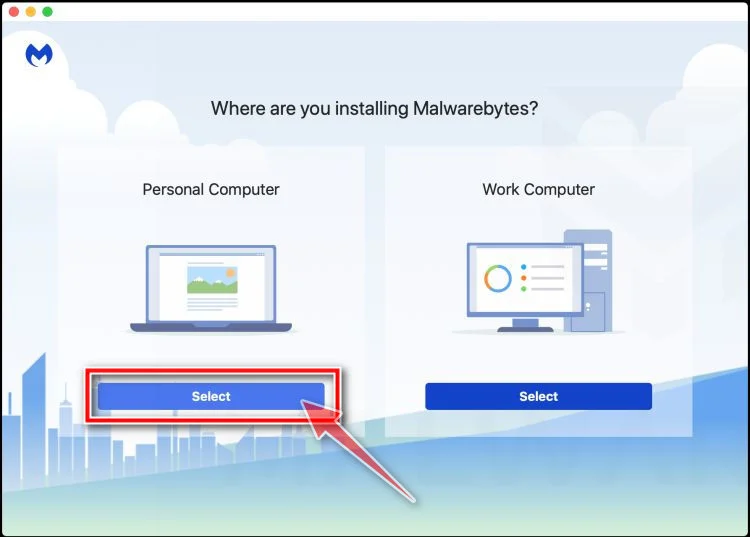
Select “Personal Computer” or “Work Computer”
Malwarebytes will ask what type of computer you’re installing it on. Click either Personal Computer or Work Computer, whichever applies.
-
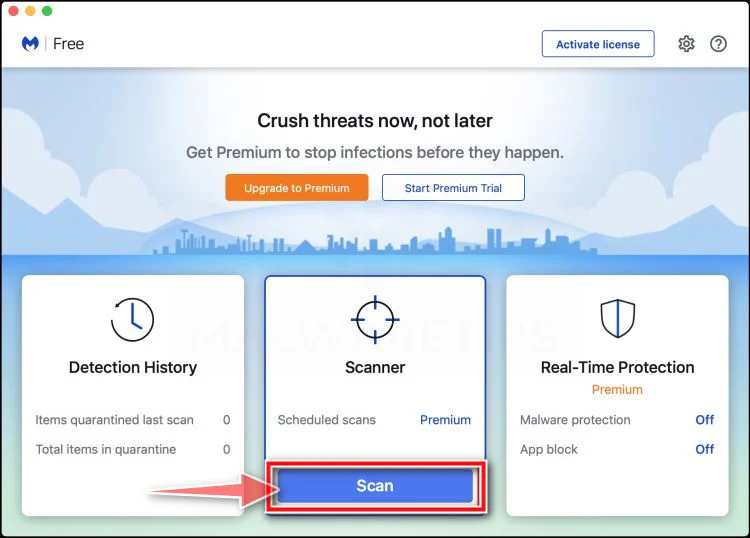
Start the Scan
Click the “Scan” button. Malwarebytes will automatically update its detection database and begin checking your Mac for malware.
-
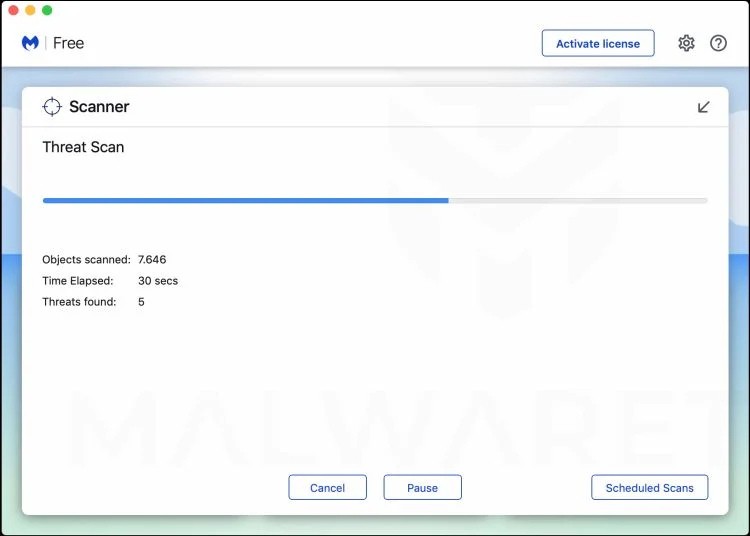
Wait for the Scan to Finish
Malwarebytes will scan your Mac for adware, browser hijackers, and other malicious programs. This can take a few minutes, so feel free to do something else — just check back occasionally to see the progress.
-
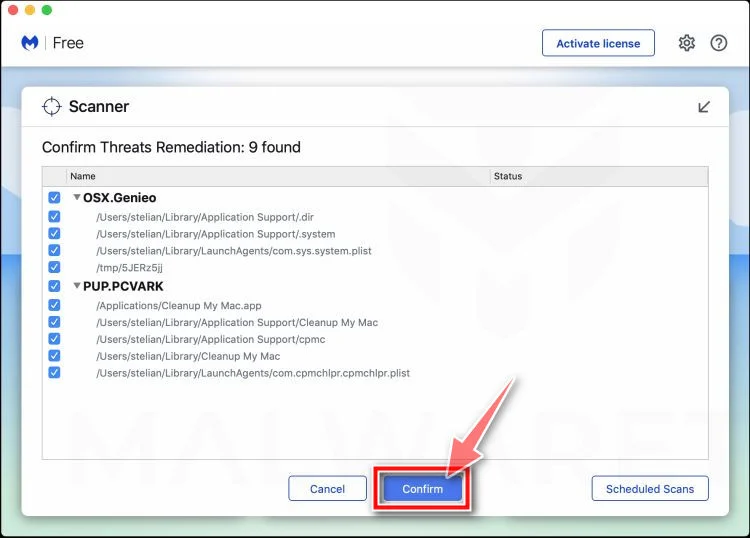
Quarantine the Detected Threats
When the scan is done, you’ll see a list of everything Malwarebytes found. Click the “Quarantine” button to remove all the threats at once.
-
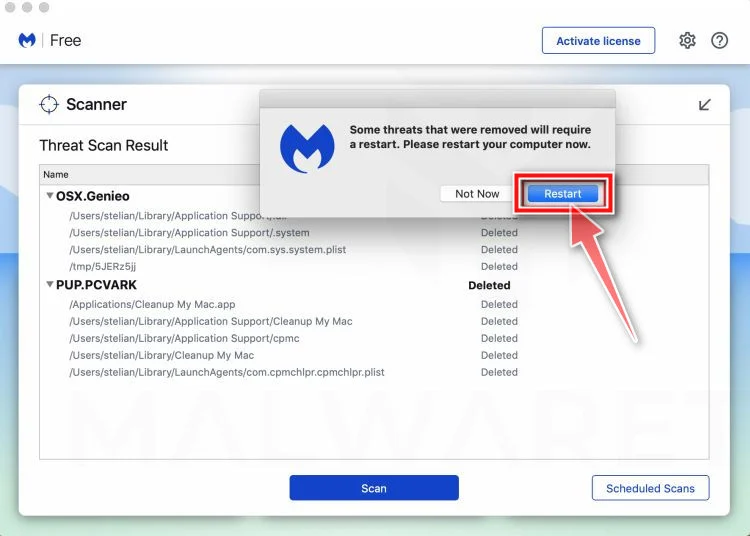
Restart Your Mac
Malwarebytes will now remove all the malicious files it found. Some threats can only be fully removed after a reboot — if Malwarebytes asks you to restart, allow it. Once you’re logged back in, your Mac is clean.
That’s it — your Mac is now free of adware, rogue browser extensions, and other potentially harmful software.
If you are still experiencing problems while trying to remove a malicious program from your computer, please ask for help in our Mac Malware Removal Help & Support forum.
Run a Malware Scan with Malwarebytes for Android
Malwarebytes for Android automatically detects and removes dangerous threats like malware and ransomware so you don’t have to worry about your most-used device being compromised. Aggressive detection of adware and potentially unwanted programs keeps your Android phone or tablet running smooth.
-
Download Malwarebytes for Android.
You can download Malwarebytes for Android by clicking the link below.
Get Malwarebytes for AndroidOpens Google Play in a new tab.Want real-time protection? See Malwarebytes Premium for AndroidMalwarebytes for AndroidScans your phone and removes malware at no cost -
Install Malwarebytes for Android on your phone.
In the Google Play Store, tap “Install” to install Malwarebytes for Android on your device.

When the installation process has finished, tap “Open” to begin using Malwarebytes for Android. You can also open Malwarebytes by tapping on its icon in your phone menu or home screen.

-
Follow the on-screen prompts to complete the setup process
When Malwarebytes will open, you will see the Malwarebytes Setup Wizard which will guide you through a series of permissions and other setup options.
This is the first of two screens that explain the difference between the Premium and Free versions. Swipe this screen to continue.
Tap on “Got it” to proceed to the next step.
Malwarebytes for Android will now ask for a set of permissions that are required to scan your device and protect it from malware. Tap on “Give permission” to continue.
Tap on “Allow” to permit Malwarebytes to access the files on your phone.
-
Update database and run a scan with Malwarebytes for Android
You will now be prompted to update the Malwarebytes database and run a full system scan.

Click on “Update database” to update the Malwarebytes for Android definitions to the latest version, then click on “Run full scan” to perform a system scan.

-
Wait for the Malwarebytes scan to complete.
Malwarebytes will now start scanning your phone for adware and other malicious apps. This process can take a few minutes, so we suggest you do something else and periodically check on the status of the scan to see when it is finished.

-
Click on “Remove Selected”.
When the scan has been completed, you will be presented with a screen showing the malware infections that Malwarebytes for Android has detected. To remove the malicious apps that Malwarebytes has found, tap on the “Remove Selected” button.

-
Restart your phone.
Malwarebytes for Android will now remove all the malicious apps that it has found. To complete the malware removal process, Malwarebytes may ask you to restart your device.
That’s it — your Android phone is now clean — no more malicious apps, adware, or browser redirects.
If you are still having problems with your phone after completing these instructions, then please follow one of the steps:
- Restore your phone to factory settings by going to Settings > General management > Reset > Factory data reset.
- Ask for help in our Mobile Malware Removal Help & Support forum.
Stay Protected: Block Ads and Malicious Sites
Now that your device is clean, keep it that way. Most infections start with a malicious ad or a fake download button — so blocking them at the source is your best defense.
We recommend AdGuard, which blocks malicious ads, phishing pages, and dangerous redirects before they can reach you.
👉 Download AdGuard and browse safely
The Bottom Line
Robinhood scam texts are designed to feel urgent, technical, and legitimate.
They mention withdrawal codes, phone number changes, and account security because those topics trigger immediate fear. The phone number in the message is the real payload. Once you call, scammers try to steal your login codes, financial information, or money, and in some cases they push remote access tools like AnyDesk to take the scam even further. Robinhood warns about fake support numbers, and both the FTC and AnyDesk describe the same pressure-and-control tactics used in these scams.
If you get one of these texts, do not call the number.
Check your account directly in the official Robinhood app or through the official Robinhood website, report the text as spam, and move on. If you already interacted with the scammer, act quickly, secure your accounts, contact real support, and report the incident.
Fast action makes a real difference.

Join the discussion
0 commentsShare your experience or ask a question about this article.
Discussion
Start the conversation
Have a question or something useful to share? Add the first comment.