


You’re getting to know someone online when they ask you to help with a car insurance claim. It sounds like a favor they’ve already sorted out.
Then they ask you to tell an insurer something you can’t honestly confirm. Before you agree, find out what that would put in your name.
Overview
The favor isn’t a request for your savings
In this form of romance fraud, a person you met through a dating site or app wants to use your identity in a false insurance claim.
The request may be to confirm that you saw something, back up their account of an accident, or agree to paperwork you don’t understand.
The Guardian reported that the Insurance Fraud Bureau had detected cases involving this kind of pressure. The person targeted isn’t necessarily asked to send money.
That’s what makes the situation easy to misread.
You can have money in the bank, see no financial loss, and still face a serious problem with your name on a claim.
A criminal case shows how far it can go
City of London Police reported that a man received a 20-month prison sentence after involving women he met online in deliberate collisions linked to fraudulent insurance claims.
The Insurance Fraud Bureau identified 16 fraudulent claims linked to him, according to police. That figure describes that investigation, not the number of people targeted across the industry.
You don’t need to understand how any collision was orchestrated to recognize a dangerous request. Nobody in a new relationship can decide what you saw or experienced for you.
Three things that shouldn’t come from a dating contact
- A statement about an accident should reflect your own recollection, not somebody else’s version prepared for you.
- Documents about a claim should be checked with the insurer through a contact you find independently.
- A request involving a planned collision or physical risk calls for help, not further negotiation.
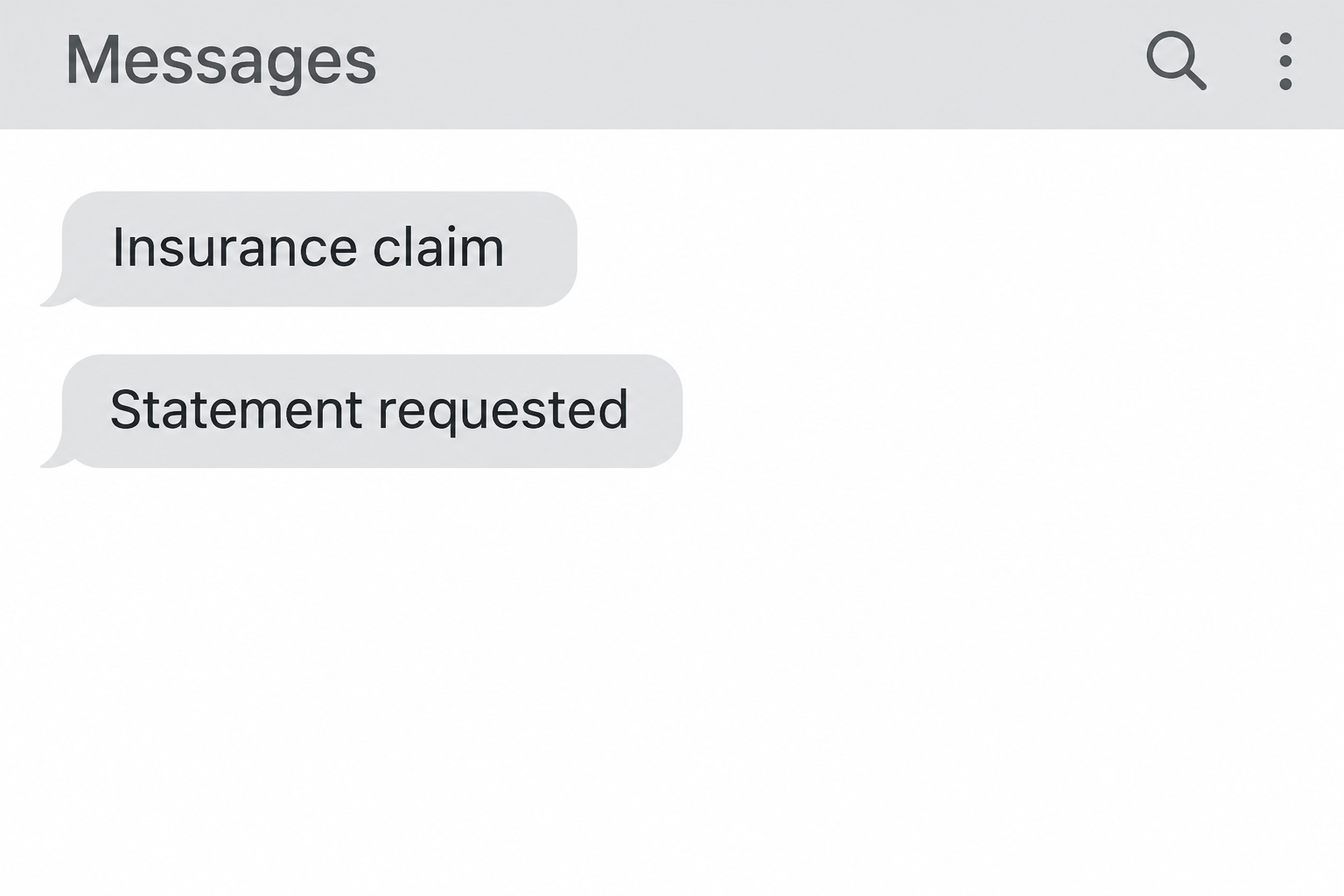
The illustration depicts a request about a claim, not an actual message or court exhibit. The case matters because the request can sound much smaller than its consequences.
How the Romance Insurance Claim Scam Works
Step 1: A new relationship makes a request easier to trust
A match can feel attentive, reliable and helpful long before you learn much about their real life.
That’s a normal part of meeting someone, not a sign you’ve done anything wrong.
The concern starts when trust is used to get you to do something you couldn’t independently explain. You don’t owe the other person permission to use your identity.
An introduction through mutual friends wouldn’t change that boundary. The question is whether the facts you are being asked to confirm are facts you personally know.
Step 2: The problem is presented as familiar paperwork
The appeal may sound like someone needs help finishing a claim after an accident. A person you care about can make a complex form feel like a routine courtesy.
It’s reasonable to help someone locate the official insurer or check how to ask a question. It isn’t reasonable to sign or confirm a statement that isn’t yours.
If you don’t remember something clearly, saying that is different from letting somebody fill the gap. A claim process doesn’t require you to replace uncertainty with their certainty.
Step 3: They ask you to give their account under your name
You might be asked to answer a phone call or confirm details you didn’t witness. You may feel that refusing now would call the relationship into question.
Read any document in full and ask whose account it contains. Decline to sign anything you don’t recognize as true, even if the other person says it won’t matter.
The insurer needs to hear what you know and what you don’t know. Keep those separate when someone is pressuring you to give a short answer.
Step 4: The consequences can outlast the relationship
Once a claim or statement is made, it can become part of someone else’s records. Breaking off contact alone won’t tell you what was submitted or correct inaccurate information.
A follow-up may arrive from an insurer, broker or investigator. Independently verify who is contacting you before sharing sensitive details or assuming the call is part of the scam.
An official inquiry and a demand from the dating contact are different. Don’t take advice on what to say from the person who wants their account accepted.
What a Real Insurance Question Looks Like
You can verify the insurer without relying on the person who introduced you
If somebody says a firm is waiting for your statement, find the firm’s details independently. Ask how it verifies a request and how to contact a claim handler safely.
Don’t send the firm sensitive records through an address supplied only by the dating contact. Use a secure route the insurer itself identifies.
When you aren’t sure whether an insurer or intermediary is real, pause before replying. A logo, a familiar company name and a reference number can be copied.
A legitimate witness can describe uncertainty
It’s possible to remember an event without knowing every detail. Say what you observed yourself and distinguish it from what you were told later.
Read a statement back before signing it. If it has details you didn’t provide, or words you think give the wrong impression, raise that with the insurer.
If you aren’t able to review a document because of language or accessibility, ask for independent help. The person applying pressure shouldn’t be the only one who explains it.
Nobody should put you in danger to settle a claim
An invitation that makes you worry about a collision, confrontation or physical harm is not a paperwork question. Don’t attend or travel with the person to find out.
If there is imminent danger, contact emergency services. If you’ve already been in a crash, prioritize safety and seek appropriate professional help rather than following someone else’s version of events.
You can ask a trusted person to help with contact and support. Don’t make putting yourself at risk the price of proving loyalty to a new partner.
If Your Identity Has Been Used Without Your Agreement
Someone might refer to a policy, vehicle or accident you don’t recognize. That isn’t the same as knowing you participated in anything, and it deserves its own check.
Record how you learned about the claim. Note which account contacted you, what it asked for, and whether you ever shared an identity document or signature.
Then speak to the real insurer about whether it has a record connected to you. Ask what it needs to investigate the possible misuse securely.
If a claim statement wasn’t yours, don’t guess who submitted it. Tell the insurer exactly what you know and keep the original communications that can support that account.
When documents are needed, only send copies through verified channels. Take advice about what to share and where if the record contains details about somebody else’s policy.
If you’re not sure whether a relative signed under pressure, don’t ask them to destroy the statement. Help them keep the records and seek independent advice about correcting it.
How to Respond to Different Kinds of Claim Requests
If the contact only asks for a favor
You can decline without finding out who planned what. You still have the option to talk to someone independent, especially if the conversation leaves you uneasy.
If the person describes a real accident, you can tell them to contact their insurer. Keep yourself out of any account of events you didn’t witness.
Direct offers of money aren’t necessary for this pressure to work. Don’t take the absence of a payment offer as proof the other person is acting normally.
If somebody sends paperwork you were not expecting
Look at the title and who supposedly issued it before touching links or signing anything. Contact the organization directly if you need to establish whether the request exists.
If the form already has details you didn’t supply, keep that distinction clear. Record what you recognize and what you don’t, without filling in any missing information for the sender.
Don’t hand over passwords to a broker or send identification through a dating chat. A legitimate firm can explain its security checks when you start from an independently verified channel.
If you saw something but your account differs
It’s possible to witness a real event and still be asked to stretch the truth. You don’t have to change your account to accommodate anyone’s claim.
Write down your own recollection before reviewing words supplied by someone else. If you weren’t there for part of it, be clear about that gap when asked.
Don’t speculate about medical injuries or damages you can’t assess. Refer questions about the claim to the insurer rather than guessing on the other person’s behalf.
If you already acted because you felt under pressure
Record what was happening when you were asked to agree. It can help an adviser understand which communications came first and what you knew at the time.
Don’t assume that difficulty saying no means there’s nothing you can do now. Stop further participation and seek advice based on the actual documents and events.
Let someone independent know if you’re worried about retaliation. You may need help keeping records or making contact in a way that doesn’t bring more pressure.
When an insurer asks for follow-up information, keep a copy of what it requested. Independently check the contact before replying, and don’t let the dating contact answer for you.
Make a distinction between assistance with the claim and support for your own safety. The insurer can address its records, while police or other appropriate services can address threats.
Do not assume the outcome of the public prosecution predicts what will happen in your situation. The qualified person advising you needs the facts of your own case.
Keep all correspondence in its original form where possible. A summary is useful, but it shouldn’t replace the actual version of a statement someone asked you to confirm.
What to Do if You Have Fallen Victim to This Scam
Step away from the request before doing anything else.
Don’t attend an unfamiliar meeting, participate in anything unsafe, or agree to repeat somebody else’s account. If you feel threatened, get help through your local emergency or police channel.
When you can do so safely, save the relevant messages. Don’t follow a new link or go to a place the person suggests just to collect evidence.
If you gave a statement, keep the actual version.
Save what you signed or sent and record how it reached the insurer. If you think it was false, altered or sent under pressure, consider getting independent legal advice promptly.
Contact the insurer directly about the record. Don’t rely on the person’s promise that nothing will happen if you stay quiet.
Report what happened without adding conclusions you don’t know.
Explain which facts were your own recollection and which came from somebody else. Record dates in order, including when you first realized the story might be false.
In the UK, the Report Fraud guidance explains where you can make a report for your location. Immediate threats are a separate matter for police.
If you sent identification, check who may have used it.
Keep a list of what you shared and the date. Let any named insurer know if you think somebody used it without permission, and ask how they can investigate safely.
Pay attention to later communications about policies or claims you don’t recognize. Independently verify the sender, and avoid paying anyone who offers to remove your name from a record.
Report the dating profile and protect your contact information.
Use the platform’s reporting option and keep the report reference if one is available. If different accounts were involved, record those connections without publicly naming people you can’t verify.
If the person contacts you again from another account, save the evidence without arguing. Share it privately with the people or authorities already helping you resolve the matter.
Frequently Asked Questions
Is it still a scam if nobody asks for money?
Yes, a person may want your identity or a statement they can use in a false claim. The absence of a transfer doesn’t make that request safe.
What if I actually witnessed an accident?
Describe what you personally saw or remember. Don’t agree to details that came only from the other person’s account, and verify any request through the real insurer.
What if my name was used without permission?
Contact the genuine insurer and explain what you know, including whether you ever shared documents. Ask how to record suspected misuse and provide evidence securely.
Can I just change a statement without telling anyone?
Keep the original and ask the insurer or an independent legal adviser how to correct inaccurate information. Don’t create a new account of events under somebody else’s prompting.
Should I pay someone to fix the claim?
Don’t pay a stranger who says they can remove you from a claim. Speak to the actual insurer and use independent professional advice if you need it.
Is every request for insurance help from a partner suspicious?
You can help someone find legitimate contact details or understand a process. The red line is being asked to take a risk or confirm something you don’t know.
The Bottom Line
Don’t lend your name to somebody else’s version of an insurance claim. Giving honest help with paperwork isn’t the same as signing or confirming facts you never witnessed.
If you’re already named on something you didn’t authorize, deal with the actual insurer, keep your evidence, and seek independent advice if you’re worried about your statement.

Join the discussion
0 commentsShare your experience or ask a question about this article.
Community experiences
Did this happen to you?
Your experience could help someone recognize the same scam. Submit a private report for our team to review.
I experienced this tooReports are reviewed before publication. Sharing publicly is always your choice.
Discussion
Start the conversation
Have a question or something useful to share? Add the first comment.