


A recruiter on TikTok says jobs in Europe are ready for applicants willing to move quickly. The clips look busy and the paperwork looks official.
The next conversation is about a deposit. Before you pay, find out whether the employer and the recruiter will both confirm the same offer.
Overview
A foreign job offer can borrow a real recruiter’s identity
The Guardian documented Kenyan job seekers who paid after encountering overseas recruitment offers promoted on TikTok. The employment they were promised did not materialize.
One applicant paid 150,000 Kenyan shillings. She later received a document that used the letterhead of a real Dutch recruitment agency for a job in Amsterdam.
The agency told The Guardian it had no partnership with the recruiter behind the offer. That is stronger evidence than a document that simply looks well designed.
There are three separate things to verify
- Find the agency in the appropriate current Kenyan register and check its exact identity and status.
- Ask the named employer or foreign hiring agency whether the job and the relationship are real.
- Check the destination country’s official immigration route before paying anyone who claims to arrange permission to work.
Passing one of those checks doesn’t settle the others. A registered agency can’t turn a nonexistent job into a real offer, and job paperwork isn’t permission to travel.
Keep a single offer in view
This article concerns false job offers and placement requests, not a finding about every overseas recruiter or about whether named businesses operate today.
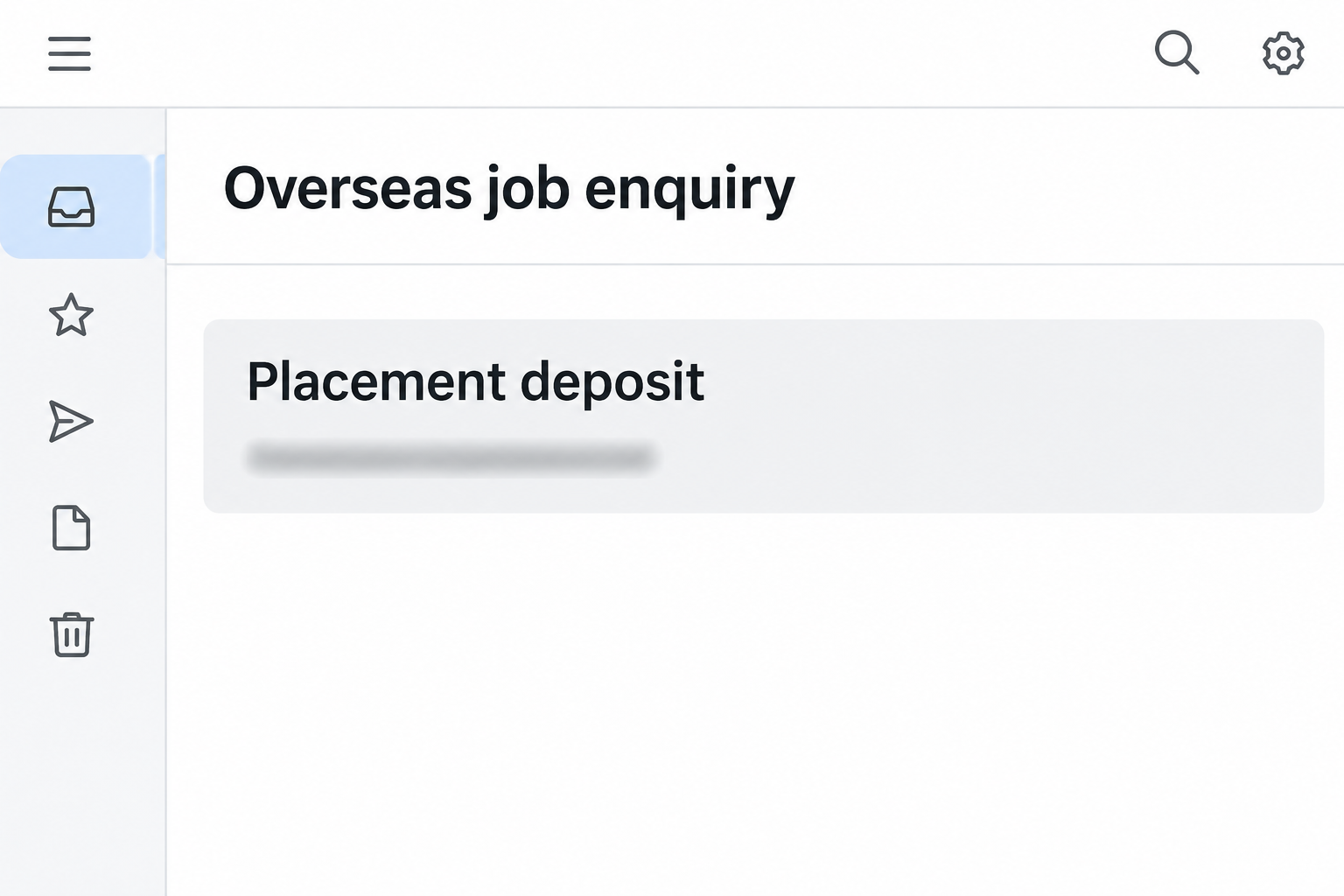
The image illustrates the point where a social media inquiry turns into a deposit request. It doesn’t reproduce a real applicant’s documents or a recruiter’s payment information.
How the TikTok Overseas Job Scam Works
Step 1: Posts promise a route from job seeker to overseas worker
The posts can show envelopes or papers and describe vacancies in areas such as warehouses, hospitality, or care. The quantity of material can feel like evidence of a working business.
It isn’t evidence that the job exists for you. A video cannot establish where a document came from, what it permits, or whether the person shown got hired.
If a real applicant says they found work through a recruiter, that still doesn’t confirm your offer. Your employer, contract and authorization need their own checks.
Step 2: The conversation moves toward an advance payment
A recruiter may present the deposit as a way to reserve a placement or prepare paperwork. An applicant can feel that waiting to verify it would cost them the chance.
An overseas move is expensive enough to make a smaller early charge seem normal.
Ask who receives the money, what it is for, and what happens if there is no job.
Don’t pay to discover which employer you are dealing with. A genuine company should have a way to confirm whether the vacancy and recruiter are authorized.
Step 3: Impressive paperwork makes the waiting feel reasonable
In the documented case, an apparently official letter used a genuine agency’s name. The real agency’s response showed that the papers weren’t evidence of the claimed relationship.
Some applicants also described scheduled interviews or long periods without a clear update. A meeting only proves somebody joined a call, not that the host represents the employer.
If the documents look unfamiliar, don’t let the person who sent them be your only interpreter. Contact the employer or genuine agency from its own site.
Step 4: A promised start date can slip without a job ever appearing
After a payment, you may keep waiting because you’ve already borrowed money or told people you’re leaving. This is when a new promise can feel like progress.
Ask for confirmation from the party that will actually employ you. If the named company disavows the offer, don’t send more money to repair it.
A request for a refund is separate from a new job offer.
Don’t accept an unverified replacement placement only because the person says it is your one chance to recover the deposit.
Verify the Recruiter, the Job, and the Work Permission Separately
Start with the official Kenyan agency check
Kenya’s State Department for Diaspora Affairs provides a recruitment-agency verification page. Use the listed official tools to check the agency name and the status shown there.
A trading name on social media may not match the legal name.
Ask for the exact agency identity, then compare it with the verified entry instead of choosing the closest match.
If the person sends a screenshot of a registration, open the official register yourself. Its current status and contact details matter more than a cropped image.
Ask the employer a question the recruiter can’t answer on its behalf
Find the employer’s hiring contact through a separate route. Ask whether the vacancy exists and whether it recognizes the named agency’s right to recruit for it.
If the contact refuses to verify personal applications by email, ask what legitimate process it offers instead. Don’t send your passport to an address from the suspicious offer.
Some hires use an intermediary rather than the end employer during screening.
Even then, there should be a way to establish who is authorized and which role you are applying for.
Check who issues permission to work
An offer letter and a government work authorization are not interchangeable. Verify the applicable process with the destination country’s official immigration or consular service.
Avoid assuming that the person who promises the job can also guarantee a visa. Ask which authority issues it and how you can validate the process independently.
If you’re already abroad when you see the offer, check how your location affects the official route. Don’t treat instructions from a chat as personal immigration advice.
Before You Resign, Borrow Money, or Book a Flight
Make yourself a simple checklist of what you have verified. Include the role, employer, worksite, process for permission to work, and who is responsible for payment.
If the recruiter keeps adding costs, separate the original agreement from the latest demand.
Look for a written answer about what the fee pays for and to whom it is payable.
Get the total cost and refund conditions before sending any deposit you have independently verified. A sequence of smaller charges can hide a much larger commitment.
Tell a trusted person what would have to be true before you leave your present job. They can help catch an assumption you made because the opportunity sounded promising.
If a genuine deadline is close, ask the employer directly whether it’s still open. Don’t let a recruiter decide that feeding your family requires a transfer today.
Keep your original job and travel arrangements separate from paperwork that nobody else will confirm. You can keep looking for work without accepting a new deadline from the same account.
What to Ask for at Each Point in a Real Application
Before you agree to an interview
Ask for the role title, employer and a description you can check independently. Notice whether the recruiter can explain what the employer actually needs without promising a visa for everyone.
Look for the company’s official process for contacting applicants. A video call organized by a stranger can be a real meeting without being real evidence of who is hiring.
If all communication stays inside one chat, ask the employer whether it uses that route. Don’t pass passports or employment records around a group that nobody has independently verified.
Some applicants may not be able to check a role in the language in which it is advertised. Ask an independent reader what the document promises and who is named.
Before sending identity documents or signing anything
Clarify whose name appears on the agreement and what service they promise to provide. Separate the employment itself from assistance with an application or interview.
If a document says an agency acts for a company, confirm that relationship with the company. Contact details printed in that same document aren’t an independent route.
Check what details the legitimate process actually requires, and at which stage. Don’t send documents early just because the recruiter says it will prevent you from losing a place.
Keep a record of which files went to which organizations. If an offer turns out to be false, that record helps you work out what may have been exposed.
Before making travel plans
Find out whether work permission is required before you leave and whether you have it. A video about successful applicants does not tell you the status of your own case.
Check where you would work, what hours are offered, and what the employer has agreed to pay. A genuine-sounding job title doesn’t answer those questions.
If housing, transport or other costs are part of the arrangement, ask who is responsible for them. Write down the costs separately from what is described as a placement fee.
Share the name of the actual employer and confirmed travel plan with someone you trust. If those details keep changing, verify them again rather than relying on an earlier version.
If the job is not yet verified, check cancellation terms before buying a ticket. Being under pressure to travel doesn’t make a booking refundable or the job real.
The public NEA overview for employment agencies explains the authority’s role in registration and managing foreign employment.
It is a starting point for verification, not an endorsement of a particular ad.
If you received your offer while working in another country, note where you applied and where payment was sent. Those facts can matter when you ask how to report it.
Check whether a recruiter changed its name between your inquiry and the payment request. A different identity does not automatically prove fraud, but it deserves an independent explanation.
Keep the old offer if you receive a replacement. Ask which terms changed and why, rather than letting a new PDF erase the history of what was promised.
Set a decision date that is yours, not the recruiter’s. If key checks are still missing then, keep your money and documents while you consider other options.
What to Do if You Have Fallen Victim to This Scam
Stop sending money for the unverified placement.
Save the ad, account name, written offer, messages, and payment instructions you already received. Keep the records in order so another person can see what changed.
Don’t send an additional charge for a refund or a replacement job. Contact the genuine employer and your payment provider independently.
Contact the payment provider from its own channel.
Tell the bank or transfer company what you were promised, who received the money, and when. Keep the receipt or transaction reference you used.
Ask whether it can stop, recall, or dispute the transfer and what evidence it needs. Recovery options differ, so don’t pay somebody who promises a certain result.
Report a suspected recruiter through verified channels.
Use the public Kenyan authority information to find the appropriate reporting process if the offer was directed at workers in Kenya. Report the account to the app as well.
If someone abroad is pressuring you to travel or surrender documents, seek help through an official local authority or your consular service. Don’t go to a meeting to investigate.
Act if you sent a passport, ID, or employment records.
Record which copies you sent and whether anything original is out of your possession. Ask the relevant issuing authority or consular service how to reduce the risk of misuse.
Look out for follow-up requests that refer to your application details. Don’t send the same files to anyone who claims to be resolving this without independent verification.
Keep the next job search independent of the previous offer.
Start with verified agencies, government services, or an employer you can contact independently. A familiar name or a reference to your application doesn’t authenticate a new account.
If you need help understanding a document, ask an independent person. Don’t make the sender your only source for interpreting the role, fees, or permission to work.
Frequently Asked Questions
Is a TikTok recruiting account always fake?
No, real agencies can use social media. Validate the recruiting agency, employer and work authorization through their own independent channels before paying or sharing documents.
Does a registered company prove the job is real?
Company registration identifies a business, not a particular vacancy. Separately check the status of the recruiter and confirm that the named employer recognizes the offer.
What if the offer letter uses the real employer’s logo?
A real name or logo can be copied. Ask the company whether it issued the document or authorized anyone else to make that offer.
Should I pay a deposit to hold the placement?
Don’t send it on the strength of a chat, video, or forwarded papers. Confirm both the job and the party requesting money first.
Can a recruiter guarantee my work visa?
Don’t treat that promise as permission to work. Check what the destination’s official authority requires and how an application should be made.
Do I have to wait before speaking to my bank?
Contact the payment provider as soon as you believe the placement was fraudulent. Waiting for another promised refund can waste time you could use to ask about recovery.
The Bottom Line
Don’t pay for an overseas job because a social media recruiter shows a letter or promises a visa. Verify the agency, the employer and the official immigration process separately.
If you already paid or supplied documents, act through your payment provider and the appropriate authorities. Preserve the offer, transaction, and messages without sharing private records publicly.

Join the discussion
0 commentsShare your experience or ask a question about this article.
Community experiences
Did this happen to you?
Your experience could help someone recognize the same scam. Submit a private report for our team to review.
I experienced this tooReports are reviewed before publication. Sharing publicly is always your choice.
Discussion
Start the conversation
Have a question or something useful to share? Add the first comment.