


Someone you met in an online group has become part of your daily routine. You share news, check in, and notice when they haven’t written.
Now they’re asking for help again, and turning them down feels like risking the friendship. It helps to separate the relationship from the request.
Overview
The friendship is the reason the payment feels personal
Friendship fraud happens when someone cultivates a relationship and uses it to get money, gifts or other help through a false story.
It can look much like a romance scam, but there may be no flirting, dating, or talk of a future together.
Regular conversation can be enough to make a request feel genuine.
A real online friendship isn’t suspicious simply because you haven’t met. The risk here is a pattern of claims you can’t verify and pressure that makes saying no feel costly.
What a bank found in reported cases
TSB described several confirmed cases, including one in which someone lost more than £4,000 after an Instagram contact asked for help with medical bills.
The Guardian reported on the warning. In another case described by TSB, the relationship lasted four years and involved 60 payments.
Those examples show how widely the pattern can vary. They don’t tell you how often a stranger’s request is fraudulent, or whether anyone will recover a particular payment.
Three questions that get you past the latest emergency
- What can you confirm about the person and the request without relying entirely on their messages?
- What happens to the relationship when you say you won’t send more money or codes?
- If you’ve helped repeatedly, how much have you actually sent across all payment methods?
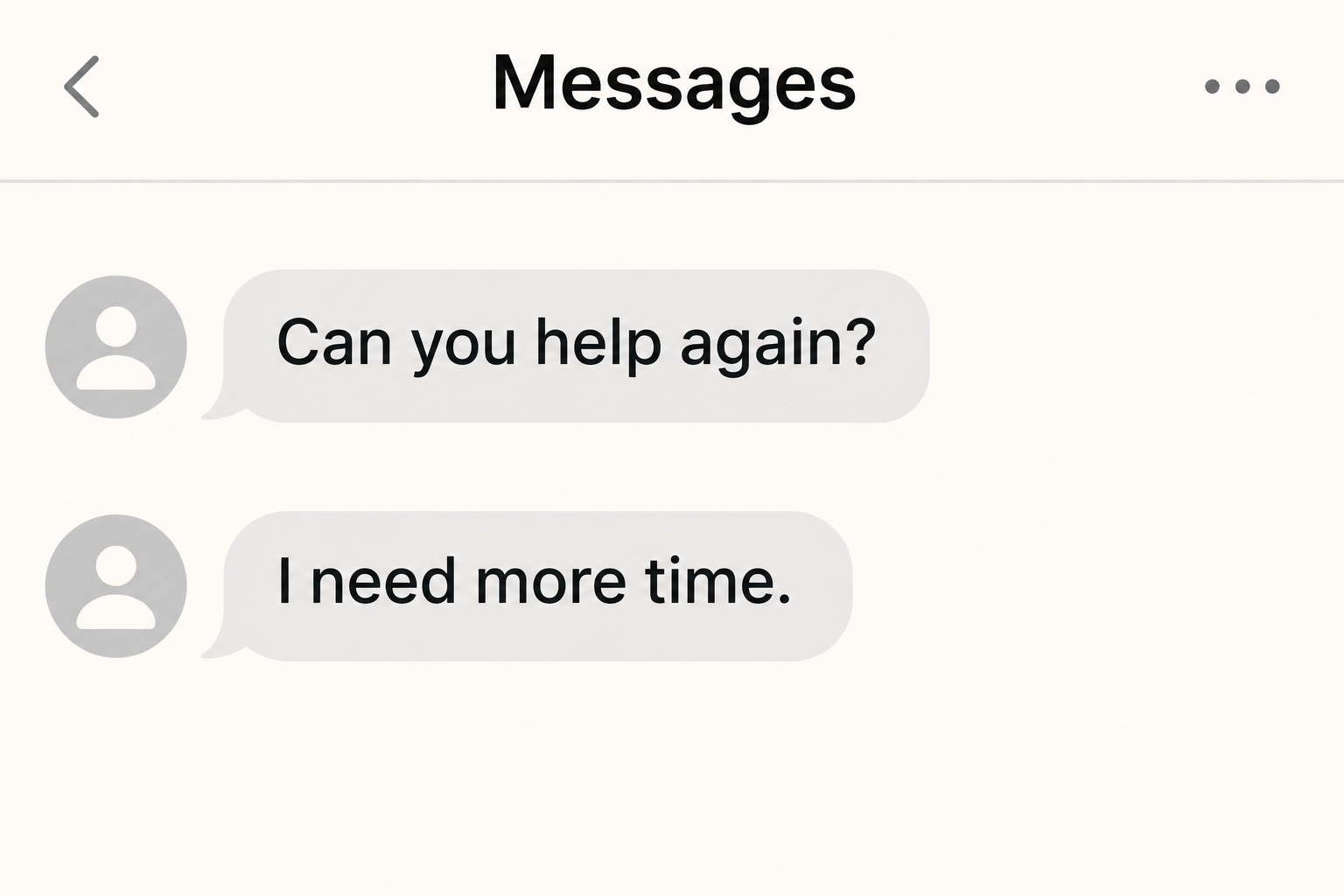
The picture illustrates a repeated request, not a real conversation. You can answer these questions without accusing someone publicly or continuing to pay them.
How the Online Friendship Scam Works
Step 1: The contact becomes familiar in an ordinary setting
You may meet in a hobby forum, comments section or social media group, where chatting about a shared interest is the normal thing to do.
Being in the same group doesn’t verify anyone’s identity. It’s also not a problem on its own; what matters is how the connection is used later.
An online friend may seem to remember everything you say. That can be comforting, but it’s not a substitute for checking a request that would leave you financially exposed.
Step 2: Regular conversation turns into emotional reliance
Some people now start or end their day by checking messages from someone they’ve never met. The arrangement can be meaningful to them even when the other person is dishonest.
A scam can last for months or years rather than beginning with a big demand. Think of the long-running TSB case as an example, not a required pattern.
If a friendship moves to a different app, that change isn’t proof of fraud either. But don’t let a private chat cut you off from the people you normally consult.
Step 3: A request for help makes the relationship feel urgent
The person may describe bills, groceries, or another emergency and ask for a transfer or gift card. The real question is no longer whether you enjoy talking.
You’re being asked to act on a story that carries a consequence for you. Wanting to help doesn’t require you to send money directly to an unverified person.
A genuine need can be dealt with through appropriate local services or verified sources. Don’t let a stranger make you the only person who can help.
Step 4: More payments can become the price of staying in touch
One of the accounts described by TSB threatened to cut contact unless the target continued sending payments and gift cards.
That’s pressure, even if no specific threat of harm is made.
A person may keep sending manageable sums without noticing the total has grown. A payment list makes it easier to look at what has happened across the whole relationship.
If the contact gets angry when you pause, you don’t need to win the argument. End the payment arrangement and speak to someone whose advice isn’t tied to receiving money.
How to Check a Request Without Giving Up Online Friendships
Keep the decision about money separate from the person
Imagine describing the request without saying who made it. Would you pay it if it came from an account you had never spoken to before?
Next, ask which part is independently verifiable. A screenshot sent by the person asking for money doesn’t establish a bill or tell you who will get the transfer.
You can care about someone and still say you won’t use gift cards or send a bank transfer. A boundary can protect the relationship if it is genuine.
Look for what changed between the first favor and the latest
For example, you might once have agreed to a small amount for a particular reason. That doesn’t commit you to recurring help or a new kind of payment.
Note if dates, recipients or reasons keep changing. You don’t have to decide whether each change was intentional to conclude that more money should wait.
If a different account follows up, don’t assume it is a friend, family member or professional who can vouch for the claim. Use independent contact routes where possible.
Protect the details that make later demands sound genuine
Review who can see your posts, location and contact information. Shared interests can stay public without telling everyone where you live, what you own or when you’re alone.
Treat an unexpected call that knows something from your messages as a separate request. Knowing a detail only establishes that somebody had access to it.
If you sent identity documents or a password, get advice specific to that exposure. You don’t need to change every account simply because you answered a message.
How to Help a Relative Without Making Them Feel Blamed
A useful first question is how they met the person and what made them comfortable. Let them explain what they liked about the friendship before asking about payments.
If you open by mocking the story, they may feel forced to defend the relationship. Focus on the next decision they can make instead of what they should have noticed.
Offer to go through transactions side by side, with their permission. If you aren’t authorized to use their account, help them contact the institution themselves.
Show them why a promise of repayment is different from a receipt or completed transfer. Avoid promising a refund, even if another customer in the bank’s report received one.
Talk about what the person is likely to lose if they end contact, not only about their money. Suggest social support without making it a condition of helping.
If they’re particularly isolated, ask what would make it easier to keep in touch with people they already trust. Don’t respond by taking away all their online connections.
How to Tell a One-Off Favor From a Financial Arrangement
Write down what was asked of you, not just what you sent
Start with the first money conversation you remember. Keep separate notes for requests you declined and payments you made, because both can show how the relationship changed.
If promised repayments kept being pushed back, note those dates too. The pattern may be easier to see on one page than in a conversation spread over several apps.
When the same person used more than one recipient, record the recipients separately. A bank can tell you what it needs without you having to identify everyone involved.
Cancel any arrangement you set up to send recurring payments if you no longer want it. Ask the provider for help if you cannot tell whether transfers are scheduled.
Respond to the problem without paying the person who described it
If someone asks for help with a bill, there may be an appropriate organization they can contact. You are not obliged to solve the problem through a private transfer.
Don’t use a supposed professional’s contact details supplied by the same person as independent verification. A second voice chosen by the first contact doesn’t resolve the conflict.
You can decline a conversation about loans while leaving room to speak to a genuine friend later. See whether they respect the decision without inventing another deadline.
If the conversation involves a claim of immediate danger, seek appropriate help through an independently verified route. Sending a code is not a way to establish someone’s safety.
Keep support available after payments stop
People can miss a daily conversation even after learning it involved deception. Losing that routine can feel real regardless of what the other person was doing.
Arrange a check-in with someone you already know or look for a community you can approach independently. That is different from replacing one private stranger with another.
If you help a relative, ask what kind of support they want with checking messages and money. Avoid taking over their accounts or speaking for them without permission.
People sometimes worry that a private report will expose all of their conversations. Ask what records are relevant before handing over material that has nothing to do with the fraud.
Keep a private note of the action your payment provider recommends. That can spare you from repeatedly telling the whole story if a support case has several stages.
If the person calls again, use a second contact route to talk through the demand with someone you trust. You don’t have to make a decision while the caller waits.
Visit a bank branch or contact its verified support if the app is hard to use.
Let the institution explain what it needs from you and how you can share it safely.
Where you can, address any real costs you put off while helping the stranger. The provider or organization you actually owe can explain what options exist for that separate issue.
Review each account involved even if one provider can act. A gift card claim, bank transfer dispute and platform report may all have different evidence and timelines.
Don’t post a stranger’s photograph as a warning. The picture may belong to someone unconnected, and the useful warning is about the request, not a face you can’t authenticate.
What to Do if You Have Fallen Victim to This Scam
Pause further payments, including the small ones.
Don’t send another gift card, transfer or verification code. If the contact sends a new emergency, share the problem with a trusted person instead of resolving it alone.
Keep a copy of the conversation as it stands. Don’t announce a confrontation if you’re worried about what the contact might do.
Make one timeline that covers each payment method.
Record dates, amounts, the transfer or card references and the recipient details you already have. Count repeat payments as well as the first large one.
If you used gift cards, keep receipts and the cards if you still have them. Store any codes privately and don’t post them to explain what happened.
Contact whoever handled the money using their own channel.
Tell your bank or payment service that you believe there was sustained deception. Give it the timeline and ask what it can do about each relevant transfer.
If gift cards were involved, contact the issuer separately. Ask it what records to keep and what options remain, without relying on promises from the recipient.
Deal with information exposure on its own terms.
If you shared a password, change it on the real service and check account recovery settings. If you sent ID, ask the issuer how to handle possible misuse.
Be careful with account access if someone says they’re helping you reclaim the money. A genuine provider can explain its procedures through the channel you contacted yourself.
Report the accounts, then get support outside the chat.
Use platform tools to flag the contact and keep any report reference. UK readers can check Report Fraud’s guidance for the appropriate route.
Tell somebody who can help you with the next call. You don’t need to settle every part of the experience before asking for practical support.
Frequently Asked Questions
Is friendship fraud the same as romance fraud?
The trust-building can look similar, but friendship fraud doesn’t require a romantic relationship. Regular companionship can be used to make financial pressure feel like a normal favor.
Does a video call make the request safe?
Recognizing the person on a call doesn’t authenticate what they say they need. Check the payment request independently, even when the relationship feels familiar.
What if the first several requests were small?
Add them up across payment methods. A small amount can feel reasonable on its own even when repeated payments are creating a serious financial burden.
Should I send another payment to recover earlier money?
Don’t pay someone who promises to release a refund if you send more. Speak to the provider who actually handled the original payments.
Can I help my parent if they don’t want to block the contact?
Start by asking them to pause payments and review the facts together. Offer to help contact their provider without taking control of their account or shaming them.
Does reporting the account automatically start a refund?
Reporting the profile and disputing payments are separate tasks. Contact each payment provider with the actual evidence, and don’t assume that any amount will automatically be refunded.
The Bottom Line
Stop sending money to keep a friendship going. You don’t need to prove that every detail was false before setting that boundary.
If you already paid, put the transactions in order and call your provider directly. Ask a trusted person for help so the scammer isn’t your only source of advice.

Join the discussion
0 commentsShare your experience or ask a question about this article.
Community experiences
Did this happen to you?
Your experience could help someone recognize the same scam. Submit a private report for our team to review.
I experienced this tooReports are reviewed before publication. Sharing publicly is always your choice.
Discussion
Start the conversation
Have a question or something useful to share? Add the first comment.