

A beetroot supplement can look like a simple one-time purchase. You choose a bottle, check the price, and expect a package at your door.
Rosabella’s sales page deserves a slower look. The important details are not all on the bottle, and they change what a buyer may agree to.
Overview
What Rosabella is selling
Rosabella markets beetroot capsules for blood flow and heart health. Its product page describes 1,300 mg of beetroot powder per two-capsule serving.
The listing presents 60 capsules per bottle. Those are seller claims about the product, not independent evidence that the finished supplement treats a medical condition.
Beetroot contains dietary nitrates, which are studied for their possible effects on circulation. That does not make every beetroot capsule clinically proven or appropriate for everyone.
Why the checkout matters more than the bottle
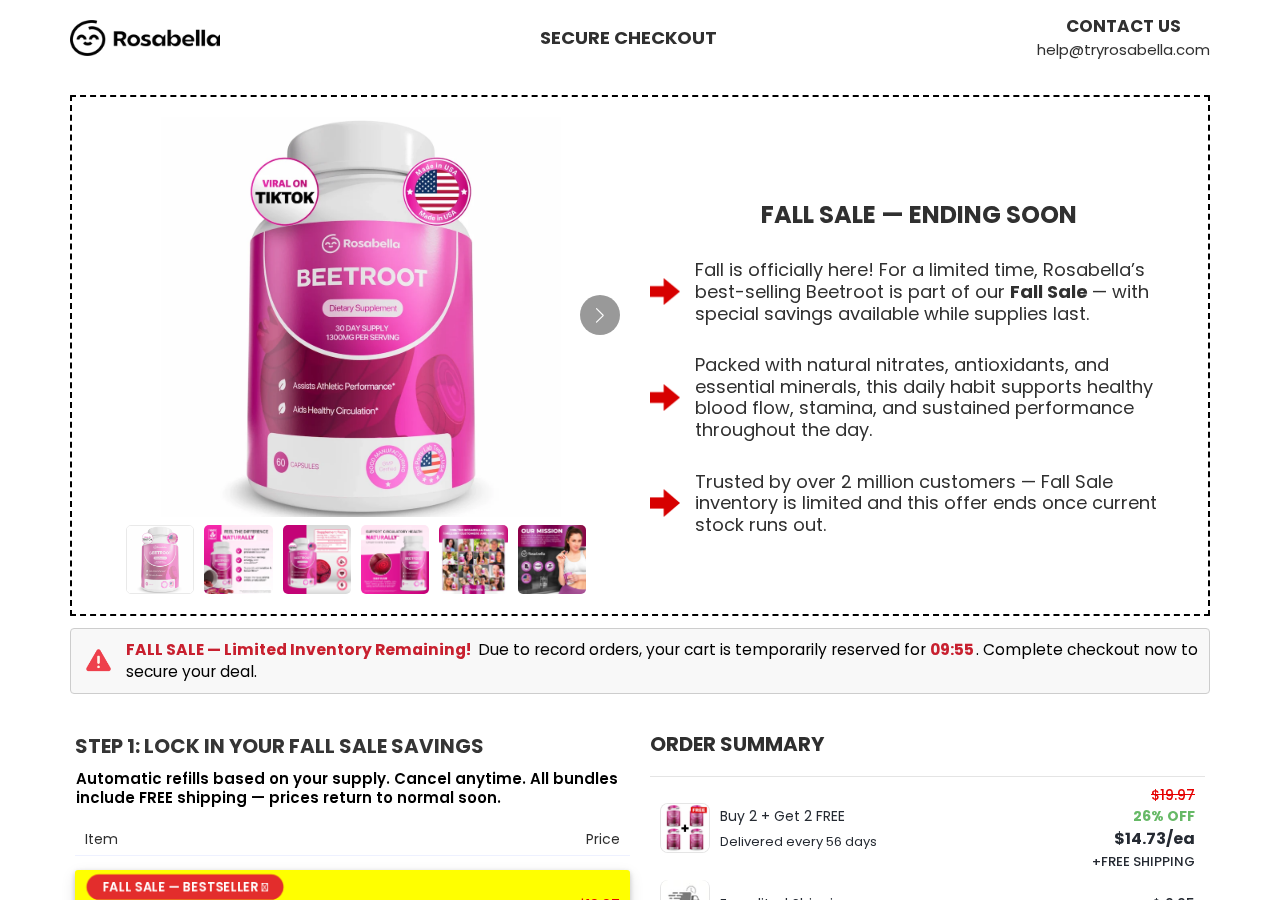
The sales funnel we inspected offered bundles labeled with automatic refills. Its initially selected option showed a recurring $74.90 subtotal every 56 days.
Another option showed $44.90 every 28 days. A larger bundle showed $89.90 every 84 days. These intervals matter more than the headline bottle count.
The refill language is visible, so describing this as a secretly imposed subscription would overstate the evidence. The concern is the preselected recurring choice.
An expedited-shipping add-on for $9.95 and a marketing-text consent box also appeared checked during our visit. A buyer should review both before paying.
- Read the selected bundle, its refill interval, and the future charge before entering payment details.
- Check whether shipping and text-message options are already selected.
- Compare the refund policy with the recurring plan, not just the first-order guarantee.
- Keep screenshots of the exact offer and confirmation you accept.
What the current evidence supports
This is a buyer-risk investigation, not proof that Rosabella is a counterfeit product or that every customer is charged without consent.
We verified the live offer and policy pages on October 10, 2026. We did not order a bottle, test its contents, or inspect a customer’s statement.
The seller’s refund terms exclude recurring and autoship purchases from its first-purchase guarantee. That gap deserves attention before a recurring offer is chosen.
The Refill Offer, Examined Closely
A shopper arriving from an ad may first notice the bottle count and sale language. The crucial line is the one explaining that shipments repeat.
On the inspected landing page, the selected buy-two-get-two offer continued every 56 days. The displayed recurring subtotal was $74.90.
Someone comparing only the first shipment with a store shelf price could miss that another package is scheduled. The future obligation is part of the product.
The buy-one-get-one choice showed a shorter, 28-day cycle with a $44.90 recurring subtotal. Smaller initial bundles can therefore mean more frequent charges.
The buy-three-get-three choice showed a longer, 84-day cycle and $89.90 recurring subtotal. These were the displayed options during our review.
Prices and defaults can change. Before ordering, look at the final checkout total and the recurring schedule presented to you at that moment.
An automatically selected plan is not the same as an entirely hidden one. Still, a preselected option can catch people who assume the page offers a single shipment.
There is also a practical question: how many capsules arrive, and how quickly would one person use them? Compare that with the renewal interval.
If bottles accumulate faster than you can use them, a discounted bundle may become expensive storage. Supplements also have expiration dates to consider.
The landing page displayed a short countdown and promotional wording. Treat those cues as sales pressure, not evidence that the health claim has been established.
One section said the brand was trusted by more than 2 million people, while another referred to nearly 1 million. We could not reconcile those figures.
Customer counts on a sales page are not substitutes for published product testing. Ask what the actual formula contains and what evidence supports each promised benefit.
How the Rosabella Beetroot Checkout Works
Step 1: A health claim brings the buyer to the offer
The page speaks to people interested in circulation and heart health. Those are serious concerns, so the promise can feel more important than ordinary shopping details.
Read the claim as advertising. If you have a diagnosis, symptoms, or medication questions, discuss beetroot supplements with a qualified clinician first.
According to the FTC’s health-products guidance, health claims need reliable scientific support. A favorable ingredient study does not automatically validate a particular bottle.
Step 2: A bundle becomes the starting selection
The offer groups bottles into buy-one-get-one, buy-two-get-two, and buy-three-get-three choices. The selected bundle may look like the recommended deal.
Before comparing discounts, calculate the total number of bottles and servings. Then compare the first shipment with the next scheduled delivery.
A large bundle is not necessarily wrong for every buyer. It becomes a problem when the shopper does not notice how quickly the cycle repeats.
Step 3: The plan carries future refills
The page explicitly uses automatic-refill language and displays recurring subtotals. This is the central commercial fact of the offer.
On our visit, the default selection repeated every 56 days. A careful buyer should write down that date, the expected amount, and cancellation route.
Do not assume that selecting a different bottle count makes the purchase one-time. Each option should be checked individually for subscription wording.
Step 4: Small add-ons can alter the final checkout
The expedited-shipping option appeared selected at $9.95. A separate box also appeared to consent to marketing text messages.
Those selections may be removable, but the shopper has to notice them. Read the order summary after changing a bundle or delivery option.
Take a screenshot before submitting payment. It helps if the receipt later differs from the page you believed you accepted.
Step 5: The first-order guarantee has limits
Rosabella’s refund policy describes a 90-day guarantee for the first purchase of a particular product.
The policy excludes recurring or autoship purchases from that guarantee. Refunds for those later shipments require unopened items and buyer-paid return shipping.
That is narrower than the landing page’s broad “no hassle” guarantee language. Read the detailed policy when deciding what protection you actually have.
Those conditions matter if the first box seems risk-free but a later refill arrives. A refund promise for the initial order is not a blanket refund promise.
Step 6: Cancellation depends on timing
The site has a subscription-management page. Use it early, and retain confirmation that the plan ended.
The policy says shipped orders cannot be canceled and refers to a possible $2 cancellation or restocking fee. Read the current language before acting.
If the next renewal is close, contact support through the site’s published channel and the subscription portal. Save both attempts in writing.
Claims About Beetroot Need a Separate Reality Check
Beetroot is a familiar food, and nitrate research is real. Marketing can blur the line between an ingredient with potential effects and a tested commercial formula.
Rosabella’s listing gives a powder amount, but the number alone does not tell you the nitrate content, batch consistency, or clinical outcome.
The checkout imagery includes a “Made in USA” badge. We did not obtain manufacturing records, lot reports, or independent laboratory results for this bottle.
That absence does not prove the claim false. It means the sales page should not be treated as an independent laboratory report.
Look for a complete Supplement Facts panel, the capsule ingredients, serving size, warnings, and an identifiable lot number before using any supplement.
If you take blood-pressure medication or have a relevant medical condition, check with your clinician. A supplement should not replace prescribed treatment.
Be skeptical of testimonials suggesting dramatic changes in a short time. Individual stories cannot show what happened in a controlled comparison.
The practical choice is twofold: whether the product suits you, and whether the purchase terms suit you. Those questions need separate answers.
Company Identity and Return Terms
The business named in the policy
The policy names Ambrosia Brands LLC and lists 30 N Gould St, Sheridan, Wyoming 82801. We have not verified that address as a factory.
A legal or mailing address can serve different functions. It does not tell you where the capsules were manufactured or where returns are processed.
Do not infer Chinese manufacture, a fake company, or a fulfillment-center-only operation from the address alone. The available pages do not establish those claims.
First order versus future orders
The refund terms distinguish a qualifying first purchase from recurring shipments. Buyers should read that distinction before selecting a plan.
Ask whether an opened bottle can be returned. The policy’s unopened-item language can sharply limit what a dissatisfied customer actually recovers.
Also calculate return postage. A refund is less valuable if the buyer pays to send multiple bottles back and some shipments are excluded.
How to preserve your position
Save the offer page, product page, subscription terms, refund policy, checkout summary, and receipt. A dated set of screenshots is useful if wording changes.
Use a payment method with a clear dispute process. That is a precaution, not a prediction that Rosabella will deny a valid request.
Set a calendar reminder several days before the next renewal. Waiting until a package ships can narrow the cancellation choices the seller offers.
The manufacturing trail still matters
A bottle label should identify the responsible business, lot, serving instructions, and ingredient amounts. Check the package when it arrives, not only its photograph.
If testing is mentioned during checkout, ask what was measured and whether the results apply to your lot. A general slogan is less informative.
Neither the Wyoming address nor an advertisement establishes the manufacturing country. Avoid treating an unknown origin as proof of danger or safety.
Questions to Ask Before Paying
Will this be a one-time purchase or a continuing plan? Do not answer from the advertising headline. Read the exact option selected in checkout.
What will the next charge be, and when? Write down the amount and date, including taxes or shipping that may appear at the final step.
What happens to unused bottles if you cancel? The return policy’s unopened-item and recurring-order exclusions can matter more than the stated guarantee length.
Where can you manage the plan yourself? Confirm that you can reach the account or subscription portal before the first renewal becomes urgent.
What evidence supports the benefit you want? Look for research on this finished product, at its stated dose, for the specific outcome being promised.
What is inside the capsule besides beetroot powder? Review the full label for fillers, allergens, and serving directions, especially if you use other supplements.
If a claim sounds like treatment for a disease, pause and ask a clinician. A supplement purchase should not delay evaluation of symptoms.
Finally, compare the recurring cost over several months with alternatives. A low first-order price can conceal the amount a plan requires later.
What to Do if You Ordered and Did Not Expect Refills
-
Confirm what you bought. Find the order receipt and identify the chosen bundle, refill interval, first charge, and next billing date.
Check the original checkout screenshot if you kept one. The terms shown at purchase time matter more than a general memory of the page.
-
Manage or cancel the plan promptly. Use the seller’s subscription portal and request written confirmation that no further shipments will be billed.
If the portal does not work, contact support through the site’s published channel. Save the request date and any automated reply.
-
Separate a refund request from cancellation. Stopping future orders may not refund a shipment already processed. Ask about both explicitly.
Read the unopened-item condition and return-shipping requirement before mailing anything. Request a return authorization and address in writing.
-
Review your card statement. Match each posted charge to a receipt and delivery. A pending authorization may differ from a completed transaction.
If a charge was unauthorized or continued after a documented cancellation, contact your card issuer promptly and provide your records.
-
Seek medical advice for health concerns. Stop using a product that causes an adverse reaction and contact a healthcare professional.
Keep the bottle, lot information, and ingredient label. Those details can help a clinician evaluate what you took.
-
Report a misleading offer if warranted. Provide the advertisement, order terms, receipts, and cancellation history to the relevant consumer authority.
Describe exactly what the page showed and what happened to you. Avoid assuming every other buyer had the same experience.
Frequently Asked Questions
Is Rosabella Beetroot automatically a scam?
No. We found a real sales page with disclosed automatic refills. The concern is the selected recurring offer, add-ons, and limited refund terms.
Does the checkout show a subscription?
Yes. During our review, the bundle choices displayed automatic refills and recurring amounts. Confirm the current page before ordering because offers can change.
Is the first purchase covered by the 90-day guarantee?
The policy describes a first-purchase guarantee with conditions. Recurring orders fall outside it; refunds for those shipments require unopened items and buyer-paid return shipping.
Was the product proven to be made in China?
No. The pages we inspected do not establish its manufacturing origin. A business address or shipping pattern would not prove that either.
Can beetroot capsules replace heart medication?
No. Do not stop prescribed treatment for a supplement. Ask your healthcare professional whether beetroot capsules make sense for your situation.
What should I save before cancelling?
Keep the checkout summary, subscription schedule, refund policy, receipt, support messages, and cancellation confirmation. Note the next billing date.
The Bottom Line
Rosabella Beetroot’s main buyer risk is not an undisclosed magical ingredient. It is a purchase path where recurring shipments and extras can be easy to overlook.
Read the refill interval and refund exclusions before paying. If you already ordered, confirm your plan now and keep written proof of any cancellation.








