

You have probably seen the clip already. A phone screen. A promo code. A $10,000 welcome sitting on a casino that looks finished in thirty seconds. Someone is cashing out in the comments. Someone else is already in the chat telling you to hurry.
That is why people search Ruavux.com after they already signed up. The ad did not ask you to research a brand. It asked you to claim a bonus before the code expired.
This page is about what happens after that click. The deposit. The balance that appears. The moment you try to take anything off the site. And the extra payment that shows up when you do.


Overview
Ruavux.com is a crypto casino built around one switch. You can send money in. You cannot take money out until you send more.
The first deposit is easy. A wallet address. A coin you already hold. A progress bar that makes the transfer feel like a normal casino top-up. Then a number appears on the dashboard. That number is the hook. It looks like a balance. It behaves like bait.
The trap is not the slot. The trap is cashout. Withdraw is where the site stops being a game and starts being a bill. Verification. Activation. A network fee. A security deposit. The label changes. The demand does not. You pay extra to reach money that only exists on their screen.
After you pay, the next fee is already written. Wrong network. VIP check. One more compliance step. The site keeps the first transfer and asks for a second one. That is the whole product.

The bonus that is not cash
The ad sells a gift. Type a code. Get credited. Start playing. Ruavux.com advertises huge welcome numbers, sometimes up to $10,000, for a signup that takes seconds.
A real casino can run a welcome offer. It also prints the wagering, the max cashout, and the expiry. This style of site does the opposite. The bonus lands first. The rules arrive later, if they arrive at all, and they arrive as a payment demand.
That giant credit is not money you can move. It is a number designed to get you clicking Crash, Plinko, and Mines before you ask who runs the wallet on the other side. Once you have “won” on house credit, walking away feels like leaving cash on a table.
It is not cash on a table. It is a screenshot of a number the operator can change, freeze, or ignore.
The names that do the selling
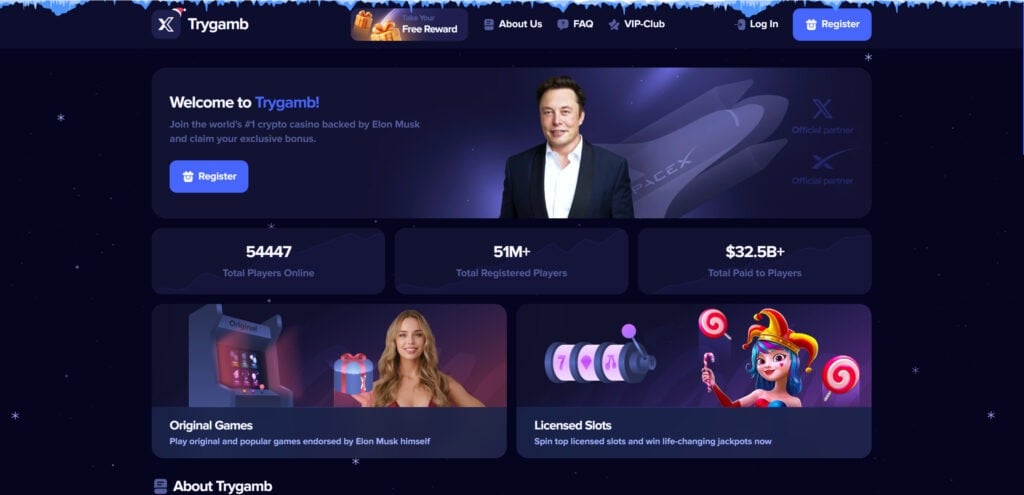
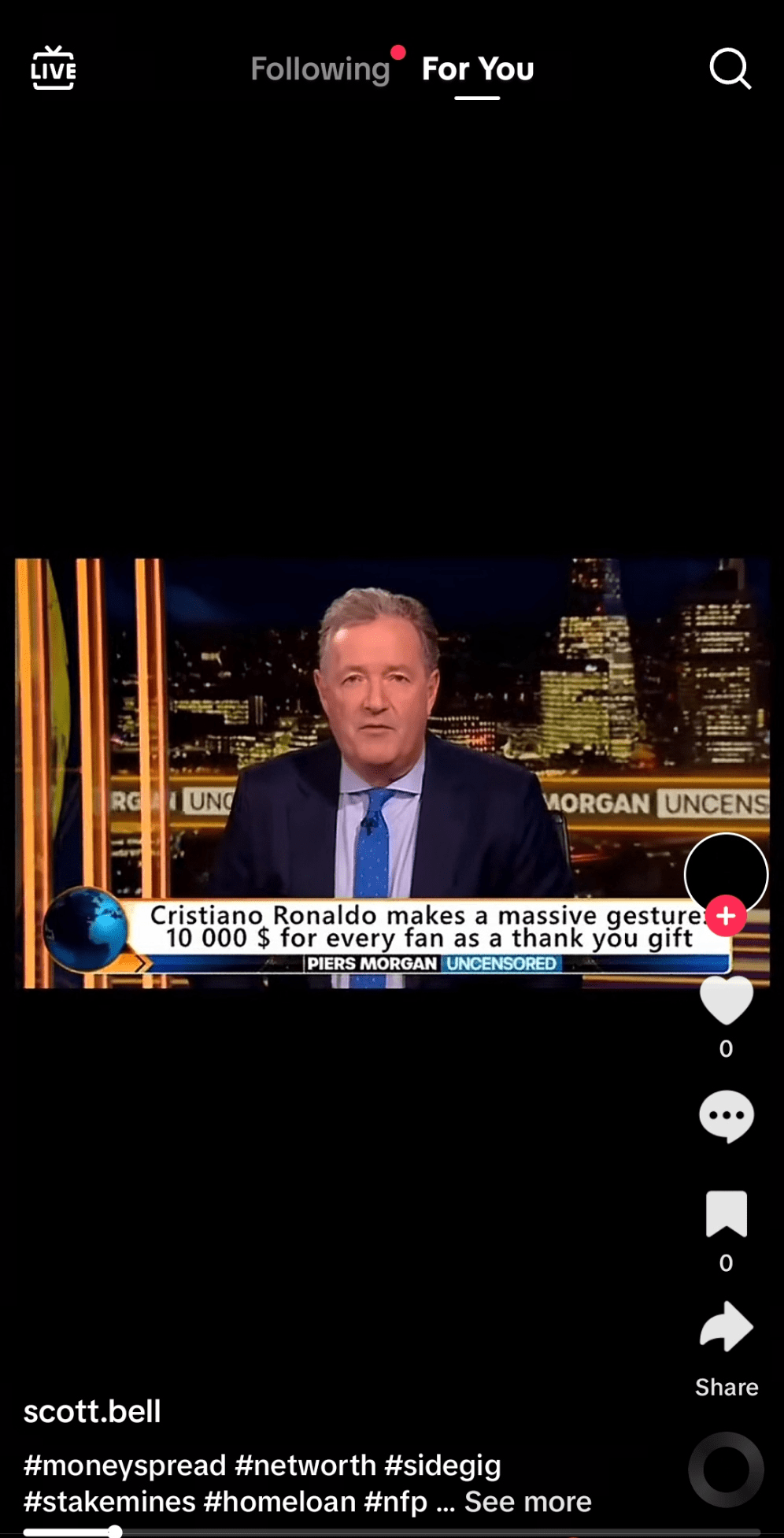
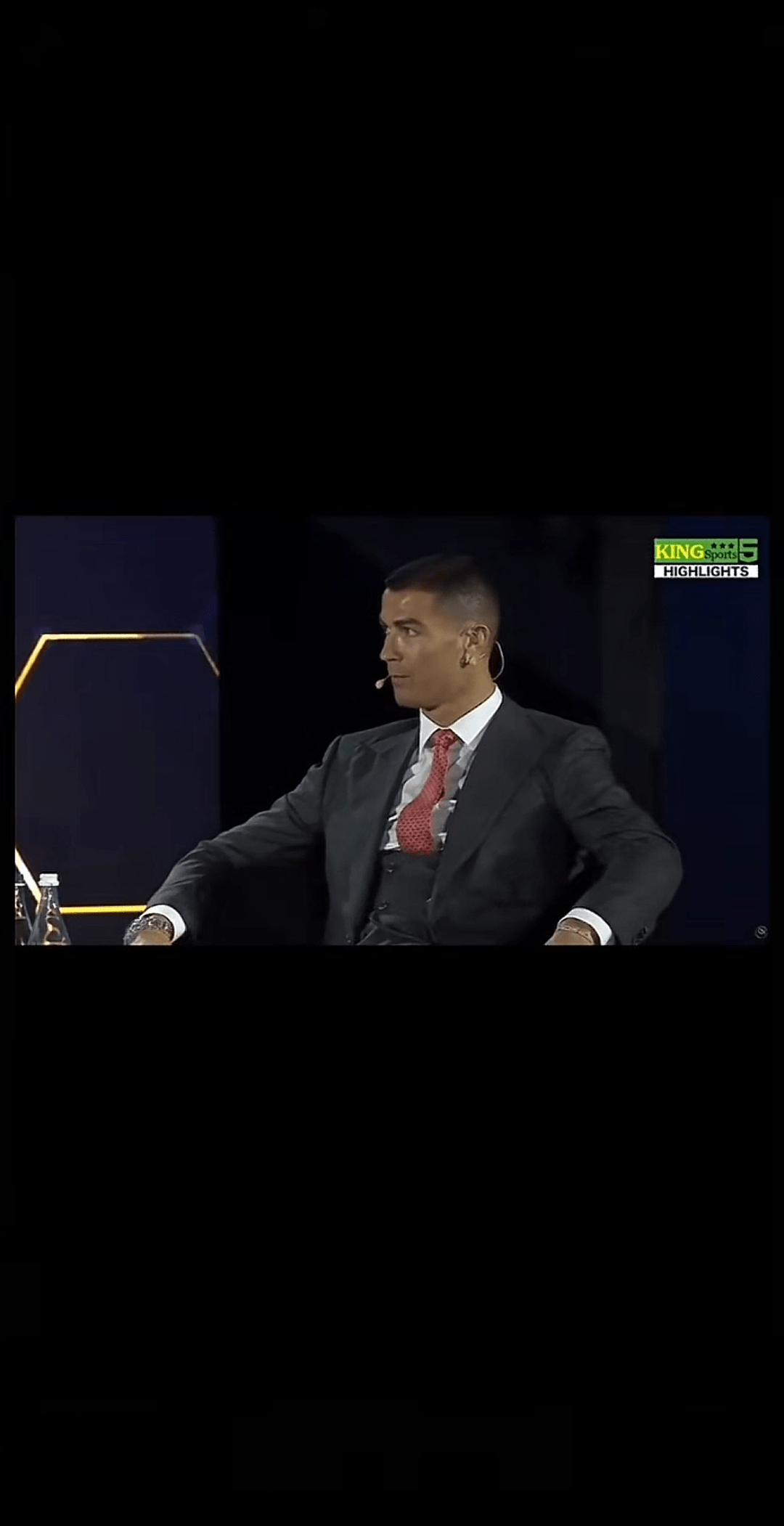
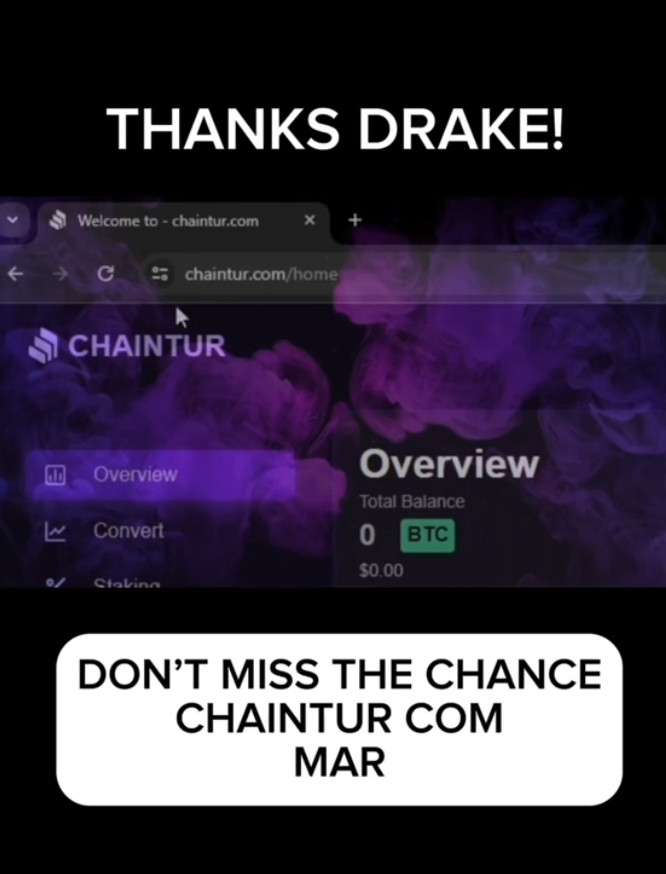
Ruavux.com borrows famous faces the way a fake shop borrows a logo. Elon Musk. MrBeast. Drake. Jeff Bezos. Bill Gates. Other versions of the same funnel add Cristiano Ronaldo, Mark Zuckerberg, Warren Buffett, Taylor Swift. The pitch is that a billionaire built a casino for regular people, or that a creator is handing out free crypto.
There is no credible, checkable tie between those people and this domain. The names are there because a scroll stops for a familiar face. You are not being shown a founder. You are being shown a costume.

This is the same celebrity-credit trick that has run for years across “free Bitcoin” pages and fake giveaway clips. The face changes. The wallet address is still theirs.


The live-wins theater
The dashboard is busy on purpose. Players online. Registered users. A ticker of recent wins. A list of withdrawals that just went out. The site wants you to feel late to a room that is already paying people.
Those counters are a costume, the same way the celebrity names are a costume. Scripts can refresh a win feed. Bots can invent a cashout. A ticker is not a bank statement. If the only proof that people get paid is a widget the operator controls, you do not have proof.
The theater has one job. Keep you depositing until you try to leave. Leaving is where the room goes quiet.
Easy in, locked out
Signup is frictionless because friction would give you time to search the domain. Email, or even less. No serious identity check. No wait. A bonus hits the account. A prompt tells you to play.
Identity appears later, and only when you ask for your money. That is the tell. A real platform that needs to know who you are asks before it takes a deposit, or at least before it lets a large cashout sit in a queue. This style of site asks after you already sent crypto, when walking away means abandoning the number on the screen.
The lock is sold as safety. Wallet verification. Account review. A compliance hold. Then the “review” is a transfer you have to make, often described in the $100 to $500 range, before anything can leave.
Pay to reach your own balance
This is the wall. You tap Withdraw. The site does not send coins. It sends a chore.
The chore has official-sounding names:
- Verification deposit
- Activation fee
- Network fee
- Security deposit
- Wallet validation
Whatever the label, the structure is the same. You must send more crypto to unlock crypto the site says you already have. A real operator that charges a fee deducts it from the payout. It does not invoice you for a second transfer as the price of leaving.
If support will not deduct a fee from the withdrawal, stop. That answer is the product.
After you pay
The first extra deposit does not open the door. It proves you will pay to keep the story going. Then the story grows a new chapter. Technical issue. Pending. Wrong network. VIP verification. Deposit more to unlock the unlock.
Support stays warm while it is selling the next transfer. Scripts, then a person, then silence. Once the operator decides you are done paying, the chat goes dead and the balance stays where it is: on their page, in their custody, in a coin you already signed away.
Crypto lock-in is the point. Transfers do not reverse the way a card charge can. The site picked a rail that favors the person who already received the coins.
How The Scam Works
The funnel is short. An ad creates urgency. A bonus creates a balance. A game creates a win. Withdrawal creates a bill. Each step is there to get you to the next payment, not to the next payout.
1. The ad finds you first
Most people do not type Ruavux.com into a browser after reading a license page. They meet it in a feed. TikTok-style clips. YouTube ads that look like a creator’s screen recording. Facebook posts. Instagram stories. Chat groups where a “friend” drops a code.
The clip is built for speed:
- A promo code
- A signup bonus, often $2,000 to $10,000
- A limited-time clock
- A founder story with famous names
- Screenshots of fat balances and “successful” withdrawals
You are not being sold a casino in the first five seconds. You are being sold a secret: free credits, a code that expires, a room that is already paying. Tracking is already in the link.
2. Sign-up is frictionless on purpose
The landing page is built to close the tab you would have used to search reviews. Register. Claim. Play. The longer you sit on an empty form, the more likely you are to type the domain into a search bar and see the same complaint over and over: people can deposit, people cannot leave.
After you register, the site usually shows three things at once:
- A bonus credited instantly
- A prompt to start a game
- A dashboard with a large balance
That instant credit is a commitment trick. You already “have” something. Closing the tab now feels like throwing it away. The operator is counting on that feeling. Nothing has been paid to you. A row in their database changed color.
3. The bonus gets you playing
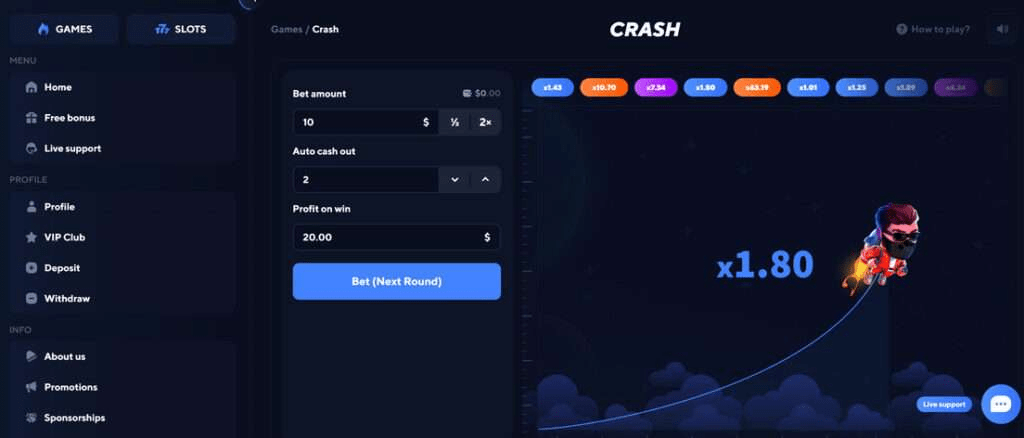
The games are familiar on purpose. Crash. Slots. Plinko. Dice. Mines. Tower. Coin flip. The buttons respond. The multipliers move. Early “wins” are common enough that the account looks alive.
Polish is not fairness. A slick front end is cheap to copy. The same layout shows up under other names with the same carousel and the same #1 decentralized headline. The games exist to get you to Withdraw while you still believe the number is yours.
You play with house credit first. That is cheaper for them than paying a real jackpot, and it still creates the same emotion: momentum. Then the site offers a deposit so you can “unlock” larger bets or complete a wagering step you never saw in the ad. Some people send coins here. Some wait until cashout. Both roads lead to the same wall.
4. The first withdrawal is the wall
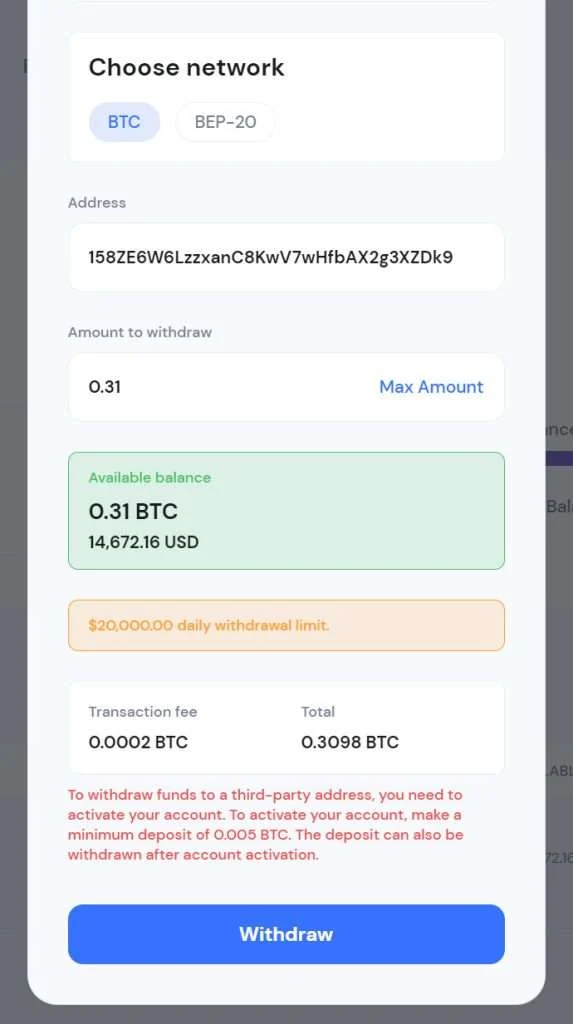
This is the moment the site was built for. You tap Withdraw. You pick a coin. You paste an address you control. Then the tone changes.
The site does not usually say you cannot withdraw. It says you can withdraw after one more step. That sentence is the trap. Hope stays intact. The bill arrives wearing a policy.
Common lines:
- “Withdrawals are locked until verification is complete”
- “You must verify your wallet”
- “Minimum deposit required to withdraw”
- “Account verification required”
- “Security check in progress”
A two-minute test is enough. Try a small cashout, even $10. Read the message. If it says you must deposit first to unlock withdrawals, stop. If it asks for a separate transfer to “verify” the wallet, stop. A real platform can process a payout without invoicing you for a new deposit.
5. The verification deposit
This is the extraction. Support, or a banner on the cashout page, asks for another transfer. The figure is often talked about in the $100 to $500 range. It is framed as the thing standing between you and the balance you can already see.
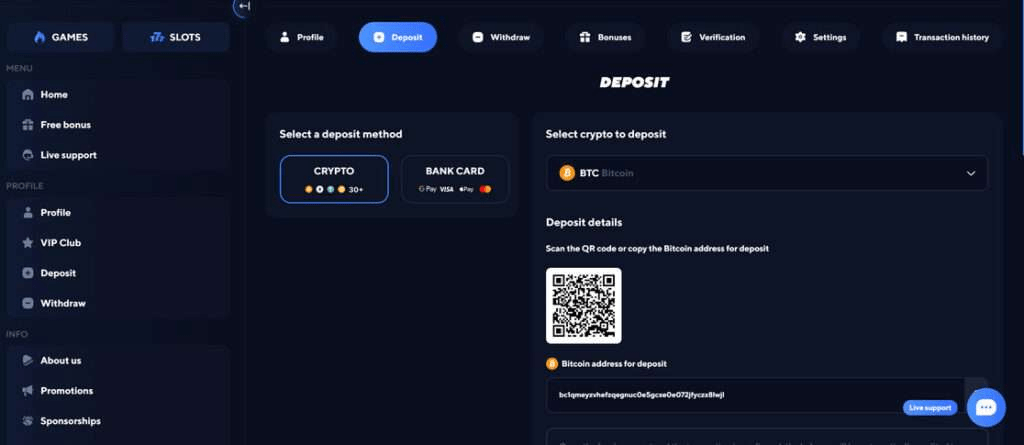
The deposit is dressed as:
- A compliance requirement
- A network fee
- A wallet validation step
- A security deposit
It is not verification. Verification is a document, a selfie, a wait. This is a payment. You are buying another chance to believe the first number was real.
Phrases that give the wall away:
- “Verification deposit required to withdraw”
- “Activate withdrawals by making a deposit”
- “Wallet verification required before payout”
- “Pay the network fee to process withdrawal”
- “One final step to unlock your funds”
Ask one question and stop if the answer is no: can they deduct any required fee from the withdrawal instead of asking for a separate deposit? If they cannot, you are not in a queue. You are in a checkout.
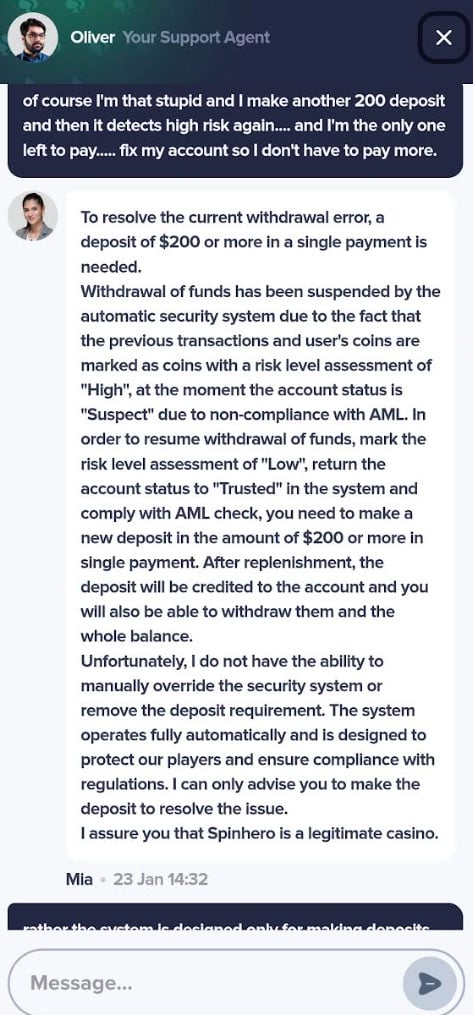
6. The goalposts move
Pay the first extra deposit and the site has a new problem that only money can solve. A second payment. Or a stall that never ends.
The excuses are interchangeable:
- “Technical issue, try again later”
- “Your withdrawal is pending”
- “You selected the wrong network”
- “You need VIP verification”
- “Additional compliance is required”
- “Deposit more to unlock withdrawals”
This is not a broken cashier. It is a loop. Each new requirement is written after you prove you will pay the last one. The balance stays visible so the next fee still feels like a small price for a large number.
The Federal Bureau of Investigation has the same warning in plainer language. Extra “fees” or “taxes” to release money you were already promised are a red flag, and paying them does not get the money back.
7. Support fades, then the name changes
While you are still a payer, support is available. It repeats the same script. It is vague about timelines. It is specific about wallet addresses. Then it slows down. Then it stops.
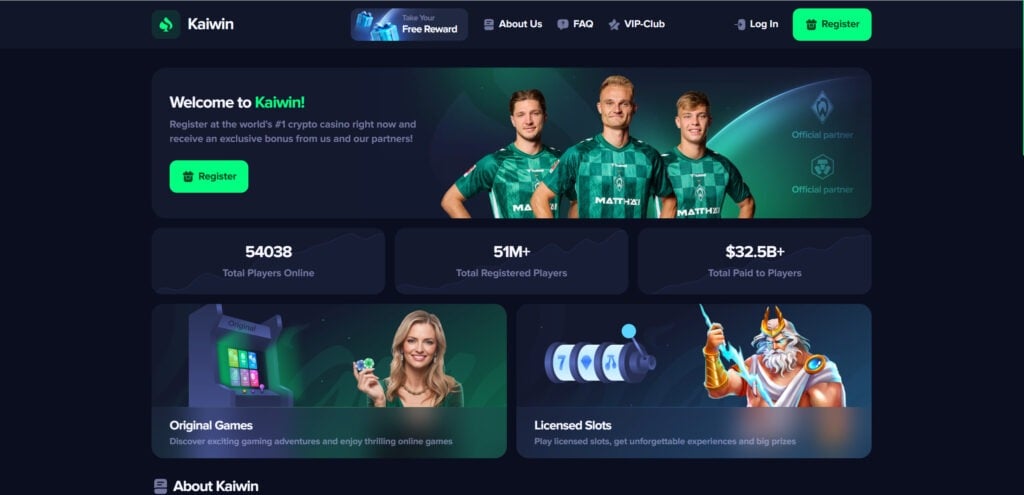
Ruavux.com is not a one-off storefront. The same casino skin, the same bonus pitch, and the same withdrawal wall travel under other domains. The logo changes. The demand does not.
Side by side, the fingerprints repeat:
- The same hero line, often “Decentralized Crypto Gaming Platform #1”
- The same page blocks and game carousel
- The same oversized bonus
- The same cashout message that wants a new deposit
- The same recycled celebrity story
Lookalike names that have used this funnel include Bunodex.com, TryGamb.cc, Olympus-games.net, KaiWin.cc, Betaras.com, Bezhope.bet, Acegam.com, 8BitWin.com, 7Spiny.com, Nexusball.com, Germibet.cc, Telaxplay.com, EnyBex.com, Roarax.com, Siodex.com, RuseWin.cc, and Epicdrops.life.
Domains rotate because complaints pile up, ads get banned, and a fresh URL is cheaper than a refund. Do not trust a new name. Trust the behavior. If cashout is locked behind a new deposit, you are in the same room.
What To Do If You Have Fallen Victim
If you already sent coins, or you already typed a password into Ruavux.com, the job is to stop the next loss, lock your real accounts, and keep proof. You do not need to win an argument in their chat.
- Stop sending money. Do not pay a verification deposit, an activation fee, or a “network fee.” If you already sent one extra transfer, do not send the next one. The second bill is how the first bill was supposed to feel: temporary, official, almost done.
- Save the proof before the page changes. Screenshot the dashboard, the bonus, the withdrawal error, the chat, the deposit address, and the promo page. Copy transaction hashes, amounts, coins, and dates from your wallet or exchange. The FBI asks for those details when you report crypto fraud, and they are easier to grab now than after a domain dies.
- Write to the exchange you sent from. If the coins left a centralized exchange, open a ticket the same day. Give them the destination address, the hash, the amount, the asset, the time, and a short description of the cashout demand. They may not reverse the transfer. They can still flag the address. Speed matters more than a perfect essay.
- Lock the accounts that still belong to you. Change the email password that sits on your exchange. Turn on two-factor authentication. Replace reused passwords. Check the browser for a new extension you did not install. If you connected a wallet or approved a spend, revoke it and move what is left to a fresh wallet you control.
- Ignore recovery agents. After a crypto loss, a second inbox shows up offering to “get it back” for an upfront fee. The FBI warns against cryptocurrency recovery services that charge before they work. Treat a cold message that already knows your case as another extraction.
- Report it. In the United States, file with the FTC fraud report form and with the FBI Internet Crime Complaint Center, and tell the exchange. The FTC’s advice is the same as the practical one: act quickly and attach the hashes. Outside the United States, use your national cybercrime unit, local police, and the ad platform that showed you the clip.
- Report the ad, not only the domain. If a clip, a page, or a chat account sent you here, report that account too. Include the landing URL and a screenshot of the offer. Killing one domain does less than cutting the feed that keeps minting the next one.
- Warn people with facts. A short note is enough: the bonus claim, what the withdrawal screen asked for, how support answered, and any deposit address you were given. Skip the drama. A dry timeline helps the next person more than a rant.
Crypto transfers are usually final once they confirm. That is why this funnel prefers coins. Your best move is the one they do not want: no second payment, a complete evidence folder, and a report filed while the addresses are still warm.
The Bottom Line
Ruavux.com sells a bonus, prints a balance, and then charges you to leave. The celebrity names, the live-win ticker, and the familiar games are there to get a deposit in. Cashout is where the site becomes a wall: a verification deposit, an activation fee, a network charge, another “final” step.
If a platform will not deduct a fee from a withdrawal and instead invoices you for a new transfer, you are not unlocking funds. You are sending more of them.
If you already paid, stop. Save the hashes. Lock your email and exchange. Report the transfer. And if a stranger offers to recover the coins for a fee up front, that is the same trap with a different headline.

Reviews & discussion
0 commentsShare a firsthand experience, or ask a question.
Community reviews
ruavux.com
Moderated reader experiences, not an editorial verdict.
Start the conversation
Have a question or something useful to share? Add the first comment.