


RUG AI V2 presents itself as a set of financial tools. Behind the orange headline is the promise of a system that runs on its own.
Before using a tool like that, it helps to ask what you can check without opening your wallet.
Overview
A liquidity engine described in technical terms but not demonstrated
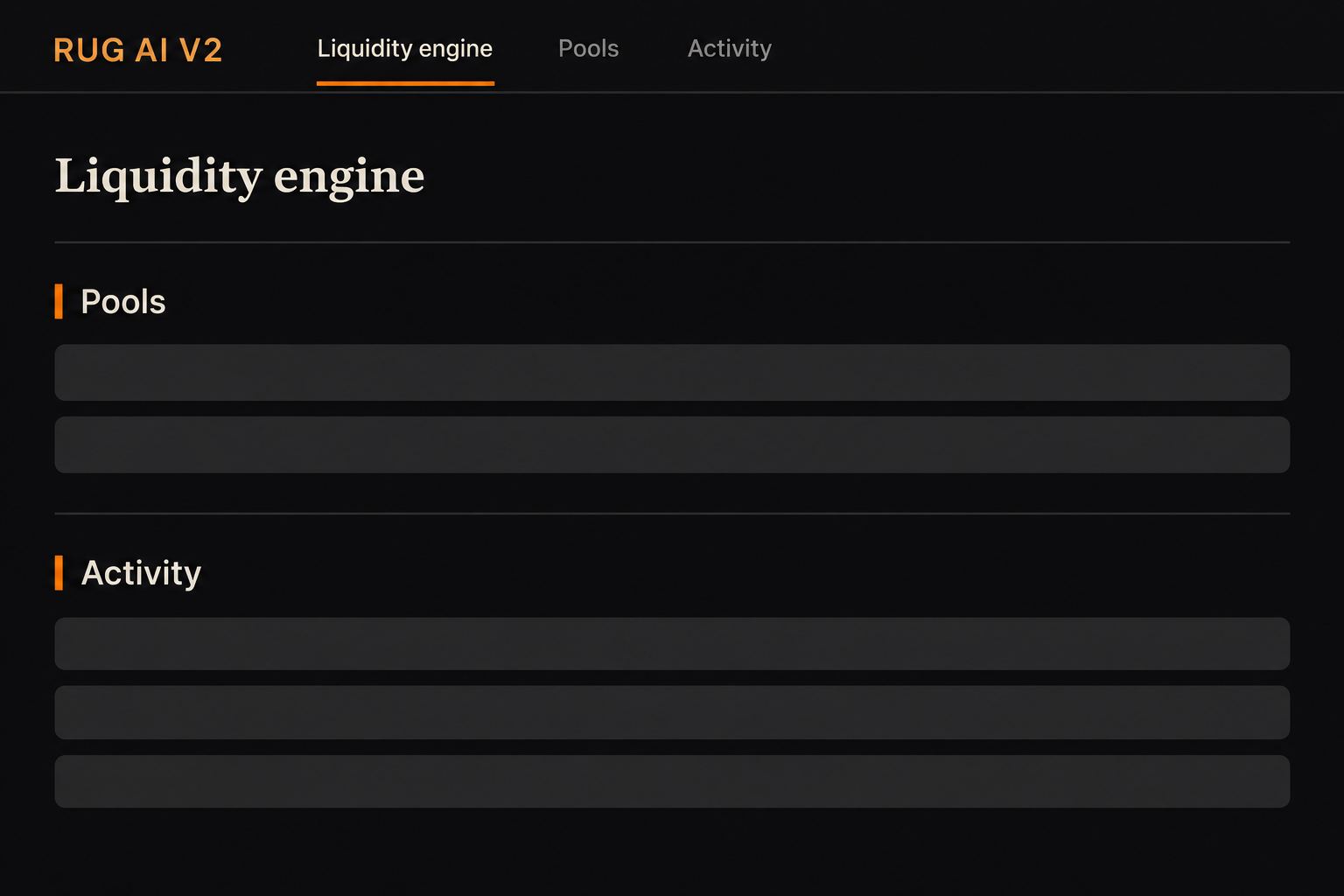
The reported RUG AI V2 site advertised an automated crypto liquidity engine. It mentioned repeatable extraction, a 24-hour cycle, and a system that appeared to be live.
The archived landing page was hosted at rugai[.]site. It showed sections labeled Pools, Activity, and Dashboard, and a start control that led into a wallet selection screen.
Those are things the site displayed, not results from an independently verified financial product. Seeing a live indicator does not prove there is a functioning engine behind the page.
The available evidence concerns that specific landing page and the requested wallet connection. It does not establish a verified operator, the terms of a genuine product, or a completed payout.
“Liquidity” and “AI” do not tell you what you would authorize
Liquidity describes the availability of assets for trading. A real service can have a particular approach to managing it, with responsibilities and risks that it should be able to explain.
The landing page offered a broad technical description without establishing, in the captured flow, who would be responsible for assets or what the visitor would be authorizing.
“AI” also says nothing by itself about whether a system is safe or productive. The label is not proof of an automated strategy, an audit, or verified investment performance.
There is no need to connect funds to make a product describe itself. Who runs it, what it does, and what permissions it wants are questions to answer first.
The visible handoff was to a wallet, not a documented trial
The screenshot sequence showed a chooser with a long list of wallet applications. It did not demonstrate a paper-trading feature, a validated return, or an approved transaction.
Keep these things separate when deciding what to do:
- A page can display technical labels without explaining what its service does.
- A wallet chooser does not show that any wallet provider endorses the page.
- A request for a signature or transaction is a separate decision from learning about a service.
- A claimed withdrawal, profit, or balance is not a transaction record.
Do not assume the similarly named owner of a different site has anything to do with this one. The warning applies to the reported page and its documented behavior.
How the RUG AI V2 Liquidity Engine Scam Works
Step 1: The site makes a conceptual promise look like a product
The main page introduces an engine, not a simple payment request. Navigation for pools and activity makes the idea look structured enough to be used as a real application.
The term “reforged” suggests that an established system has already been improved. Nothing visible in the capture establishes a previous version or the results of such an update.
An experienced reader may recognize vocabulary from real trading systems and become curious about what this one does. Curiosity does not require following the page into an approval flow.
Try stating the offer back in plain language. If you cannot identify what would happen to your assets, the page has not yet answered an essential question.
Step 2: The 24-hour cycle adds a sense of activity
A cycle label makes a tool sound as though it is already operating on a schedule. The label is not enough to tell a visitor what is measured or executed.
Do not confuse the cycle with a documented return or withdrawal period. The captured wording does not establish how much a user would earn or whether any processing occurred.
The same caution applies to an activity ticker. A visual signal may be nothing more than a design element unless the activity can be verified from a trustworthy source.
If someone sends a screenshot of a different balance, ask where the number came from. Independent records are more useful than comparing two versions of the same promise.
Step 3: Clicking to start moves the visitor into a wallet selector
The documented path from the introduction led to a list of wallets. It asked the reader to choose a wallet before demonstrating meaningful details about the purported engine.
The chooser did not authenticate the project. Wallet names tell you which software might handle requests, not whether the requesting website is safe.
A genuine application may let users connect to see features. In this case, the reasonable decision is to stop because the observed flow has not established a trustworthy service.
There is nothing to gain from testing with your primary wallet. Even a throwaway test does not establish who operates the site or whether later behavior will be the same.
Step 4: Any requested authorization matters more than the dashboard
An ordinary connection usually shares a public address and begins a session. It does not automatically establish that assets have moved or that a key was disclosed.
An approval or signature can have a different effect. The result depends on the network and what the wallet actually requested, not on the website calling it an engine.
The archive does not show a signed transaction or victim transfer. The concern is the wallet handoff, not a claim that every connection emptied a wallet.
If a site cannot explain a request in terms you can check, do not approve it. You can leave without losing access to the legitimate wallet app.
Step 5: A balance or support conversation can create another decision
The recorded site included a chat control, but there is no evidence here about how an operator answered it. Its presence should not be read as verified support.
Someone who has already interacted may be tempted to ask the site how to undo it. That gives the same unverified service another chance to request access or money.
Use the help route provided by the wallet you already installed. If the problem concerns a transaction, bring its reference rather than credentials or the wallet’s recovery information.
What to Do if You Have Fallen Victim to This Scam
-
Close the page and write down what happened in order. Note whether you saw the engine page, chose an app, connected, or accepted a separate request.
Keep the message or original referral privately if you still have it. Do not revisit the page to find a wallet name or copy a new link.
-
If no wallet action happened, do not assume money moved. You can review balances and activity using your normal tools, but the landing page alone does not demonstrate loss.
If you installed anything after following separate instructions, report that as a different exposure. No download or execution was established in the captured engine flow.
-
If you connected, remove the site from the wallet’s connected sites. Check the account you used and the network it was on instead of relying on a portfolio total.
Review approval history and transactions, if available. If you find a request that is not clear, take its record to the wallet provider through a channel you already trust.
-
If you signed or approved, check the permission separately. Disconnecting a site is not the same as revoking access that you actually authorized.
Identify the asset and affected network. Revoke unfamiliar ongoing permissions where supported, using a trusted tool rather than an offer sent from the same site.
If you see unauthorized transfers, do not add more funds to test whether they still happen. Get product-specific support before funding a wallet you suspect is compromised.
-
Use new recovery information if a secret was exposed. A trusted device and a fresh wallet can help protect assets you can safely move.
The MetaMask guidance on compromised accounts can help distinguish secret disclosure from an isolated approval. Other wallet providers publish their own procedures.
-
Preserve actual payment or transfer details before seeking help. Save the amount, network, destination, transaction reference, and a summary of where the interaction began.
If a regulated exchange appears in the transfer trail, use its published fraud channel. Do not pay someone who offers to retrieve funds by opening another connection.
Questions to Ask Before You Try an Automated Crypto Tool
Describe the service without the product’s own labels
Ask whether a tool displays information, makes trading decisions, requests custody, or uses wallet permissions. Those roles have different effects on what you control.
A page can reuse themes such as pools or activity while proving none of those functions. Look for documentation that explains the real operation and the party responsible for it.
Try to find a source that did not come from the sales page or its support chat. A copied description on another account is not independent verification.
Separate a stated cycle from a financial result
A 24-hour cycle might sound measurable, but it is still not a demonstrated profit. A verified result would need context, including what the system actually did and what risks applied.
The FTC’s investment scam guidance warns that claimed systems and impressive stories do not make an investment safe. That is general guidance, not a finding about the page’s operator.
The RUG AI V2 capture is more limited than a trial or financial audit. It shows a pitch and a wallet chooser, which is enough to decide not to proceed.
Understand what a test would and would not prove
A first interaction showing a balance or accepting a connection does not establish what will happen later. You do not need a live test to decline an unverified request.
If you manage funds for other people, talk through the request before anyone signs. A second look should review the actual source and authorization, not merely the design.
Be cautious with links to a mirror that claims to be newer. A revised page can reproduce the same unresolved questions under another address.
Write down what control would change hands
A portfolio display can read information without custody. A service that executes trades or manages liquidity may require something more, which the operator should explain before you act.
Ask who can move funds, which asset permissions are involved, and how they would end. Vague answers are not improved by calling the strategy decentralized.
Look for what you would do if something goes wrong. A verified support route through a documented company or project is different from a chat box on the disputed page.
Find a plain-language description of how the service could lose money. A performance claim is not useful if it leaves out who would bear the loss.
Treat an availability marker differently from a track record
A system can have a status page without producing reliable results. In the captured RUG AI V2 page, even the name of the operator remained unverified.
The Investor.gov warning about AI and investment fraud describes how supposed AI trading services can use unrealistic claims. It does not evaluate RUG AI V2 itself.
If a purported investment service claims registration, check the real regulator separately. An image of a license or a line naming one is not enough.
If someone asks whether the tool is safe, find out what they actually saw. Independent account records can establish more than a screenshot from the seller.
Avoid guessing about how the engine’s stated cycle works. The evidence supports declining it, not making claims about trading strategies or losses that were never demonstrated.
In the same way, a wallet alert is a reason to review an actual permission. It is not an invitation to continue until the platform’s purpose becomes clearer.
Frequently Asked Questions
What did RUG AI V2 say it was?
The observed page described itself as an automated liquidity engine and referred to a 24-hour cycle. That is what it advertised, not an independently demonstrated service.
Was an actual investment balance confirmed?
No verified user balance or return was shown in the recorded wallet-selection flow. Use the independent records associated with your own account if you suspect a loss.
Is a live or cycle label evidence that a system works?
A status label is controlled by whoever operates the page. It does not identify the operator or substantiate transactions, returns, or a withdrawal schedule.
Does the wallet chooser mean my wallet provider approved the site?
The display of wallet names is not an endorsement. Review which website initiated the request and what it asks your software to do.
What if I signed but do not see an immediate transfer?
A request may affect permissions without producing an immediate outgoing payment. Check the authorization details and get provider guidance if you cannot determine its effect.
Can the site’s own chat prove it is legitimate?
A person answering a chat is not independent evidence of ownership or safety. Use known official support for the wallet and do not send credentials in the conversation.
The Bottom Line
Do not use the reported RUG AI V2 page to start a trading or liquidity tool. It presented a wallet request before establishing a service you could verify.
If you interacted with it, check the exact account and what it authorized. That is more useful than revisiting a page that labels itself live.

Join the discussion
0 commentsShare your experience or ask a question about this article.
Community experiences
Did this happen to you?
Your experience could help someone recognize the same scam. Submit a private report for our team to review.
I experienced this tooReports are reviewed before publication. Sharing publicly is always your choice.
Discussion
Start the conversation
Have a question or something useful to share? Add the first comment.