

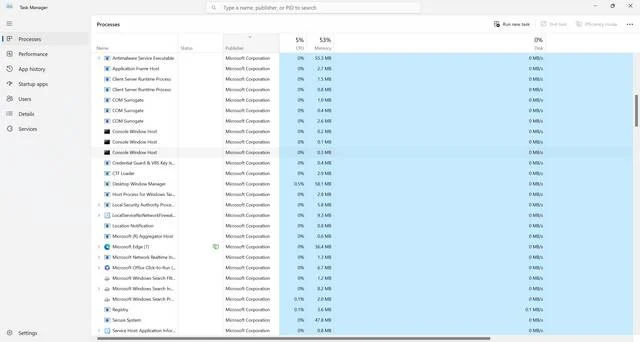
When you open the Task Manager on your Windows computer, you may notice a process called “Service Host: Program Compatibility Assistant Service” running in the background. This process might raise some questions and concerns, especially if you are not familiar with it. In this article, we will explore what the Program Compatibility Assistant Service is, why it is running in Task Manager, and how it affects your computer’s performance.
Understanding the Program Compatibility Assistant Service
The Program Compatibility Assistant Service is a built-in Windows service that helps users run older programs on newer versions of Windows. It automatically detects compatibility issues and suggests solutions to ensure that the program runs smoothly. This service is particularly useful for users who rely on legacy software or have programs that were designed for older versions of Windows.
The Program Compatibility Assistant Service works by analyzing the behavior of a program and comparing it to a database of known compatibility issues. If it detects any potential problems, it can apply compatibility settings or provide recommendations to resolve the issue. This service runs in the background to ensure that it is always available to assist with compatibility-related tasks.
Why Is the Program Compatibility Assistant Service Running in Task Manager?
Seeing the Program Compatibility Assistant Service running in Task Manager is completely normal and expected. It is a system process that starts automatically when you boot up your computer. The service remains active in the background to monitor and assist with compatibility issues as you use your computer.
While the Program Compatibility Assistant Service is designed to be helpful, it can consume system resources, especially if you have a large number of programs installed on your computer. However, the impact on performance is usually minimal, and most users will not notice any significant slowdowns.
If you are experiencing performance issues or suspect that the Program Compatibility Assistant Service is causing problems, it is worth investigating further. You can use the Task Manager to monitor the resource usage of this service and determine if it is consuming an excessive amount of CPU, memory, or disk resources.
Managing the Program Compatibility Assistant Service
If you find that the Program Compatibility Assistant Service is using a significant amount of system resources or causing performance issues, there are a few steps you can take to manage it:
- Disable Compatibility Assistant: If you rarely encounter compatibility issues or prefer to handle them manually, you can disable the Program Compatibility Assistant Service. To do this, open the Control Panel, go to “Programs,” and click on “Run programs made for previous versions of Windows.” From there, you can disable the compatibility assistant.
- Limit Compatibility Assistant’s Impact: If you want to keep the Program Compatibility Assistant Service enabled but reduce its impact on system resources, you can adjust its settings. Right-click on the Start button, select “Run,” and type “services.msc” to open the Services window. Locate the “Program Compatibility Assistant Service” in the list, right-click on it, and choose “Properties.” In the Properties window, you can change the startup type to “Manual” or “Disabled” to limit its impact.
- Scan for Viruses and Malware: In some cases, malware or viruses can disguise themselves as legitimate processes, including the Program Compatibility Assistant Service. It is always a good idea to scan your computer for malware using reliable antivirus software like Malwarebytes Free. This will help ensure that the Program Compatibility Assistant Service running on your computer is genuine and not a malicious program.
Conclusion
The Program Compatibility Assistant Service is an essential component of Windows that helps users run older programs on newer versions of the operating system. It runs in the background, monitoring for compatibility issues and providing solutions when necessary. While it may consume system resources, the impact on performance is usually minimal.
If you encounter performance issues or suspect that the Program Compatibility Assistant Service is causing problems, you can manage it by disabling or adjusting its settings. Additionally, it is always a good practice to scan your computer for malware to ensure that the service running is legitimate.
Understanding the Program Compatibility Assistant Service and its role in your computer’s performance can help you make informed decisions about managing it effectively. By taking the necessary steps to optimize its impact, you can ensure a smooth and efficient computing experience.

Join the discussion
0 commentsShare your experience or ask a question about this article.
Discussion
Start the conversation
Have a question or something useful to share? Add the first comment.