

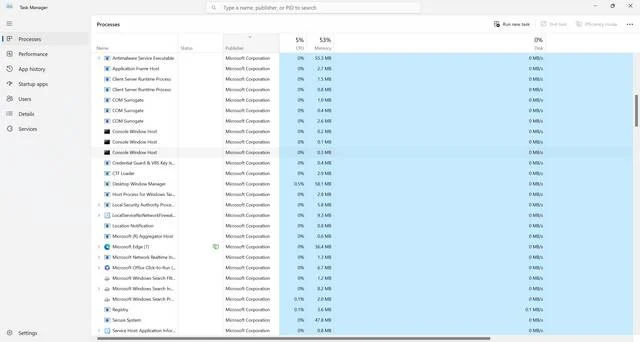
When you open the Task Manager on your Windows computer, you may notice a process called “Service Host: TCP/IP NetBIOS Helper” running in the background. This process, also known as “lmhosts.exe,” is an essential component of the Windows operating system. In this article, we will explore why this process is running, its functions, and how it impacts your computer’s performance.
Understanding TCP/IP NetBIOS Helper
The TCP/IP NetBIOS Helper service is responsible for providing support for NetBIOS over TCP/IP (Transmission Control Protocol/Internet Protocol) protocols. NetBIOS, which stands for Network Basic Input/Output System, is an API (Application Programming Interface) used by applications to access network services.
The NetBIOS protocol was widely used in earlier versions of Windows for file and printer sharing, as well as for network communication between computers. However, with the introduction of newer networking technologies, such as TCP/IP, the importance of NetBIOS has diminished.
The TCP/IP NetBIOS Helper service acts as a mediator between applications that still rely on NetBIOS and the modern TCP/IP protocol stack. It enables these applications to communicate over a TCP/IP network by translating NetBIOS requests into TCP/IP requests and vice versa.
Why Is It Running?
Even though NetBIOS is no longer as prevalent as it once was, the TCP/IP NetBIOS Helper service continues to run in the background for backward compatibility reasons. Some older applications and network devices may still rely on NetBIOS for certain functionalities, and disabling the service could cause compatibility issues.
Additionally, the TCP/IP NetBIOS Helper service is required for certain network features, such as the “Network Neighborhood” or “Network Discovery” in Windows, which allow you to browse and access shared resources on your local network.
While the service may not be actively used by most users, it remains enabled by default to ensure compatibility and support for legacy applications and network functionalities.
Impact on Performance
The TCP/IP NetBIOS Helper service is a relatively lightweight process that consumes minimal system resources. It typically runs in the background without causing any noticeable impact on your computer’s performance.
However, in rare cases, the service may malfunction or become corrupted, leading to high CPU or memory usage. If you notice unusually high resource consumption by the TCP/IP NetBIOS Helper process, it is recommended to investigate further to ensure there are no underlying issues.
If you suspect that malware or a virus may be disguising itself as the TCP/IP NetBIOS Helper process, it is crucial to run a thorough scan using reliable security software. We recommend using Malwarebytes Free to scan your system for any potential threats.
Disabling or Stopping the Service
While it is generally not recommended to disable the TCP/IP NetBIOS Helper service, there may be situations where you want to stop it temporarily or permanently. Here are the steps to disable the service:
- Open the Run dialog by pressing the Windows key + R.
- Type “services.msc” and press Enter to open the Services window.
- Scroll down and locate the “TCP/IP NetBIOS Helper” service.
- Right-click on the service and select “Properties.”
- In the Properties window, change the “Startup type” to “Disabled.”
- Click “Apply” and then “OK” to save the changes.
It is important to note that disabling the TCP/IP NetBIOS Helper service may cause compatibility issues with certain applications or network functionalities. Therefore, it is recommended to proceed with caution and only disable the service if you are certain it will not impact your system’s performance or functionality.
Conclusion
The TCP/IP NetBIOS Helper service, also known as “lmhosts.exe,” is an integral part of the Windows operating system. It enables backward compatibility for applications and network devices that rely on the NetBIOS protocol. While it may not be actively used by most users, disabling the service can potentially cause compatibility issues. It is generally recommended to leave the service enabled unless you have a specific reason to disable it. If you suspect any issues with the TCP/IP NetBIOS Helper process, it is advisable to run a scan using reliable security software like Malwarebytes Free to ensure your system’s safety.

Join the discussion
0 commentsShare your experience or ask a question about this article.
Discussion
Start the conversation
Have a question or something useful to share? Add the first comment.