

The Seurico Denture Silicone Reline Kit is being marketed as a revolutionary solution for denture wearers — promising comfort, perfect fit, and instant relief. But behind the glowing testimonials and bold promises lies a classic dropshipping scam. If you’re considering buying the Seurico Kit, stop and read this full breakdown first. This article exposes how the scam works, what the real product looks like, and what you should do if you’ve already been duped.
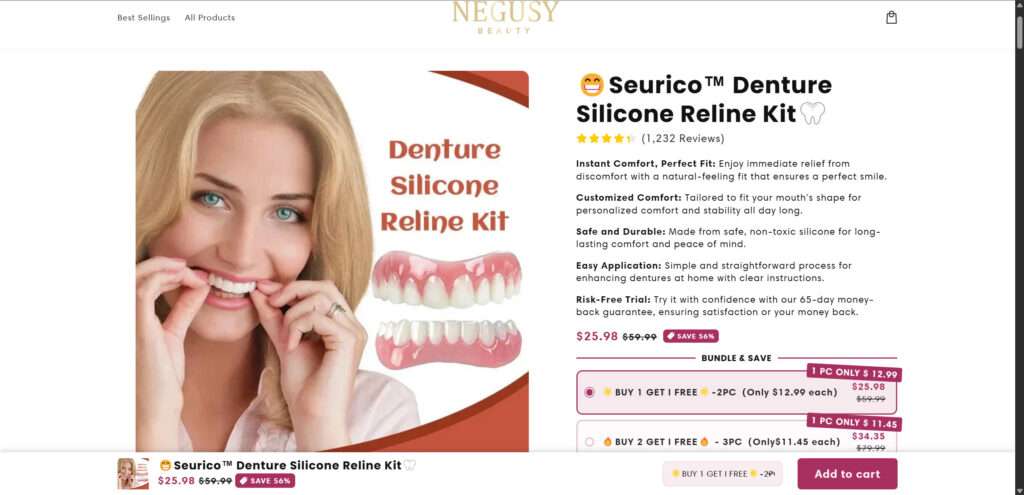
What Is the Seurico Denture Silicone Reline Kit?
The Seurico Kit is advertised as a soft silicone reline that you apply to your dentures at home. It claims to provide:
- Instant relief from sore spots
- A secure, customized fit
- Long-lasting comfort with non-toxic silicone
- A 65-day risk-free money-back guarantee
It’s sold under various promotions like:
- Buy 1 Get 1 Free
- Buy 3 Get 2 Free
- 56% to 70% OFF discounts
These offers are engineered to seem like amazing deals — and that’s exactly what the scammers are banking on.
Why Seurico Is a Scam
Seurico follows a proven dropshipping scam formula — one we’ve seen before under different names like Furzero, NESLEMY, and Minceetbien. Here’s how it works:
1. Fake Testimonials & Stock Images
The reviews on Seurico websites are fake. Photos are pulled from stock image databases. Names like “Lily Hall” and “Carlos Martinez” are used across other scam sites. There are no independent reviews from verified buyers.
2. Unrealistic Claims
No over-the-counter silicone kit can do what Seurico claims:
- Prevent long-term denture discomfort
- Offer professional-level dental performance at $10 per unit
- Fit perfectly without professional dental adjustment
3. Massive Price Cuts & Bundles
Offering the product for $8.99 or less per piece in “Buy 4 Get 3 Free” bundles is a psychological trick to get people to spend more — especially vulnerable seniors looking for dental relief.
4. No Customer Support or Refunds
Despite the flashy “65-Day Risk-Free Trial,” victims report:
- No customer service response
- No physical return address
- Excuses or silence when refunds are requested
5. Same Scam, Different Name
Seurico isn’t new — it’s just another skin for the same scam. The exact same product and description have appeared on scam sites under:
- Furzero Denture Silicone Reline Kit
- Minceetbien Soft Denture Kit
- NESLEMY Dental Fit Kit
The product is sourced from cheap Chinese manufacturers and shipped directly to you (dropshipping). It usually arrives in 2–3 weeks.
6. Low-Quality Product
When the product does arrive, buyers are shocked to receive:
- A tiny packet of low-grade silicone
- No clear instructions
- No results like in the ads
It’s often sticky, unstable, or completely ineffective — and in some cases, even unsafe.
How the Seurico Scam Works
Step 1: High-Pressure Ads
Facebook and TikTok ads show instant results, smiling seniors, and flashy phrases like “Enjoy a perfect smile in seconds.”
Step 2: Fake Reviews and Guarantees
They build trust using stock photos and scripted testimonials that never existed. All reviews are curated — no negative feedback allowed.
Step 3: You Place the Order
You pick a bundle deal and pay using your credit or debit card. Most sites don’t offer PayPal, which provides buyer protection.
Step 4: Weeks of Waiting
The product ships from China, taking 14–28 days. There’s no tracking or support.
Step 5: Poor Product Arrives
What you receive looks nothing like the website. It’s a basic DIY silicone pack — not medical-grade, and often missing key parts or directions.
Step 6: Refunds Denied
You email customer support — but:
- They don’t reply
- Or they say you must return it at your own cost to China
- Or they delay until your refund window expires
Who’s Behind Seurico?
There is no registered business entity called Seurico. No phone number. No business address. No legitimate tax or warranty information. These sites are:
- Run anonymously
- Hosted on new domains
- Managed by international scam rings who cycle through brand names
This is a repeat operation that has scammed thousands using different brand skins, always with the same playbook.
What To Do If You Ordered Seurico
1. File a Chargeback
- Contact your bank or card provider
- Report the transaction as fraud
- Request a chargeback immediately
2. Save Evidence
- Screenshots of the ad, product page, and your receipt
- Email confirmation and chat logs (if any)
3. Report the Scam
- Federal Trade Commission (FTC) — USA
- Better Business Bureau (BBB)
- IC3.gov — Internet crime center
- Your country’s consumer protection agency
4. Warn Others
- Post reviews on Trustpilot, Reddit, Facebook groups
- Share your story with scam-alert sites and dental forums
5. Watch for Other Scam Names
Seurico is just one. Be cautious of any dental product offering huge results, miracle comfort, and 50–80% discounts with no physical seller.
Final Warning: Stay Away from Seurico
The Seurico Denture Silicone Reline Kit is not safe, not effective, and not supported. It is part of a broader scam operation running multiple fake dental products through social media ads and scam stores.
There is no accountability, no real refund policy, and no value in the product.
If you need denture help, talk to a real dentist. Do not gamble with your health on fake silicone sold by anonymous scammers.
FAQs About Seurico Scam
Is the Seurico Kit FDA-approved or medically tested?
No. There is no evidence that Seurico is approved by any dental or medical authority. It is sold through unauthorized websites with no official certification.
Will I get my money back if I’m not satisfied?
Highly unlikely. Most buyers report ignored refund requests, delayed responses, or having to pay high international return fees.
Is this the same as Furzero or NESLEMY?
Yes. The exact same product and claims have been repackaged and sold under other scam names like Furzero, NESLEMY, and Minceetbien.
Can I trust the reviews on their website?
No. The reviews are fake, scripted, and use stock images. Always search for independent reviews outside the sales site.
How can I avoid falling for scams like this?
- Avoid unknown dental brands offering miracle results
- Check domain age and business registration
- Look for red flags like massive discounts, no contact info, and no third-party reviews
Protect your health. Protect your wallet. Share this article to help others stay safe from the Seurico scam.

Join the discussion
0 commentsShare your experience or ask a question about this article.
Discussion
Start the conversation
Have a question or something useful to share? Add the first comment.