

You may have received an unexpected email claiming you were selected to receive a $2.5 million donation grant from the “Sevim Arsel Foundation.” At first glance, it sounds generous and exciting. But beware: this is a well‑known scam that has tricked many people into revealing personal data or sending money. In this article you’ll discover exactly how this scam works, how to spot the red flags, and what to do if you’ve already engaged. Let’s get started.

Scam Overview
The so‑called Sevim Arsel Foundation scam email replicates a common advance‑fee or donation fraud. It uses the name of a real Turkish philanthropist, Semahat Sevim Arsel, to give credibility. The message alleges that recipients are among twenty individuals globally selected to receive a donation of $2,500,000 USD. It presents a fake foundation and claims share of a larger $50 million fund. The email urges the recipient to contact a supposed coordinator—often named Dr. Mesut Akin or Dr. Mehmet Koc—to process verification and release.
Although Semahat Sevim Arsel is indeed a real person (daughter of Vehbi Koç and founder of charitable activity), there is no known foundation under that name giving out such grants to random individuals. Scammers exploit her Wikipedia presence to lend legitimacy.
Multiple solo scam‑reporting sources and forum posts describe identical message patterns: recipients receive the text, with “$2,500,000 grant,” story of widow without heirs, selection via random internet or retail database, promises of culture or women empowerment funds. A common feature: directing recipients to a Wikipedia link about Semahat Sevim Arsel (so you think it’s real), though the foundation itself does not exist
Here is what the scam email might say:
Dear Beneficiary,
The management of the Sevim Arsel Foundation is pleased to inform you that you have been selected by our Board of Trustees as one of twenty individuals chosen to receive an annual donation grant. You have been awarded the sum of $2,500,000 to support the promotion of cultural understanding, the empowerment of women, and aid to those in need around you. The funds are also intended for your personal and business development.
Our foundation is committed to humanitarian growth, gender equality, and community support. This donation is part of a $50 million USD fund, approved by Turkish billionaire and philanthropist Mrs. Semahat Sevim Arsel, who founded this initiative. She has dedicated a portion of her wealth to charitable giving each year.
Mrs. Arsel has expressed her desire to donate her wealth to deserving individuals rather than let family disputes disrupt her legacy. As she stated: “I am an elderly widow without an heir. My wealth has become a source of conflict among my relatives. Rather than let it be a cause for chaos, I choose to share it with people I have never met, hoping it brings positive change before I leave this world.”
You can learn more about her here: https://en.wikipedia.org/wiki/Semahat_Sevim_Arsel
Recipients were selected globally through a random draw from online databases and retail transaction records. You are one of twenty individuals chosen to receive $2,500,000 USD in aid from the Sevim Arsel Foundation, as authorized by parliamentary decree.
To proceed with verification and processing, please contact our Grant Coordinator, Dr. Mesut Akin, via the email below
Why this scam works
Scam designers rely on several psychological ploys:
- Authority hijack: using a known philanthropist’s name (Semahat Sevim Arsel) to create a sense of legitimacy.
- Scarcity and urgency: claiming “only twenty individuals chosen” to trigger excitement and fear of missing out.
- Altruistic framing: promoting cultural understanding, women’s empowerment, community aid gives veneer of purpose.
- Impersonal mass targeting: random selection from vague “online databases” so no real criteria is needed—they can send to thousands of addresses.
- Respectable titles: assigning “Dr. Mesut Akin” or “Grant Coordinator”—seeming official.
- Anchoring to large sums: $2.5 million sounds life‑changing, making a one‑time request for fees seem plausible.
Known variants and evolution
Reports since at least 2021 show identical scam patterns, sometimes offering euros instead of USD, sometimes small variations in wording and names or contact email addresses (e.g. infosevimarselfoundation@gmail.com or els08721@gmail.com). The email subject lines often read “Congratulations” or “GRANT AWARD Notification” and spoof generic helpdesk domains. Investigation of IP addresses shows they originate from unrelated locations (e.g. Columbus, USA) not Turkey or official institutions.
Red flags summarized
- No official website or public reference to such a foundation exists
- Randomly emailed to recipients with no prior contact or application
- Request for verification leading to demands for bank details or fees
- Poor grammar and generic email account origins
- Use of Wikipedia link to seem official, rather than directing you to an actual foundation site
- Pressure tactics about secrecy or immediate action.
How The Scam Works
Here’s how the Sevim Arsel Foundation scam typically unfolds, broken into stages.
Step 1: Initial Email
The scam begins with an unsolicited email, often addressed vaguely (“Dear Beneficiary” or “Dear Recipient”) rather than your actual name. It announces selection for a donation grant—most commonly $2,500,000 USD. The message includes:
- Claim of being selected among twenty recipients worldwide
- Purpose of funds (cultural understanding, women empowerment, community support)
- Authority cited: parliamentary decree, Turkish billionaire
- Personal backstory: widow without heir chooses to donate
- Link to Wikipedia page about Semahat Sevim Arsel to lend credibility.
Step 2: Response Prompt
It instructs the recipient to reply or contact a “Grant Coordinator” (e.g. Dr. Mesut Akin or Mehmet Koc) via a provided email. The tone is friendly and official. There is no mention of fees yet, just verification.
Step 3: Verification & Personal Information
If you reply, the scammer requests personal data: your full name, home address, occupation, bank account details, perhaps copies of ID, sometimes tax info. They pose it as “verification” needed to release the funds.
Step 4: Advance‑Fee Request
Soon after submission of your details, they claim that before funds can be disbursed, you must pay a “processing fee”, “tax clearance”, “notary fee”, “wire transfer fee”, or “insurance cover”. This fee may range from a few hundred to a few thousand dollars. They justify it as legitimate operational cost.
Step 5: Multiple rounds of fees
Once the first fee is paid, they ask for more—often citing unexpected administrative issues: foreign exchange, currency conversion, legal documents, emergency payment. Each new demand is framed as urgent, or risk of losing the grant.
Step 6: Vanishing act
After payment(s), the scammers disappear. Emails bounce, contact disappears, funds never arrive. Any documents or checks they send are fake or fraudulent (e.g. counterfeit checks that bounce). They may stall for weeks asking for more “proof” or fees until communication stops.
Step 7: Identity theft, further fraud
In some cases, by collecting personal information early, they may use those details for identity theft. They may attempt to access bank accounts or open credit lines. This deeper damage can affect victims long after the initial interaction.
Why so effective
- A large money promise triggers emotional response
- Victims rationalize paying a small fee to claim a life‑changing sum
- Authority and story build trust quickly
- Complexity and vagueness prevent independent verification.
Real world impact
Countless victims globally report losing hundreds or thousands in fees. Some victims forward emails to scam tracking sites like ScamWatcher or email‑scam alert blogs. Scam monitoring sites note these emails are fraudulent and urge recipients not to respond or send money.
What to Do If You Have Fallen Victim to This Scam
If you have engaged with the Sevim Arsel Foundation scam email and shared information or paid fees, take these steps immediately:
- Stop all contact
Cease communications with the scammers. Do not reply or send any more money or documents. - Contact your bank or credit issuer
If you provided bank or payment account info, notify your bank immediately. Explain the situation and ask to freeze or close accounts if needed. Request fraudulent transaction reversals if possible. - Report to local authorities
File a report with your local police or cybercrime unit. Provide copies of the email exchange, payment receipts, and any related details. - Report to fraud‑reporting platforms
In Romania, you can contact ANSPDCP, Autoritatea Națională pentru Protecția Consumatorului, or CERT‑RO. Globally, use platforms like ScamWatcher, Scam Survivors, or email scam alert blogs to report the incident. This helps track scam patterns (Scam Alerts to keep you safe!, Scamwatcher). - Monitor credit reports and identity
If you provided personal identifiers, set up credit monitoring or identity theft protection. Watch for unfamiliar activity or new credit in your name. - Change passwords and secure email
In case you sent credentials, immediately change email and account passwords. Enable two‑factor authentication on any service with sensitive data. - Notify friends and family
Warn others, especially those who receive similar emails from you inadvertently, to avoid further spread or mutual targeting. - Keep documentation
Save all correspondence, payment confirmations, and attachments. These serve as evidence for police, banks, or legal claims. - Seek financial advice if large losses
If you lost significant sums, you may want to talk to a financial advisor or legal counsel about possible recovery options or insurance claims. - Spread awareness
Share your experience on relevant forums (reducing stigma) or consumer advisory sites to help others avoid the scam. Quoting your actual emails can help people recognise the variant.
Is Your Device Infected? Run a Free Malware Scan
Slow performance, constant pop-ups, or strange behavior? These are classic signs of a malware infection. The fastest way to find out is to scan your device with Malwarebytes Free — one of the most trusted malware removal tools available.
The free version detects and removes the most common threats, including:
- Adware — the cause of those annoying pop-ups
- Browser hijackers — unwanted redirects and changed homepages
- Trojans and spyware — hidden programs stealing your data
- Potentially unwanted programs (PUPs) — software you never asked for
👉 Select your device below — Windows, Mac, or Android — then follow the simple steps to download Malwarebytes, scan your system, and remove any threats it finds. The scan usually takes 5 to 20 minutes.
Run a Malware Scan with Malwarebytes for Windows
Malwarebytes is one of the most popular and trusted anti-malware tools for Windows — and it’s completely free for removing infections. It catches threats that many antivirus programs miss, including adware, browser hijackers, and trojans. Follow the steps below to scan and clean your PC in just a few minutes.
Download Malwarebytes
Click the button below to download the latest version of Malwarebytes for Windows from the official source. The free version is all you need — it will scan your computer and remove adware, browser hijackers, and other malicious software at no cost.
Download MalwarebytesOfficial installer for Windows 11 and 10. Your download starts right away.Want real-time protection? See Malwarebytes Premium Malwarebytes Free for WindowsScans and removes malware at no cost
-
Install Malwarebytes
When the download finishes, open your Downloads folder and double-click the MBSetup file. If Windows shows a User Account Control pop-up, click “Yes” to allow the installation.

Follow the On-Screen Prompts to Install Malwarebytes
The setup wizard will walk you through a few quick screens:
-
Choose where you’re installing the program — “Personal Computer” or “Work Computer” — then click Next.

-
Malwarebytes will now install on your device. This usually takes under a minute.

-
When installation is complete, the “Welcome to Malwarebytes” screen will open automatically.

-
On the final screen, click Open Malwarebytes to launch the program.

-
Enable “Scan for Rootkits”
Before scanning, turn on rootkit detection so Malwarebytes can find even the most hidden threats. Click the Settings gear icon on the left side of the screen.

In the settings menu, find “Scan for rootkits” and click the toggle so it turns blue.

Done? Click “Dashboard” in the left pane to return to the main screen.
Start the Scan
Click the blue Scan button. Malwarebytes will automatically update its virus database and start checking your computer for malware.

-
Wait for the Scan to Finish
The scan checks your entire system for browser hijackers and other malicious programs, so it can take 5 to 20 minutes depending on your computer. Feel free to do something else — just check back occasionally to see the progress.

-
Quarantine the Detected Threats
When the scan is done, you’ll see a list of everything Malwarebytes found — malware, adware, and potentially unwanted programs. Click the “Quarantine” button to remove all of them at once.

Malwarebytes will now remove the malicious files and registry entries and move them safely into quarantine.

-
Restart Your Computer
Some threats can only be fully removed after a reboot. If Malwarebytes asks you to restart, click Yes. Once you’re logged back in, Malwarebytes has finished removing the threats it found.

That’s it — your Windows PC is now clean of trojans, adware, and other malware, and should be back to running smoothly.
If you are still having problems with your computer after completing these instructions, then please follow one of the steps:
- Run a computer scan with ESET Online Scanner
- Ask for help in our Windows Malware Removal Help & Support forum.
Run a Malware Scan with Malwarebytes for Mac
Malwarebytes for Mac is a free on-demand scanner that removes the malware other security software tends to miss — adware, browser hijackers, and unwanted programs included. Cleaning an infected Mac with Malwarebytes has always been completely free, and it’s our go-to recommendation. Follow the steps below to scan and clean your Mac in just a few minutes.
-
Download Malwarebytes for Mac
Click the button below to download the latest version of Malwarebytes for Mac.
Download MalwarebytesOfficial installer for macOS. Your download starts right away.Want real-time protection? See Malwarebytes PremiumMalwarebytes Free for MacScans and removes malware at no cost -
Open the Malwarebytes setup file
When the download finishes, open your Downloads folder and double-click the setup file to begin the installation.
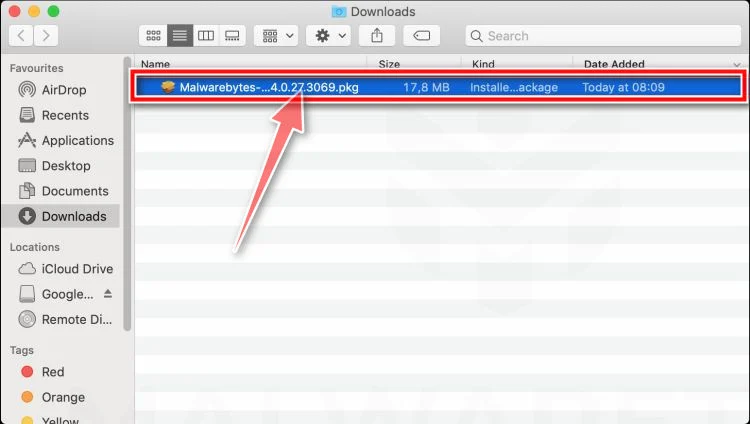
-
Follow the On-Screen Prompts to Install Malwarebytes
The Malwarebytes for Mac Installer will guide you through a few quick screens. Click “Continue” and keep following the prompts until the installation completes.
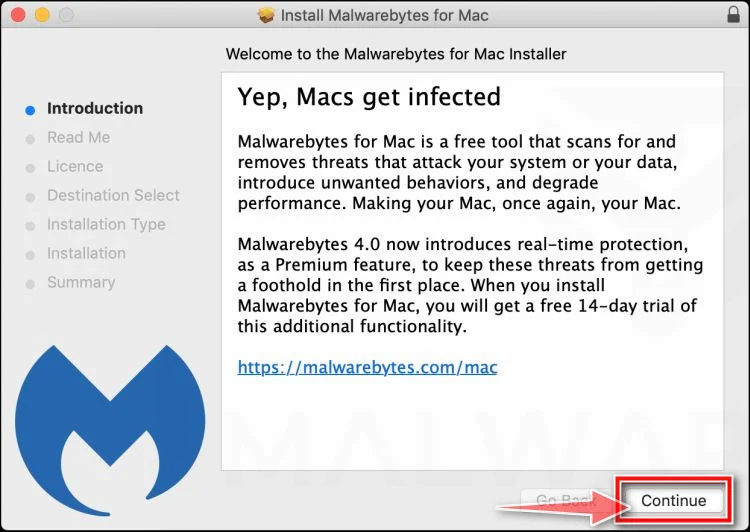
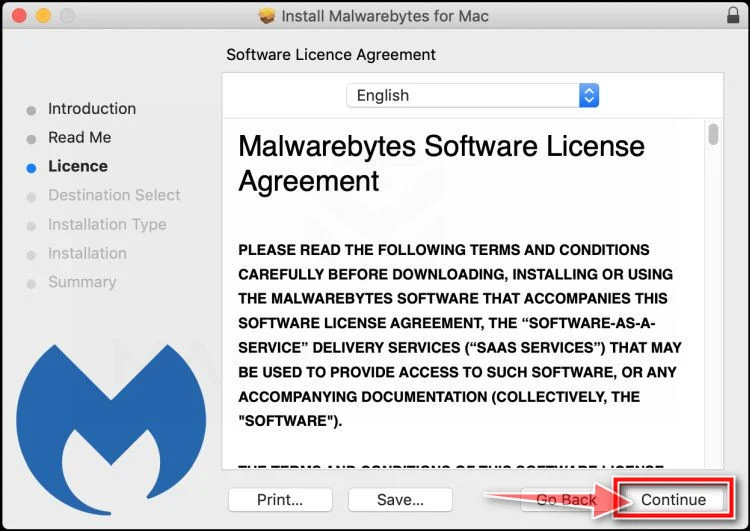
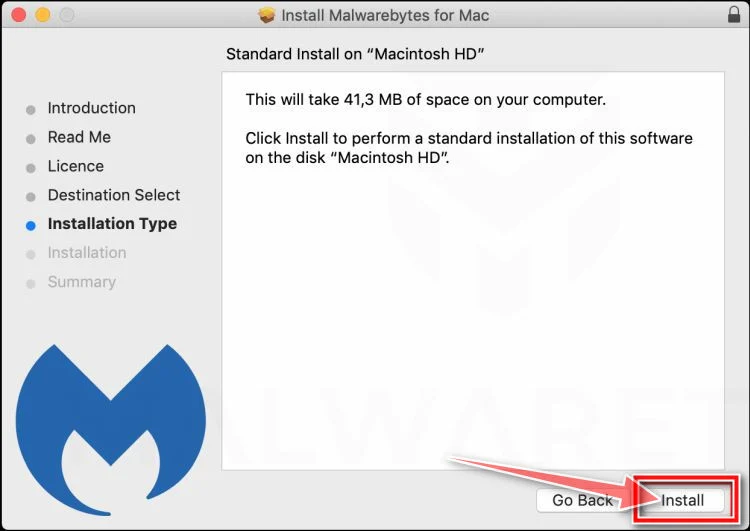
When the installation is complete, Malwarebytes opens to the Welcome to Malwarebytes screen. Click “Get started“.
-
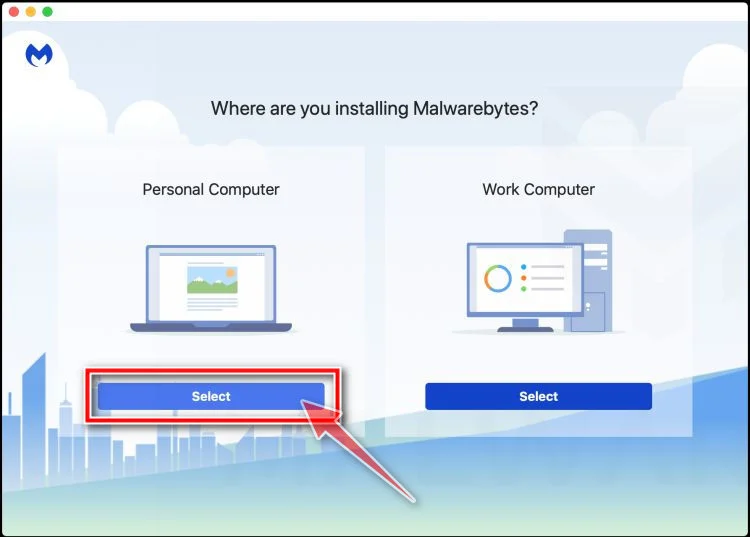
Select “Personal Computer” or “Work Computer”
Malwarebytes will ask what type of computer you’re installing it on. Click either Personal Computer or Work Computer, whichever applies.
-
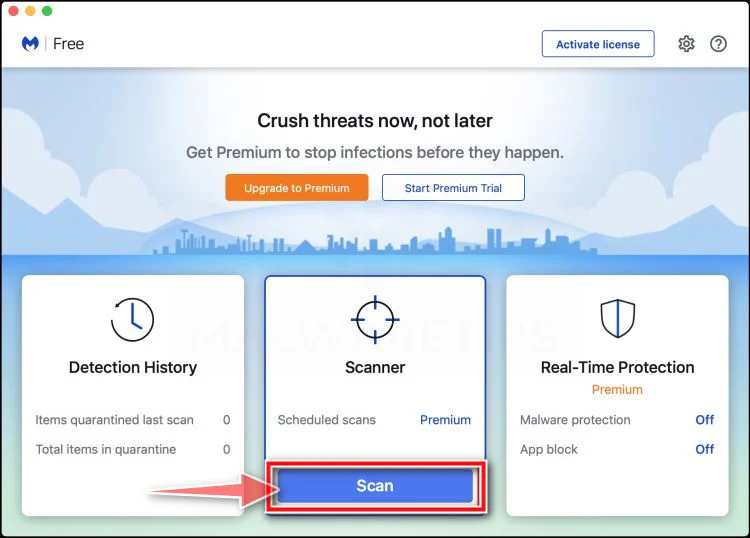
Start the Scan
Click the “Scan” button. Malwarebytes will automatically update its detection database and begin checking your Mac for malware.
-
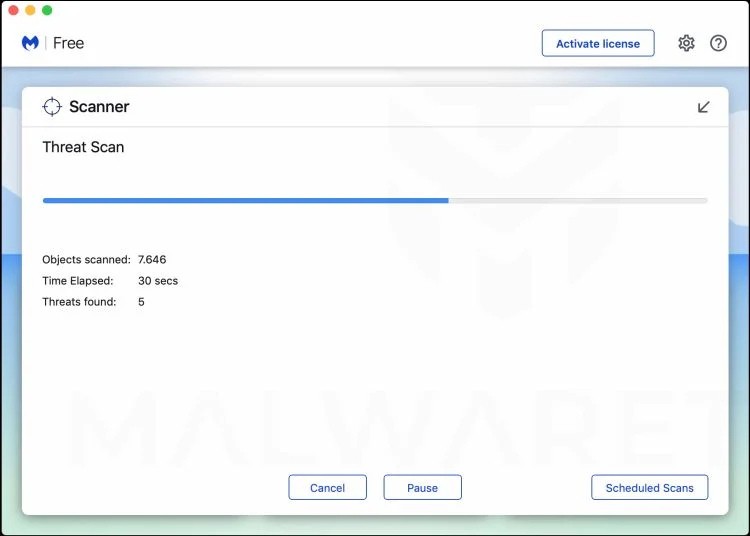
Wait for the Scan to Finish
Malwarebytes will scan your Mac for adware, browser hijackers, and other malicious programs. This can take a few minutes, so feel free to do something else — just check back occasionally to see the progress.
-
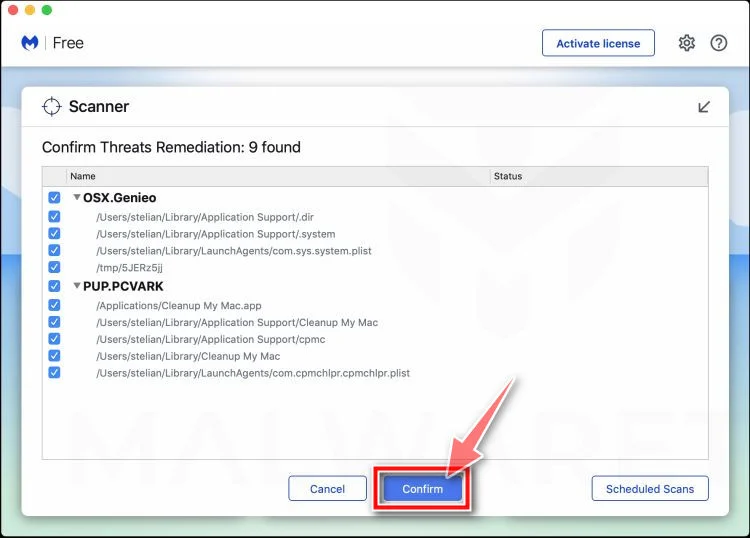
Quarantine the Detected Threats
When the scan is done, you’ll see a list of everything Malwarebytes found. Click the “Quarantine” button to remove all the threats at once.
-
Restart Your Mac
Malwarebytes will now remove all the malicious files it found. Some threats can only be fully removed after a reboot — if Malwarebytes asks you to restart, allow it. Once you’re logged back in, your Mac is clean.
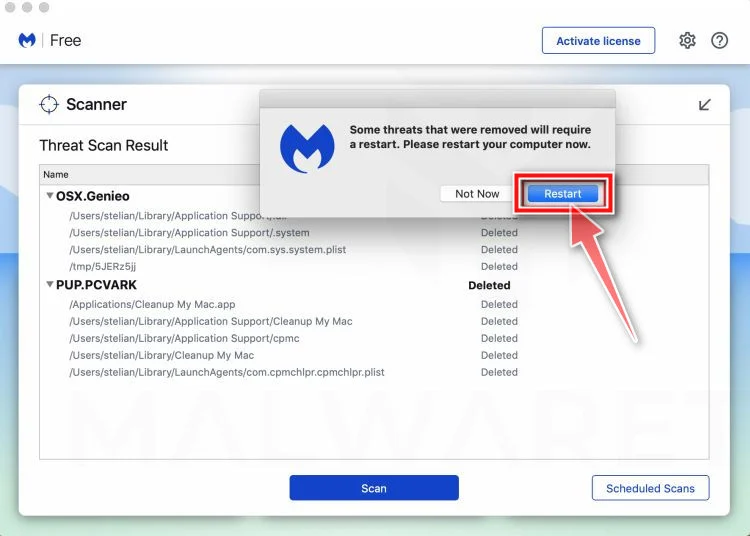
That’s it — your Mac is now free of adware, rogue browser extensions, and other potentially harmful software.
If you are still experiencing problems while trying to remove a malicious program from your computer, please ask for help in our Mac Malware Removal Help & Support forum.
Run a Malware Scan with Malwarebytes for Android
Malwarebytes for Android automatically detects and removes dangerous threats like malware and ransomware so you don’t have to worry about your most-used device being compromised. Aggressive detection of adware and potentially unwanted programs keeps your Android phone or tablet running smooth.
-
Download Malwarebytes for Android.
You can download Malwarebytes for Android by clicking the link below.
Get Malwarebytes for AndroidOpens Google Play in a new tab.Want real-time protection? See Malwarebytes Premium for AndroidMalwarebytes for AndroidScans your phone and removes malware at no cost -
Install Malwarebytes for Android on your phone.
In the Google Play Store, tap “Install” to install Malwarebytes for Android on your device.

When the installation process has finished, tap “Open” to begin using Malwarebytes for Android. You can also open Malwarebytes by tapping on its icon in your phone menu or home screen.

-
Follow the on-screen prompts to complete the setup process
When Malwarebytes will open, you will see the Malwarebytes Setup Wizard which will guide you through a series of permissions and other setup options.
This is the first of two screens that explain the difference between the Premium and Free versions. Swipe this screen to continue.
Tap on “Got it” to proceed to the next step.
Malwarebytes for Android will now ask for a set of permissions that are required to scan your device and protect it from malware. Tap on “Give permission” to continue.
Tap on “Allow” to permit Malwarebytes to access the files on your phone.
-
Update database and run a scan with Malwarebytes for Android
You will now be prompted to update the Malwarebytes database and run a full system scan.

Click on “Update database” to update the Malwarebytes for Android definitions to the latest version, then click on “Run full scan” to perform a system scan.

-
Wait for the Malwarebytes scan to complete.
Malwarebytes will now start scanning your phone for adware and other malicious apps. This process can take a few minutes, so we suggest you do something else and periodically check on the status of the scan to see when it is finished.

-
Click on “Remove Selected”.
When the scan has been completed, you will be presented with a screen showing the malware infections that Malwarebytes for Android has detected. To remove the malicious apps that Malwarebytes has found, tap on the “Remove Selected” button.

-
Restart your phone.
Malwarebytes for Android will now remove all the malicious apps that it has found. To complete the malware removal process, Malwarebytes may ask you to restart your device.
That’s it — your Android phone is now clean — no more malicious apps, adware, or browser redirects.
If you are still having problems with your phone after completing these instructions, then please follow one of the steps:
- Restore your phone to factory settings by going to Settings > General management > Reset > Factory data reset.
- Ask for help in our Mobile Malware Removal Help & Support forum.
Stay Protected: Block Ads and Malicious Sites
Now that your device is clean, keep it that way. Most infections start with a malicious ad or a fake download button — so blocking them at the source is your best defense.
We recommend AdGuard, which blocks malicious ads, phishing pages, and dangerous redirects before they can reach you.
👉 Download AdGuard and browse safely
Frequently Asked Questions About the Sevim Arsel Foundation Scam Email
1. What is the Sevim Arsel Foundation scam email?
The Sevim Arsel Foundation scam email is a fraudulent message claiming that you have been chosen to receive a $2.5 million donation grant from a non-existent charity allegedly founded by Turkish billionaire Semahat Sevim Arsel. The email appears legitimate, often linking to a real Wikipedia page about Semahat Sevim Arsel to gain credibility. However, there is no such foundation, and no genuine grants are being distributed this way. The main goal of the scam is to trick recipients into sharing personal information or sending money under false pretenses.
2. Is there a real Sevim Arsel Foundation giving away money?
No. While Semahat Sevim Arsel is a real Turkish philanthropist and member of the Koç family, there is no official foundation that gives out unsolicited grants to random individuals via email. Legitimate philanthropic organizations do not award large sums of money without prior application, verification, and official communication through secure channels.
3. How can I identify a Sevim Arsel scam email?
Common red flags include:
- Generic greetings like “Dear Beneficiary” instead of your name.
- Promise of a large sum of money ($2.5 million) for no clear reason.
- Use of free email domains such as Gmail, Yahoo, or Outlook instead of an official foundation website.
- A link to Wikipedia instead of an official organizational site.
- Spelling and grammar errors in the email text.
- Requests for personal data, bank account details, or payment for “processing fees.”
- Urgency or secrecy requests to push you into acting fast without verifying.
If you see any of these signs, the email is likely a scam.
4. What happens if I reply to the scam email?
If you respond, the scammer will typically:
- Request personal details (name, address, occupation, bank information).
- Ask for copies of ID or passport under the guise of “verification.”
- Eventually demand an advance fee for taxes, legal documents, or fund release.
- Possibly attempt identity theft or further fraud using your information.
These emails never lead to a legitimate grant. Instead, victims risk financial loss and stolen personal data.
5. Can scammers actually access my bank account with just my information?
If you only share your name and email, they likely cannot access your bank account directly. However, if you provide account numbers, copies of your ID, or online banking credentials, scammers can use this information for identity theft, phishing attacks, or unauthorized transactions. Never send sensitive data to unverified sources.
6. I already sent money to the scammers. Can I get it back?
Unfortunately, money sent to scammers is often difficult to recover, especially if transferred via wire services, cryptocurrency, or gift cards. However, you should:
- Contact your bank or payment provider immediately to attempt a recall or dispute.
- File a fraud report with your local authorities and cybercrime units.
- Notify consumer protection agencies and fraud-reporting websites to help track the scammers.
7. What should I do if I received the Sevim Arsel scam email but didn’t respond?
If you received the email but took no action:
- Do not reply or click any links in the message.
- Mark the email as spam or phishing in your inbox.
- Report it to your email provider and fraud-reporting platforms.
- Stay alert for future phishing attempts, as your email address may now be on scammers’ target lists.
8. How do scammers make these emails look legitimate?
Scammers often:
- Use the name of a real philanthropist to gain trust.
- Include official-sounding titles like “Grant Coordinator” or “Board of Trustees.”
- Mention government approvals or parliamentary decrees to seem authentic.
- Link to real Wikipedia pages instead of fake sites to avoid suspicion.
- Use convincing language about charity and humanitarian goals.
All these tactics are designed to disarm skepticism and lure victims into a false sense of security.
9. How can I protect myself from similar email scams?
Follow these safety measures:
- Never respond to unsolicited emails offering large sums of money.
- Verify the legitimacy of any foundation or donor by checking official websites or trusted news sources.
- Avoid clicking on links or downloading attachments from unknown senders.
- Use email filters and antivirus software to block phishing attempts.
- Educate yourself and others about common online scams to stay informed.
10. Who can I report the Sevim Arsel scam email to?
You can report this scam to multiple entities:
- Your email provider (Gmail, Outlook, Yahoo, etc.) to block the sender.
- Local police or cybercrime agencies for fraud documentation.
- Consumer protection organizations such as the FTC (US), Action Fraud (UK), or national equivalents.
- Scam reporting websites like ScamWatcher, Scam Survivors, or PhishTank.
- CERT or anti-phishing centers in your country to help track and shut down the scammer’s operations.
Reporting helps authorities gather evidence and warn others about the scam.
The Bottom Line
This brief conclusion summarises and leaves the reader with a clear takeaway and motivational closing.
The Sevim Arsel Foundation scam email is a fraudulent scheme that exploits the name of a real philanthropist to offer fake $2.5 million grants. Despite the compelling story and official tone, the foundation does not exist, and no legitimate grants are awarded this way. Victims who respond are asked for bank details, processing fees, or personal documentation—and once they pay or share information, everything vanishes.
If you receive such an email, treat it as a phishing scam. Do not reply, do not send money, do not provide sensitive data. Legitimate charitable grants are not delivered in unsolicited messages to random recipients. Stay vigilant, verify independently, and trust your instincts.
By reading this article, you now know how the scam works, what the warning signs are, and exactly what to do if you’ve been targeted. Share this information to help others avoid becoming victims. Scammers rely on secrecy and fear—together, awareness is our best defense.
Stay safe and informed.

Join the discussion
0 commentsShare your experience or ask a question about this article.
Discussion
Start the conversation
Have a question or something useful to share? Add the first comment.