

Shed clearance sales seem like an excellent opportunity to get a high-quality storage shed at a fraction of the cost. The promise of massive discounts on sheds from top brands like Rubbermaid, Lifetime, Keter, and more is undoubtedly enticing. However, increasingly, these too-good-to-be-true deals are turning out to be outright scams designed to prey on unsuspecting consumers.
This detailed exposé will uncover how shed clearance sale scams operate, the tactics they use, and most importantly, how to protect yourself from falling victim. With online shopping expanding rapidly, customers must stay vigilant against frauds masquerading as legitimate retailers. This guide will provide the insights you need to avoid these shed clearance sale scams.
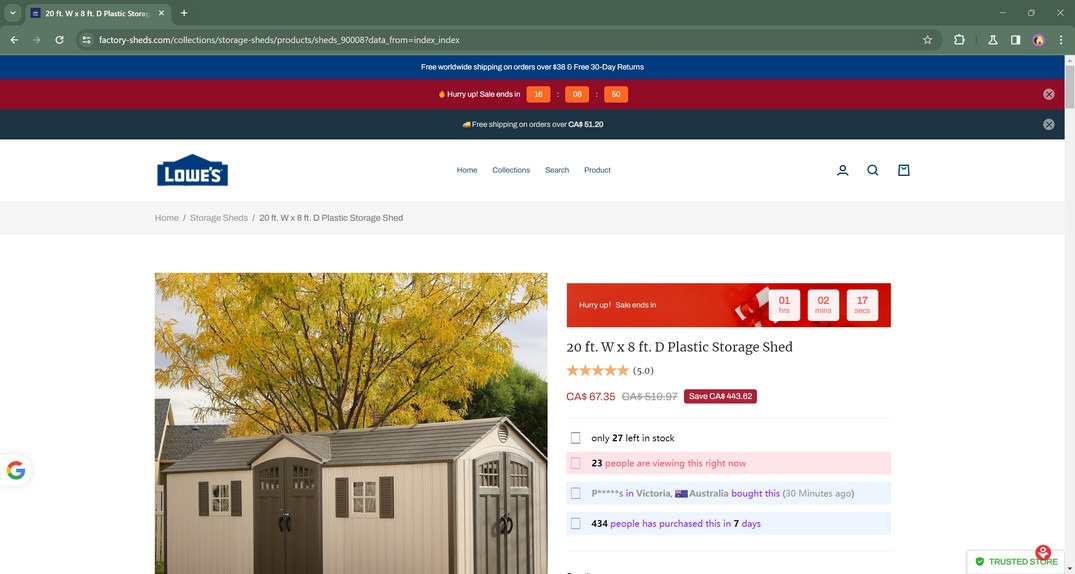
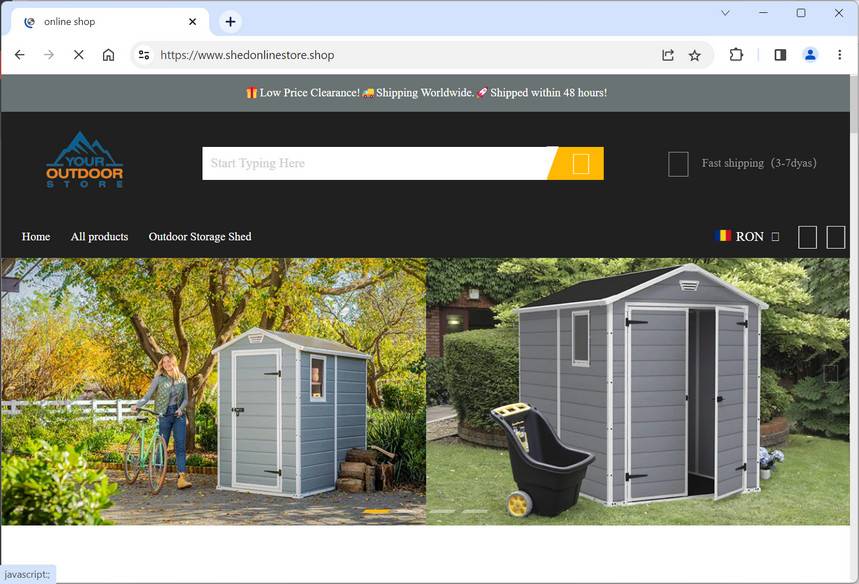
Shed Clearance Sale Scam Overview
Shed clearance sale scams typically begin with online advertisements on social media platforms or search engines. The ads promote unbelievable discounts on storage sheds – often up to 85-90% off retail prices. Brands like Suncast, Lifetime, Arrow, and Best Barns are commonly used to lend credibility. Phrases like “limited time only,” “massive sale,” and “clearance prices” create a sense of urgency.
When a customer clicks on these ads, they are directed to a website selling sheds at impossibly low prices. The website has all the markers of an authentic retailer – product images, company logo, shipping information, contact details, and more. However, subtle inconsistencies reveal their scam nature upon closer inspection.
Once customers are lured in by the prospects of massive savings, scammers employ various tactics to obtain payment. Many request upfront credit card payments for quick delivery. Others collect personal information like names, addresses, and phone numbers under the pretext of arranging doorstep delivery.
In most cases, customers who place orders never receive the promised shed. At best, victims get a flimsy, inferior quality product that barely resembles the advertised shed. More often, victims are left empty-handed – with no shed and their money stolen by scammers.
These scam websites vanish quickly once enough victims have been duped. They resurface under new domain names and repeat the same shed clearance sale scam targeting new victims. Staying ahead of authorities requires scammers to constantly change identities and domains.
Common Tricks Used in Shed Clearance Sale Scams
Shed clearance scammers use clever psychological tricks and technological tactics to execute their fraud. Here are some common techniques deployed to rip off customers:
- Fake limited-time discounts and markdowns to create a false sense of urgency. Countdown timers, “sale ending soon” notices, and other pressures force hasty purchase decisions.
- Lists well-known shed brands like Keter, Suncast, and Rubbermaid to piggyback on their reputation and credibility.
- High-quality website templates, stock photos, and polished copy to appear like a legitimate online retailer at first glance.
- Social proof tactics like fake reviews and trust badges to win over skeptical customers.
- Limited contact information like email-only customer service to avoid direct interaction with victims.
- Fake claims of inventory shortages, limited supplies, and one-time clearance events to suggest exclusivity.
- Credit card processors and payment mechanisms that redirect funds to scammer’s accounts or countries.
- Quick domain changes, identity shifts, and other techniques to stay anonymous, untraceable, and evade law enforcement.
Most Common Victim Experiences in Shed Clearance Sale Scams
Here are some of the most frequent outcomes that victims of shed clearance sale scams experience:
- Paying upfront but never receiving the shed or getting an indefinite shipping runaround.
- Receiving a shoddy, low-grade shed made with inferior materials like thin metal or plastic instead of the advertised premium wooden shed.
- Getting a small plastic kids playhouse barely 3-4 ft. tall after ordering a full-size 8×10 ft. metal storage shed.
- Shed breaking apart or collapsing within days or weeks due to poor construction and materials.
- Dealing with a seller that disappears after receiving payment. No way to contact them regarding failed delivery or getting a refund.
- Phony tracking information showing the shed is perpetually “in transit” but never arriving at the destination.
- Credit card payments processed and cleared but shed never ships out from the seller.
- Personal information like names, addresses, and phone numbers getting sold to other scammers resulting in more spam and fraud.
- Being completely unable to locate the seller due to fake business addresses, disconnected phone numbers, and deactivated email addresses.
- Significant financial losses from payments made for sheds that are never delivered.
Red Flags to Spot Shed Clearance Sale Scams
While scammers are undoubtedly cunning, their websites and offers do contain red flags that can tip off wary customers. Watch out for these signs that indicate a potential shed clearance sale scam:
- Prices that are drastically lowered, like 85% off or more, compared to regular retailer prices. Such steep discounts are almost always deceitful.
- Countdown timers or high-pressure text like “Hurry! Only 3 sheds remaining” to force quick purchase decisions.
- Contact information limited to just an email address with no physical business address or working customer service number.
- Typos, grammatical errors, and other basic mistakes throughout the website and in product listings.
- Generic-soundingbusiness and domain name like “ShedsDirectCompany” or “ShedsSalesShop” rather than a distinctive brand name.
- Limited selection focused heavily on discounts and deals rather than a wide range of shed models and accessories.
- Credit card payments mandatorily required upfront before order processing and delivery.
- Website was very recently registered, often within the past 1 year or less as per Whois domain lookup.
- No business registrations or certifications from Better Business Bureau, local state authorities, etc.
- No refund policy whatsoever or refusal to provide refunds under any circumstances.
- No reviews on the website or anywhere else online from previous customers.
How Shed Clearance Sale Scams Work
Now that we’ve covered a broad overview, let’s take a closer look at the nitty-gritty details on how these shed clearance scams operate at each step:
1. Crafting Convincing Scam Websites
The process begins with the scam artists creating fake websites advertising clearance shed sales. They invest significant time into making these websites look authentic and believable to future victims. Here are some of the tactics used in designing their websites:
- Registering domain names like UltimateShedDeals.com or MegaShedSales.com that include keywords buyers commonly search for.
- Purchasing premium website templates that mimic the look and feel of real eCommerce stores.
- Adding a professional logo, compelling copy, and high-quality product photos to build trust.
- Including customer service contact pages with email addresses or online forms to make customers feel supported.
- Adding fake badges like “BBB accredited” or “McAfee secure” to boost perceptions of legitimacy.
- Plagiarizing content like FAQs and policies from real shed sellers to look more credible.
- Building basic company profiles on LinkedIn, Twitter, and Facebook to expand their web presence.
- Creating fake blogs with shed buying guides and recommendations to indirectly promote their scam.
2. Luring Victims with Social Media Ads
The next step is running ads on social networks like Facebook, Instagram, and Pinterest to drive traffic to their websites. Scammers leverage these platforms for the huge audiences and advanced targeting capabilities.
- Purchasing cheap sponsored posts and ads targeting users interested in gardening, home improvement, DIY projects, and backyard sheds.
- Writing enticing ad copy hyping up clearance events, limited-time-only deals, and closeout discounts on premium shed brands.
- Including urgency triggers like flash sales, one-time offers, and other tactics to prompt impulse purchases.
- Frequently testing new ads and keywords to maximize website clicks at the lowest cost.
- Using video and image ads since they capture more attention and interest than plain text ads.
- Masking links so the landing page URL looks legitimate rather than revealing the scammy domain name.
- Paying for ads globally without geographic limits to access the widest possible victim pool.
3. Convincing Shoppers to Purchase
Once potential victims land on the fake clearance sale websites, scammers shift to persuading them to complete their purchase. Their site experience and ordering process is designed to overcome doubts and skepticism.
- Displaying countdown timers or limited quantities available to suggest acting fast before the deals sell out.
- Showcasing impressive discounts of up to 85-90%, far deeper than any legitimate retailer could offer.
- Tacking on extra fees for delivery or other services during checkout to inflate profits.
- Removing consumer protection measures like free returns or refund eligibility to maximize revenue.
- Offering an option for customers to pay the full amount upfront for faster processing and delivery.
- Using temporary credit card processors that funnel payments to the scammers before shutting down.
- Limiting contact options to anonymous email addresses or web forms to avoid probing questions.
- Upselling extra warranties, accessories, and services to squeeze out maximum dollars per order.
4. Collecting Payments and Disappearing
The final step occurs once victims are convinced to complete their purchase on the phony clearance sale websites. Scammers collect credit card payments or personal information and then vanish without delivering the promised sheds.
- Use temporary merchant accounts with banks to accept credit card payments before shutting them down.
- Process payments through third-party processors like Stripe that offer little fraud protection.
- Provide fake order confirmation emails with made-up tracking numbers that never update.
- Go silent and stop responding to customer emails or queries about delayed shipments.
- Take advantage of banks’ chargeback time limits to avoid refunding.
- Leave negative reviews blaming customers for payment failures to dissuade chargebacks.
- Switch web hosts and domain registrars frequently to stay off authorities’ radar.
- Legally register companies under layers of corporate shells to hide identities.
- Move funds out of compromised payment accounts quickly to avoid seizure.
- Rebrand under new company names and websites when discovered.
What To Do If You Fall Victim to a Shed Clearance Sale Scam
Here are the vital steps to take immediately if you suspect you’ve fallen prey to a fake shed clearance sale:
Step 1 – Notify Your Bank and Payment Processor
The moment you suspect a scam, contact your bank and payment processor, (credit card issuer, PayPal, etc). Inform them regarding the potentially fraudulent charges. Place a hold on any pending transactions made to the seller. Also request a chargeback on cleared payments if still within the allowable time limits.
Providing these details will help strengthen your case:
- Date ordered and amount paid
- Seller website and transaction details
- Any email or advertising links related to the purchase
- Reasons you believe it was a scam (no delivery, fake site, etc.)
- Efforts taken so far to contact the seller (if any)
The quicker you report, the higher the likelihood of recovering lost funds through your bank or payment provider’s fraud protections.
Step 2 –Mark All Associated Emails as Spam
Search your inbox for any emails related to this suspicious shed transaction – order confirmations, shipping notices, etc. Mark all of these emails as spam or junk. This will prevent you from accidentally clicking any malicious links the scammers may have inserted into those messages.
Also set up email filters to delete or auto-discard any future emails from the scammer’s domain name directly into your spam folder. Cut off their digital access to you.
Step 3 – Track Down Payment Merchant
Many scam websites do not handle payments directly but route it through third-parties like Stripe, PayPal, etc. See if you can determine the underlying payment provider or merchant bank from your order confirmation email and transaction records.
Contact their fraud department to potentially reverse the charges and have them scrutinize the seller for violating policies. Provide them the seller’s website, domain registrar, web host, and any other relevant details you uncovered.
Payment providers have an obligation to vet merchants using their platforms. Alerting them can get dodgy sellers blocked faster.
Step 4 – Issue Chargebacks if Needed
If your bank or payment processor does not provide a refund, submit chargeback requests. Chargebacks allow reversing transactions when goods or services promised were never delivered.
Most credit card providers and payment services have chargeback eligibility periods typically ranging from 90-120 days from the original payment date. Act swiftly within these thresholds for the best chance of successful chargebacks.
Follow your bank or payment service’s chargeback dispute process providing all supporting details of the scam – proof of payment, written communication with the seller, and the circumstances that led you to believe it was fraudulent. Reputable providers take chargeback evidence seriously and will validate your scam claims.
Step 5 – Block Associated Accounts
Scammers frequently use avenues like social media to advertise clearance sales and interact with potential victims.
Review your social media history for any accounts that contacted you regarding the fraudulent shed offer – Facebook pages that advertised the deal, Instagram sellers that messaged you, etc. Block these accounts fully and report them for suspension to prevent the scam spreading further.
Step 6 – Secure Personal Information
Next, check if you shared any sensitive personal information – like your address or government ID details – with the scammers when you placed the order.
If yes, take safeguards immediately to prevent misuse:
- Place fraud alerts and credit freezes with credit bureaus like Equifax and Experian.
- Monitor credit reports and bank statements for signs of identity theft.
- Wisely share personal details only with reputable businesses you fully trust going forward.
Step 7 – Report the Scam
The final step is to report the shed clearance sale scam to relevant authorities so they can start investigations and consumer awareness efforts:
- Complain to the Federal Trade Commission (FTC) about the deceptive business practice.
- Report the seller’s website to scam warning services like Ripoff Report and BBB Scam Tracker.
- File police complaints with the FBI’s Internet Crime Complaint Center (IC3) or local law enforcement.
- Submit details to domain registrars and web hosting companies so they scrutinize the seller for policy violations.
- Warn other consumers about the scam by posting reviews describing your experience on retail and review sites.
The more complaints authorities receive, the sooner illegal operators can be shut down to prevent further victimization.
Frequently Asked Questions about Shed Clearance Sale Scams
What is the Shed Clearance Sale Scam?
The Shed Clearance Sale Scam is a fraudulent scheme where scammers create fake ecommerce websites advertising major discounts on storage sheds, sometimes up to 85-90% off. They use online ads and misleading claims of liquidation sales or limited-time deals to lure customers. Victims end up paying for sheds that are never delivered.
How do scammers advertise these fake sales?
Scammers rely heavily on Facebook ads, Google search ads, and Instagram sponsored posts to promote their clearance sale websites. The ads contain enticing offers, deep discounts, and high-pressure tactics urging quick action before sales end.
What techniques do they use to make their websites look real?
These scam websites are designed carefully to look like genuine online stores. Scammers use stolen photos, polished copy, fake trust badges, and legitimate business templates. Subtle signs like grammatical errors can give them away upon closer inspection.
Should I trust extremely low prices like 85% off on sheds?
No, absurdly steep discounts are a big red flag. No legitimate retailer can offer such dramatic 85-90% price cuts on high-value sheds and remain profitable. Discounts beyond 30-40% off regular prices are highly suspicious.
What happens when I order a shed from their website?
In most cases, victims that place orders never get the shed but lose their money. At best, they receive a low-quality shed made from cheap materials that does not match the advertised product.
Can I get a refund if I realize I was scammed?
You should immediately contact your bank and payment provider to halt transactions and request refunds. Reporting the fraud quickly gives the best chance of reversing payments. You can also submit chargeback requests within the allowed time limits, typically 90-120 days.
Should I provide my personal information when ordering?
No, avoid sharing details like your address or government IDs with unfamiliar websites, especially those with unusually low prices. Scammers can misuse your information for identity fraud. Only provide such data to trusted retailers that you fully verify.
How can I spot these scams before ordering a shed?
Watch for red flags like prices too good to be true, high-pressure tactics, fresh web domains, no physical address, grammatical errors, and limited contact options. Do your research on the company first and don’t fall for unrealistic discounts. If it looks fishy, trust your instincts.
Where can I report these fake shed sellers?
Notify relevant authorities like the FTC, IC3, BBB, domain registrars, etc. and post scam warnings online. This helps curb the scammers and prevents more victims. The more reports against a fraudulent website, the quicker it can be taken down.
Conclusion
Shed clearance sale scams are easy to fall for due to convincing websites, polished ads, and promise of unbelievable discounts up to 85-90% off or more. However, customers who place orders either receive shoddy sheds or nothing at all.
Scammers rely heavily on social media advertising and false limited-time offers to give their deals legitimacy. High-pressure sales tactics and limited contact options make it difficult for victims to unravel the scams before losing money.
If you do become a victim, immediately contact banks, report to authorities, and take steps to recover lost funds. Be vigilant for these scam red flags when shopping online, and exercise caution before purchasing sheds available at unusually low clearance prices.

Join the discussion
0 commentsShare your experience or ask a question about this article.
Discussion
Start the conversation
Have a question or something useful to share? Add the first comment.