

In recent weeks, a suspicious “therapy” device called the SIENOVA Portable Lymphatic Drainage Therapy Device has become extremely popular on social media. Advertised as a revolutionary 2-in-1 therapy that enhances lymphatic detox, boosts circulation, reduces edema and more, this deceptive product is being aggressively marketed across platforms like Facebook, Instagram and TikTok using fake reviews and misleading health claims.
But here’s the reality: the SIENOVA device is nothing more than a cheap massager purchased from China in bulk then resold at an outrageous markup. This article will uncover the truth about this product, explain exactly how the scam works and provide steps you can take if you have fallen victim to false promises.
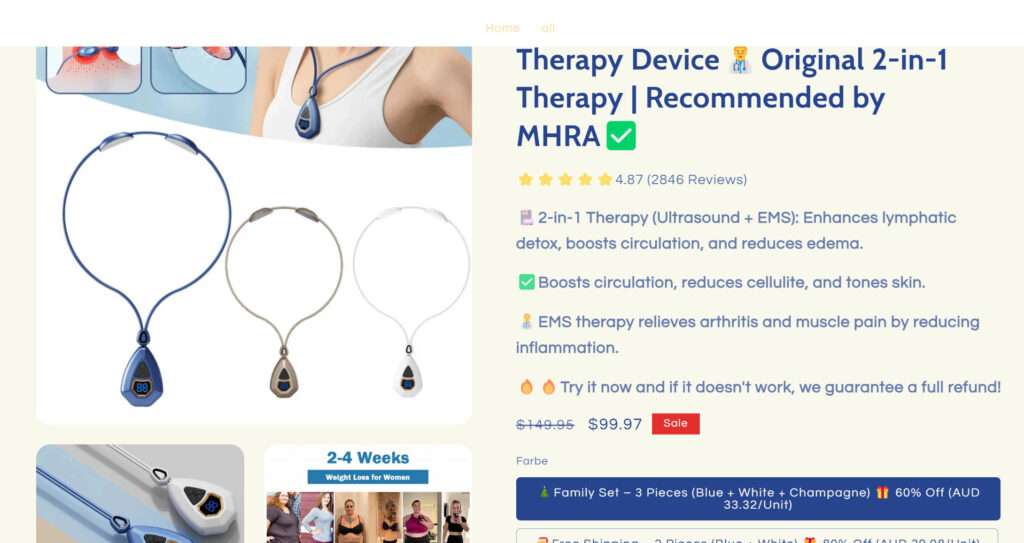
Overview of the Scam
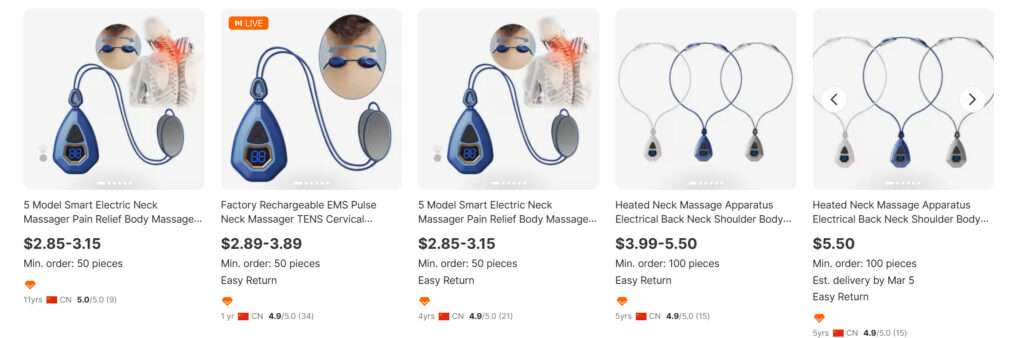
The SIENOVA Portable Lymphatic Drainage Therapy Device first emerged around June 2024 and is essentially a dropshipping scheme. Scammers purchase generic neck massagers from Chinese websites like Alibaba for only $5 per unit, then rebrand and resell them for $50 to $100 with false medical claims.
To promote the inflated products, an intricate web of websites has been set up featuring doctored before-and-after images, fictitious customer reviews and fake celebrity endorsements.
So what is actually being sold? The devices are simply cheap, low-quality massagers disguised as medical equipment. They do provide a heating and massage effect, but claims of “lymphatic detox”, “fat burning” and other health benefits are medically unsupported.
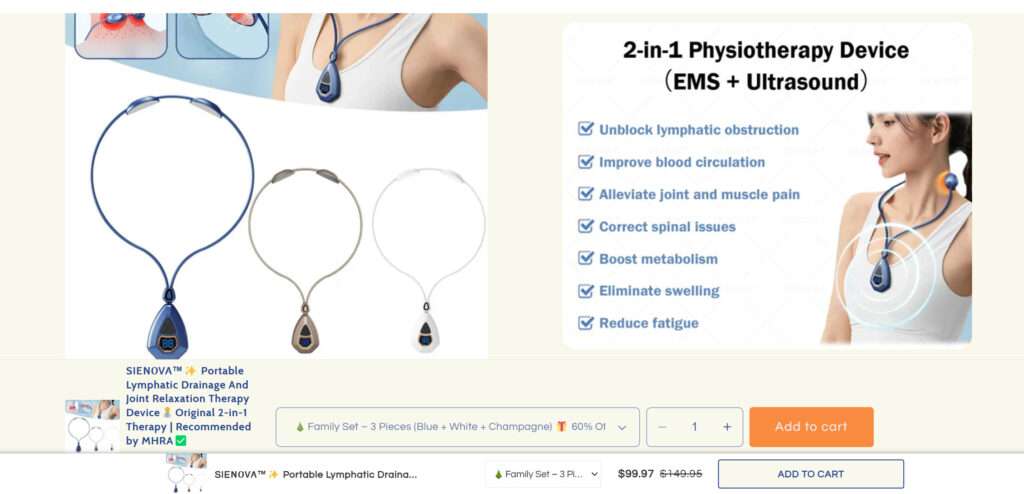
By exploiting vulnerable consumers desperate for pain relief or weight loss, this health scam has generated huge profits worldwide while putting people’s safety at risk.
How the Scam Works
The SIENOVA scam operates through the following deceptive tactics:
1. Mass Purchasing and Rebranding
The scammers purchase generic neck massagers and muscle stimulators in bulk from Chinese ecommerce sites for only $2 to $5 per unit. These cheap devices may be labeled as a “cervical massage instrument”, “neck protector” or “electrical body massager”.
They then rebrand the devices with the fake “SIENOVA” name and markup the price by 1000% or more. A $5 massager becomes a $50 to $100 “lymphatic drainage therapy device”.
2. Creating a Web of Fake Websites
To sell the marked-up products, the scammers create a network of websites advertising the fictitious SIENOVA brand.
3. Running Sponsored Ads on Social Media
The scam heavily targets Facebook, Instagram and TikTok to reach consumers. Fake SIENOVA ads promise dramatic health benefits and will lead users back to the deceptive sales sites.
These “influencer” style sponsored posts also contain fake celebrity endorsements and doctored before-and-after images, adding to the illusion. Comments may even be disabled to prevent real users from posting warnings.
4. Making Exaggerated Health Claims
The SIENOVA ads and websites make wildly exaggerated claims about the products’ health and weight loss effects. They falsely claim the device provides “2-in-1 therapy” combining ultrasound and EMS technology.
In reality, the cheap massagers have NO medical benefits beyond temporary heat and massage effects. None of the dramatic claims about lymph drainage, fat burning, arthritis relief or edema reduction are scientifically proven.
5. Running “Limited Time” Fake Discounts
To drive urgency around the inflated products, fake discount promos are used convince customers to buy immediately.
Ads will include countdown timers, claims that only a few devices are left in stock, or limited time offers like “50% off”. In reality, this is just a marketing ploy to get users to purchase before investigating further.
By understanding these deceptive practices, you can better identify and avoid SIENOVA scams across social media and ecommerce sites. Only buy health products from reputable sellers and be wary of dramatic claims around unproven devices.
What To Do If You Are A Victim
If you have already purchased a SIENOVA Portable Lymphatic Drainage Therapy Device and now realize it is a scam, you still have options:
1. Request an immediate refund: Contact the seller/website immediately to cancel your order and request a full refund. Do this within your credit card or bank’s refund timeframe. Keep records of all communication.
2. Dispute the charges: If the seller refuses to refund you or is unresponsive, dispute the charges with your credit card company or bank. Provide evidence the product was misrepresented.
3 Warn others: Leave comments on SIENOVA ads and reviews warning potential victims that it is a scam. The more people made aware, the harder it is for scammers to find new victims.
4. Contact consumer protection agencies: File official complaints with bodies like the FTC in the US, ACCC in Australia or CMA in the UK to aid investigation into the scams.
5. Spread awareness: Share your experience on social media or with local media outlets to expose the tactics used and scale of victims. This helps prevent others falling prey.
The earlier you take action, the higher your chance of reversing the damage. Do not let shame or embarrassment prevent you seeking justice.
Frequently Asked Questions
1. What exactly is the SIENOVA Portable Lymphatic Drainage Therapy Device?
The SIENOVA device is a generic muscle massager purchased in bulk from Chinese websites like Alibaba for only $2-$5 per unit. Scammers rebrand and resell them for $50-$100 as a supposed “lymphatic drainage therapy” device, using fake health claims.
2. How do the scammers sell the fake SIENOVA products?
They create a network of deceitful websites advertising the SIENOVA brand loaded with doctored images, fake reviews and false celebrity endorsements. The scammers also run sponsored ads on Facebook, Instagram and TikTok to target consumers and drive traffic to the scam sites.
3. What health benefits do the scammers claim their device provides?
The scammers make exaggerated claims that the SIENOVA device enhances lymphatic drainage, boosts circulation, burns fat, reduces cellulite, relieves arthritis and more. None of these claims are scientifically proven.
4. Are the products sold on Amazon and eBay also fake?
Yes, scammers also list the misleadingly branded SIENOVA devices right on Amazon and eBay. The sponsored listings contain fabricated reviews and use SEO tactics to rank higher in searches.
5. Are there any real health benefits to using the device?
No. The cheap massagers provide only a temporary heating/massage effect on muscles. They have absolutely no proven benefits for lymph drainage, ultrasound cavitation, circulation or arthritis relief as deceptively claimed.
6. What are some warning signs of a SIENOVA scam website or ad?
Fake countdown timers, too-good-to-be-true claims, exaggerated “before and after” images, suspicious celebrity endorsements and disabling comments on posts are all red flags. User reports of no refunds or returns should also raise alarms.
7. What should I do if I already purchased one of these devices?
Immediately contact the seller and your credit card company to request a refund due to false claims. Report the misleading ads and listings as well. Consider filing complaints with consumer protection agencies to help warn others.
8. How can I spot SIENOVA scams and avoid them in the future?
Scrutinize health claims thoroughly, look for independent reviews, only buy therapy devices from real medical companies, and remember that dramatic results require robust clinical proof.
9. Are the marketers of SIENOVA ever held accountable?
Class action lawsuits have been filed against some of the marketers, but the scam networks adapt quickly. Consumer awareness and reporting suspicious activity is key to eventually holding more accountable.
10. Where can I learn more about identifying online health scams?
Reputable websites like QuackWatch.org, the FTC Consumer Advice page, and nonprofit consumer advocacy groups have helpful scam identification resources and advice for staying safe online.
11. What should I do if I see a suspicious SIENOVA ad or listing?
Report it immediately to the platform it appears on, leave comments warning others of the scam, and consider filing a complaint with local consumer protection groups to help with further investigation.
The Bottom Line
In summary, the heavily marketed SIENOVA Portable Lymphatic Drainage Therapy Device takes advantage of vulnerable consumers through an elaborate web of deceptive health claims, fake testimonials and misleading discount promos.
It is a clear example of ecommerce fraud, using dropshipping and social media tactics to exploit people desperate for pain relief, weight loss and other health solutions.
No real evidence exists to support the promised benefits around lymph drainage, ultrasound fat cavitation or EMS technology. The devices are simply cheap massagers marked up exorbitantly and rebranded as medical devices.
By understanding the tactics and learning to carefully scrutinize health product claims, you can avoid wasting money and potential health risks from such scams. Only purchase therapy devices from reputable medical companies, ask your doctor for recommendations, and be wary of anything promising dramatic results without robust clinical evidence.
Your health and safety should be the top priority.

Join the discussion
0 commentsShare your experience or ask a question about this article.
Discussion
Start the conversation
Have a question or something useful to share? Add the first comment.