

Scratches and scuffs on your car’s exterior can significantly degrade its appearance and value. Removing them often requires professional help or expensive auto body work. This is why the Nano Sparkle Cloth caught people’s attention as a quick DIY solution for erasing car scratches.
The cloth gained viral popularity on social media, with bold claims of easily removing scratches and oxidation using nanotechnology. But does it actually work as advertised? Or is it just hype and clever marketing for an ordinary cleaning rag?
In this article, we’ll take an in-depth look at the Nano Sparkle Cloth, evaluate its scratch removing capability based on real customer reviews, and determine if it’s a scam or a legit product that delivers.
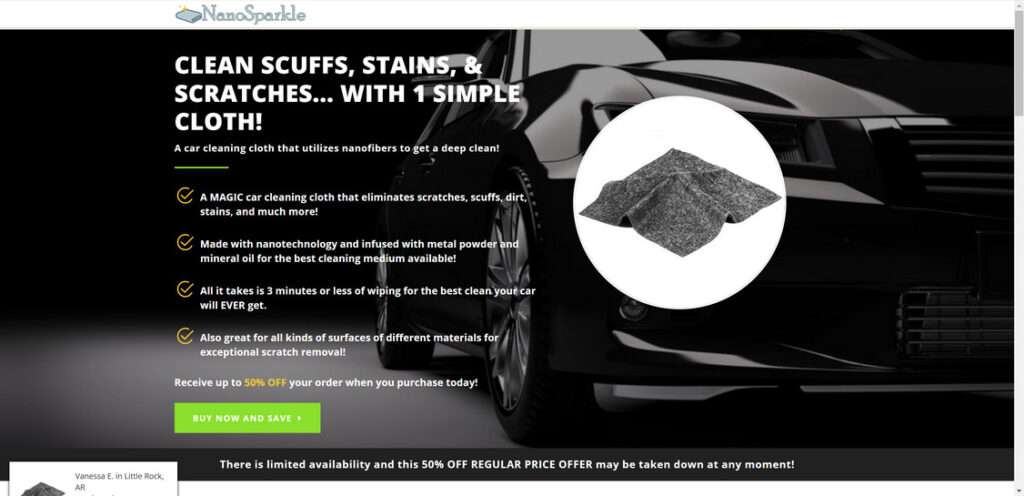
An Overview of the Nano Sparkle Cloth’s Claims
The Nano Sparkle Cloth is marketed as a revolutionary car cleaning cloth infused with nanotechnology. According to the manufacturer, it can remove scratches, scuffs, oxidation, and stains from your car’s paint, headlights, windows, dashboards, and other surfaces.
Some of the key claims made about this product include:
- Uses nanofibers to “lift” away scratches and blemishes
- Eliminates need for car waxing or polishing
- Requires only 3 minutes of wiping for best results
- Can be reused 15-20 times if maintained properly
- Works on paints, glass, plastic, metal and more
- Repairs oxidation and protects paint
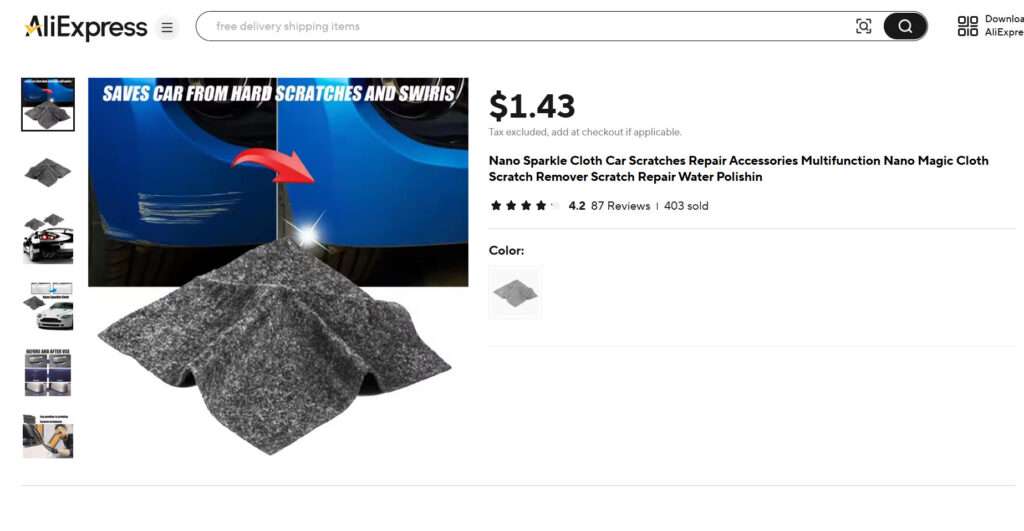
The cloth is priced at around $30 and is marketed through social media ads and influencer promotions. It seems like an affordable and convenient way to restore your car’s exterior. But before getting swayed by the sensational claims, let’s look at real user experiences.
What Do Customer Reviews Reveal About the Nano Sparkle Cloth?
The Nano Sparkle Cloth has abundant positive testimonials on its website. However, independent customer feedback on third-party sites paints a different picture.
Several users found the cloth had no impact on existing scratches, even minor ones. The scratches remained clearly visible after wiping with the Nano cloth. Customers have posted before and after photos showing no change, contradicting the company’s claims.
One reviewer suspected the cloth is just a regular microfiber rag with no special nanotechnology infused in it. Others mention the cloth simply cleans the surface but does not “repair” scratches in any way.
There are also warnings that using the cloth improperly can wear down the car’s clearcoat and worsen its condition. Repeated wiping with the abrasive cloth can enhance scratches rather than remove them.
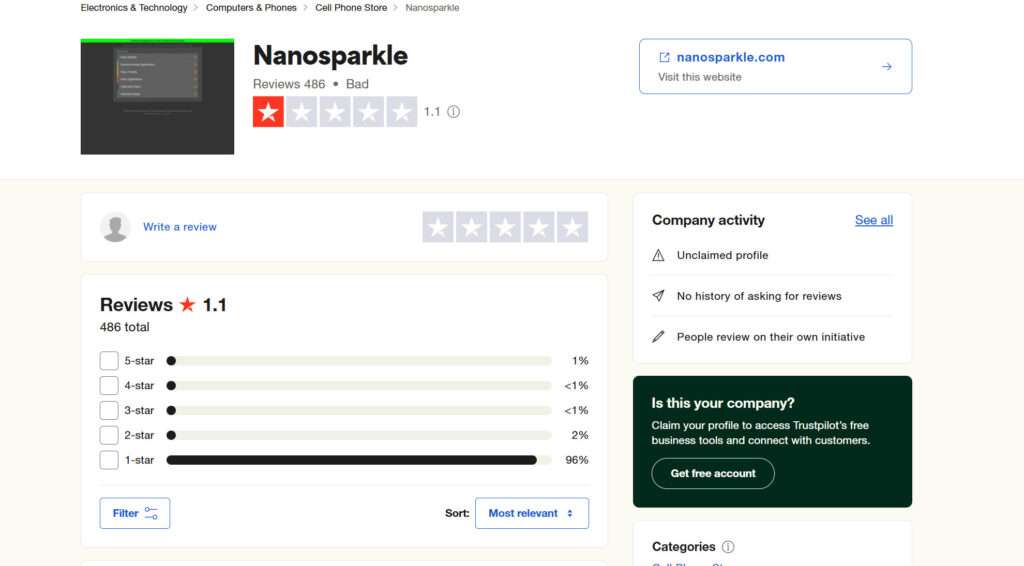
Many customers have called the Nano Sparkle cloth a “scam” and waste of money in their reviews. They state it performs no better than ordinary rags that cost a fraction of the price.
Evaluating the Scratch Removal Capabilities of the Nano Sparkle Cloth
Based on the customer feedback and evidence available, the Nano Sparkle Cloth does not appear to possess any exceptional scratch removal capabilities despite the bold claims made by its maker.
There are several reasons why the cloth likely fails to deliver the promised results:
It lacks abrasives required to physically “erase” scratches – Removing clearcoat scratches requires lightly abrading the surface to level it. The Nano Sparkle Cloth does not contain any grit or sanding particles to do this effectively.
The nanofibers likely have no special properties – Ordinary microfiber cloths also contain fine nanofibers that can capture particles. But they cannot lift scratches which penetrate deeper into the clearcoat. There is no evidence that the fibers on the Nano Cloth are unique or different from regular microfiber towels.
Oxidation removal requires chemicals – Chemical compounds containing polishing oils or oxalic acid are required to break down and dissolve oxidation. A simple cloth cannot remove heavy oxidation on its own without added chemical cleaners.
Scratch filling technology is not used – Some proprietary cloths fill in scratches with polymers rather than remove them. But the Nano Sparkle Cloth does not appear to employ any advanced filling fibres or polymers.
In essence, it is an overpriced regular microfiber cloth marketed using exaggerated claims and faux before-after images. While it may remove some surface dirt and oxidation, deeper scratches remain wholly untouched after using this cloth.
Can the Nano Sparkle Cloth Worsen Existing Scratches?
According to some user anecdotes online, improper use of the Nano Sparkle Cloth can potentially worsen scratches and swirl marks on your car’s paint.
The cloth has a microfiber side for scrubbing, which is fairly abrasive. If excess pressure is applied while rubbing, it can leave hairline marring on the clearcoat.
Aggressive back-and-forth motion can also enhance the appearance of existing scratches. Repeated use slowly strips away the clearcoat over time as well, leaving the base paint more exposed and prone to damage.
These risks are not highlighted in the company’s marketing material. Most customers expect a gentle rubbing motion to magically erase scratches. When that does not happen, the vigorous rubbing they attempt can risk damaging the finish further.
Expert Tips: How to Remove Car Scratches Safely
Rather than waste money on a product like the Nano Sparkle Cloth, follow these expert-recommended steps to remove scratches from your car’s exterior:
- Wash and clay bar the car to remove bonded surface contaminants
- Assess type of scratches – clearcoat only or through to primer/metal
- Use a polish with light abrasives to reduce appearance of shallow scratches
- Employ wet sanding for deeper scratches, starting with 2000 grit up to 8000
- Apply touch-up paint on scratches exposing metal to prevent rusting
- Finish with a sealing wax to protect the finish from new damage
For heavy oxidation, using a chemical decontaminator followed by a polishing compound works best to remove the dullness and restore gloss. Avoid applying excessive pressure and limit rubbing to avoid adding swirls.
For deep scratches and body damage, professional auto body repair is recommended. Temporary fillers like touch-up pens can also conceal scratches optically at low cost.
The Verdict: Clever Marketing But Ineffective for Real Scratch Removal
In summary, the Nano Sparkle Cloth turns out to be an overhyped product that fails to deliver anything beyond ordinary cleaning cloths.
The promises of easy, instant scratch and oxidation removal are false based on actual customer experiences. At best, it offers very mild cleaning and surface polishing. But scratches remain unaffected even after vigorous rubbing with the cloth.
The nanofiber microstructure offers no special benefits contrary to the marketing claims. It does not contain any abrasives to physically wear down scratches. And no advanced polymers or fillers are infused to fill scratches optically.
It is essentially a basic microfiber cloth sold at a premium under the guise of revolutionary nanotechnology. The company employs misleading marketing and fake reviews to make unrealistic claims.
In fact using the Nano Sparkle Cloth improperly can potentially worsen scratches – a real risk absent from the promotions. For guaranteed scratch removal, traditional methods like polishing and wet sanding remain far more effective and safer options.
In conclusion, the Nano Sparkle Cloth is not an outright “scam” but a severely overhyped product that does not work as advertised. Despite the buzz on social media, it is best avoided for car care and other alternatives relied upon instead.

Join the discussion
0 commentsShare your experience or ask a question about this article.
Discussion
Start the conversation
Have a question or something useful to share? Add the first comment.