

In recent months, the popularity of cryptocurrencies like Solana (SOL) has exploded. As a result, scammers have taken notice and launched elaborate schemes to capitalize on unsuspecting crypto enthusiasts. One such prevalent scam promises free SOL tokens through fake “giveaway” websites.
These fraudulent platforms lure victims with promises of sending anywhere from 100 to 1 million SOL to their wallets – completely free of charge. Of course, the reality is that there is no actual giveaway or free tokens. The sites exist solely to phish for wallet details and steal user funds.
In this comprehensive guide, we’ll break down exactly how the Solana giveaway scams operate, identify the red flags to watch out for, and provide actionable tips on what to do if you suspect you’ve fallen prey to one.
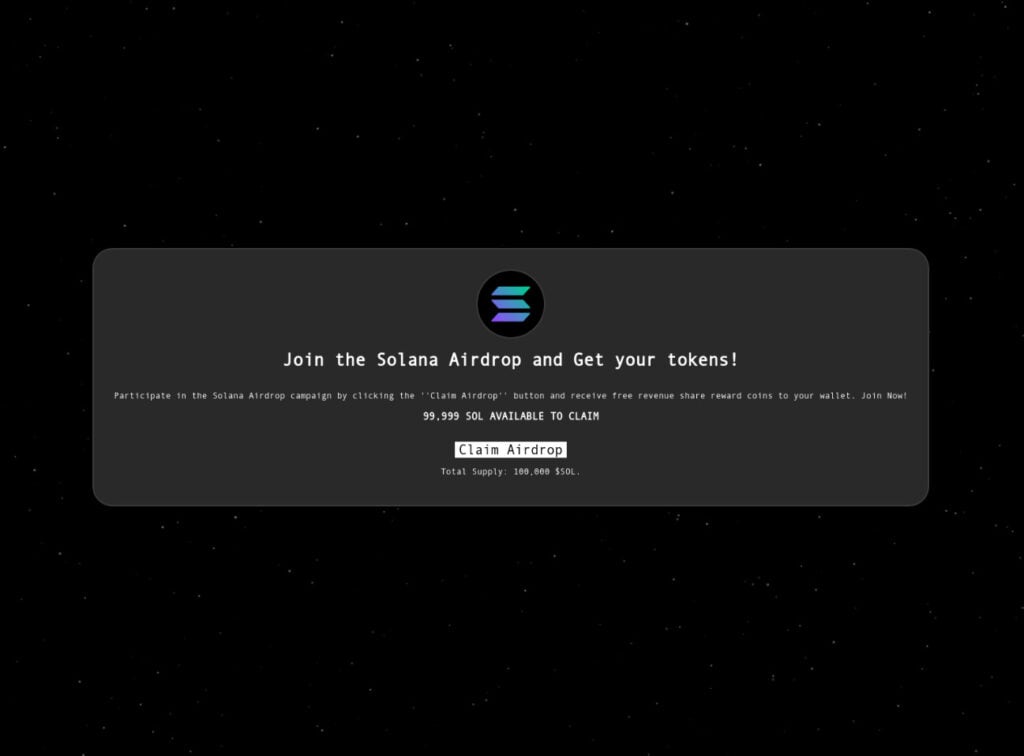
Overview of the Solana Giveaway Scam
The Solana giveaway scam follows a familiar playbook used by crypto scammers for years. The general flow goes like this:
- Scammers set up fake websites promoting a free SOL “airdrop” giveaway. These include:
- Copycat sites mimicking legitimate Solana ecosystem platforms
- Throwaway domains registered solely for the scam
- Sites piggybacking off Solana’s brand recognition
- They spam links to the fraudulent giveaway sites across social media, email, SMS, Telegram, Discord and anywhere else they can reach potential victims.
- When users click on the link, they are taken to the scam platform showing Solana’s branding and messaging about a free token giveaway.
- To “claim” the airdrop, users are instructed to connect their wallet by inputting their seed phrase or private keys.
- Once submitted, scammers drain all funds from the connected wallets and disappear without providing any SOL in return.
By promoting fake free giveaways, scammers prey on people’s understandable desire to claim free money. But as the saying goes, if it sounds too good to be true, it probably is. There are no such things as free giveaways in crypto – any site promising as much is a scam.
How the Solana Giveaway Scam Works
Now that we’ve covered the scam at a high level, let’s go through how it works step-by-step:
1. Scam Setup
The scammers first have to set up the fake giveaway websites and associated infrastructure. This includes:
- Registering lookalike domains for popular Solana sites (e.g. solana.org vs. solana.com)
- Creating copycat sites mimicking real Solana ecosystem platforms using the company’s name, branding, and imagery
- Building basic websites advertising a SOL giveaway pool
- Adding wallet connection flows that trick users into submitting private keys or seed phrases
- Setting up spamming operations to blast out links via email, SMS, social media, messaging platforms
2. Driving Traffic
Once built, scam sites are useless unless scammers can drive victims to them. Typical user acquisition tactics include:
- Spamming the links on social platforms like Twitter, Reddit, Facebook using bot accounts
- Sending direct messages with the phishing links on Telegram or Discord
- Blast spamming via SMS and email
- Promoting on dark web forums and shady Telegram groups
The goal is carpet bombing as many channels as possible to reach unsuspecting users. Messages often pose as Solana staff or unofficial brand ambassadors conducting a special promo giveaway.
3. Phishing Users
When a target clicks on one of the malicious links, they are taken to the fraudulent platform. The site displays Solana branding and messaging about a special giveaway program with a prize pool of 100k to 1 million SOL tokens.
Users are prompted to “claim” their share of tokens by connecting their wallet. This involves entering their seed phrase or private keys, which grants the scammers full access.
Some other social engineering tactics include:
- Showing fake totals of users who have claimed tokens already to build trust
- Countdown timers to create false urgency
- Verification steps that expose wallet secrets
4. Draining Funds
As soon as a user connects their wallet, scammers can steal any cryptocurrency associated with it. This primarily includes SOL, but also extends to BTC, ETH, stablecoins, NFTs, or other tokens held in the compromised wallet.
With full control, scammers rapidly drain everything of value from the wallet and disappear. Meanwhile, the victims are left with empty wallets and no free tokens as promised.
By the time users realize it’s a scam, it’s too late. Scammers cover their tracks by quickly moving funds across decentralized networks, making stolen crypto nearly impossible to recover.
There Are No Solana Giveaways – They Are All Scams
It needs reiterating – legitimate Solana and crypto giveaways essentially do not exist. Any website or platform promoting free SOL tokens or NFTs through an airdrop is a scam.
Real crypto giveaways are incredibly rare. Top projects have no need to hand out free tokens randomly or select people to gift crypto.
So if you come across a Solana giveaway online, it should immediately raise skepticism. Assume any promotion for free SOL is a fraudulent phishing attempt until definitive proof proves otherwise.
The scammers are relying on the lure of free money to overcome critical thinking. But remember – if it seems too good to be true, it is. There is no free lunch.
Protect yourself and your funds by steering completely clear of any Solana giveaway offer. Report them as scams to get the fraudulent platforms shut down before they can victimize others.
Stay vigilant and safeguard your hard-earned crypto assets. The promise of free tokens may be enticing, but gives scammers exactly what they want – access to steal your cryptocurrency.
Warning Signs of a Solana Giveaway Scam
While scammers are getting increasingly sophisticated, there are still telltale signs to recognize their phishing giveaways:
- Promises of free cryptocurrency or NFTs – if it seems too good to be true, it is.
- Sketchy direct messages on social media or messaging platforms promoting giveaways.
- Poor spelling and grammar, or otherwise unprofessional communications.
- Links to unofficial domains instead of real solana.com or Solana ecosystem sites.
- Fake social proof via fake follower/member counts, fake comments, etc.
- Pressuring language urging quick action such as claim your tokens before time runs out!
- Requests to connect your wallet and enter seed phrase or private keys.
If you spot any of these red flags, avoid the site and do not connect your wallet. Report the scams on social platforms when possible to get fraudulent accounts removed quickly.
What To Do If You Connected Your Wallet
If you suspect you already connected to a Solana phishing site, take the following steps immediately:
- Disconnect your wallet – If still on the scam site, disconnect your wallet right away.
- Move funds to new wallet – Create a brand new crypto wallet and transfer any remaining funds to it for safety.
- Reset seed phrase – Never reuse a seed phrase or private keys after exposing to scammers.
- Scan for malware – Check your device for malware which may be logging your keystrokes or clipboard.
- Report scam – File reports with hosting providers, registrars, social networks, etc to get scam infrastructure taken down.
- Monitor transactions – Keep an eye on your wallet address using a blockchain explorer to see if funds are moved out by scammers.
- Contact authorities – If funds were stolen, file reports with the FTC, FBI, and local law enforcement. Recovery is rare but still worth reporting.
While recovering stolen crypto is very difficult, taking prompt action can prevent further losses. Be vigilant about scams targeting your existing assets stored elsewhere.
Here is a detailed and SEO-optimized FAQ section about the Solana giveaway scam:
Frequently Asked Questions on the Solana Giveaway Scam
1. What is the Solana giveaway scam?
The Solana giveaway scam is a phishing technique used by scammers to steal cryptocurrency from unsuspecting victims. Scammers create fake websites promoting a free airdrop or giveaway of Solana (SOL) tokens. They then spam links to these fraudulent platforms and trick users into connecting their wallets under the pretense of claiming free tokens. This grants the scammers access to drain all funds from the compromised wallet.
2. How do scammers create the fake Solana giveaway websites?
Scammers register lookalike domains of popular Solana sites and build basic websites advertising a SOL giveaway pool of 100k to 1 million tokens. They use Solana branding and imagery without permission to make the platforms seem legitimate. The sites have wallet connection flows that harvest user’s private keys and seed phrases once submitted.
3. Where do scammers promote the phishing links?
To drive traffic to their fake websites, scammers spam links across social media platforms like Twitter and Reddit. They send direct messages on Telegram and Discord posing as Solana staff conducting a special promo. Email and SMS spam blasts are also common distribution tactics.
4. What tricks do the fraudulent sites use?
To socially engineer victims, phishing platforms employ tricks like fake totals of users who already claimed tokens, countdown urgency timers, and multi-step verification flows that eventually expose wallet keys. Anything to build trust and get users to connect wallets.
5. How do scammers actually steal funds from wallets?
Once a wallet is connected, scammers can view and drain any cryptocurrency associated with it. This includes not just SOL, but also BTC, ETH, stablecoins, and other tokens in the wallet. Scammers rapidly siphon all funds before users realize it’s a scam. The stolen crypto is then laundered and becomes nearly irretrievable.
6. What are some warning signs of a Solana giveaway scam?
Look out for promises of free crypto, sketchy links from unknown sources, poor grammar/spelling, fake Solana branding, urgency tactics, and requests to input private keys or seed phrases. Anything pressuring immediate wallet connection via seed phrase is a huge red flag.
7. What should I do if I submitted my keys to a phishing site?
If you already connected your wallet, immediately disconnect it and transfer any remaining funds to a brand new crypto wallet. Never reuse compromised keys. Also scan devices for malware, report the scam, monitor transactions for drainage, and contact authorities.
8. Is it ever legit to submit keys or seed phrases to receive a crypto airdrop?
No, legitimate projects would never require you to submit private keys or seed phrases randomly to receive an airdrop. This is a common phishing tactic and guarantee of a scam attempt. Protect keys and seed phrases to avoid crypto theft.
9. How can I identify and avoid Solana giveaway scams in the future?
Be wary of free crypto offers, ignore unsolicited messages, triple check site URLs, avoid sketchy links altogether, and never enter your seed phrase or keys. If it seems questionable, it’s better to assume any giveaway is a scam trying to steal your cryptocurrency or NFTs.
10. What should I do if I spot a potential Solana phishing scam?
If you come across a shady looking crypto giveaway site, report it immediately to hosting providers, registrars, social networks, etc. to get the scam infrastructure taken down ASAP. Also spread warnings about the site to help keep others from falling victim.
The Bottom Line
The Solana giveaway scam exploits greed and naivety around free crypto offers. Remember, there is no such thing as free money in cryptocurrency.
Genuine platforms will never ask you to connect your wallet or submit private keys randomly. Triple check site URLs, never click unsolicited links, and avoid entering seed phrases unless you fully trust the site and connection is secured.
With crypto scams on the rise, it pays to be paranoid. If an offer looks fishy, don’t take the bait. Keep your crypto safe by steering clear of sketchy links altogether – protecting your funds is well worth missing out on scams disguised as free giveaways.
Stay vigilant and happy hodling!

Join the discussion
0 commentsShare your experience or ask a question about this article.
Discussion
Start the conversation
Have a question or something useful to share? Add the first comment.