

The Solax MV Graphic Hoodie has been popping up across social media feeds and Google searches, advertised with bold claims like “up to 70% off sitewide.” At first glance, it looks like a fashion steal. A trendy hoodie with striking superhero-inspired graphics for just £17.95 instead of £67.95? It’s easy to see why shoppers are tempted.
But is this deal too good to be true? With the rise of online scams and shady dropshipping operations, it’s worth taking a closer look before pulling out your credit card. In this article, we’ll break down everything you need to know about Solaxwear.shop, the store behind the MV Graphic Hoodie.
We’ll analyze how the operation works, reveal the red flags that point toward a scam, and explain what you can do if you’ve already been caught in the trap.
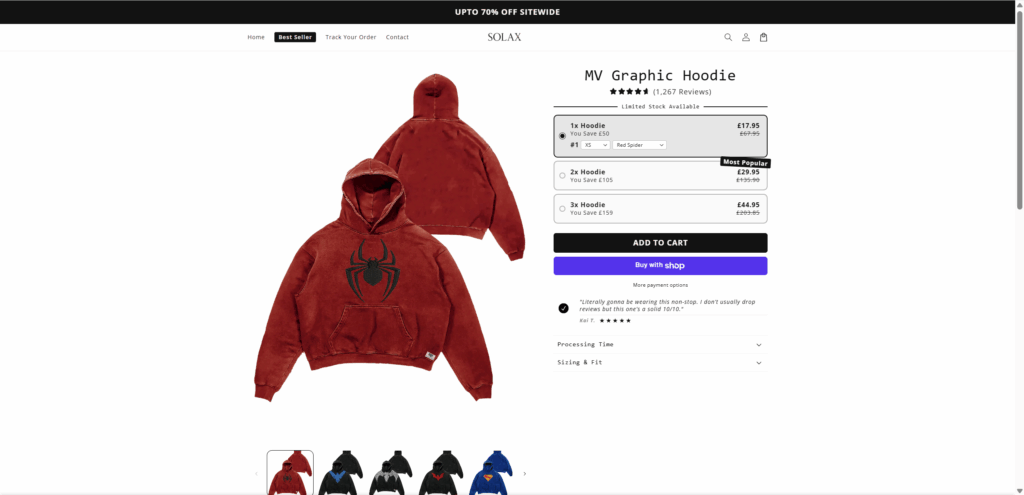
Overview of the Solax MV Graphic Hoodie
At first glance, Solaxwear.shop appears to be a typical fashion retailer. The site is sleek, minimal, and well-designed, featuring a collection of graphic hoodies with names like “Red Spider,” “Nightwing,” and “Symbiote.” These designs mimic popular superhero logos and cultural references, appealing to a younger audience that wants bold, edgy streetwear without paying premium prices.
The MV Graphic Hoodie, their star product, is displayed prominently on the homepage and throughout ads. It comes in several sizes (XS to 2XL) and offers different superhero-inspired variations. Each hoodie is marketed as being on heavy discount. For example:
- 1 hoodie = £17.95 (originally £67.95)
- 2 hoodies = £29.95 (originally £135.90)
- 3 hoodies = £44.95 (originally £203.85)
The discount is positioned as urgent and limited, with banners claiming “up to 70% off sitewide” and “limited stock available.” This tactic is common in online marketing, but in Solaxwear’s case, the pricing model itself raises questions.
A closer inspection shows several red flags:
- Brand-new website:
Solaxwear.shop’s domain was registered only in May 2025. A new website is not automatically suspicious, but when combined with other issues, it’s concerning. Established brands usually have a longer history, reviews, and online presence. - Copied product photos:
The product images on Solaxwear.shop are professional and eye-catching, but they aren’t original. A reverse image search reveals the same hoodie photos on multiple unrelated websites, suggesting Solax is reusing pictures from other sellers. This is common in dropshipping, where sellers never physically handle the products they sell. - Weak customer support:
The only contact option available is an email address (solaxwearshop@outlook.com). There’s no phone number, live chat, or physical address listed. If something goes wrong with your order, you’ll likely struggle to reach anyone for help. - Lack of transparency:
Legitimate online stores usually have an “About Us” page with information about the company, founders, or mission. Solaxwear provides none of this. The absence of team information or a business address suggests an intentional lack of accountability. - Suspicious reviews:
The website boasts over 1,200 glowing 5-star reviews. However, there’s no trace of genuine customer feedback on trusted third-party sites like Trustpilot, Reddit, or fashion forums. This discrepancy indicates that the reviews are either fabricated or copied.
Taken together, these factors paint a troubling picture. Solaxwear.shop may not outright steal your money, but it fits the pattern of Chinese dropshipping sites that lure in buyers with huge discounts, ship low-quality or counterfeit items, and disappear when complaints arise.
How the Operation Works
To understand why Solaxwear.shop raises so many alarms, it helps to look at how scam-like dropshipping operations typically function. Here’s a breakdown of how their system works:
1. Creating a Fresh Website
The operators purchase a cheap domain (in this case, solaxwear.shop) and quickly set up a Shopify or similar store template. These templates look polished and professional, often indistinguishable from legitimate e-commerce sites. They populate the store with flashy banners like “70% OFF” and “Limited Stock” to create urgency.
2. Copying Product Images and Listings
Rather than designing their own clothing, they source trending items from Chinese suppliers on sites like AliExpress or 1688. They download existing product photos and upload them to their own website. This is why Solax’s MV Graphic Hoodie images also appear on other stores.
3. Running Aggressive Ads
These shops often rely on Instagram, TikTok, and Facebook ads. They target young consumers with eye-catching videos of the hoodies paired with captions like “Get Yours Now Before It’s Gone.” The goal is to spark impulse purchases rather than careful decision-making.
4. Overpromising Discounts
The hoodie’s listed price is shown as £67.95, slashed down to £17.95. In reality, the original price is artificially inflated. On wholesale sites, these hoodies may cost just £7–10. The “discount” is simply a psychological trick.
5. Collecting Payments
The site accepts major credit cards, PayPal, and alternative processors. Once you pay, your order confirmation arrives instantly, making the experience feel legitimate.
6. Delaying Shipments
Orders are usually fulfilled directly by Chinese suppliers. This means long shipping times, often 3–6 weeks. During this period, the store operators remain vague, responding slowly or not at all to inquiries.
7. Delivering Poor Quality
Some customers eventually receive a hoodie, but it often looks nothing like the advertised product. Material quality may be cheap, sizing inconsistent, and graphics poorly printed.
8. Dodging Refund Requests
With no reliable customer service, refund requests are ignored or delayed until the dispute window on PayPal or credit cards closes. Shoppers often find themselves unable to recover their money.
9. Rebranding and Repeating
Once negative reviews pile up and the site’s reputation is tarnished, the operators shut down the website and relaunch under a new name. The cycle repeats, preying on new buyers who stumble upon ads for the same hoodies under a different brand.
What To Do If You Have Fallen Victim
If you’ve already purchased from Solaxwear.shop and suspect you’ve been scammed, don’t panic. You still have options to protect yourself and potentially recover your money. Here’s what you should do:
1. Contact Your Bank or Credit Card Company
If you paid using a debit or credit card, immediately contact your bank. Explain that you suspect fraudulent activity and request a chargeback. Many banks have buyer protection policies that allow you to dispute the transaction and get your money back.
2. Open a Dispute With PayPal
If you paid through PayPal, open a dispute as soon as possible. PayPal allows buyers to request refunds for “items not as described” or “items not received.” The faster you act, the better your chances of success.
3. Keep All Documentation
Save your order confirmation emails, receipts, and any communication with the seller. These will serve as evidence when filing disputes or complaints.
4. Report the Website
You can file a complaint with organizations like:
- Action Fraud (UK)
- Federal Trade Commission (FTC) if in the US
- Better Business Bureau (BBB)
- Your local consumer protection agency
Reporting the site helps alert others and may contribute to shutting down fraudulent operators.
5. Warn Others
Share your experience on platforms like Reddit, Trustpilot, or social media. Scammers thrive in silence. The more visibility their tactics receive, the fewer victims they can exploit.
6. Monitor Your Accounts
If you entered sensitive information on the site, keep an eye on your bank account and credit card statements. Consider requesting a new card to prevent unauthorized transactions.
7. Learn for Next Time
Unfortunately, scams like Solaxwear.shop are common. Take this as a lesson to always research unfamiliar stores before buying. Check reviews, domain age, contact information, and image authenticity.
The Bottom Line
The Solax MV Graphic Hoodie may look like an incredible deal, but the evidence suggests otherwise. With a brand-new domain, copied product images, no real customer support, fake-looking reviews, and zero transparency, Solaxwear.shop checks nearly every box of a typical dropshipping scam.
If you value your money and time, it’s best to avoid this store and look for clothing from reputable retailers. Fashion steals are exciting, but if the deal seems too good to be true, it usually is.
Consumers deserve honesty and quality, not deception. By staying vigilant and informed, you can protect yourself from falling into traps like the Solax MV Graphic Hoodie.

Reviews & discussion
0 commentsShare a firsthand experience, or ask a question.
Community reviews
solaxwear.shop
Moderated reader experiences, not an editorial verdict.
Start the conversation
Have a question or something useful to share? Add the first comment.