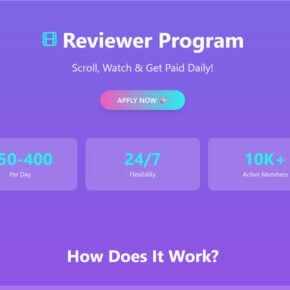
The $35/hour “listen and review” pitch is bait, not a real Spotify opportunity.
The application flow funnels you into trials, app installs, and signups that pay them commissions.
There’s no real reviewer dashboard or payout, just redirect loops, spam, and potential subscription traps.
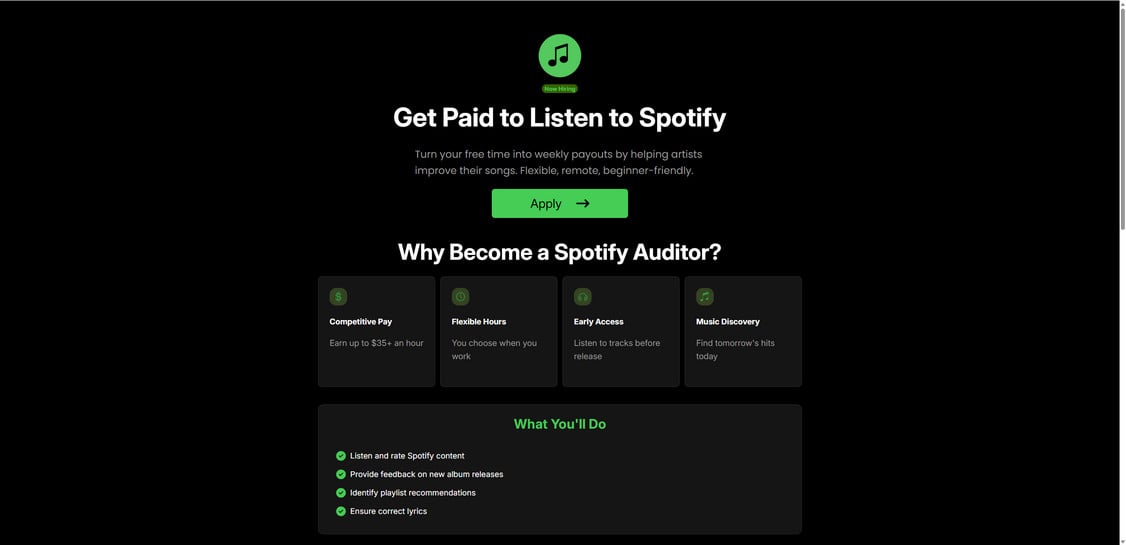
If you saw an ad promising $35 an hour to “review songs on Spotify,” you’re not alone. SongCheckUS.com is spreading fast, and it’s designed to look like a real Spotify hiring page, right down to the wording, the layout, and the “Apply Now” pressure.
But here’s the part that matters: the moment you click through, the story quietly changes.
What starts as a simple “music reviewer job” turns into something else entirely, with a very specific goal and a very predictable outcome. Before you enter your email or complete any “steps to qualify,” it’s worth seeing how this funnel works, why it feels so convincing, and what people usually discover only after it’s too late.
Scam Overview
SongCheckUS.com is a classic “get paid to listen” job scam. It promises earnings like $35/hour for reviewing songs and albums on Spotify, and it frames the offer as if it were an official recruiting channel. The design borrows Spotify-like colors and wording, then stacks urgency and social proof on top of it.
The goal is not to hire you. The goal is to push you into affiliate offers (also called CPA offers), where the site owners get paid when you submit info, sign up for trials, install apps, or complete “required steps.”
Why it looks convincing
Polished “application” layout: It looks like a real hiring funnel, with a clean CTA and job-style sections.
Brand mimicry: Spotify-style UI cues are used to imply a relationship that does not exist.
Big money hook: The $35/hour claim is front and center to trigger quick decisions.
Fake social proof: Testimonials, “1,000+ new auditors,” and “recent signup” style popups create momentum and credibility.
Broad, feel-good perks: “Flexible hours,” “early access,” and “music discovery” are designed to appeal to almost anyone.
These elements are engineered to lower skepticism and increase clicks, not to provide a legitimate role.
Red flags that confirm it’s a scam
No verified program on Spotify’s official channels supporting hourly pay for random users to review music.
No real employer transparency: vague ownership, generic legal pages, and missing verifiable contact details.
Pressure and urgency: “apply now” framing without time or details to validate anything.
“Qualification” via offers: being told to install apps, sign up for trials, or complete promotions to proceed.
No credible workflow: no clear, verifiable system for how reviews are submitted, scored, or paid.
No reliable independent validation: no reputable reporting confirming legitimacy.
What it’s really doing
This site is an affiliate lead funnel. Instead of a real reviewer dashboard and real pay, you are routed into third-party promotions. The operators profit from your clicks and completed offers, while you get nothing resembling a legitimate job, and often end up with unwanted subscriptions, spam, or risky downloads.rent explanation of how you would actually get paid for legitimate work.nstall you perform—not your success or income.
How the SongCheckUS.com Scam Works
SongChSongCheckUS.com is not just a misleading landing page. It is a purpose-built conversion funnel designed to monetize visitors through data capture and affiliate (CPA) offers. The “Spotify reviewer” job is the bait. Your clicks, personal details, and completed signups are the product.
Step 1: Lure victims through ads and “job” posts
Most people find the site through paid ads or reposted listings that look like legitimate remote work:
“Now Hiring: Get Paid to Listen to Spotify”
“Earn $35/hour From Home, Music Reviewer Jobs”
“Flexible Work Reviewing Music for Spotify”
These promotions show up on major ad networks and social platforms, and sometimes get republished on job boards by third parties. The targeting is simple: people looking for fast income, side hustles, or work-from-home roles.
Step 2: Use a polished landing page to imply legitimacy
After clicking, you land on a page engineered to feel “official”:
Spotify-like branding cues and music-industry language
A bold pay claim front and center
Easy-benefit bullet points like “Flexible Hours” and “Music Discovery”
A prominent “Apply” button
The page often includes testimonials, star ratings, and “recent signup” style popups to create the impression that thousands of people are already getting paid. These elements are not evidence. They are persuasion tools meant to short-circuit verification.
Step 3: Capture personal data under the pretext of an application
To proceed, the site asks for details such as:
name and email
sometimes phone number, location, or age range
This is positioned as “building your reviewer profile,” but it functions as lead collection. That data can be used for aggressive marketing, resold to lead brokers, or leveraged for follow-up scams. A common outcome is an immediate spike in spam emails, robocalls, and scam texts after submitting information.
Step 4: Redirect users into an affiliate offer wall
Next comes the real money step: you are told to “complete 2-3 offers” to qualify before you can start reviewing music.
These offers commonly include:
free trials that convert to paid subscriptions
app installs
survey funnels that push for more personal data
signups for unrelated services
This is classic CPA marketing: the operators get paid when you complete an action. You do not get a job. You are simply being walked through revenue-generating conversions.
Some offers hide recurring charges in the fine print. Others route users toward low-quality downloads or pushy subscription traps. Either way, the risk is on you, and the profit is on them.
Step 5: The job never arrives, only more loops and upsells
After completing offers, victims expect a dashboard, onboarding email, or review portal. Instead, the funnel typically does one of the following:
sends you into more surveys and redirects
repeats the “complete another step” message
pushes “training” or “verification” that requires payment
bounces you to unrelated marketing pages
At this stage, the scam’s design becomes obvious: it is an endless monetization loop. Your role is not to review music. Your role is to keep clicking and converting.
Step 6: Spread the scam through referrals and social sharing
Many funnels add a viral layer: users are encouraged to “boost approval chances” by inviting friends or sharing a referral link.
This accomplishes two things:
it gives the scam free distribution through group chats, forums, and social media
it makes victims feel like they are still “progressing” toward access
People end up posting the link in places like Facebook groups, Discord servers, and Reddit, unintentionally expanding the scam’s reach while chasing a job that does not exist.
What to Do If You Fell for the SongCheckUS.com Scam
If you’ve interacted with SongCheckUS.com or entered your data, follow these steps:
1. Stop Engaging Immediately
Exit the site and do not complete any further actions. Block the domain using your browser or antivirus software. Delete your browser history and cookies to prevent further tracking.
2. Change Your Passwords
If you submitted a commonly used password, change it across all platforms—especially:
Email
Banking apps
Social media
Shopping sites
Use a password manager to generate strong, unique credentials and activate two-factor authentication for added security.
3. Scan Your Device Thoroughly
If you downloaded anything, run a full scan using trusted antivirus software. Remove any flagged files or suspicious apps. Consider using both antivirus and anti-malware tools like Malwarebytes for better coverage.
4. Check Your Financial Statements
If you submitted payment info during an “offer,” monitor your bank account or credit card for unauthorized charges. Contact your bank to block the card or account if necessary. Cancel any free trials you may have unknowingly enrolled in.
5. Unsubscribe from Spam and Block Callers
You may start receiving excessive marketing emails or texts. Use unsubscribe links in legitimate messages, but never click links in emails you suspect are phishing. Add new spam numbers to your block list.
6. Report the Site to Authorities
File a report with the following organizations:
Spotify’s official support team so they can issue warnings
Share your experience on Reddit, Facebook groups, scam-tracking websites, and community forums. Many people fall for this scam due to its realism—your story could prevent it.
8. Consider Identity Monitoring Services
If you shared sensitive personal data (SSN, address, etc.), sign up for a service like:
LifeLock
Aura
IdentityForce
These tools can alert you if your information appears in data leaks or is used for credit applications.
Is Your Device Infected? Scan for Malware
If your computer or phone is slow, showing unwanted pop-ups, or acting strangely, malware could be the cause. Running a scan with Malwarebytes Anti-Malware Free is one of the most reliable ways to detect and remove harmful software. The free version can identify and clean common infections such as adware, browser hijackers, trojans, and other unwanted programs.
Malwarebytes works on Windows, Mac, and Android devices. Choose your operating system below and follow the steps to scan your device and remove any malware that might be slowing it down.
Malwarebytes for WindowsMalwarebytes for MacMalwarebytes for Android
Run a Malware Scan with Malwarebytes for Windows
Malwarebytes stands out as one of the leading and widely-used anti-malware solutions for Windows, and for good reason. It effectively eradicates various types of malware that other programs often overlook, all at no cost to you. When it comes to disinfecting an infected device, Malwarebytes has consistently been a free and indispensable tool in the battle against malware. We highly recommend it for maintaining a clean and secure system.
Download Malwarebytes
Download the latest version of Malwarebytes for Windows using the official link below. Malwarebytes will scan your computer and remove adware, browser hijackers, and other malicious software for free.
(The above link will open a new page from where you can download Malwarebytes)
Install Malwarebytes
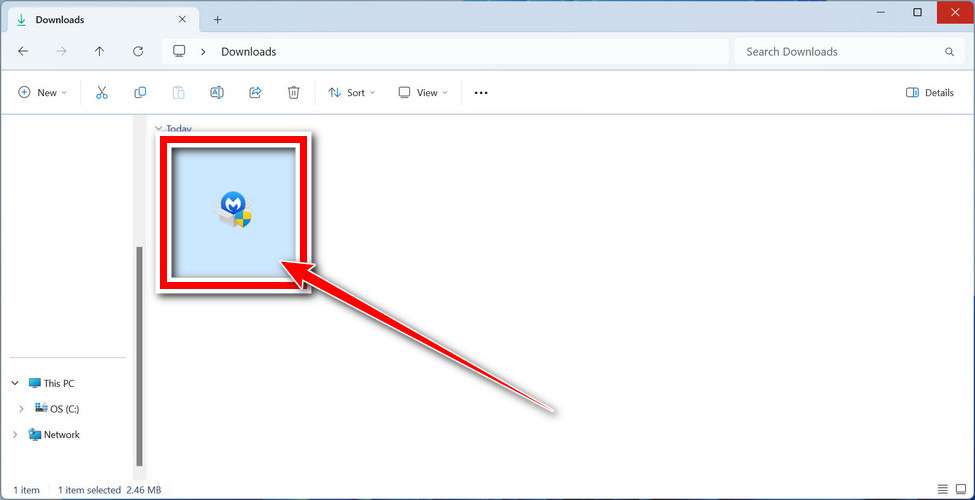
After the download is complete, locate the MBSetup file, typically found in your Downloads folder. Double-click on the MBSetup file to begin the installation of Malwarebytes on your computer. If a User Account Control pop-up appears, click “Yes” to continue the Malwarebytes installation.
Follow the On-Screen Prompts to Install Malwarebytes
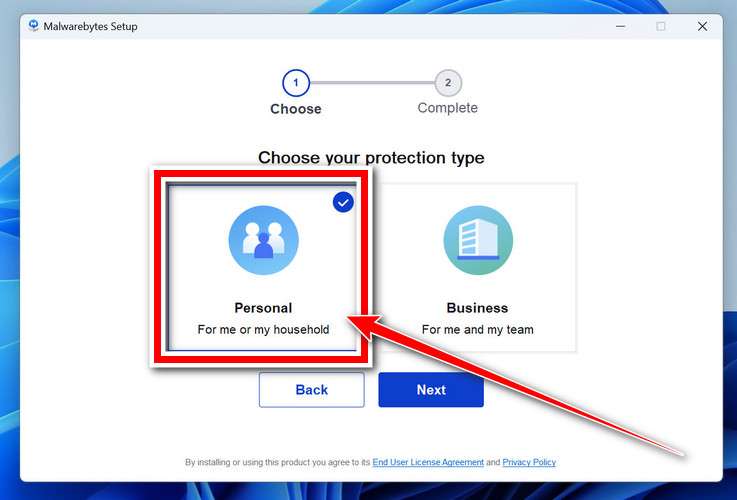
When the Malwarebytes installation begins, the setup wizard will guide you through the process.
You’ll first be prompted to choose the type of computer you’re installing the program on—select either “Personal Computer” or “Work Computer” as appropriate, then click on Next.
Malwarebytes will now begin the installation process on your device.
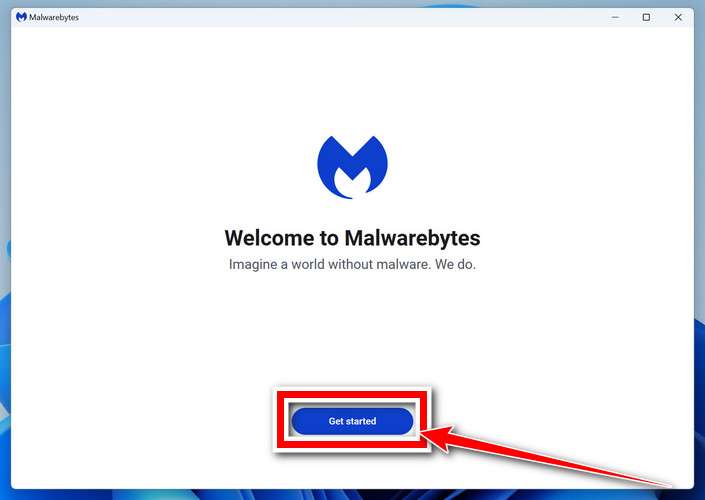
When the Malwarebytes installation is complete, the program will automatically open to the “Welcome to Malwarebytes” screen.
On the final screen, simply click on the Open Malwarebytes option to start the program.
Enable “Rootkit scanning”.
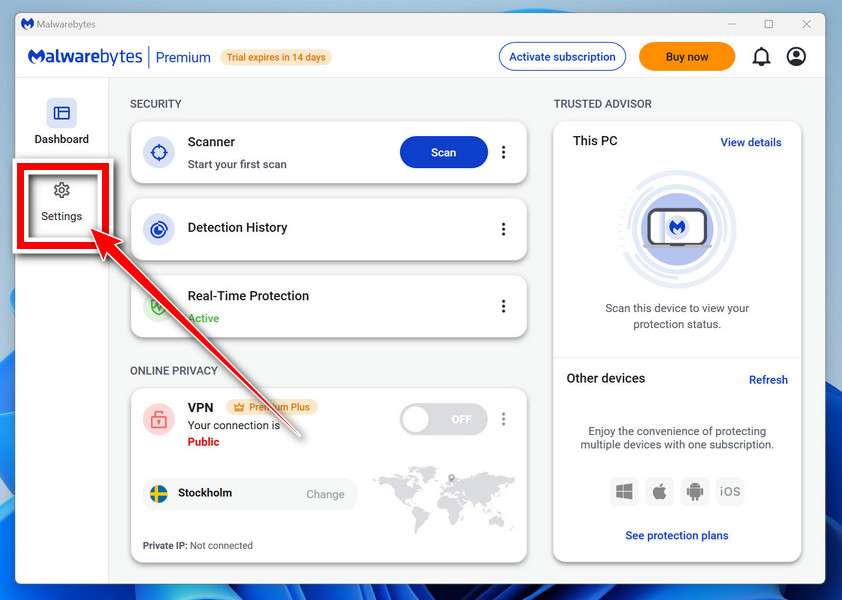
Malwarebytes Anti-Malware will now start, and you will see the main screen as shown below. To maximize Malwarebytes’ ability to detect malware and unwanted programs, we need to enable rootkit scanning. Click on the “Settings” gear icon located on the left of the screen to access the general settings section.
In the settings menu, enable the “Scan for rootkits” option by clicking the toggle switch until it turns blue.
Now that you have enabled rootkit scanning, click on the “Dashboard” button in the left pane to get back to the main screen.
Perform a Scan with Malwarebytes.
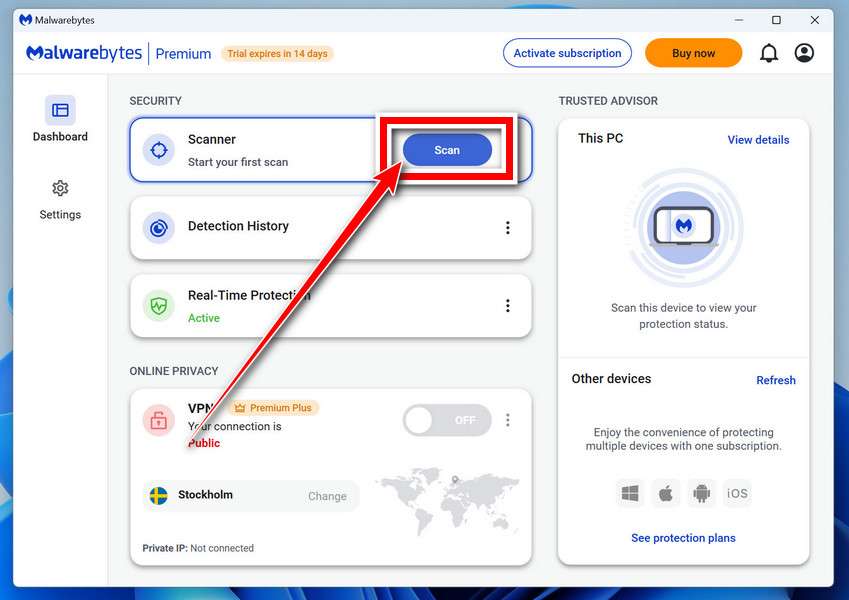
To start a scan, click the Scan button. Malwarebytes will automatically update its antivirus database and begin scanning your computer for malicious programs.
Wait for the Malwarebytes scan to complete.
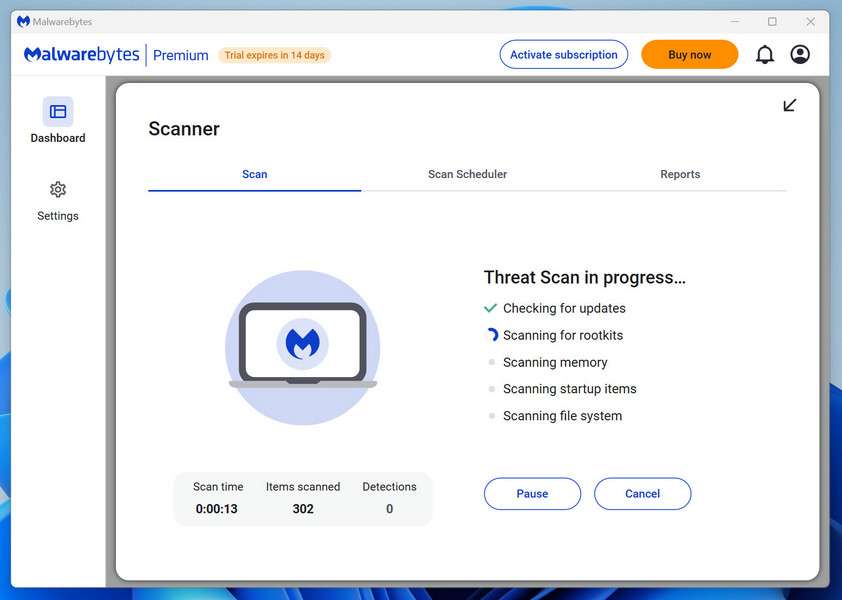
Malwarebytes will now scan your computer for browser hijackers and other malicious programs. This process can take a few minutes, so we suggest you do something else and periodically check the status of the scan to see when it is finished.
Quarantine detected malware
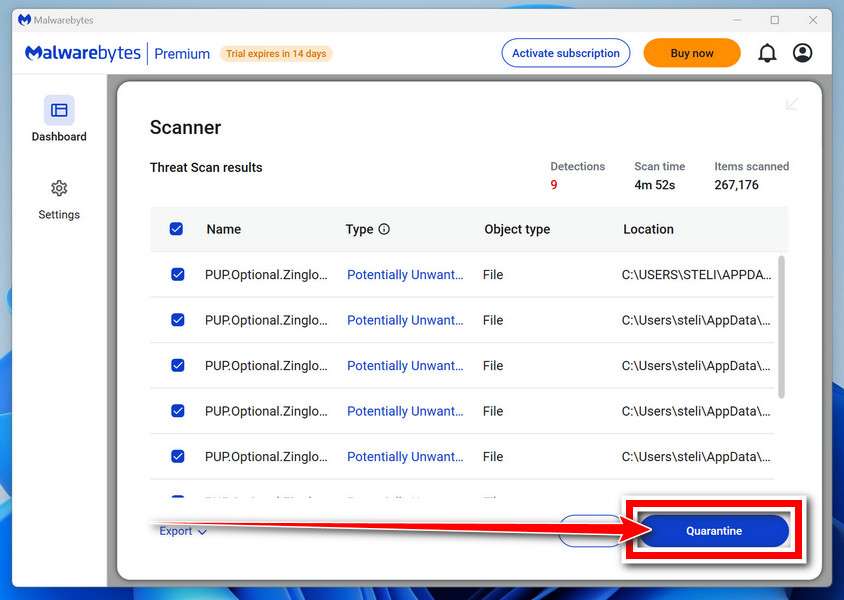
Once the Malwarebytes scan is complete, it will display a list of detected malware, adware, and potentially unwanted programs. To effectively remove these threats, click the “Quarantine” button.
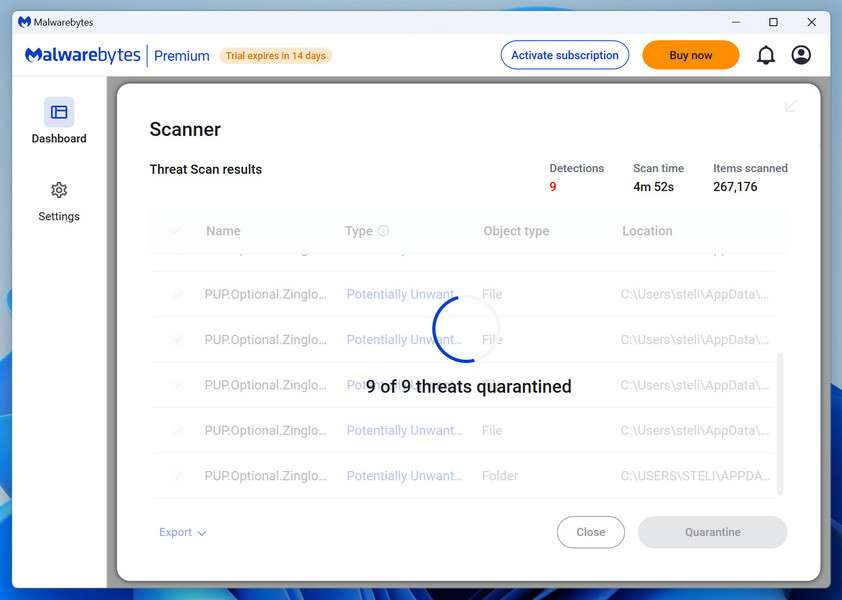
Malwarebytes will now delete all of the files and registry keys and add them to the program’s quarantine.
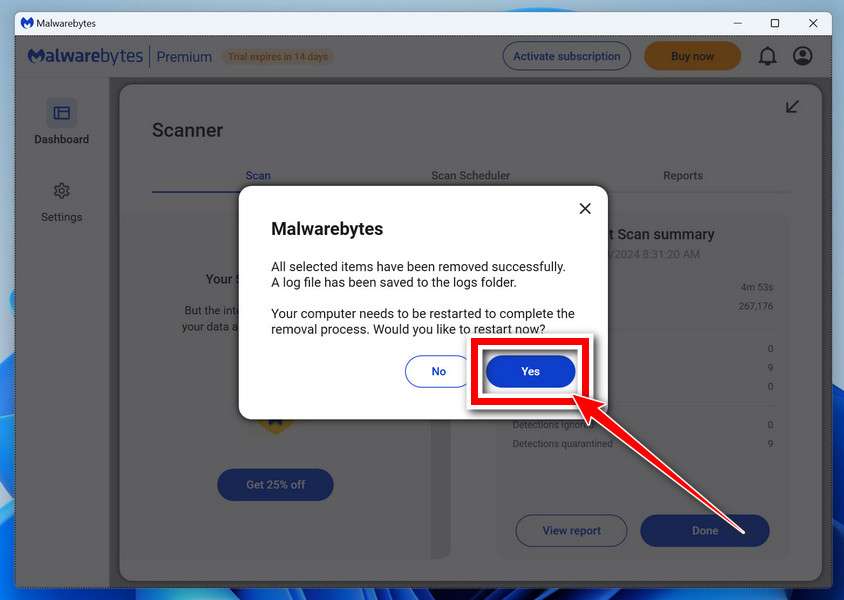
Restart your computer.
When removing files, Malwarebytes may require a reboot to fully eliminate some threats. If you see a message indicating that a reboot is needed, please allow it. Once your computer has restarted and you are logged back in, you can continue with the remaining steps.
Once the scan completes, remove all detected threats. Your Windows computer should now be clean and running smoothly again, free of trojans, adware, and other malware.
If your current antivirus allowed this malicious program on your computer, you may want to consider purchasing Malwarebytes Premium to protect against these types of threats in the future. If you are still having problems with your computer after completing these instructions, then please follow one of the steps:
Malwarebytes for Mac is an on-demand scanner that can destroy many types of malware that other software tends to miss without costing you absolutely anything. When it comes to cleaning up an infected device, Malwarebytes has always been free, and we recommend it as an essential tool in the fight against malware.
Download Malwarebytes for Mac.
You can download Malwarebytes for Mac by clicking the link below.
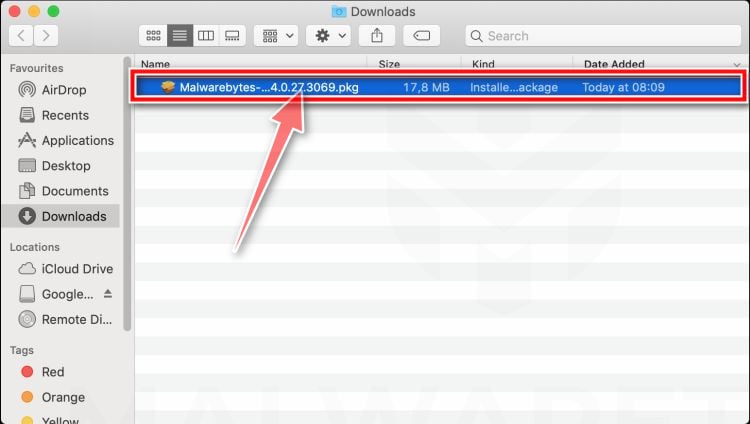
When Malwarebytes has finished downloading, double-click on the setup file to install Malwarebytes on your computer. In most cases, downloaded files are saved to the Downloads folder.
Follow the on-screen prompts to install Malwarebytes.
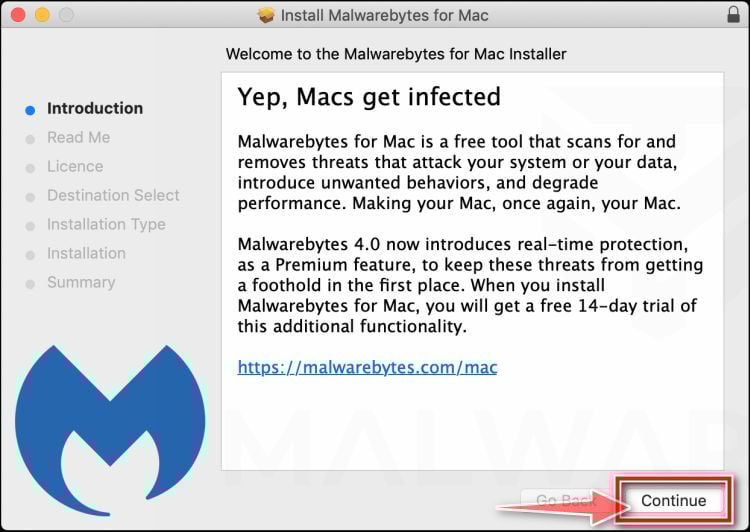
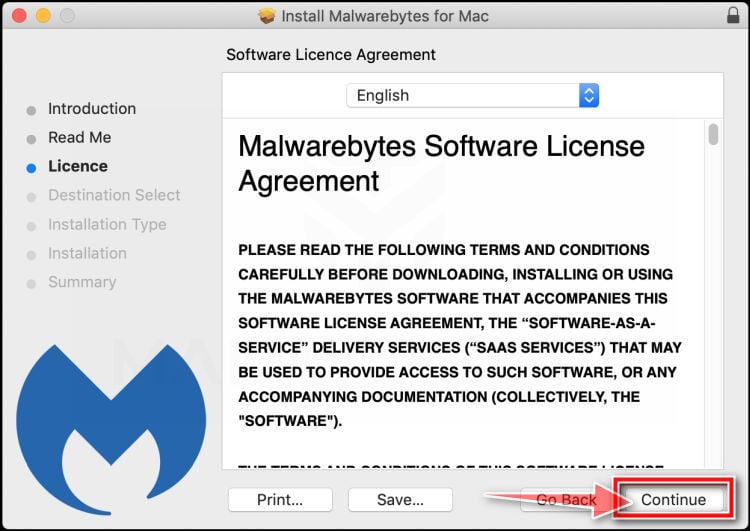
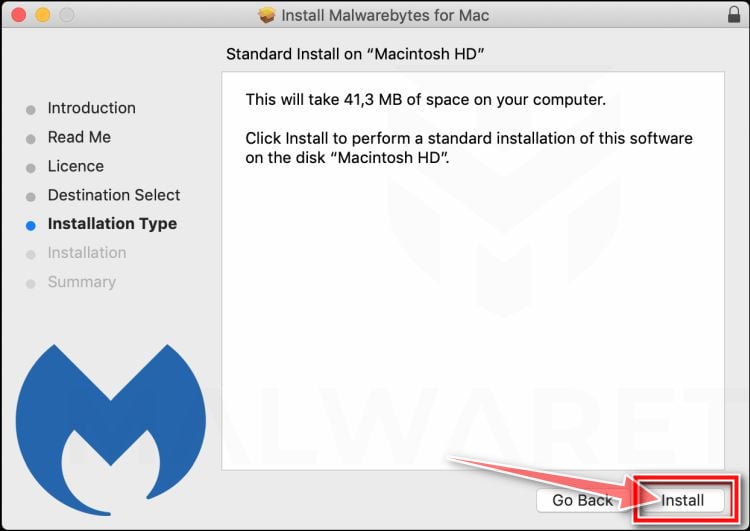
When the Malwarebytes installation begins, you will see the Malwarebytes for Mac Installer which will guide you through the installation process. Click “Continue“, then keep following the prompts to continue with the installation process.
When your Malwarebytes installation completes, the program opens to the Welcome to Malwarebytes screen. Click the “Get started” button.
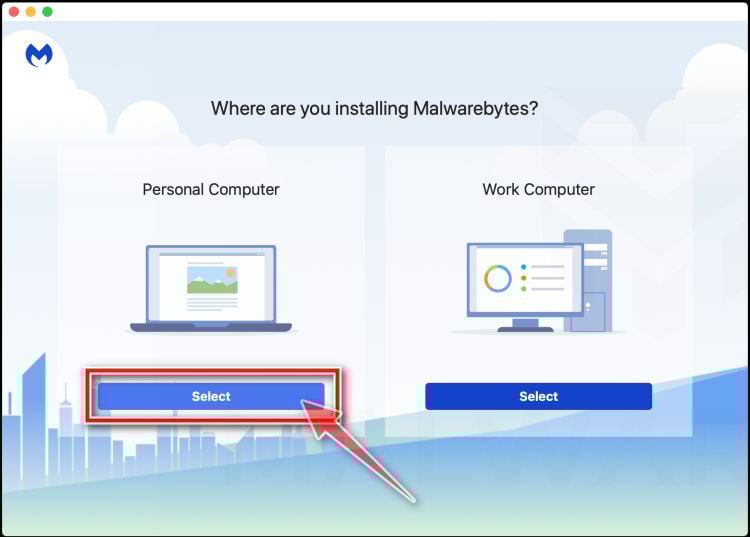
Select “Personal Computer” or “Work Computer”.
The Malwarebytes Welcome screen will first ask you what type of computer are you installing this program, click either Personal Computer or Work Computer.
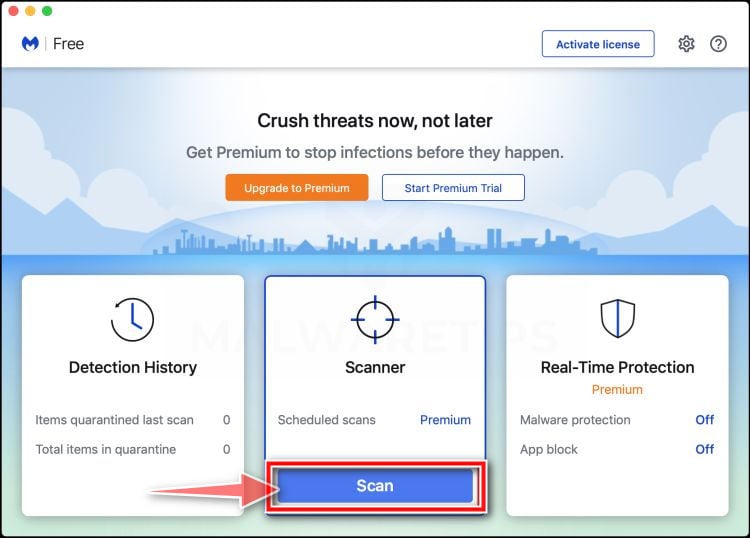
Click on “Scan”.
To scan your computer with Malwarebytes, click on the “Scan” button. Malwarebytes for Mac will automatically update the antivirus database and start scanning your computer for malware.
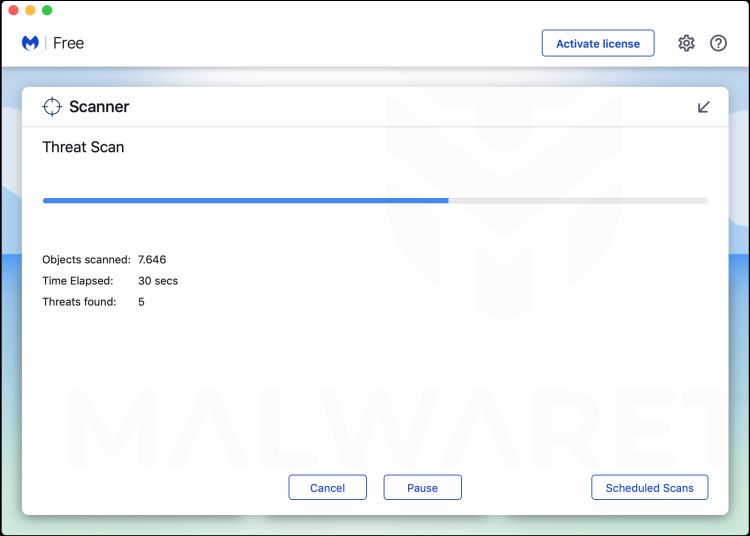
Wait for the Malwarebytes scan to complete.
Malwarebytes will scan your computer for adware, browser hijackers, and other malicious programs. This process can take a few minutes, so we suggest you do something else and periodically check on the status of the scan to see when it is finished.
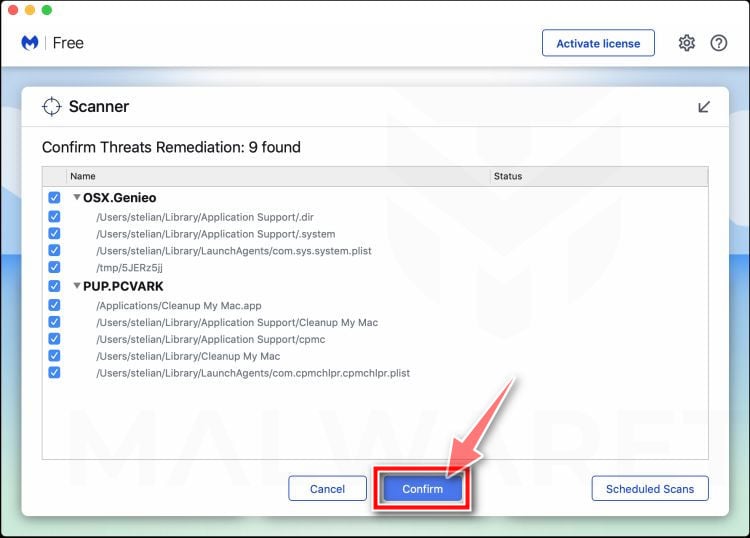
Click on “Quarantine”.
When the scan has been completed, you will be presented with a screen showing the malware infections that Malwarebytes has detected. To remove the malware that Malwarebytes has found, click on the “Quarantine” button.
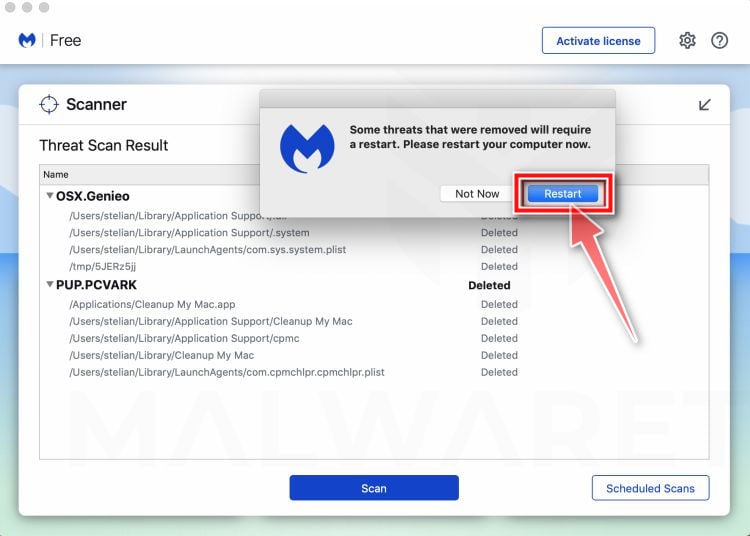
Restart computer.
Malwarebytes will now remove all the malicious files that it has found. To complete the malware removal process, Malwarebytes may ask you to restart your computer.
After scanning, delete any detected threats. Your Mac should now be free from adware, unwanted extensions, and other potentially harmful software.
If your current antivirus allowed a malicious program on your computer, you might want to consider purchasing the full-featured version of Malwarebytes Anti-Malware to protect against these types of threats in the future. If you are still experiencing problems while trying to remove a malicious program from your computer, please ask for help in our Mac Malware Removal Help & Support forum.
Run a Malware Scan with Malwarebytes for Android
Malwarebytes for Android automatically detects and removes dangerous threats like malware and ransomware so you don’t have to worry about your most-used device being compromised. Aggressive detection of adware and potentially unwanted programs keeps your Android phone or tablet running smooth.
Download Malwarebytes for Android.
You can download Malwarebytes for Android by clicking the link below.
In the Google Play Store, tap “Install” to install Malwarebytes for Android on your device.
When the installation process has finished, tap “Open” to begin using Malwarebytes for Android. You can also open Malwarebytes by tapping on its icon in your phone menu or home screen.
Follow the on-screen prompts to complete the setup process
When Malwarebytes will open, you will see the Malwarebytes Setup Wizard which will guide you through a series of permissions and other setup options. This is the first of two screens that explain the difference between the Premium and Free versions. Swipe this screen to continue. Tap on “Got it” to proceed to the next step. Malwarebytes for Android will now ask for a set of permissions that are required to scan your device and protect it from malware. Tap on “Give permission” to continue. Tap on “Allow” to permit Malwarebytes to access the files on your phone.
Update database and run a scan with Malwarebytes for Android
You will now be prompted to update the Malwarebytes database and run a full system scan.
Click on “Update database” to update the Malwarebytes for Android definitions to the latest version, then click on “Run full scan” to perform a system scan.
Wait for the Malwarebytes scan to complete.
Malwarebytes will now start scanning your phone for adware and other malicious apps. This process can take a few minutes, so we suggest you do something else and periodically check on the status of the scan to see when it is finished.
Click on “Remove Selected”.
When the scan has been completed, you will be presented with a screen showing the malware infections that Malwarebytes for Android has detected. To remove the malicious apps that Malwarebytes has found, tap on the “Remove Selected” button.
Restart your phone.
Malwarebytes for Android will now remove all the malicious apps that it has found. To complete the malware removal process, Malwarebytes may ask you to restart your device.
When the scan is finished, remove all detected threats. Your Android phone should now be free of malicious apps, adware, and unwanted browser redirects.
If your current antivirus allowed a malicious app on your phone, you may want to consider purchasing the full-featured version of Malwarebytes to protect against these types of threats in the future. If you are still having problems with your phone after completing these instructions, then please follow one of the steps:
Restore your phone to factory settings by going to Settings > General management > Reset > Factory data reset.
After cleaning your device, it’s important to protect it from future infections and annoying pop-ups. We recommend installing an ad blocker such as AdGuard. AdGuard blocks malicious ads, prevents phishing attempts, and stops dangerous redirects, helping you stay safe while browsing online.
The Bottom Line
SongCheckUS.com is a well-disguised scam built to profit from user data, affiliate offer completions, and software installs. It does not represent Spotify, nor does it provide a real paid reviewer opportunity.
There’s no $35/hour wage. No actual music reviews. No employment.
The site’s professional appearance masks a dangerous and persistent digital scam. The best defense is awareness—so share what you’ve learned, and remember: any site asking for sensitive information or offering high pay for no work is worth investigating.
FAQ: SongCheckUS.com “Spotify Reviewer” Job Scam
What is the SongCheckUS.com scam?
SongCheckUS.com is a “get paid to listen to music” job scam that claims you can earn $35+ per hour reviewing songs and albums. The site is designed like a hiring portal, but it functions as a marketing funnel that monetizes visitors through lead collection and affiliate offers, not employment.
Is SongCheckUS.com legit or affiliated with Spotify?
No. There is no verified connection between SongCheckUS.com and Spotify. The site uses music-industry wording and familiar design cues to imply legitimacy, but it does not provide a verifiable employer identity, real hiring process, or an authenticated Spotify dashboard.
Does Spotify actually pay people $35/hour to review music?
Not in the way SongCheckUS.com advertises. Spotify does not run a public, open-to-anyone program that pays random users an hourly wage to review music. Real opportunities tied to Spotify are posted through official channels, and they do not require you to “qualify” by completing unrelated offers.
Why does the site look so convincing?
Because it borrows the structure of legitimate recruiting funnels: clean layout, job-like benefit bullets (flexible hours, early access), and strong calls to action. Many of these pages also use scripted “recent signup” popups and testimonials to simulate a busy, trusted platform.
What is the real goal of SongCheckUS.com?
The goal is conversion, not hiring. You are pushed toward actions that generate revenue for the site operators, such as submitting your contact details, installing apps, signing up for trials, or completing surveys. Those actions can pay them affiliate commissions even if you never receive anything in return.
What are “offers,” and why is “complete 2-3 offers to qualify” a huge red flag?
An “offer” is usually an affiliate promotion: a trial subscription, app install, survey funnel, or signup form. The operator gets paid when you complete the action. Legitimate employers do not require applicants to install apps, sign up for trials, or complete promotional offers to access a job.
What happens if I enter my email or phone number on SongCheckUS.com?
Most commonly: you start getting spam email, robocalls, and scam texts, sometimes quickly. Your information can be used for targeted marketing, sold to lead brokers, or reused in future scams that reference the same “application” you started.
Can SongCheckUS.com steal my Spotify account?
The bigger risk is what comes next. If a scam flow ever asks for your Spotify password, verification codes, payment details, or asks you to download files, treat it as unsafe. Spotify states it will not ask for sensitive info over email and will not ask you to download anything from its emails. (Spotify)
I completed an offer (trial/app install). Will I get paid now?
In most cases, no. Victims typically report being sent into more steps, more redirects, or more “qualification” loops instead of receiving access to a real reviewer dashboard. This is how offer-wall funnels keep extracting value while never delivering a real job.
I gave my card details for a “free trial.” What should I do immediately?
Act fast and assume recurring billing is possible:
Cancel the trial through the merchant you signed up with (look for a confirmation email and cancel from your account page).
Check your bank/card transactions for pending charges and subscription descriptors.
Dispute unauthorized charges with your bank/card issuer if anything looks wrong.
Consider replacing your card if you entered details on a site you do not trust.
Change passwords on your email account (and any reused passwords elsewhere), since email access is often the next target.
I installed an app from the offer wall. What should I do?
If you installed something you do not recognize or trust:
Uninstall it immediately.
Run a full security scan on your device using a reputable antivirus/anti-malware product.
Watch for unusual behavior: popups, new toolbars/extensions, battery drain, or unknown background activity.
Why do these scams keep popping up under different names?
Because the template is reusable. Operators often launch multiple nearly identical “music reviewer” sites with the same claims, layout, and scripts. Malware and scam researchers have documented similar fake Spotify reviewer funnels using the same mechanics (high hourly pay, fake popups, and offer requirements).
How can I report the SongCheckUS.com scam?
Reporting helps ad platforms and registrars take action faster:
Report it to the Federal Trade Commission using their job scam reporting guidance.
Report the ad that led you there on the platform where you saw it (search ads, social ads, video ads).
If you found it via a job board, report the listing and the poster account. The FTC also publishes practical guidance on spotting job scams and where to report them.
What are the biggest warning signs of a “Spotify reviewer job scam” like this?
Watch for these patterns:
“Get paid to listen to Spotify” plus a high hourly wage and no requirements
“Limited spots” urgency and aggressive “Apply Now” prompts
Testimonials and “live signup” popups you cannot verify
Vague company identity and generic legal/contact pages
Any step that requires offers, installs, or trials to “qualify”
No clear explanation of how reviews are evaluated, submitted, or paid
Are job scams like this actually common right now?
Yes. Job scams and task-based funnels have been growing, and consumer protection agencies have warned that “easy work, high pay” offers are a frequent lure. The Associated Press has also reported on the rise of these schemes and the FTC’s guidance on avoiding them.
How do I protect myself from similar “get paid to listen to music” scams?
Use a simple verification checklist:
Verify the role exists on the company’s official careers site.
Do not trust ads or job posts that skip normal hiring steps.
Never pay, install, or “complete offers” to unlock a job.
Avoid sharing phone numbers and personal details until you confirm the employer.
Use unique passwords and enable two-factor authentication on your email.
I’m worried about identity theft. What should I do next?
If you shared personal details and now feel at risk:
Keep screenshots of the site, emails, and charges in case you need to dispute transactions or file reports.
Monitor your email for password reset attempts.
Check your bank/card accounts daily for a week, then weekly.
Consider placing a fraud alert or credit freeze with the major credit bureaus: Equifax, Experian, and TransUnion.
Thomas is an expert at uncovering scams and providing in-depth reporting on cyber threats and online fraud. As an editor, he is dedicated to keeping readers informed on the latest developments in cybersecurity and tech.