


The proposal looks like something a Spark voter might find on an ordinary afternoon. It even has a name for the extra benefit: Assets Boost.
If you came across that offer while checking your positions, take a moment away from the page. There’s a better place to see what Spark is voting on.
Overview
The offer was for the first 1,000 voters
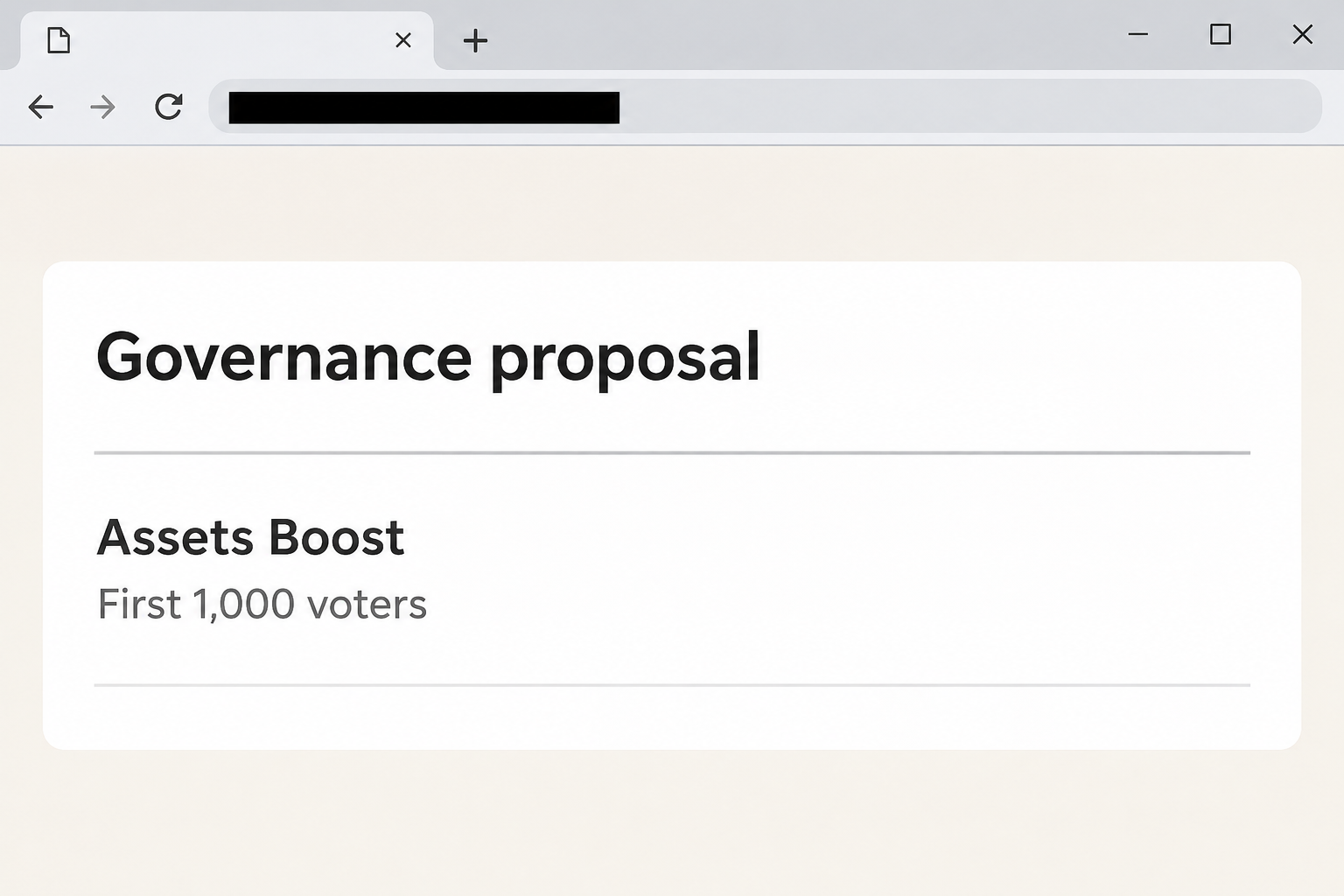
The Spark Voting Rewards scam used a page styled to resemble Spark’s DeFi platform. The reported version promised an Assets Boost to the first 1,000 voters.
It described a proposal as live and connected it with an upcoming rewards date. The wording gave the impression that a decision had already moved into its final stage.
The slot count did a different job from a countdown. You didn’t need to know when the vote ended if you believed the places could disappear at any moment.
The reported host was app.sparkfi[.]guru. The brackets keep it from becoming a clickable address here. There is no reason to visit it to check a proposal.
The browser image above recreates the language that identifies the lure. It shows no active proposal, wallet balance, destination, or record of a transaction.
Spark really does have governance votes
This wasn’t an invented use for the Spark name. The official Spark governance documentation describes a system in which SPK voting power can be used directly or delegated.
That makes the story sound familiar to someone who already follows the protocol. A familiar task, however, doesn’t make every page offering it an authorized venue.
Start with the documented governance route and locate the proposal independently. Compare its title, subject, status, and voting venue before opening any wallet interface.
A governance thread can discuss incentives, and some voting venues use signatures. Neither fact proves a bonus promised by a separate page exists.
A project community can also forward a link in good faith. A recommendation from somebody you recognize is a reason to check, not a substitute for doing it.
A wallet connection and a spending approval aren’t the same
The documented page opened a wallet chooser. That is evidence of what it asked visitors to do, not proof that every chooser interaction transferred assets.
Here’s what to check if you’re trying to remember what happened:
- A visit alone means you loaded the page. It does not establish that a wallet shared information or that a transaction occurred.
- A basic connection typically grants access to your public address and lets the site request further actions. The site may retain the address after you disconnect.
- A signature can be a harmless ballot or a consequential authorization. Check what the wallet actually showed, not what the browser called the action.
- An on-chain token approval may persist until changed or revoked, even when the original site is gone.
- A leaked recovery phrase is a separate emergency. Disconnecting apps and removing individual approvals won’t take back the master secret.
There is no independently established transaction history for the reported Spark page in this account. The defensive advice below covers what readers can verify in their own wallets.
How The Scam Works
Step 1: A governance announcement catches your eye
The opening pitch isn’t about doubling a deposit. It sounds like routine protocol business, with a proposal that supposedly needs a final round of votes.
That language fits a community where people already track incentives, allocations, and changes in governance. The proposal itself can seem more interesting than the address bar.
The offer can also sound useful to somebody who has never voted before. A reward makes learning a new interface feel suddenly worth the time.
Where you first saw the link does not tell you who controls its destination. A copied post, a private message, and an ad can lead to the same page.
If you can’t recover the original announcement, that doesn’t stop you from verifying the proposal. Use Spark’s documented channel to look for the same decision from scratch.
Step 2: The reward makes checking feel expensive
First come, first served creates a specific kind of pressure. Every minute spent looking for the real proposal can seem like a minute somebody else is claiming your place.
Even experienced voters feel that pressure when a new incentive makes sense on paper. The safest response is to treat the urgency as a feature of the pitch.
The case report documents the promise, not a funded pool or a distribution contract. An attractive label can exist without any money behind it.
Where an incentive is legitimate, you should be able to verify the terms without giving an unfamiliar site a wallet connection. Find independent documentation before deciding there’s anything to miss.
Step 3: The page tries to become your voting venue
The counterfeit page borrowed Spark’s appearance and put a voting action where you might expect it. Following that action brought up options for connecting a wallet.
Familiar wallet names are not publisher endorsements. An imitation site can present a list that includes the same wallet you normally use for genuine protocol activity.
On a small screen, the invitation and wallet choice can take up more room than the browser address. That makes it easy to focus on the next action.
Instead of inspecting the suspect page until it feels convincing, leave it. Go from your trusted Spark documentation to the venue it points to for that specific decision.
If your wallet is already unlocked, you still have time to stop. An unlocked wallet is not an instruction to authorize whatever the next page requests.
Step 4: A genuine wallet may display an untrusted request
At this point, separate two things: the wallet app can be genuine, while the request it shows can come from a site you should not trust.
The difference matters because wallet prompts describe distinct actions. An address request, a governance signature, and permission for a third party to spend a token have different consequences.
If a purported ballot asks to transfer assets or grant spending authority, decline it. A confusing prompt is not an invitation to sign first and diagnose the result later.
An off-chain signature might not appear as a transaction at the moment you sign it. That absence can be reassuring only when you know what the signature authorized.
Conversely, an ordinary ballot signature isn’t automatically theft just because it was gasless. Verify the venue and the meaning of the specific request.
Step 5: The real consequence shows up in the wallet records
There are several possible endings. Somebody might leave at the chooser, disconnect after sharing an address, or approve an action that has financial consequences.
A permission can remain available after the misleading screen closes. That is why disconnecting is not the same as revoking an on-chain approval.
If a transfer is confirmed, collect the public transaction record from a trusted explorer. A banner on the reward page cannot tell you whether an asset really moved.
You may also discover that a balance changed for an unrelated reason or that you’re viewing a different network. Check the affected address and chain before drawing a conclusion.
Nothing on the scam page can refund a confirmed transfer. Whoever promises to reverse it in exchange for another payment or a recovery phrase deserves the same scrutiny.
What to Do if You Have Fallen Victim to This Scam
-
Close the page and record what you remember. Note the approximate time, network, wallet, and wording of anything you accepted. Never save or send recovery words as evidence.
If you still have the address in browser history, preserve it for a report without reopening it. Don’t ask a friend to test it with their wallet.
-
If you stopped at the connection, disconnect the site in your wallet. Review open sessions, especially if you used a mobile connection or a separate wallet connector.
Then check activity independently. If you declined every subsequent request, there is no reason to treat a basic connection alone as proof that funds moved.
-
If you signed something, find out what it was. Use the wallet’s official support route and identify the account, network, and approximate interaction time.
Tell support if there is no transaction hash. A signature can matter before it appears in transaction history, particularly if it enables a later action.
Don’t post full signatures publicly to ask strangers what they mean. Use a verified help channel that can tell you which limited details are safe to share.
-
Check for and revoke unknown approvals using a trusted route. MetaMask’s token approval guidance explains how approvals differ from ordinary wallet connections.
Revocation is usually an on-chain action and may cost a network fee. Identify the correct wallet and chain, and do not confuse an in-app disconnect with revocation.
Removing an approval may stop later spending under that permission. It will not restore assets already transferred, and it may not address a different authorization or a leaked phrase.
-
If you gave away recovery words or a private key, stop using the affected wallet. Get help from the wallet maker using its official instructions for a compromised wallet.
A replacement wallet needs fresh recovery material. Restoring the old phrase on another device does not create a new secret or close existing access.
If funds remain, act from a trusted device and consult official support promptly. Avoid sending extra funds into a compromised wallet on a stranger’s instructions.
-
If you can see an unauthorized transfer, document and report it. Keep the transaction hash, chain, asset, amount, public destination, and relevant times.
Report the impersonation to Spark through an official channel. If a transfer appears to involve a custodial service, notify that service through its own fraud channel.
The FBI’s cryptocurrency crime reporting guidance describes the information US reporters should assemble. Local reporting options differ outside the US.
Don’t pay for a promised reversal. A complaint is useful evidence for investigation, not a guarantee that funds will return.
-
Warn anyone you sent the offer to. Identify the fraudulent campaign, say that it was not verified, and point people to Spark’s governance documentation instead of forwarding the link.
If someone has already interacted, ask them to check that wallet through its own tools. What they approved matters more than whether their screen looked like yours.
Checks to Make Before Your Next Spark Vote
Find the proposal without using the offer
Look for a proposal that ordinary participants can find too. Check whether its text, current state, and voting window match the announcement you were shown.
Take note of the venue named in the documentation for that vote. A link found in an unrelated promotion can’t establish where Spark intended the vote to take place.
If you’ve delegated SPK, verify whether you or the delegate has voting power for the specific proposal. Don’t let a bonus page instruct you to undo an existing delegation.
This check still matters if the original host is gone. A replacement domain can bring back the pitch with a fresh reward name.
Decide what a vote should ask the wallet to do
Open the verified venue and read its instructions even if you already know the general procedure. Voting methods and eligibility details can change by proposal.
Take a second look if the request doesn’t match your choice. Moving funds, granting spending permission, and casting a vote are different actions.
If your wallet gives a warning or can’t clearly explain an action, don’t dismiss the uncertainty. Ask the wallet’s real support service or the verified project community before signing.
In particular, nothing about checking voting eligibility requires a stranger to have your recovery phrase. That boundary stays in place whether or not the proposal itself is legitimate.
Frequently Asked Questions
Is the Spark Assets Boost for the first 1,000 voters real?
That offer was part of a counterfeit Spark voting page. Check actual incentives and proposals using Spark’s official channels, not the promise on that page.
Does connecting my wallet give the site my recovery phrase?
Not in an ordinary wallet connection. A request to type or paste the phrase is a different action and should be refused.
Can anything happen after I disconnect from the page?
Disconnecting ends the connection but does not necessarily remove an existing approval or undo a signature. Check the authorization separately if you accepted more than the connection.
Is signing a vote always unsafe?
No. A real governance process may use a wallet signature. The question is who requested it, what it authorizes, and whether it matches the vote you independently located.
Will an antivirus scan reverse an unauthorized crypto transfer?
No. A wallet authorization and a device infection are separate issues. This documented case concerns a fake voting page and wallet requests, not an identified installer.
What if the reported page has stopped loading?
Don’t look for a mirror. Use the wallet’s own activity and the correct chain explorer to review an interaction that already occurred.
The Bottom Line
Spark has real governance. That doesn’t make a lookalike page promising an Assets Boost the place to cast your vote.
Leave the offer and find the proposal independently. If you already interacted, work out whether you connected, signed, or shared a secret, then respond to that specific exposure.

Join the discussion
0 commentsShare your experience or ask a question about this article.
Community experiences
Did this happen to you?
Your experience could help someone recognize the same scam. Submit a private report for our team to review.
I experienced this tooReports are reviewed before publication. Sharing publicly is always your choice.
Discussion
Start the conversation
Have a question or something useful to share? Add the first comment.