

The Sun-Free Glow Patch is being pushed across social media as a futuristic tanning shortcut: no sun, no spray tan, no lotion, no tanning bed. Just apply a tiny “micro-needle” patch and supposedly let “advanced transdermal tanning technology” create a natural bronze glow from within.
That sounds impressive. It also raises a lot of red flags.
After looking at the product claims, the repeated sales pages, the pricing, the vague science, and the buyer complaints, the Sun-Free Glow Patch appears to be another overhyped beauty product promoted through aggressive social media ads, questionable before-and-after imagery, and dropshipping-style sales tactics.
What Is the Sun-Free Glow Patch?
Sun-Free Glow is marketed as a micro-needle tanning patch that supposedly delivers tanning ingredients into the skin and activates melanin production without UV exposure.
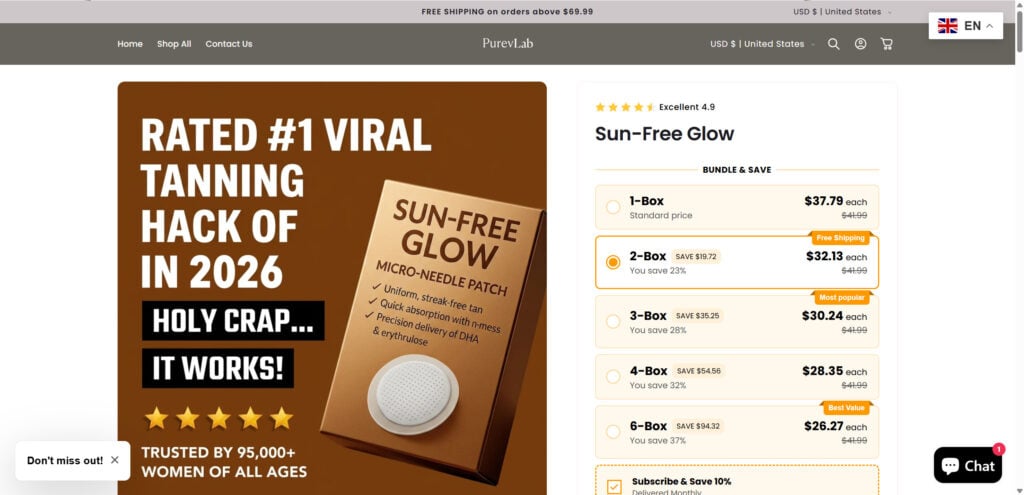
One sales page claims the patch can create a “Gradual, Real Tan in 6–12 Weeks,” requires “Just One Patch Every Two Weeks,” and uses a “Patented EryGlow™ Complex.” The same page sells one box for $41.99 and claims each patch uses dissolving micro-needles to activate natural melanin formation.
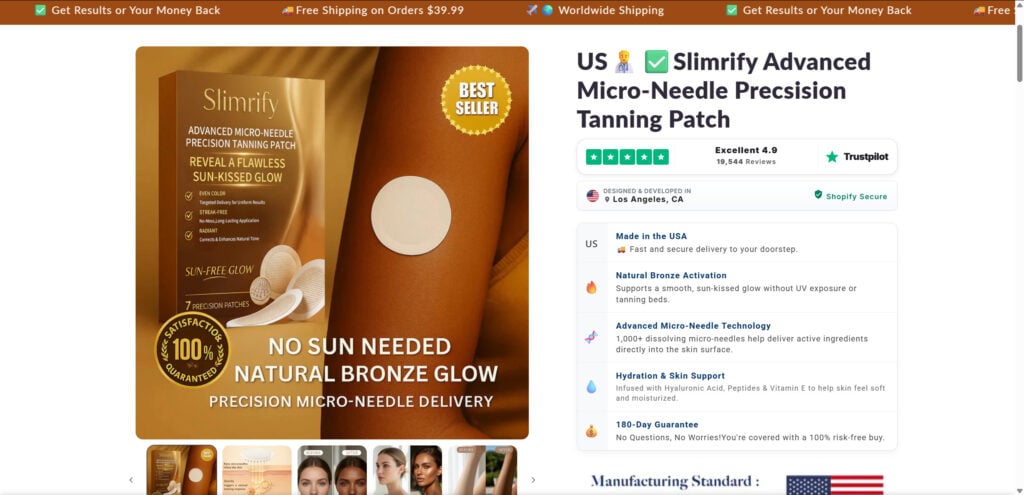
Another site, Slimrify, promotes a similar “advanced micro-needle” tanning patch and claims each patch has more than 1,000 ultra-fine dissolving micro-needles that create delivery channels in the skin for better absorption.
The marketing usually presents the product as:
- A sun-free tanning solution
- A micro-needle patch
- A melanin activator
- A transdermal tanning system
- A no-mess alternative to fake tan
- A “science-backed” beauty innovation
But the issue is not just what the product claims. It is how it is being sold.
Why the Sun-Free Glow Patch Looks Suspicious
The biggest red flag is the gap between the marketing and the evidence.
The ads make the product sound like a breakthrough tanning technology, but the sales pages do not provide convincing independent clinical proof that these patches can create the dramatic bronze transformations shown in promotional videos.
The language is filled with phrases like “melanin activation,” “advanced transdermal tanning,” “peptide activators,” and “micro-needle delivery.” These terms sound scientific, but they are not the same as verified evidence.
The FTC says health-related advertising claims need proper substantiation and must not mislead consumers, especially when scientific uncertainty exists. That matters here because the Sun-Free Glow Patch is not simply claiming to moisturize the skin. It is claiming to influence tanning biology.
The Dropshipping Pattern
The Sun-Free Glow Patch is not limited to one official-looking website. It appears under multiple storefronts, including Purevlab, Slimrify, and other similar product pages.
That is common in dropshipping operations. A product is sourced cheaply, rebranded with a premium name, then sold through polished landing pages and paid social ads at a much higher price.
The pattern usually works like this:
- A cheap generic product is sourced from overseas suppliers.
- A new brand name is created around it.
- AI-style ad videos make the product look revolutionary.
- Fake-looking reviews and before-and-after photos build trust.
- Customers are pushed into buying bundles.
- Returns become difficult because the customer must ship the product back to China.
- Some buyers report unwanted subscriptions or repeated charges.
That does not mean every tanning patch listing is operated by the same company. But the sales pattern is very similar to many beauty and wellness dropshipping schemes.
The Fake Science Problem
The Sun-Free Glow Patch ads lean heavily on the idea that the patch can activate melanin naturally. This is the core claim.
Real tanning is a biological response involving melanin production, UV exposure, skin type, genetics, and cellular signaling. It is not something consumers should assume can be safely and predictably triggered by a small cosmetic patch just because an ad uses scientific-sounding words.
One Purevlab page claims its formula “mimics the skin’s natural tanning process” and “stimulates melanin formation without sunlight.” That is a major claim. If a company makes claims like this, consumers should expect clear evidence, not just product-page graphics and glowing testimonials.
The FDA also warns that microneedling products can carry risks and may not always produce the desired cosmetic outcome. It notes that side effects from microneedling can sometimes last a short or long time, and some may be permanent.
That does not mean every dissolving cosmetic patch is automatically dangerous. But it does mean consumers should be cautious when a product uses “micro-needle” language while making bold cosmetic claims without strong safety and effectiveness data.
Fake Reviews and AI-Generated Marketing
Another concern is the review ecosystem around products like this.
Many Sun-Free Glow ads and pages use polished testimonials, dramatic transformation claims, and “verified buyer” style reviews. Some promotional videos appear to use AI-generated visuals, recycled clips, or scripted influencer-style reactions.
The FTC has specifically warned against fake or false consumer reviews, including AI-generated fake reviews and testimonials from people who did not actually use the product.
That is relevant because viral beauty scam campaigns often rely on the same formula:
- Overly perfect customer photos
- Before-and-after images that look edited or AI-generated
- Reviews that sound similar
- Generic first names
- No verifiable reviewer profiles
- No independent testing
- No credible dermatology sources
- Heavy urgency and discount pressure
When a product needs this much hype to sell, that is usually not a good sign.
Common Complaints About Sun-Free Glow Patch
Buyer complaints around this type of product tend to follow a familiar pattern:
The Product Does Not Work as Advertised
Many customers say they did not get the bronze glow shown in the ads. Some report no visible tanning effect at all. Others say the product is just a small patch that does not produce meaningful results.
That is a major issue because the advertising creates the impression of a dramatic, effortless tan.
Customers Receive Multiple Units
Some buyers report ordering one unit but receiving multiple items, often after a checkout flow that pushes bundles, upgrades, or hidden quantity increases.
This is common with aggressive ecommerce funnels. The page may present “best value” bundles, pre-selected offers, or post-purchase upsells that confuse buyers into spending more than intended.
Returns Are Nearly Impossible
A common complaint with dropshipping beauty products is that the company may claim to offer refunds, but then requires the customer to ship the item back to China.
That makes the refund process unrealistic. The return shipping may cost almost as much as the order, and tracking international returns can be difficult.
The FTC advises consumers to check return policies before buying, including who pays return shipping, how many days they have to return the item, and whether restocking fees apply.
Unwanted Subscriptions
Some buyers report being enrolled into recurring charges or subscriptions they did not clearly understand.
This is another major red flag. Subscription traps are often hidden behind “trial,” “VIP,” “discount club,” or “auto-renewal” language. The FTC has warned that negative-option marketing, including automatic renewals and free trials, must not mislead people about important terms.
How the Sun-Free Glow Patch Scheme Works
The Sun-Free Glow Patch operation appears to follow a predictable viral-product funnel.
1. The Ad Creates Curiosity
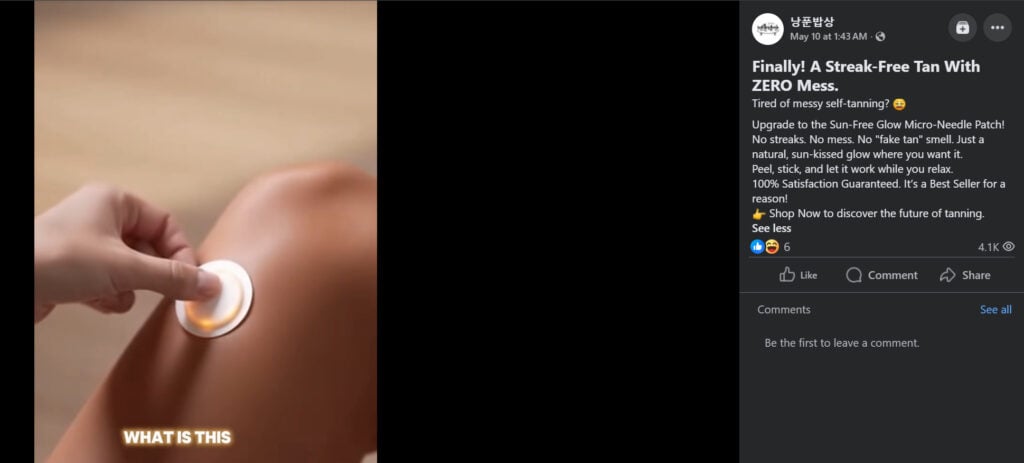
The ad usually opens with a hook like:
“Have you seen this sun-free tanning patch all over social media?”
Then it presents the patch as a new beauty breakthrough. The goal is to make the viewer feel like they are discovering a secret product before everyone else.
2. The Marketing Uses Scientific-Sounding Claims
The ad talks about:
- Transdermal tanning
- Dissolving micro-needles
- Melanin activation
- Peptide technology
- Glow-enhancing skin science
- DHA and erythrulose delivery
The language sounds convincing, but it is vague. It does not show strong independent clinical evidence proving that the product works the way the ads suggest.
3. The Before-and-After Photos Build False Confidence
Many ads show pale skin turning bronze after using the patch. These visuals are often the most persuasive part of the campaign.
But before-and-after photos are easy to manipulate with lighting, filters, self-tanner, AI tools, or unrelated stock content.
4. The Landing Page Pushes Urgency
Once users click the ad, they land on a sales page with heavy conversion tactics:
- Limited-time discounts
- Bundle offers
- High review scores
- “Verified buyer” testimonials
- “Clinically inspired” wording
- Free shipping thresholds
- Money-back guarantee language
The goal is to make the purchase feel low-risk.
5. The Product Arrives and Disappoints
The buyer often receives a small, generic-looking patch product. In many cases, it does not match the premium expectations created by the ad.
Some buyers then discover similar-looking patches available elsewhere for much less, which reinforces the dropshipping concern.
6. The Refund Process Becomes the Real Trap
When customers complain, the company may delay, ask for photos, offer a partial refund, or require return shipping to China.
This is how many dropshipping refund systems discourage complaints. Technically, the company may say refunds are possible. Practically, the process is so inconvenient that many customers give up.
Is the Sun-Free Glow Patch Legit?
Based on the available signs, consumers should be very cautious.
The Sun-Free Glow Patch may be a real physical product, but that does not make the marketing legitimate. The problem is the exaggerated promise that a tiny patch can create a natural, even, sun-free tan through advanced melanin activation without strong independent proof.
The red flags include:
- Multiple websites selling similar versions
- Dropshipping-style product structure
- Expensive pricing for what appears to be a cheap patch
- Vague scientific claims
- No convincing independent clinical evidence
- AI-style ads and suspicious testimonials
- Refund complaints
- Return shipping barriers
- Reports of unwanted subscriptions
- Claims that sound too easy and too futuristic
Verdict: Sun-Free Glow Patch looks like a high-risk, overhyped beauty product promoted through misleading dropshipping tactics. I would avoid it.
What To Do If You Bought Sun-Free Glow Patch
If you already purchased it, act quickly.
1. Save Everything
Keep screenshots of:
- The product page
- The checkout page
- The advertised price
- The refund policy
- The order confirmation
- Any subscription terms
- Emails from customer support
- Tracking information
- The package and return address
This evidence helps if you need to dispute the charge.
2. Contact the Seller Once
Send a clear refund request by email. Keep it short:
“I ordered this product based on your advertised claims. The product does not work as advertised. I am requesting a full refund. Please confirm that no subscription or recurring billing is active on my account.”
Do not argue endlessly with customer support.
3. Check for Subscription Charges
Look at your bank or card statement. Watch for recurring charges under names that may not match “Sun-Free Glow.”
If you see a recurring charge, contact your bank or card issuer immediately.
4. Dispute the Charge
If the seller refuses to refund you, sends the wrong quantity, charges you multiple times, or enrolls you in an unwanted subscription, contact your credit card company or payment provider.
5. Report the Seller
You can report misleading ads, fake reviews, subscription traps, or refund problems to consumer protection agencies. The FTC also recommends escalating unresolved refund issues through outside help when a business does not cooperate.
The Bottom Line
The Sun-Free Glow Patch is being marketed as a breakthrough tanning solution, but the evidence does not match the hype.
The product relies on big claims, vague science, dramatic visuals, and social media urgency. Buyer complaints about poor results, unwanted bundles, difficult returns, and possible subscription traps make it even more concerning.
A real tan without UV damage is an appealing promise. That is exactly why this type of product spreads so fast online. But when a product claims to activate melanin through a tiny patch while offering little real proof, consumers should treat it as a major red flag.
Bottom line: Sun-Free Glow Patch appears to be a dropshipping-style beauty scam built around exaggerated tanning claims. Avoid buying it from viral ads, and dispute the charge quickly if you already ordered and were misled.
FAQ
Is the Sun-Free Glow Patch legit?
The Sun-Free Glow Patch looks highly suspicious. While customers may receive a physical product, the marketing appears exaggerated, and there is little reliable proof that the patch can create the dramatic sun-free tanning results shown in the ads.
Does the Sun-Free Glow Patch really make your skin tan?
There is no strong public evidence showing that these patches can safely and reliably create a real bronze tan through “melanin activation” as advertised. Many buyers report little or no visible result.
Why are Sun-Free Glow Patch ads all over social media?
These ads are likely part of a viral dropshipping campaign. The product is promoted through attention-grabbing videos, AI-style visuals, fake-looking before-and-after photos, and urgent discount offers designed to push fast purchases.
Is Sun-Free Glow Patch a dropshipping product?
It appears to follow the dropshipping model. Similar tanning patches are sold across multiple websites, often with inflated prices, generic branding, and difficult return policies that may require shipping the item back to China.
Why do some customers receive multiple units?
Some buyers report receiving more patches than they intended to order. This can happen through confusing checkout funnels, pre-selected bundle offers, post-purchase upsells, or misleading quantity options.
Are there unwanted subscriptions connected to Sun-Free Glow Patch?
Some complaints mention recurring charges or unwanted subscriptions that are difficult to cancel. Buyers should check their bank statements carefully after ordering and contact their card issuer if they see unauthorized charges.
Can I return the Sun-Free Glow Patch?
Returns may be difficult. Many dropshipping-style stores advertise refund guarantees but then require customers to ship the product back to China, making the process expensive and impractical.
What should I do if I bought Sun-Free Glow Patch?
Save screenshots of the ad, product page, checkout page, order confirmation, refund policy, and all emails. Contact the seller once for a refund, check for recurring charges, and dispute the transaction with your bank or credit card provider if the seller refuses to help.
Are the before-and-after photos real?
Many ads for viral beauty products use edited images, filters, stock clips, AI-generated visuals, or unrelated customer photos. The Sun-Free Glow Patch marketing should not be trusted unless the results are backed by credible, independent evidence.
Should I buy Sun-Free Glow Patch?
It is safer to avoid it. The product has too many red flags, including exaggerated tanning claims, vague science, dropshipping-style websites, refund complaints, and possible subscription issues.








