

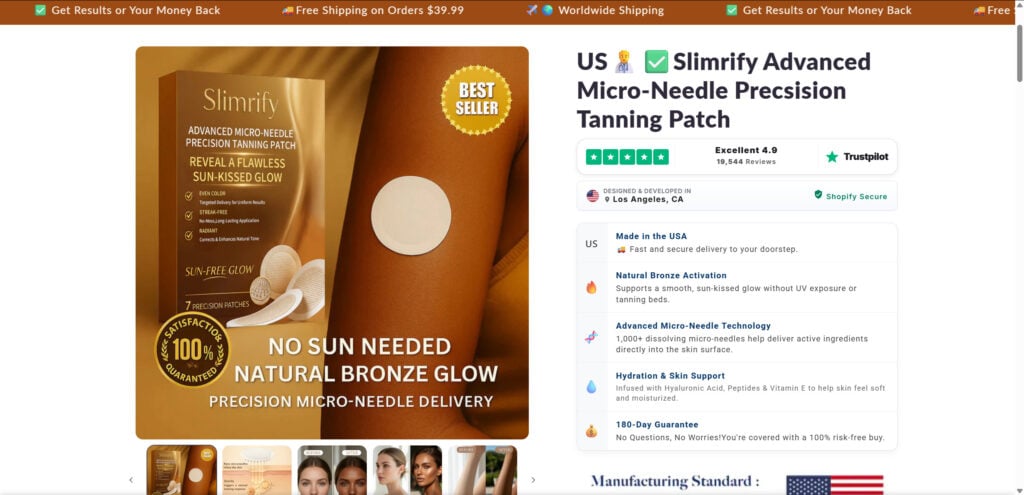
The Slimrify Advanced Micro-Needle Precsision Tanning Patch is being promoted as a futuristic way to get a bronze glow without sunlight, tanning beds, sprays, lotions, or messy self-tanner.
The promise is simple: apply a tiny patch, let the micro-needles dissolve, and supposedly your skin begins developing a natural-looking tan from within.
But behind the polished product page and social media ads, there are major red flags. The Slimrify tanning patch appears to follow the same pattern seen with many viral beauty dropshipping products: exaggerated claims, vague science, inflated pricing, suspicious testimonials, and refund problems that make it difficult for buyers to get their money back.
What Is the Slimrify Advanced Micro-Needle Precsision Tanning Patch?
Slimrify markets the product as an “Advanced Micro-Needle Precsision Tanning Patch,” with the spelling “Precsision” appearing in the product title. The sales page claims each patch contains more than 1,000 dissolving micro-needles that create tiny delivery channels in the skin, allowing tanning ingredients to absorb more effectively than traditional self-tanning creams or foams.
The product page also claims Slimrify uses “advanced Nano Micro-Needle Technology” and a “Slimrify Tanning Complex” to work with the body’s natural tanning process. It describes a timeline where the skin supposedly begins preparing for a melanin response after the first patch, deepens after several weeks, and reaches a longer-lasting glow after two to three months.
That sounds impressive, but the problem is obvious: the page uses heavy scientific-sounding language without showing strong independent clinical evidence that these patches can create the dramatic tanning results shown in viral ads.
Why This Product Raises Red Flags
The Slimrify tanning patch is not being sold like a normal, transparent beauty product. It is being sold like a viral “miracle” item.
The page uses phrases such as:
- Advanced transdermal delivery
- 1,000+ dissolving micro-needles
- Skin-targeted absorption
- Melanin response
- Tanning complex
- Peptide activators
- Natural golden finish
- Bronze from within
These phrases are designed to make the product feel scientific and premium. But marketing language is not proof.
The FTC says companies must support health-related advertising claims with appropriate evidence, especially when claims involve physical effects or scientific mechanisms. If a product claims to influence the skin’s tanning process through micro-needle delivery, consumers should expect clear studies, real testing, and transparent ingredient data — not just a flashy landing page.
The “Micro-Needle” Claim Is Not Something to Ignore
Slimrify’s page repeatedly leans on micro-needle technology as the key selling point. That alone should make buyers cautious.
Microneedling is not just a trendy beauty word. The FDA explains that microneedling devices create small punctures in the skin and may carry risks such as redness, itching, peeling, discomfort, burning, bruising, bleeding, pigmentation changes, infection, and other complications.
The FDA also notes that microneedling may not always produce the desired aesthetic result and that any improvement may be temporary.
This does not mean every dissolving cosmetic patch is automatically dangerous. But when a product claims to use micro-needles to deliver tanning ingredients beneath the skin, consumers should be careful. The more invasive the product sounds, the more evidence and safety transparency the seller should provide.
The Fake Science Problem
The biggest issue with the Slimrify tanning patch is not simply that it uses beauty buzzwords. It is that the entire pitch depends on the idea that a small patch can trigger a visible, even, natural-looking tan without UV exposure.
That is a major claim.
Real tanning involves melanin production, skin type, genetics, UV exposure, and biological signaling. Slimrify’s page suggests the patch can work with the body’s natural pigment system and create a gradual bronze effect using ingredients such as DHA, erythrulose, and peptide activators.
DHA and erythrulose are known self-tanning ingredients, but traditional self-tanners usually work by reacting with the surface layer of the skin. That is different from proving that a patch can safely and reliably stimulate a true internal tanning response.
The sales page does not provide enough credible evidence to support the dramatic transformation story being sold in the ads.
The Dropshipping Pattern
The Slimrify Advanced Micro-Needle Precsision Tanning Patch appears to fit a familiar dropshipping pattern.
The product is promoted as a premium beauty innovation, but many similar tanning patches are sold across multiple websites under different brand names. These products are often marketed through viral social media ads, AI-style videos, scripted testimonials, and aggressive discount funnels.
The typical operation works like this:
- A cheap generic patch is sourced from overseas suppliers.
- A new brand name is built around it.
- The product is renamed with scientific-sounding wording.
- Paid ads create urgency and curiosity.
- The landing page pushes bundles and discounts.
- Customers receive a low-cost product that does not match the hype.
- Refunds become difficult because returns may require international shipping.
This is why many buyers only realize the problem after the package arrives.
Suspicious Reviews and AI-Style Ads
Another red flag is the way products like this are promoted online.
Viral tanning patch ads often rely on before-and-after images, glowing testimonials, influencer-style videos, and “verified customer” reviews. Some of these visuals may be edited, filtered, staged, or AI-generated.
That matters because the FTC has a rule targeting fake reviews and testimonials, including deceptive reviews attributed to people who did not actually use the product or AI-generated fake endorsements.
With products like the Slimrify tanning patch, buyers should be skeptical of:
- Perfect before-and-after photos
- Reviews that sound generic or repetitive
- Customer names with no real profiles
- Testimonials that appear on multiple sites
- Scripted influencer reactions
- Claims of massive results without credible proof
- Urgency tactics like “limited stock” or “sale ends soon”
A real product should not need fake-looking hype to sell.
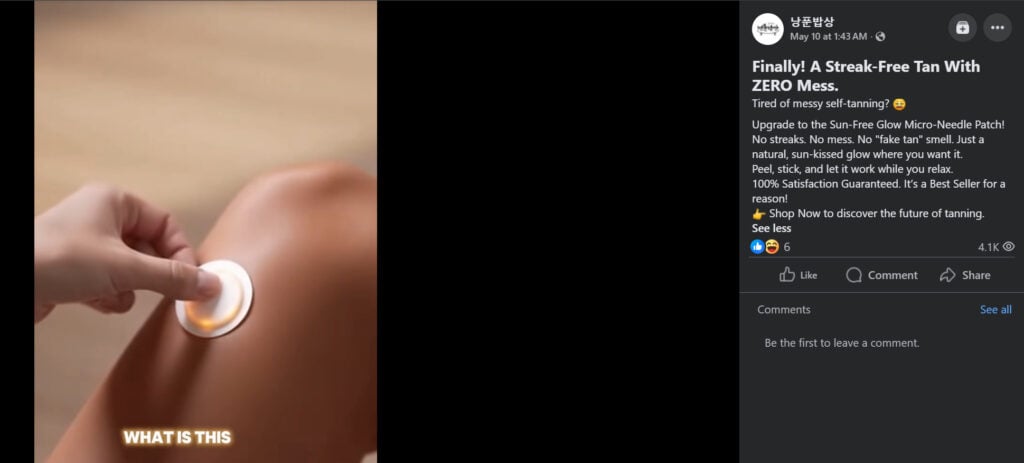
Common Complaints About Slimrify-Style Tanning Patches
Complaints around this type of product usually follow the same pattern.
The Product Does Not Work as Advertised
The most common complaint is simple: the patch does not create the tan shown in the ads.
Some buyers report no noticeable change. Others say the effect is weak, uneven, or nothing like the “natural bronze glow” promised by the marketing.
Buyers Receive More Units Than They Ordered
Some customers report ordering one item but receiving multiple units. This can happen when checkout pages use confusing bundle offers, pre-selected quantities, or post-purchase upsells.
The customer thinks they bought one product, but the final charge may reflect a larger order.
Returns Are Difficult or Unrealistic
Many dropshipping-style stores advertise refund guarantees, but then require customers to ship the product back to China or another overseas return address.
That makes the refund process nearly impossible for many buyers. International return shipping can be expensive, slow, and difficult to track.
Subscription or Recurring Charge Concerns
Some buyers report unwanted subscriptions or recurring charges after purchasing viral beauty products like this.
The FTC describes negative-option programs as arrangements where sellers continue charging for goods or services unless the consumer cancels. It also notes that these programs become harmful when marketers fail to disclose terms clearly, bill without consent, or make cancellation difficult.
If you bought this product, check your bank statement carefully.
Is Slimrify Advanced Micro-Needle Precsision Tanning Patch Legit?
The product may exist physically, but that does not make the marketing trustworthy.
Slimrify’s tanning patch has too many red flags:
- Exaggerated tanning claims
- Scientific-sounding language without strong proof
- Micro-needle claims that deserve more safety transparency
- Questionable before-and-after marketing
- Dropshipping-style sales structure
- Similar products sold under multiple names
- Reports of poor results
- Difficult return processes
- Possible unwanted subscription issues
- Heavy urgency and bundle-based checkout tactics
The safest conclusion is that the Slimrify Advanced Micro-Needle Precsision Tanning Patch appears to be a high-risk beauty product promoted with misleading or exaggerated claims.
What To Do If You Bought It
If you already ordered the Slimrify tanning patch, act quickly.
1. Save Evidence
Take screenshots of:
- The product page
- The advertised claims
- The checkout page
- Your order confirmation
- The refund policy
- Any subscription terms
- Customer support emails
- Tracking information
- The package and return label
This evidence may help if you need to dispute the charge.
2. Contact the Seller Once
Send a clear refund request. Keep it direct:
“I purchased the Slimrify tanning patch based on the advertised claims. The product does not work as advertised, and I am requesting a full refund. Please also confirm that no subscription or recurring billing is active on my account.”
Do not waste weeks arguing with support.
3. Check for Recurring Charges
Look for repeat charges under Slimrify or a different billing name. If you see anything suspicious, contact your bank or credit card provider immediately.
4. Dispute the Charge
If the seller refuses a refund, requires unreasonable return shipping, charged you for extra units, or enrolled you in a subscription without clear consent, file a dispute with your card provider.
5. Report the Ads
Report misleading ads directly on Facebook, Instagram, TikTok, YouTube, or whichever platform showed you the promotion. These ads often disappear and return under new brand names.
The Bottom Line
The Slimrify Advanced Micro-Needle Precsision Tanning Patch is being marketed as a breakthrough tanning product, but the evidence does not match the hype.
The product page uses impressive-sounding claims about dissolving micro-needles, transdermal tanning, melanin response, and peptide activators. But there is little transparent proof that this patch can safely and reliably create the dramatic bronze results shown in social media ads.
When you combine the exaggerated claims, dropshipping-style structure, questionable reviews, refund problems, and possible subscription concerns, the verdict is clear:
The Slimrify Advanced Micro-Needle Precsision Tanning Patch looks like an overhyped dropshipping beauty product with major scam red flags. Avoid buying it from viral ads, and dispute the charge quickly if you were misled.








