

Night driving can be stressful, especially with the intense glare from modern LED headlights. For many older drivers, this glare can cause eye strain, headaches, and even dangerous moments behind the wheel. That’s exactly what products like the Surpora Night Driving Glasses (also marketed as GlareGuard™ Glasses) claim to fix. They promise to reduce glare, improve night vision, and make nighttime driving safer and more comfortable. But do they really work, or is this just another overhyped dropshipping product that preys on online shoppers?
In this comprehensive investigation, we dig deep into the Surpora Night Driving Glasses — from their product claims and customer reviews to the actual sourcing and business model behind them. If you’re considering buying these glasses, this review will tell you everything you need to know before spending your money.
Overview: What Are Surpora Night Driving Glasses?
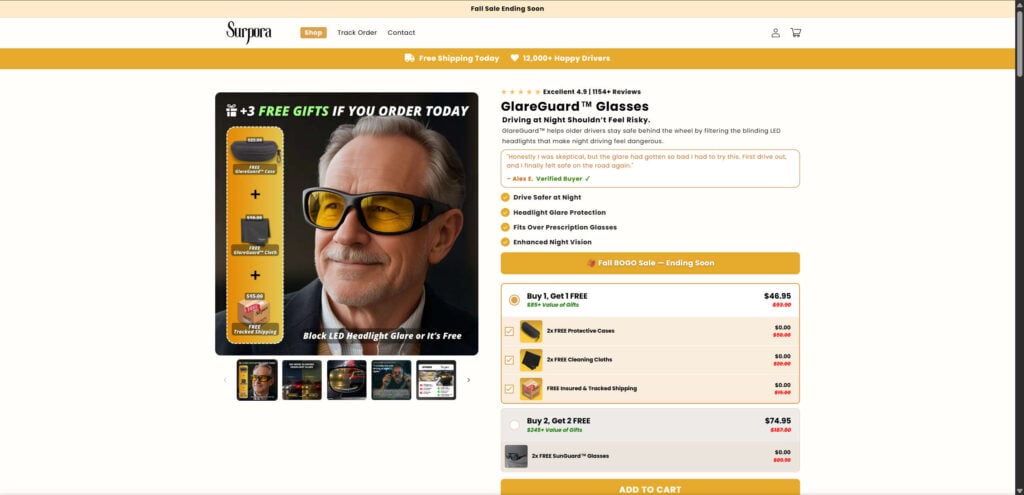
Surpora markets its GlareGuard™ Glasses as specialized night driving eyewear designed to filter the harsh glare from LED headlights, streetlights, and oncoming traffic. According to the website, the glasses are made to help drivers see clearly at night by reducing blue light, minimizing glare, and improving overall contrast. The brand claims that they “block LED headlight glare or it’s free,” which immediately positions them as a guaranteed solution for night vision problems.
The website presentation looks professional at first glance. It features bright yellow lenses, smiling older customers, and numerous five-star reviews that praise how well the glasses supposedly work. They even advertise a “Buy 1, Get 1 Free” deal along with “three free gifts” — a carrying case, cleaning cloth, and free tracked shipping. However, once you look beneath the surface, several red flags start to appear.
Exaggerated Marketing Claims
The marketing around the Surpora Night Driving Glasses is designed to create a sense of urgency and trust. The site uses phrases like:
- “Drive safer at night.”
- “Protect what matters.”
- “Drive with clarity.”
- “Block LED headlight glare instantly.”
It also cites statistics like “97% of users reported reduced glare and eye strain” and “94% felt safer driving at night.” However, these statistics are not backed by any scientific studies or verifiable sources. There’s no link to research, no mention of independent testing, and no clear manufacturer listed anywhere on the website.
Fake Sense of Social Proof
Surpora’s website heavily relies on fake-looking reviews and testimonials. The photos used appear to be generic stock images or AI-generated images of older adults wearing yellow glasses. Each review includes glowing five-star ratings and comments like, “I finally feel safe on the road again,” or “I can’t believe how well these work!” There are no timestamps, no verified purchase badges, and no user profiles. In short, there’s no real evidence that these reviewers are genuine customers.
New, Untraceable Website
Another red flag is that Surpora’s website is new, with limited history online. A quick domain check shows it was created recently, and there are no verifiable company details such as an address, phone number, or business registration. The only contact options are a generic email form and an “Order Tracking” link that doesn’t lead to a recognizable logistics system.
This pattern is common among dropshipping operations that resell cheap products from overseas at highly inflated prices.
Identical Glasses Found Online for Under $2
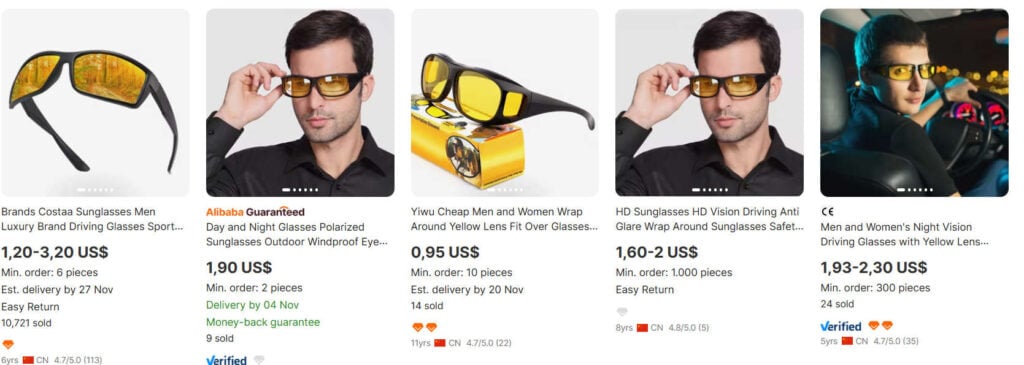
When you compare the Surpora Night Driving Glasses with listings on wholesale sites like AliExpress and Alibaba, you’ll find nearly identical products — the same shape, same yellow lenses, and even the same packaging — selling for $0.95 to $2.30 per pair. Surpora charges around $46.95 to $74.95, claiming this includes free gifts worth over $85. The huge markup is typical of deceptive dropshipping schemes that rely on flashy marketing rather than product quality.
The Dropshipping Model Behind Surpora
Dropshipping is a business model where the seller doesn’t actually stock the product. Instead, they buy it from a third-party supplier (usually in China) only after you place your order. This means:
- You often wait weeks for delivery.
- The product that arrives is usually low quality and not as described.
- Returning or refunding is extremely difficult, if not impossible.
Surpora fits this pattern perfectly. The company promotes itself as an innovative American brand, but its products match low-cost imports. Reviews from independent sources and customer feedback online suggest that returns are rarely honored and customer support is unresponsive.
What You Actually Get
Based on user complaints and verified feedback from people who’ve purchased these glasses, here’s what typically happens:
- The product arrives in cheap packaging, often without branding.
- The glasses feel flimsy, with loose hinges and poor lens clarity.
- The “polarized” lenses do little to reduce glare in real-world driving.
- The so-called “free gifts” are low-cost accessories worth only a few cents.
In short, buyers receive a generic, mass-produced item that doesn’t live up to the promises on the website.
The Illusion of Safety and Science
Surpora’s website uses pseudo-scientific explanations to make their glasses seem credible. They claim to use “polarized lenses that filter blue light” and “reduce melatonin suppression from bright headlights.” While yellow-tinted lenses can slightly increase contrast in some conditions, they do not significantly improve night vision and can actually reduce overall visibility because they cut down light entering the eye. The American Academy of Ophthalmology specifically warns that there is no proven benefit to night driving glasses and that they can sometimes make things worse.
In essence, the Surpora Night Driving Glasses use real scientific terminology to lend legitimacy to false or misleading claims.
How the Operation Works
The Surpora Night Driving Glasses website is a textbook example of a dropshipping scam operation disguised as a premium lifestyle brand. Let’s look at how it works step by step so you can recognize the signs and avoid falling for similar online traps.
Step 1: Setting Up the Brand and Website
Dropshippers begin by creating a convincing brand identity that feels trustworthy. In this case, “Surpora” uses a sleek, modern website layout with professional photos and emotionally charged marketing language. The product name “GlareGuard™” gives the impression of a patented or specialized technology, when in fact it’s just a generic term.
The site’s structure mimics that of legitimate eCommerce stores, with elements like:
- Customer testimonials
- Star ratings
- FAQs
- Shipping and refund policies
- Limited-time offers
However, these are mostly copied templates found in Shopify-based dropshipping stores. The main goal is to build credibility long enough for you to hit “Add to Cart.”
Step 2: Psychological Triggers and Urgency
The marketing copy on Surpora’s website is crafted to push emotional buttons. It targets older adults who may already struggle with night driving, emphasizing safety, comfort, and family protection. It uses phrases such as “Protect what matters” and “Driving at night shouldn’t feel risky.” This emotional appeal creates fear around night driving while positioning their product as the solution.
At the same time, the website uses scarcity tactics like:
- “Fall BOGO Sale Ending Soon”
- “Free shipping today only”
- “12,000+ happy drivers”
These create a sense of urgency, making buyers feel they must act fast to avoid missing out. In reality, these “sales” are permanent and part of the design to keep the illusion alive.
Step 3: Inflated Prices and Fake Discounts
Surpora claims that one pair of glasses costs $93.90, but you can buy one and get one free for $46.95. This supposed “discount” is purely psychological. The real wholesale price of these glasses, as shown on multiple Chinese retail platforms, is under $3. The inflated price makes the “deal” seem irresistible, even though you’re still overpaying by more than 1,000%.
Step 4: Using Stock Photos and AI Reviews
All images on the Surpora website appear to be stock photography or AI-generated composites. The people shown in testimonials are not identifiable real customers. Some photos even appear in listings for unrelated products online. Fake reviews with generic names and glowing feedback are strategically placed to mimic authenticity.
The tactic works well on less skeptical shoppers, especially older buyers unfamiliar with online scams.
Step 5: Outsourcing Fulfillment to Cheap Suppliers
Once a purchase is made, Surpora likely forwards your order to a low-cost supplier in China. These suppliers handle packaging and shipping directly to your address. Because of this, delivery can take anywhere from two to six weeks, and the product quality varies drastically depending on which supplier fulfills the order.
If you try to track your shipment, you’ll often get generic tracking links or long delays. Some users report receiving no product at all.
Step 6: Making Returns Impossible
Surpora’s refund policy looks reasonable on the surface — a “30-Day Money Back Guarantee.” However, this is where the deception deepens. The actual process of returning a product is deliberately complicated. Customers report that when they request a refund, they’re either ignored or told to ship the item back to an overseas address at their own expense. Since return shipping costs often exceed the price of the glasses, most people give up.
This tactic is common in dropshipping scams: make the refund policy sound reassuring while ensuring it’s nearly impossible to use.
Step 7: Rebranding and Relaunching
Once too many complaints accumulate or negative reviews start circulating, these operations often shut down and reopen under a new brand name. The same product reappears with a new logo, new testimonials, and slightly tweaked marketing text. This allows the operators to continue profiting while avoiding accountability.
If Surpora’s reputation continues to deteriorate, don’t be surprised to see the exact same glasses reappear under a new name like “LumaDrive,” “SafeVision,” or “ClearSight Pro.”
Step 8: Targeting Vulnerable Consumers
The Surpora campaign specifically targets older drivers, a demographic more likely to experience glare sensitivity and less likely to recognize online sales manipulation. The language on the site is written to reassure and comfort, rather than to inform. By invoking emotional themes like “protecting your loved ones” and “driving safely with confidence,” they create a false sense of trust and urgency.
These manipulative tactics are central to the entire operation. They exploit both emotional vulnerability and limited online literacy to sell an overpriced, underperforming product.
What To Do If You Have Already Bought Surpora Night Driving Glasses
If you’ve already purchased Surpora Night Driving Glasses and are now realizing you may have been misled, don’t panic. There are still steps you can take to protect yourself and potentially recover your money.
1. Contact Your Payment Provider Immediately
If you paid by credit card or PayPal, contact your provider right away and request a chargeback or dispute. Explain that the product you received was not as described and that the company has failed to respond to refund requests. Include screenshots of the original advertisement, the product page, and the item you received.
Credit card companies and PayPal often side with consumers in these cases, especially if the seller is unresponsive or the evidence of deception is clear.
2. Save All Communication and Documentation
Keep every email, receipt, tracking number, and message exchanged with the seller. Documentation is crucial when filing a dispute or complaint. Take clear photos of the product you received, especially if it looks different from the advertised item.
This evidence can help your payment provider or consumer protection agency verify your claim.
3. Do Not Ship the Item Back Without Instructions
Some customers are told to send the product back to a foreign address at their own expense. Do not do this unless your payment provider instructs you to. International return shipping is often more expensive than the product itself, and in many cases, the item never reaches the seller.
If you must return it, make sure to use a tracked and insured shipping method so you have proof of delivery.
4. File a Complaint With Consumer Protection Agencies
If you believe the operation is fraudulent, file a complaint with organizations like:
- The Federal Trade Commission (FTC) in the United States
- Your local consumer protection office or equivalent authority
- Better Business Bureau (BBB) (if applicable)
- Online fraud reporting platforms
While this might not lead to immediate reimbursement, it helps build a record of complaints that can lead to investigations and warnings issued to others.
5. Leave Honest Reviews Online
Leaving a factual, detailed review can help protect other consumers from falling for the same scam. Post your experience on consumer forums, review platforms, and social media. Include photos of the actual product, your order confirmation, and describe how it differs from the advertising.
Make sure your review is calm, factual, and evidence-based. Avoid emotional language, as clear, verifiable details make your warning more credible.
6. Learn to Identify Dropshipping Scams in the Future
If you were misled by Surpora, take this as a learning opportunity. Before buying from an unfamiliar online store, check for the following warning signs:
- Recently created website with no history or company details
- Overly emotional or exaggerated marketing language
- Fake countdown timers or “limited time offers”
- Stock photos or AI-generated images for reviews
- No physical address or working phone number
- Identical products on wholesale sites for a fraction of the price
Doing a quick reverse image search of the product or reading independent reviews can often save you from losing money.
7. Warn Friends and Family
Surpora targets an older demographic, so share what you’ve learned with others who might be vulnerable to similar scams. A simple conversation can prevent others from wasting their money.
8. Monitor Your Financial Accounts
If you entered credit card details on the Surpora website, keep an eye on your statements. Look for unauthorized or repeated charges. If anything suspicious appears, contact your bank immediately to freeze or replace your card.
The Bottom Line
The Surpora Night Driving Glasses and their branded name GlareGuard™ are marketed as a breakthrough solution for safer night driving. In reality, they appear to be cheap imported glasses resold at a massive markup under misleading claims. The website’s reviews, statistics, and guarantees lack transparency, and the business structure follows the same blueprint used by countless dropshipping scams.
While the idea of reducing headlight glare sounds appealing, there is no credible scientific evidence that yellow-tinted “night driving” glasses significantly improve visibility or safety. Reputable ophthalmologists have even cautioned against using them, noting that they can reduce the total amount of light entering your eyes, which can make night driving more difficult.
If you’re serious about improving night driving safety, consider legitimate alternatives:
- Have your eyes checked by an optometrist to rule out vision problems.
- Ensure your windshield and headlights are clean and properly aligned.
- Use high-quality prescription lenses with anti-reflective coating.
In conclusion, Surpora Night Driving Glasses are not worth your money. The exaggerated claims, fake reviews, and poor refund support all point to an operation built around profit, not performance. Before clicking “Buy Now,” take a few minutes to research the company and read reviews from independent sources. Your wallet — and your peace of mind — will thank you.








