

If you’ve recently received an alarming email claiming that your system has flagged undelivered messages due to security validations, you are not alone. Many individuals and businesses are being targeted by this scam, which is designed to trick recipients into handing over their login credentials. The email typically looks like a legitimate system notification and warns that several messages are being held in a quarantine folder. It then prompts the user to click a button labeled something like “Deliver (3) Messages to Inbox.”
Unfortunately, this message is not from your email provider. It is a carefully designed phishing attempt meant to steal sensitive information such as your email address, password, and potentially financial data. In this article, we will provide a detailed overview of this scam, explain how it works step by step, and show you exactly what to do if you’ve already interacted with it.
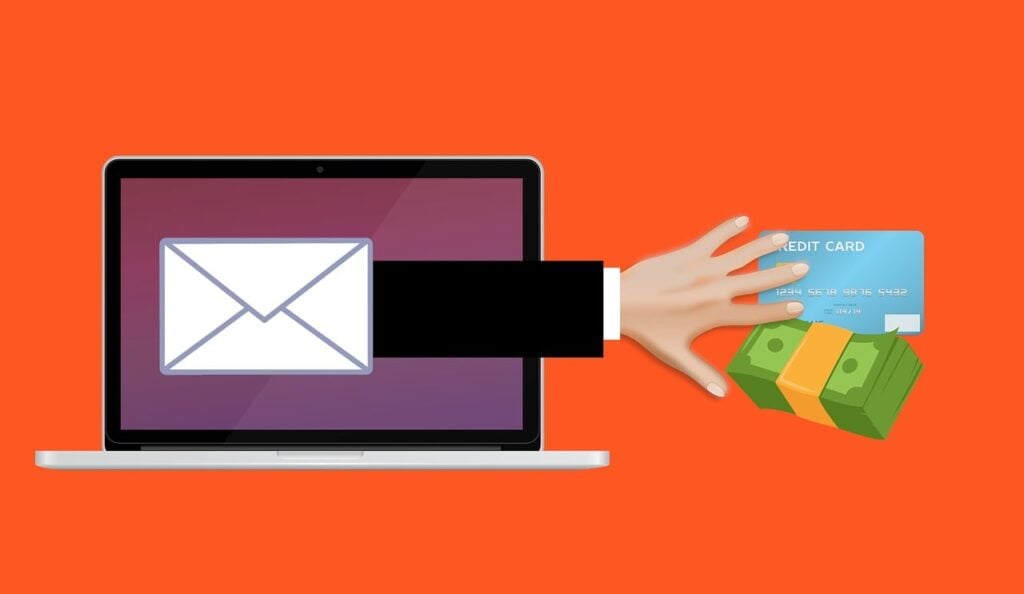
Scam Overview
The “System Has Flagged Messages Due To Security Violations” email scam is a classic phishing campaign. It relies on fear and urgency to push victims into taking immediate action without questioning the legitimacy of the email.
Key Characteristics of the Scam Email
- Subject Line Variations
- “Alert: Incoming Emails Are Being Held”
- “System Has Flagged Messages Due To Security Violations”
- “Action Required: Review Quarantined Messages”
- “Undelivered Emails Pending Your Review”
- False Claim of Quarantined Emails
The body of the email states that your account has flagged a number of undelivered or quarantined messages (often three). To make it appear credible, the email often lists fake subjects such as:- Bank T/T
- Payment
- Invoice
- Urgency and Call to Action
The email insists that the recipient must take immediate action to “release the messages” by clicking a button that looks professional and trustworthy. - The Dangerous Button
- Example: Deliver (3) Messages to Inbox
- Clicking this button does not release any emails. Instead, it redirects the victim to a fraudulent login page disguised as a legitimate webmail portal.
- Phishing Page Mechanics
- The fake page usually copies the look of popular services (Microsoft Outlook, Gmail, Yahoo Mail, or company-branded portals).
- Once you enter your login credentials, they are immediately sent to the scammers.
- Potential Consequences
- Unauthorized access to your email account.
- Password reuse exploitation (if the same password is used for banking, social media, or business accounts).
- Identity theft.
- Business email compromise (BEC) leading to fraudulent invoices or payment redirection scams.
How the Scam Works
Understanding exactly how this scam functions is key to avoiding it. Let’s break it down into clear steps.
Step 1: The Initial Email
- The victim receives an email with a subject line implying urgency.
- It is formatted to mimic a professional system alert, complete with tables showing pending emails.
- The fake “quarantined” emails usually appear important (financial terms like “Invoice,” “Payment,” etc.).
Step 2: Psychological Manipulation
The scam leverages social engineering tactics:
- Urgency: “You have 3 undelivered messages pending.”
- Fear of Missing Out: “You might lose critical communications.”
- Authority: Styled to look like an official system message.
Most people do not want to risk losing important bank or invoice emails, so they are more likely to comply.
Step 3: The Call to Action
- A large, eye-catching button labeled “Deliver Messages to Inbox” urges the victim to click.
- The button leads to a fraudulent website.
Step 4: The Phishing Website
- The victim is redirected to a fake login page designed to look like their email provider.
- Victims are prompted to enter:
- Email address
- Password
- Sometimes additional security questions or multi-factor authentication codes
Step 5: Data Harvesting
- Once submitted, the information is not used to release any messages.
- Instead, it is immediately sent to cybercriminals.
Step 6: Exploitation of Stolen Credentials
Scammers may:
- Log into the victim’s email account.
- Send out more phishing emails to their contacts.
- Attempt password reuse on banking, social media, and business platforms.
- Launch fraudulent payment requests (e.g., Business Email Compromise).
- Sell the stolen credentials on dark web marketplaces.
Step 7: Further Attacks
- If scammers gain control of a corporate email account, they can impersonate employees or executives, leading to large-scale financial fraud.
- They may also steal confidential documents, trade secrets, or sensitive customer data.
What To Do If You Have Fallen Victim To This Scam
If you clicked the link or entered your credentials, time is critical. Immediate action can help minimize the damage.
1. Change Your Email Password Immediately
- Go directly to your email provider’s official website (do not use any links in the suspicious email).
- Change your password to something strong and unique.
- Do not reuse this password for other accounts.
2. Enable Two-Factor Authentication (2FA)
- If available, turn on two-factor authentication for your email account.
- Use an authenticator app (Google Authenticator, Authy) rather than SMS when possible.
3. Check for Unauthorized Access
- Review your email login history (most providers allow this).
- Look for unusual IP addresses, devices, or locations.
4. Revoke Malicious App Connections
- Go to your account’s security settings.
- Remove any suspicious third-party apps or connections that may have been authorized.
5. Scan Your Device for Malware
- Use a reputable antivirus program.
- Scammers may also trick users into downloading malware in similar campaigns.
6. Secure Other Accounts
- If you reused your password on banking, social media, or other services, change those passwords immediately.
- Enable 2FA wherever possible.
7. Notify Your Contacts
- If scammers have accessed your email, they may send phishing emails to your contacts.
- Warn colleagues, friends, and family not to click on suspicious messages coming from your address.
8. Report the Scam
- Report the phishing attempt to your email provider (e.g., Microsoft, Google, Yahoo).
- In the U.S., forward the email to the FTC at reportphishing@apwg.org.
- In the EU or UK, report to your national cybercrime authority.
9. Monitor Your Accounts Closely
- Watch for suspicious financial transactions.
- Monitor for password reset attempts or unfamiliar account recovery emails.
10. Consider Identity Protection Services
- If you suspect identity theft, consider using a credit monitoring service.
- Freeze your credit reports if you believe financial fraud may be attempted.
Is Your Device Infected? Run a Free Malware Scan
Slow performance, constant pop-ups, or strange behavior? These are classic signs of a malware infection. The fastest way to find out is to scan your device with Malwarebytes Free — one of the most trusted malware removal tools available.
The free version detects and removes the most common threats, including:
- Adware — the cause of those annoying pop-ups
- Browser hijackers — unwanted redirects and changed homepages
- Trojans and spyware — hidden programs stealing your data
- Potentially unwanted programs (PUPs) — software you never asked for
👉 Select your device below — Windows, Mac, or Android — then follow the simple steps to download Malwarebytes, scan your system, and remove any threats it finds. The scan usually takes 5 to 20 minutes.
Run a Malware Scan with Malwarebytes for Windows
Malwarebytes is one of the most popular and trusted anti-malware tools for Windows — and it’s completely free for removing infections. It catches threats that many antivirus programs miss, including adware, browser hijackers, and trojans. Follow the steps below to scan and clean your PC in just a few minutes.
Download Malwarebytes
Click the button below to download the latest version of Malwarebytes for Windows from the official source. The free version is all you need — it will scan your computer and remove adware, browser hijackers, and other malicious software at no cost.
Download MalwarebytesOfficial installer for Windows 11 and 10. Your download starts right away.Want real-time protection? See Malwarebytes Premium Malwarebytes Free for WindowsScans and removes malware at no cost
-
Install Malwarebytes
When the download finishes, open your Downloads folder and double-click the MBSetup file. If Windows shows a User Account Control pop-up, click “Yes” to allow the installation.
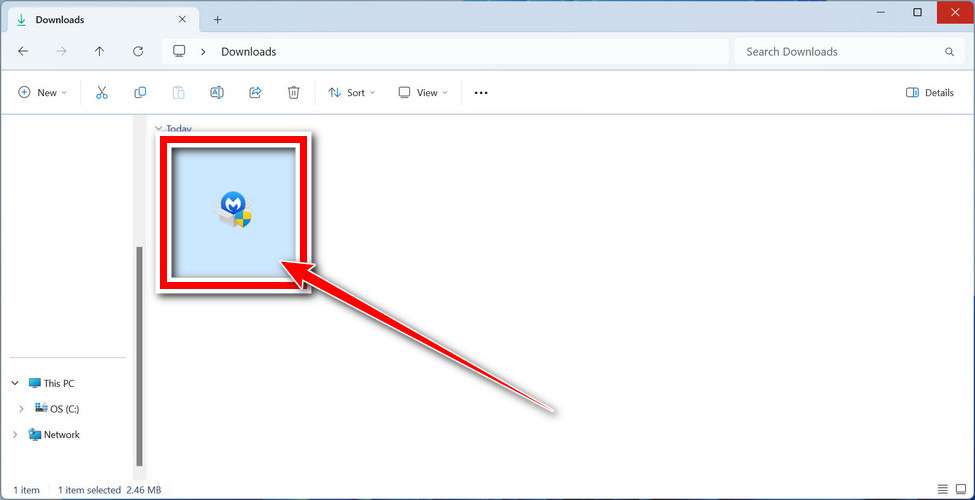
Follow the On-Screen Prompts to Install Malwarebytes
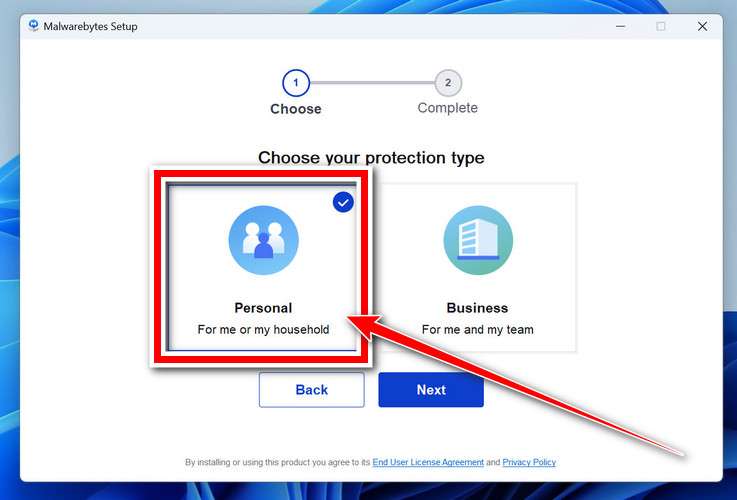
The setup wizard will walk you through a few quick screens:
-
Choose where you’re installing the program — “Personal Computer” or “Work Computer” — then click Next.
-
Malwarebytes will now install on your device. This usually takes under a minute.

-
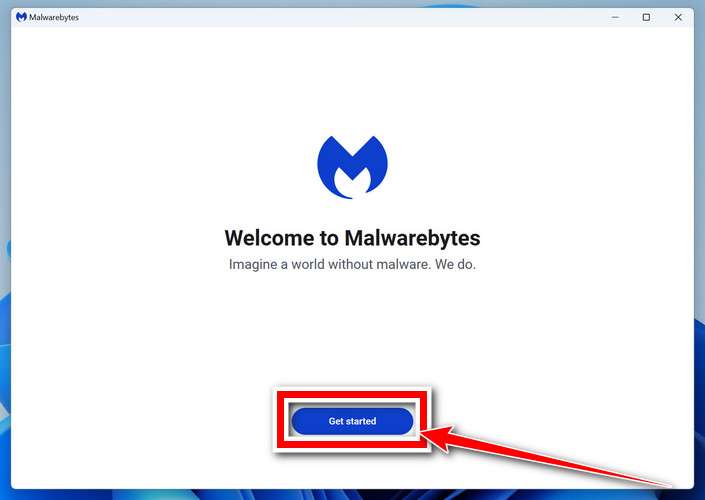
When installation is complete, the “Welcome to Malwarebytes” screen will open automatically.
-
On the final screen, click Open Malwarebytes to launch the program.

-
Enable “Scan for Rootkits”
Before scanning, turn on rootkit detection so Malwarebytes can find even the most hidden threats. Click the Settings gear icon on the left side of the screen.
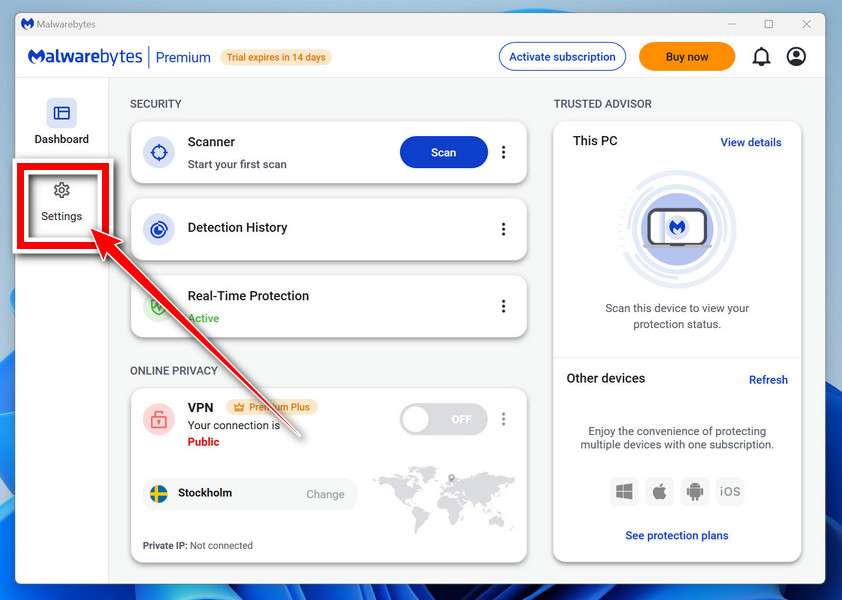
In the settings menu, find “Scan for rootkits” and click the toggle so it turns blue.

Done? Click “Dashboard” in the left pane to return to the main screen.
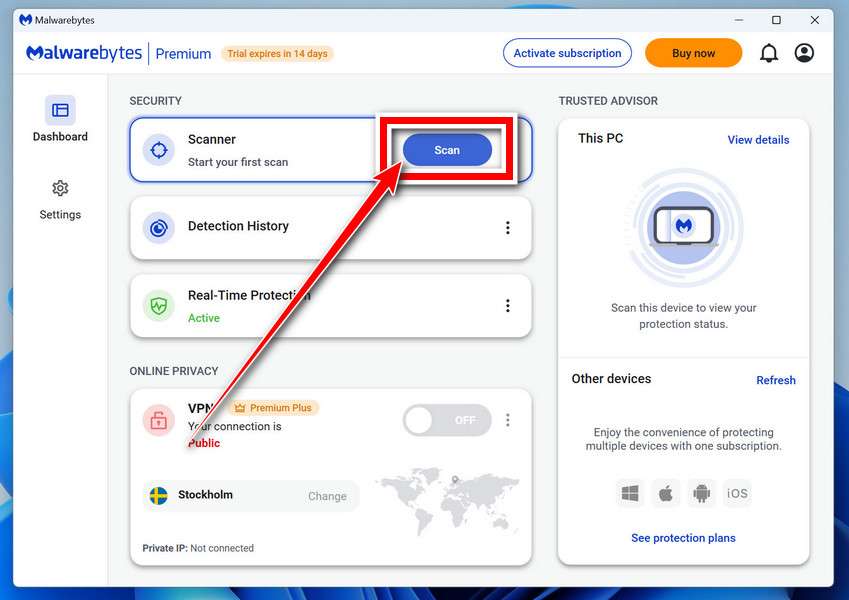
Start the Scan
Click the blue Scan button. Malwarebytes will automatically update its virus database and start checking your computer for malware.
-
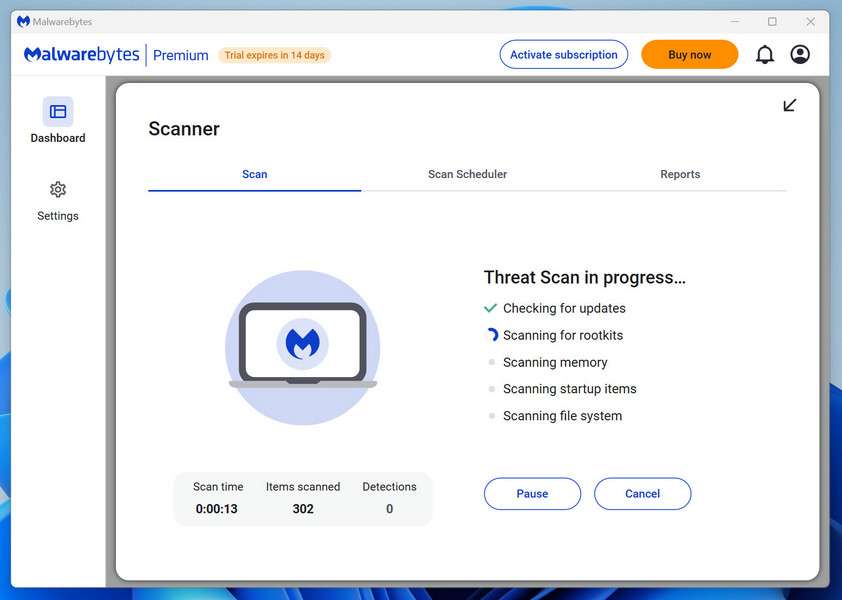
Wait for the Scan to Finish
The scan checks your entire system for browser hijackers and other malicious programs, so it can take 5 to 20 minutes depending on your computer. Feel free to do something else — just check back occasionally to see the progress.
-
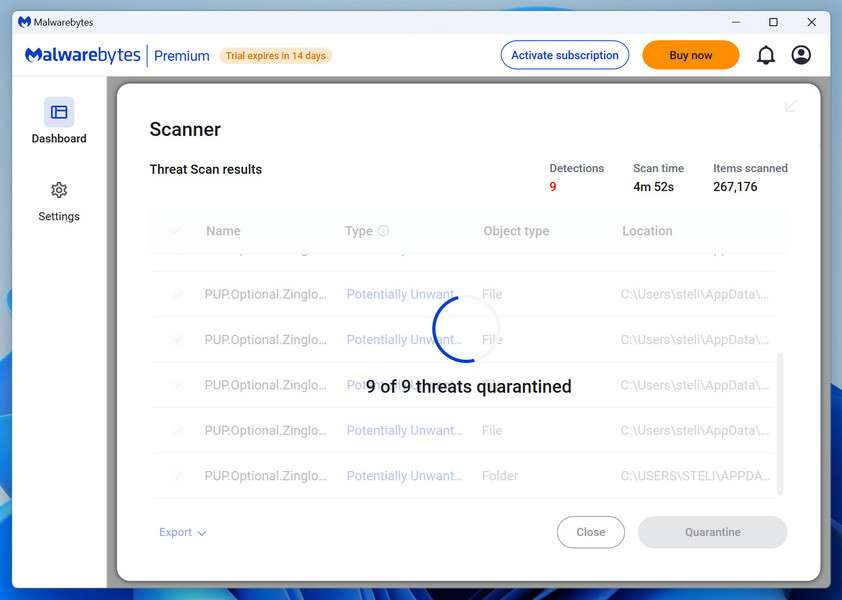
Quarantine the Detected Threats
When the scan is done, you’ll see a list of everything Malwarebytes found — malware, adware, and potentially unwanted programs. Click the “Quarantine” button to remove all of them at once.
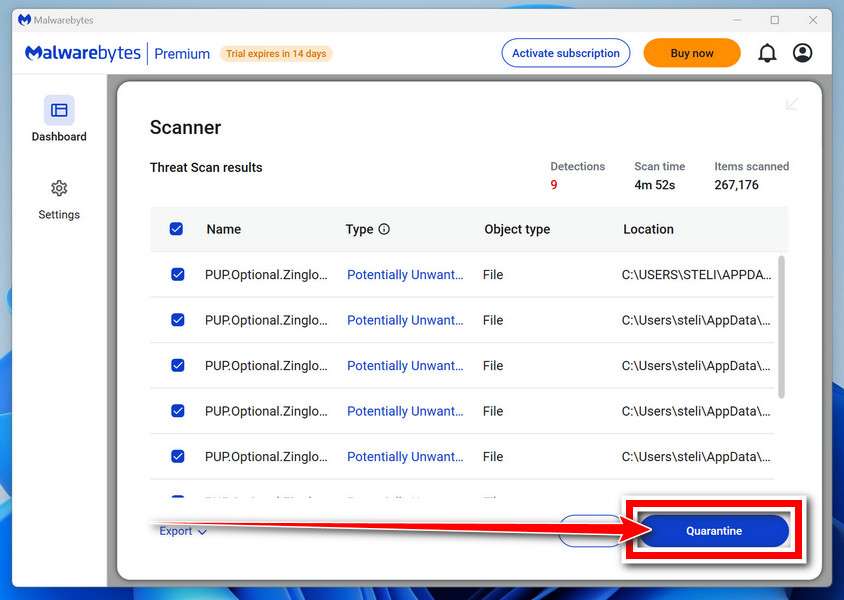
Malwarebytes will now remove the malicious files and registry entries and move them safely into quarantine.
-
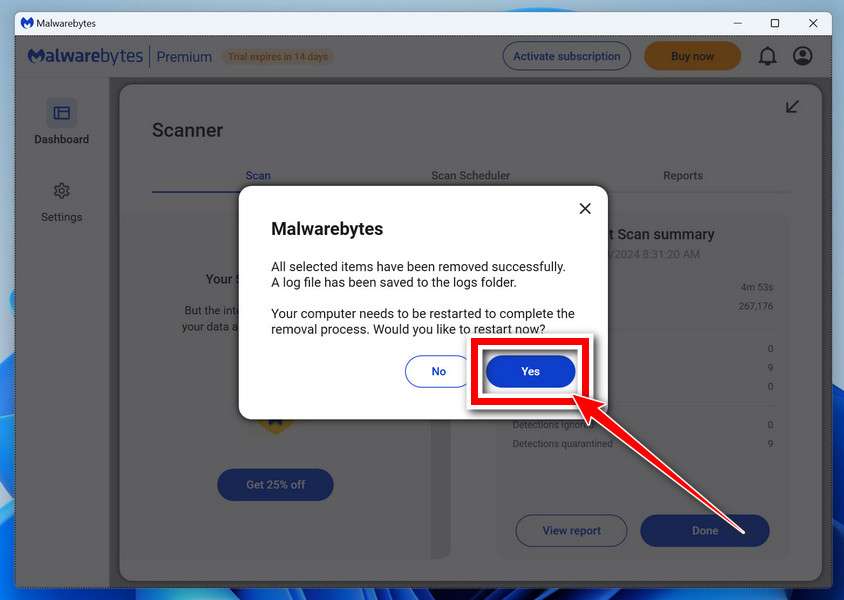
Restart Your Computer
Some threats can only be fully removed after a reboot. If Malwarebytes asks you to restart, click Yes. Once you’re logged back in, Malwarebytes has finished removing the threats it found.
That’s it — your Windows PC is now clean of trojans, adware, and other malware, and should be back to running smoothly.
If you are still having problems with your computer after completing these instructions, then please follow one of the steps:
- Run a computer scan with ESET Online Scanner
- Ask for help in our Windows Malware Removal Help & Support forum.
Run a Malware Scan with Malwarebytes for Mac
Malwarebytes for Mac is a free on-demand scanner that removes the malware other security software tends to miss — adware, browser hijackers, and unwanted programs included. Cleaning an infected Mac with Malwarebytes has always been completely free, and it’s our go-to recommendation. Follow the steps below to scan and clean your Mac in just a few minutes.
-
Download Malwarebytes for Mac
Click the button below to download the latest version of Malwarebytes for Mac.
Download MalwarebytesOfficial installer for macOS. Your download starts right away.Want real-time protection? See Malwarebytes PremiumMalwarebytes Free for MacScans and removes malware at no cost -
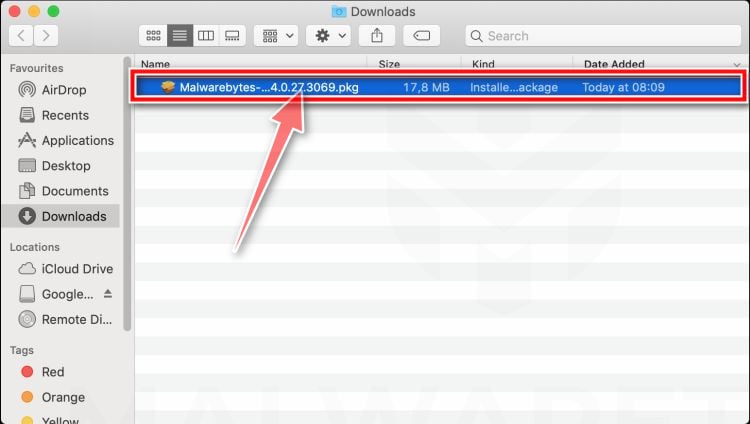
Open the Malwarebytes setup file
When the download finishes, open your Downloads folder and double-click the setup file to begin the installation.
-
Follow the On-Screen Prompts to Install Malwarebytes
The Malwarebytes for Mac Installer will guide you through a few quick screens. Click “Continue” and keep following the prompts until the installation completes.
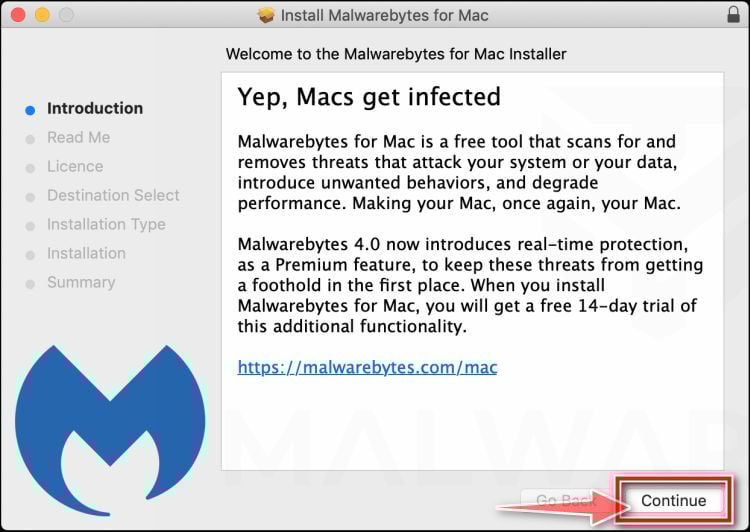
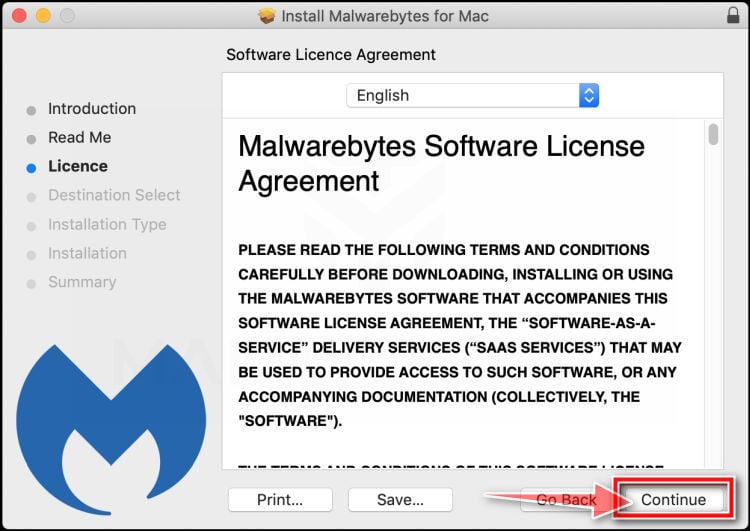
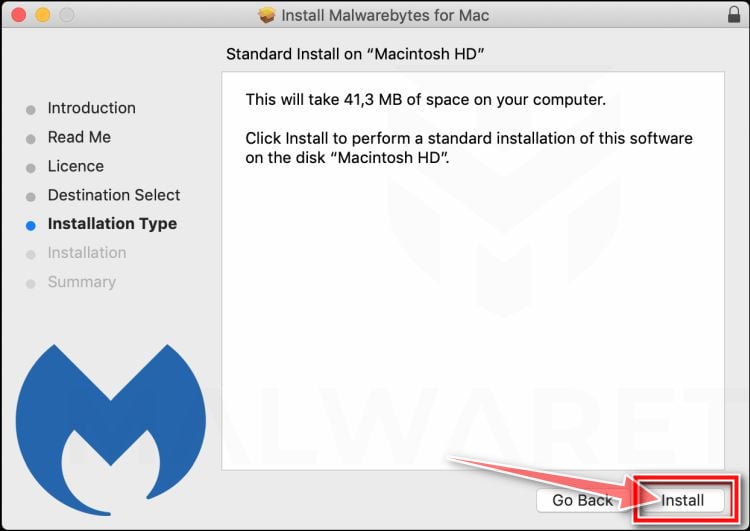
When the installation is complete, Malwarebytes opens to the Welcome to Malwarebytes screen. Click “Get started“.
-
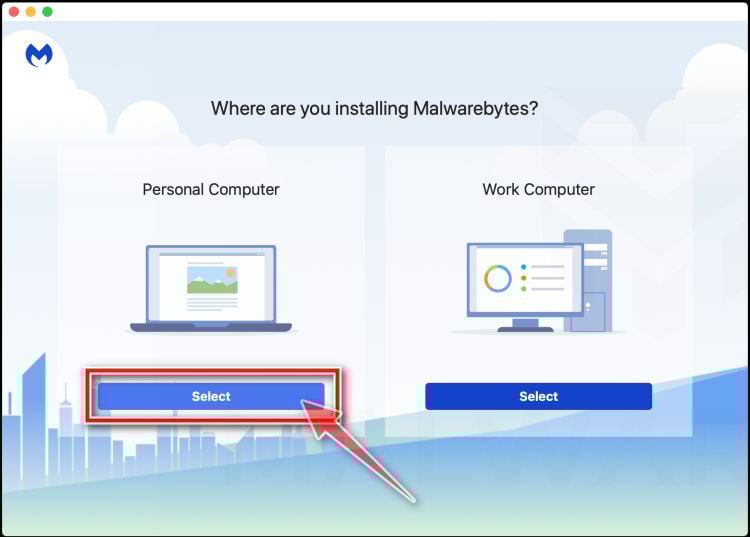
Select “Personal Computer” or “Work Computer”
Malwarebytes will ask what type of computer you’re installing it on. Click either Personal Computer or Work Computer, whichever applies.
-
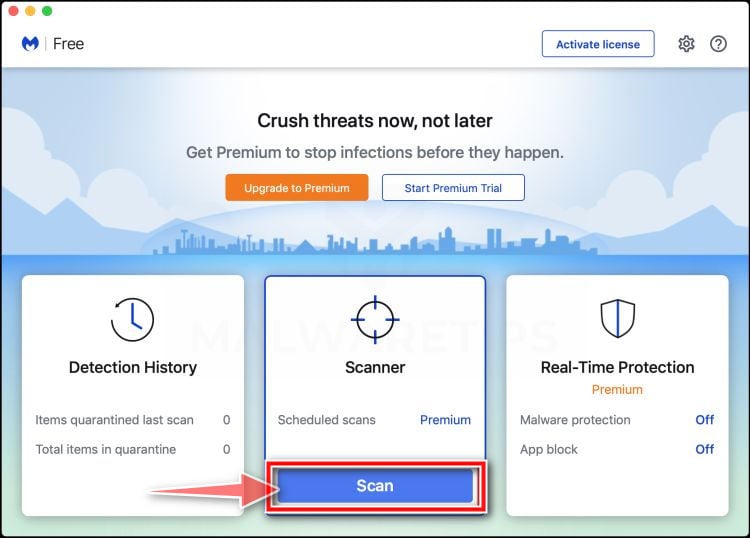
Start the Scan
Click the “Scan” button. Malwarebytes will automatically update its detection database and begin checking your Mac for malware.
-
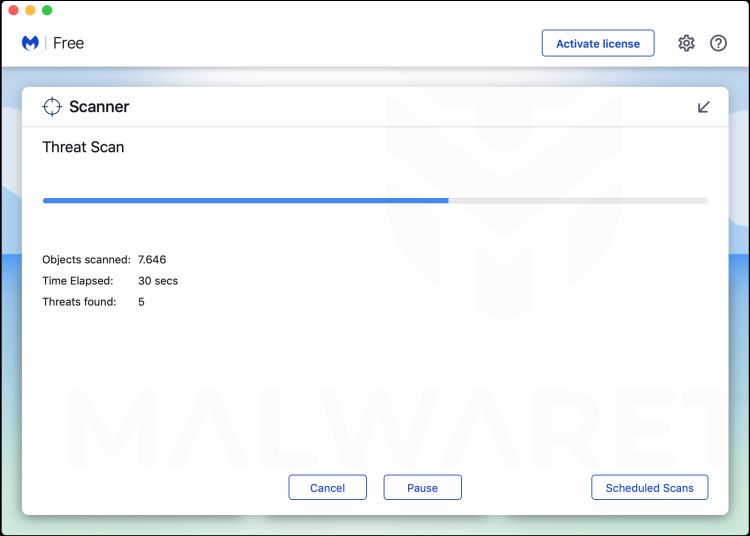
Wait for the Scan to Finish
Malwarebytes will scan your Mac for adware, browser hijackers, and other malicious programs. This can take a few minutes, so feel free to do something else — just check back occasionally to see the progress.
-
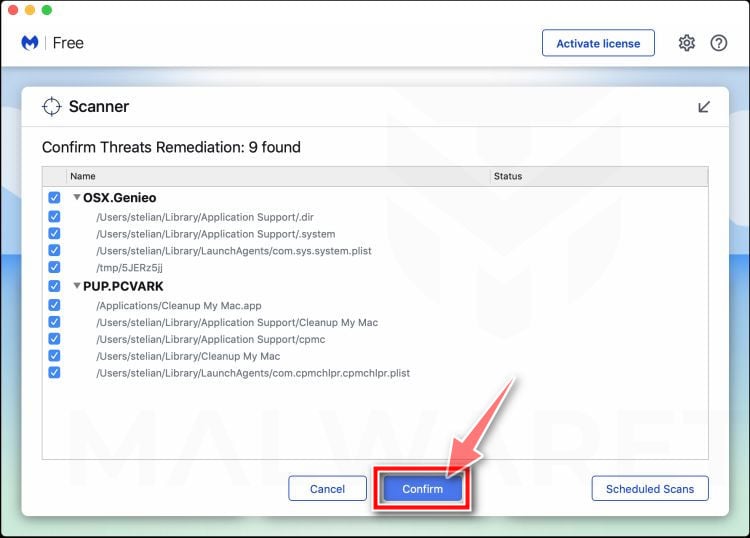
Quarantine the Detected Threats
When the scan is done, you’ll see a list of everything Malwarebytes found. Click the “Quarantine” button to remove all the threats at once.
-
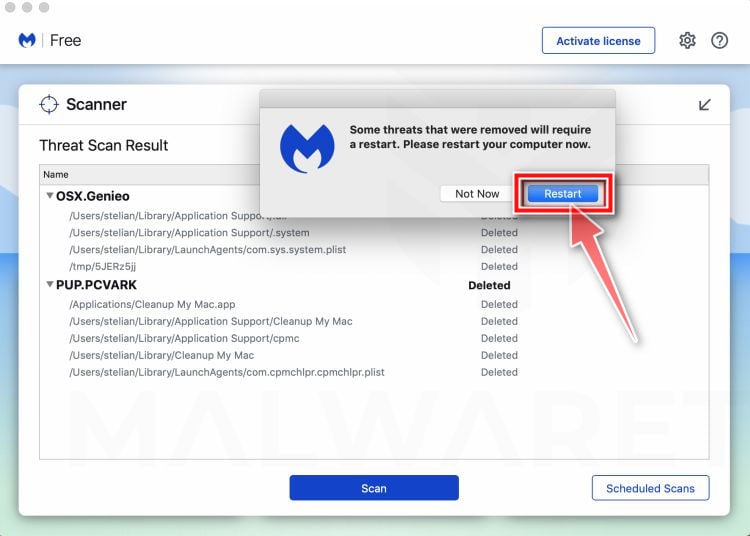
Restart Your Mac
Malwarebytes will now remove all the malicious files it found. Some threats can only be fully removed after a reboot — if Malwarebytes asks you to restart, allow it. Once you’re logged back in, your Mac is clean.
That’s it — your Mac is now free of adware, rogue browser extensions, and other potentially harmful software.
If you are still experiencing problems while trying to remove a malicious program from your computer, please ask for help in our Mac Malware Removal Help & Support forum.
Run a Malware Scan with Malwarebytes for Android
Malwarebytes for Android automatically detects and removes dangerous threats like malware and ransomware so you don’t have to worry about your most-used device being compromised. Aggressive detection of adware and potentially unwanted programs keeps your Android phone or tablet running smooth.
-
Download Malwarebytes for Android.
You can download Malwarebytes for Android by clicking the link below.
Get Malwarebytes for AndroidOpens Google Play in a new tab.Want real-time protection? See Malwarebytes Premium for AndroidMalwarebytes for AndroidScans your phone and removes malware at no cost -
Install Malwarebytes for Android on your phone.
In the Google Play Store, tap “Install” to install Malwarebytes for Android on your device.

When the installation process has finished, tap “Open” to begin using Malwarebytes for Android. You can also open Malwarebytes by tapping on its icon in your phone menu or home screen.

-
Follow the on-screen prompts to complete the setup process
When Malwarebytes will open, you will see the Malwarebytes Setup Wizard which will guide you through a series of permissions and other setup options.
This is the first of two screens that explain the difference between the Premium and Free versions. Swipe this screen to continue.
Tap on “Got it” to proceed to the next step.
Malwarebytes for Android will now ask for a set of permissions that are required to scan your device and protect it from malware. Tap on “Give permission” to continue.
Tap on “Allow” to permit Malwarebytes to access the files on your phone.
-
Update database and run a scan with Malwarebytes for Android
You will now be prompted to update the Malwarebytes database and run a full system scan.

Click on “Update database” to update the Malwarebytes for Android definitions to the latest version, then click on “Run full scan” to perform a system scan.

-
Wait for the Malwarebytes scan to complete.
Malwarebytes will now start scanning your phone for adware and other malicious apps. This process can take a few minutes, so we suggest you do something else and periodically check on the status of the scan to see when it is finished.

-
Click on “Remove Selected”.
When the scan has been completed, you will be presented with a screen showing the malware infections that Malwarebytes for Android has detected. To remove the malicious apps that Malwarebytes has found, tap on the “Remove Selected” button.

-
Restart your phone.
Malwarebytes for Android will now remove all the malicious apps that it has found. To complete the malware removal process, Malwarebytes may ask you to restart your device.
That’s it — your Android phone is now clean — no more malicious apps, adware, or browser redirects.
If you are still having problems with your phone after completing these instructions, then please follow one of the steps:
- Restore your phone to factory settings by going to Settings > General management > Reset > Factory data reset.
- Ask for help in our Mobile Malware Removal Help & Support forum.
Stay Protected: Block Ads and Malicious Sites
Now that your device is clean, keep it that way. Most infections start with a malicious ad or a fake download button — so blocking them at the source is your best defense.
We recommend AdGuard, which blocks malicious ads, phishing pages, and dangerous redirects before they can reach you.
👉 Download AdGuard and browse safely
Frequently Asked Questions
What is the “System Has Flagged Messages Due To Security Violations” email scam?
The “System Has Flagged Messages Due To Security Violations” email scam is a phishing attack disguised as a legitimate email security alert. The email claims that several messages (often labeled as “Bank T/T,” “Payment,” and “Invoice”) have been quarantined due to security validations. Victims are urged to click a button to “deliver messages to inbox.” Instead of releasing messages, the link redirects to a fake login page that steals your email credentials.
Is the “Incoming Emails Are Being Held” message real?
No, it is not real. The “Alert: Incoming Emails Are Being Held” subject line is a common variation of this phishing scam. No legitimate email service provider will ever send such an email asking you to click a button to release quarantined messages. If you receive this notification, it is 100% fraudulent and should be ignored or deleted.
How does the scam trick victims?
The scam uses social engineering tactics to create a sense of urgency and fear. It tricks users into believing:
- They are missing critical business or financial emails.
- Their account has detected a security issue.
- Immediate action is required to restore normal functionality.
By playing on fear of missing payments or invoices, the scam increases the likelihood of victims clicking the phishing link without verifying authenticity.
What happens if I click “Deliver Messages to Inbox”?
If you click the “Deliver Messages to Inbox” button in this phishing email, you will be redirected to a fake login page. This page is designed to look like your email provider’s sign-in portal. Once you enter your username and password, the credentials are immediately stolen by scammers. This gives them unauthorized access to your email account and potentially all linked services.
What can scammers do with my stolen email login credentials?
Scammers who gain access to your email account may:
- Hijack your inbox to send phishing emails to your contacts.
- Reset passwords for other accounts (banking, shopping, social media).
- Commit financial fraud through invoice scams or wire transfer requests.
- Steal sensitive data, such as business files, tax documents, or IDs.
- Sell your credentials on dark web marketplaces for profit.
The consequences can be severe, especially if you reuse the same password across multiple platforms.
How can I tell if the “System Has Flagged Messages” email is a scam?
Look for these red flags:
- Generic greeting (“Dear user” instead of your real name).
- Urgent language pressuring you to act quickly.
- Suspicious links or buttons (hover over the link and check the URL — it won’t match your email provider’s domain).
- Unfamiliar sender address that doesn’t match official domains.
- Grammar mistakes or formatting issues in the message.
If an email seems off, always log in directly to your email provider through its official website instead of clicking embedded links.
What should I do if I entered my password on the phishing page?
If you already entered your credentials, act immediately:
- Change your email password on the official site.
- Enable two-factor authentication (2FA) for added security.
- Check recent login activity in your account settings.
- Revoke any suspicious app connections linked to your account.
- Secure other accounts that use the same password.
- Warn your contacts that your account may have been compromised.
- Report the phishing email to your provider (Google, Microsoft, Yahoo, etc.).
The faster you act, the better chance you have of preventing identity theft or fraud.
Why do scammers use subjects like “Bank T/T,” “Payment,” or “Invoice”?
These subject lines are chosen strategically to trigger urgency and financial concern. Many people assume these could be related to payments, banking transfers, or invoices from clients. By using financial terminology, scammers increase the odds that recipients will panic and click without thinking twice.
How can I protect myself from email phishing scams like this?
Follow these best practices to stay safe:
- Never click links in unsolicited security alerts.
- Verify directly by logging into your account through the official website.
- Use strong, unique passwords for all accounts.
- Enable two-factor authentication (2FA) whenever possible.
- Educate employees (for businesses) about phishing risks.
- Use advanced spam filters to block known phishing domains.
- Regularly update software and security tools to reduce vulnerabilities.
Should I report the scam email?
Yes. Reporting phishing attempts helps improve email security for everyone. You can:
- Report to your email provider (use the “Report phishing” option).
- Forward the email to reportphishing@apwg.org (Anti-Phishing Working Group).
- In the U.S., file a complaint with the FTC.
- In the U.K., forward phishing emails to report@phishing.gov.uk.
- Within the EU, report to your national cybercrime authority.
The Bottom Line
The “System Has Flagged Messages Due To Security Violations” email scam is a dangerous phishing campaign that preys on urgency and fear. It tricks users into believing their emails are being quarantined due to security checks, then lures them into entering their login credentials on a fake website.
If you receive such an email:
- Do not click any links or buttons.
- Delete the email immediately.
- Secure your account if you have interacted with it.








