


A token falls below its advertised target, then climbs back. If you bought it because it was supposed to be stable, that recovery can feel like reassurance.
But a price chart cannot tell you how the recovery happened. That distinction was central to the fraud case involving TerraUSD.
Overview
The price recovered in 2021, but not for the reason investors were given
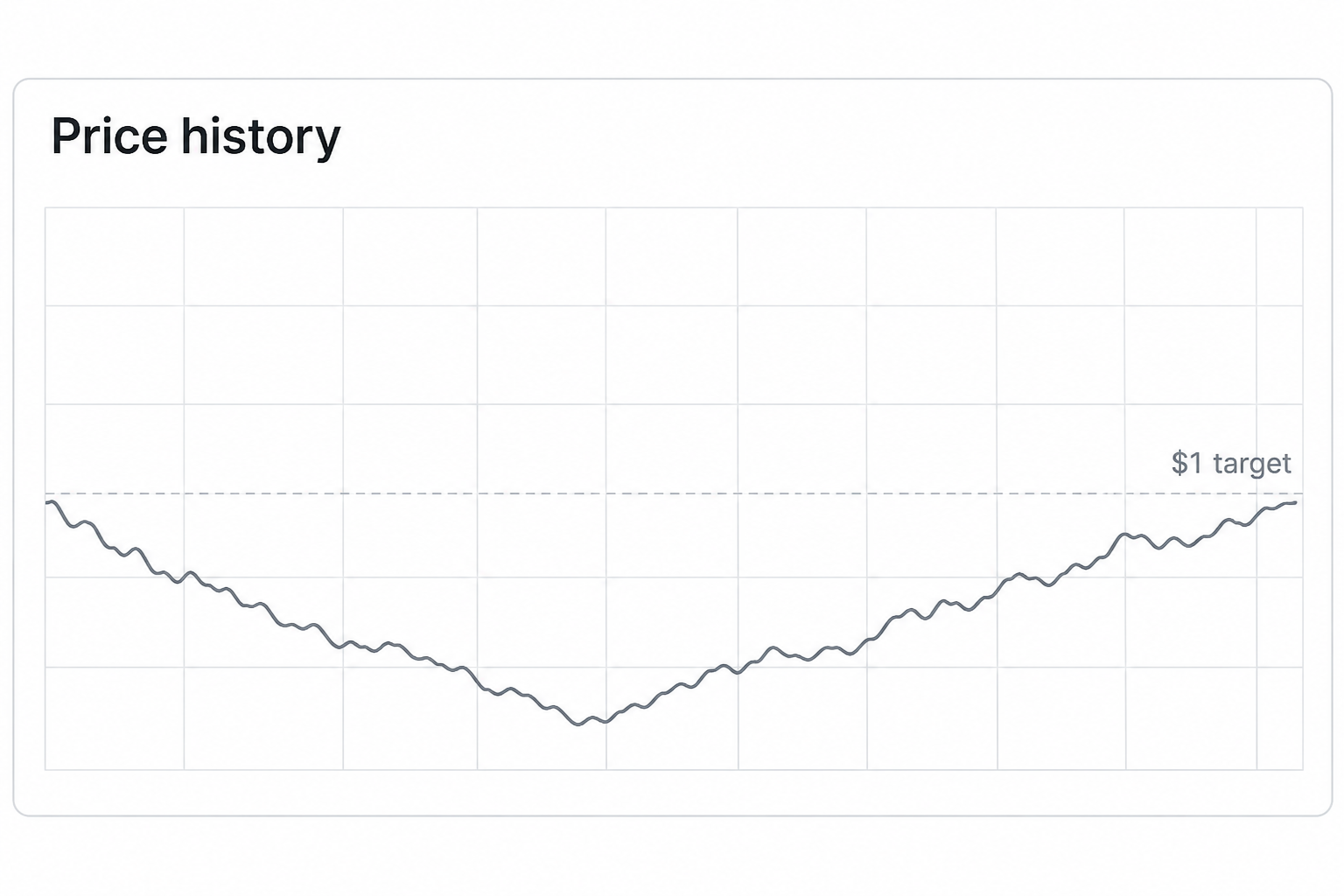
TerraUSD, also called UST, was designed to trade around $1. In May 2021 it slipped below that target and later moved back toward it.
According to the US Attorney’s Office, Do Kwon said Terra’s protocol restored the price on its own. Prosecutors said a trading firm secretly spent millions buying UST to support it.
That means one important part of the sales story was false. The fact that the price recovered didn’t show that the algorithm could handle the problem without outside help.
The illustration shows the general shape of a dip and rebound. It is not a historical chart, so do not use it to estimate prices or losses.
The Guardian reported that Kwon pleaded guilty and was sentenced to 15 years in December 2025. The case involved more than one deception.
UST and Luna were related, but they weren’t interchangeable
The advertised role of UST was to stay around a target. Luna was a different asset with a variable market price and a role in the ecosystem.
The federal case describes their collapse in May 2022 and investor losses exceeding $40 billion. That is not a total that has been approved for repayment.
A target price is not a guarantee that you can redeem a unit at that price. A return to the target is not evidence that a system recovered unaided.
The case concerned false statements about TerraUSD, not a finding that all stablecoins work alike. Check the actual issuer, mechanism, and redemption terms in each case.
What matters if you are checking a prior loss
A historical chart can help put events in order, but it will not establish your own transactions. Start with records that identify what you bought and when.
- Record the exact asset symbol and the dates you held it.
- Download transaction exports from the exchanges or other services you used.
- Note any prior claim numbers or determinations separately from exchange records.
- Distinguish the criminal case’s forfeiture process from the company’s bankruptcy process.
- Do not use new token or wallet offers to verify old losses.
If you already filed a claim, the latest official notice for your own case matters more than a headline about the overall losses.
How the False TerraUSD Stability Claim Worked
Step 1: Investors were sold a story about a $1 target
The attraction was not that UST was expected to rise sharply. It was that a digital asset would supposedly maintain a predictable reference price.
The marketing description matters because it shapes what a buyer thinks can go wrong. A token described as stable can still carry risks that a chart does not show.
Read what happens when the asset falls below the target. Ask who has an obligation to act, if anyone, and whether the response depends on active buyers.
A claim about the intended price in ordinary trading doesn’t tell you what happens when many people want to sell at once. Look for written conditions covering that outcome.
Step 2: A price move gave observers something to check
When UST moved below its target in 2021, investors could see both the decline and the later recovery. They couldn’t tell from the chart which actions caused it.
A visible recovery can be consistent with several explanations. It does not show who made trades, whether support was discretionary, or whether the same support will return.
If a developer attributes a recovery to its system, look for independently verifiable evidence. A chart of the result cannot establish the cause a developer claims.
Ask who would have access to evidence of a support arrangement. The person promoting the token may not be an independent source about the intervention.
Step 3: The account given to investors left out the intervention
The federal sentencing release says the protocol alone did not bring UST back in 2021. Kwon arranged for a trading firm to buy UST.
The deception was not simply that a third party participated in a market. The problem was telling investors that the protocol had done what the intervention helped achieve.
For someone deciding whether to hold the token, that changed the risk. If the apparent recovery relied on a private arrangement, the next recovery might not work the same way.
Keep the difference between the sale claim and the market event clear. You can verify a price without verifying why it moved.
Step 4: The later break was not the same event
In May 2022, UST lost its peg again, and UST and Luna collapsed. This was distinct from the 2021 episode when the price returned to the advertised level.
Don’t merge the two episodes into one price chart without dates. The false explanation relied on using the earlier recovery as evidence that the system worked.
Buyers who entered at different times may have different records and losses. A headline total can’t tell an exchange or administrator what happened to an individual position.
If a new promoter uses the 2021 recovery to tell you another offer is safe, ask what is actually being sold today. Don’t pay for reassurance built on old data.
How to Check Records and Official Claim Information
Export the history from a service you already use
Sign in through the exchange’s known site or app. Locate transaction history or statements and export the period covering your purchases, sales, and transfers.
Record the symbol, quantity, date, and transaction reference. If you moved assets to a second service, keep the corresponding records without treating the same transfer as a second purchase.
Do not share the credentials needed to access any of those accounts. You can preserve evidence of a transaction without handing over wallet recovery words or signing a new request.
If a service has closed or your export is incomplete, keep the records you do have. Mark the missing periods rather than reconstructing exact amounts from memory.
Check which official case or claim you are dealing with
Start with the Justice Department’s official Terraform case page. Confirm the defendant and browse the dated notices about victim updates and possible forfeiture remission.
Read the conditions before submitting sensitive evidence. The federal page distinguishes potential remission after forfeiture from separate proceedings concerning Terraform’s bankruptcy.
For bankruptcy, check the November 2026 status update filed by the plan administrator and the notices for your own claim. The update describes review of existing claims.
An existing claim review does not mean a new claim window is open. If you previously filed, compare your claim number and individual determination with the official records.
Treat a demand to unlock funds as a new claim you need to verify
If a message promises a distribution, compare it with the applicable official notice. Check whether the notice actually says someone will contact you through that route.
Do not connect a wallet or approve a transaction to confirm a loss. Ask the verified case contact what it needs and use only its secure instructions.
Keep the sender’s message without acting on it. A correct case number or asset symbol can be copied from records that anyone can read.
What a Stablecoin Chart Can and Cannot Tell You
Compare the trading price with the right to redeem
A chart records what people paid at particular times and venues. It does not show that the issuer will redeem your unit or that a particular market has sufficient buyers.
Start with the issuer’s current terms for the exact asset and network. Check whether redemption is offered, who can use it, and what conditions might stop or delay it.
If the offer does not identify an issuer responsible for redemption, say so in your notes. Do not replace missing terms with promises made by an exchange or promoter.
You may see the same or a similar symbol used for different assets. Check the asset identifier in your own trading record before comparing it with a report.
Keep venue statements and network records together
A transaction reference on your exchange may not be the same as a public network reference. Save both where you have them and record the service that supplied each one.
If a public record shows that an asset moved, it still might not identify you as the owner of the exchange account. Keep the exchange export alongside it.
When a service gives you a revised export, retain the earlier copy and date the new one. That makes it easier to explain why your supporting records differ.
If you only have a balance screenshot, save it as context and identify what it cannot show. Don’t treat it as a complete record of purchases or withdrawals.
What to Do If You Lost Money or Responded to a Recovery Pitch
Stop and keep the new request separate
Don’t pay a fee, transfer a token, or sign something to make an old balance available. Save your record of the request without accessing the destination again.
Label those messages separately from your UST or Luna purchases. A follow-up fraud is a different event and may involve different evidence.
Put your trades and transfers in order
Export the relevant account history and list dates, amounts, currencies, venues, and references. Include both purchases and any proceeds you actually received.
Note where evidence is missing and keep the original exports. Do not replace the records with a current estimate of the entire loss.
Find the correct official court or agency route
Use the criminal case page to check dated victim notices. For an existing bankruptcy claim, start with the determination and current court or administrator notice.
Do not send a new submission simply because somebody forwards an old form. If the instructions are unclear, ask the official contact about your specific claim reference.
Notify the provider if you made a new payment
Reach your bank or exchange through your established account. Describe the transaction you approved and the statements that induced you to make it.
Ask about its fraud-reporting process and any available tracing or dispute options. Its reply is separate from anything the court might offer.
Protect any account information you shared
Tell the provider immediately if you shared a password, approved a sign-in, or signed a wallet request. Ask what access or transactions it can review.
Change compromised credentials through the genuine service. If wallet access was involved, get independent support before following advice given by the person who sent the request.
Preserve decisions and respond by the applicable deadline
Save any legitimate case notice, the date you received it, and the exact reference. Check whether it requires a response or describes an earlier deadline.
If the notice is unfamiliar, confirm it through known official details. Keep a copy of what you submit and any acknowledgment you receive.
Frequently Asked Questions
Did TerraUSD really return to $1 in 2021?
The reported price recovered toward its target. Federal prosecutors said it did so after another trading firm bought large amounts, not because the protocol recovered on its own.
The same price can be reached through different causes. The case concerns the false explanation given to investors, not whether the chart showed a recovery.
Is the $40 billion available to claim?
The amount describes reported investor losses in the collapse, not a fund set aside in that amount. The criminal forfeiture figure is a different number.
Check the case notices rather than relying on the headline total. Recovery options and eligibility depend on the actual proceeding.
Are the bankruptcy and criminal case the same process?
No, the Justice Department distinguishes possible criminal forfeiture remission from the bankruptcy proceedings. A notice for one does not set the rules for the other.
Identify the case using the reference on the official notice. If you have already filed, check the status and instructions for that filing.
Does a stable trading price prove a token is backed?
A market price does not establish what assets back a token or whether it can be redeemed. Those questions need evidence outside the price chart.
Ask who operates it, what verification is available, and who has a right to redeem. Don’t transfer money merely to test somebody’s answer.
Is a new Luna listing the same as an old loss claim?
A new listing or promotional token offer is not evidence of an official claim process. Verify claims through the notice from the court or agency.
Don’t submit a seed phrase or connect your wallet because an advertisement names the old project. Check what documentation the actual administrator requires.
What if I no longer have an exchange login?
Keep any statements, receipts, records, or correspondence you still have. Contact the former service through independently verified details if it has a remaining support channel.
Ask the relevant official case contact what other evidence it can accept. Don’t give credentials to an outside service that promises to retrieve your transaction history.
The Bottom Line
Don’t use the 2021 price recovery as proof that TerraUSD’s advertised safeguard worked by itself. And don’t pay anyone to unlock compensation based on that old loss.
If you lost money, preserve your trade history and check the official criminal or bankruptcy route that applies. Treat unsolicited recovery requests as separate, unverified offers.

Join the discussion
0 commentsShare your experience or ask a question about this article.
Community experiences
Did this happen to you?
Your experience could help someone recognize the same scam. Submit a private report for our team to review.
I experienced this tooReports are reviewed before publication. Sharing publicly is always your choice.
Discussion
Start the conversation
Have a question or something useful to share? Add the first comment.