


A card on a phone can make an unfamiliar wallet feel like something you already know. The shopping experience looks straightforward from that side of the screen.
Before loading money onto a Licovia card, there is another side worth looking at. It starts with the paperwork behind the card, not the card image.
Overview
The offer combines a wallet, a prepaid card and commissions
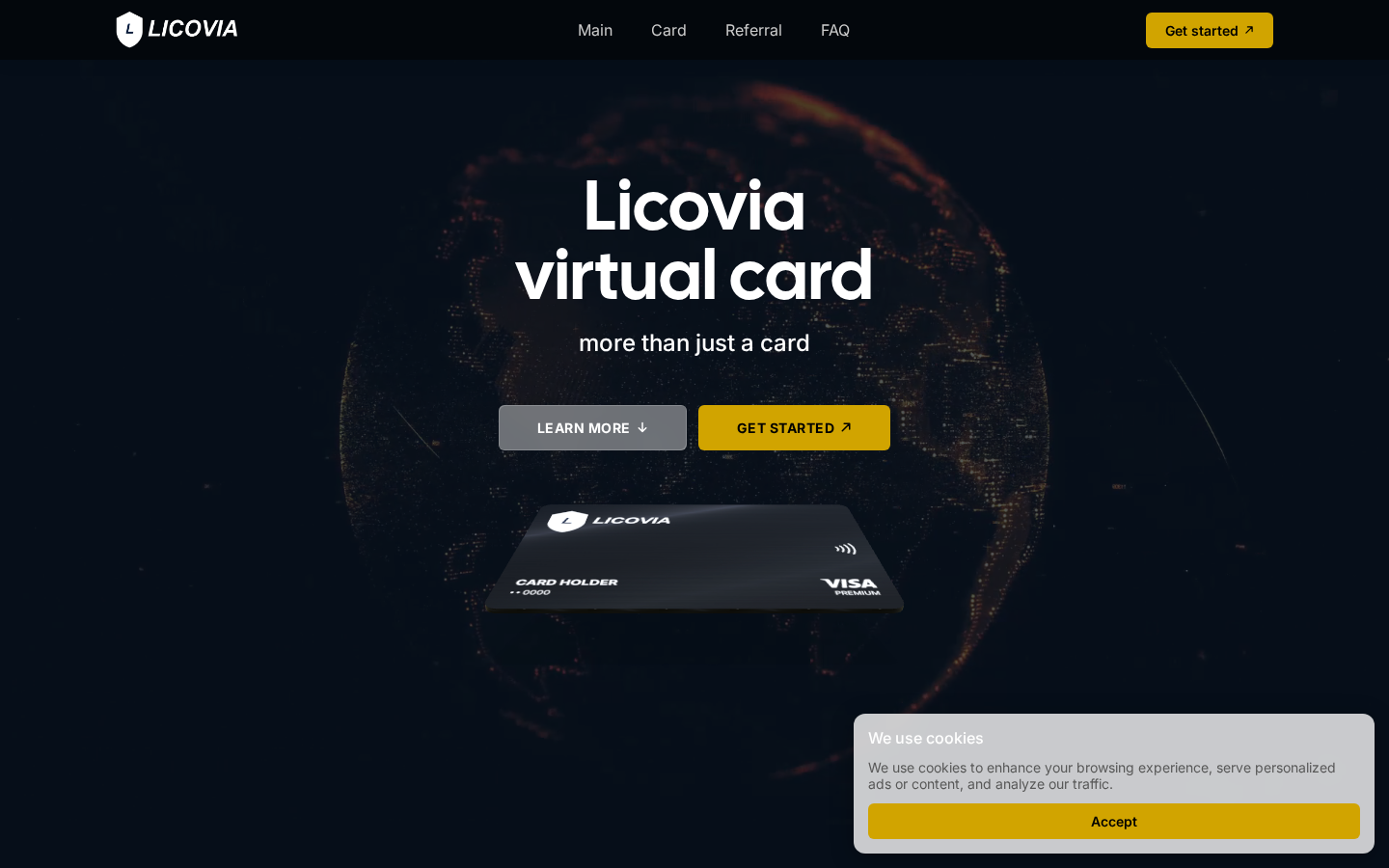
The Licovia crypto site promotes a wallet and cards that can be used for purchases. Its homepage also markets a referral program tied to card purchases and transactions.
That matters because you may hear about the card from someone who is paid if you sign up and use it. A recommendation can have a financial incentive behind it.
The payment features and the referral program should still be assessed separately. A card purchase does not become an investment simply because an affiliate earns a commission.
Equally, even a card that works at a shop does not establish how the operator would handle a suspended account, a disputed charge or funds left behind.
The question to ask before paying
The consumer question is simple: who owes you your remaining balance, and under what agreement can you get it back? The name on the homepage doesn’t answer that.
The crypto site’s footer describes Licovia as a marketing brand and says regulated providers and infrastructure partners supply card issuance and payment services. That separates the brand from those providers.
The public material reviewed did not establish the legal issuer for a specified Licovia card in a specified country. It did not independently establish who would hold your balance.
There are three distinctions to keep in mind before relying on a screenshot of an offer:
- The card network is the system that carries a payment, not necessarily the company you contract with.
- The financial institution named in the card agreement matters more than the logo on the sales page.
- The price of issuing a card can be separate from loading, spending and recovering funds.
What the public pages can and cannot show
The Swiss-branded business site presents broader payment services. The separate crypto card site has its own disclosure and makes the offer relevant to people shopping for a card.
The business site’s description of a payment platform is not a substitute for the crypto card agreement. Follow the terms that apply to the exact card being offered to you.
The card site advertised ways to use the card with Apple Pay or Google Pay. Treat device compatibility as a product feature to check, not evidence of financial protection.
Neither the referral marketing nor an unavailable page proves fraud. The missing answers about issuance and funds are enough to make funding the card a bad decision for now.
How the Licovia Offer Is Presented
Step 1: The card makes crypto spending look familiar
The visible pitch is about moving from a wallet to purchases without learning a new shopping routine. A virtual card also looks easier to try than a bank account.
That is true of many legitimate cards, which is why the presentation is not the problem by itself. The question is what happens before and after a payment.
The balance can sit under a separate wallet agreement even if the card works. Ask what gets converted before it reaches the payment account.
Ask which company receives the value at each point and when a transfer becomes irreversible. An affiliate who knows the app interface might not know the contractual answer.
The answer matters more if you were planning to leave money there between purchases. The ability to spend one payment is different from the right to take unused funds back.
Step 2: The referral offer changes who is recommending it
The crypto homepage openly promotes commissions from friends’ card purchases and transactions. That is a material fact about the pitch, even if the individual referral is not dishonest.
A friend may show you how a card worked for them. Their experience cannot confirm which agreement you will sign, particularly if you live in a different country.
Watch for advice to raise your spending or add more money before reviewing your agreement. Ask whether the person advising you receives a benefit from the next transaction.
An answer about a promotional card price still leaves other questions. What is the minimum top-up, how is conversion priced, and can you withdraw the remainder rather than spending it?
There may also be more than one card in circulation under the same brand. A price, issuer or limit for one version cannot safely be applied to the others.
Step 3: The real cost depends on what happens after loading
A search listing showed a Licovia help article for Visa E-commerce, but the actual page returned an error. We could not check its current fees.
The indexed material referred to separate authorization and other conditional fees for that variant. It is not a current universal price sheet for every customer or every card.
Before funding, request the dated fee schedule for the exact variant, your issuing country and the currency you intend to spend. Ask how you receive a copy you can keep.
Make the provider distinguish a card issuance charge, a wallet conversion, a decline charge and any closure cost. The same word, fee, can describe very different events.
A misleading comparison quotes only the monthly cost. A useful comparison tells you how much value goes in, what reaches the payment account and what can come back.
If the current schedule isn’t available until after you pay, stop there. You should not need an irreversible transfer in order to discover its conditions.
Step 4: Support and redemption are separate from whether spending works
The site advertises support and offers contact routes. A support button does not tell you who can review a disputed transaction or authorize a balance return.
Get a written distinction between app support and the issuer’s complaints team. If the app becomes inaccessible, you need to know which company will still answer your inquiry.
Ask what happens on closure if the card has a balance but the wallet and card use different providers. Request the procedure and any deadline before accepting the agreement.
A store receipt proves a transaction happened. It does not prove how a refund will be routed if the card was closed or never belonged to the same issuing program.
The test is not whether somebody can demonstrate a purchase. It is whether you can independently verify the terms when the purchase is reversed or support fails.
Which Company Is Behind the Licovia Card?
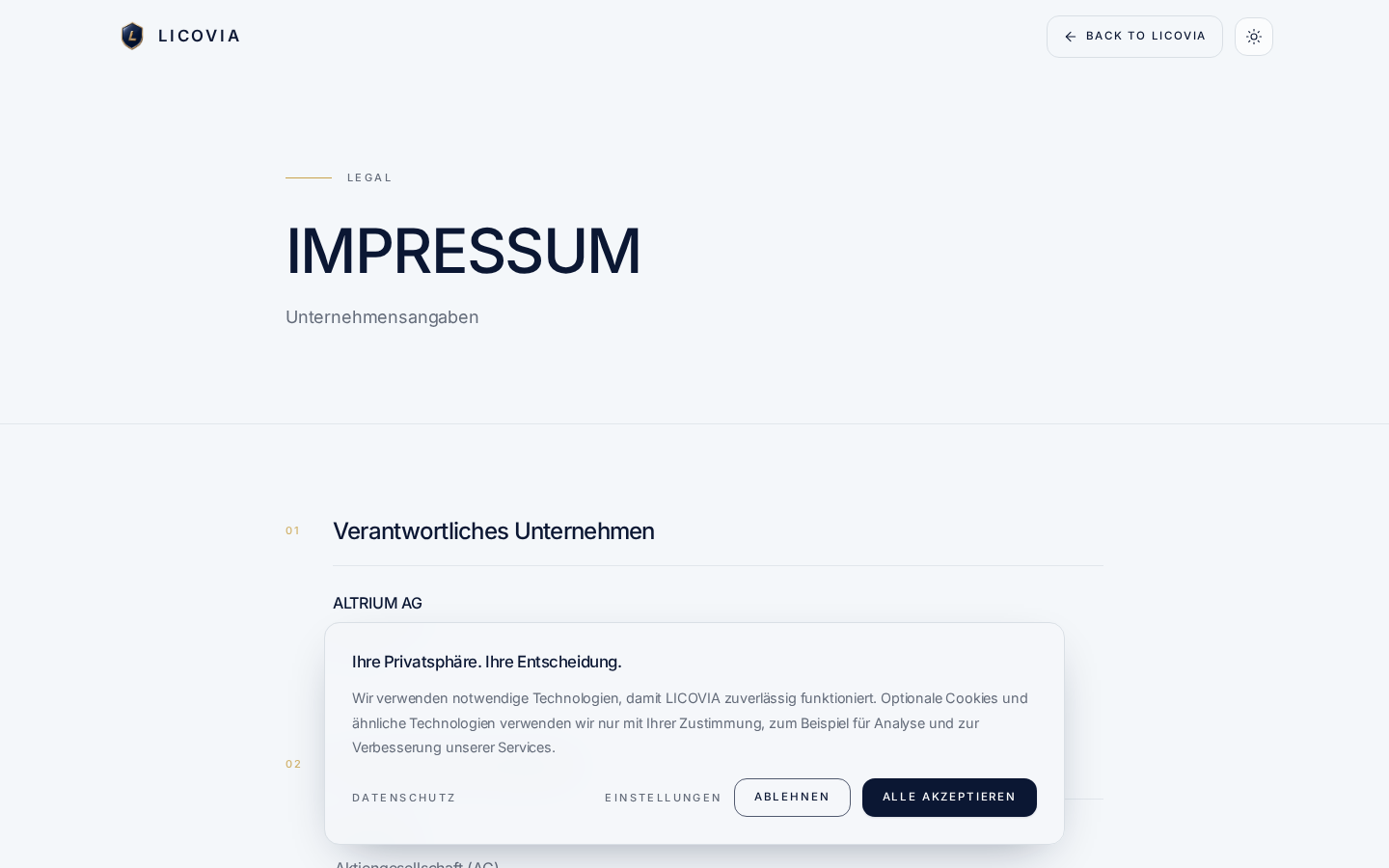
The Swiss business site names ALTRIUM AG
The business site’s imprint names ALTRIUM AG in Zollikon and lists the company identifier CHE-106.678.230. Its terms describe that company as the provider of platform and interface technology.
Those are meaningful disclosures about the business site. They are not evidence on their own that ALTRIUM AG takes your card deposit or issues a specific payment card.
If a reseller presents the Swiss reference as the answer to every question, ask them to point to the issuer and its obligations in your actual contract.
The public terms describe a role for partners in financial and payment services. The name of a technology company alone cannot confirm which partner is involved in your transaction.
The crypto site displays a Costa Rican company
The crypto homepage separately displays 3-102-084697 S.R.L. and a Costa Rican address in Escazú, San José. The Swiss company’s imprint should not be substituted for that disclosure.
A postal address tells you what the company has put on its site. It does not tell you whether the location is staffed or which entity is responsible for funds.
Those disclosures do not prove either address is false. The useful question is whether your agreement, receipt and complaints route identify the same accountable party.
If the card seller and issuer are different, that can be legitimate. Your paperwork should explain the split rather than leaving you to piece it together from two websites.
The issuer and safeguarding arrangements are the missing answers
Ask for the full legal issuer name and its official contact, along with the company holding the wallet balance. Do not settle for the card-network logo.
If a provider points to Swiss supervision, start with FINMA’s public information and use the supervised institutions or warning list link relevant to the claim.
Compare the legal name and stated activity rather than searching only the marketing name. If the issuer is elsewhere, use the authority that covers that exact issuer and service.
Absence from a warning list is not permission to trust the offer. It may tell you only that the name has not appeared on that list.
Do not assume the wallet balance has deposit insurance
Ask what legal protection applies to the card balance and what applies to the crypto wallet. Those are two different questions even when one app displays them together.
If the answer is that funds are safeguarded, request the relevant terms and the entity responsible. Do not read that word as a promise of bank deposit insurance.
Also ask what you would do if the wallet operator went offline while a card charge was pending. Identify which company can still see and handle the transaction.
A regulated company somewhere in a partnership is not enough. Its agreement or independent confirmation should show that it covers the product you are being sold.
What to Do Before Funding or If You Already Loaded Money
- Keep the card offer and account information you already have, including the variant, country, purchase price and name used on the payment record.
- If you have not paid, stop before any issuance charge or top-up and request the applicable cardholder agreement, issuer identity and complete dated fee schedule.
- If you have a balance, open the app independently using your normal route and record the available balance, recent charges and any pending transactions.
- Use the issuer’s verified support channel for card disputes and ask the wallet provider separately about redemption or returning unused funds.
- If a deposit between services is missing, report it to the service that sent the funds and provide the actual transfer reference.
- Do not pay any new release fee to a promoter or recovery contact, and do not share credentials or wallet recovery words.
Before you send documents
Copy the full legal name, jurisdiction and exact card variant from the agreement. Find the issuer independently through the relevant authority or its own published site.
Check that the issuer itself confirms the service or program being offered. A match on a company name alone does not connect a third-party form to it.
If the onboarding form requests identity documents but the controller is not clear, pause. Ask the verified provider who handles the documents and how to close or withdraw an application.
No useful verification requires reading your password or one-time code to a promoter. Keep those separate even if you are only trying to get a basic price quote.
If you cannot obtain and match the documents, there is no next step that requires a test purchase. Stop the application before it takes any payment.
If a charge or balance is already in dispute
Start with the receipt tied to the actual event. Note whether you are missing a top-up, disputing a card purchase or asking for closure of a remaining balance.
For a card purchase you do not recognize, ask the verified issuer to secure the card and explain its dispute process. Keep the date and case reference.
For an uncredited transfer, show the sending provider the original receipt. Ask whether it was settled and what trace or recall options, if any, remain.
If a support channel only asks you to top up again, do not do it. Preserve the request and use a separate, independently verified contact.
A successful dispute with one provider does not settle a different balance. Keep the responses for the card, wallet and sending bank in separate parts of your records.
Frequently Asked Questions
Is Licovia confirmed to be a scam?
The material checked does not establish a fraud finding. It does leave questions about which provider would issue the card and handle money for a particular customer.
That is enough to recommend against paying or sending identification on the current evidence, without calling the company a proven scam.
Does ALTRIUM AG issue the card?
The Swiss business pages identify ALTRIUM AG as the platform provider. That disclosure does not confirm it is the issuer of the crypto card being promoted to you.
Request the actual cardholder agreement and identify the entity named in its issuing and complaints provisions before sending money.
Does the network logo mean my balance is protected?
A card-network logo tells you which network the card is marketed as using. It does not identify who holds your balance or what protection applies to it.
Verify the issuer, wallet provider and applicable agreement separately. Do not assume the same protections apply to money in every part of the service.
Is every referral a sign of fraud?
No, commissions and referral programs can exist in legitimate services. They do give some recommenders a reason to encourage card purchases or transactions.
Ask about that incentive and verify the offer independently. A promoter’s answer does not replace terms from the company responsible for the money.
Can I use the indexed fee page as a quote?
No, because the listing describes a particular card variant and the current help link did not load reliably. It is not a verified price for your proposed account.
Ask for the written fee schedule that applies to your exact product and jurisdiction. Keep it with your agreement so you can compare later charges.
What if someone offers to withdraw my balance for me?
Do not hand over account access or send an advance fee. Contact the verified provider yourself to find the applicable redemption or closure process.
If you have already shared login information, secure the related account using the legitimate service and tell the provider what happened.
The Bottom Line
Do not buy or fund a Licovia card yet. First verify the issuer, who holds the balance, the current fees and how to get funds back.
If you already paid, stop adding money and document the balance and charges. Use independently verified provider contacts, not a referral chat, to ask about your options.

Join the discussion
0 commentsShare your experience or ask a question about this article.
Community experiences
Did this happen to you?
Your experience could help someone recognize the same scam. Submit a private report for our team to review.
I experienced this tooReports are reviewed before publication. Sharing publicly is always your choice.
Discussion
Start the conversation
Have a question or something useful to share? Add the first comment.